

There have been 63 monarchs of England and Britain spread over a period of approximately 1200 years.
English Kings
SAXON KINGS
EGBERT 827 – 839
Egbert (Ecgherht) was the first monarch to establish a stable and extensive rule over all of Anglo-Saxon England. After returning from exile at the court of Charlemagne in 802, he regained his kingdom of Wessex. Following his conquest of Mercia in 827, he controlled all of England south of the Humber. After further victories in Northumberland and North Wales, he is recognised by the title Bretwalda (Anglo-Saxon, “ruler of the British”). A year before he died aged almost 70, he defeated a combined force of Danes and Cornish at Hingston Down in Cornwall. He is buried at Winchester in Hampshire.
AETHELWULF 839 – 858
King of Wessex, son of Egbert and father of Alfred the Great. In 851 Aethelwulf defeated a Danish army at the battle of Oakley while his eldest son Aethelstan fought and defeated a Viking fleet off the coast of Kent, in what is believed to be “the first naval battle in recorded English history”. A highly religious man, Athelwulf travelled to Rome with his son Alfred to see the Pope in 855.
AETHELBALD 858 – 860
The second son of Aethelwulf, Æthelbald was born around 834. He was crowned at Kingston-upon-Thames in southwest London, after forcing his father to abdicate upon his return from pilgrimage to Rome. Following his father’s death in 858, he married his widowed stepmother Judith, but under pressure from the church the marriage was annulled after only a year. He is buried at Sherbourne Abbey in Dorset.
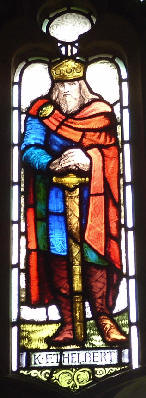
AETHELBERT 860 – 866
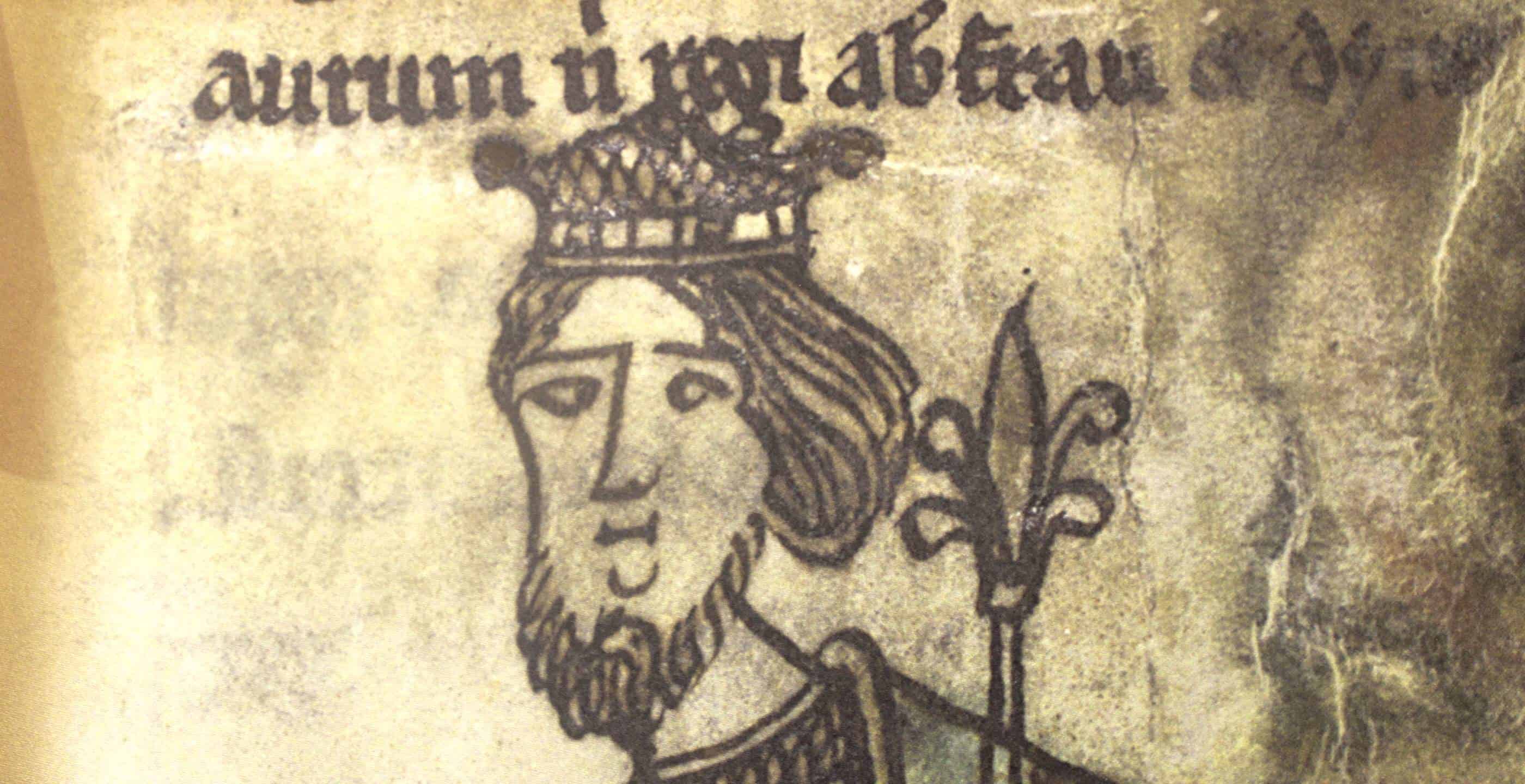
Became king following the death of his brother Æthelbald. Like his brother and his father, Aethelbert (pictured above) was crowned at Kingston-upon-Thames. Shortly after his succession a Danish army landed and sacked Winchester before being defeated by the Saxons. In 865 the Viking Great Heathen Army landed in East Anglia and swept across England. He is buried at Sherborne Abbey.
AETHELRED I 866 – 871
Aethelred succeeded his brother Aethelbert. His reign was one long struggle with the Danes who had occupied York in 866, establishing the Viking kingdom of Yorvik. When the Danish Army moved south Wessex itself was threatened, and so together with his brother Alfred, they fought several battles with the Vikings at Reading, Ashdown and Basing. Aethelred suffered serious injuries during the next major battle at Meretun in Hampshire; he died of his wounds shortly after at Witchampton in Dorset, where he was buried.
ALFRED THE GREAT 871 – 899 – son of AETHELWULF
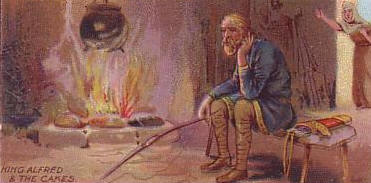
Born at Wantage in Berkshire around 849, Alfred was well educated and is said to have visited Rome on two occasions. He had proven himself to be a strong leader in many battles, and as a wise ruler managed to secure five uneasy years of peace with the Danes, before they attacked Wessex again in 877. Alfred was forced to retreat to a small island in the Somerset Levels and it was from here that he masterminded his comeback, perhaps ‘burning the cakes‘ as a consequence. With major victories at Edington, Rochester and London, Alfred established Saxon Christian rule over first Wessex, and then on to most of England. To secure his hard won boundaries Alfred founded a permanent army and an embryonic Royal Navy. To secure his place in history, he began the Anglo-Saxon Chronicle.
EDWARD (The Elder) 899 – 924
Succeeded his father Alfred the Great. Edward retook southeast England and the Midlands from the Danes. Following the death of his sister Aethelflaed of Mercia, Edward united the kingdoms of Wessex and Mercia. In 923, the Anglo-Saxon Chronicle recorded that the Scottish King Constantine II recognised Edward as “father and lord”. The following year, Edward was killed in a battle against the Welsh near Chester. His body was returned to Winchester for burial.
ATHELSTAN 924 – 939
Son of Edward the Elder, Athelstan extended the boundaries of his kingdom at the Battle of Brunanburh in 937. In what is said to be one of the bloodiest battles ever fought on British soil, Athelstan defeated a combined army of Scots, Celts, Danes and Vikings, claiming the title of King of all Britain. The battle saw for the first time individual Anglo-Saxon kingdoms being brought together to create a single and unified England. Athelstan is buried in Malmesbury, Wiltshire.
EDMUND 939 – 946
Succeeded his half-bother Athelastan as king at the tender age of 18, having already fought alongside him at the Battle of Brunanburh two years earlier. He re-established Anglo-Saxon control over northern England, which had fallen back under Scandinavian rule following the death of Athelstan. Aged just 25, and whilst celebrating the feast of Augustine, Edmund was stabbed by a robber in his royal hall at Pucklechurch near Bath. His two sons, Eadwig and Edgar, were perhaps considered too young to become kings.
EADRED 946 – 955
The son of Edward the Elder by his third marriage to Eadgifu, Eadred succeeded his brother Edmund following his premature death. He followed in the family tradition of defeating Norsemen, expelling the last Scandinavian King of York, Eric Bloodaxe, in 954. A deeply religious man, Eadred suffered a serious stomach ailment that would eventually prove fatal. Eadred died in his early 30s, unmarried and without an heir, at Frome in Somerset. He is buried in Winchester.
EADWIG 955 – 959
The eldest son of Edmund I, Eadwig was about 16 when he was crowned king at Kingston-upon-Thames in southeast London. Legend has it that his coronation had to be delayed to allow Bishop Dunstan to prise Eadwig from his bed, and from between the arms of his “strumpet” and the strumpets’ mother. Perhaps unimpressed by the interruption, Eadwig had Dunstan exiled to France. Eadwig died in Gloucester when he was just 20, the circumstances of his death are not recorded.
EDGAR 959 – 975
The youngest son of Edmund I, Edgar had been in dispute with his brother concerning succession to the throne for some years. Following Eadwig’s mysterious death, Edgar immediately recalled Dunstan from exile, making him Archbishop of Canterbury as well as his personal adviser. Following his carefully planned (by Dunstan) coronation in Bath in 973, Edgar marched his army to Chester, to be met by six kings of Britain. The kings, including the King of Scots, King of Strathclyde and various princes of Wales, are said to have signalled their allegiance to Edgar by rowing him in his state barge across the River Dee.
EDWARD THE MARTYR 975 – 978
Eldest son of Edgar, Edward was crowned king when aged just 12. Although supported by Archbishop Dunstan, his claim to the throne was contested by supporters of his much younger half-brother Aethelred. The resulting dispute between rival factions within the church and nobility almost led to civil war in England. Edward’s short reign ended when he was murdered at Corfe Castle by followers of Aethelred, after just two and half years as king. The title ‘martyr’ was a consequence of him being seen as a victim of his stepmother’s ambitions for her own son Aethelred.
AETHELRED II THE UNREADY 978 – 1016
Aethelred was unable to organise resistance against the Danes, earning him the nickname ‘unready’, or ‘badly advised’. He became king aged about 10, but fled to Normandy in 1013 when Sweyn Forkbeard, King of the Danes invaded England in an act of revenge following the St Brice’s Day massacre of England’s Danish inhabitants.
Sweyn was pronounced King of England on Christmas Day 1013 and made his capital at Gainsborough, Lincolnshire. He died just 5 weeks later.
Aethelred returned in 1014 after Sweyn’s death. The remainder of Aethelred’s reign was one of a constant state of war with Sweyn’s son Canute.
EDMUND II IRONSIDE 1016 – 1016
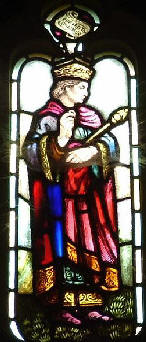
The son of Aethelred II, Edmund had led the resistance to Canute’s invasion of England since 1015. Following the death of his father, he was chosen king by the good folk of London. The Witan (the king’s council) however elected Canute. Following his defeat at the Battle of Assandun, Edmund made a pact with Canute to divide the kingdom between them. This treaty ceded control of all of England, with the exception of Wessex, to Canute. It also stated that when one of the kings died the other would take all of England… Edmund died later that year, probably assassinated.
CANUTE (CNUT THE GREAT) THE DANE 1016 – 1035
Canute became king of all England following the death of Edmund II. The son of Sweyn Forkbeard, he ruled well and gained favour with his English subjects by sending most of his army back to Denmark. In 1017, Canute married Emma of Normandy, the widow of Aethelred II and divided England into the four earldoms of East Anglia, Mercia, Northumbria and Wessex. Perhaps inspired by his pilgrimage to Rome in 1027, legend has it that he wanted to demonstrate to his subjects that as a king he was not a god, he ordered the tide not to come in, knowing this would fail.
HAROLD I 1035 – 1040
Also known as Harold Harefoot, in recognition of his speed and skill as a hunter. Harold was the illegitimate son of Canute; he claimed the English crown on the death of his father whilst his half-brother Harthacanute, the rightful heir, was in Denmark fighting to protect his Danish kingdom. Harold died three years into his reign, just weeks before Harthacanute was due to invade England with an army of Danes. He was buried in Westminster Abbey before Harthacanute had his body dug up, beheaded, and thrown into the Thames. His bits were later gathered and re-buried at St. Clement Danes in London.
HARTHACANUTE 1040 – 1042
The son of Cnut the Great and Emma of Normandy, Harthacanute sailed to England with his mother, accompanied by a fleet of 62 warships, and was immediately accepted as king. Perhaps to appease his mother, the year before he died Harthacanute invited his half-brother Edward, Emma’s son from her first marriage to Aethelred the Unready, back from exile in Normandy. Harthacanute died at a wedding whilst toasting the health of the bride; he was aged just 24 and was the last Danish king to rule England
EDWARD THE CONFESSOR 1042-1066
Following the death of Harthacanute, Edward restored the rule of the House of Wessex to the English throne. A deeply pious and religious man, he presided over the rebuilding of Westminster Abbey, leaving much of the running of the country to Earl Godwin and his son Harold. Edward died childless, eight days after the building work on Westminster Abbey had finished. With no natural successor, England was faced with a power struggle for control of the throne.
HAROLD II 1066
Despite having no royal bloodline, Harold Godwinson was elected king by the Witan (a council of high ranking nobles and religious leaders), following the death of Edward the Confessor. The election result failed to meet with the approval of one William, Duke of Normandy, who claimed that his relative Edward had promised the throne to him several years earlier. Harold defeated an invading Norwegian army at the Battle of Stamford Bridge in Yorkshire, then marched south to confront William of Normandy who had landed his forces in Sussex. The death of Harold at the Battle Of Hastings meant the end of the English Anglo-Saxon kings and the beginning of the Normans.
NORMAN KINGS
 WILLIAM I (The Conqueror) 1066- 1087
Also known as William the Bastard (but not normally to his face!), he was the illegitimate son of Robert the Devil, whom he succeeded as Duke of Normandy in 1035. William came to England from Normandy, claiming that his second cousin Edward the Confessor had promised him the throne, and defeated Harold II at the Battle of Hastings on 14th October 1066. In 1085 the Domesday Survey was begun and all of England was recorded, so William knew exactly what his new kingdom contained and how much tax he could raise in order to fund his armies. William died at Rouen after a fall from his horse whilst besieging the French city of Nantes. He is buried at Caen.
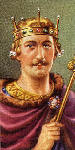 WILLIAM II (Rufus) 1087-1100
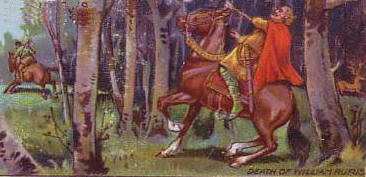
William was not a popular king, given to extravagance and cruelty. He never married and was killed in the New Forest by a stray arrow whilst out hunting, maybe accidentally, or possibly shot deliberately on the instructions of his younger brother Henry. Walter Tyrrell, one of the hunting party, was blamed for the deed. The Rufus Stone in The New Forest, Hampshire, marks the spot where he fell.
HENRY I 1100-1135
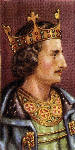
Henry Beauclerc was the fourth and youngest son of William I. Well educated, he founded a zoo at Woodstock in Oxfordshire to study animals. He was called the ‘Lion of Justice’ as he gave England good laws, even if the punishments were ferocious. His two sons were drowned in the White Ship so his daughter Matilda was made his successor. She was married to Geoffrey Plantagenet. When Henry died of food poisoning, the Council considered a woman unfit to rule and so offered the throne to Stephen, a grandson of William I.
 STEPHEN 1135-1154
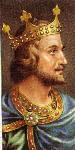
Stephen was a very weak king and the whole country was almost destroyed by the constant raids by the Scots and the Welsh. During Stephen’s reign the Norman barons wielded great power, extorting money and looting town and country. A decade of civil war known as The Anarchy ensued when Matilda invaded from Anjou in 1139. A compromise was eventually decided, under the terms of the Treaty of Westminster Matilda’s son Henry Plantagenet would succeed to the throne when Stephen died.
PLANTAGENET KINGS
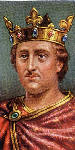 HENRY II 1154-1189
Henry of Anjou was a strong king. A brilliant soldier, he extended his French lands until he ruled most of France. He laid the foundation of the English Jury System and raised new taxes (scutage) from the landholders to pay for a militia force. Henry is mostly remembered for his quarrel with Thomas Becket, and Becket’s subsequent murder in Canterbury Cathedral on 29th December 1170. His sons turned against him, even his favourite John.
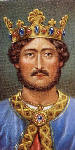 RICHARD I (The Lionheart) 1189 – 1199
Richard was the third son of Henry II. By the age of 16, he was leading his own army putting down rebellions in France. Although crowned King of England, Richard spent all but 6 months of his reign abroad, preferring to use the taxes from his kingdom to fund his various armies and military ventures. He was the leading Christian commander during the Third Crusade. On his way back from Palestine, Richard was captured and held for ransom. The amount paid for his safe return almost bankrupt the country. Richard died from an arrow-wound, far from the kingdom that he so rarely visited. He had no children.
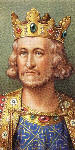 JOHN 1199 -1216
John Lackland was the fourth child of Henry II. Short and fat, he was jealous of his dashing brother Richard I whom he succeeded. He was cruel, self-indulgent, selfish and avaricious, and the raising of punitive taxes united all the elements of society, clerical and lay, against him. The Pope excommunicated him. On 15th June 1215 at Runnymede the barons compelled John to sign Magna Carta, the Great Charter, which reinstated the rights of all his subjects. John died – from dysentery – a fugitive from all his enemies. He has been termed “the worst English king”.
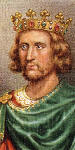 HENRY III 1216 -1272
Henry was 9 years old when he became king. Brought up by priests he became devoted to church, art and learning. He was a weak man, dominated by churchmen and easily influenced by his wife’s French relations. In 1264 Henry was captured during the rebellion of barons led by Simon de Montfort and was forced to set up a ‘Parliament’ at Westminster, the start of the House of Commons. Henry was the greatest of all patrons of medieval architecture and ordered the rebuilding of Westminster Abbey in the Gothic style.
Monarchs of England and Wales
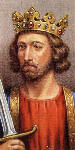 EDWARD I 1272 – 1307
Edward Longshanks was a statesman, lawyer and soldier. He formed the Model Parliament in 1295, bringing the knights, clergy and nobility, as well as the Lords and Commons together for the first time. Aiming at a united Britain, he defeated the Welsh chieftains and created his eldest son Prince of Wales. He was known as the ‘Hammer of the Scots’ for his victories in Scotland and brought the famous coronation stone from Scone to Westminster. When his first wife Eleanor died, he escorted her body from Grantham in Lincolnshire to Westminster, setting up Eleanor Crosses at every resting place. He died on the way to fight Robert Bruce.
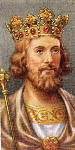 EDWARD II 1307 – deposed 1327
Edward was a weak and incompetent king. He had many ‘favourites’, Piers Gaveston being the most notorious. He was beaten by the Scots at the Battle of Bannockburn in 1314. Edward was deposed and held captive in Berkeley Castle in Gloucestershire. His wife joined her lover Mortimer in deposing him: by their orders he was murdered in Berkley Castle – as legend has it, by having a red-hot poker thrust up his anus! His beautiful tomb in Gloucester Cathedral was erected by his son, Edward III.
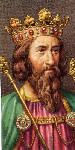 EDWARD III 1327 – 1377
Son of Edward II, he reigned for 50 years. His ambition to conquer Scotland and France plunged England into the Hundred Years War, beginning in 1338. The two great victories at Crecy and Poitiers made Edward and his son, the Black Prince, the most renowned warriors in Europe, however the war was very expensive. The outbreak of bubonic plague, the ‘Black Death’ in 1348-1350 killed half the population of England.
RICHARD II 1377 – deposed 1399
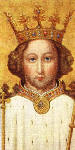 The son of the Black Prince, Richard was extravagant, unjust and faithless. In 1381 came the Peasants Revolt, led by Wat Tyler. The rebellion was put down with great severity. The sudden death of his first wife Anne of Bohemia completely unbalanced Richard and his extravagance, acts of revenge and tyranny turned his subjects against him. In 1399 Henry of Lancaster returned from exile and deposed Richard, becoming elected King Henry IV. Richard was murdered, probably by starvation, in Pontefract Castle in 1400.
HOUSE OF LANCASTER
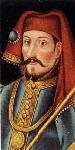 HENRY IV 1399 – 1413
The son of John of Gaunt (third son of Edward III), Henry returned from exile in France to reclaim his estates previously seized by Richard II; he was accepted as king by Parliament. Henry spent most of his 13 year reign defending himself against plots, rebellions and assassination attempts. In Wales Owen Glendower declared himself Prince of Wales and led a national uprising against English rule. Back in England, Henry had great difficulty in maintaining the support of both the clergy and Parliament and between 1403-08 the Percy family launched a series of rebellions against him. Henry, the first Lancastrian king, died exhausted, probably of leprosy, at the age of 45.
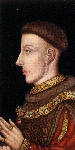 HENRY V 1413 – 1422
The son of Henry IV, he was a pious, stern and skilful soldier. Henry had honed his fine soldiering skills putting down the many rebellions launched against his father and had been knighted when aged just 12. He pleased his nobles by renewing the war with France in 1415. In the face of tremendous odds he beat the French at the Battle of Agincourt, losing just 400 of his own soldiers with more than 6,000 Frenchmen killed. On a second expedition Henry captured Rouen, was recognised as the next King of France and married Catherine, the daughter of the lunatic French king. Henry died of dysentery whilst campaigning in France and before he could succeed to the French throne, leaving his 10-month old son as King of England and France.
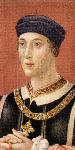 HENRY VI 1422 – deposed 1461 Beginning of the Wars of the Roses
Gentle and retiring, he came to the throne as a baby and inherited a losing war with France, the Hundred Years War finally ending in 1453 with the loss of all French lands except for Calais. The king had an attack of mental illness that was hereditary in his mother’s family in 1454 and Richard Duke of York was made Protector of the Realm. The House of York challenged Henry VI’s right to the throne and England was plunged into civil war. The Battle of St Albans in 1455 was won by the Yorkists. Henry was restored to the throne briefly in 1470. Henry’s son, Edward, Prince of Wales was killed at the Battle of Tewkesbury one day before Henry was murdered in the Tower of London in 1471. Henry founded both Eton College and King’s College, Cambridge, and every year the Provosts of Eton and King’s College lay roses and lilies on the altar which now stands where he died.
HOUSE OF YORK
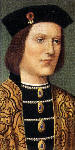 EDWARD IV 1461- 1483
He was the son of Richard Duke of York and Cicely Neville, and not a popular king. His morals were poor (he had many mistresses and had at least one illegitimate son) and even his contemporaries disapproved of him. Edward had his rebellious brother George, Duke of Clarence, murdered in 1478 on a charge of treason. During his reign the first printing press was established in Westminster by William Caxton. Edward died suddenly in 1483 leaving two sons aged 12 and 9, and five daughters.
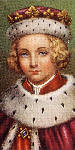 EDWARD V 1483 – 1483
Edward was actually born in Westminster Abbey, where his mother Elizabeth Woodville had sought sanctuary from the Lancastrians during the Wars of the Roses. The eldest son of Edward IV, he succeeded to the throne at the tender age of 13 and reigned for only two months, the shortest-lived monarch in English history. He and his brother Richard were murdered in the Tower of London – it is said on the orders of his uncle Richard Duke of Gloucester. Richard (III) declared The Princes in the Tower illegitimate and named himself rightful heir to the crown.
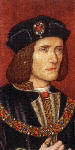 RICHARD III 1483 – 1485 End of the Wars of the Roses
Brother of Edward IV. The ruthless extinction of all those who opposed him and the alleged murders of his nephews made his rule very unpopular. In 1485 Henry Richmond, descendant of John of Gaunt, father of Henry IV, landed in west Wales, gathering forces as he marched into England. At the Battle of Bosworth Field in Leicestershire, Richard was defeated and killed in what was to be the last important battle in the Wars of the Roses. Archaeological investigations at a car park in Leicester during 2012 revealed a skeleton which was thought to have been that of Richard III, and this was confirmed on the 4th February 2013. His body was re-interred at Leicester Cathedral on 22nd March 2015.
THE TUDORS
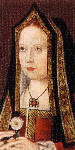
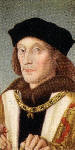 HENRY VII 1485 – 1509
When Richard III fell at the Battle of Bosworth, his crown was picked up and placed on the head of Henry Tudor. He married Elizabeth of York and so united the two warring houses, York and Lancaster. He was a skillful politician but avaricious. The material wealth of the country increased greatly. During Henry’s reign playing cards were invented and the portrait of his wife Elizabeth has appeared eight times on every pack of cards for nearly 500 years.
Monarchs of England, Wales and Ireland
HENRY VIII 1509 – 1547
 The best known fact about Henry VIII is that he had six wives! Most school children learn the following rhyme to help them remember the fate of each wife: “Divorced, Beheaded, Died: Divorced, Beheaded, Survived”. His first wife was Katherine of Aragon, his brothers widow, whom he later divorced to marry Anne Boleyn. This divorce caused the split from Rome and Henry declared himself the head of the Church Of England. The Dissolution of the Monasteries began in 1536, and the money gained from this helped Henry to bring about an effective Navy. In an effort to have a son, Henry married four further wives, but only one son was born, to Jane Seymour. Henry had two daughters both to become rulers of England – Mary, daughter of Katherine of Aragon, and Elizabeth, daughter of Anne Boleyn.
EDWARD VI 1547 – 1553
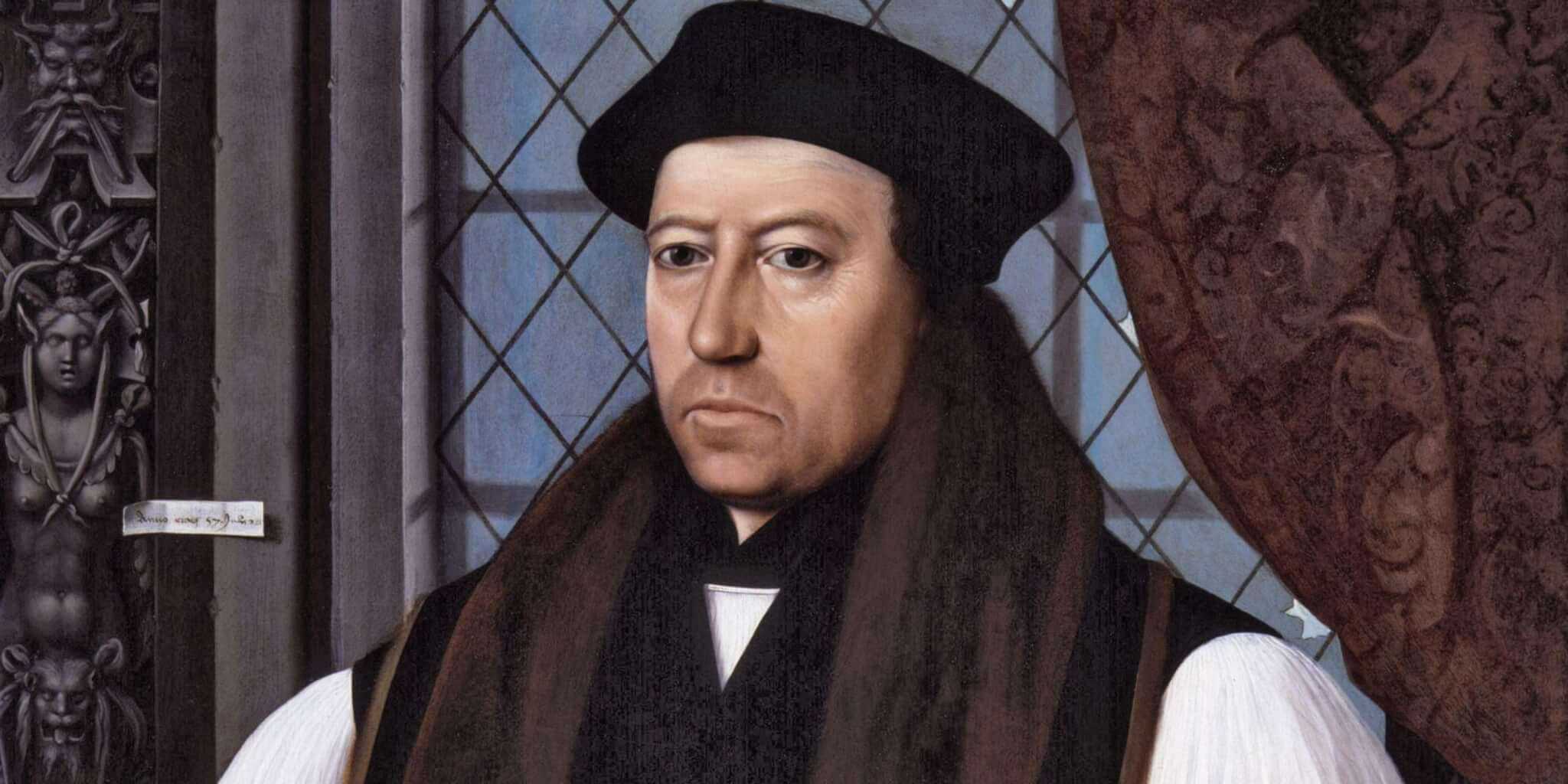
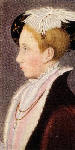 The son of Henry VIII and Jane Seymour, Edward was a sickly boy; it is thought he suffered from tuberculosis. Edward succeeded his father at the age of 9, the government being carried on by a Council of Regency with his uncle, Duke of Somerset, styled Protector. Even though his reign was short, many men made their mark. Cranmer wrote the Book of Common Prayer and the uniformity of worship helped turn England into a Protestant State. After Edward’s death there was a dispute over the succession. As Mary was Catholic, Lady Jane Grey was named as the next in line to the throne. She was proclaimed Queen but Mary entered London with her supporters and Jane was taken to the Tower. She reigned for only 9 days. She was executed in 1554, aged 17.
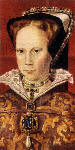 MARY I (Bloody Mary) 1553 – 1558
Daughter of Henry VIII and Katherine of Aragon. A devout Catholic, she married Philip of Spain. Mary attempted to enforce the wholesale conversion of England to Catholicism. She carried this out with the utmost severity. The Protestant bishops, Latimer, Ridley and Archbishop Cranmer were among those burnt at the stake. The place, in Broad Street Oxford, is marked by a bronze cross. The country was plunged into a bitter blood bath, which is why she is remembered as Bloody Mary. She died in 1558 at Lambeth Palace in London.
ELIZABETH I 1558-1603
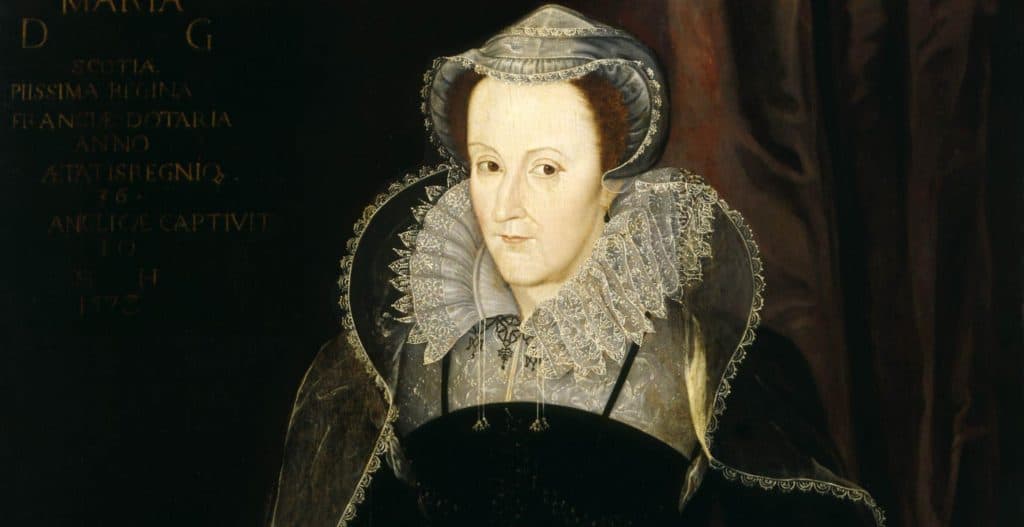
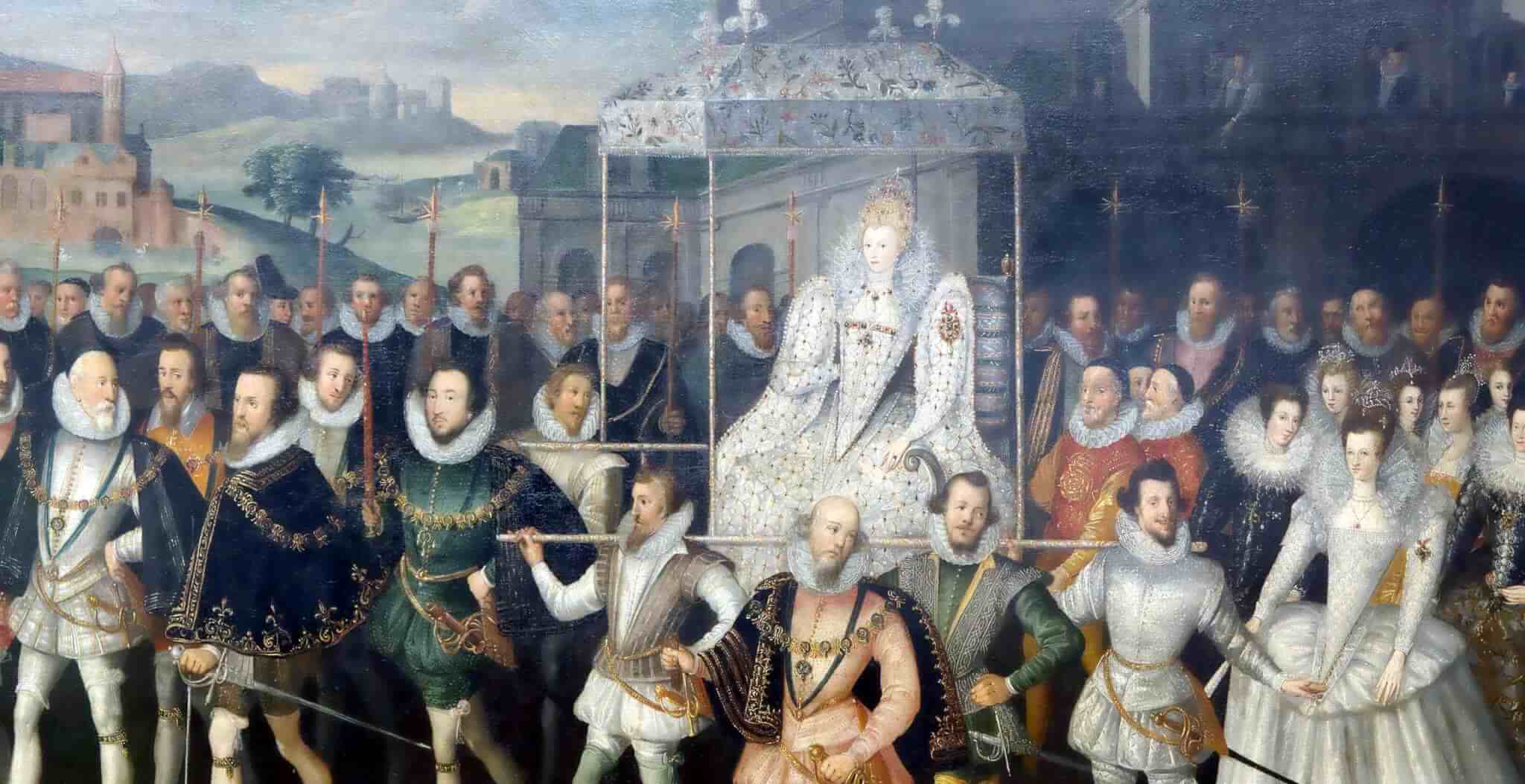
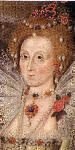 The daughter of Henry VIII and Anne Boleyn, Elizabeth was a remarkable woman, noted for her learning and wisdom. From first to last she was popular with the people and had a genius for the selection of capable advisors. Drake, Raleigh, Hawkins, the Cecils, Essex and many many more made England respected and feared. The Spanish Armada was decisively defeated in 1588 and Raleigh’s first Virginian colony was founded. The execution of Mary Queen of Scots marred what was a glorious time in English history. Shakespeare was also at the height of his popularity. Elizabeth never married.
British Monarchs
THE STUARTS
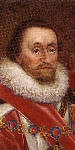 JAMES I and VI of Scotland 1603 -1625
James was the son of Mary Queen of Scots and Lord Darnley. He was the first king to rule over Scotland and England. James was more of a scholar than a man of action. In 1605 the Gunpowder Plot was hatched: Guy Fawkes and his Catholic friends tried to blow up the Houses of Parliament, but were captured before they could do so. James’s reign saw the publication of the Authorised Version of the Bible, though this caused problems with the Puritans and their attitude towards the established church. In 1620 the Pilgrim Fathers sailed for America in their ship The Mayflower.
 CHARLES 1 1625 – 1649 English Civil War
The son of James I and Anne of Denmark, Charles believed that he ruled by Divine Right. He encountered difficulties with Parliament from the beginning, and this led to the outbreak of the English Civil War in 1642. The war lasted four years and following the defeat of Charles’s Royalist forces by the New Model Army, led by Oliver Cromwell, Charles was captured and imprisoned. The House of Commons tried Charles for treason against England and when found guilty he was condemned to death. His death warrant states that he was beheaded on 30th January 1649. Following this the British monarchy was abolished and a republic called the Commonwealth of England was declared.
THE COMMONWEALTH
declared May 19th 1649
OLIVER CROMWELL, Lord Protector 1653 – 1658
Cromwell was born at Huntingdon, Cambridgeshire in 1599, the son of a small landowner. He entered Parliament in 1629 and became active in events leading to the Civil War. A leading Puritan figure, he raised cavalry forces and organised the New Model Army, which he led to victory over the Royalists at the Battle of Naseby in 1645. Failing to gain agreement on constitutional change in government with Charles I, Cromwell was a member of a ‘Special Commission’ that tried and condemned the king to death in 1649. Cromwell declared Britain a republic ‘The Commonwealth’ and he went on to become its Lord Protector.
Cromwell went on to crush the Irish Catholic Confederation and the Scots loyal to Charles II between 1649 and 1651. In 1653 he finally expelled the corrupt English parliament and with the agreement of army leaders became Lord Protector (King in all but name)
RICHARD CROMWELL, Lord Protector 1658 – 1659
Richard was the third son of Oliver Cromwell, he was appointed the second ruling Lord Protector of England, Scotland and Ireland, serving for just nine months. Unlike his father, Richard lacked military experience and as such failed to gain respect or support from his New Model Army. Richard was eventually ‘persuaded’ to resign from his position as Lord Protector and exiled himself to France until 1680, when he returned to England.
THE RESTORATION
CHARLES II 1660 – 1685
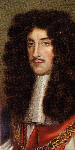 Son of Charles I, also known as the Merry Monarch. After the collapse of the Protectorate following the death of Oliver Cromwell and the flight of Richard Cromwell to France, the Army and Parliament asked Charles to take the throne. Although very popular he was a weak king and his foreign policy was inept. He had 13 known mistresses, one of whom was Nell Gwyn. He fathered numerous illegitimate children but no heir to the throne. The Great Plague in 1665 and the Great Fire of London in 1666 took place during his reign. Many new buildings were built at this time. St. Paul’s Cathedral was built by Sir Christopher Wren and also many churches still to be seen today.
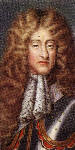 JAMES II and VII of Scotland 1685 – 1688
The second surviving son of Charles I and younger brother of Charles II. James had been exiled following the Civil War and served in both the French and Spanish Army. Although James converted to Catholicism in 1670, his two daughters were raised as Protestants. James became very unpopular because of his persecution of the Protestant clergy and was generally hated by the people. Following the Monmouth uprising (Monmouth was an illegitimate son of Charles II and a Protestant) and the Bloody Assizes of Judge Jeffries, Parliament asked the Dutch prince, William of Orange to take the throne.
William was married to Mary, James II’s Protestant daughter. William landed in England and James fled to France where he died in exile in 1701.
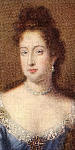
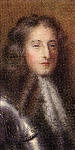 WILLIAM III 1689 – 1702 and MARY II 1689 – 1694
On the 5 November 1688, William of Orange sailed his fleet of over 450 ships, unopposed by the Royal Navy, into Torbay harbour and landed his troops in Devon. Gathering local support, he marched his army, now 20,000 strong, on to London in The Glorious Revolution. Many of James II’s army had defected to support William, as well as James’s other daughter Anne. William and Mary were to reign jointly, and William was to have the Crown for life after Mary died in 1694. James plotted to regain the throne and in 1689 landed in Ireland. William defeated James at the Battle of the Boyne and James fled again to France, as guest of Louis XIV.
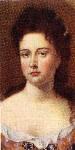 ANNE 1702 – 1714
Anne was the second daughter of James II. She had 17 pregnancies but only one child survived – William, who died of smallpox aged just 11. A staunch, high church Protestant, Anne was 37 years old when she succeeded to the throne. Anne was a close friend of Sarah Churchill, the Duchess of Marlborough. Sarah’s husband the Duke of Marlborough commanded the English Army in the War of Spanish Succession, winning a series of major battles with the French and gaining the country an influence never before attained in Europe. It was during Anne’s reign that the United Kingdom of Great Britain was created by the Union of England and Scotland.
After Anne’s death the succession went to the nearest Protestant relative of the Stuart line. This was Sophia, daughter of Elizabeth of Bohemia, James I ‘s only daughter, but she died a few weeks before Anne and so the throne passed to her son George.
THE HANOVERIANS
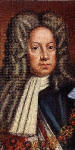 GEORGE I 1714 -1727
Son of Sophia and the Elector of Hanover, great-grandson of James I. The 54 year old George arrived in England able to speak only a few words of English with his 18 cooks and 2 mistresses in tow. George never learned English, so the conduct of national policy was left to the government of the time with Sir Robert Walpole becoming Britain’s first Prime Minister. In 1715 the Jacobites (followers of James Stuart, son of James II) attempted to supplant George, but the attempt failed. George spent little time in England – he preferred his beloved Hanover, although he was implicated in the South Sea Bubble financial scandal of 1720.
GEORGE II 1727 – 1760
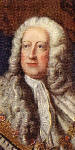 Only son of George I. He was more English than his father, but still relied on Sir Robert Walpole to run the country. George was the last English king to lead his army into battle at Dettingen in 1743. In 1745 the Jacobites tried once again to restore a Stuart to the throne. Prince Charles Edward Stuart, ‘Bonnie Prince Charlie’. landed in Scotland. He was routed at Culloden Moor by the army under the Duke of Cumberland, known as ‘Butcher’ Cumberland‘. Bonnie Prince Charlie escaped to France with the help of Flora MacDonald, and finally died a drunkard’s death in Rome.
GEORGE III 1760 – 1820
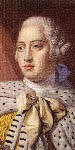 He was a grandson of George II and the first English-born and English-speaking monarch since Queen Anne. His reign was one of elegance and the age of some of the greatest names in English literature – Jane Austen, Byron, Shelley, Keats and Wordsworth. It was also the time of great statesmen like Pitt and Fox and great military men like Wellington and Nelson. in 1773 the ‘Boston Tea Party‘ was the first sign of the troubles that were to come in America. The American Colonies proclaimed their independence on July 4th 1776. George was well meaning but suffered from a mental illness due to intermittent porphyria and eventually became blind and insane. His son ruled as Prince Regent after 1811 until George’s death.
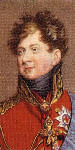 GEORGE IV 1820 – 1830
Known as the ‘First Gentleman of Europe’. He had a love of art and architecture but his private life was a mess, to put it mildly! He married twice, once in 1785 to Mrs. Fitzherbert, secretly as she was a Catholic, and then in 1795 to Caroline of Brunswick. Mrs. Fitzherbert remained the love of his life. Caroline and George had one daughter, Charlotte in 1796 but she died in 1817. George was considered a great wit, but was also a buffoon and his death was hailed with relief!
WILLIAM IV 1830 – 1837
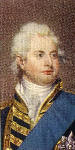 Known as the ‘Sailor King’ (for 10 years the young Prince William, brother of George IV, served in the Royal Navy), he was the third son of George III. Before his accession he lived with a Mrs. Jordan, an actress, by whom he had ten children. When Princess Charlotte died, he had to marry in order to secure the succession. He married Adelaide of Saxe-Coburg in 1818. He had two daughters but they did not live. He hated pomp and wanted to dispense with the Coronation. The people loved him because of his lack of pretension. During his reign Britain abolished slavery in the colonies in 1833. The Reform Act was passed in 1832, this extended the franchise to the middle-classes on a basis of property qualifications.
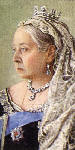 VICTORIA 1837 – 1901
Victoria was the only child of Princess Victoria of Saxe-Coburg and Edward Duke of Kent, fourth son of George III. The throne Victoria inherited was weak and unpopular. Her Hanoverian uncles had been treated with irreverence. In 1840 she married her cousin Albert of Saxe-Coburg. Albert exerted tremendous influence over the Queen and until his death was virtual ruler of the country. He was a pillar of respectability and left two legacies to the UK, the Christmas Tree and the Great Exhibition of 1851. With the money from the Exhibition several institutions were developed, the Victoria and Albert Museum, the Science Museum, Imperial College and the Royal Albert Hall. The Queen withdrew from public life after the death of Albert in 1861 until her Golden Jubilee in 1887. Her reign saw the British Empire double in size and in 1876 the Queen became Empress of India, the ‘Jewel in the Crown’. When Victoria died in 1901, the British Empire and British world power had reached their highest point. She had nine children, 40 grand-children and 37 great-grandchildren, scattered all over Europe.
HOUSE OF SAXE-COBURG AND GOTHA
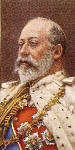 EDWARD VII 1901 – 1910
A much loved king, the opposite of his dour father. He loved horse-racing, gambling and women! This Edwardian Age was one of elegance. Edward had all the social graces and many sporting interests, yachting and horse-racing – his horse Minoru won the Derby in 1909. Edward married the beautiful Alexandra of Denmark in 1863 and they had six children. The eldest, Edward Duke of Clarence, died in 1892 just before he was to marry Princess Mary of Teck. When Edward died in 1910 it is said that Queen Alexandra brought his current mistress Mrs. Keppel to his bedside to take her farewell. His best known mistress was Lillie Langtry, the ‘Jersey Lily’.
HOUSE OF WINDSOR
Name changed in 1917
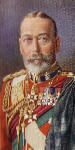 GEORGE V 1910 – 1936
George had not expected to be king, but when his elder brother died he became the heir-apparent. He had joined the Navy as a cadet in 1877 and loved the sea. He was a bluff, hearty man with a ‘quarter-deck’ manner. In 1893 he married Princess Mary of Teck, his dead brother’s fiancee. His years on the throne were difficult; the First World War in 1914 – 1918 and the troubles in Ireland which led to the creation of the Irish Free State were considerable problems. In 1932 he began the royal broadcasts on Christmas Day and in 1935 he celebrated his Silver Jubilee. His latter years were overshadowed by his concern about the Prince of Wales and his infatuation with Mrs. Simpson.
 EDWARD VIII June 1936 – abdicated December 1936
Edward was the most popular Prince of Wales Britain has ever had. Consequently when he renounced the throne to marry Mrs. Wallis Simpson the country found it almost impossible to believe. The people as a whole knew nothing about Mrs. Simpson until early in December 1936. Mrs. Simpson was an American, a divorcee and had two husbands still living. This was unacceptable to the Church, as Edward had stated that he wanted her to be crowned with him at the Coronation which was to take place the following May. Edward abdicated in favour of his brother and took the title, Duke of Windsor. He went to live abroad.
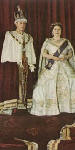 GEORGE VI 1936 – 1952
George was a shy and nervous man with a very bad stutter, the exact opposite of his brother the Duke of Windsor, but he had inherited the steady virtues of his father George V. He was very popular and well loved by the British people. The prestige of the throne was low when he became king, but his wife Elizabeth and his mother Queen Mary were outstanding in their support of him.
The Second World War started in 1939 and throughout the King and Queen set an example of courage and fortitude. They remained at Buckingham Palace for the duration of the war in spite of the bombing. The Palace was bombed more than once. The two Princesses, Elizabeth and Margaret, spent the war years at Windsor Castle. George was in close touch with the Prime Minister, Winston Churchill throughout the war and both had to be dissuaded from landing with the troops in Normandy on D-Day! The post-war years of his reign were ones of great social change and saw the start of the National Health Service. The whole country flocked to the Festival of Britain held in London in 1951, 100 years after the Great Exhibition during Victoria’s reign.
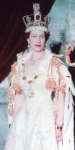 ELIZABETH II 1952 – 2022
Elizabeth Alexandra Mary, or ‘Lilibet’ to close family, was born in London on 21 April 1926. Like her parents, Elizabeth was heavily involved in the war effort during the Second World War, serving in the women’s branch of the British Army known as the Auxiliary Territorial Service, training as a driver and mechanic. Elizabeth and her sister Margaret anonymously joined the crowded streets of London on VE Day to celebrate the end of the war in Europe. She married her cousin Prince Philip, Duke of Edinburgh, and they had four children: Charles, Anne, Andrew and Edward. When her father George VI died, Elizabeth became Queen of seven Commonwealth countries: the United Kingdom, Canada, Australia, New Zealand, South Africa, Pakistan, and Ceylon (now known as Sri Lanka). Elizabeth’s coronation in 1953 was the first to be televised, serving to increase popularity in the medium and doubling television licence numbers in the UK. The huge popularity of the royal wedding in 2011 between the Queen’s grandson, Prince William and the commoner Kate Middleton, now the Prince and Princess of Wales, reflected the high profile of the British Monarchy at home and abroad. 2012 was also an important year for the royal family, as the nation celebrated the Queen’s Diamond Jubilee, her 60th year as Queen.
On 9th September 2015, Elizabeth became Britain’s longest serving monarch, ruling longer than her great-great grandmother Queen Victoria who reigned for 63 years and 216 days.
Her Majesty Queen Elizabeth II died at Balmoral on 8th September 2022 at the age of 96. She was the longest reigning monarch in the history of the United Kingdom, celebrating her Platinum Jubilee in June 2022.
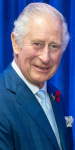 King Charles III 2022 –
Following the death of Queen Elizabeth II, Charles succeeded to throne at the age of 73, taking the title King Charles III, his wife Camilla becoming Queen. Charles is the oldest heir apparent to succeed to the British throne. Charles Philip Arthur George was born in Buckingham Palace on 14th November 1948 and became heir apparent on the accession of his mother as Queen Elizabeth II in 1952.