|
 |
Kings
and Queens of England and Britain - updated
Meet
the 66 monarchs that ruled England and Britain over a period of 1500 years.
Some died in bed, some in battle, some in most unusual
circumstances; some were great warriors, some were great
statesmen, some were...not!
Browse
this section for a brief history of each monarch and their reign -
including some of those little extra details often omitted in the
history books! |
World War
One Timeline
Presenting the major
events of each year of the First World War, the Great War, from the
assassination of Archduke Ferdinand in 1914 to the Armistice on November
11th 1918 and the Treaty of Versailles.....
World War Two Chronology
Presenting the major
events of each year of World War II, from the German invasion of Poland
in 1939, the evacuation from Dunkirk in 1940, the Japanese attack on
Pearl Harbour in 1941, Montgomery’s famous victory at El Alamein in
1942.....
Now with Audio!
1939 ~ 1940 ~
1941 ~ 1942 ~
1943 ~ 1944 ~
1945
Death at the Derby, June 4th
1913
The 1913 Epsom Derby will always be remembered for the tragic
incident when Emily Davison, a suffragette, threw herself in front of the King's
horse...
Empire Day - 24th May
The words "Empire
Day" summon up an
image of a motherly Queen Victoria presiding over an Empire which
spanned almost a quarter of the entire globe.
However it
was not until after the death of Queen Victoria, who died on 22
January 1901, that Empire Day was first celebrated.
St George's Day - April 23rd
Every nation has its own ‘Patron Saint’ who in times of great peril
is called upon to help save the country from its enemies. But who was St.
George, and what did he do to become England’s Patron Saint?
William Shakespeare
The most
famous of all English playwrights was born in 1564 and died on St Georges Day,
in 1616. His birthday is celebrated annually on 23rd April in
Stratford-upon-Avon.
Thomas Cochrane
Thomas Cochrane was what can only be described as a
colourful character. Naval commander, politician, fraudster and
national hero, all crammed into one lifetime....
Queen Victoria - A Life in
Pictures
The film, 'The
Young Victoria' is released in cinemas this month. Princess
Beatrice of York, great-great-great-great-granddaughter of Queen
Victoria, appears briefly in the film as one of Victoria's ladies in
waiting. Victoria was born on May 24, 1819....
The Wool Trade
Wool as
a raw material has been widely available since the
domestication of sheep. Even before shears were
invented, wool would have been harvested using a comb or
just plucked out by hand. In
medieval England, wool became big business....
The Lancashire Cotton Famine
By 1825, cotton was Britain’s biggest import and the
dominant force of the economy was the Lancashire cotton industry.
However the American Civil War brought the industry to its knees....
A Tudor Christmas
The twelve days of Christmas would have been a most welcome break for the workers on the land, which in Tudor times would have been the
majority of the people. All work, except for looking after the animals, would stop, restarting again on Plough Monday, the first Monday after Twelfth Night. For the gentry, Christmas was a time for serious feasting....
A
Victorian Christmas
Christmas trees, carol singers, Christmas cards, Santa Claus and
crackers - integral parts of a traditional Christmas, but why?
Remember, Remember the 5th of November....
Bonfire Night - why do the British celebrate with fireworks, bonfires - and set fire to
'Guy'?
Trafalgar Day - October 21st
Celebrated on October 21st,
Trafalgar Day marks the day on which Britain triumphed in the Battle of
Trafalgar in 1805.
The Great Exhibition of 1851
It is Queen Victoria’s
husband Albert who is normally credited with being the
driving force behind the Great Exhibition of 1851, but
it appears that just as much praise for organising this
remarkable event should also be bestowed upon one Henry
Cole.....
The Spanish Armada
The Spanish Armada set sail from Spain in July 1588, with
the mission of overthrowing the Protestant Queen
Elizabeth I and restoring Catholic rule over England......
Roman Roads
Well-known
Roman roads include Watling Street, which ran from
London to Chester and the Fosse Way......
The
Mystery of the Princes in the Tower
Shakespeare portrays Richard III as the villainous uncle who ordered
the little princes put to death in order to secure his throne.... but
Richard wasn't the only person who would benefit from their
deaths........
The Victoria Cross
On 26th June 1857, at an award ceremony in Hyde Park, Queen
Victoria presented the first sixty-two Victoria
Crosses in front of a cheering crowd of 100,000
people. A century and half later, the medal
remains the highest honour for bravery and
valour that can be awarded to members of the
British Armed Forces.....
“Just one more push” to Passchendaele
On 6th November 1917, after three months of fierce fighting,
British and Canadian forces finally took control of the tiny village of
Passchendaele in the West Flanders region of Belgium, so ending one of
the bloodiest battles of World War I. With approximately a third of a
million British and Allied soldiers either killed or wounded, the Battle
of Passchendaele (officially the third battle of Ypres), symbolises the
true horror of industrialised trench warfare.
The Norman Conquest
1066
The best known battle in British History - the
Battle of Hastings took place on October 14th 1066.
The Great Fire of London 1666
The people of London who had managed to survive the Great Plague in 1665 must have thought that the year 1666 could only be better, and couldn't
possibly be worse!
Poor souls....
Stand
and Deliver! Highwaymen - gentlemen of
the road or thugs and thieves?
Jamestown, Virginia: Birth of a Nation
2007 marks the 400th anniversary of the founding of the first
permanent British settlement in the New World, or what is now called
the United States
Sir George Somers
Elizabethan privateer, merchant
trader, MP, military leader and founder of Bermuda (The Somers
Isles), England's first Crown Colony. The small inconvenience of
being shipwrecked didn't stop him from completing his voyage to the
Virginian colony of Jamestown with
desperately needed supplies and colonists........
The Act of Union 1707
2007 marks the 300th
anniversary of the Act of Union between England and Scotland.
Max Woosnam
This sporting polymath
played soccer for Manchester City and England, won Olympic Gold at
tennis, was a Wimbledon Champion, fought with distinction in the
First World War....and beat film star Charlie Chaplin at table
tennis, playing with a butter knife!!
C.B. Fry
This amazing man played rugby for the Barbarians,
football for England, captained the English cricket team, equalled the
world long jump record - and was offered the throne of Albania.
The Crossword Panic of May 1944 -
updated
The planning of the D Day landings
was almost complete - what could possibly go wrong?......
The Longbow
The English longbow, also called the Welsh longbow, was a powerful
type of medieval longbow used to great
effect against the French during the Hundred Years War, particularly
at the Battle of Agincourt...
V-J Day
There
was much joy and celebration around the world when on 15th August
1945 US President Harry S Truman declared the day as Victory in Japan
Day...
The Battle of the Somme 1916
July
1st 1916 - the bloodiest day in the
history of the British Army, or The Battle of the Somme –
The Lost Generation.
Ninety years ago on 1st July 1916 at around 7.30 in the
morning, whistles were blown to signal the start of what would be
the bloodiest day in the history of the British Army.
The Barnbow Lasses
It is often said that wars are either won at sea, in the air,
or in the trenches; however this story relates to a ‘war
of production’ – a war that was fought in the factories
of Leeds by a brave band of Yorkshire women known as
the The Barnbow Lasses. The story also records the worst tragedy in the history of
the City of Leeds - in terms of people killed – a story
however that never made the news headlines of the day.
It recalls a dreadful explosion that killed 35 Yorkshire
women and girls at the Barnbow Munitions factory at
Crossgates during the First World War....
The Thankful Villages
Millions of families throughout the UK suffered the loss
of close family relatives in the Great War of 1914
-18. It appears that barely a family or community across the
UK escaped World War I untouched,
except that is for the “Thankful Villages”......
The South Sea Bubble
The 18th century version of the Dot Com Boom - and Bust!
Isambard Kingdom Brunel's ss Great
Britain
A recent popular poll placed Isambard Kingdom Brunel as the
second Greatest Briton of all time after Sir
Winston Churchill. He was without doubt Britain’s
greatest engineer, and of all the legacies he left to
the world, one of his greatest was the ss Great Britain....
The Border Reivers
The
story of the Border Reivers dates from the 14th century and
continued through into the late 17th century. In those days, the
border between the two sovereign countries of England and Scotland displayed all the characteristics of a frontier,
lacking law and order. Cattle rustling, feuding, murder, arson and pillaging were all common occurrences.....
Victory in Europe Day - V-E Day
60 years ago on
May 8th
1945, the Allies celebrated the defeat of
Nazi Germany and the end of Adolf Hitler's Reich,
formally recognising the end of the Second World War in
Europe....
The
Ascott Martyrs A true story of 16 indomitable women and their
struggle for justice....
The
Victorians and their influence
Or how the Victorians put the 'Great' into Great
Britain!
Wat Tyler and the Peasants
Revolt
In 1381, some 35 years after
the Black Death had swept through Europe decimating over one third of
the population, there was a shortage of people left to work the land.
Recognising the power of ‘supply and demand’, the remaining peasants
began to re-evaluate their worth.............
Mutiny on the Bounty
Back in
the 1930’s a blockbuster movie was made which reappears almost every
year on the Christmas TV schedule. It tells the tale, which is in
fact a true story, about a famous mutiny that took place in 1789 on
an English ship.....
The Domesday Book
Residents of Hampstead might not be too
pleased to learn that their exclusive London village
once housed more pigs than people but this is just one
of the fascinating insights to be gained from reading
the Domesday Book.........
Archbishops of
Canterbury
One of the 'top jobs' in England, but not always very safe:
archbishops through the ages have been beheaded, murdered, burnt at
the stake, banished from the realm......
The D-Day Mulberry Harbours
The Allies needed harbours in order to
land the hundreds of thousands of men and millions of tons of
supplies they would need if Operation Overlord, the code-name given
to D-Day, was to succeed......
Murder in the Cathedral
“Will no one rid me of this
turbulent priest!” Fateful words supposedly uttered by King Henry II
which set in motion the events which led to the murder of Thomas
Becket, Archbishop of Canterbury, at the altar in Canterbury
Cathedral in 1170...
Britain On Track
An invention that changed the world is 200 years old in 2004.
Britain is celebrating the bicentenary of the steam railway
locomotive with a year-long events programme....
Richard the Lion Heart
Outside the Houses of Parliament there
stands a statue of Richard I seated on his horse
as testimony that he was one of
England’s bravest and greatest kings …or was he?
The Tudors - Image and
Reality
The
Tudors remain among the most instantly recognisable of
England’s monarchs.....
The Lost
Sandringhams - the Vanished Battalion
What happened to the
Sandringhams during the disastrous
Dardanelles
campaign in the middle of their very first battle, on the afternoon of
August 12, 1915? One minute the men were charging bravely against the
Turkish enemy. The next they had disappeared. Their bodies were never
found. There were no survivors. They did not turn up as prisoners of
war. They had simply vanished......
Sir Robert "Bobby" Peel
And why
British policemen are known as Bobbies........
The Coronation of Her
Majesty Queen Elizabeth II
Fifty years ago, on 2nd June 1953, the
Coronation of Queen Elizabeth II took place, and the
whole country joined in celebration...
The Tolpuddle Martyrs
In March 1834 six English farm labourers were sentenced to 7 years
transportation to a penal colony in Australia - for being in a trade
union??!!
The Nine Days Queen
Queen Victoria is well known to
have had the longest reign in English history (over sixty years) but
poor young Lady Jane Grey had the shortest …just nine days.
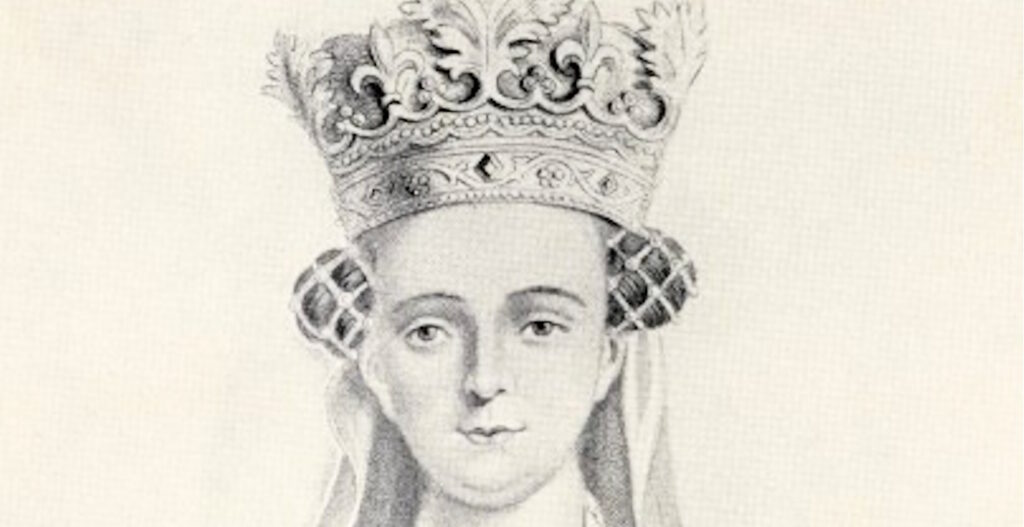
Matilda, Empress Maud
Matilda and Stephen: the 'forgotten' English Civil War of the 12th
century
Cleopatra's Needle
Have you ever wondered why Cleopatra's Needle is on the Embankment
in London, and how it got there? Six men died bringing the Needle to
England - and it wasn't even Cleopatra's anyway
Poor Fred!
English history records several members of its Royal family dying in peculiar circumstances.
But the strangest death must be that of Frederick, Prince of Wales who died after being hit with a cricket-ball....
The War of Jenkins' Ear
Now
who on earth was Jenkins,
and why is a war named after his ear?
Not Waterloo but Peterloo
England is not a country of frequent revolutions; some say it is because our weather is not conducive to outdoor marches and riots.
However, weather or no weather, in the early 1800's, working men began to demonstrate on the streets and demand changes in their working lives....
The Iron Duke
The Duke of Wellington, perhaps Britain's greatest military hero was, in his mother's eyes, a disaster!
Arthur Wellesley was
seen as an awkward child by his mother the Countess of Mornington. She declared, " I vow to God I don't know what I shall do with my awkward son Arthur". How wrong can a mother be!
Offa, His Dyke and His Legendary Hospitality!
Offa, King of the Mercians, is best remembered for his Dyke but perhaps he could also be known as the 'father-in-law from
Hell'?!
Queen Anne
The last of the Stuarts, Queen Anne was shy, conscientious, stout, gouty, shortsighted and very small. During her reign great deeds were done, great battles
were fought and the United Kingdom was born.
Queen Elizabeth I
Elizabeth I gave her name to a golden age of poets, statesmen and adventurers. Known as the Virgin Queen, or Gloriana, her union with her people became a substitute for the marriage she never
made
Boudica - Britain's Warrior Queen
Britain has produced many fierce, noble warriors down the ages who have fought to keep
Britain free, but
there was one formidable lady in history whose name will never be forgotten - Queen Boudica or Boadicea as she is also called.
The West Country Duking Days
One of the most harrowing episodes in the history of England's West Country began on 11th June 1685, when Charles II's illegitimate son, the Duke of Monmouth, sailed into Lyme Regis harbour
and the Monmouth Rebellion began...
Emma Lady Hamilton
Lord Nelson's great love was Emma, a lady with a quite remarkable past!
The South Sea Bubble
The 18th century version of the Dot Com Boom - and Bust!
Admiral Lord Nelson
In 1758 a small sickly baby boy was born; son of the Rector of Burnham Thorpe in Norfolk. No one could have envisaged that this child would, in his lifetime, become one of England's greatest
heroes....
The
Great Plague of 1665
Bubonic Plague ( The Black Death) had been known in England for
centuries...
Queen Caroline - the friendly Queen!
The only British Queen to be tried
for adultery.....
Impostors
History is littered with stories of 'impostors'....
Castles
Castles and fortified houses can be found all over Britain. They were built either to keep enemies out or to keep people in!
Prime Ministers of the United Kingdom
From Walpole to Blair............
The Theft of the Crown Jewels
One
of the most audacious rogues in English history was Colonel Blood, known as 'the man who stole the Crown Jewels'..........
Invaders!
The Dark Ages - a time of great change when Britain was host to many peoples - Anglo-Saxons, Anglo-Danes, Norse, Cymru, Viking raiders and even
Norman mercenaries.....
Pretty,
witty Nell
"Pray
good people be civil, I am the Protestant whore"........
Bits and Pieces!
It
is very strange how the body parts of famous people often go missing,
only to reappear hundreds of years after the demise of their owners.
Read on for the true (if rather gory!) stories of some missing
'bits and pieces' belonging to famous people in history and how they
were recovered!
Jack the Ripper
Fear and panic stalked the streets of London's East End in 1888 as
five women were brutally murdered.
Victorian Poisoners
Poison
was the first choice for many murderers in the Victorian era - and was
particularly popular with women!
Robin Hood - fact or
fiction, real or legend?
Legend has it that Robin Hood was
an outlaw living in Sherwood Forest with his 'Merry Men' - but did he
really exist and if so, how much of the legend is true?
Prehistoric
England - 4000BC - 43 AD
The Neolithic, Bronze and Iron Ages and the influence of the 'young
farmers' !
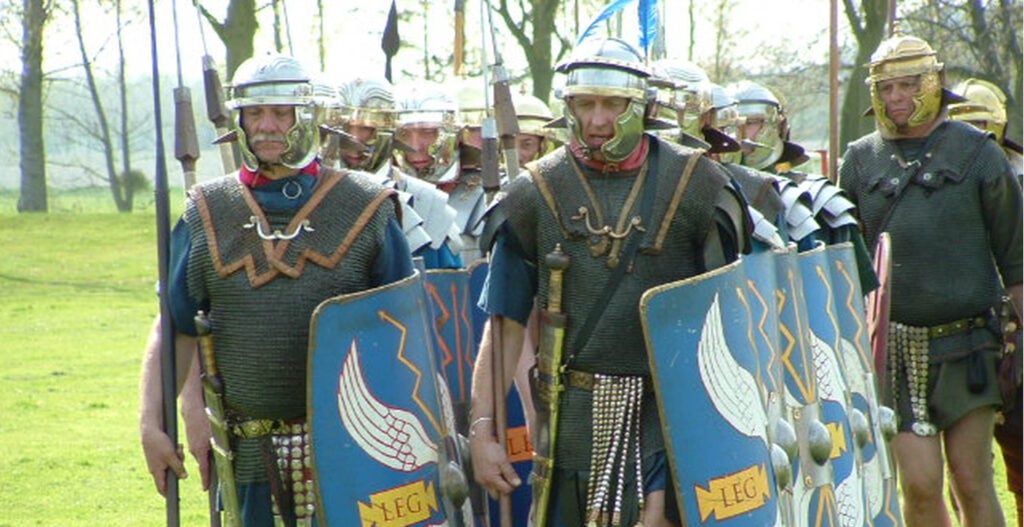
Roman
England: 43 AD - 410 AD
The Romans in Britain

Queen Elizabeth I
She may have had the "body of a weak and feeble
woman"... but what did she look like - really?
Back to Top
Historic Birthdays - Month by Month
Historic Birthdates in January
Historic Birthdates in
February
Historic Birthdates in March
Historic Birthdates in April
Historic
Birthdates in May
Historic Birthdates in June
Historic Birthdates in July
Historic
Birthdates in August
Historic Birthdates in September
Historic Birthdates in October
Historic
Birthdates in November
Historic Birthdates in December
Back to
Top
Historic Britain - Month by Month
Historic January
Historic
February
Historic March
Historic April
Historic
May
Historic June
Historic July
Historic
August
Historic September
Historic October
Historic
November
Historic December
Back to Top
More
British History
History
of England -
History of
Scotland - History of Wales