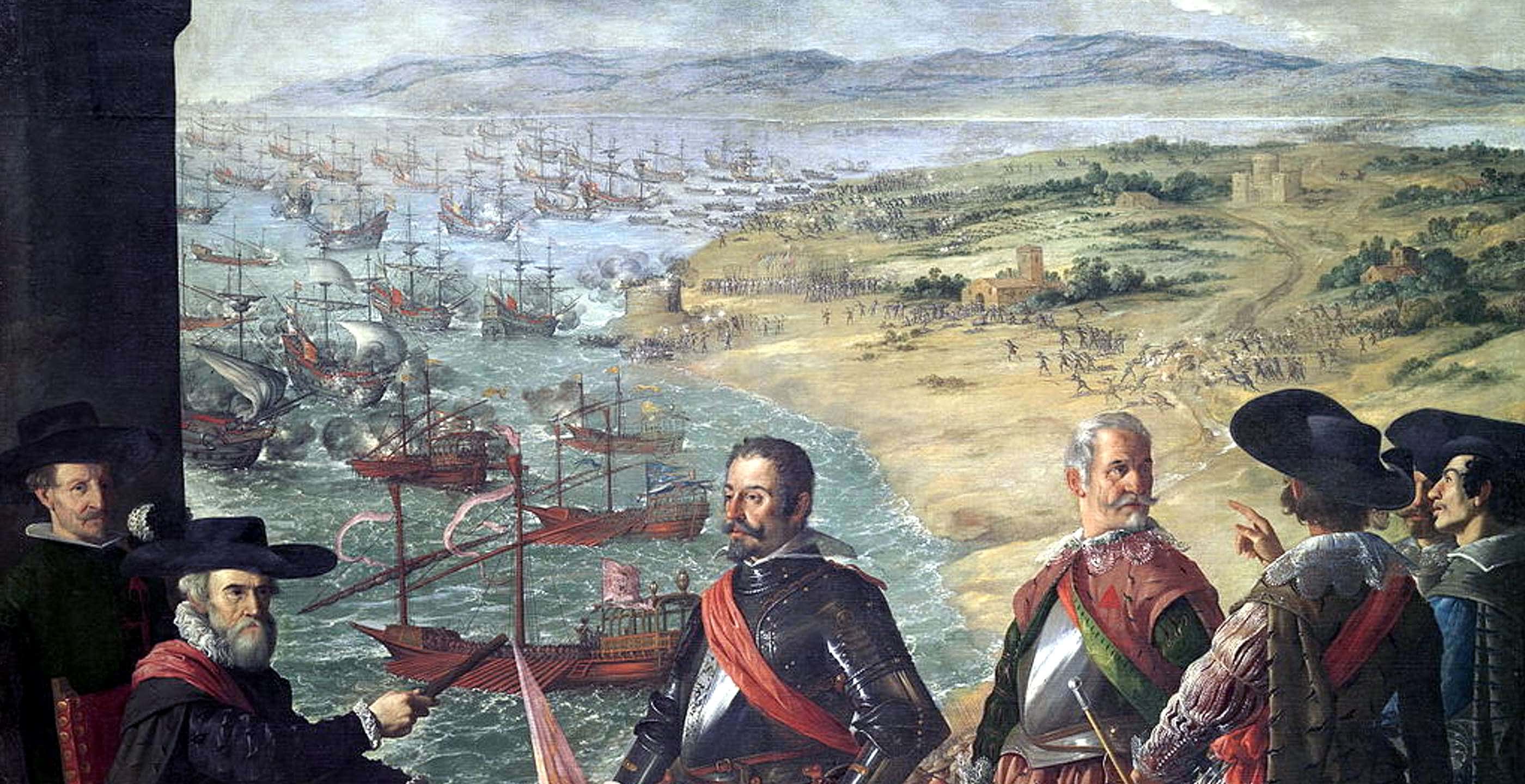

As the Spanish Armada neared English shores, tension gripped the nation.
The mightiest fleet in the world had set out to challenge England’s sovereignty, and rumours of invasion swept throughout the country.
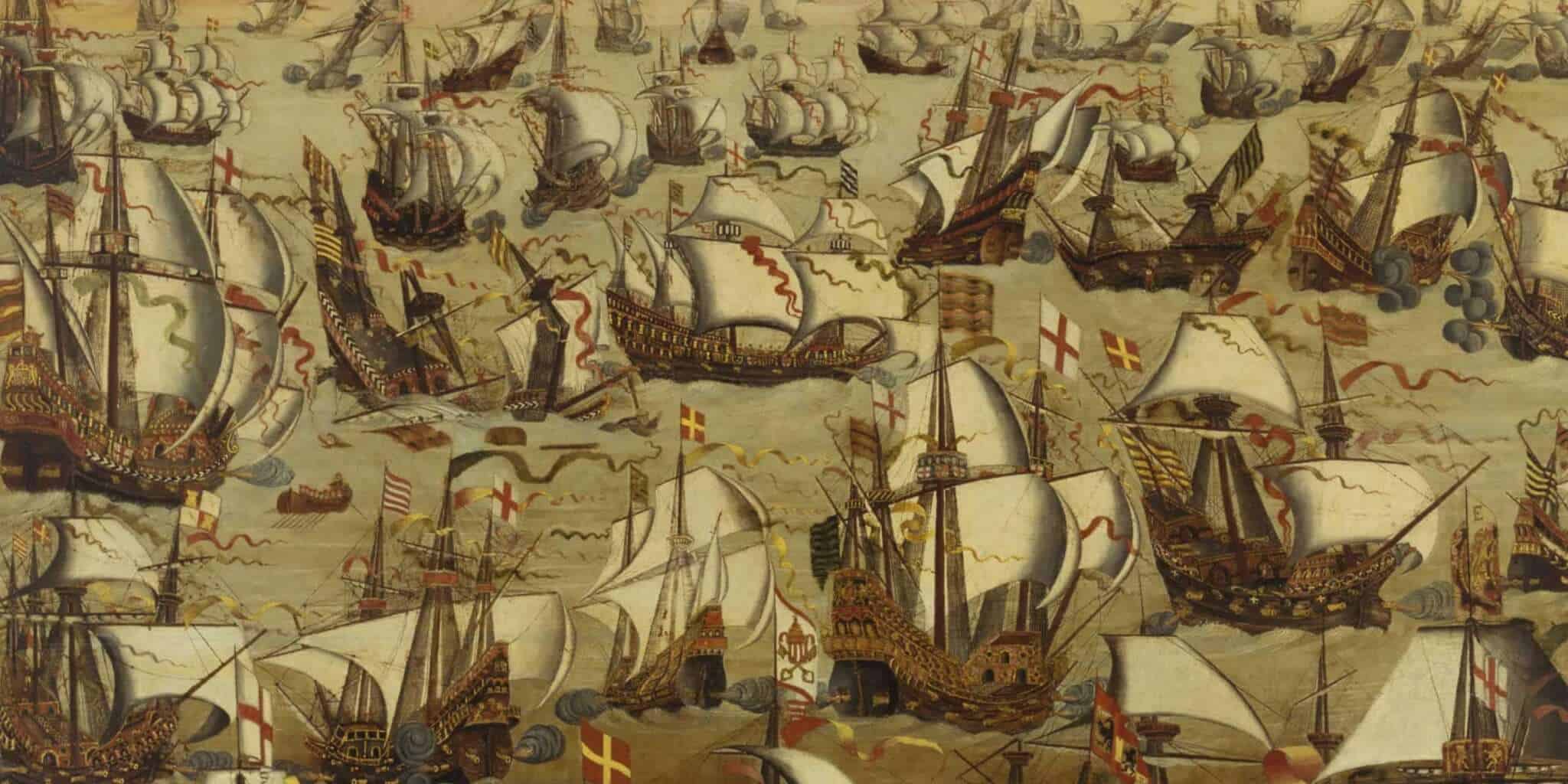
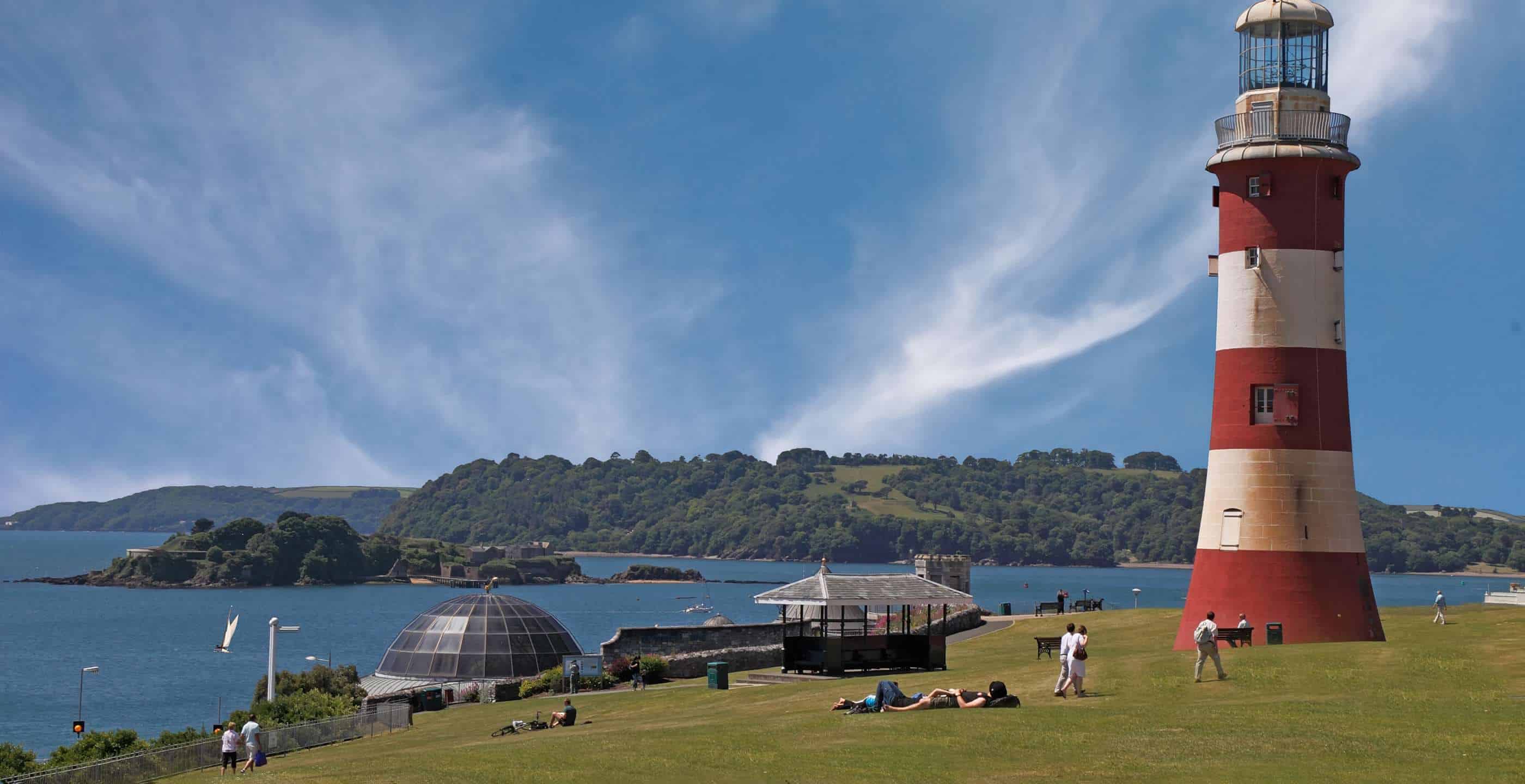
The Spanish Armada had been sent by the Catholic King Philip II of Spain with the aim of overthrowing Elizabeth, a Protestant monarch, and returning England to the Catholic faith. The smaller English fleet was however faster and more manoeuvrable than the larger Spanish galleons. From its base in Plymouth the English fleet attacked the Armada as it sailed up the Channel towards Calais. Even though the Armada reached Calais largely intact, whilst in harbour the fleet was attacked at night by English fire ships, forcing it to scatter.
This led to the Battle of Gravelines, where the Armada suffered significant losses.
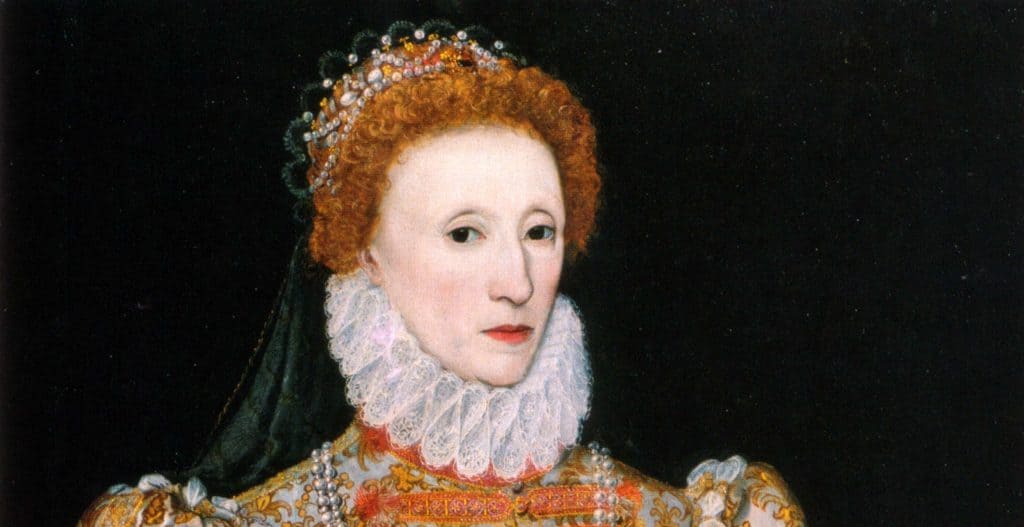
Knowing that the fate of the country hung in the balance, but not yet aware of the success of the English fireship attack in Calais and the sea battle of Gravelines, Queen Elizabeth I decided to address her forces at Tilbury.
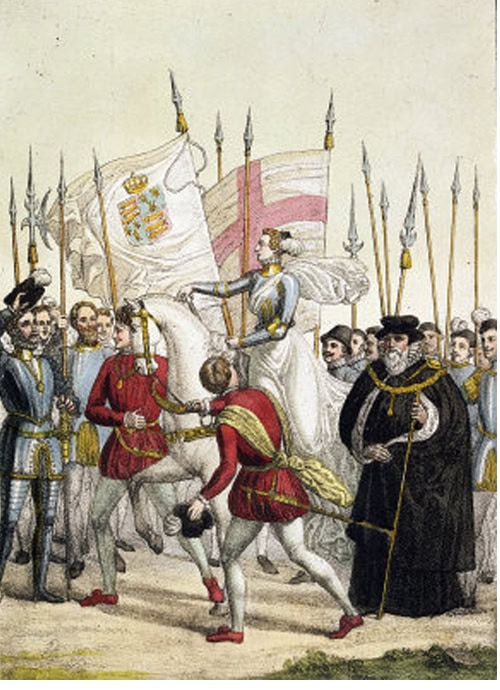
Here, she made a speech that has become one of the defining moments in British history:
“My loving people,
We have been persuaded by some that are careful of our safety to take heed how we commit ourselves to armed multitudes, for fear of treachery. But I assure you, I do not desire to live to distrust my faithful and loving people.
Let tyrants fear. I have always so behaved myself that, under God, I have placed my chiefest strength and safeguard in the loyal hearts and good-will of my subjects; and therefore I am come amongst you, as you see, at this time, not for my recreation and disport, but being resolved, in the midst and heat of the battle, to live and die amongst you all; to lay down for my God, and for my kingdom, and my people, my honour and my blood, even in the dust.
I know I have the body of a weak and feeble woman; but I have the heart and stomach of a king, and of a king of England too, and think foul scorn that Parma or Spain, or any prince of Europe, should dare to invade the borders of my realm: to which rather than any dishonour shall grow by me, I myself will take up arms, I myself will be your general, judge, and rewarder of every one of your virtues in the field.
I know already, for your forwardness you have deserved rewards and crowns; and We do assure you on a word of a prince, they shall be duly paid. In the mean time, my lieutenant general shall be in my stead, than whom never prince commanded a more noble or worthy subject; not doubting but by your obedience to my general, by your concord in the camp, and your valour in the field, we shall shortly have a famous victory over these enemies of my God, of my kingdom, and of my people.”
Although there are several versions of the speech, this is the one that is most widely accepted as authentic. It appeared in a letter from Leonel Sharp to the Duke of Buckingham.
According to several descriptions of the event, the Queen rode a magnificent white horse and wore a plumed helmet and a steel cuirass over a flowing white velvet gown, with a gold and silver truncheon in her hand – the very embodiment of a warrior queen.
The defeat of the Spanish Armada made England a world-class power and boosted national pride. The iconic Armada portrait of Elizabeth I celebrates this great victory and depicts her in all her majesty.
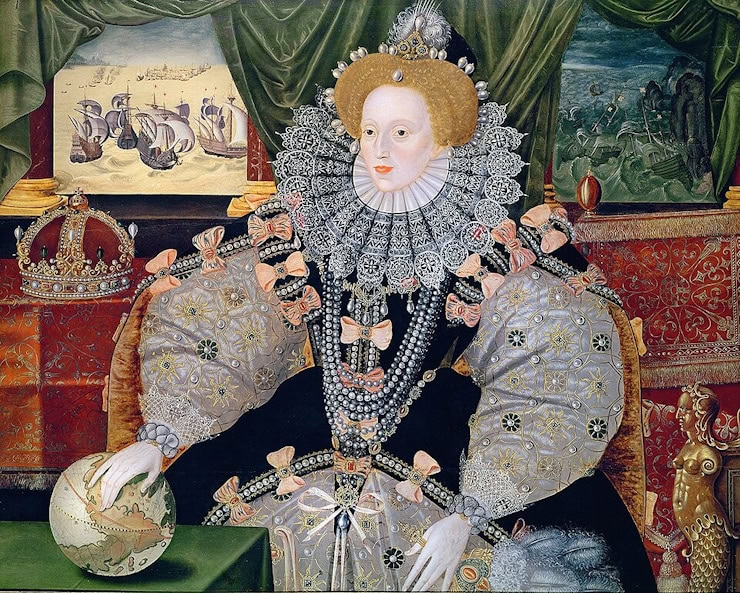
On the left of the painting, England’s fleet watches the attack of their fireships, whilst on the right, the Armada is being scattered by storms along the coasts of Scotland and Ireland. In the centre stands Elizabeth in all her glory, her hand resting on a globe, the very embodiment of England’s power.
Queen Elizabeth I’s speech at Tilbury not only rallied her troops during a pivotal moment in history, but also secured her popularity and established her legacy as a formidable leader. The speech is still referenced today, in film, literature and theatre.
Published: 23rd February 2026