

The democracy and parliamentary system we have today has evolved over many centuries, developing and refining through conflicts, reforms, challenges and the proliferation of new ideas.
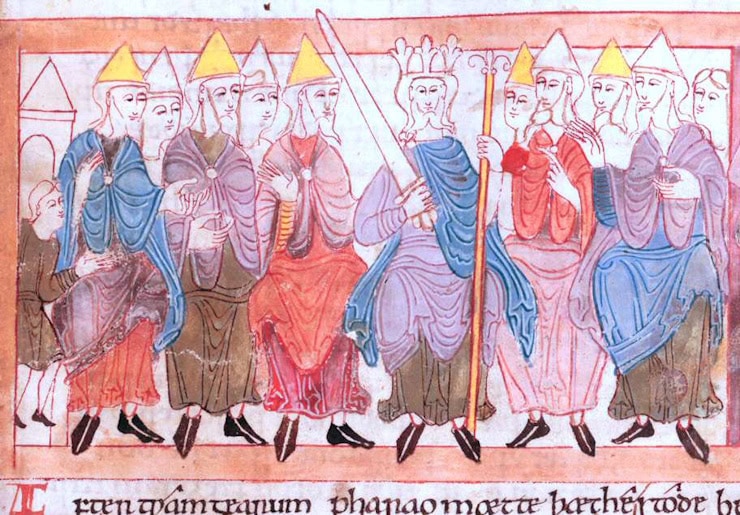
1066- The Norman Conquest – Under the Norman kings, regular counsels (curia regis) were held for members of the royal court and then periodically enlarged by a court making up a great council (magnum concilium) which discussed matters of national interest such as legislature.
1189 to 1215- Was a period of transition for the great council which found itself burdened by financial hardship as a result of waging wars.
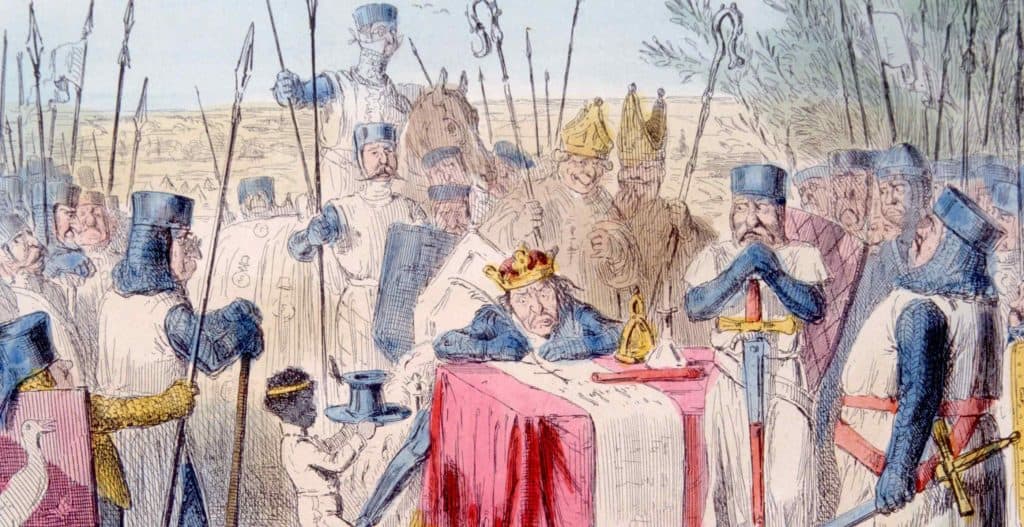
15th June 1215-The Magna Carta (Great Charter) was an historic and revolutionary royal charter which curtailed the unlimited powers of the king and established the power of the law.
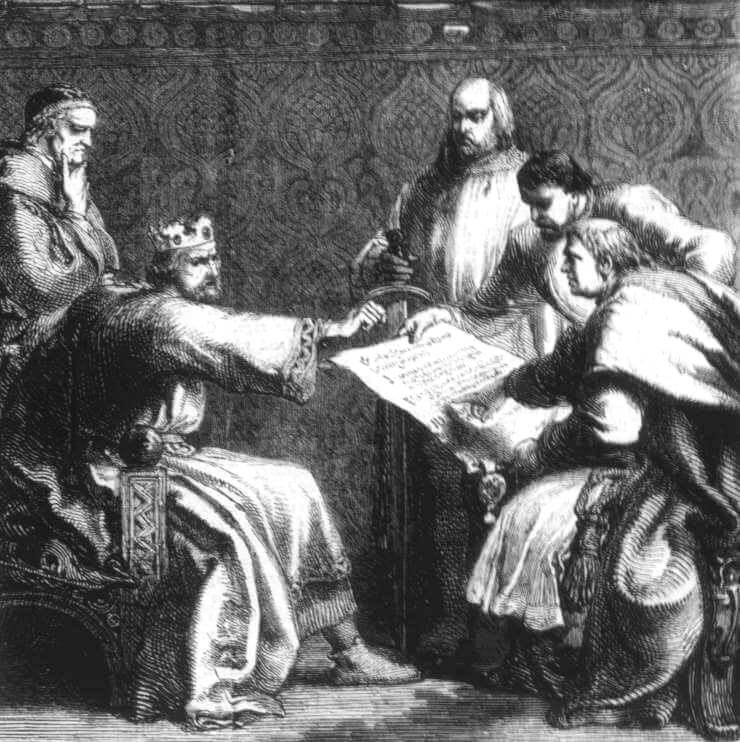
King John agreed to the charter having previously alienated his barons who demanded that he adhere to the covenants within the charter, which included protecting and implementing the rights of the church, prevention of illegal imprisonment of barons and access to impartial justice, as well as limitations on feudal payments to the Crown.
This was to be implemented by a council of 25 barons and involved three important tenants:
1) The king was not above the law
2) The king could make laws and raise taxation but only with the consent of the community of the realm
3) Obedience to the king was not an absolute right but conditional.
Significantly, the Magna Carta would gain the status of fundamental law after John’s reign.
1230s- Westminster became the regular setting for Parliament to be held.
1236-The term Parliament was used for the first time referring to the Great Council.
1254-Sheriffs were instructed to send elected representatives of the counties (knights of the shire) to consult with the king on taxation.
1258- The Provisions of Oxford were introduced in order to rein in the power of Henry III and called for regular Parliaments meeting three times a year and with representatives from the counties.
A council of fifteen barons was chosen to give advice and manage the king as well as supervise his ministers. Led by Simon De Montfort, the council proved short-lived as Henry III failed to adhere to the reforms.
23rd January 1264- The Mise of Amiens was a settlement awarded by King Louis IX of France to settle the conflict between Henry III and his rebel barons. With the result heavily skewed in the monarch’s favour the settlement, rather than quell tensions, only agitated them and led the barons to escalate matters, leading to the Second Barons’ War.
14th May 1264- the Battle of Lewes secured a victory for the rebels led by Simon De Montfort and the capture of the king and his family.
20th January 1265- Simon De Montfort’s Parliament was held and was a significant moment, as it drew representation from the towns and the shires, with representatives discussing various matters of national concern.
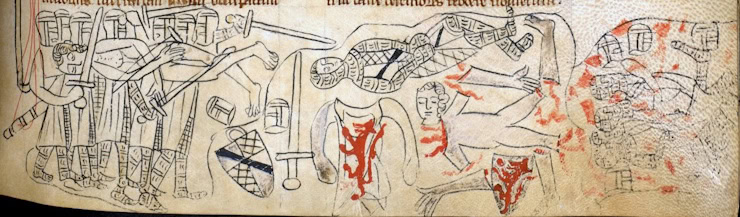
4th August 1265- The Battle of Evesham saw Simon De Montfort’s brief spell as de facto leader of the country come to an end, and with it the ascent of royal authority once more.
1295-Model Parliament was called by King Edward I in order to seek financial support for wars in Scotland and France.
For the first time, a representative parliament including lower orders of the clergy met to discuss the matter, consisting of nobles and bishops, two representatives for each county and two for each town.
1327-From this date, representatives of the counties (knights of the shire) and of the towns (burgesses) were always summoned together to Parliament.
1332-Knights of the shire and burgesses met together and were called the Commons.
1341-The Commons met separately from the Upper House for the first time.
1352-The Commons began to meet in the Chapter House of Westminster Abbey.
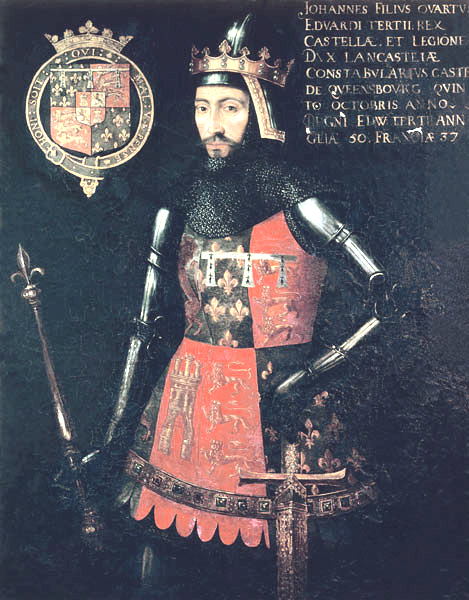
1376-The Good Parliament was the name traditionally attributed to the English Parliament of 1376, which was held in London from April 28 to July 10 and was the longest Parliament up until that time.
At the time, the English court was rife with corruption and efforts were being made by some of the members to reform the government, however they faced push-back from John of Gaunt, the effective ruler of England at the time.
1388-The Lords Appellant were a group of nobles who during the reign of King Richard II, sought to impeach five of the King’s favourites in order to restrain the tyrannical rule.
1389- Richard II regained control.
1397-Commons moved from Chapter House of Westminster Abbey to its Refectory.
1397-Richard II took his revenge on the Appellants, many of whom were executed or exiled. The next two years have been described by historians as Richard’s “tyranny”.
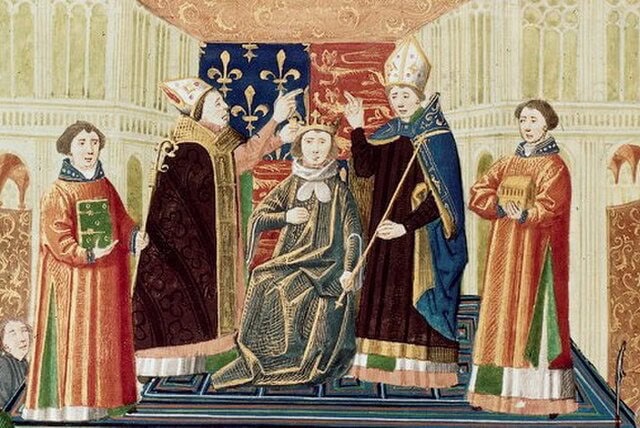
1399-Parliament deposed Richard II and Henry IV‘s reign started.
Henry invaded England in June 1399 with a small force that quickly grew and after meeting little opposition, he deposed Richard and had himself crowned king.
1401-During the reign of Henry IV, the Commons claimed the right to grant taxation (supply) only after their complaints had been addressed (redress of grievances).
1414-Henry V acknowledged that the approval and consultation of both Houses was necessary to make new laws.
1429-Limitations on rights to vote were imposed by a statute, which gave rights to vote in county elections to those owning freehold property worth 40 shillings a year.
1512-Henry VIII moved the royal family out of the Palace of Westminster after a fire, and left it to the use of Parliament and some government offices.
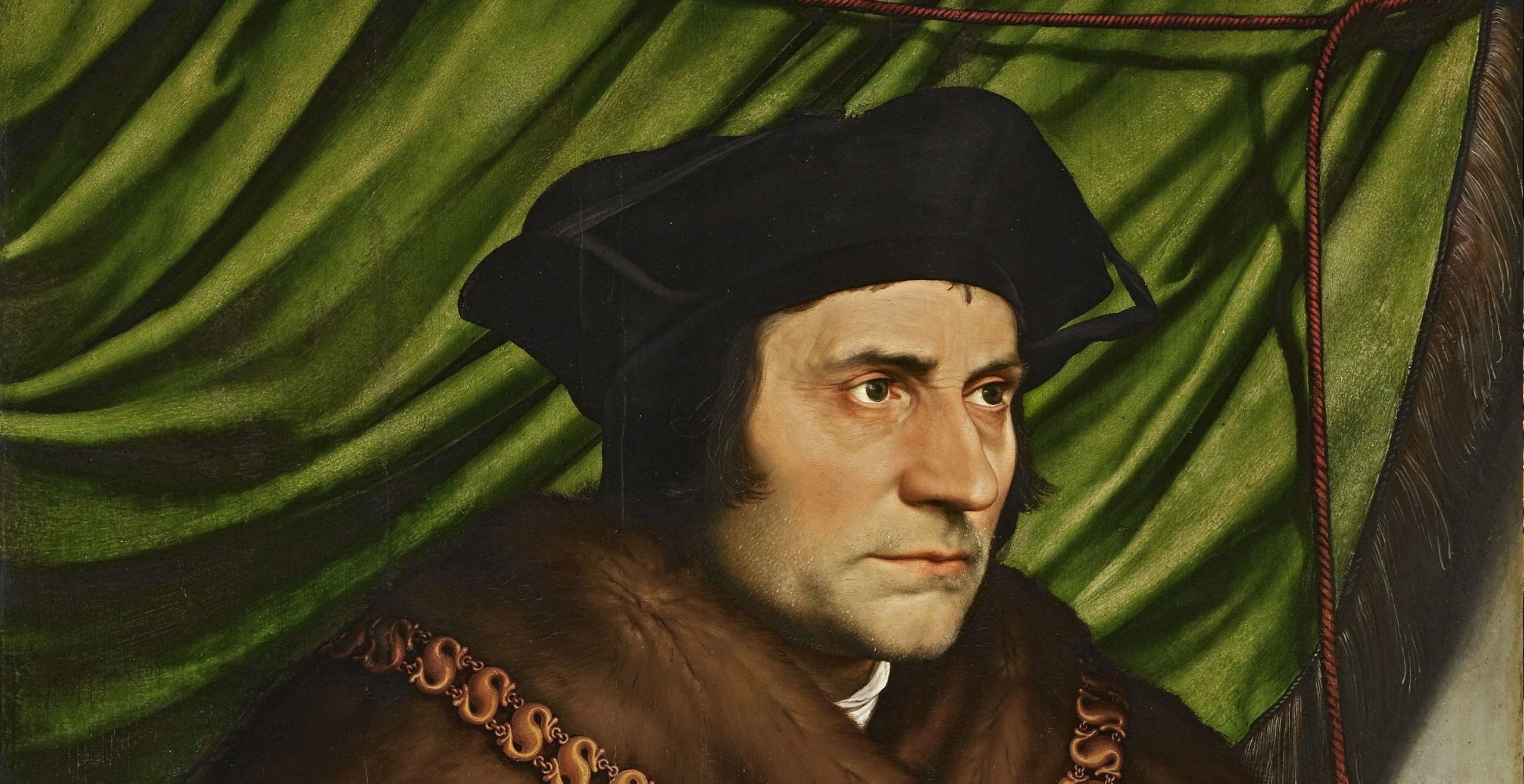
1523-Speaker of the Commons Sir Thomas More made the first known request for freedom of speech in Parliament.
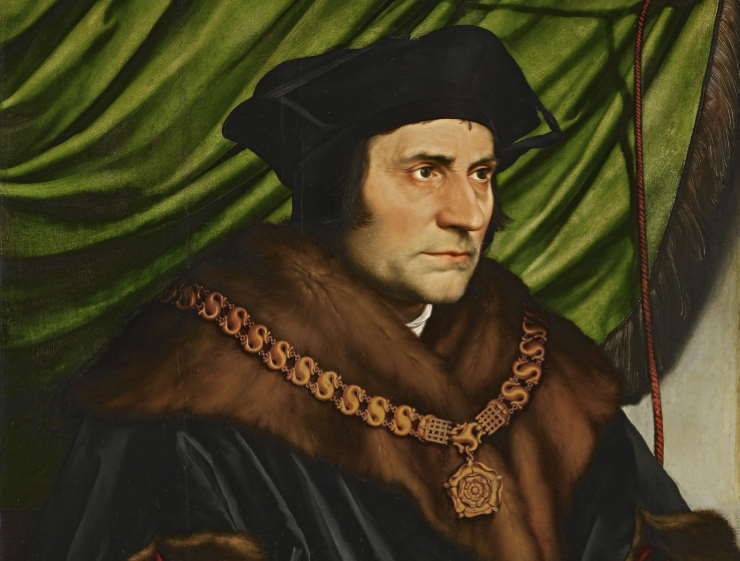
1529-36-The Reformation Parliament of Henry VIII changed and affected the most fundamental aspects of English governance and thus people’s lives.
Legislation was passed on numerous topics but particularly religion, transferring religious authority from the Pope to the English Crown.
1535-Legislation provided for Welsh representatives in the House of Commons.
1536-A statute joined Wales to English administration and allowed its counties and boroughs to return members to Parliament.
1539-Henry VIII suppressed the monasteries, and the abbots and priors could no longer sit in the House of Lords.
1547-Edward VI handed St Stephen’s Chapel over to the Commons for their use.
1576-Peter Wentworth made a speech in the Commons arguing for freedom of speech in Parliament, for which he was punished and committed to the Tower of London. A Puritan leader and critic of Elizabeth I, his address in parliament reflected a new era where freedom of speech was discussed in political affairs.
March 1603-Accession of James VI of Scotland as James I of England, the first Stuart King.
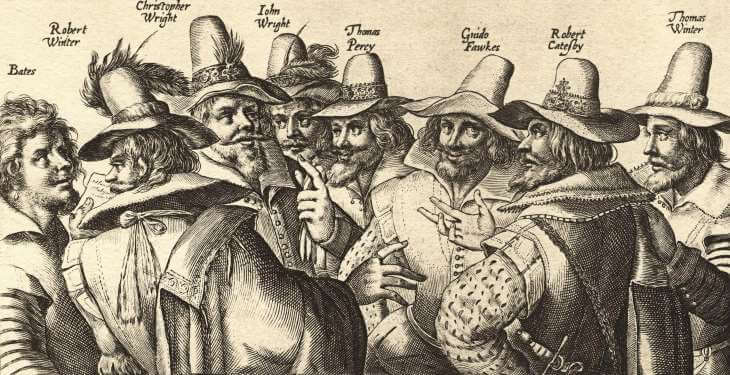
5th November 1605-The Gunpowder Plot
A group of disaffected Catholics led by Robert Catesby hatched a plot to blow up the Houses of Parliament on its opening day and kill the king and destroy his government in the process.
March 1625-Death of James I and accession of Charles I.
June 1625- Parliament voted against the practise of the monarch collecting custom duties (known as tonnage and poundage) by royal prerogative, by restricting it to only one year of revenue. Charles I continued to collect custom duties despite this vote.
September 1626-Charles I levied a Forced Loan, without parliamentary approval, to raise money for war and responded forcefully to those who refused to pay by throwing them in prison.
June 1628-Parliament forced the King to assent to the Petition of Right.
10th March 1629-The Speaker of the Commons Sir John Finch was held down in his chair by three Members to prevent him from adjourning the House, whilst resolutions were passed against the king’s actions.
The king was furious and dissolved Parliament. There would not be another one for eleven years.
November 1638-Scottish Presbyterians, Covenanters, revolted against Charles I’s religious innovations and started the first Bishops’ War against England.
13th April to 5th May 1640- After eleven years Charles I recalled Parliament, known as Short Parliament, requiring money to fund his military struggle against the Scots in the Bishops’ War. The parliament lasted for almost a month.
October 1640-The Scottish secured a military victory against the English in the Second Bishops’ War. Their capture of Northumberland and Durham forced Charles’ hand and a month later he summoned parliament.
November 1640-The Long Parliament was convened by Charles I who was desperate for money, but instead found his authority and policies challenged.
1642-1651- The English Civil War consisted of a series of conflicts fought between the Royalists and Parliamentarians, resulting in the execution of Charles I.
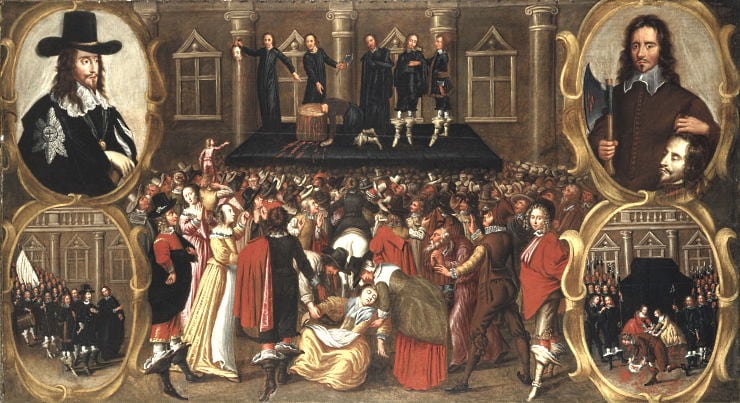
30th January 1649- Charles I was executed and the monarchy was abolished.
1649-1660- The Commonwealth of England was established as a republic.
19th May 1649- The Rump Parliament declared the existence of the republic, and power sat in the Parliament as well as a Council of State.
1650-1652- Anglo-Scottish War.
1653-The Dissolution of the Rump Parliament and the introduction of Oliver Cromwell as Lord Protector.
This period of governance by Cromwell was known as the Protectorate.
1659- The Protectorate Parliament dissolved.
1660- Monarchy restored as Charles’ son Charles II became king.
1681-Charles II dissolved parliament and ruled without them for the last four years of his reign.
1685- Charles II died and he was succeeded by his brother James II.
November 1688-The Glorious Revolution resulted in the deposition of James II. He was replaced by his daughter Mary II, and her Dutch husband, William III of Orange.
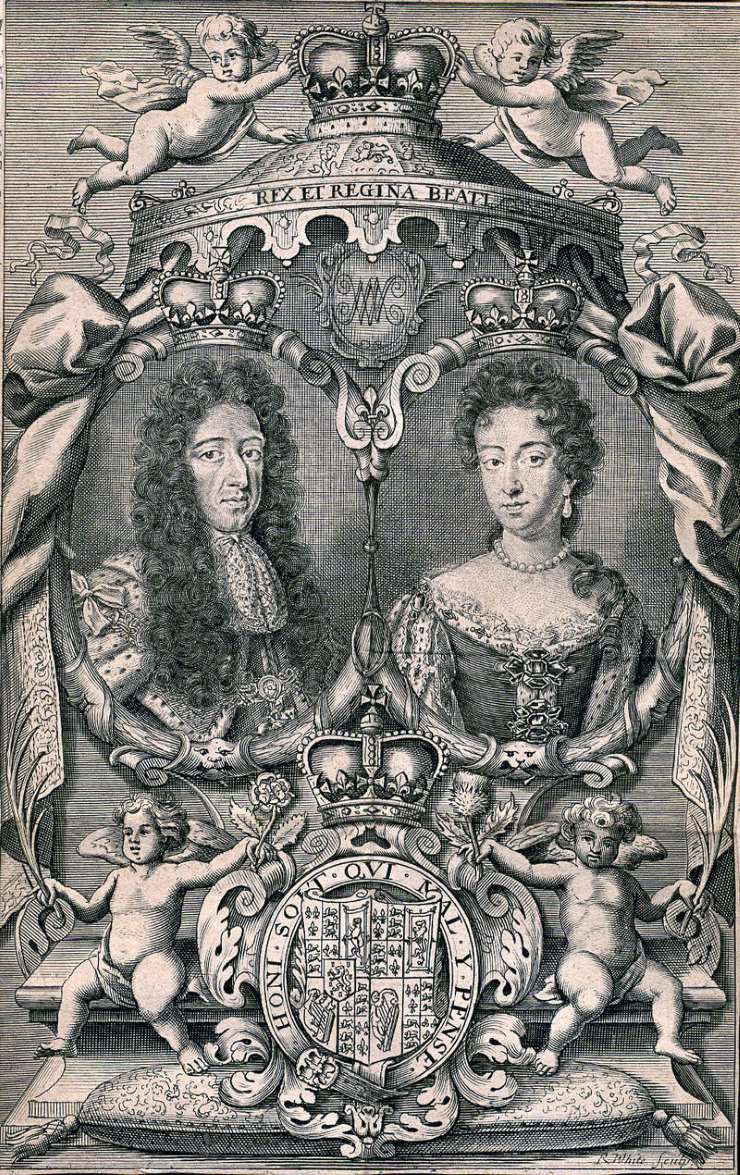
1689- Bill of Rights was enacted which set out basic civil rights. It was primarily designed to prevent monarchs from trying to change laws, raise taxes or maintain an army without Parliament’s consent.
1701-The Act of Settlement was approved, which secured Protestant succession to the throne. It also strengthened the Bill of Rights.
1st May 1707-Acts of Union passed in the Parliaments of England and Scotland united the two countries creating a united kingdom to be called “Great Britain”. Scotland was allocated 45 seats in the House of Commons.
October 1707-The new Parliament met for the first time.
1st January 1801-Act of Union joins Ireland and Great Britain. The Irish Parliament was abolished and lost its independence in exchange, Ireland was given 100 MPs at Westminster.
1832-Representation of the People Act (otherwise known as the first Reform Act)
The Reform Act introduced the first wave of extensive changes to the electoral system of England and Wales by reapportioning constituencies in order to address the issue of unequal distribution of seats. The act also broadened the franchise by extending the vote to men meeting property qualifications.
1838-The People’s Charter was drawn up for the London Working Men’s Association (LWMA) by William Lovett and Francis Place.
The Charter had six demands:
• All men to have the vote (universal manhood suffrage)
• Voting should take place by secret ballot
• Parliamentary elections every year, not once every five years
• Constituencies should be of equal size
• Members of Parliament should be paid
• The property qualification for becoming a Member of Parliament should be abolished
June 1839- The Chartists‘ petition was presented to the House of Commons with over 1.25 million signatures. It was rejected by Parliament, which led to unrest.
1842-Second Chartist petition presented to House of Commons
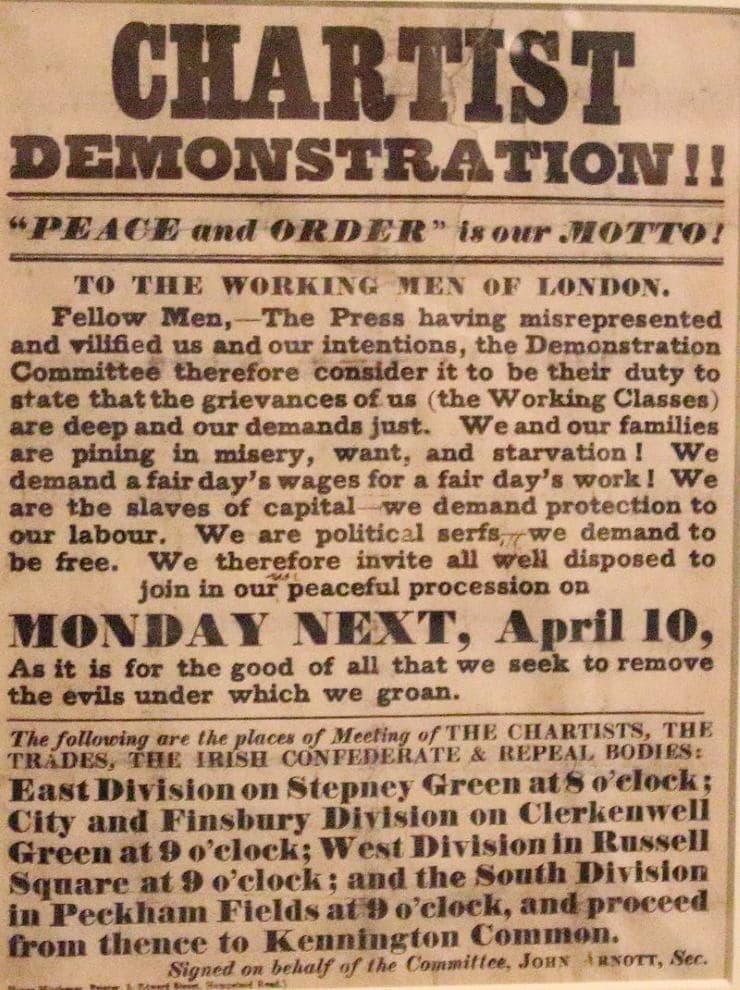
1848-Third Chartist petition presented to House of Commons
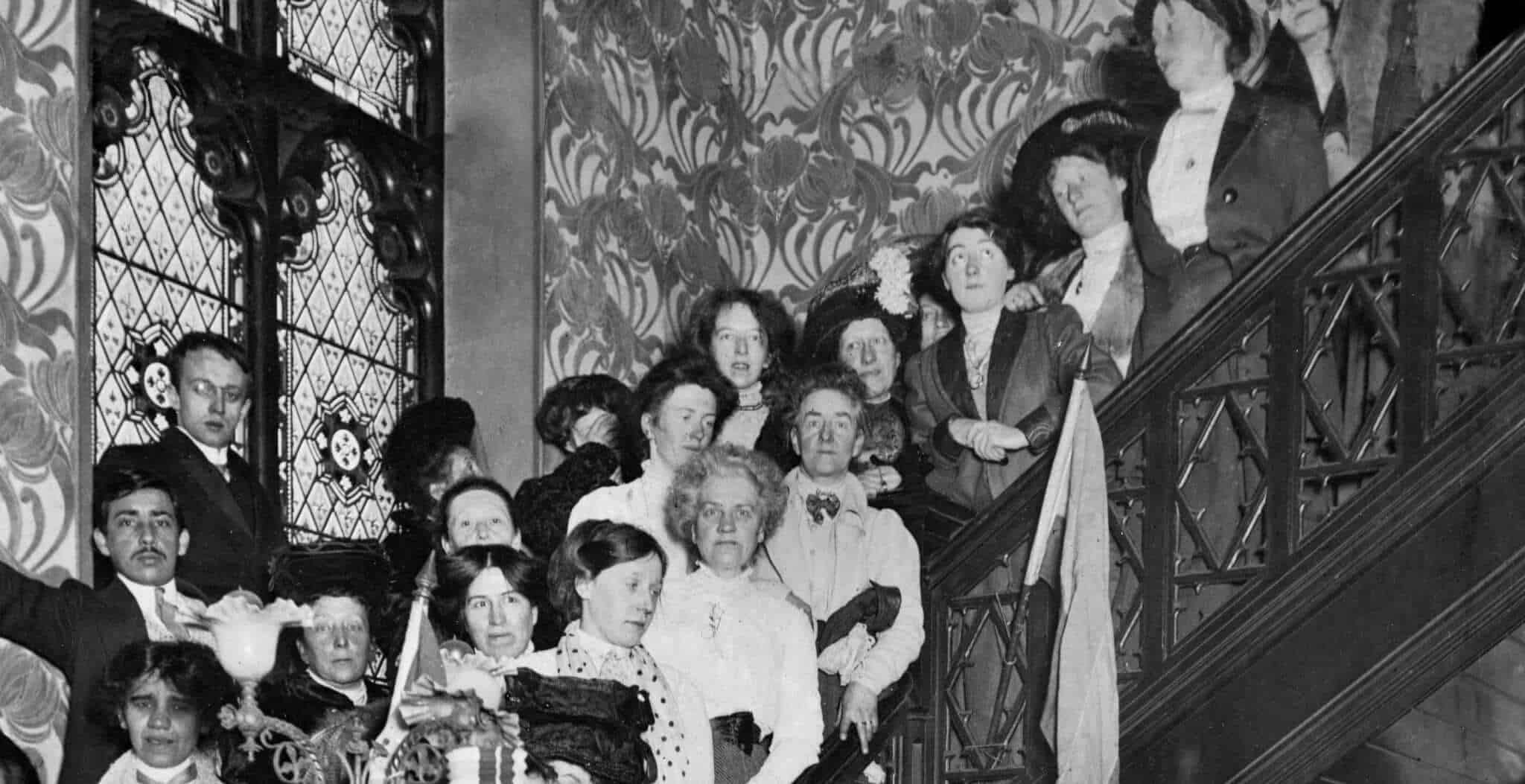
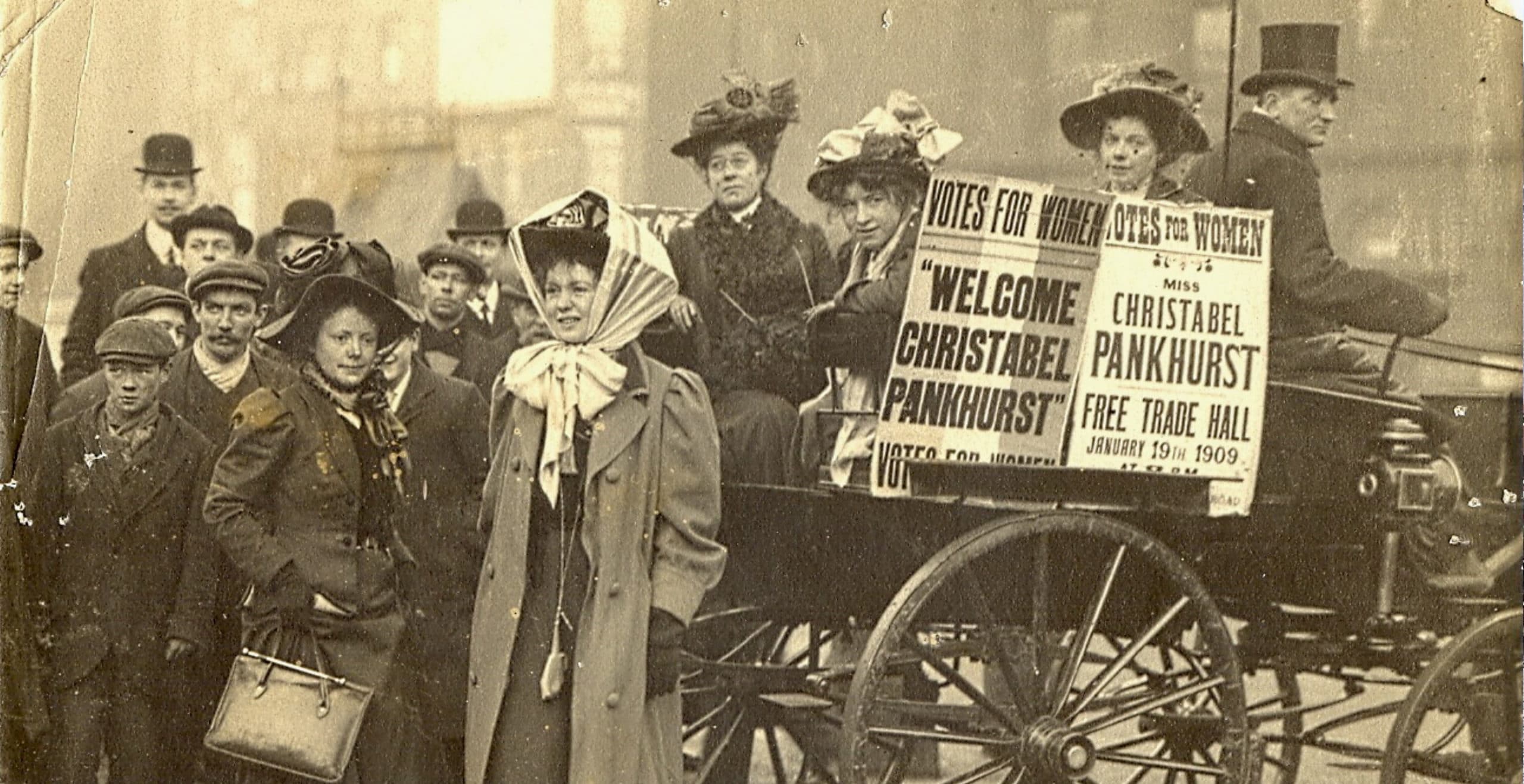
1866-The first mass women’s suffrage petition was sent to the House of Commons. Many suffrage societies were set up.
1867 -First debate on women’s suffrage in Parliament, led by John Stuart Mill.
1867-Representation of the People Act (the Second Reform Act) extended vote to urban working men meeting property qualification. This effectively gave the vote to working class men for the first time.
1872-Ballot Act introduces the secret ballot at elections.
1884-Representation of the People Act (the Third Reform Act) extended concessions in order to address the imbalance between boroughs and counties which established a uniform franchise throughout the country.
1885-Redistribution Act distributed the seats in the House of Commons, introducing the concept of equally populated constituencies in order to equalise representation across the UK.
1910-1912- Parliament considers various ‘Conciliation Bills’ which would have given some women the vote, but none pass.
1911-The suffragette Emily Wilding Davison (1872-1913) hides in a cupboard in the House of Commons on census night.
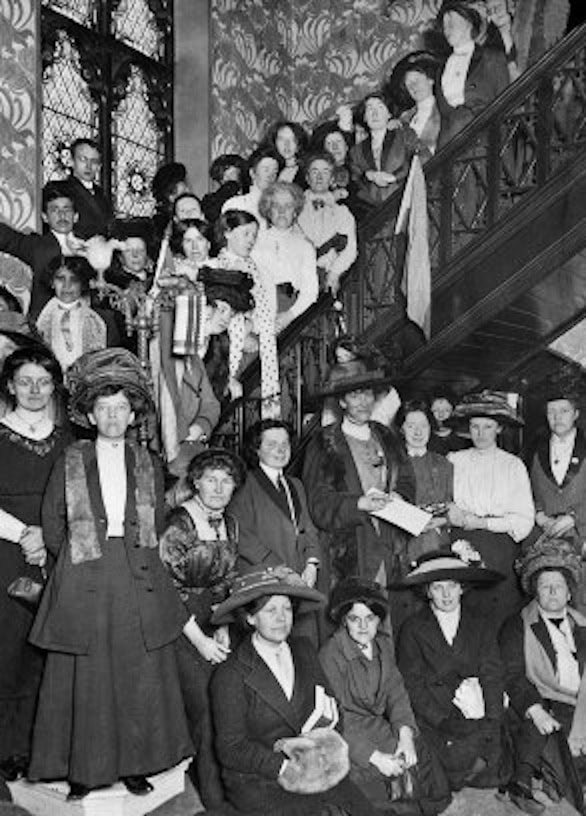
1913-The Prisoners’ Temporary Discharge for Ill-Health Act, also known as ‘The Cat and Mouse Act’, is introduced, targeting suffragettes on hunger-strike.
1914-1918- World War One
Defence of the Realm Act was passed in order to control communications, the nation’s ports and subject civilians to the rule of military courts.
20 March to 2 May 1917- Imperial War Cabinet meeting, consisting of representatives from Canada, Australia, India, the Dominion of Newfoundland, New Zealand, South Africa, and the United Kingdom.
11 June to late July 1918- Second Imperial War Cabinet meeting.
November 1918 to early January 1919- Third and final Imperial War Cabinet meeting.
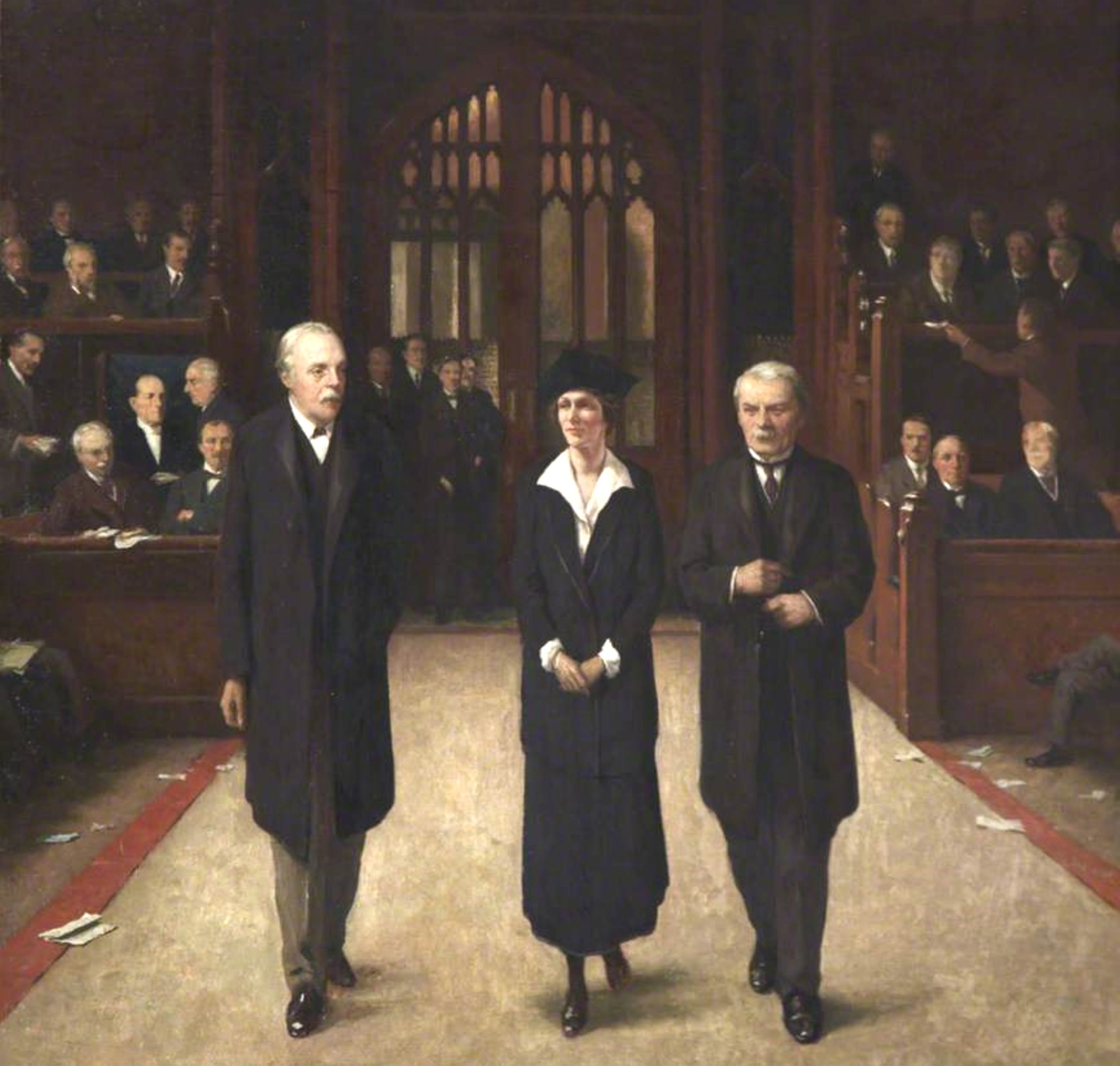
1918-Representation of the People Act extended suffrage by giving the vote to all men over 21, thus abolishing property qualifications and enfranchising women for the first time, by giving women over 30 who met certain minimum property qualifications the vote.
1920-Government of Ireland Act 1920 (also known as the Fourth Home Rule Bill) which divided Ireland into two territories, Southern Ireland and Northern Ireland, each intended to be self-governing, except in areas specifically reserved to the Parliament of the United Kingdom.
1922- The Irish Free State Agreement Act marked the end of the Irish War of Independence and the beginning of the Irish Free State, which was granted the same constitutional status as other countries within the British Commonwealth. It reduced the number of seats for Irish constituencies at Westminster from 105 to 13 constituencies in Northern Ireland.
1928-Representation of the People Act extends vote to all women over 21.
The Equal Franchise Act of 1928 was a significant moment in the fight for gender equality as it granted equal voting rights to women and men.
1 September 1939 – 2 September 1945- Second World War.
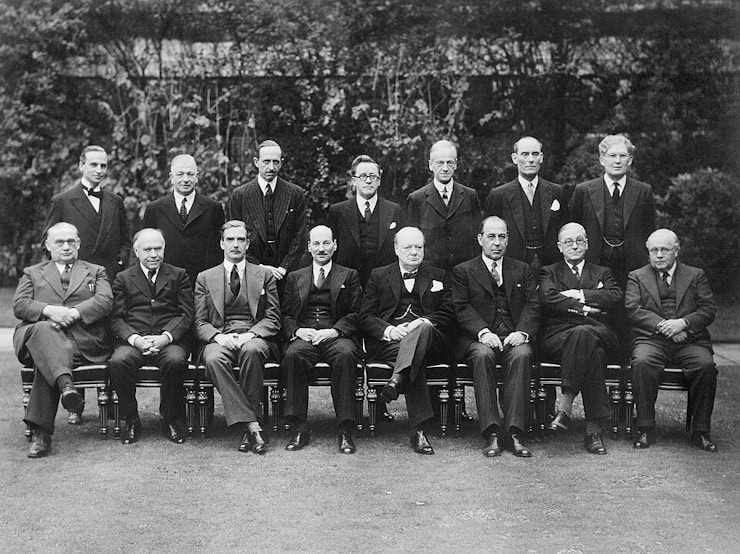
10 May 1940 – 23 May 1945-The Churchill war ministry was the United Kingdom’s coalition government for most of the Second World War.
1944-House of Commons (Redistribution of Seats) Act established four permanent boundary commissions for the UK and a regular system for reviewing constituency boundaries.
1969-Representation of the People Act extends vote to men and women over 18.
Jessica Brain is a freelance writer specialising in history. Based in Kent and a lover of all things historical.
Published: 5th March 2026