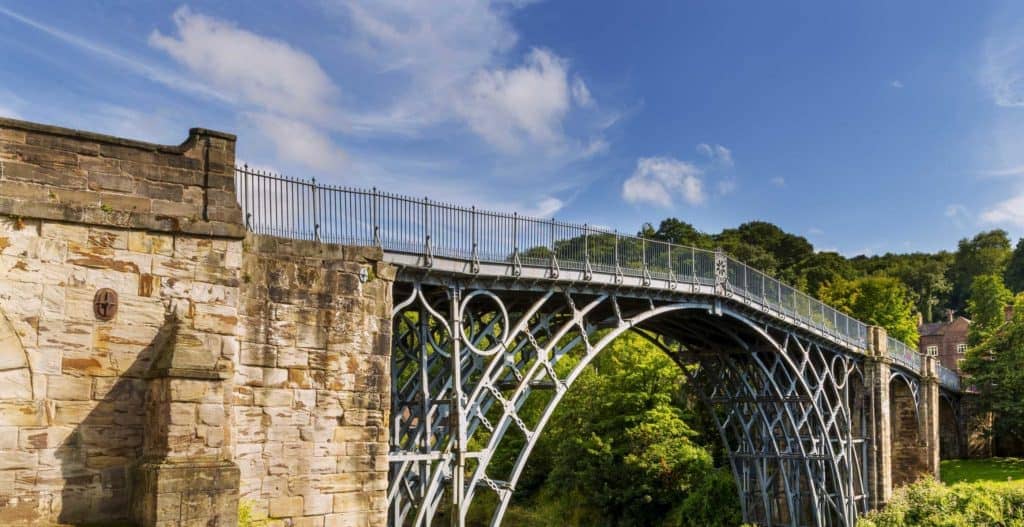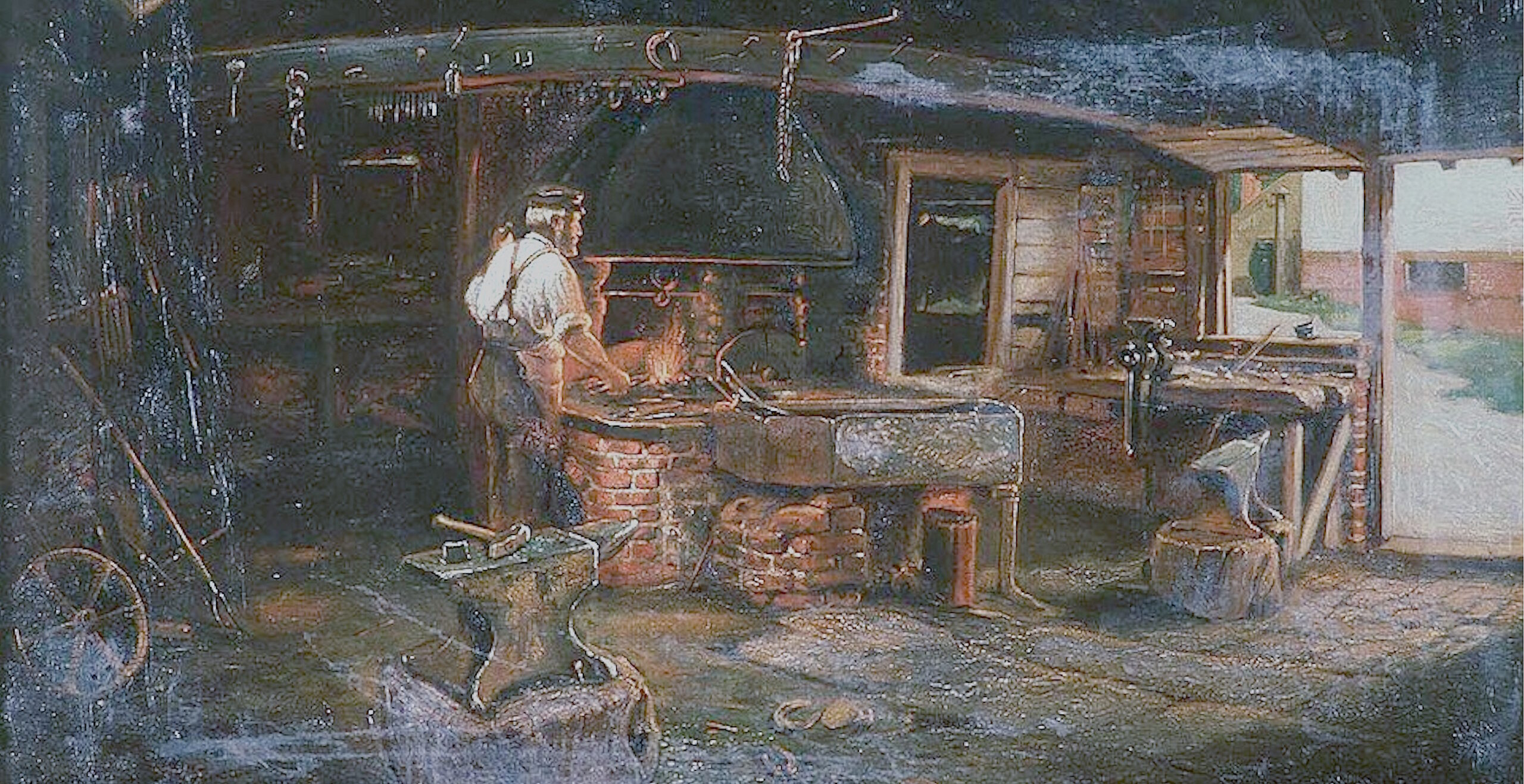


Before the village pub, there was the village forge. Long before that, even. By the time the Norman scribes compiled the Domesday Book in 1086, the blacksmith was already such a fixed feature of English settlement life that smiths appear in the survey by the dozen, often listed alongside mills and churches as the things that made a settlement properly functional.
You couldn’t really have a working village without one. The smith made the tools that worked the land, the horseshoes that moved people across it, and the nails that held the buildings together. Take the smith out and the village stopped working.
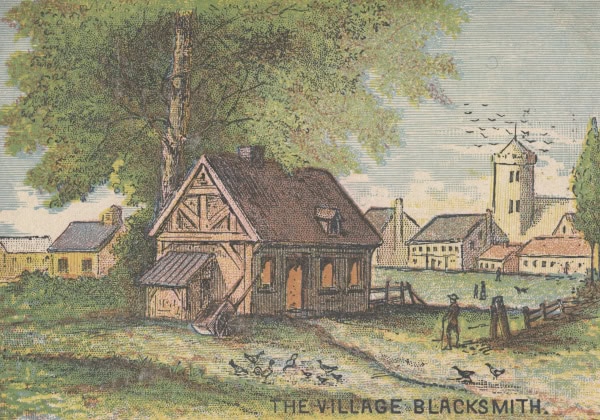
I run a forge in Stroud called Soulful Iron, and the historical weight of what we do is something I think about more than you might expect. When you spend your days heating steel and bending it into shape, you’re doing something with roots in this country that go back roughly three thousand years.
The tools have improved. The fuel has changed. The basic motion of hammer striking hot metal on an anvil has not. It’s one of the longest- running technical traditions in British life, and most people walk past it without realising it.
The Iron Age Origins
Britain learned to work iron seriously around 800 BC, give or take a century. Hill forts started filling with iron tools. Weapons followed. The technology was transformative because iron, unlike bronze, didn’t depend on long distance trade routes for its raw material. You could find iron ore in Britain itself, in vast quantities, particularly in the Forest of Dean and the Weald.
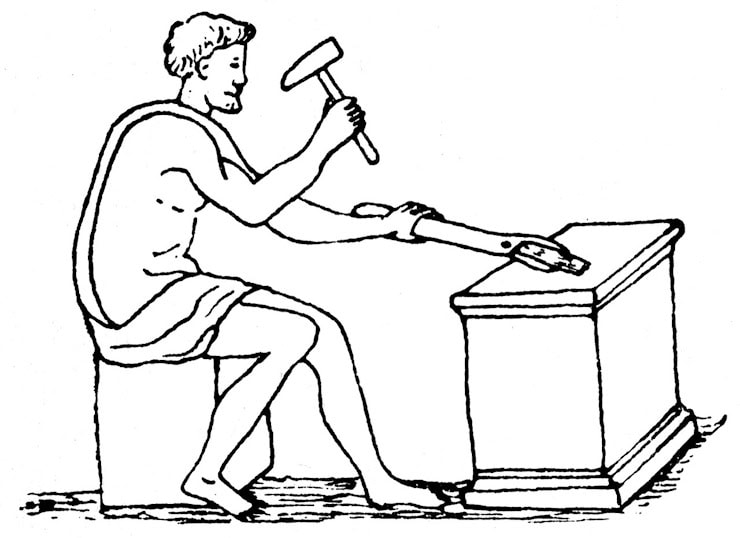
The smelting was crude by later standards, but the principle was set: heat ore, separate the iron, work it on an anvil. By the time the Romans arrived, native British smiths were already proficient. The Roman occupation accelerated things, introducing better techniques, but the craft was native. When Rome left, the smiths stayed. The Anglo-Saxons inherited a working tradition that they then carried forward without interruption for the next thousand years.
The Medieval Village Smithy
In medieval England, the blacksmith occupied a peculiar position in village life. Skilled, essential, but also slightly other. Working with fire and iron carried symbolic weight. Smiths appear in folklore as figures of magical capability, in legal texts as protected craftsmen, and in parish records as some of the most economically important inhabitants of any village.
The work was relentless. A typical village smithy produced hinges, latches, tools, ploughshares, kitchen ironwork and horseshoes on demand. Larger settlements often supported multiple smiths, each with a specialism. The forge was where you went when something needed fixing, fabricating, or replacing, and the smith was, in many cases, the closest thing a village had to an engineer.
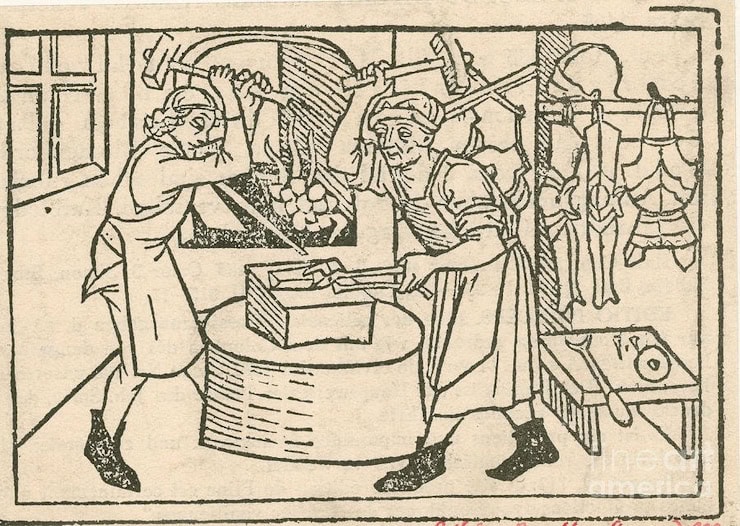
What’s striking when you read the records is how local the trade was. Iron came from regional ore deposits. Fuel was drawn from the surrounding woods. Finished goods rarely travelled far. Every village was, in a small way, self-sufficient for ironwork. That changed slowly, then quickly, with the Industrial Revolution.
Industrial Decline and the Surviving Craft
The nineteenth century is where the village smithy started to fade. Factory production made cheap nails, mass-stamped horseshoes and pressed hardware widely available. Most rural smiths shifted into farriery, focusing on horses, or closed entirely. By the early twentieth century the picture-postcard village smithy was already more of a heritage image than a working trade.
But the craft didn’t vanish. Architectural ironwork, restoration work, bespoke commissions and gate-making kept a smaller, specialist trade alive throughout the twentieth century. The post-war period saw a quiet revival, helped along by the conservation movement and the slow rediscovery of heritage skills. Today, blacksmithing endures as a small but committed craft, kept alive by independent smiths working across the country.
A Modern Forge in Stroud
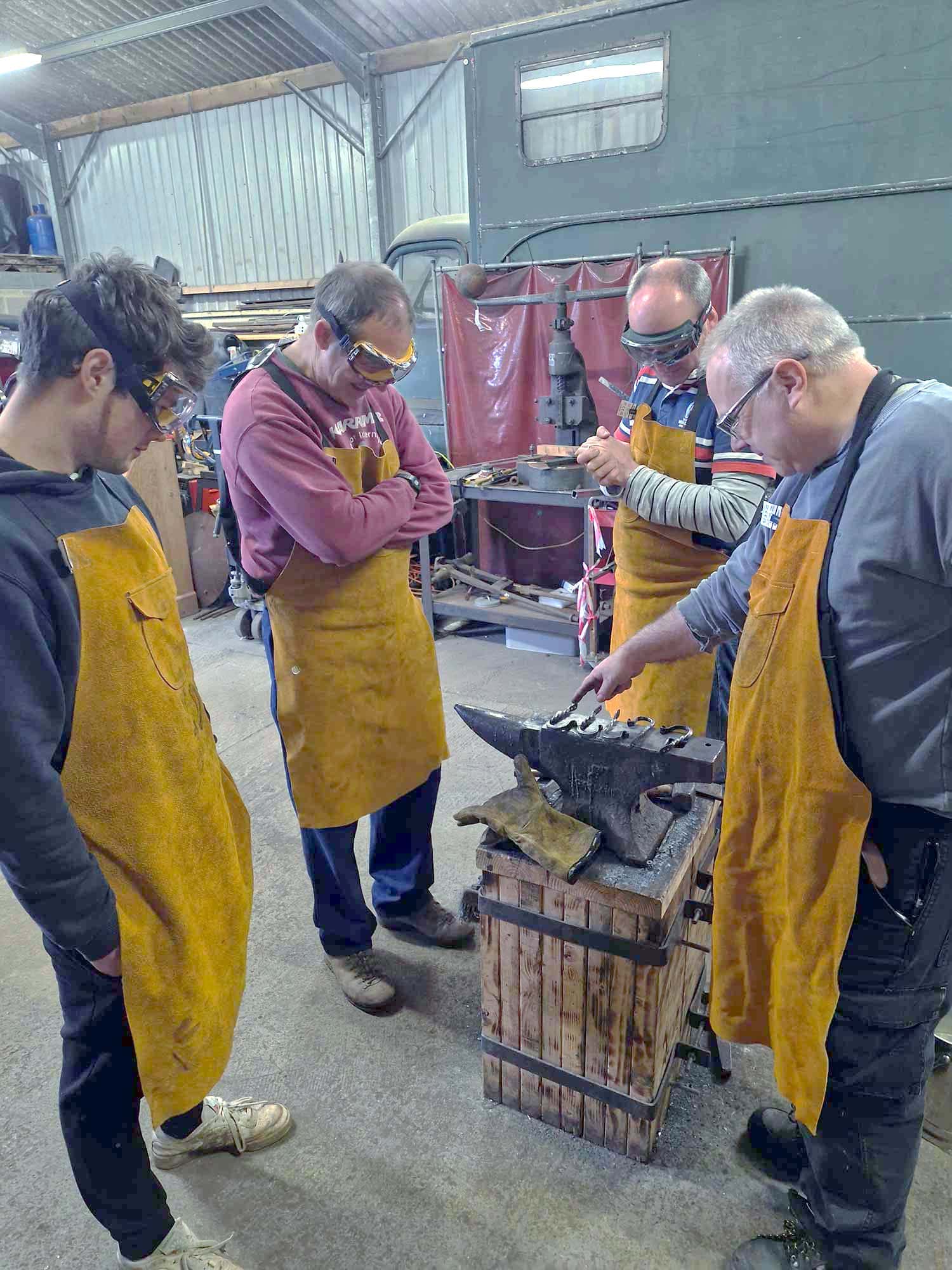
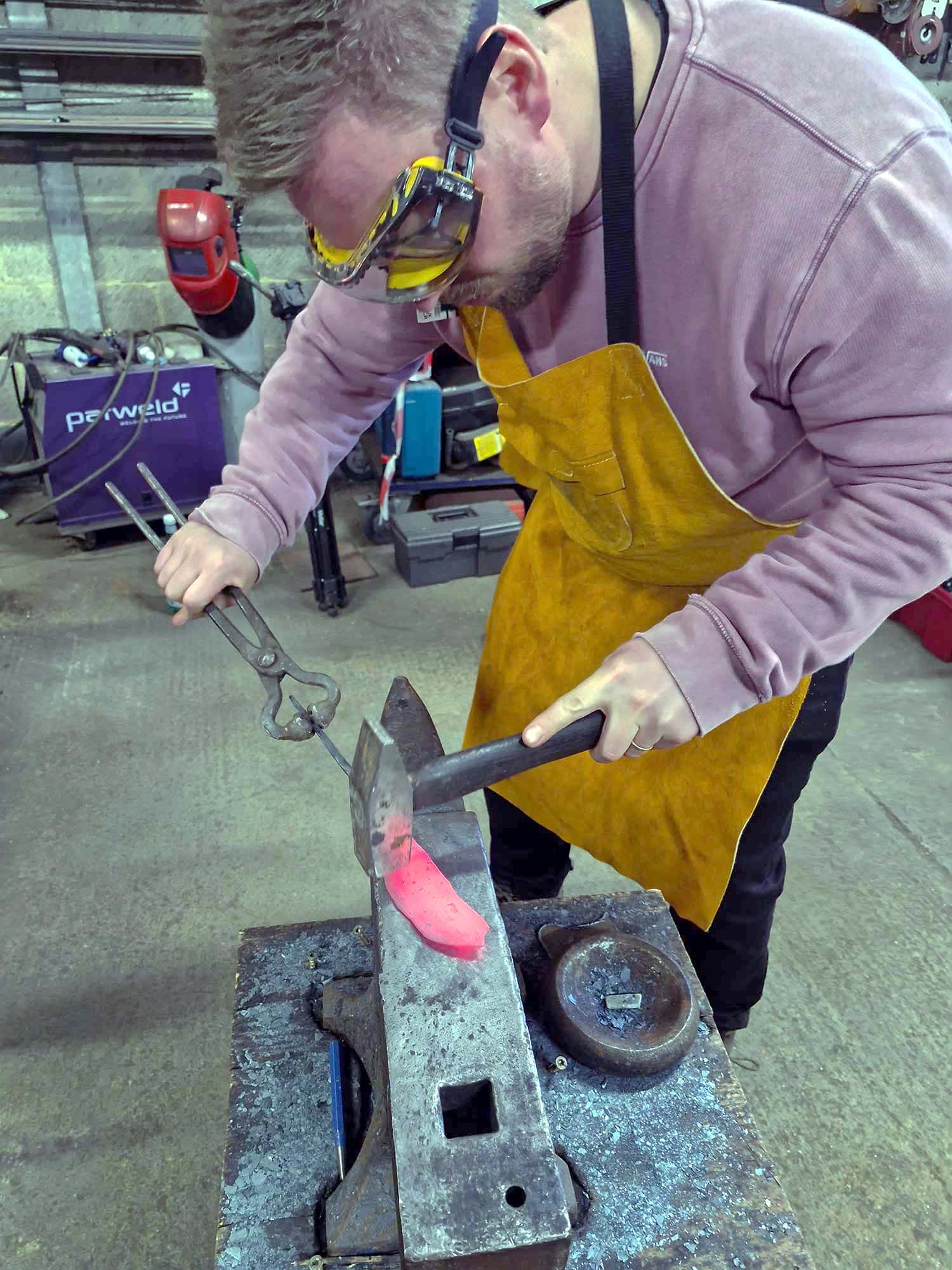
What surprises people who visit a working forge today is how recognisable the setup still is. The forge itself is different (whilst some smiths still use coke forges, many modern smiths also work with gas now, which gives finer control over heat and a much cleaner environment). However, the anvils, hammers, even leg vices are essentially the same tools used a thousand years ago. The hammer is the same. The tongs are the same. The vocabulary is the same.
At Soulful Iron we run blacksmithing and knife-making experience days for complete beginners. People come in with no background, spend a full day at the anvil, and leave carrying something they’ve made themselves: a hook, a poker, a knife. What I notice most often is the point in the day when something clicks for someone about how old the work is.
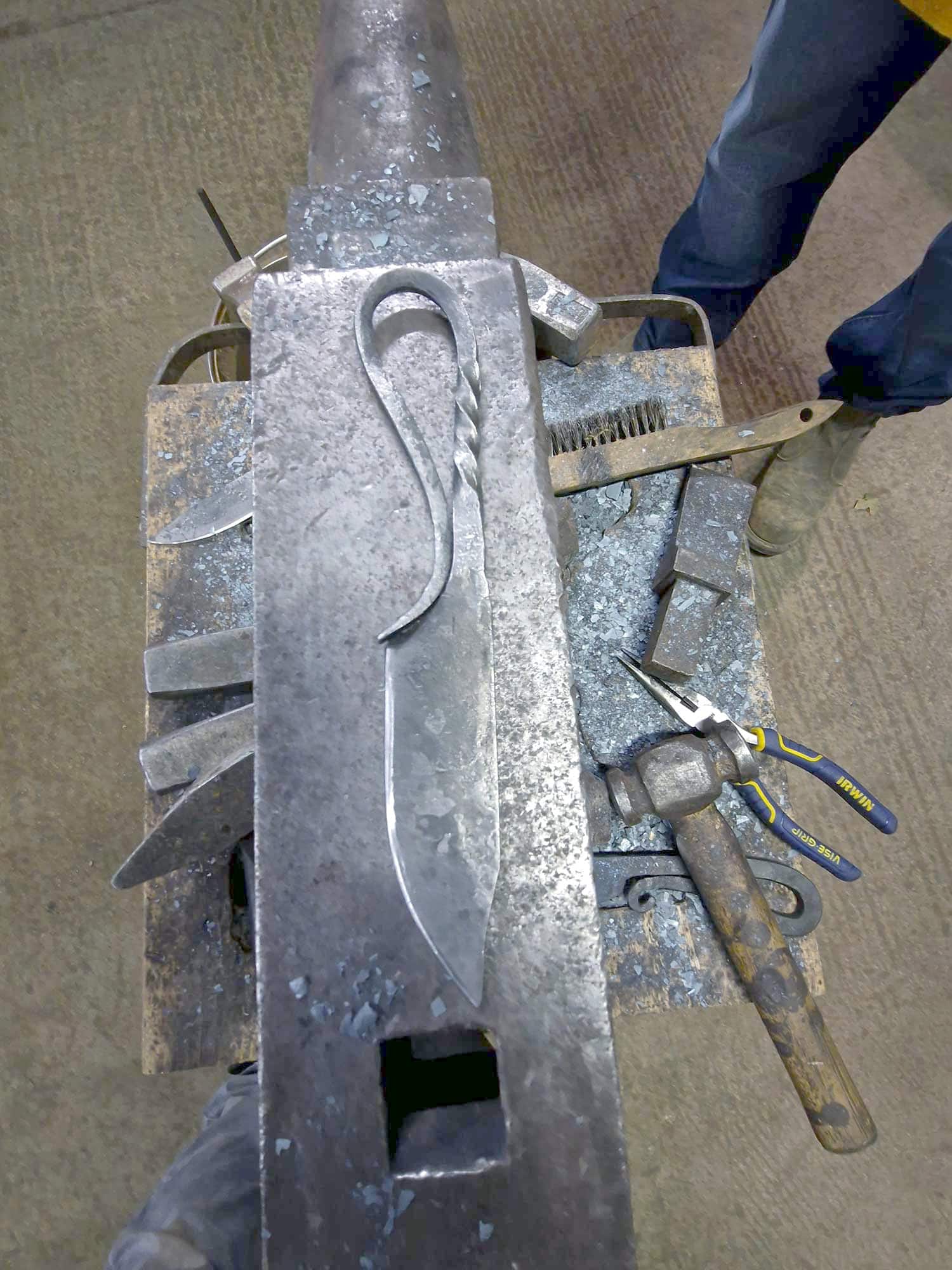
There’s a particular quiet that settles over a person when they realise they’re using a technique that a Saxon smith would have recognised. That recognition is part of what people are really coming for, I think, even if they don’t quite frame it that way when they book.
Heritage as a Living Thing
Heritage is often framed as something to be preserved behind glass. Blacksmithing is different. It survives because people keep doing it, and it keeps making sense to do because the things it produces are functional, beautiful and lasting. A hand-forged hook will outlive every chrome alternative you ever buy. A forged knife, looked after, will outlive its maker.
You can visit a museum and see iron tools from the Iron Age, the medieval period, the Tudor era, the Victorians. They all look surprisingly familiar, because the underlying job has not changed. Britain has been heating, hammering and shaping iron for roughly three millennia.
The forges have moved. The smiths have changed. The tradition has not really broken. That’s the bit that gets me. Most people, when they come to a forge for the first time, expect a quaint experience or a quick day out. What they leave with is something rarer: a small thread of contact with one of the oldest continuous crafts in British life, and an object that proves it.
If you want that contact made literal, Soulful Iron runs experience days in Stroud, open to anyone (no prior skills needed). Details are at https://soulfuliron.co.uk/experience-days/.
Three thousand years on, the craft is very much still alive.
Mike Gracia is the blacksmith behind Soulful Iron in Stroud, Gloucestershire, where he runs hands on blacksmithing and knife making experience days for complete beginners. Mike is a member of BABA (the British Artist Blacksmiths Association) and the Heritage Crafts Association.
Published: 19th October 2026.