
In the spring of 367 AD, Roman Britain began to collapse. In a year of turbulent events signifying the beginning of the end of Roman rule in Britain, an assault by foreign forces created chaos in the region.
Known as the ‘Great Conspiracy’ (sometimes Barbarian Conspiracy), a combination of attacks from numerous parties including Saxons, Attacotti, Scotti, Franks, Picts, and even Roman deserters contributed to the chaos.
During the 3rd and 4th centuries, barbarian tribes made increasing incursions against Roman held territory. Particularly hard hit was Britannia, where increasing incidents from numerous raiding parties had a massive impact on civil society and Roman governance.
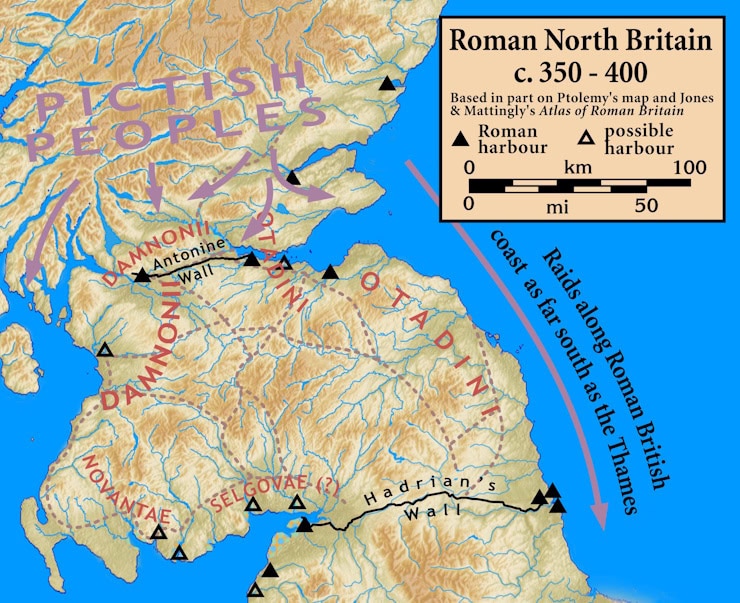
The Roman garrisons across the country found themselves overwhelmed as forces came from all directions: the Picts from the north, the Scotti from Ireland in the west, whilst the Saxons landed in the southeast, having arrived from the shores of the continent.
Exploiting the weaknesses of the depleted Roman military, a coordinated attack created a climate of instability and anarchy known as the ‘Great Conspiracy.’
Such events were recorded by historian and former soldier Ammianus Marcellinus who referred to the period as ‘barbarica conspiratio.’
Arising from a combination of factors, Roman rule in Britain was at its weakest point when the raiders arrived on its shores.
At the time, numbers of Roman soldiers were at a particularly low point following a recent challenge by General Magnentius to succeed as emperor.
His failed coup saw him garner a great deal of support from the soldiery as he was extremely popular within the army.
Eventually he was defeated, however the fighting led to a great loss of life, huge casualty numbers and chaos for Roman rule across its imperial domains.
These events thus severely hampered Roman resources, manpower, unity and morale. In this environment, barbarian forces were able to take advantage.
It was not only problems within the military however, as three consecutive years of drought had led to famine-like conditions which the raiding parties were able to exploit.
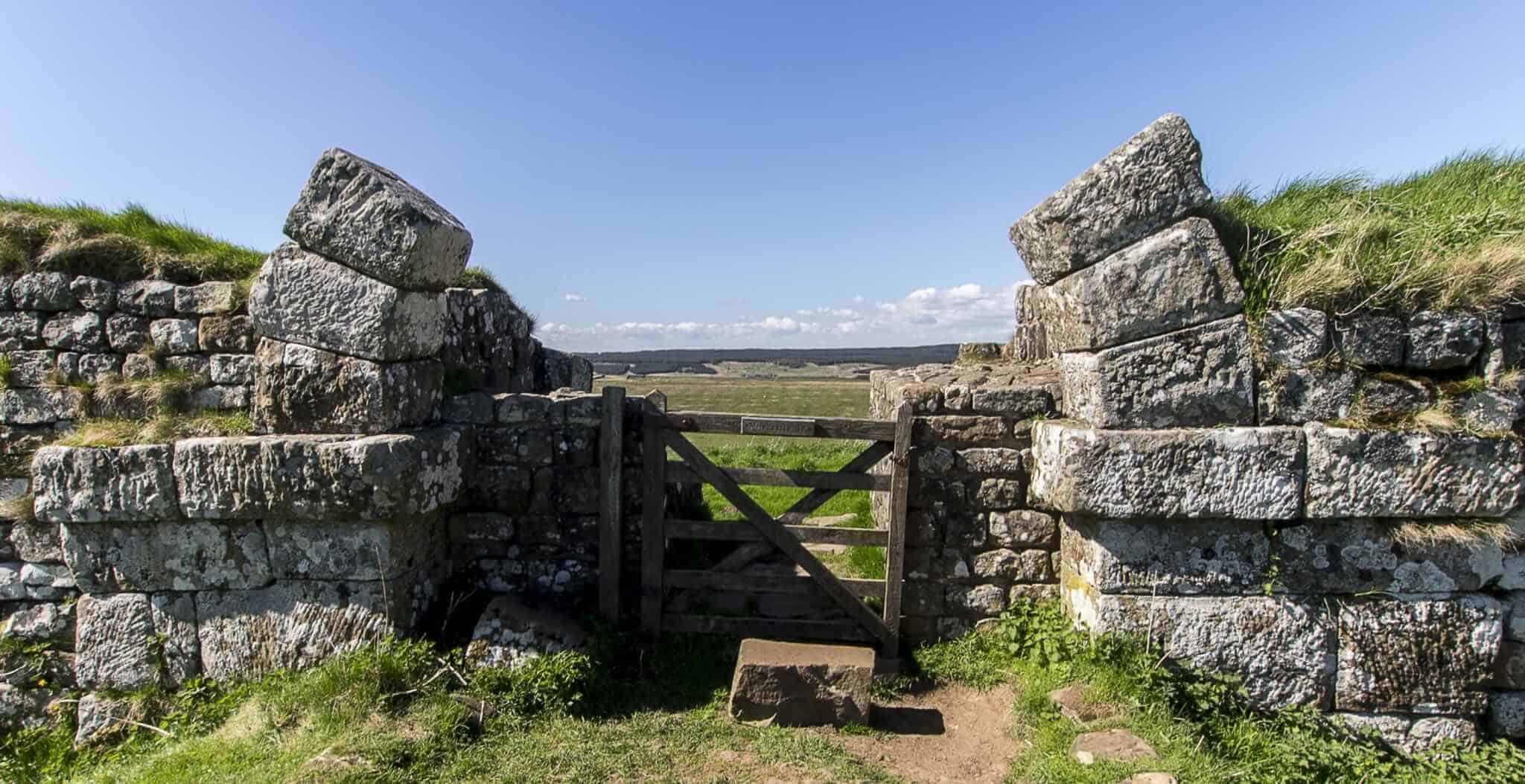
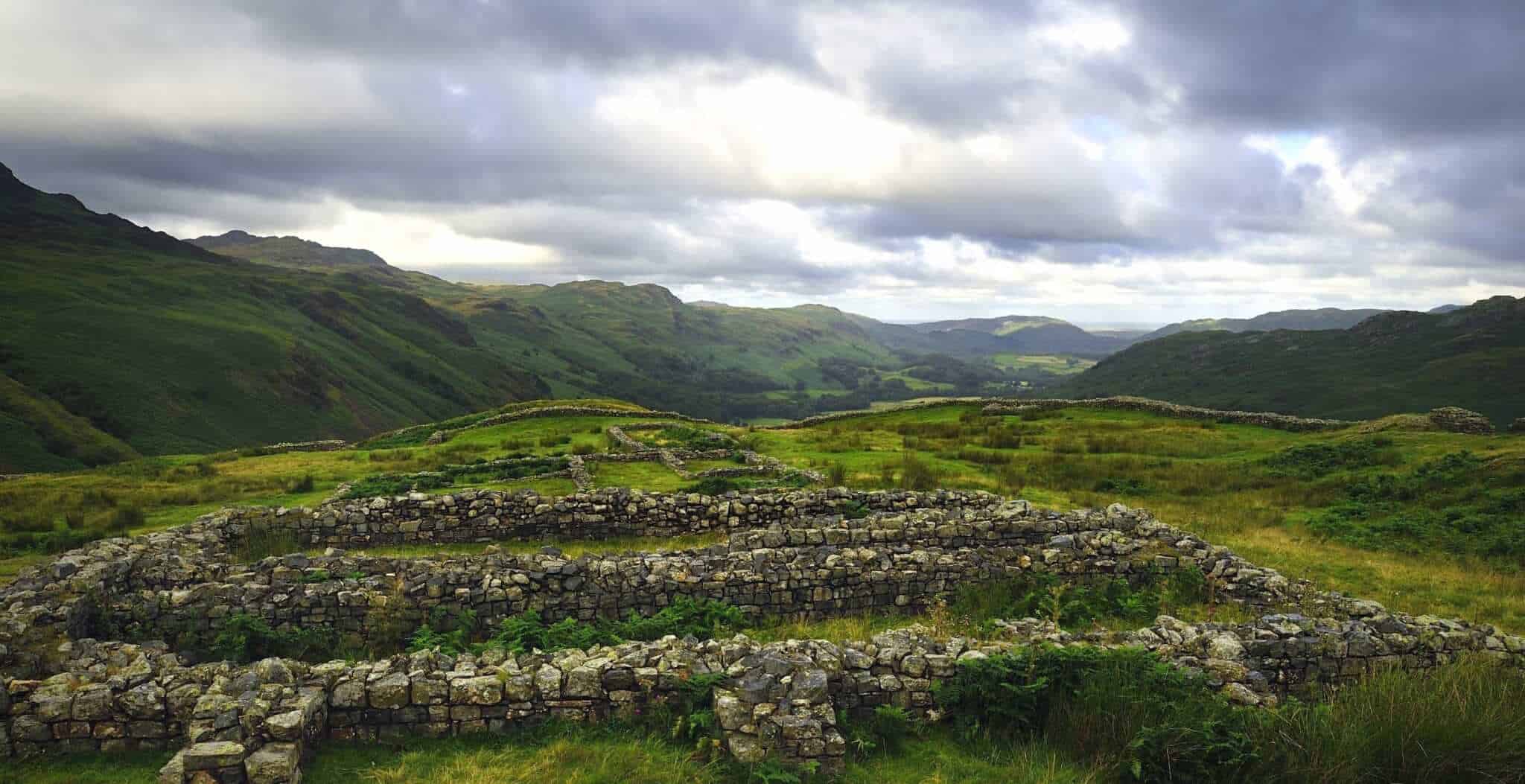
Marcellinus recorded ‘the utmost conditions of famine’ when describing the circumstances of the native Romano-British population during this time. Most likely affected would have been the grain supply to Hadrian’s Wall which provides an explanation for the widespread discontent amongst the population and soldiers alike, who were suffering from depleted reserves of food.
The combination of a poor harvest which led to food shortages and a delay in receiving pay only enhanced the atmosphere of hostility. In addition, the citizens had suffered under severe purges inflicted by Paulus Catena who had relentlessly pursued the last of Magnentius’ supporters in the region.
The soldiers in charge of the garrisons began leaving their posts and thus barbarian tribes from the north, south, east and west simply took their opportunity to raid and plunder with little resistance.
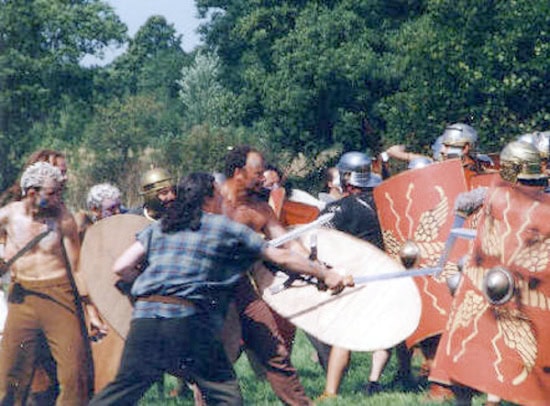
During the battles which followed, some Roman soldiers simply deserted, others switched allegiance and joined the raiders, whilst some of Rome’s leading commanders were killed.
Unfortunately, there is no first-hand account of these events as a result of Marcellinus himself residing in Antioch and hearing the information second-hand, thus accounting for some inconsistencies in the storytelling. Nevertheless, Marcellinus’s version remains one of the most useful texts regarding this period of history in Roman Britain.
One of the observations recorded by Marcellinus includes the mutiny which occurred in the winter of 367 AD along Hadrian’s Wall, which allowed Picts from Caledonia to breach the frontiers of Britannia due to the failures of the Roman garrison.
It was not only the Picts from their northern stronghold who penetrated Roman territory. Saxons from Germania, the Scotti from Hibernia and the elusive Attacotti raiding party all participated in the invasion.
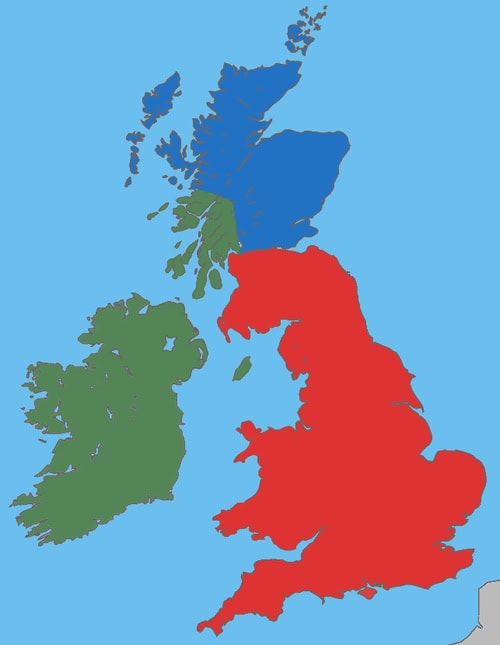 A map showing the approximate areas where the Gaelic (green), Brythonic (red) and Pictish (blue) languages were spoken during the 5th century CE; the period between the Roman withdrawal and the founding of Anglo-Saxon kingdoms. GNU Free Documentation License.
Numerous cities were sacked and the Romano-British native population found themselves on the receiving end of a great level of violence.
Simultaneously, northern Gaul also came under attacks from the Franks and the Saxons, thus pressuring Roman resources and ability to respond.
The onslaught led to great losses on the part of the Romans with significant figures in the military hierarchy being on the list of casualties, including regional commander Fullofaudes and maritime commander Nectaridus.
One particularly significant factor in securing Roman defeat was the complicity of the Roman intelligence service known as the miles areani, who were made up of local inhabitants who had been successfully bribed by the barbarians.
The disorder which ensued gave rise to widespread desertion coupled with slaves escaping their bondage and turning to robbery as a means of survival.
Meanwhile, the Romans found themselves preoccupied as Emperor Valentinian I was personally campaigning against the Alammani and thus a number of commanders were sent to deal with the problem in this northwestern outpost.
Emperor Valentinian’s reign proved to be a challenging one, facing war with numerous tribes as well as suppressing revolts across vast territories. This was a difficult time to be a Roman emperor.
When news of the disorder reached Rome, Valentinian initially sent the head of the protectores domestici, Severus, who asked for more troops and was subsequently replaced with the trusted Flavius Jovinus who was chief of the imperial cavalry in Gaul.
Jovinus was busy with suppressing similar circumstances unravelling in Gaul and was subsequently called away by Valentinian, who needed his expertise for the Alamanni campaign.
This left the Spanish born Flavius Theodosius to take up the helm and suppress the ‘Great Conspiracy’ once and for all.
Finally, Roman power was restored in the spring of 368 AD when Theodosius assembled a force in Bononia (Boulogne) before heading for Britannia. This included four units made up of Germanic fighters including Batavi, Heruli, Iovii and Victores.
With the main fighting force waiting for the harsh weather to pass, Theodosius went ahead to reconnoitre the situation. On his intelligence gathering mission he set up his base to launch his counterattack against the invaders.
Once he had assessed the situation, his troops followed closely behind and together they marched to Londinium.
He divided his troops into smaller groups in order to go after the enemy which were spread across separate locations, disorganised and laden with booty.
The much smaller groups allowed them to tackle the plunderers, who were roaming the surrounding countryside looking for victims.
Winning back the territory and its people with relative ease, Theodosius next offered amnesty to those who had formerly deserted their garrisons, thus resupplying the troops necessary to maintain the forts and bring law and order back to Roman Britain.
He also uncovered the duplicity of members of the local areani who had played such a prominent role in securing victory for the invaders, subsequently dismissing them from their positions.
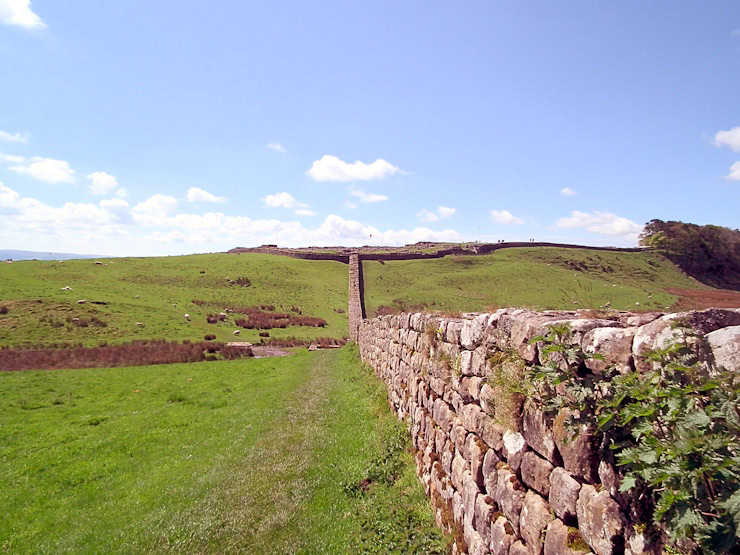
He also sought to create a buffer zone to protect the areas which had been most vulnerable to invasion, including along Hadrian’s Wall and the surrounding area of the Humber estuary. In order to do so, he appointed Dulcitius as the new Dux Britanniarum (a military position in Roman Britain) who had the task of maintaining control of this important zone.
By the conclusion of the year, all the gains made by the invaders had been reversed, Hadrian’s Wall was secure once more, law and order enforced and mutineers dealt with appropriately.
Smaller rebellions led by the likes of Valentinus who was himself an exile from the Pannonia region of central Europe was quelled by Theodosius.
The Romans were quick to realise their mistakes and subsequently embarked on a period of restructuring, which included the creation of the new province of Valentia. The recalibration would go some way in securing the governance of its northern regions with the mission of securing long-term peace.
Theodosius was given a hero’s welcome upon his return to Rome. In recognition of his victory, he was appointed as the senior military advisor to Valentinian, and his efforts would go a long way in securing his son’s rise through the ranks to become future emperor.
Nevertheless, not all was calm back in Rome’s northern provinces, as raids continued, albeit in smaller quantities.
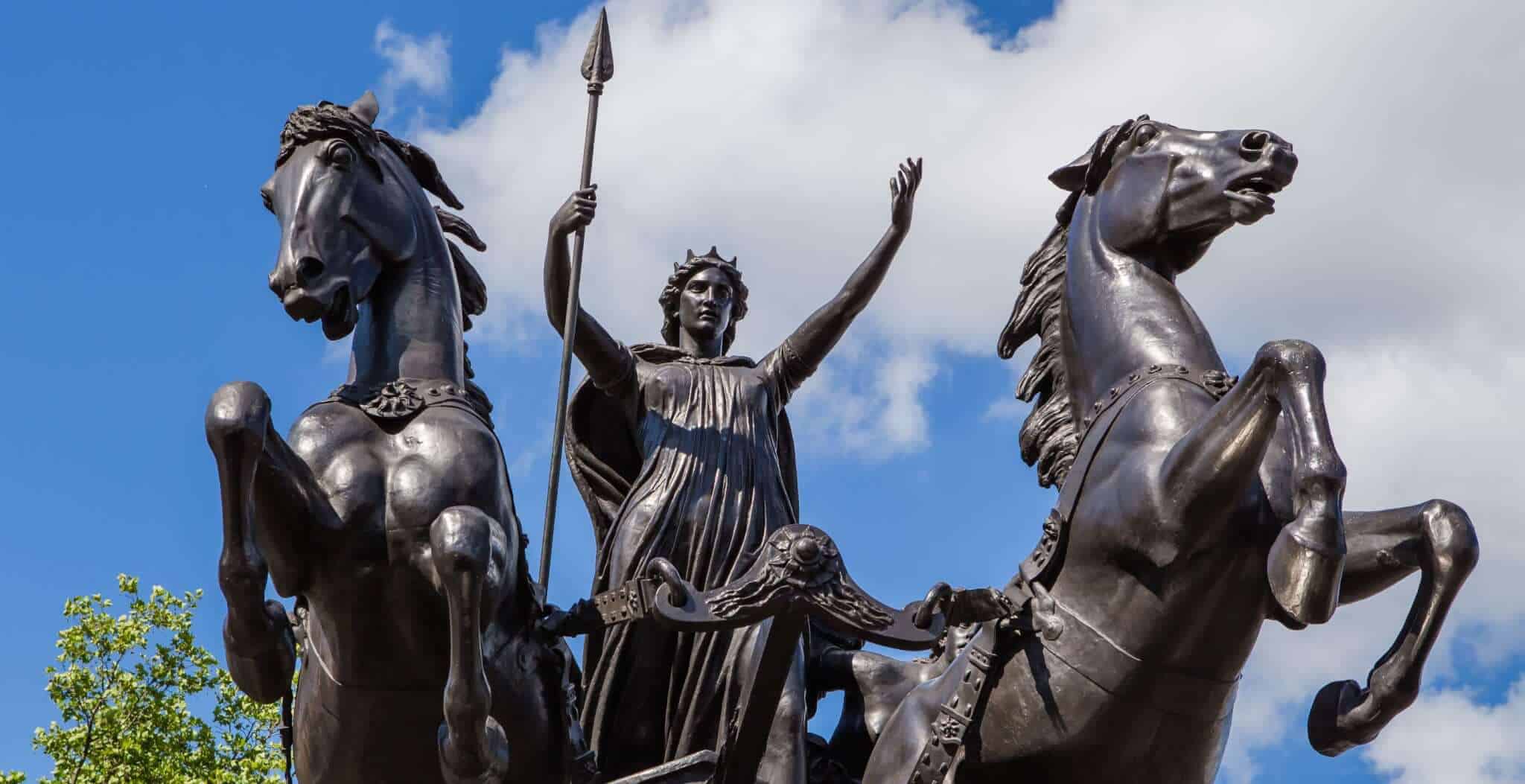
For Rome, the ‘Great Conspiracy’ was the most serious threat to its power over Britannia since the revolt by Boudica almost three centuries prior.
Whilst order was eventually restored by Theodosius, the seeds of discontent had been sown, the fragility of Roman rule evident for all to see, and only forty years later Roman power would leave these distant shores forever.
Jessica Brain is a freelance writer specialising in history. Based in Kent and a lover of all things historical.
Published: 27th July 2026.