

London may be one of the world’s most crowded and bustling cities, and crammed with motorised transport, but if you stroll along its streets you’re still never far from a horse. From the statue of Boudicca on her chariot at Westminster Bridge, to the equestrian statue of doomed Charles I at Charing Cross, there are plenty of reminders of London’s horse-drawn past.
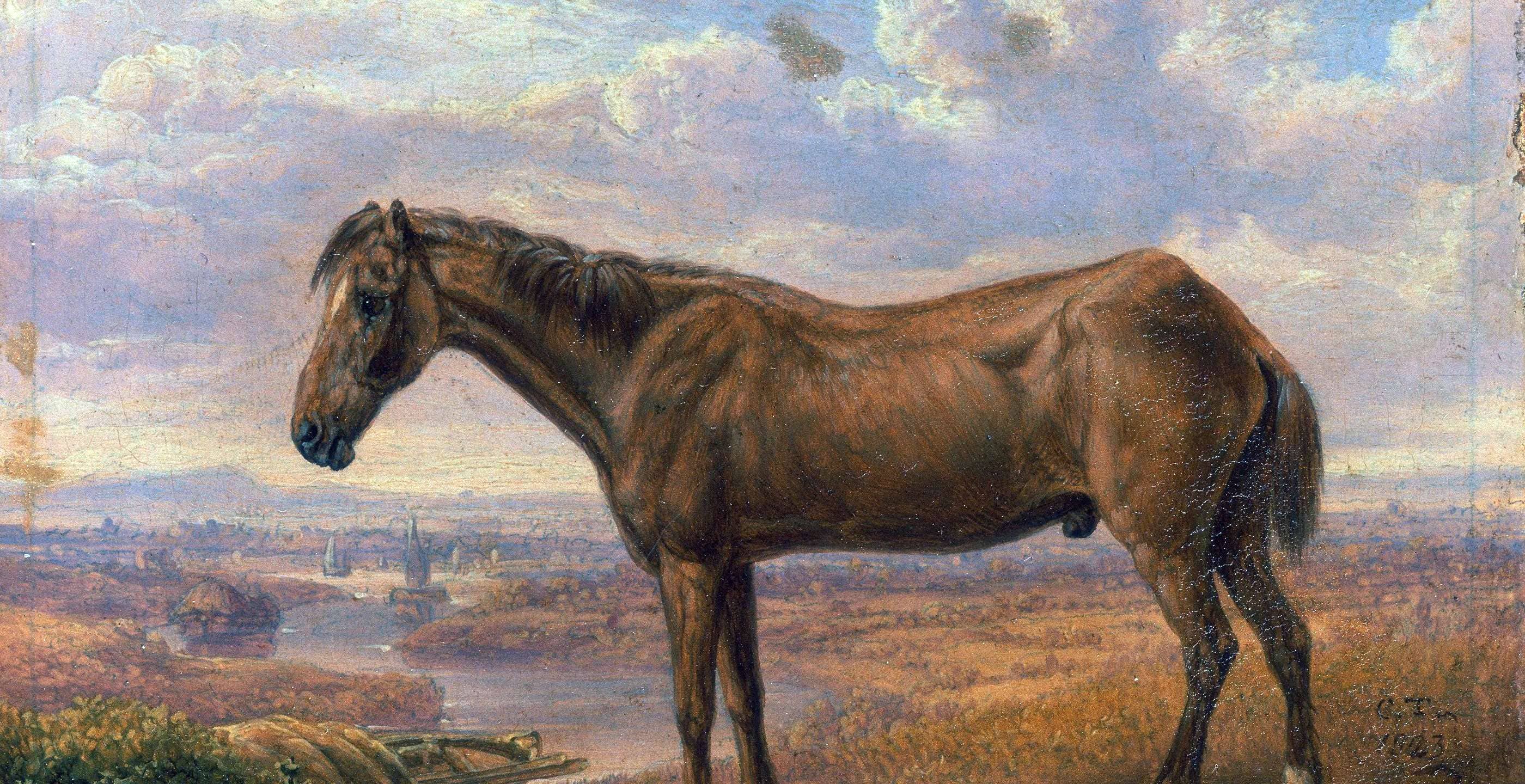
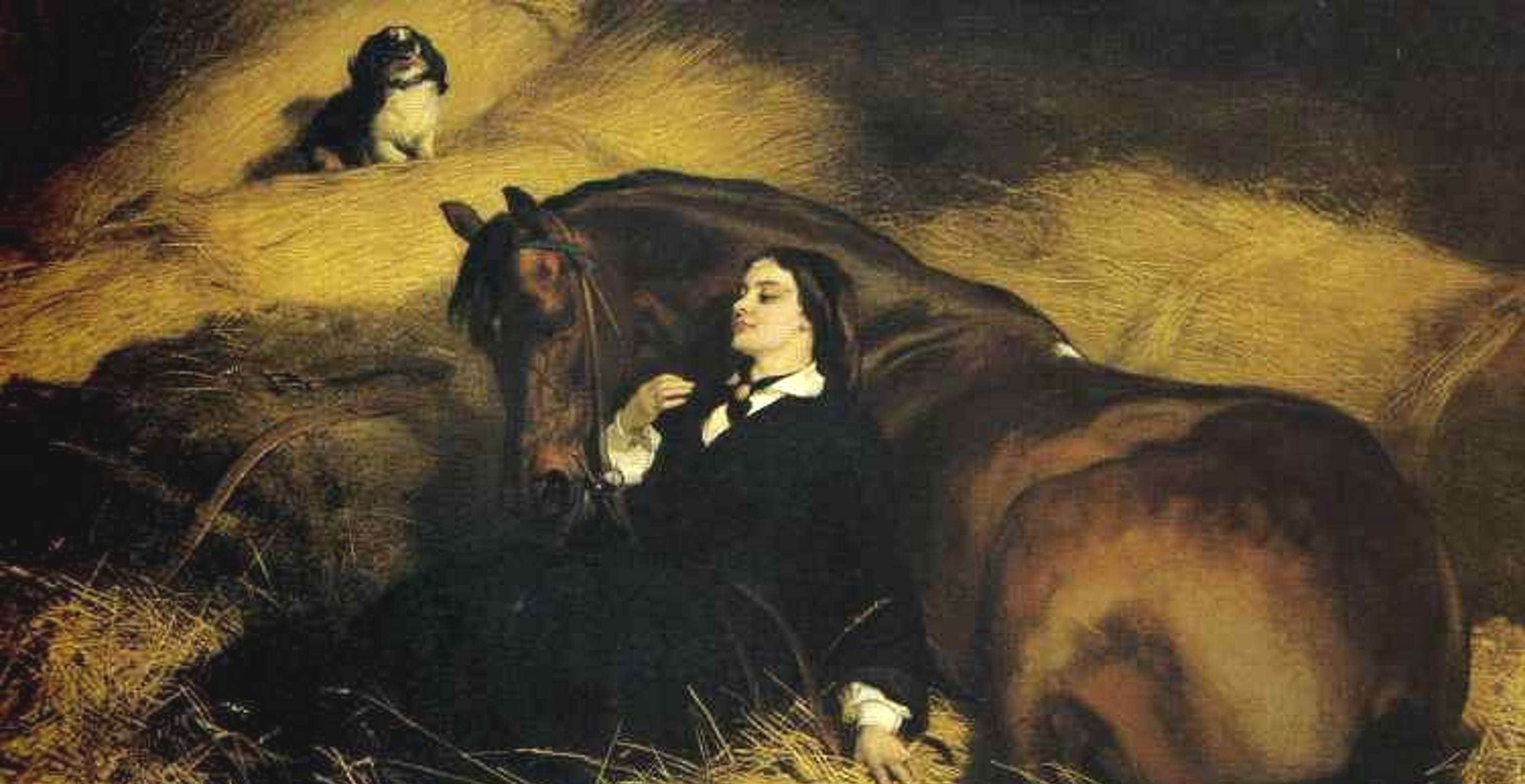
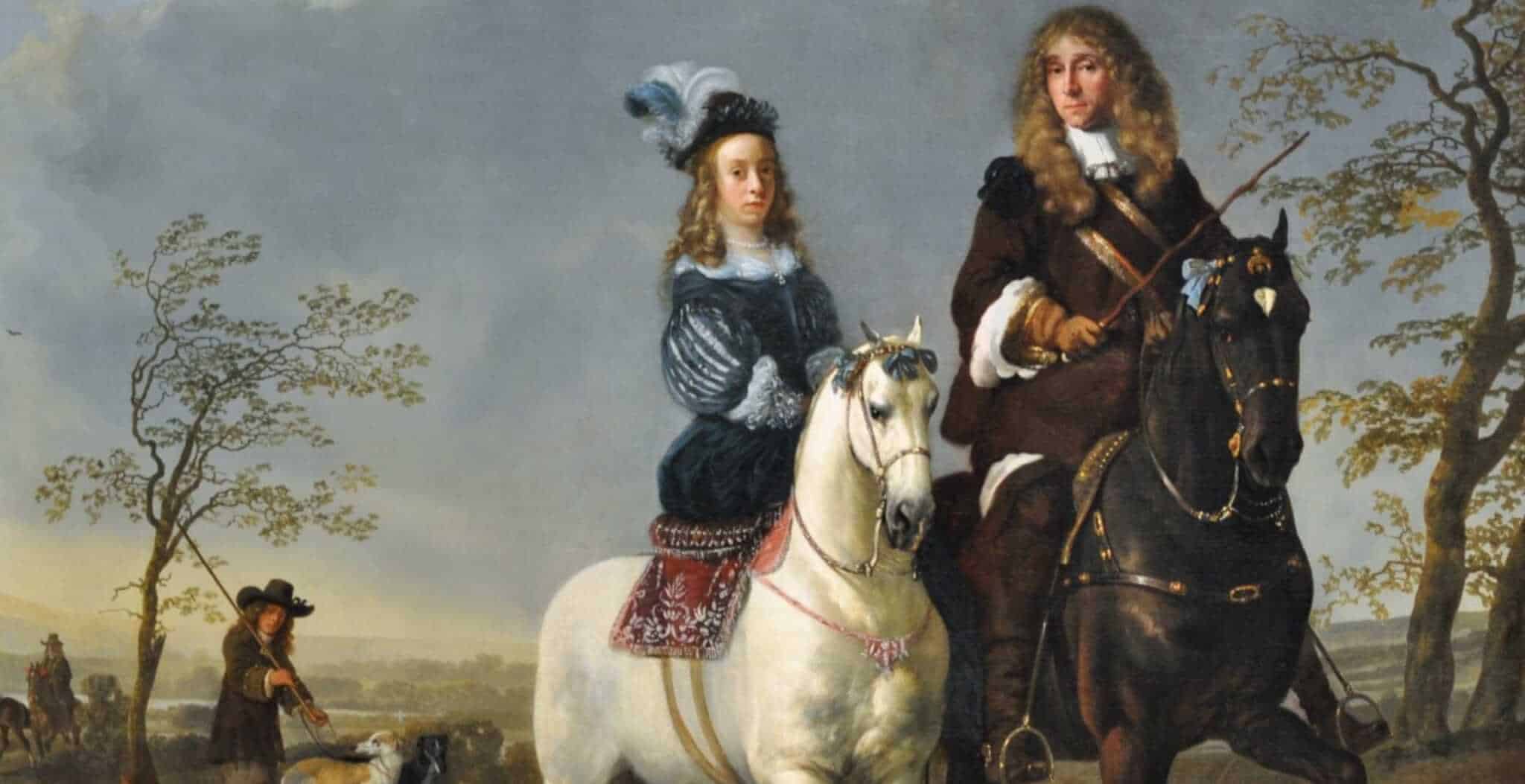
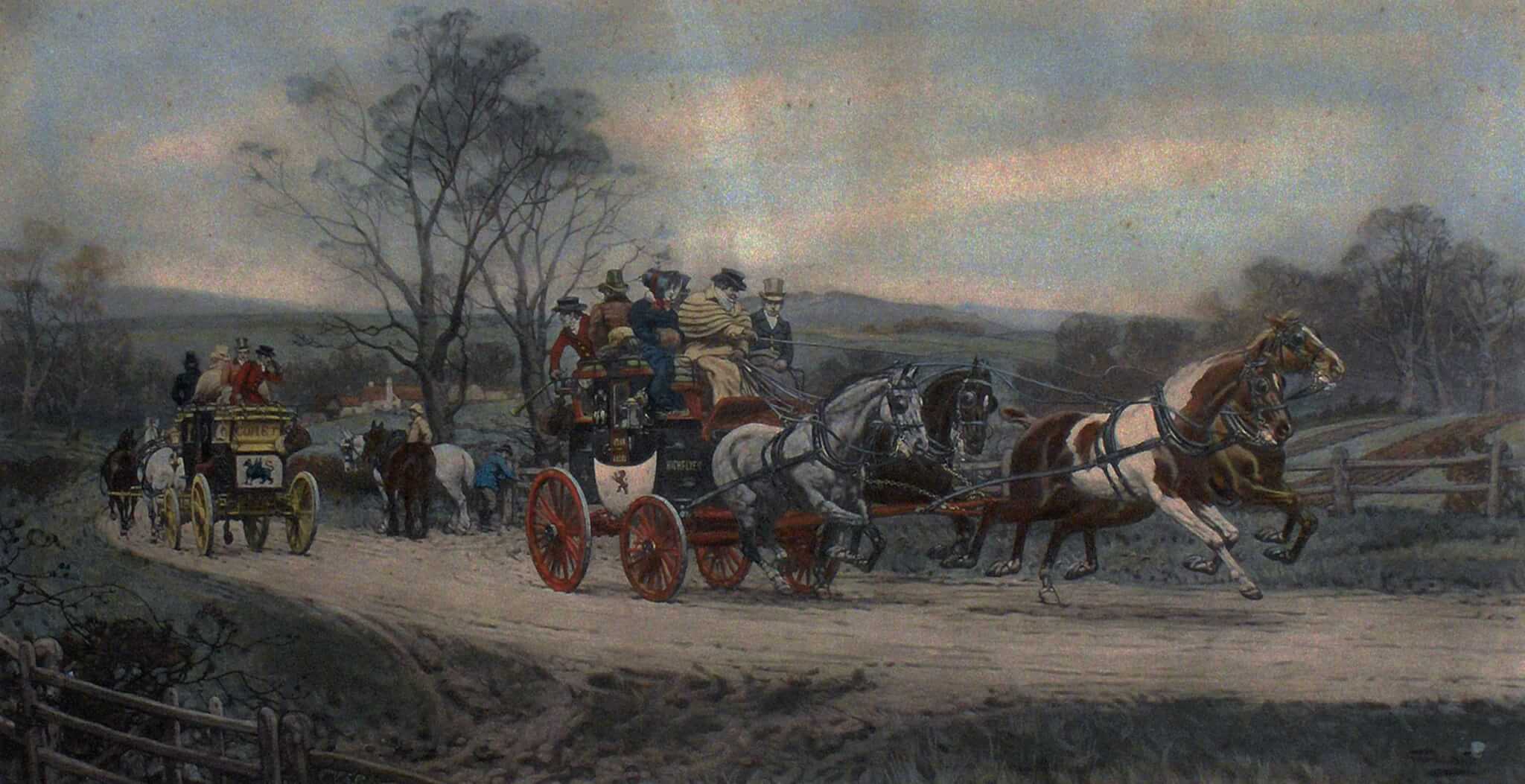
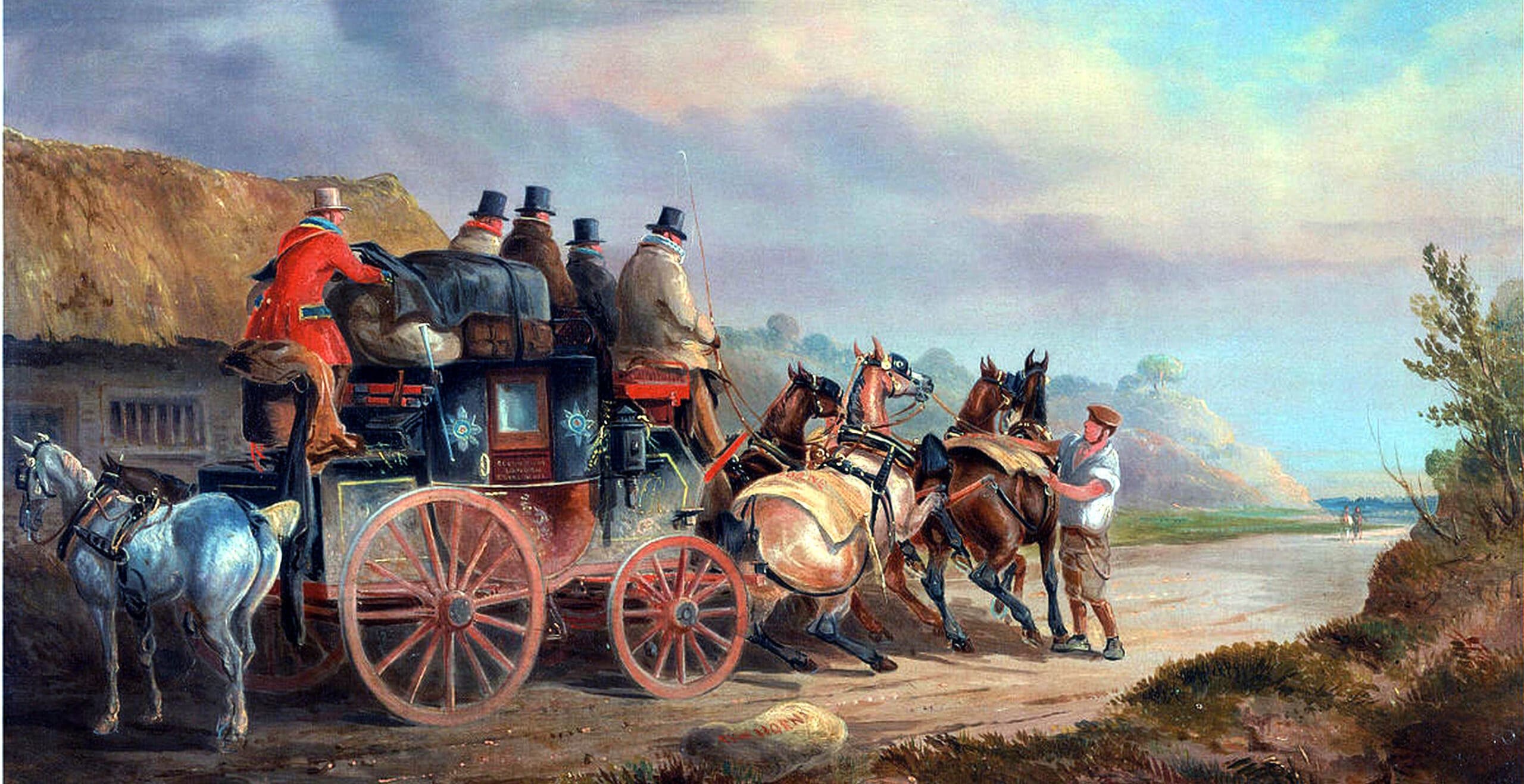
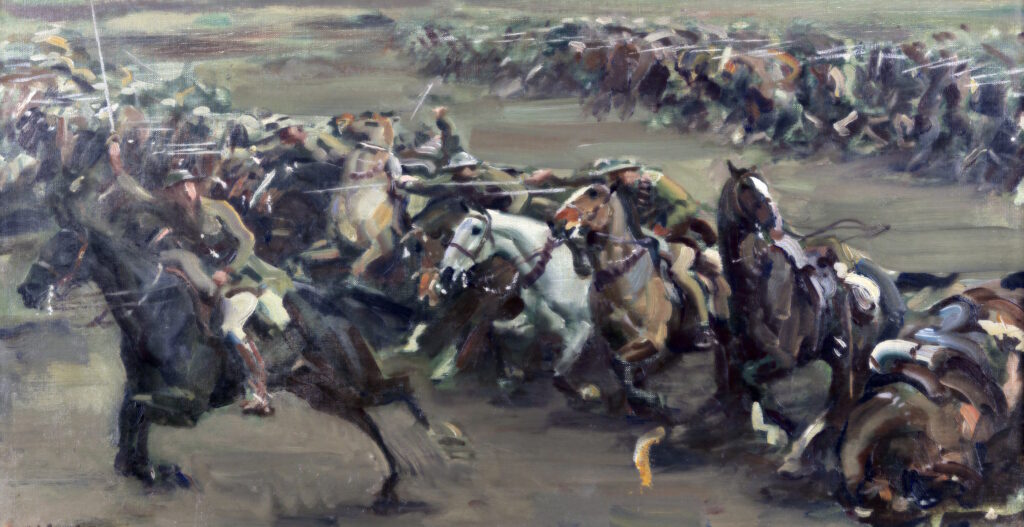
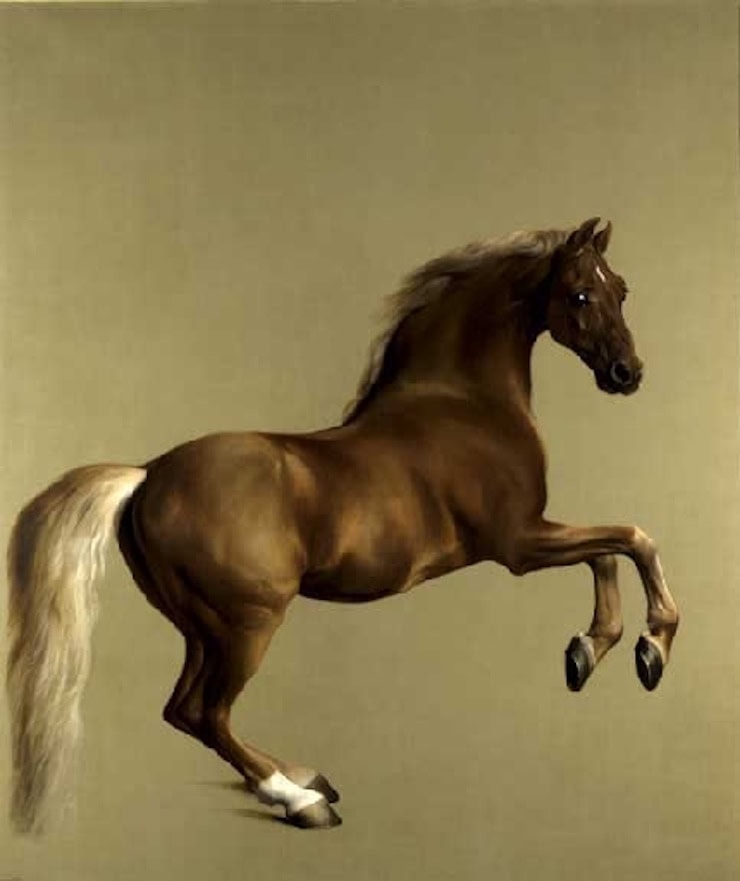
Wander into the National Gallery and another giant sized equestrian image of Charles I is on display. There’s also the portrait of probably the most famous racehorse in art history, Whistlejacket, painted by George Stubbs. There are plenty more paintings to see that have an equine theme to them. Working ponies wait patiently for their owners; a blacksmith shoes a horse in a rural smithy. There are dramatic cavalry charges and horses drawing vehicles of all types in all kinds of weather and terrain.
Over at the British Museum, there are more horses on show, and not forgetting the other equids too, including donkeys and mules. There’s an exquisite miniature four-horse chariot made from gold that comes from Central Asia and is around 2,500 years old. There are horses on painted silks from China, and horses on Greek pottery. Some relaxed looking equines munch on their lunch in a scene from an Egyptian tomb, while two more lively looking chariot horses in the upper register of the scene are clearly raring to go.
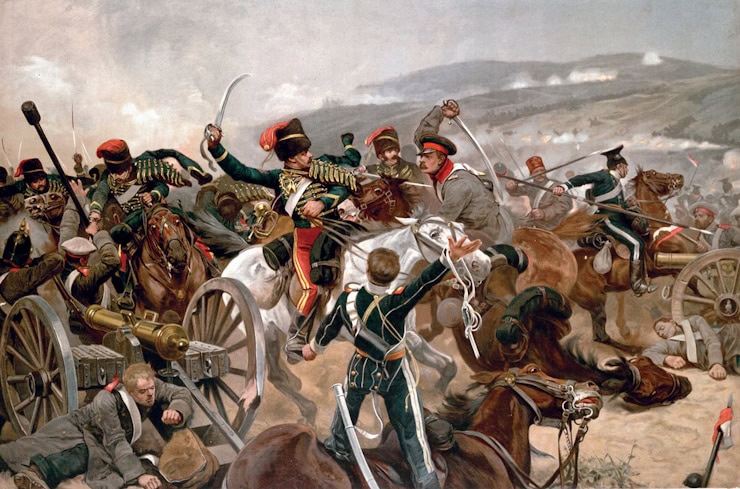
Take a trip to the London Museum, and there are lots more horsey artefacts, many from in and around the city itself. Horseshoes, hipposandals (a kind of early Roman horse shoe), medieval pilgrim badges with horses, lots of horse brasses, and of course, information about the way horses contributed to London’s social and economic life, whether ridden or driven. At the National Army Museum, there are poignant stories of the cavalry horses who died on battlefields all over the globe.
London was once a city of horses, and could not have survived without them. There were constructions of Bronze Age date on the banks of the Thames, including a bridge, probably out to an islet in the Thames. Horses were on the island of Britain quite soon after their domestication and were in use for driving, and most likely riding too, over 3,000 years ago. Although there isn’t much evidence for settlement in the area just prior to the arrival of the Romans, the local tribes were certainly rich in horses and famous for their chariotry skills.
The Romans would soon learn just how deadly those warlike people could be, using chariots to swiftly move into position on battlefields and then fight either by throwing spears from the chariots, or by dismounting and engaging on foot. The most famous rebellion against the growing power of Rome was led by Boudicca and no, there’s no evidence for her chariot having had scythe-like blades on the wheels. That wasn’t necessary, her forces were already scary enough.
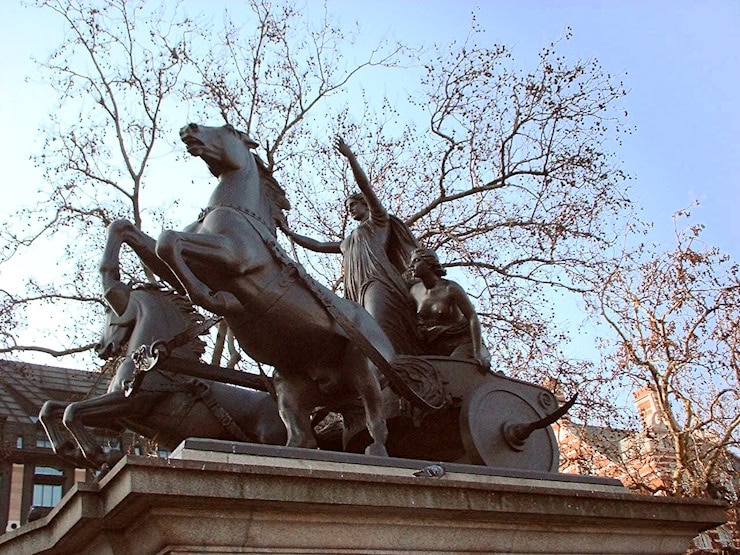
So it’s right that Boudicca and her chariot horses should stand there guarding one of the city’s most important locations – you really would want her to be on your side! The Romans brought great changes to the island, not least the arrival of Roman cavalry in large numbers. These were recruited from all over the empire, and many of the units were sent north to Hadrian’s Wall. As well as cavalry horses, plenty of working horses, mules and donkeys were also needed. They carried raw materials and finished goods on their backs, and drew them in carts. As a long network of routes extended across the land, more and more of them appeared, both supporting and stimulating the economy in diverse ways.
The Anglo-Saxons and Normans were inheritors of a pattern of horse use that was begun by the Romans. Horses were essential for travelling, although in Saxon times the international trade requiring horses may not have been quite so substantial as in Roman times. The northern and western parts of the island remained some of the areas producing the best horses, and in large numbers. Reared in the hills in semi-feral herds so they were tough and hardy, the horses of the uplands contributed to a dynamic horse trade that linked Britain to Ireland and continental Europe.
It was not just in the hills that herds could be found. They lived in the fen and marsh areas too. In a passage from Chaucer a stallion borrowed by two young clerics is released by a miller into the fens near Cambridge and dashes off to chase the “wild” mares there. “Weehee!” he screams in delight as he gallops away.
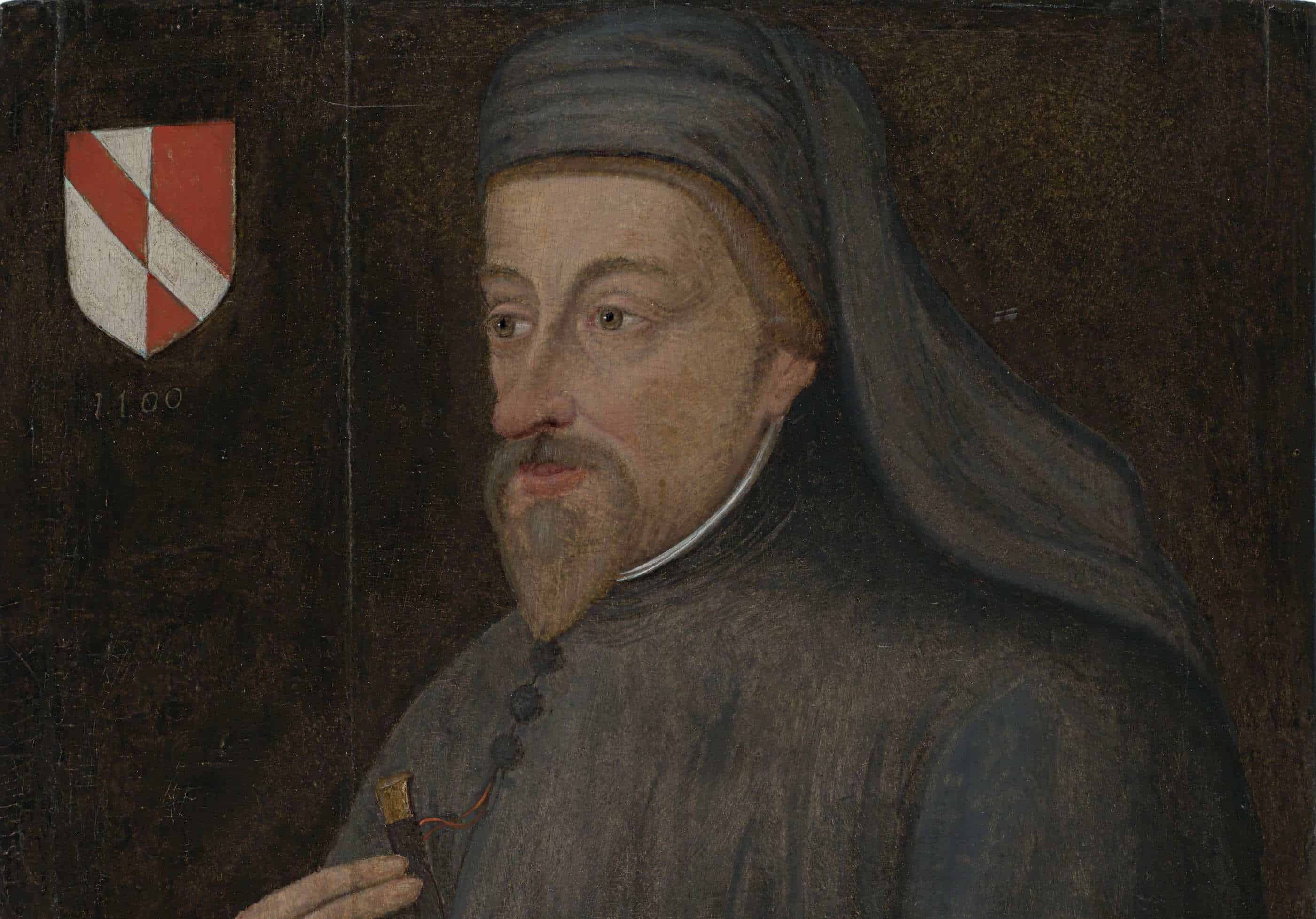
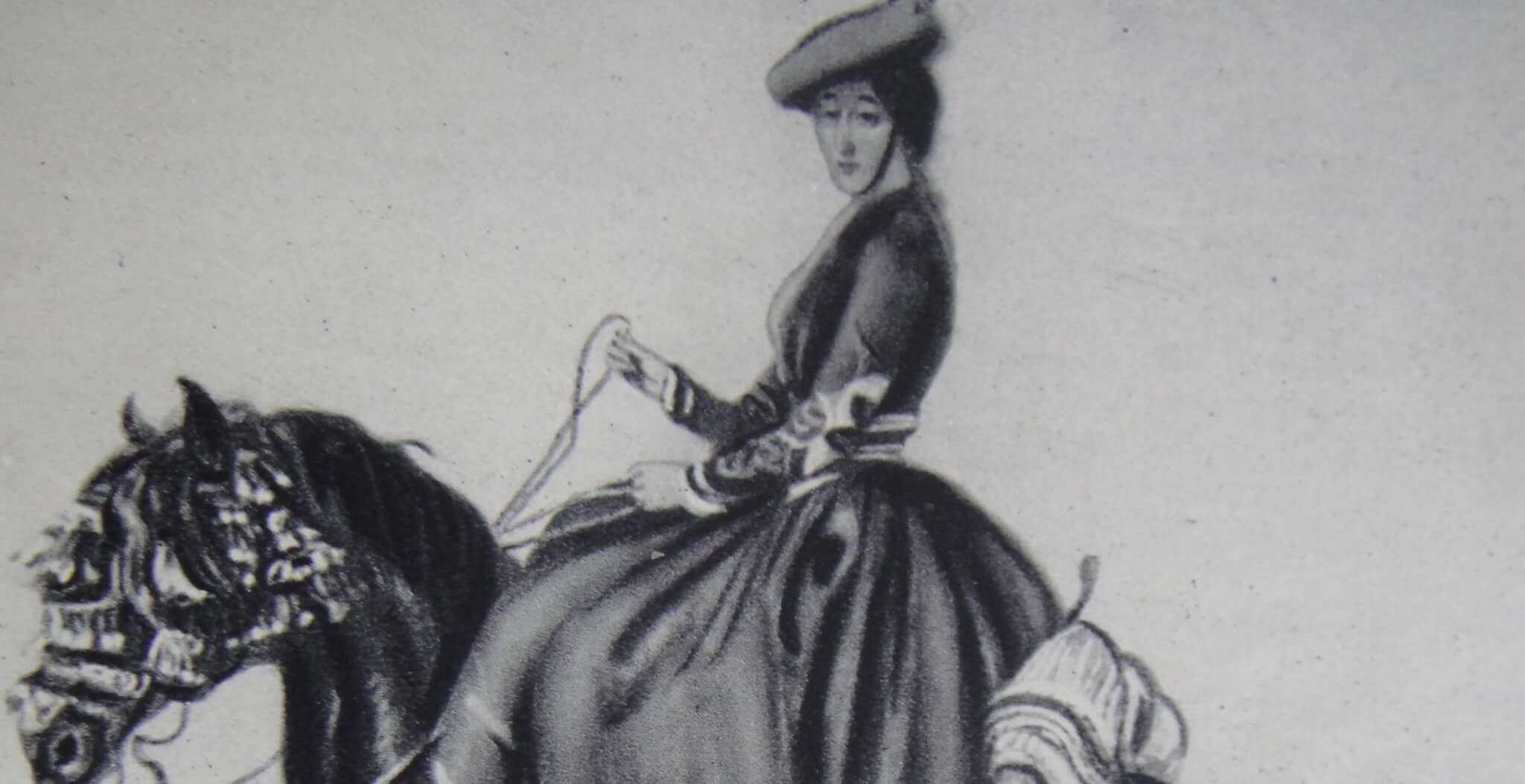
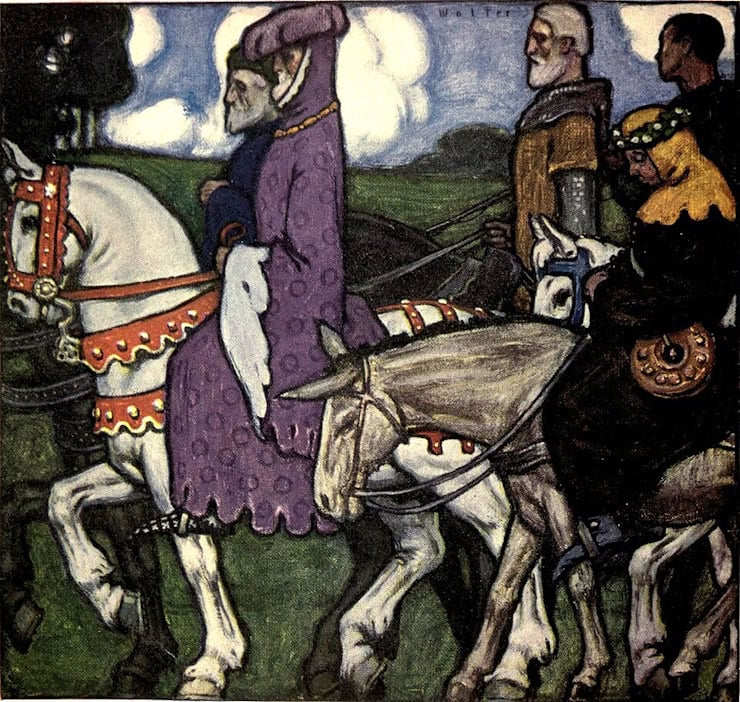
Think of medieval London and it is indeed Chaucer’s pilgrims who come most readily to mind. There they go, off to Canterbury, mounted on a wide range of horse types. The wealthy Wife of Bath rides a comfortable ambler, an elite mount, while humbler characters ride horses whose everyday use would have been as working animals carrying out a range of tasks in agriculture and commerce. There were no breeds then, horses were categorised by use.
Not only were horses used in practical ways, but also in ritual and symbolic ways. Many of the ancient ceremonies connected with London, such as the Ceremony of Quitrents, which involved horseshoes and horseshoe nails, had significant equine connections. One group of people who were extremely important were the marshalls, knight marshalls, and king’s marshalls. Their job title derived from the name of a humble worker: the marah scalc, or horse servant. Despite the name, the marshalls were some of the most powerful people in the kingdom, reflecting the important role of the horse in society. They looked after the health of the horses and were knowledgeable about farriery, the art of shoeing.
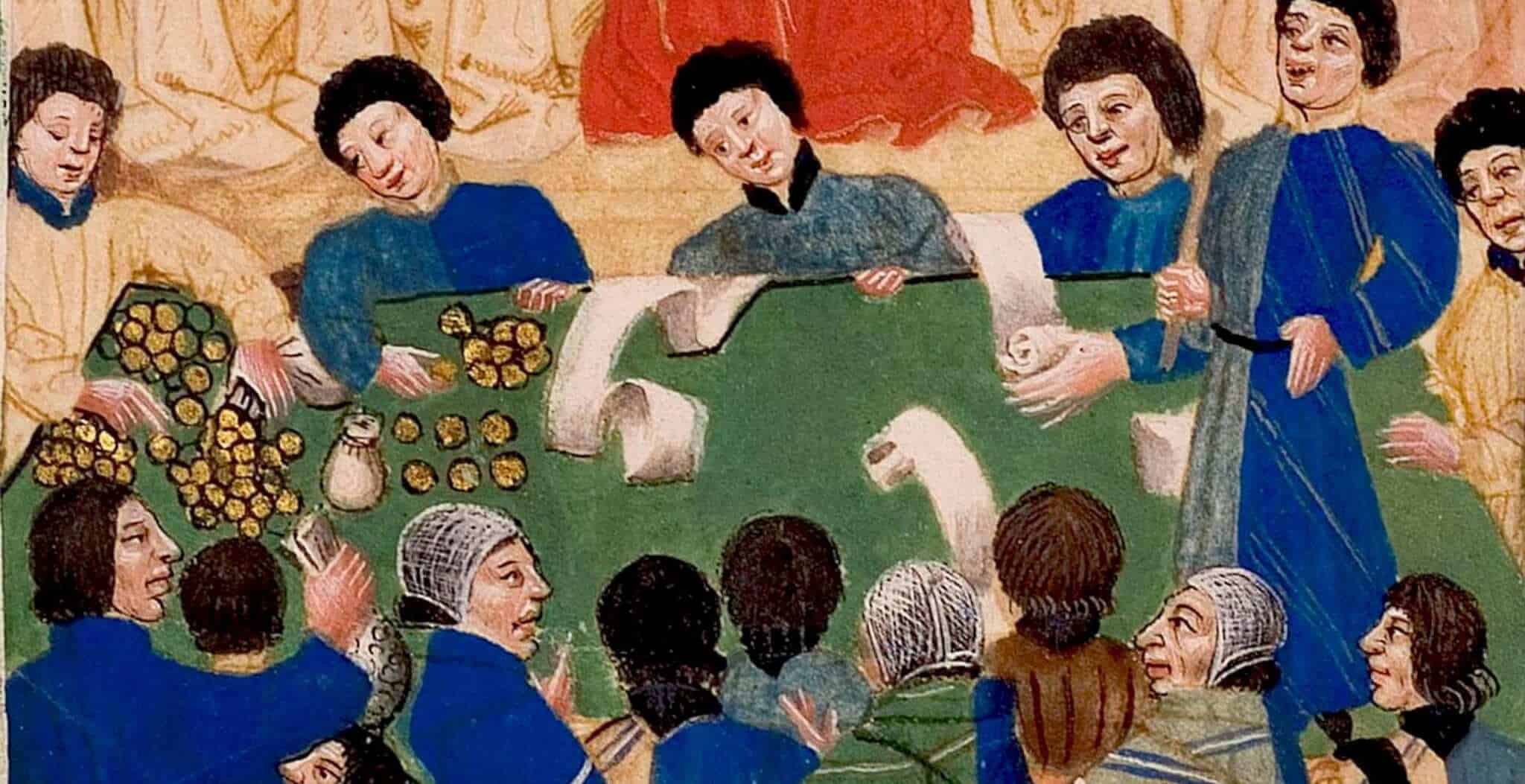
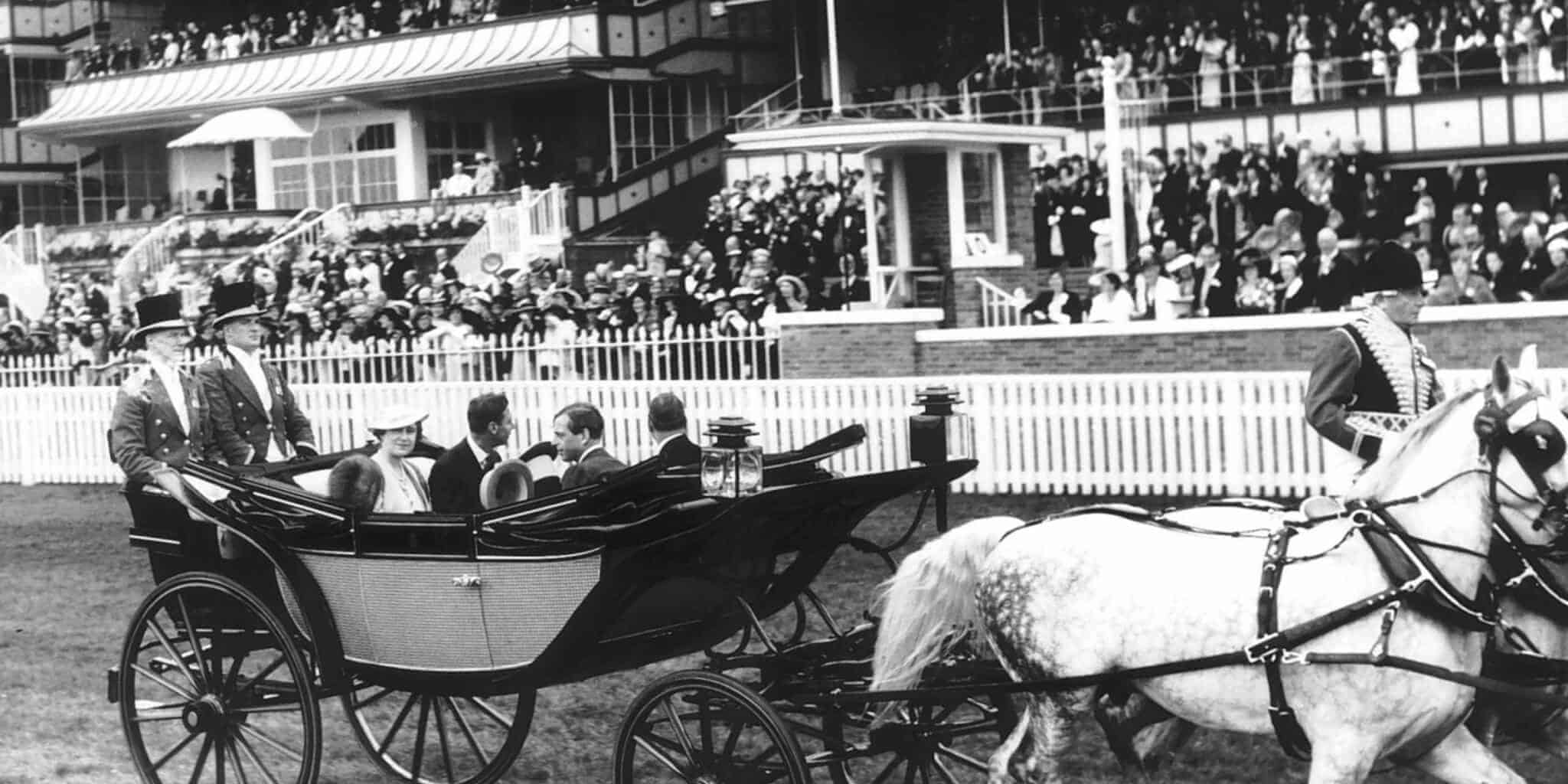
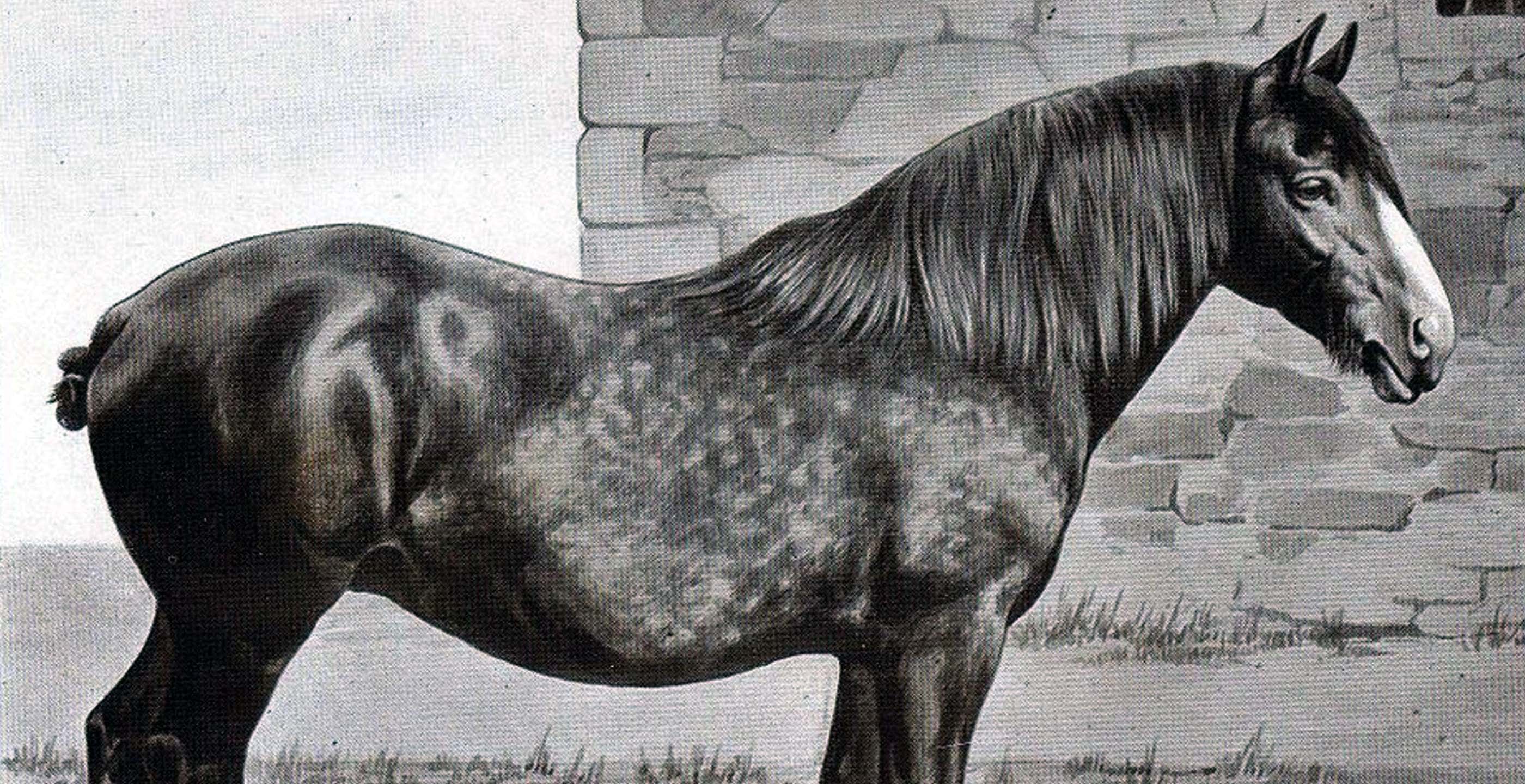
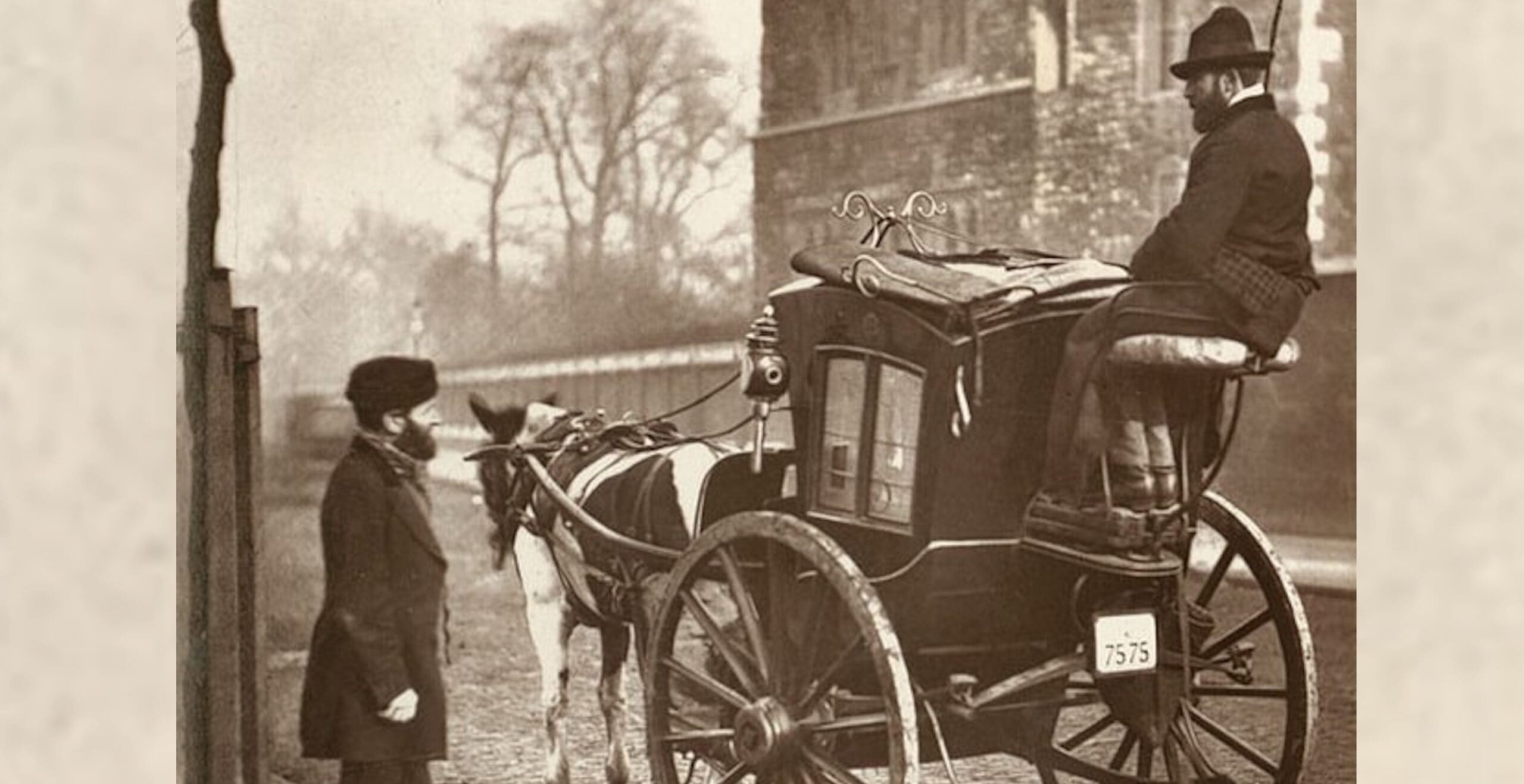
Horses were essential for most forms of royal display, highly visible at coronations, marriages, and funerals. A whole economy grew around horses. Veterinary surgeons focussed their knowledge on horses because that was where most of their work was to be found. Even the arrival of the train did not bring horse use to an end. Different kinds of horse emerged to meet changing needs. Speedy hansom cabs conveyed passengers to and from London’s railway stations in the fog, and giant Shires and Clydesdales drew brewery drays and worked on the railway yards.
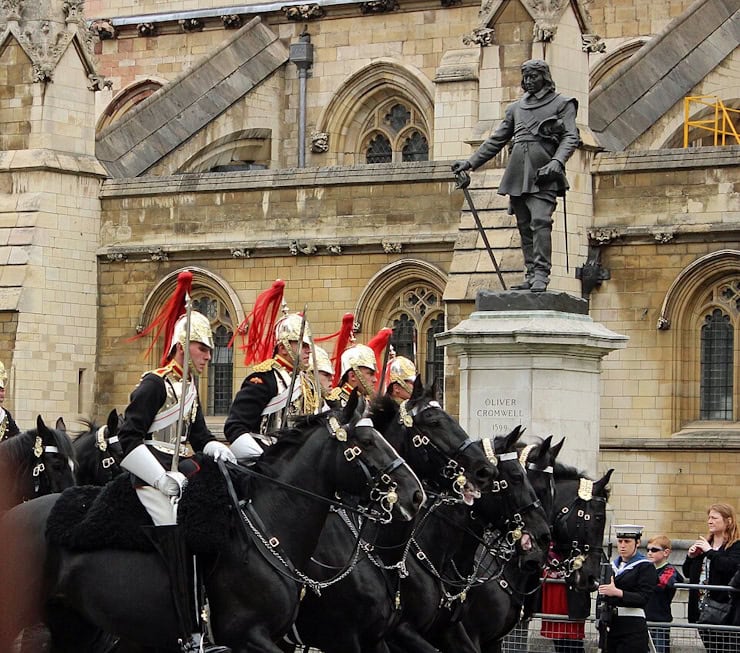
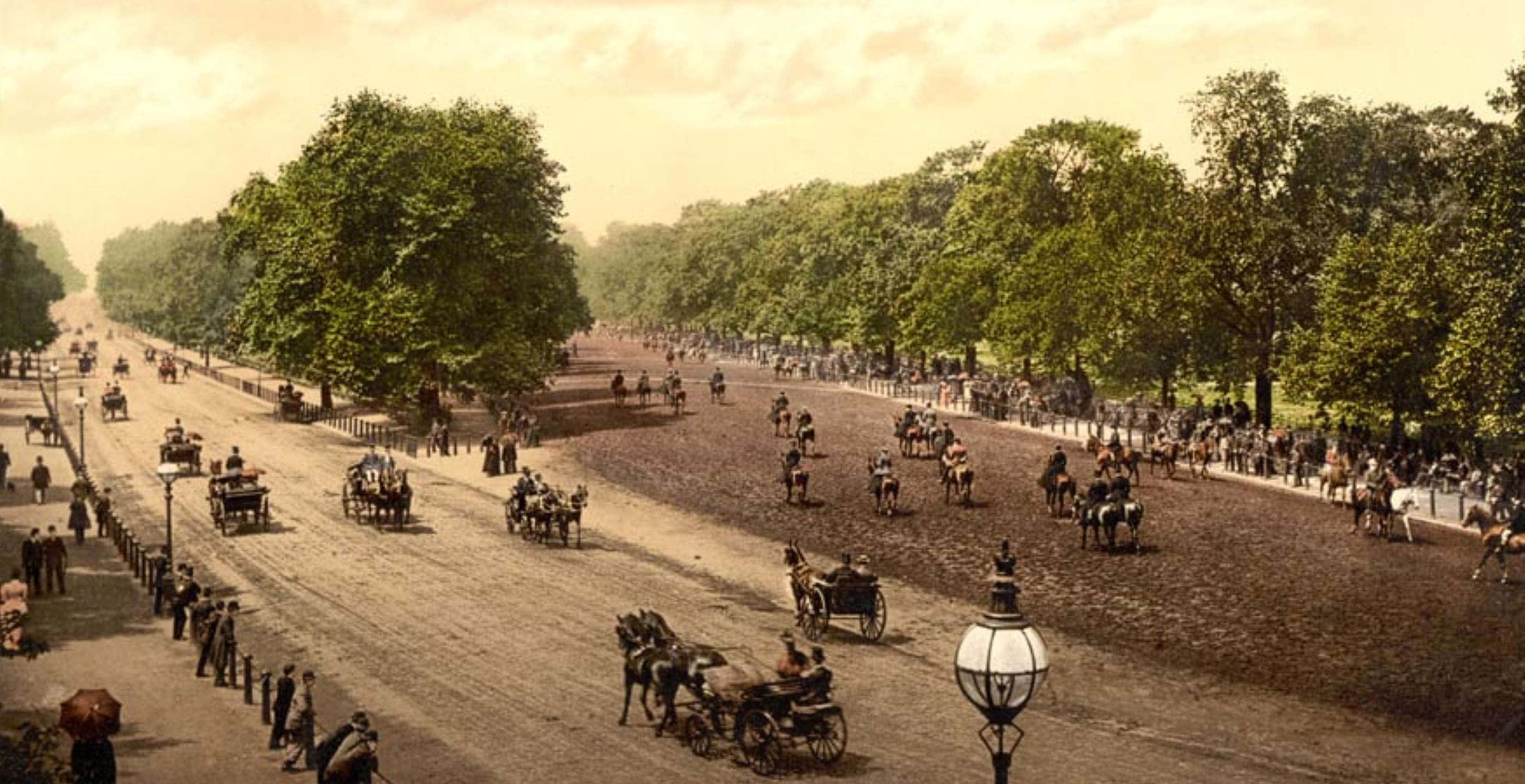
Even today visitors can find live horses in London too. The Household Cavalry rides out on London streets, leisure riders enjoy London’s parks, and the Royal Parks Shires help to maintain healthy meadows within sight of some of London’s major landmarks. Without horses, London would not have developed the way it did, and their story is as interesting as that of the great human characters who walked London’s streets.
Miriam A. Bibby PhD FSA Scot FRHIstS is an archaeologist, historian, and Egyptologist specialising in the history of the horse-human relationship. She is co-editor-in-chief of Cheiron, the International Journal of Equine and Equestrian History. She is the author of Invisible Ancestor: The Galloway Nag and its Legacy, the only monograph on the little-known yet extremely influential Galloway horse. A further book on the early history and historiography of the Thoroughbred racehorse is about to be published by Palgrave Macmillan. Her latest book, Working Horses in London, is available from Amberley Publishing. Find out more about it here: Working Horses in London – Amberley Publishing
Published: 12th November 2025