HISTORIC-


Home

Accommodation
  - By Region
      - England
      - Scotland
      - Wales
      - Ireland
      - Europe
  - By Type
      - Cottages
      - Castles
      - Hotels
      - B&Bs
      - Boats

History UK
  - Magazine
      - England
      - Scotland
      - Wales

Living History

Destinations UK

Culture UK

Marketplace UK

Links UK


About Us
Join Us
Contact Us
Site Map

Disclaimer
Privacy Statement


UK.com
THE history and heritage accommodation guide                                                                                 SITE MAP

Welsh Timeline

PREHISTORIC, BRONZE AGE, IRON AGE AND PRE-ROMAN WALES
4000BC - AD 43

ROMANS IN WALES AND BRITAIN
410 - 1066 

NORMAN WALES
1066 - 1200

WALES UNITED - REBELLION AGAINST THE ENGLISH
1200 - 1536

THE ACT OF UNION AND THE TUDORS 
1536 - 1603

THE STUARTS
160 - 1714

THE GEORGIANS
1714 - 1837

THE VICTORIANS
1837 - 1901

EDWARDIAN ERA AND WW1
1901 - 1918

POST WW1 AND WW2
1918 - 1960

  Welcome to History UK - the History of Wales!

FEBRUARY 2012

Every month we will feature articles relating to the history of Wales - famous people, famous battles, famous places etc.  These will build over the months into a full and intriguing insight into the history of this ancient land.

This Month's feature article

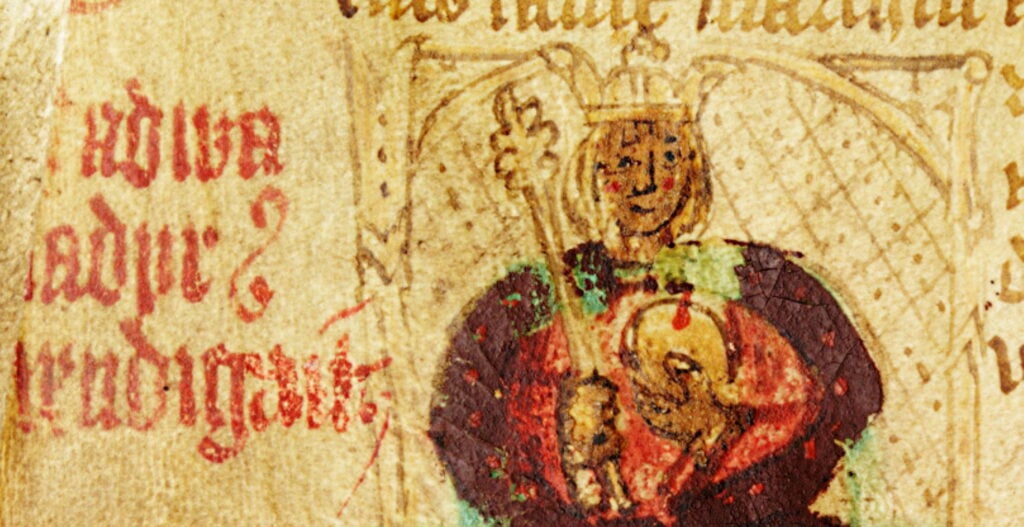
St David 
March 1st is St. Davids Day, the national day of Wales and has been celebrated as such since the 12th Century.....

Previous articles

World War One Timeline
Presenting the major events of each year of the First World War, the Great War, , from the assassination of Archduke Ferdinand in 1914 to the Armistice on November 11th 1918 and the Treaty of Versailles.....

World War Two Chronology
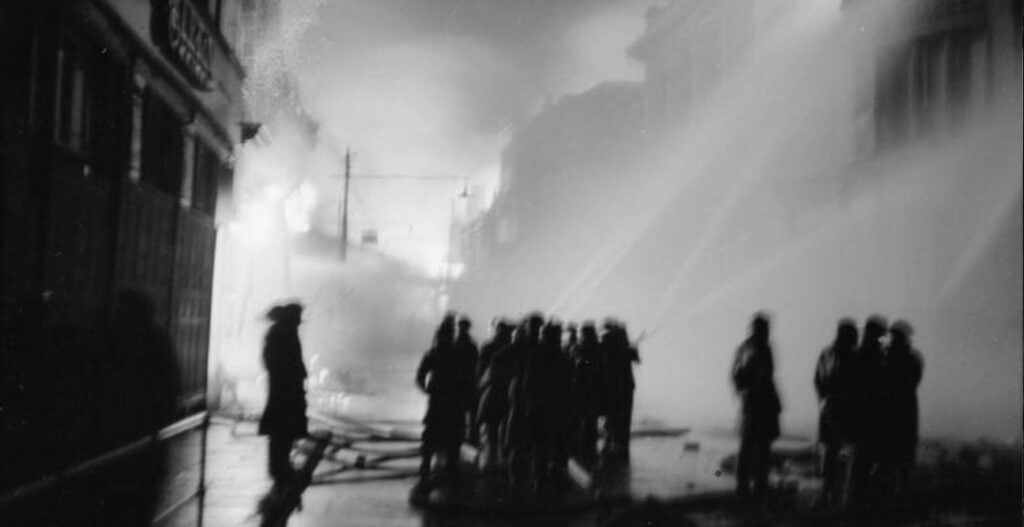
Presenting the major events of each year of World War II, from the German invasion of Poland in 1939, the evacuation from Dunkirk in 1940, the Japanese attack on Pearl Harbour in 1941, Montgomery’s famous victory at El Alamein in 1942.....
Now with Audio!

1939 ~ 1940 ~ 1941 ~ 1942 ~ 1943 ~ 1944 ~ 1945

St Dwynwen 
St Dwynwen's Day January 25th.
St Dwynwen is the Welsh patron saint of lovers, which makes her the Welsh equivalent of St Valentine......

Christmas Traditions in Wales 
Including the unique Boxing Day custom of beating young girls with boughs of holly...

Druids
Who were the Druids? Were they priests, mystics, healers, fortune tellers, teachers, philosophers? Or was there a darker side...

Dylan Thomas
Dylan Marlais Thomas was born in the Uplands suburb of Swansea, South Wales on 27 October 1914, and whilst arguably the most famous Welsh poet of all time, paradoxically his literary work is written entirely in English...

Owain Glyndwr (Owen Glendower)
Medieval Welsh nationalist leader.
In September 1400, when he was 50 years of age, Owain Glendower organised a rebellion against the English king, Henry IV and claimed the title, Prince of Wales...

The 'Art' of Hanging
As a form of capital punishment, hanging was introduced to Britain by the Germanic Anglo-Saxon tribes as early as the fifth century. However not all executions went smoothly...

The Battle of the Somme 1916
July 1st 1916 - the bloodiest day in the history of the British Army, or The Battle of the Somme – The Lost Generation. Ninety years ago on 1st July 1916 at around 7.30 in the morning, whistles were blown to signal the start of what would be the bloodiest day in the history of the British Army.

Llanelli Railway Riots, August 1911
Britain experienced a period of significant industrial conflict during 1910 - 1912, which was to become known as ‘the Great Unrest’ during which the working classes stood together to strike against unfair wages and working conditions....

The National Eisteddfod of Wales
The National Eisteddfod is the largest and oldest celebration of Welsh culture, unique throughout Europe...

Joseph Jenkins, Jolly Swagman
Waltzing Matilda' is Australia’s best known folk song and tells the story of a swagman. Yet possibly the most famous swagman of them all was a Welshman, Joseph Jenkins.....

Empire Day -  24th May
The words "Empire Day" summon up an image of a motherly Queen Victoria presiding over an Empire which spanned almost a quarter of the entire globe. However it was not until after the death of Queen Victoria, who died on 22 January 1901, that Empire Day was first celebrated....

The Festival of Britain 1951 
2011 marks the 60th anniversary of the Festival of Britain. The Festival of Britain opened on the 4th May 1951, celebrating British industry, arts and science, and inspiring the thought of a better Britain...

The Mabinogion
The Mabinogion is based upon a 14th century manuscript known as ‘Red book of Hergest’. The work is a collection of eleven tales of early Welsh literature and draws upon the mystical word of the Celtic people intertwining myths, folklore, tradition and history......

The King James Bible 
400 Years of the King James Bible.  The King James Bible has long been celebrated as one of the most significant texts of all time.....

St Patrick -  the most celebrated Welshman in America?
St. Patrick's Day is celebrated in many communities across the world each year on March 17th.  And, although he may be the patron saint of Ireland, it is in the United States where the celebrations have become a national festival. Most Americans, and other folk across the world, assume that Patrick was Irish: not so, many scholars believe he was Welshman!

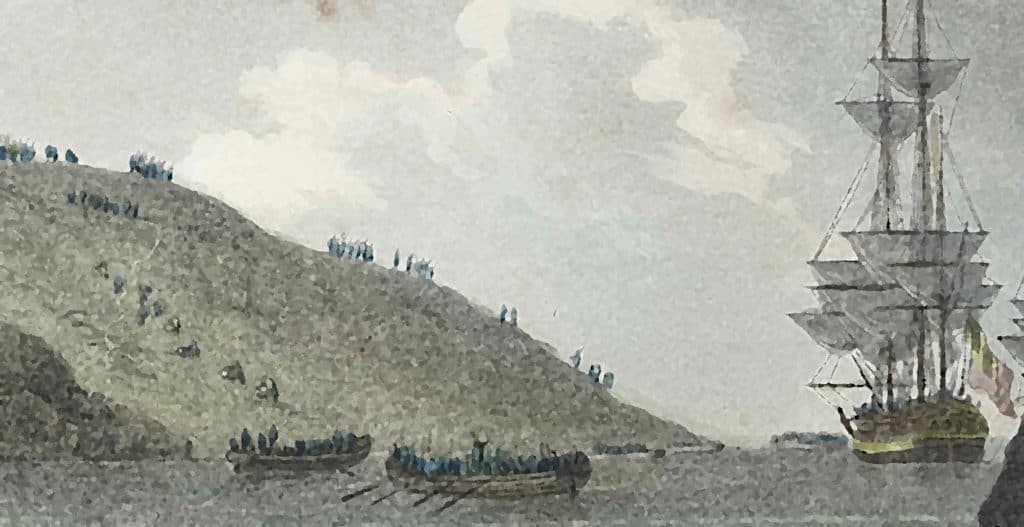
22nd February 1797: The Last Invasion of Britain 
How Jemima Fawr" (Jemima the Great) and the ladies of Fishguard, with the help of rather a lot of Portuguese wine, saved the day!

Decimal Day: Monday 15th February 1971
Prior to 1971, the pound sterling equalled 240 pence, split into 12 shillings with 12 pence in each shilling. There were threepenny bits, tanners, 10 bob notes, ha'pennies and farthings. On Decimal Day in 1971 the new pound worth 100 new pence came into circulation.....

The King's Speech
You’ve heard about the award winning film - which has just been nominated for 12 Oscars - now you can view the original transcript of the King’s Speech, which was sent to Scotland Yard in 1939, announcing that Britain was going to war....

Welsh Surnames
Have you ever wondered why there are so many Jones’ in a Welsh phonebook?.....

Victory in Europe Day - V-E Day  
60 years ago on
May 8th 1945, the Allies celebrated the defeat of Nazi Germany and the end of Adolf Hitler's Reich, formally recognising the end of the Second World War in Europe....

The Evacuation of Dunkirk
This year 2010 marks the 70th anniversary of the evacuation of more than 300,000 Allied soldiers from the beaches of Dunkirk, France between May 26th and June 4th 1940, during World War II.....

The Romans in Wales 
There was a fierce battle in A.D. 50 at the hill fort at Hereford Beacon between the Silures and the Roman army. Although the Silures, led by Caractacus, lost the battle, the Romans maintained only a brief and tenuous grip on the native Welsh......

Lloyd George 
Some have called him ‘the most famous Welshman ever born in Manchester’, however it was David Lloyd George’s Welshness that so steered his career and establish him one of the most influential British politicians of modern history....

Lawrence of Arabia 
Thomas Edward (T.E) Lawrence, more popularly known as Lawrence of Arabia, was born at Tremadoc in North Wales....

The Outbreak of World War II and the Major Events of 1939
On September 1st 1939 Germany invaded Poland.  2009 sees the 70th anniversary of the outbreak of World War II....

Ruthin, Denbighshire, North Wales
Ruthin is a small historic market town in Denbighshire, North Wales, in the beautiful Vale of Clwyd. Ruthin has a long, exciting and interesting history spanning over 700 years including battle, siege - and a sex scandal that rocked Parliament and society.....

Rule, Britannia!
As a nation, we may no longer ‘rule the waves’, but we are still proud of Britain. Alongside our national anthem, we also sing the patriotic ‘Rule, Britannia!’, regarding it, too, as a song to represent the strength of our nation.....

Patagonia - the Welsh 'New World' 
The first group of nearly 200 settlers sailed from Liverpool in late May 1865 aboard the tea-clipper Mimosa.......

The English Conquest of Wales 
The struggle of the Welsh princes against the English crown

Henry Morton Stanley - "Dr Livingstone I presume..."  Sir Henry Morton Stanley’s early life appears to have been a mix of poverty, adventure and make-believe. Stanley was actually born John Rowlands in the Welsh county town of Denbigh in 1841. His teenage mother Elisabeth Parry registered the birth of "John Rowlands, Bastard", at St. Hilary's Church.....

The Victoria Cross  On 26th June 1857, at an award ceremony in Hyde Park, Queen Victoria presented the first sixty-two Victoria Crosses in front of a cheering crowd of 100,000 people. A century and half later, the medal remains the highest honour for bravery and valour that can be awarded to members of the British Armed Forces.....

The Legend of the River Conwy Afanc  The Afanc was a legendary Welsh water monster, likened, some have said, to the Loch Ness Monster. The Afanc lived in Llyn-yr-Afanc (The Afanc Pool) in the River Conwy.......

“Just one more push” to Passchendaele  On 6th November 1917, after three months of fierce fighting, British and Canadian forces finally took control of the tiny village of Passchendaele in the West Flanders region of Belgium, so ending one of the bloodiest battles of World War I. With approximately a third of a million British and Allied soldiers either killed or wounded, the Battle of Passchendaele (officially the third battle of Ypres), symbolises the true horror of industrialised trench warfare.

World War Two Chronology   Presenting the major events of each year of World War II, from the German invasion of Poland in 1939, the evacuation from Dunkirk in 1940, the Japanese attack on Pearl Harbour in 1941, Montgomery’s famous victory at El Alamein in 1942...... 

Traditions and folklore  An introduction to some of the folklore and traditions in Wales 

The Legend of Gelert  A very faithful hound...

Destinations UK - St Dogmaels and Cardigan, West Wales
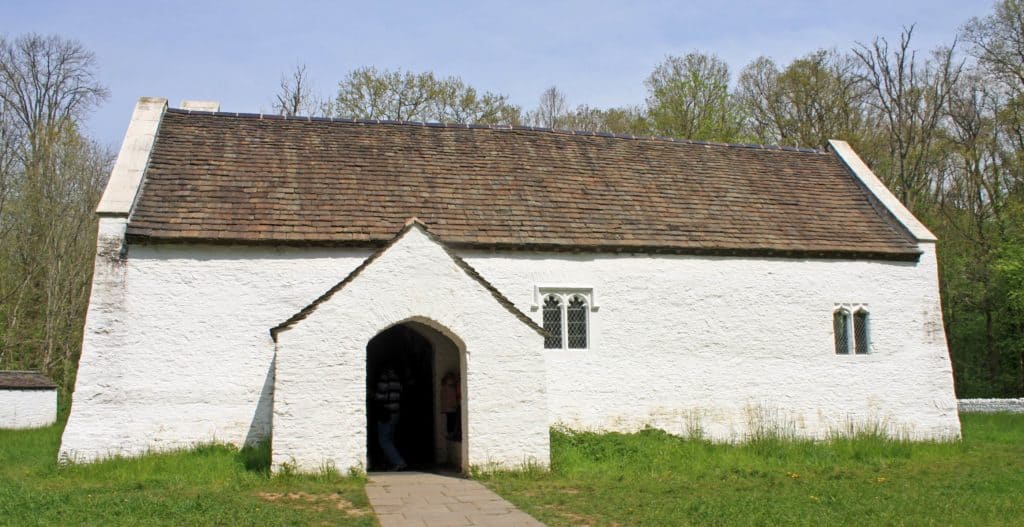
St Dogmaels occupies a beautiful situation, overlooking the River Teifi opposite the town of Cardigan.....

The Longbow  The longbow, also called the Welsh longbow, was a powerful type of medieval longbow used to great effect during the Hundred Years War....

The Great Orme Mines The Great Orme Mines in Llandudno boast over 5 miles of explored tunnels and passageways.  In 2005 it won the title of 'The Largest Prehistoric Copper Mines in the World' in the Guinness World Records.  This year marks the 15th anniversary of the mines being open to the public for everyone to visit and enjoy this incredible site.

The Leek - the National Emblem of the Welsh  Proudly sported every St. David’s Day on 1st March and at every international rugby match, the leek is now widely recognised as the national symbol of Wales. But why is it that patriotic Welshmen and women across the world attach this strong smelling member of the onion family to their clothing? The true origins are now perhaps lost in myth and legend...

The Red Dragon  The proud and ancient battle standard of the Welsh is The Red Dragon (Y Ddraig Goch)....

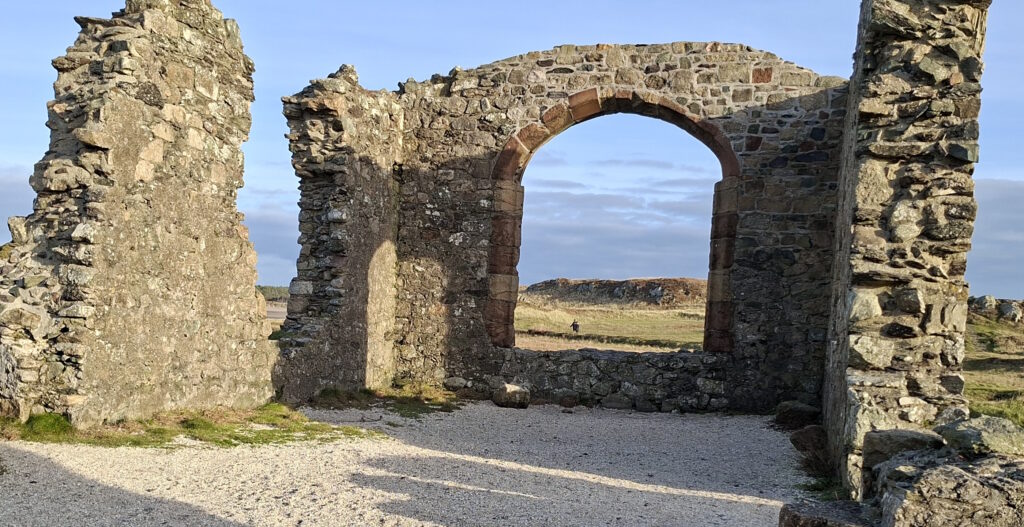
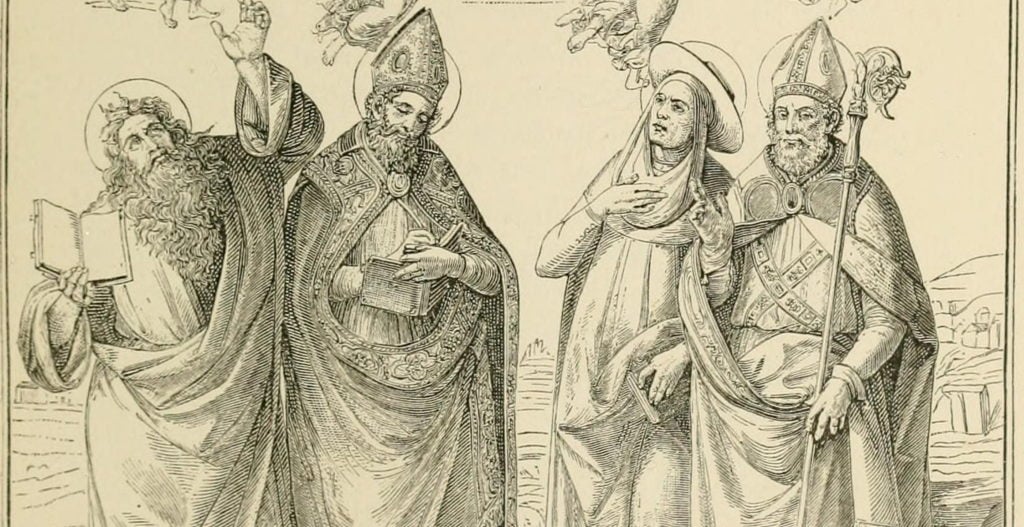
Destination UK - St Davids - tiny Cathedral city, one of the most important shrines of medieval Christendom and place of pilgrimage for centuries

The Welsh Atlantis?  Amongst the many legends associated with the Great Orme in Llandudno is the story of Llys Helig (Helig`s Palace) and the lost Land of Tyno Helig......

The Mold Riots   The history of the border town of Mold in northeast Wales is fascinating in itself; it is however the events surrounding the summer of 1869 that will record forever the town's role in the social history of Britain.....

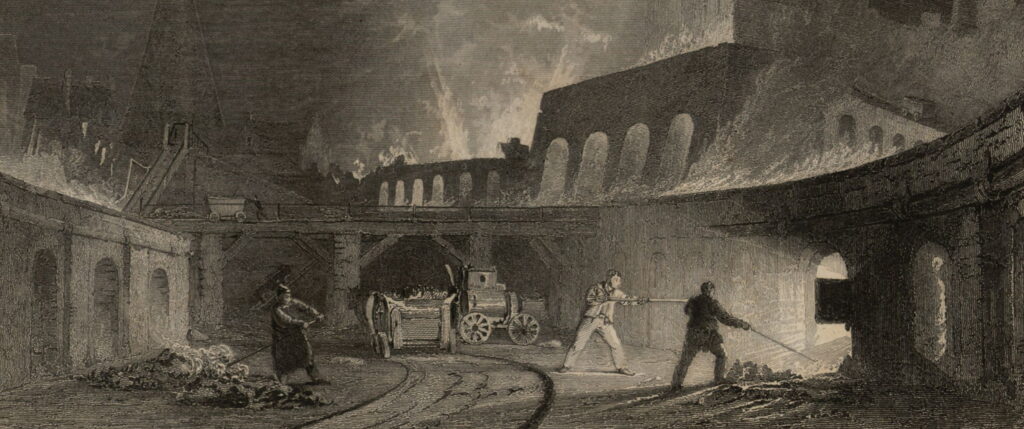
Merthyr and the Welsh Men of Steel  In the mid 1700’s, Merthyr Tydfil was just a small Welsh farming village in the upper Taff Valley. By the early 1800's Merthyr was the largest town in Wales and the world's number one steel town.....

Cawl Post Card #CC14A Taste of Wales

The Discovery of America.......by a Welsh prince?

Destinations UK - Aberystwyth, Ceredigion Long before the Normans built the first castle in Aberystwyth, Iron Age settlers used the hilltop called Pen Dinas to build a huge fortification which still dominates the skyline today.....

Twm Shon Catti  - The Welsh Robin Hood!

The Ogre of Abergavenny   In the 12th century, the Norman Lord William de Breos earned the undying hatred of the Welsh people because of his cruelty.  He is remembered as the Ogre of Abergavenny....

The Rebecca Riots   Men dressed as women protesting against English Law in Wales....

Isca - the forgotten Roman fortress

Destinations UK - Oxwich, Gower, South Wales  A castle, a historic church, a nature reserve, three miles of golden sand......and an intriguing history of "wrecking"!!

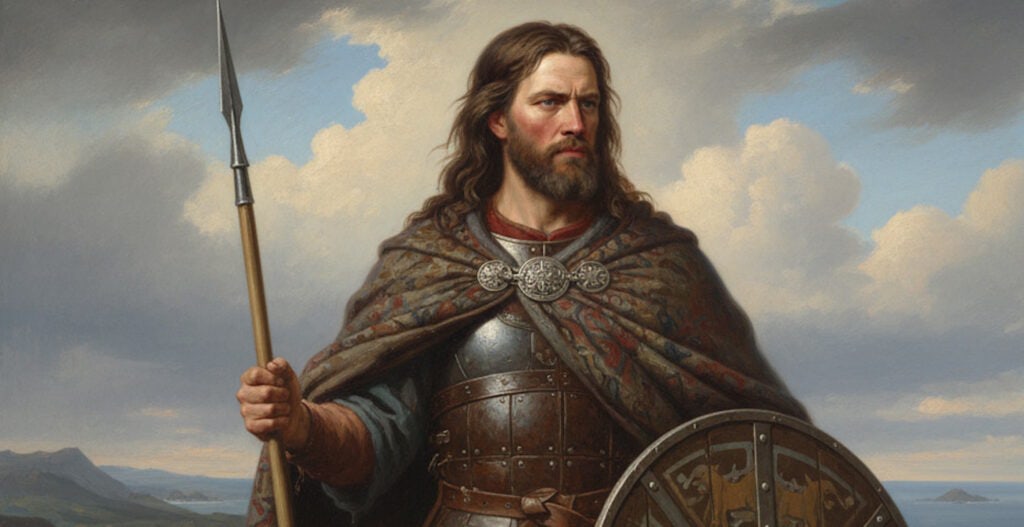
Rulers of Wales The Kings and Princes of Wales


More British History
History of England - History of Scotland - History of Wales