

Today’s modern world is powered by the magic that is electricity. It is the power that keeps the lights on, cooks our food, warms our homes or cools them, depending where in the world you live, and enables all of those TVs and computers to work… whether you want them to or not. Simply turn the switch on and it works, but how is all of that electricity generated? Well, that can be traced back to something called a steam turbine, invented by Charles Parsons back in 1884. Today, over 90% of all electricity generation in the world is produced by the use of steam turbines and that is likely to remain so, long into the foreseeable future.
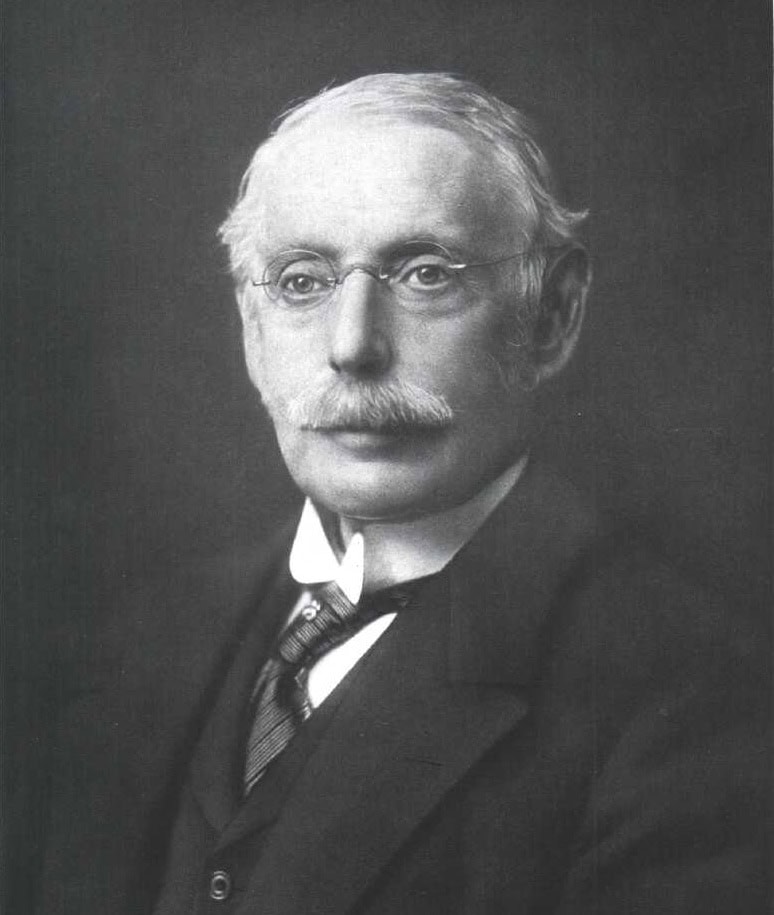
So, who was this genius Charles Parsons and what on earth are these steam turbines?
The answer to first question is a little easier to answer than the second.
Charles Algernon Parsons was born in London on 13th June 1854 in London. The youngest son of an aristocratic Anglo-Irish family, his father was the astronomer William Parsons, 3rd Earl of Rosse, an English engineer and astronomer.
At their family seat in Birr Castle, County Offaly, Ireland, Charles and his three brothers were educated at home by a number of private tutors, all of whom were well versed in the sciences of the day. Charles would go onto read mathematics at Trinity College Dublin, and then at St. John’s College, Cambridge.
Graduating in 1877 with a first-class honours degree from Cambridge, he joined the Newcastle-based engineering firm of Armstrong Whitworth as an apprentice, an unusual step perhaps for the son of an earl. Later Charles moved to Kitsons in Leeds, where he worked on rocket-powered torpedoes.
In 1884 Charles moved to Clarke, Chapman and Co., a ship-engine manufacturer operating near Newcastle, where he became head of their electrical-equipment development. It was here that he developed a high-speed steam turbine engine and immediately utilised his new engine to drive an electrical generator, which he had also designed.
His steam engine turbine made the cheap and plentiful electricity possible that would revolutionise marine transport worldwide, as well as of course, produce most of the electrical energy that we all enjoy today!
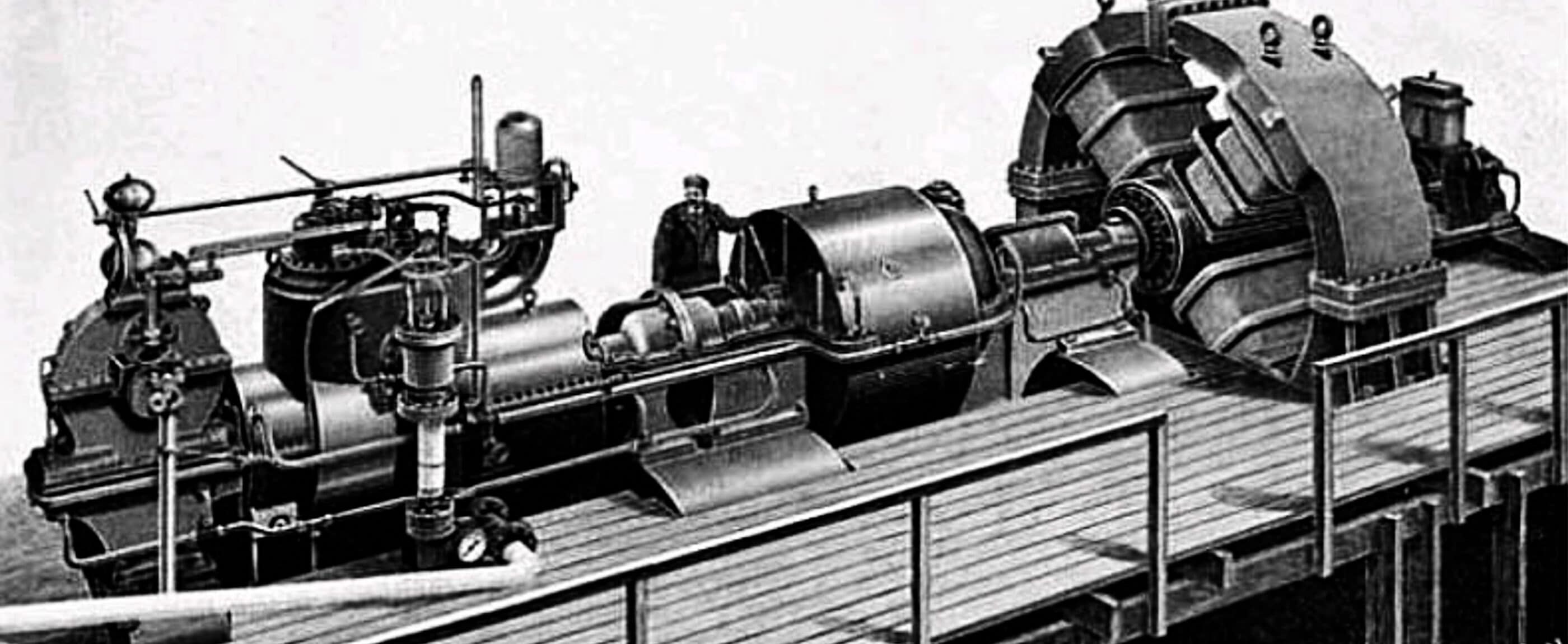
And so, on to that second question. A steam turbine, or steam turbine engine, is a machine or heat engine that extracts thermal energy from pressurised steam and uses it to do mechanical work via a rotating output shaft, which in turn drives an electrical generator, similar to a dynamo.
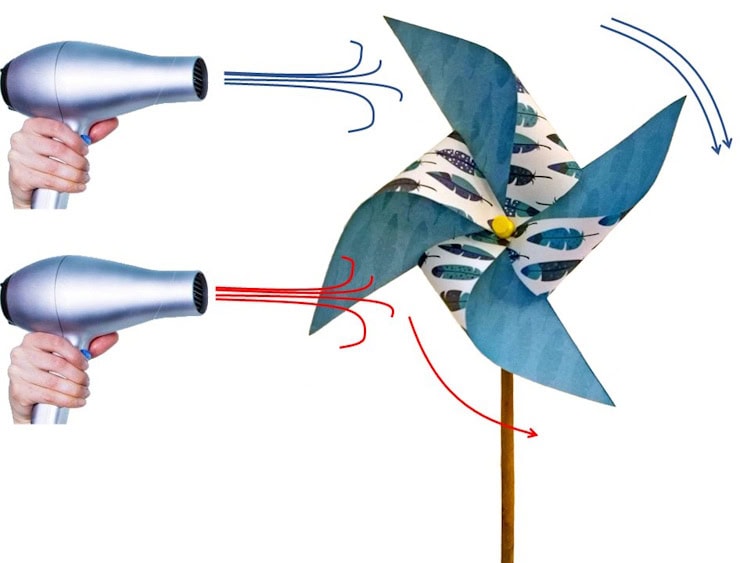
Think of a child’s plastic windmill, like the one illustrated, which rotates either in the wind or when a child blows on it. It rotates due to the aerodynamic shape of the plastic blades; however plastic would obviously melt if subjected to high pressure steam. And so, replace those aerodynamic plastic blades with high-grade steel alloy blades, lots of them, all mounted in rows on that central rotating shaft which if coupled to a generator, produces electricity. Such turbogenerators are the core of most modern power stations which can be fuelled by coal, oil, gas, nuclear, or even solar energy.
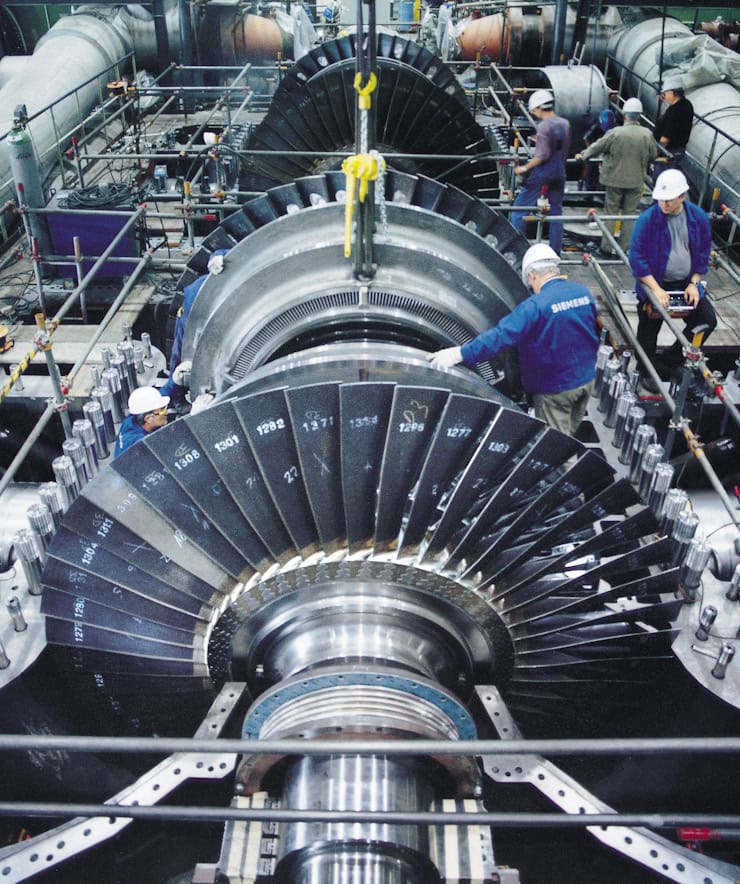
In 1889 Charles founded C. A. Parsons and Company in Newcastle to produce turbo generators to his own design. In the same year he also set up the Newcastle and District Electric Lighting Company and opened the Forth Banks Power Station, the first power station in the world to generate electricity using turbo generators. Although fairly limited in its efficiency, through rapid incremental improvements over a few years Charles built his first megawatt turbine for a generating plant in Germany.
Traditionally steam engines used steam pressure to push a piston back and forth inside a cylinder which could be converted into a rotational force via a connecting rod and crank, rather like the internal combustion engine that powers a petrol or diesel car.
Also interested in marine applications, Charles founded the Parsons Marine Steam Turbine Company in Newcastle. In June 1897, his turbine-powered yacht, Turbinia, turned up unannounced at the Royal Navy Review for the Diamond Jubilee of Queen Victoria at Spithead, in front of a celebrity audience that included the Prince of Wales, a mass of foreign dignitaries, and Lords of the Admiralty. Moving at speed to demonstrate the great potential of this new technology, the Turbinia easily outpaced the fastest Royal Navy ships of the time.
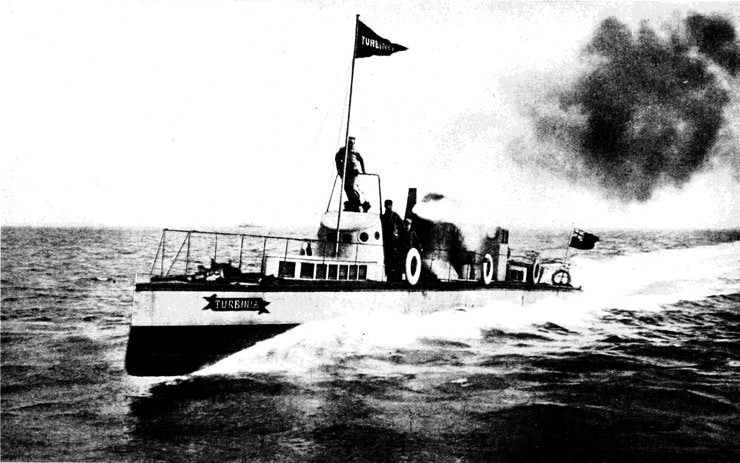
Things moved quickly in those dark but dynamic days of late Victorian Britain, as within two years the Royal Navy destroyers HMS Viper and Cobra were both launched using Charles’ turbines. Soon afterwards, the first turbine-powered passenger ships were launched; the first two transatlantic liners in 1905, and the first turbine-powered battleship, HMS Dreadnought in 1906, all of which were driven by Charles’ turbine engines.
In his private life, Charles had married Katharine Bethell in 1883. Together they had two children: Rachel Mary Parsons who was the founding President of the Women’s Engineering Society, and Algernon George “Tommy” Parsons, who was killed in action during World War I, aged 31.
Knighted in 1911, Sir Charles Algernon Parsons died on 11th February 1931, on board the steamship Duchess of Richmond whilst on a cruise with Katherine. A memorial service was held at Westminster Abbey, and Charles was subsequently buried in the parish church of St Bartholomew’s in Kirkwhelpington, Northumberland.
By Trevor Alan.
Published: 10th January 2026