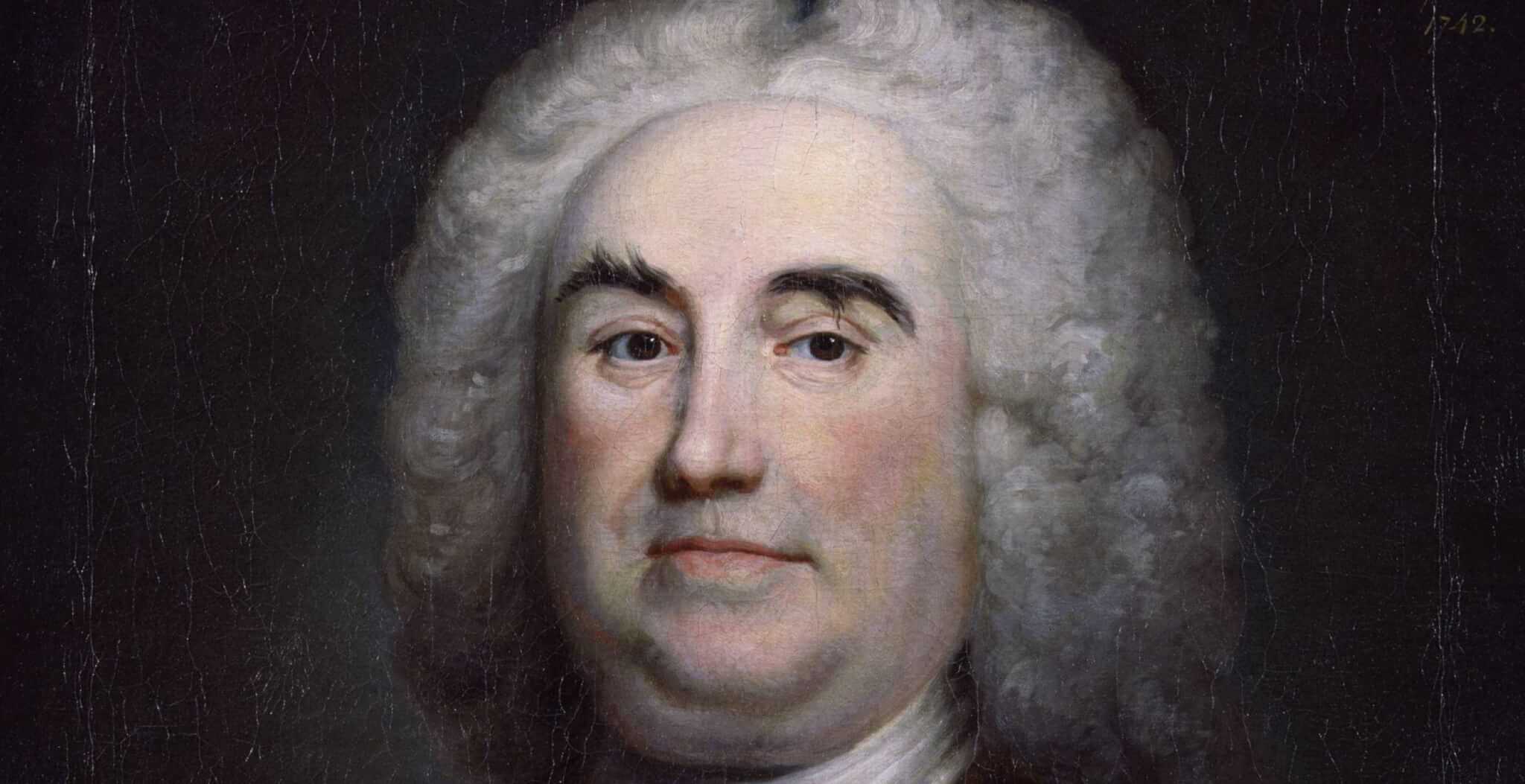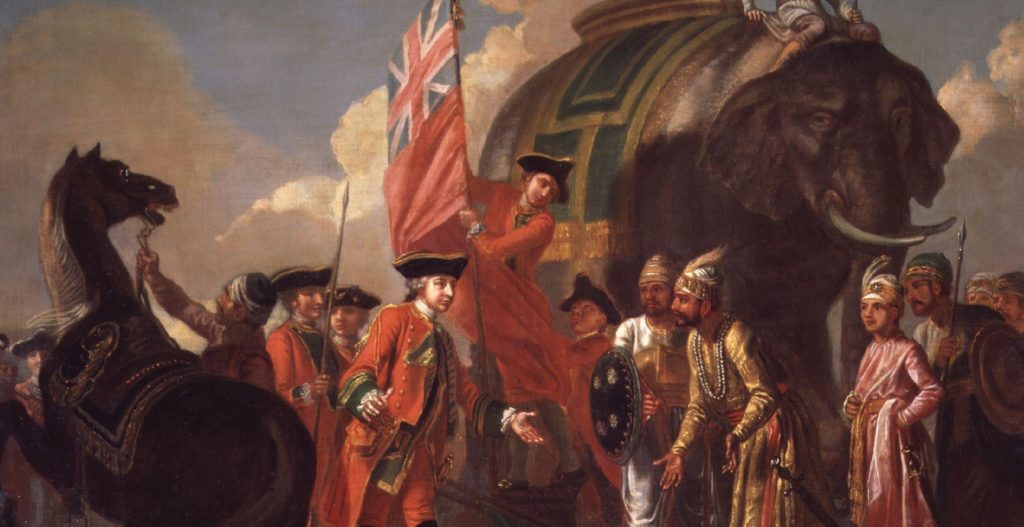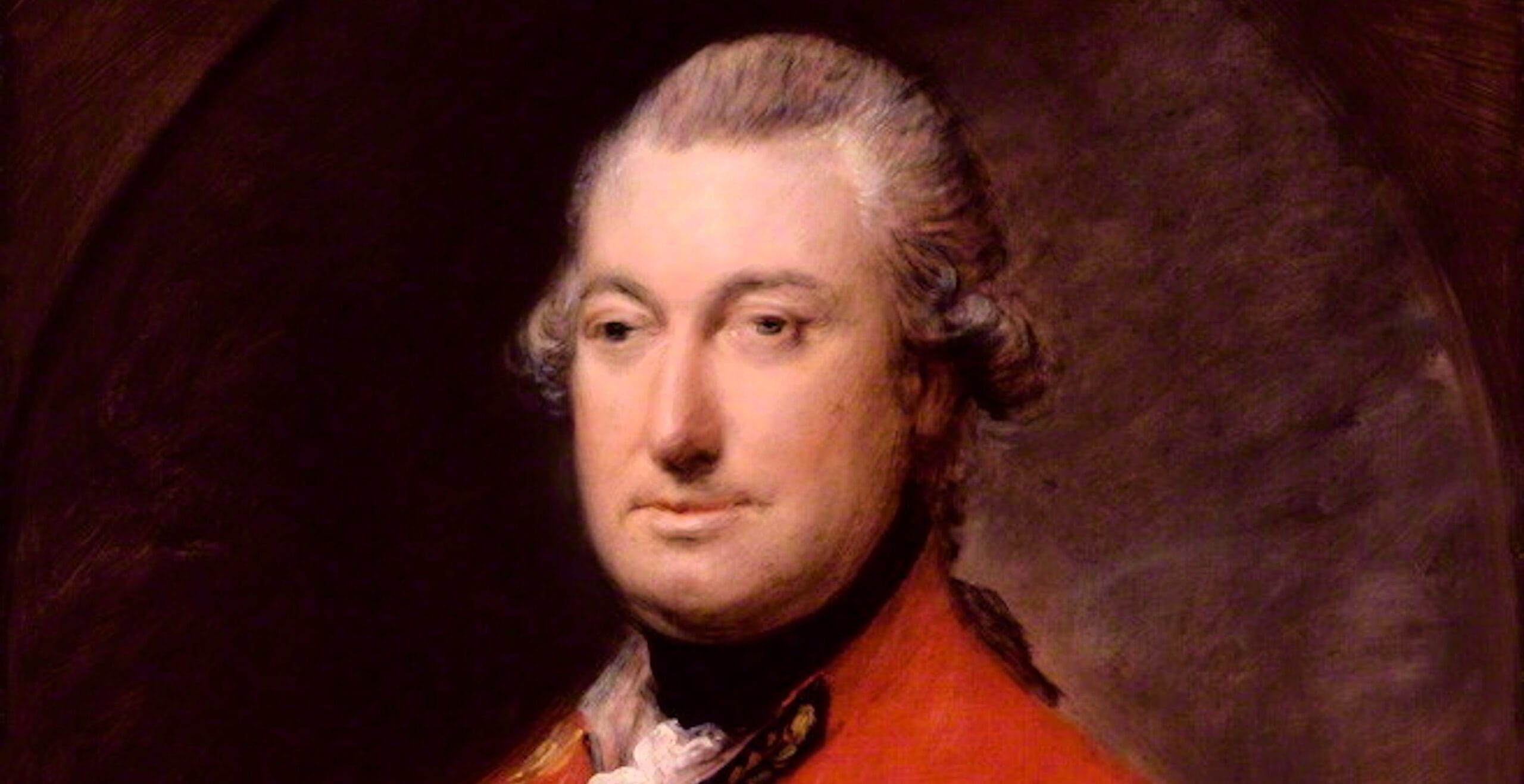


Perhaps most well-known for his surrender at the Siege of Yorktown, General Cornwallis was a prominent figure in the British army, serving not only in America but across extensive colonial territory both in Ireland and India, becoming a quintessential imperial administrator of his day.
Born into a titled aristocratic family, Cornwallis was the eldest son of Charles Cornwallis, 5th Baron Cornwallis and his wife Elizabeth Townshend (niece of Sir Robert Walpole). From this privileged background he attended Eton and then Clare College, Cambridge before turning his attention to the army.
Participation in the military was not so much a choice but an expectation, as many family members held prominent roles such as his uncle who was a colonial governor and founder of Halifax, Nova Scotia whilst his brother became an Admiral in the Royal Navy. Charles himself would join the army at eighteen and serve the entirety of his career in the military.

He began his army education on the continent, attending a military academy in Turin before travelling to Geneva where he heard the news that British troops were being sent to North America as part of the conflict known as the Seven Years’ War.
A year later he would participate in his first major conflict, the Battle of Minden, which involved combined Anglo-German forces under Prussian Field Marshal Ferdinand of Brunswick defeating the French army.
With his first taste of victory on the battlefield, Cornwallis purchased a captaincy in the 85th Regiment of Foot. Also during this time he became a Member of Parliament, another long family tradition, and entered the House of Commons.
Two years later, he succeeded his father as 2nd Earl Cornwallis and thus entered the House of Lords, falling under the tutelage of Lord Rockingham (future Prime Minister).
During his political career he voted against the unpopular Stamp Act which helped sow divisions in America and demonstrated his sympathy for the colonists.
In the meantime, he continued to serve in various European campaigns and was noted for his performance.
Back in England, Charles married Jemima Tullekin Jones who was also from a military family, and the two of them settled happily in Suffolk and had two children.
Whilst remaining in the military, Charles’s career took off when in 1775 he was promoted to major general, which also coincided with the outbreak of war in America.
By February 1776 he was on the way to New York to take command of seven regiments.
During these early battles of the American War of Independence he spent the autumn and winter commanding a column and by the following year had participated under General Howe in securing a victory at the Battle of Brandywine, as part of the Philadelphia campaign.
After briefly returning home on leave, he returned to America just as Howe was replaced as commander-in-chief by Sir Henry Clinton, leaving Cornwallis to fulfil the role of second in command.
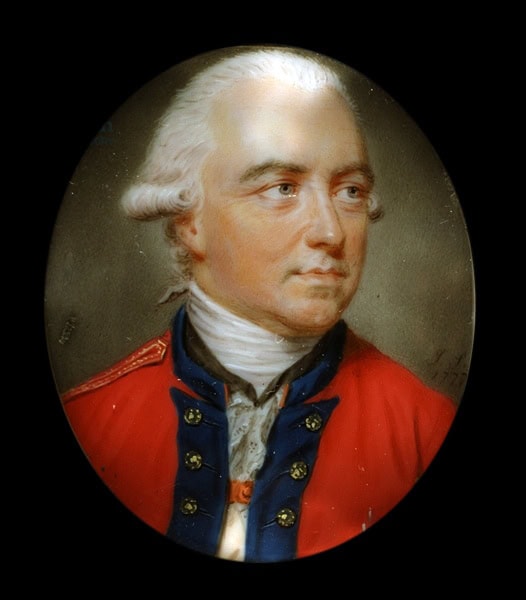
During this time, the war hit a critical turning point when France signed an alliance with America and promised to provide defensive assistance in the form of aid and troops against the English. As a result of this new development, Philadelphia was abandoned and the troops were redeployed, with Cornwallis commanding the rear-guard during the withdrawal to New York.
Not long afterwards he was forced to return home to be with his wife who was ill. Sadly the following February she died, leaving him a widower.
After his bereavement, Cornwallis returned to America in order to launch what became known as the “Southern Campaign”.
After abandoning many of the operations in the north, the British Army focused its efforts on the Southern Colonies from 1778 onwards, with the strategy that a more Loyalist population could be roused in support of the British and thus suppress the rebel forces.
In 1779, Cornwallis and Clinton initiated the second siege of Charleston, forcing the Continental Army to capitulate. After this success, Clinton returned to New York leaving Cornwallis as commander in the south.
Cornwallis immediately faced practical challenges in the form of poor supplies including ammunition, uniforms and hard currency.
Despite these shortcomings, he managed to gain a notable victory at the Battle of Camden against Horatio Gates and his Continental Army. When news reached London of this success, Cornwallis was hailed as a great military leader.
He would continue his ‘southern campaign’ with mixed results, managing at times to deal a significant blow to enemy forces whilst at the same time struggling to rally much needed Loyalist support.
Over time, despite battlefield gains, Cornwallis could not maintain his grip on South Carolina and travelled to Virginia.
He soon received orders to remain in Yorktown where his final showdown with American forces would take place. In the series of events which followed, a combined American and French force targeted Yorktown whilst Clinton remained in New York.
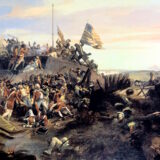
Cornwallis thus faced a strong and organised enemy commanded by Washington in the Siege of Yorktown which lasted until 19th October 1781. Eventually, with no other options at his disposal, he was forced to capitulate to the American forces, surrendering in a symbolic gesture which marked the beginning of the end for the British in North America.

In this context, Cornwallis returned to Britain in January 1782 and was well-received despite the loss.
Not everyone was so welcoming however, particularly General Clinton who tried to apportion blame to Cornwallis and claim that his failures in the southern campaign had been crucial in securing an American victory.
Despite his efforts, Clinton received most of the blame and backlash for the British loss. Cornwallis retained the confidence of King George III and the government at the time.
In the coming years he was afforded the opportunity to continue in his military career as well as develop into an effective imperial administrator.
In 1786, Cornwallis accepted a prominent position as Governor-General and commander-in-chief in India.
During his time in this position, he made significant changes to many aspects of administration, introducing widespread reforms which would ultimately set a precedent for British rule in India for years to come. This included the management of the British East India Company (EIC) which he endeavoured to keep out of military engagements.
In an effort to make the EIC more profitable and effective, he went to great lengths to streamline the business model, reducing nepotism and advocating for merit-based appointments.
In 1793 he introduced the Cornwallis Code which was a new civil and criminal code establishing regulations, new rules and methods of practice, new reforms in legislation including land taxation, a framework of Muslim and Hindu law translated into English and a legal system which instituted a racial hierarchy which became synonymous with British rule in India.
Cornwallis however did show more empathy towards the plight of lower classes, abolishing child slavery, introducing legislation to protect native weavers and creating a Sanskrit college for Hindus.
Another aspect which dominated his governance was conflict, something which he had gone to great lengths to avoid. In 1790, Cornwallis was forced to intervene and mobilise troops in the Third Anglo-Mysore War.
The conflict emerged as a result of Tipu Sultan’s (ruler of Mysore) attack on Travancore (British ally), forcing Cornwallis’s involvement. In the ensuing war which included two years of fighting and three campaigns, Cornwallis led his men to victory. A combination of British and allied forces from the Maratha Empire and Hyberabad finally laid siege to Mysore’s capital in February 1792 and ultimately forced Tipu into negotiations.
The terms of his surrender included him being forced to cede half of his territory, as well as his two sons being taken as hostages since he could not provide financial surety.
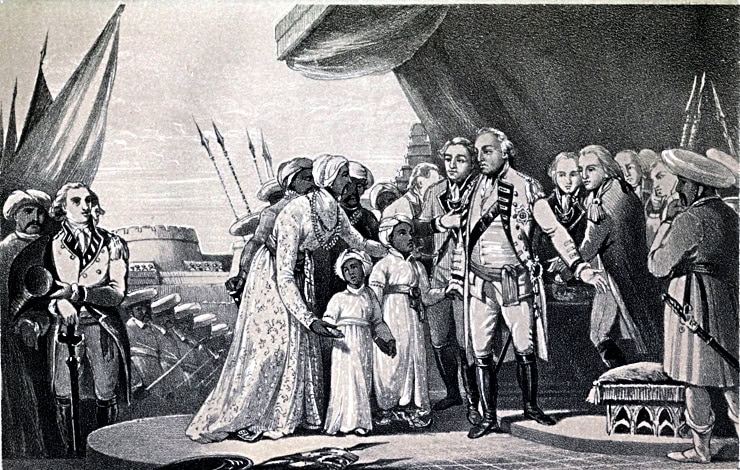
On 18th March 1792, the Treaty of Seringapatam formally concluded the Third Anglo-Mysore War, with Cornwallis and representatives of the Nizam of Hyderabad and the Maratha Empire as well as Tipu Sultan himself being the signatories.
As a result of the successful conclusion of the war, Cornwallis was made Marquess Cornwallis and returned to England the following year.
In the next four years of his career, back in Britain, Cornwallis served as Master of the Ordnance and went to great lengths to make improvements and reforms in military infrastructure and organisation.
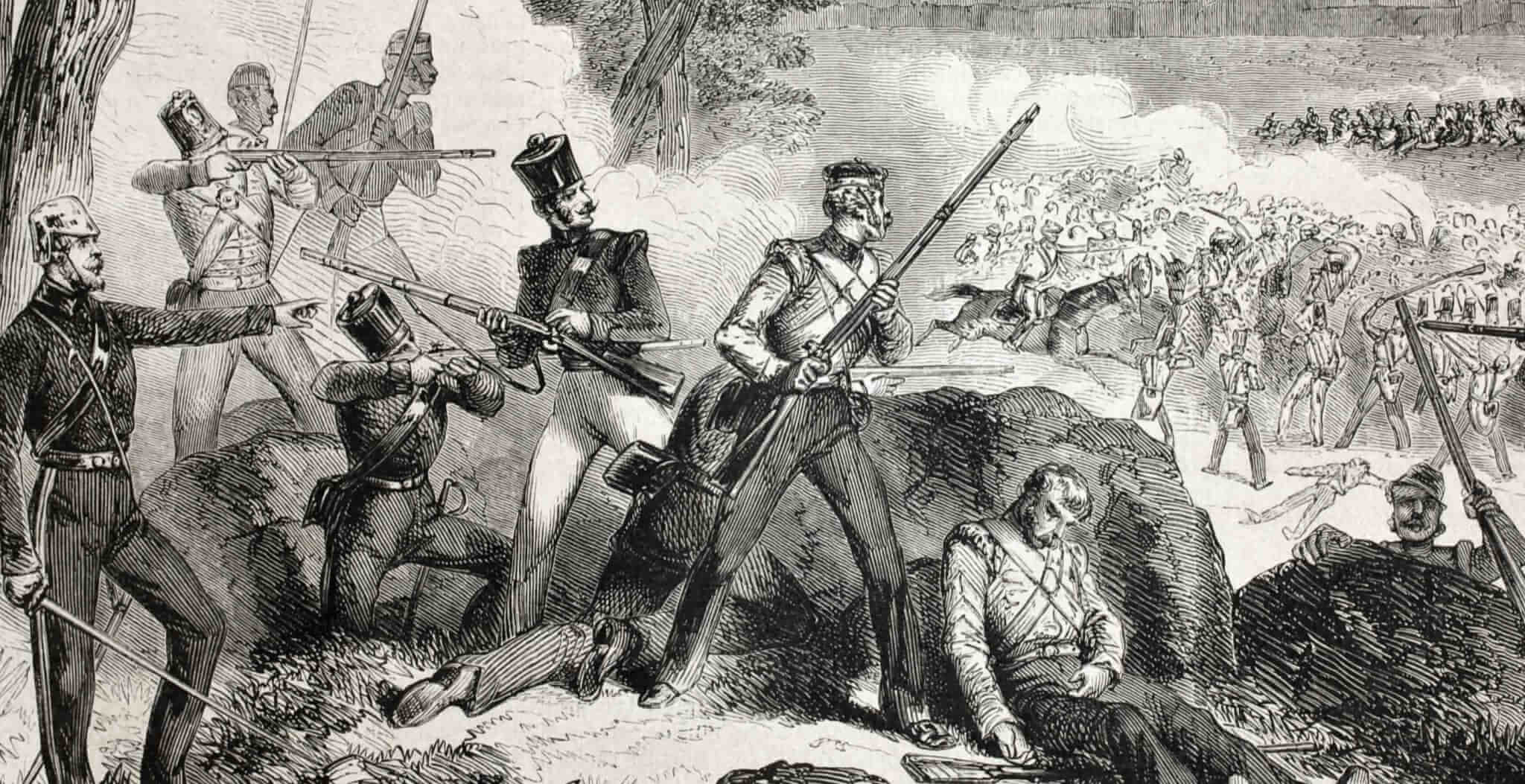
Before too long he was heading into conflict once more, this time in his new appointment as Lord Lieutenant of Ireland and commander-in-chief during the time of the Irish Rebellion. In this role, he oversaw the defeat of the Irish rebels and the French invasion in Connacht. The French invaders were forced to surrender at the Battle of Ballinamuck and in the coming months Cornwallis effectively suppressed the supporters of the United Irish movement and took control of the majority of the island.
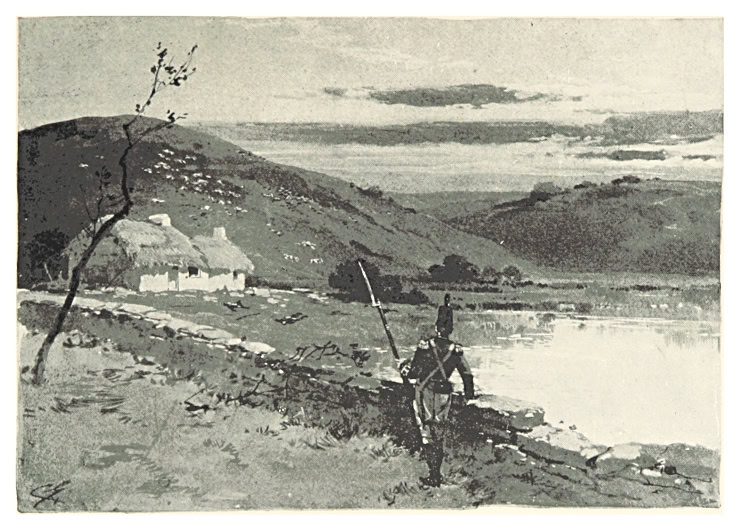 The Gory Heights of Ballinamuck, artist Charles Graham.
From page 167 of The French Invasion of Ireland in ’98 by Valerian Gribayèdoff
In the aftermath, the idea of a union of Irish and British kingdoms was pursued, something which Cornwallis supported but also recognised an important caveat would be Catholic emancipation if peace was to be long-lasting and secured. Whilst the Act of Union was passed in 1800 by the Parliament of Ireland, Cornwallis was not happy with the manner in which Parliamentary votes were bought. Despite this, King George went ahead with the union anyway, significantly without Catholic emancipation, forcing resignations from both William Pitt and Cornwallis, who returned to London in 1801.
Never short of official roles, Cornwallis found himself immediately stepping into another significant position as plenipotentiary minister to France and played a crucial role in manifesting the subsequent peace negotiations.
On 25th March 1802, the Treaty of Amiens was signed by Cornwallis (on behalf of the UK) ensuring the end of the War of the Second Coalition and securing short-lived peace.
Three years later, Cornwallis received a reappointment as Governor-General of India by Pitt who was once again Prime Minister. This was however one role too many for him, as not long after his arrival in India, he died of a fever.
A colonial administrator, not afraid to embrace reform, Charles Cornwallis was first and foremost a military man, leading from the front and willing to take on a variety of roles, with no challenge too great.
Jessica Brain is a freelance writer specialising in history. Based in Kent and a lover of all things historical.
Published: 30th June 2026.