

In June 1665, one of the most famous cities in the world became known by its new name, New York, which was formally adopted and renamed in honour of the Duke of York, brother of King Charles II.
It was previously known as New Amsterdam and in the hands of the Dutch, but after international conflict between expanding and competing empires, the city found itself acquiring a new name and with new rulers, the British. How this happened and why, can be traced back to the tiny Asian island known as Run.
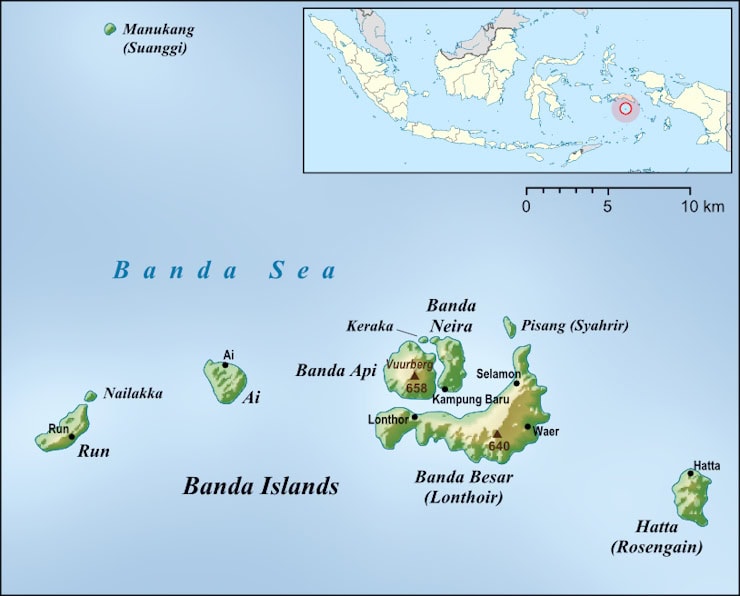
Located in what is now Indonesia, the Banda Islands was a group of islands that became a significant prize for the competing colonial interests of European powers during the Age of Discovery.
This period in history, also known as the Age of Exploration began in the 15th century and lasted almost two centuries, during which time various European powers competed to explore, reach and colonise new lands with the aim of bringing back vast treasures and commodities which would boost their economies back home.
The Dutch, along with its competitors Portugal, England and Spain, were in a race against time to gain control of the economically lucrative location in Asia known as the Spice Islands. Control of these islands, which were abundant with many herbs and spices, was the main goal and the incentive was vast profits for those who could lay claim to the market first.
Funded by their own joint stock company known as the VOC, the Dutch were the first to arrive and lay claim to the islands which included gaining control of vast plantations of nutmeg. For the locals however, the arrival of the Europeans proved immediately inauspicious, as the Dutch killed many of the local Bandanese population and treated the survivors with much brutality.
Nutmeg was a sought after spice with great health benefits and grew exclusively in the Banda Islands as a result of specific climatic conditions which provided a fertile setting for its growth. As a result, after successfully suppressing the local population and gaining physical control of the islands, the Dutch could enjoy a monopoly of the spice trade, however one issue remained.
England was hot on its heels and by 1616, had managed to gain control of the very small (less than two miles long) but strategic island called Run.
This was a significant step for the English and the newly formed English East India Company, marking the beginning of its imperial expansion in the name of the British Empire.
After the horrific experiences at the hands of the Dutch, the local inhabitants pledged their allegiance to the English and the Crown. A contract was subsequently drawn up and signed, which outraged the Dutch.
Forts and other necessary defences were subsequently erected on the island, knowing that the Dutch were planning to attack.
With just forty men, Nathaniel Courthope held off a barrage of attacks for 1540 days, however they eventually succumbed to the might of the Dutch and in 1620 the English left the island.
Now in the possession of the Dutch, again the natives faced a wave of brutality with women and children exiled, all adult men enslaved or killed and every single nutmeg tree chopped down to prevent another attempt by the English of retaking the island.
However the English continued to assert their claims on Run whilst the VOC made yearly checks on the island.
Meanwhile, further afield on the American subcontinent, the European powers were likewise jostling for control of territory.
In America, the English had settlements in Jamestown, Virginia whilst the French had territory at Port Royal and Quebec and the Spanish were busy in South America and the Caribbean.
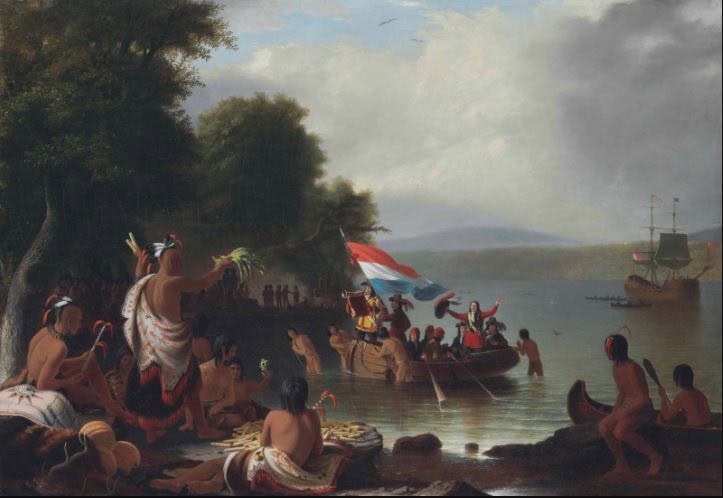
In 1609 Henry Hudson, an English explorer, was hired by the VOC to find the elusive and highly sought after route known as the Northeast Passage which many hoped would deliver a shorter more navigable route to Asia.
After coming up against treacherous Arctic conditions to the east, Hudson and his crew decided to sail westwards and landed at Newfoundland. Hudson believed that the passage to the Pacific Ocean could be found in the Americas and began exploring, eventually sailing up the major river which was subsequently named after him.
Once he returned to Europe, Hudson’s reports of new territory with vast potential and fertile land began to stimulate interest, particularly amongst Dutch traders.
Subsequently, Dutch-led expeditions set sail in 1611 and encountered and surveyed the area between Maryland and Massachusetts in a series of four voyages, with charts using the name ‘New Netherland’ for the first time.
Interest and competition soon accelerated amongst Dutch trading companies and thus the New Netherland Company came into existence as an alliance of trading companies with an exclusive patent for trade.
The New Netherlanders began trading with Native Americans, initially Algonquins who lived in the area.
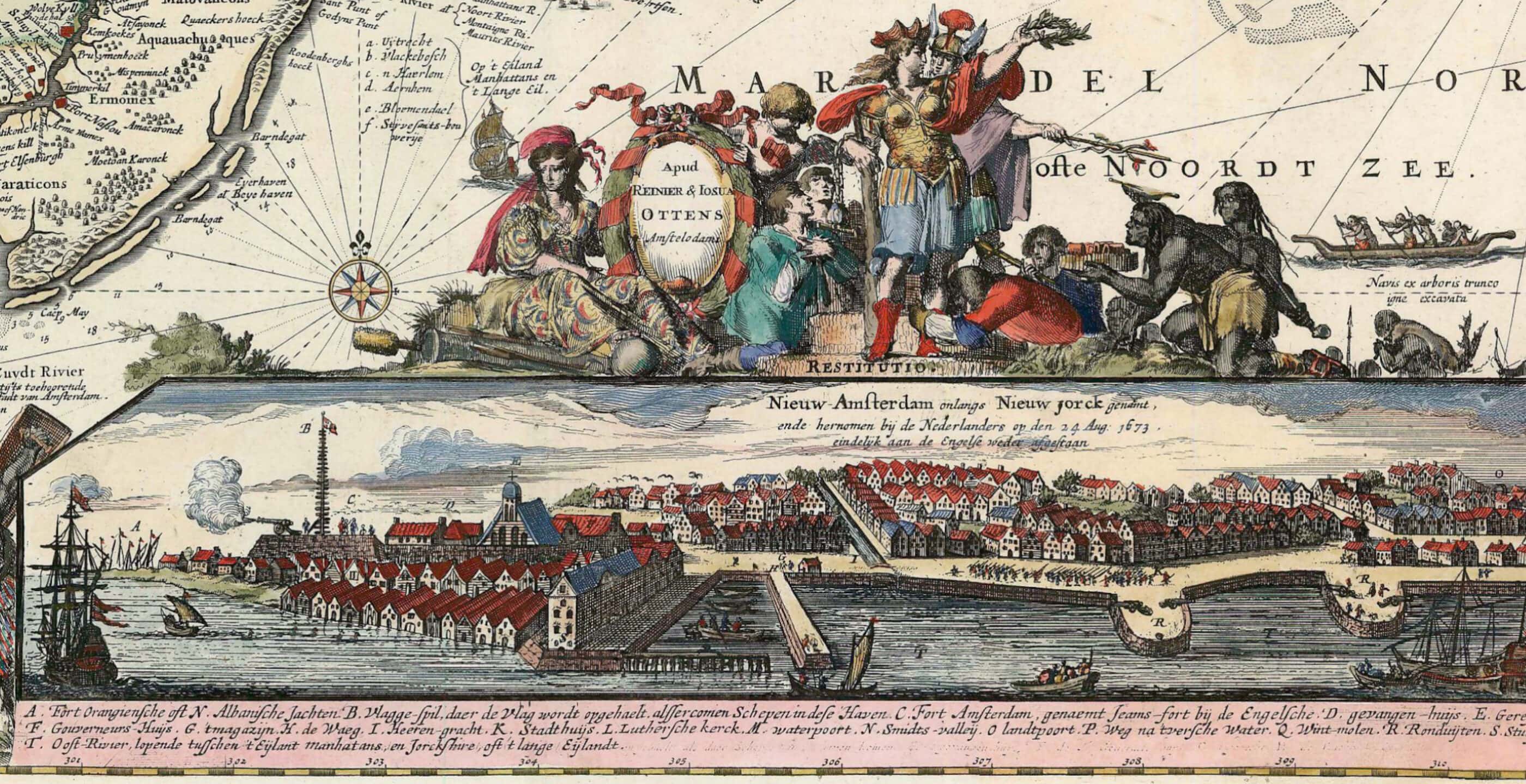
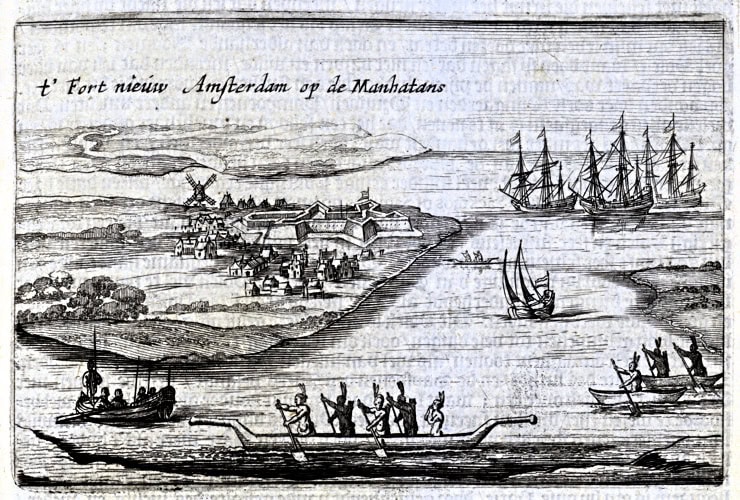 Manhatans is an old spelling of Manhattan. It was renamed New York in 1664.
This is one of the earliest known views of New Amsterdam. Drawn by Kryn Fredericks, engineer of Fort Amsterdam. c.1626.
In time the Dutch West India Company offered a land patent and sought to purchase land from the Native American tribes. Whilst agreements were negotiated both parties had very different understanding and conceptions about ownership and use of the land which unfortunately led to conflict later on.
In the meantime, the Dutch created a version of feudal aristocracy and began attracting settlers to the region.
Over time, settlements and territorial boundaries were established, with the port city of New Amsterdam becoming a major trading hub. An abundance of raw materials were loaded and exchanged between North America and Europe.
In 1647, Peter Stuyvesant arrived in New Amsterdam as governor (known as Director-General). By this point, the population had reached 15,000 with around 500 residents on Manhattan Island.
The Dutch experienced a period of growth as the province’s wealth increased, nevertheless European competition maintained a strong presence with the English further north and the Swedish in territory to the south.
Over the years, the area became a melting pot, attracting people from many other countries as well as the Netherlands. Meanwhile, the English colonies also began to grow in size, spurred on by a desire to establish communities rooted in religious identity. Soon the English settlements began to outgrow that of New Netherland.
The rampart at New Amsterdam (Wall Street) was constructed as fears of an English invasion began to loom.
Whilst the two communities were engaged in diplomatic relations, the New England Confederation was formed in 1643 as an alliance of the English colonies of Massachusetts, Plymouth, Connecticut and New Haven.
King Charles II soon resolved to annex New Netherland in a statement of intent in March 1664.
A few months later, four English frigates sailed into New Amsterdam’s harbour and demanded the surrender of New Netherland. As they did so they were met by almost no resistance, as requests for troops to protect the Dutch colonists had fallen on deaf ears. New Amsterdam was now in a perilous position, defenceless and forced to negotiate with powerful enemies.
Forced into negotiations, Article VIII confirmed that New Netherlanders “shall keep and enjoy the liberty of their consciences in religion” under English law. Such agreements were largely observed in New Amsterdam but experienced some violations by the likes of Colonel Sir Robert Carr who went on to expropriate property and sell the Dutch into slavery.
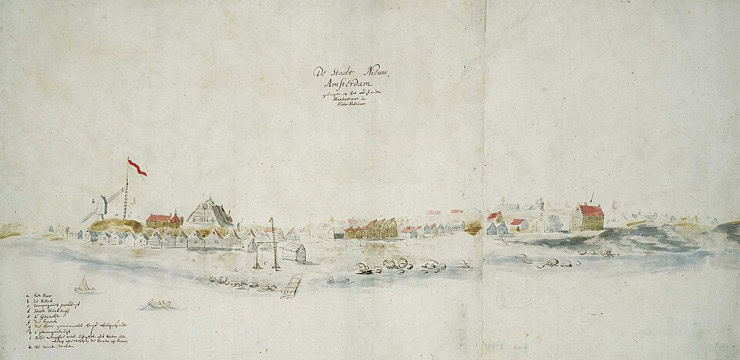
By 1650, the Treaty of Hartford ceded the Connecticut River region to New England, redrawing the New Netherland’s eastern border.
Later, the Treaty of Breda in 1667 emerged as the conclusion to the Second Anglo-Dutch War. As a result, the Dutch did not continue to make claims on New Netherland. Instead it was agreed that the status quo would be maintained, thus ensuring the English could keep the island of Manhattan which the Duke of York (brother to King Charles II) had occupied in 1664. Now known by another name, renamed after himself, the city was called New York.
Meanwhile in exchange, the highly lucrative spice island of Run was subsequently handed over to the Dutch allowing them to reassert their dominance of the spice trade.
The exchange of New Amsterdam for the tiny Asian island called Run became known as the Manhattan Transfer, an agreement which solidified peace negotiations between the warring Dutch and English but most significantly changed the course of history, outlining the trajectory of events which led to the growing dominance of the British Empire and thus redefining the history of not only the New World but that of the Old World.
Jessica Brain is a freelance writer specialising in history. Based in Kent and a lover of all things historical.
Published: 27th October 2025