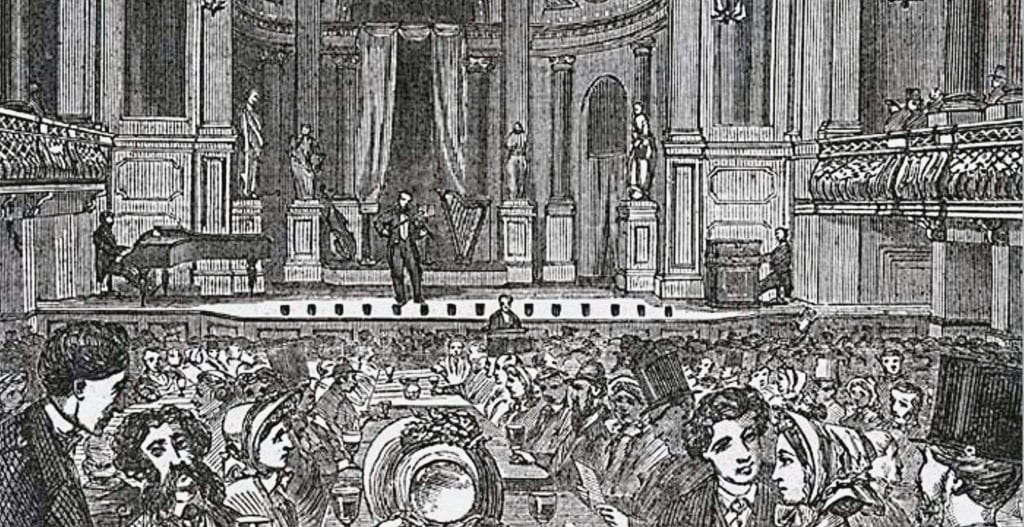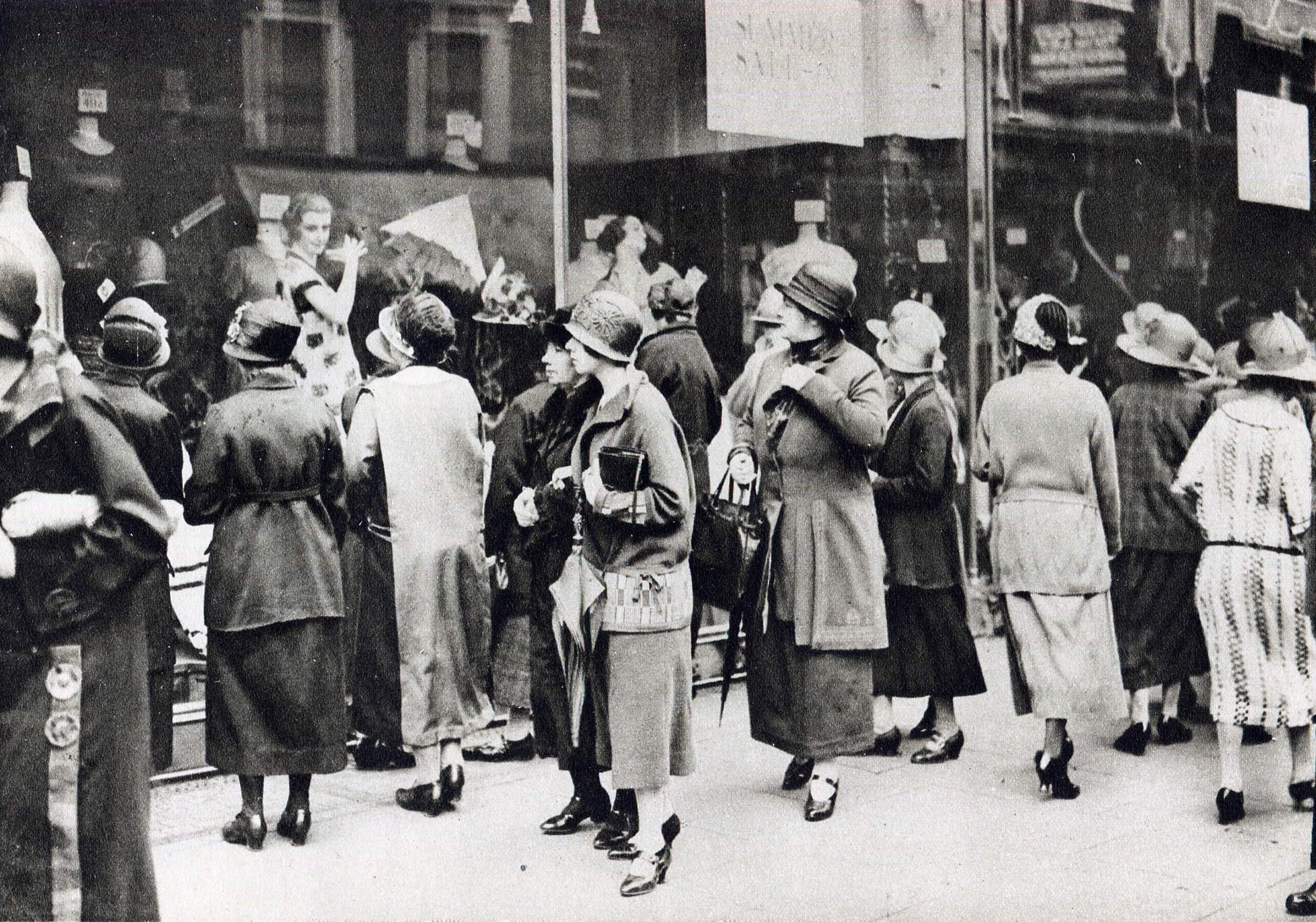


In the crime-ridden underworld of Victorian London, dominated by violent men, a group of women were able to carve out a space for themselves; specialising in shoplifting, they soon became so prolific that they won admiration from their male counterparts and earned great notoriety. Known as the Forty Elephants (or Forty Thieves) this female criminal gang would steal from high end department stores using their feminine wiles to evade capture for many years.
Their story begins, much like their name, in the area of London known as Elephant and Castle. The all-girl gang most likely took their name from this district, particularly as many of them were related to the Elephant and Castle Gang, a well-established male criminal network operating from their base at the old Elephant and Castle Tavern and led by the notorious McDonald brothers.
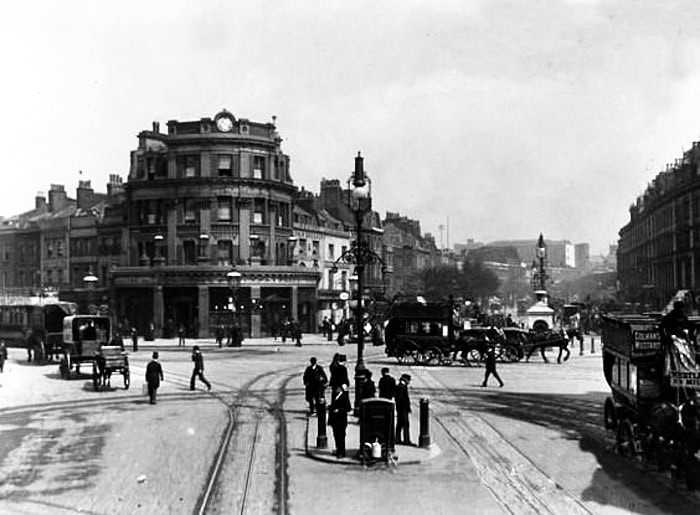
This was an area of London which was dominated by poverty and slum housing, leaving many families to bring up their children in appalling conditions with inadequate sanitation, cramped housing and little to no prospects if they survived childhood. Under these circumstances, criminality thrived with a low level criminal underclass operating in the district, with many seeing illicit activity as the only way to make money and escape poverty.
Whilst criminal endeavours were broadly conducted by men, women alike were also looking for ways to make money and thus the origins of the gang emerged.
Not restricted to the borough of London they had been born into, the women soon realised that the best prospects for profit would be found in the nicest districts, where department stores such as Harrods sold luxury goods which offered handsome rewards for the most daring women.
The main characters in the gang, better known as ‘queens’ included Mary Carr who was the first leader of the gang and played a principal role, rising through the ranks to become one of its most well-known and prominent members. She was described by a newspaper as being good looking, charming and a definitive leader of the group, making sure the women below her were obedient to her instructions. Under her leadership, the group became increasingly well-organised, transforming themselves into a disciplined and strategic criminal gang.
In 1888, Mary married fellow criminal Thomas Crane and soon the Forty Elephants were using her home at 118 Stamford Street as a base for planning their next criminal escapade.
In many cases to continue evading the authorities, Carr took on a variety of aliases.
Throughout her criminal career she became very well-known, prolific and notorious, particularly when she hit the headlines for her trial and imprisonment for child abduction. During her time in prison, Minnie Duggan became the new leader of the gang. However it was not until Mary’s death in 1924 that another woman stepped into the role and became the new ‘queen’.
Alice Diamond also had several familial connections to gangsters in the area and she became the new leader during the interwar period when the gang participated in numerous raids on top end stores, particularly in the West End of London.
The stakes were high and the risks involved forced absolute loyalty and obedience, particularly from Alice Diamond who ruled with an iron fist.
By the 1930s, she had retired from her leadership role and Maggie Hill had taken her place.
In 1939, Maggie Hill was arrested and sent to prison for four years after blinding a policeman with a hat-pin, forcing another ‘queen’ to take her place. Over the years, there were several female participants in the group, often related to one another, either as mothers and daughters or siblings.
The Forty Elephants over the years acquired a strong identity, centred round the ‘queen’ who was not elected but simply inherited the role as a natural leader to the other women.
Due to this organisation and leadership, the gang survived the war as a result of new members, often related, who replaced the older and more experienced veterans within the group.
Shirley Pitts fulfilled the role of ‘queen’, after learning from the likes of Diamond, she soon became known as the ‘queen of shoplifters’, a title awarded to her by a newspaper.
For several decades since the late 1800s, the women of the Forty Elephants gang had successfully made off with an extraordinary amount of loot, very often reselling the goods later on.
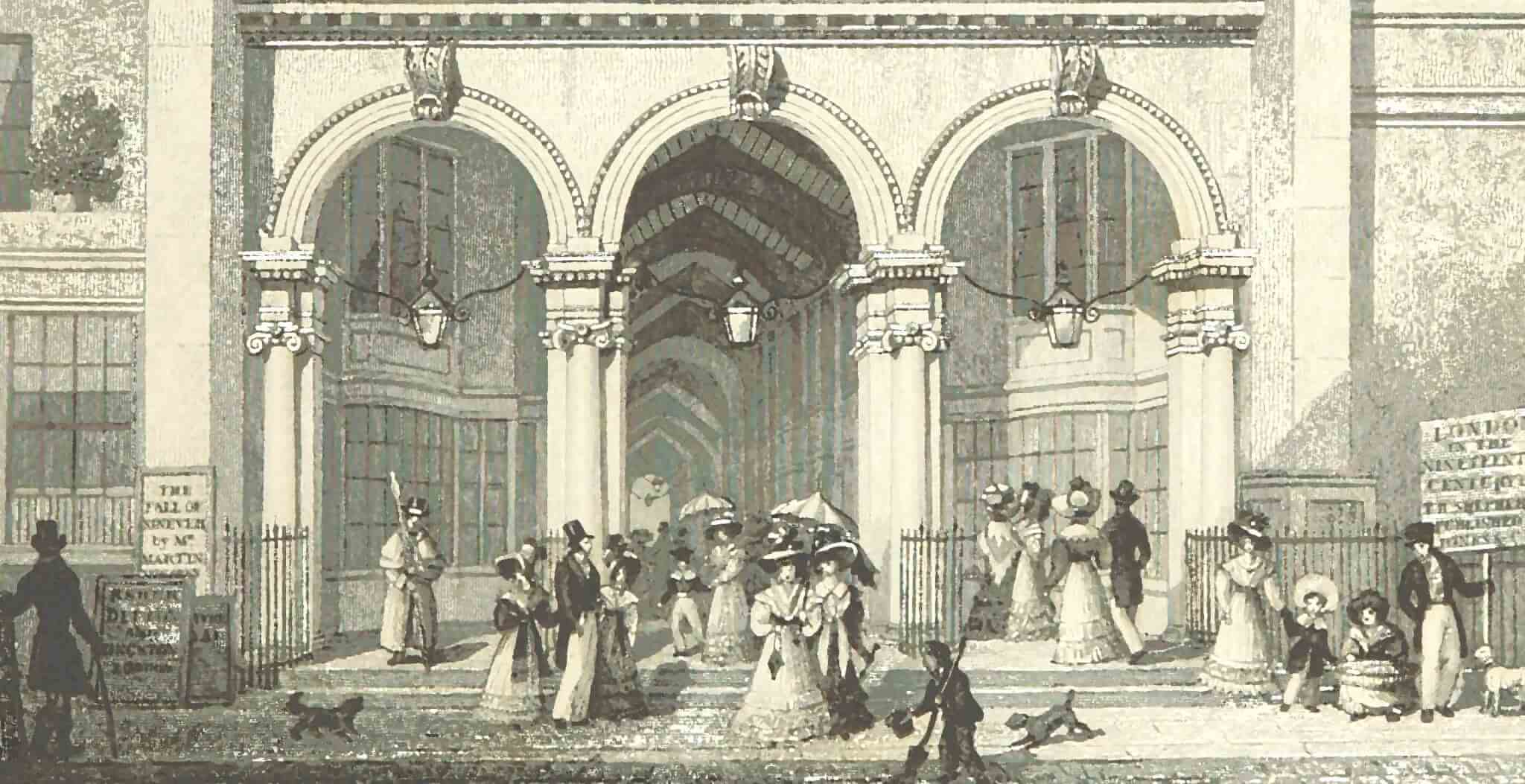
With numerous department stores across the city of London, shopping had become a mainstay of the social scene for middle class women and thus became a prime target for the criminal gang who could gain access to window displays, cash registers and hung garments under the guise of being simply another customer.
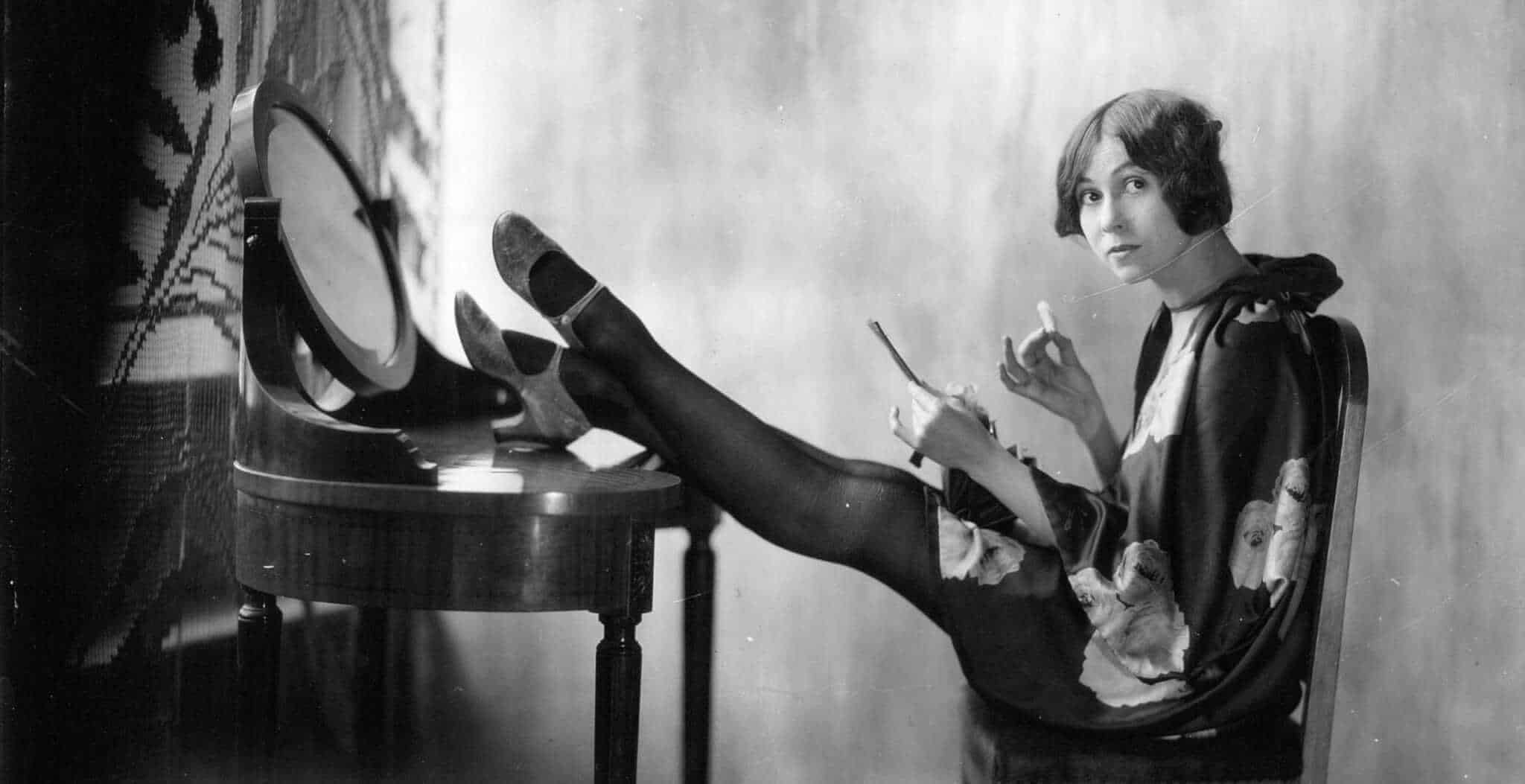
Dressed in fashionable clothing, mimicking the fellow female clientele in the store, the Forty gang descended on the West End as one police detective remarked “like a swarm of locusts”, ready to execute their plan of attack with huge profits at stake.
During the early years of the gang, the women’s clothing assisted in the thieving, as the use of large multi-layered skirts could be used to conceal many stolen items.
So much so, that the group went to the extreme lengths of putting together their own elaborately large outfits, supremely designed for maximum storage of stolen items, including using hidden pockets. This personal tailoring would pay dividends for the gang members who were able to raid many high-end stores and disguise the amount of items they had taken within their own outfits.
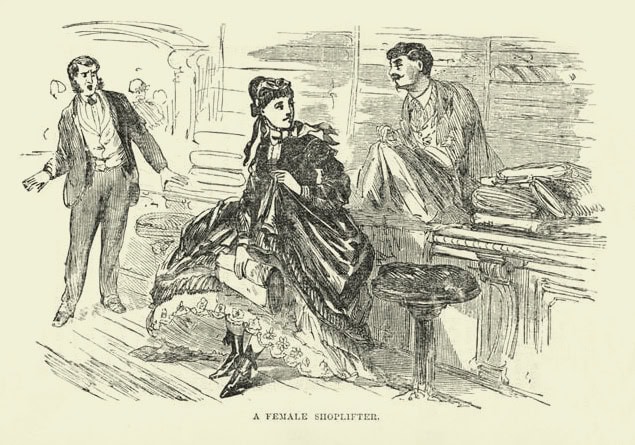
The women’s success rate was helped by the fact that female customers were given more privacy and space by members of staff thus allowing the thieving gang to take more goods without being noticed.
Moreover, the women employed a variety of tactics in order to achieve their goals, which included picking on a respectable well-attired man under the guise of asking for directions before other members of the gang accused him of assault. To avoid such an unwelcome spectacle, the man would often part with cash or valuables to ensure the women did not make a scene and would leave him alone.
An important aspect which allowed them to evade capture so often was their use of ‘fencing’ (reselling the goods) which allowed them to distribute the items through an elaborate network of fences throughout London including to street market traders, pawnbrokers and dodgy shops that relabelled items and altered designs.
Over the years, their methods evolved and by the turn of the century, the Forty Elephants even used getaway vehicles to escape capture by police. When a car was not available, they often turned to the railway network to transfer stolen items across town, thus leaving empty suitcases behind on railway stations which were eventually filled with loot upon their return.
As their tactics changed with the times, their ambitions also began to expand, resulting in not only theft as a means for making quick money. Other ventures the gang branched out into included thieving from houses by posing as maids and then robbing their employers, as well as blackmailing men whom they had engaged in an affair before threatening to tarnish his reputation if he did not part with his valuables.
A group of people who soon found themselves as a target for the gang included the society figures known as the ‘bright young things’ who were known for their lavish lifestyles which were often splashed across the tabloids.
During the reign of Alice Diamond, the group carried out a jewellery heist when they posed as members of this extravagant social scene and were able to take vast amounts of jewellery, as well as information that would assist them in later lucrative burglaries.
The Forty Elephants success enabled them to spend vast amounts of money in their favourite clubs, music halls and restaurants.
The triumph of this deception and the myriad of other schemes the gang employed, allowed the girls to acquire vast sums of money and goods worth thousands of pounds.
In doing so, these women were financially well-endowed in their own right and often became the supporting figures in the household, giving their hard earned spoils to their men at home, or else perhaps lovers or partners already caught up in the prison system.
The women proved to be unorthodox by most social standards, able to steal, engage in violence and maintain a form of financial autonomy most women rarely experienced.
Such rewards however came at a price and were fiercely guarded by members of the gang. If another woman wanted to steal on their patch they would be forced to hand over a percentage of their profits to the gang and if they dared to refuse such a request, then they would be the victims of beatings and kidnappings until they complied.
Whilst the group were very often able to evade the authorities, their activities did attract a great deal of attention and thus many members did find themselves on the receiving end of the law. Some were arrested and others convicted and sent to prison serving short sentences. Upon release they would soon return to the bosom of the gang once more and resume their activity.
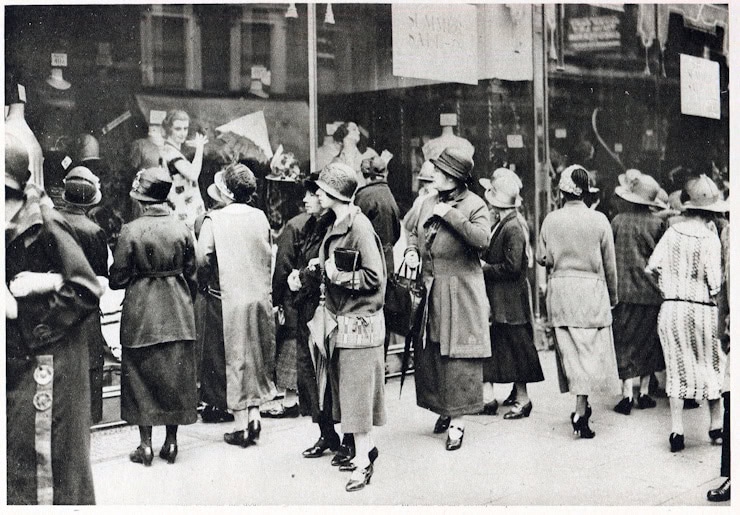
Their constant thieving contributed to a notorious reputation which made them a feared presence in many of the most upmarket shops where their faces and tactics became better understood, forcing them to expand their territory to include areas outside of London where they were less known and attracted less attention.
Operating between the 1880s and 1950s, the gang had made its mark on the criminal underworld. Feared by many, admired by others, the women formed an important part of the criminal sub-culture which dominated the streets of London during this time. As the years passed, so too did some of its members and whilst fresh faces and new tactics emerged, the advent of the Second World War saw the heyday of the group well and truly come to an end.
***The drama ‘A Thousand Blows’ is based on the activities of the Forty Elephants gang and the criminal underworld of Victorian London.
Jessica Brain is a freelance writer specialising in history. Based in Kent and a lover of all things historical.
Published: 14th April 2026.