

Dating back to 1295, the Auld Alliance was built upon Scotland and France’s shared interests in controlling England’s aggressive expansion plans. Drawn up by John Balliol of Scotland and Philip IV of France, it was first and foremost a military and diplomatic alliance, but for most ordinary Scots it brought more obvious benefits through jobs as mercenaries in France’s armies and of course, a steady supply of fine French wines.
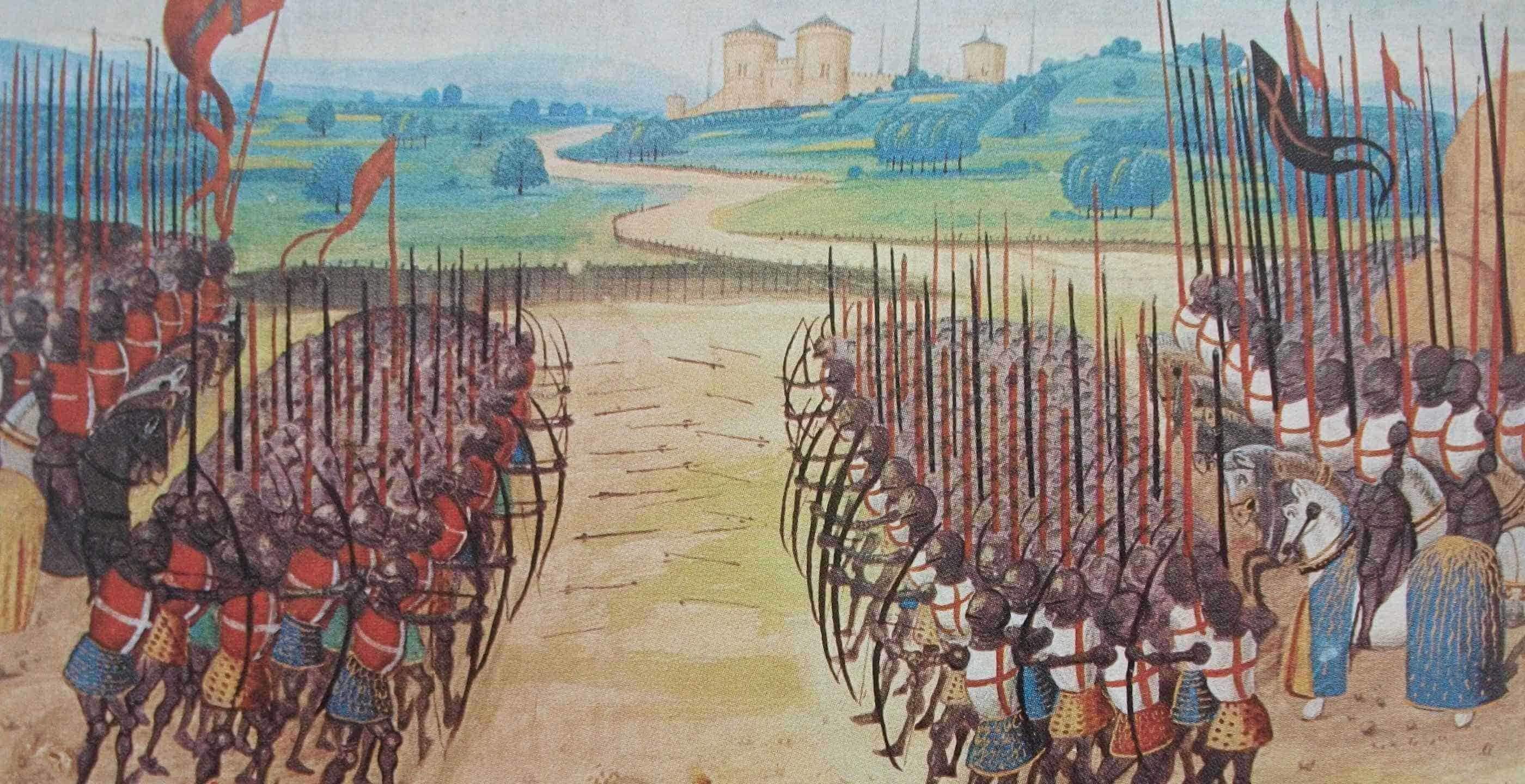
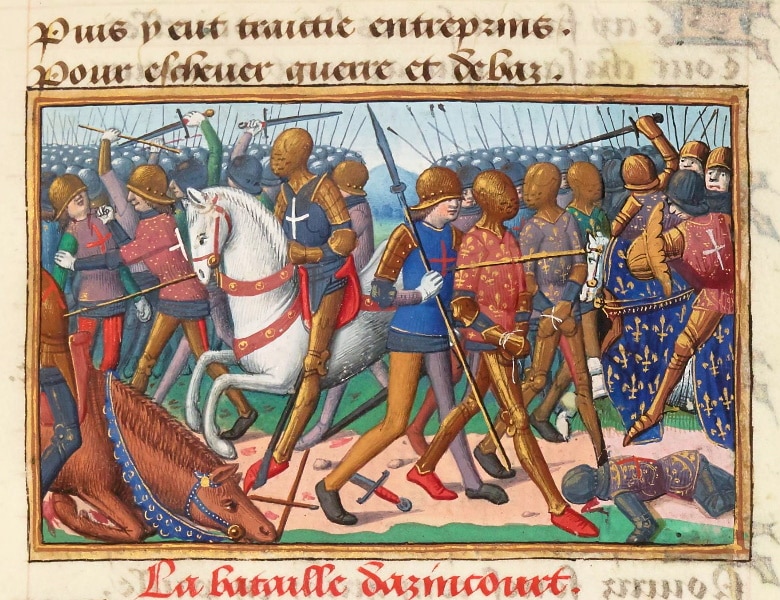
Henry V’s victory at the Battle of Agincourt in 1415 was one of England’s greatest military achievements, but for the French it was a disaster on such a scale that it led to the near collapse of the country. In desperation the French Dauphin turned to the Scots, England’s traditional enemy, for help. As always, anxious for a fight with the Auld Enemy, more than 12,000 Scots boarded ships bound for France. And they didn’t have to wait too long: in 1421 at the Battle of Bauge the Franco-Scots army defeated the English army, killing King Henry V‘s brother Thomas, Duke of Clarence.
The Scottish army was well rewarded by their French allies with honours, titles and as much fine food and drink as they could consume. All this cosseting and good living appears to have taken its toll, as at Verneuil in 1424 a Scots army totalling 4,000 men was completely wiped out by the English. As hired mercenaries they could have expected no mercy and they received none: those captured were later put to the sword. Verneuil was one of the bloodiest battles of the Hundred Years’ War, described by English chroniclers as a second Agincourt.
Despite this defeat, the military intervention of the Scots had bought valuable breathing space, and the delay ultimately saved France from English domination.
Many Scots remained in France with some joining Joan of Arc in her famous relief of Orleans. Others formed the Garde Écossais, the fiercely loyal bodyguard of the French Kings. As permitted by terms of the alliance, many of the mercenaries eventually settled in France, although then just as now, as immigrants they would always think of themselves as Scots first.
As previously mentioned, the Auld Alliance wasn’t simply a military alliance, a commercial alliance also developed which was founded on the Scots love of wine… French wine in particular!
It was due to this special relationship that Scottish merchants had the privilege of selecting the finest wines for themselves, much to the annoyance of wine drinkers south of the border. Wine that was landed in barrels at ports like Leith was mostly for consumption by the elite of Scottish society, with most commoners seemingly content with drinking whisky or beer.
The Auld Alliance was however rocked by the Reformation, and trade between Protestant Scotland and Catholic France would obviously no longer be feasible …or would it?
It does appear that the Reformation did significantly affect trade between the two nations with the one exception of claret. The Scots seemingly could not exist without it.
Records indicate that Scottish merchants were still going to Bordeaux in order to bring back their favourite choice wine as late as 1670. Even after the Union of Parliaments with England in 1707, claret continued to be smuggled into Scotland thus avoiding taxes. It appears that Scots through the ages have sought to demonstrate their affinity with their French friends by toasting ‘the King over the water’ with a fine drop of claret.
The original alliance that granted dual citizenship in both countries was eventually revoked by the French government in 1903.