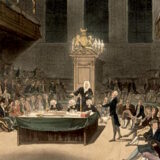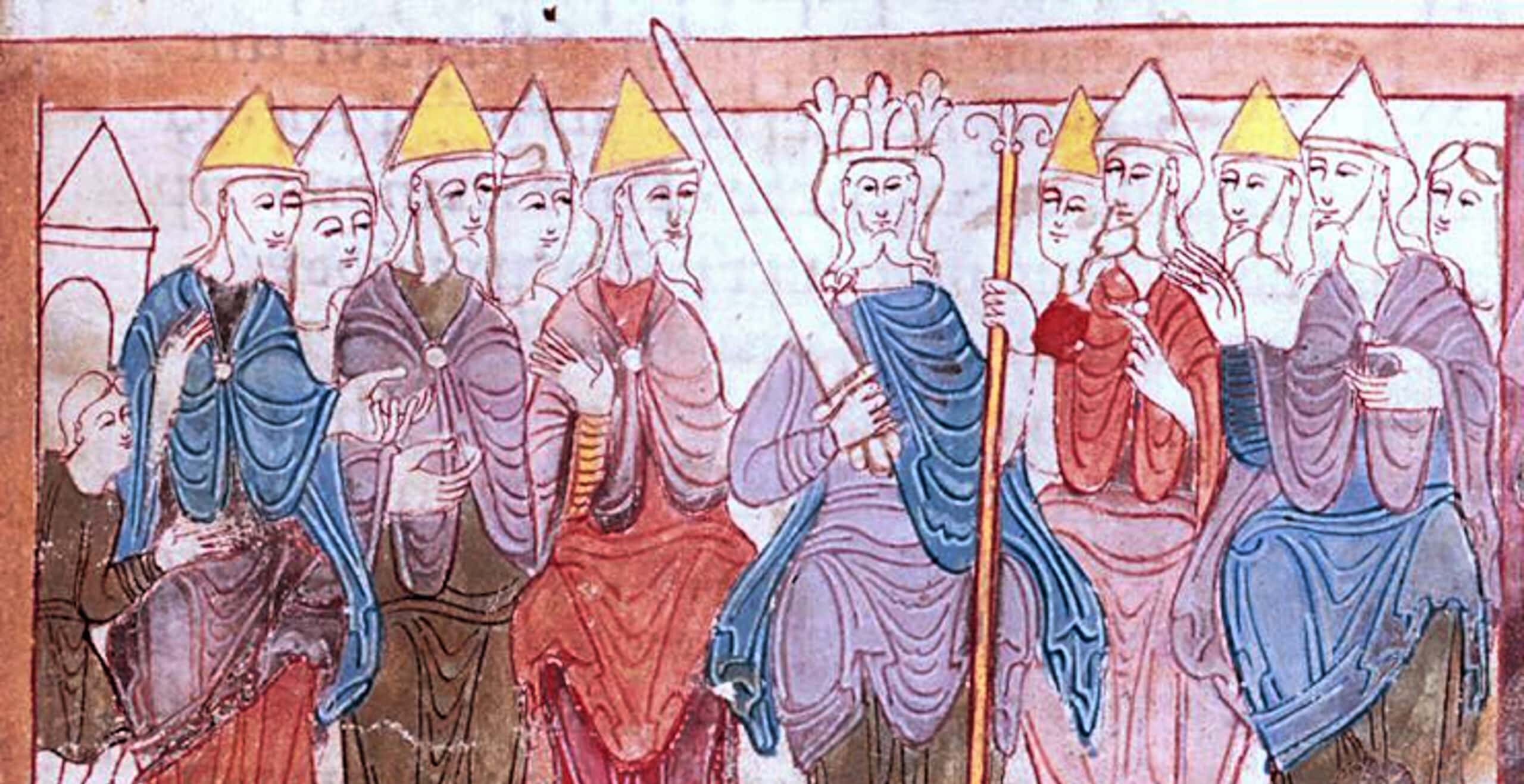


When was England’s first Parliament? Many people consider Simon de Montfort’s Parliament convened on 20th January 1265 as the first representative parliament however, Britain’s parliamentary history can be traced back much further to the Anglo-Saxon era where the Witan held significant power.
Translated from Old English, Witan means ‘wise men’. Sometimes referred to as witenagemot, the gathering essentially served as a king’s council in the governance of Anglo-Saxon England between the 7th and 11th century, consisting of high-ranking noblemen including ealdormen, thegns and bishops.
The Witan was convened on the authority of the king, who would bring together his nobility and leading advisors to discuss the most important matters of the kingdom.
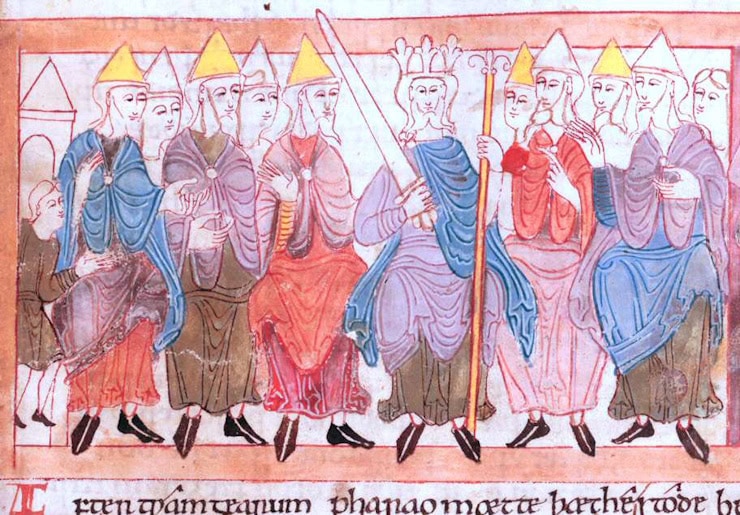
The main purpose of the gathering was to dispense advice, however the ultimate decision on whether or not to act on the guidance remained with the king alone.
The Anglo-Saxons soon realised that in order to successfully govern their realms, local support from powerful men was necessary to maintain a balance of power between localities.
As part of this emphasis on local politics, Anglo-Saxons also engaged in regular meetings known as ‘moots’ which took place in each shire (county) in order to discuss matters which pertained to local residents. As part of this meeting, local lords as well as bishops and the sheriff would attend in addition to four representatives from each village in the area. Such traditions continued after the Normans took power and became known as the County Court, thus instilling a tradition of local level representative governance in England.
The nature of the matters discussed included debating legislation, judicial cases as well as other legal matters such as issues surrounding land.
The enduring nature of these practises is reflected in the continuation of such political traditions after the Norman invasion in 1066, operating with similar political structures known as curia regis.
One particular note of distinction between the witan and its later political descendants throughout the history of Britain’s parliamentary democracy, was that the witan was much more closely aligned with royal representation and reflected the will of the monarchy to a much greater extent than its political successors.
Deriving from Germanic traditions of governance, witan has its origins in the settlers of German tribes who began relocating to England in AD 410. With the settlement of Germanic tribes came the introduction of traditions both socially and politically whereby German kings sought advice from their ‘great men.’
Whilst the Anglo-Saxons tightened their grip on power in Britain after the demise of Roman rule, the early examples of governance were ad hoc at best, distinctly local and were lacking in an institutional nature. More formality and organisation based around political agendas would naturally evolve in time.
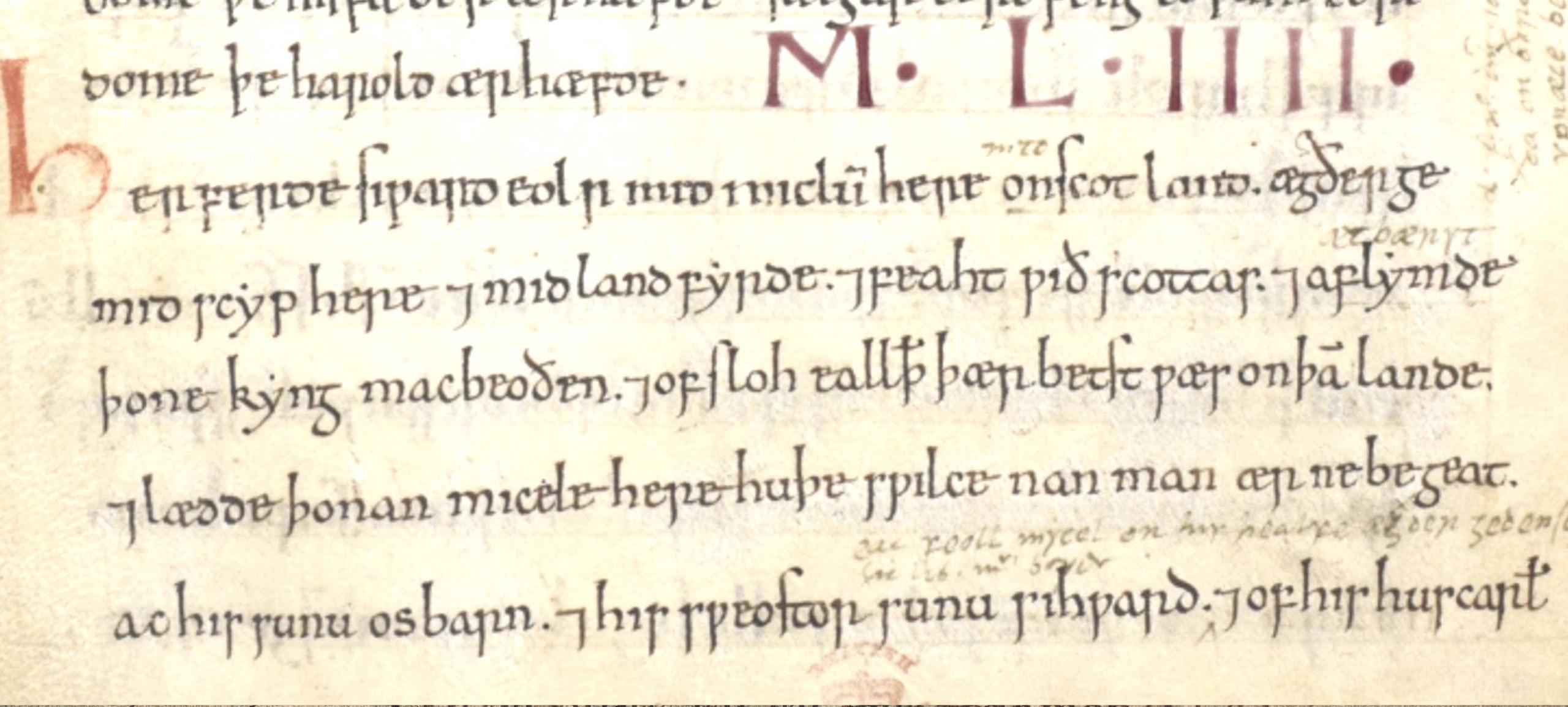
One of the earliest references to witenagemot comes from a document dating back to King Ethelbert of Kent in AD 600. The legislation proposed during the meeting of the witan would subsequently form an early set of laws which were to be recorded in an early document surviving from this period.
Defined initially by locality, the regional nature of the witan changed and expanded after the unification of England in the 10th century, thus developing a national level of governance for the first time.
The informal nature of the witan allowed the meetings to occur wherever and whenever they were required, however this ad hoc nature was later replaced and stabilised into a more structured format with a united Anglo-Saxon kingdom encompassing England, using local level earls and noblemen to administer at a county level.
Once the Anglo-Saxons had pushed their powerbase into Welsh territory, likewise the local Welsh kings could also be expected to attend.
In many cases the witan was not restricted to one location, with records between the year 900 and 1066 alluding to more than 50 different meeting areas, ranging from London to Oxford and numerous other towns across the southeast and southwest of England. Further north, meetings were rare, however records of a witan are noted both in Lincoln and Nottingham.
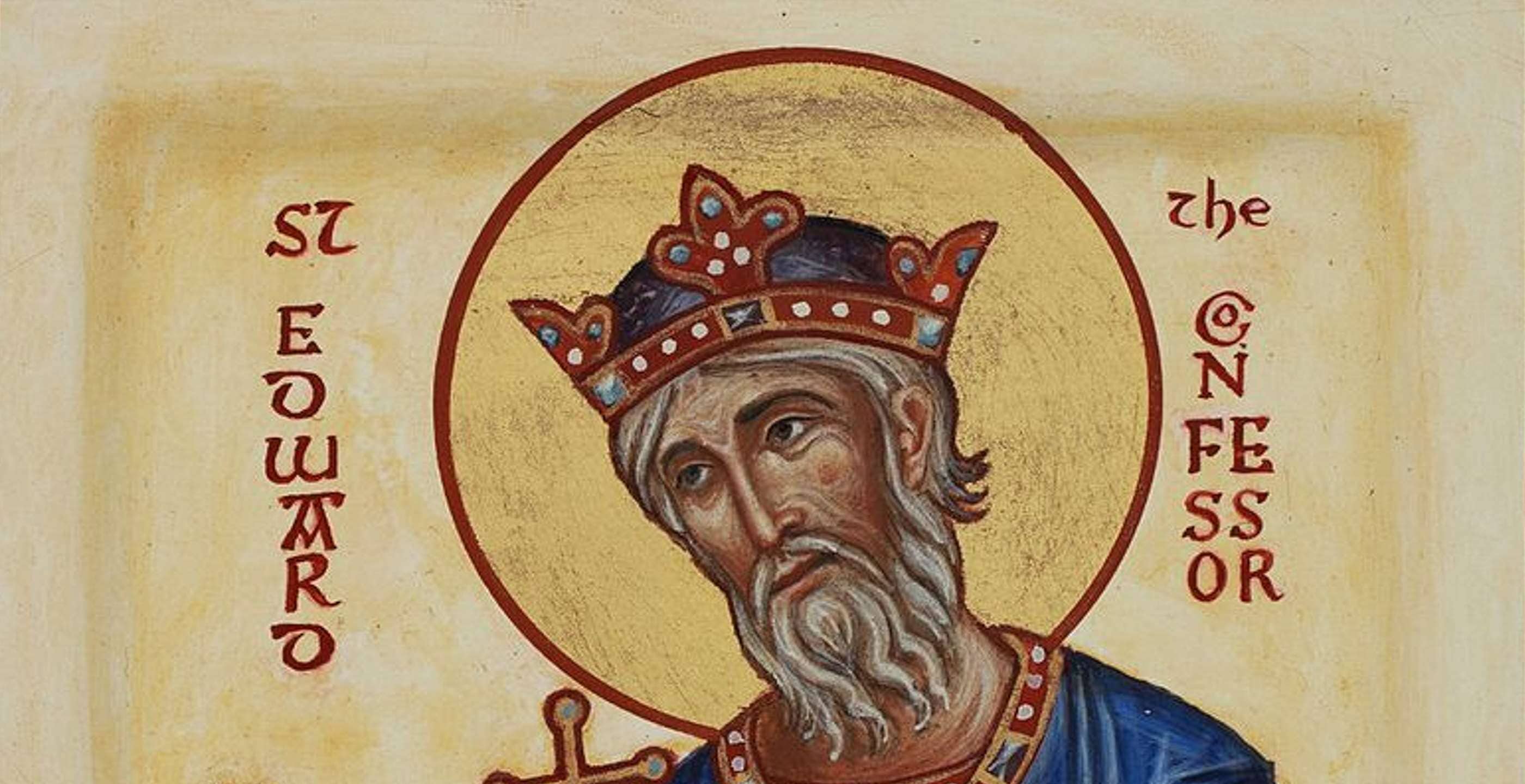
The buildings hosting witans were also not specific, as sometimes they were held at royal palaces but on other occasions merely in the local town or at a hunting lodge. Witans were convened on the authority of the king and did not occur on a particular date, with witans gathering throughout the year. However during the reign of Edward the Confessor, meetings of the witan were formalised to three specific occasions, coinciding with Christian celebrations and held at Winchester, Westminster and Guildford.
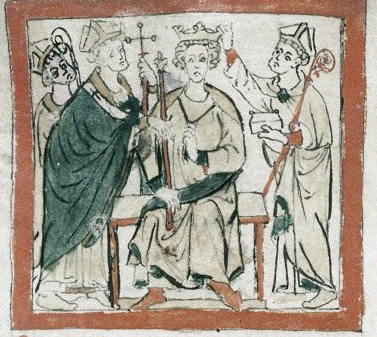
The witan’s advice was dispensed on all matters whether political, religious, social, or economic in nature.
Church law for the most part was drafted exclusively by the clergy; however, in other contexts the consent and consultation of the witan would be required, such as when introducing a high level of taxation.
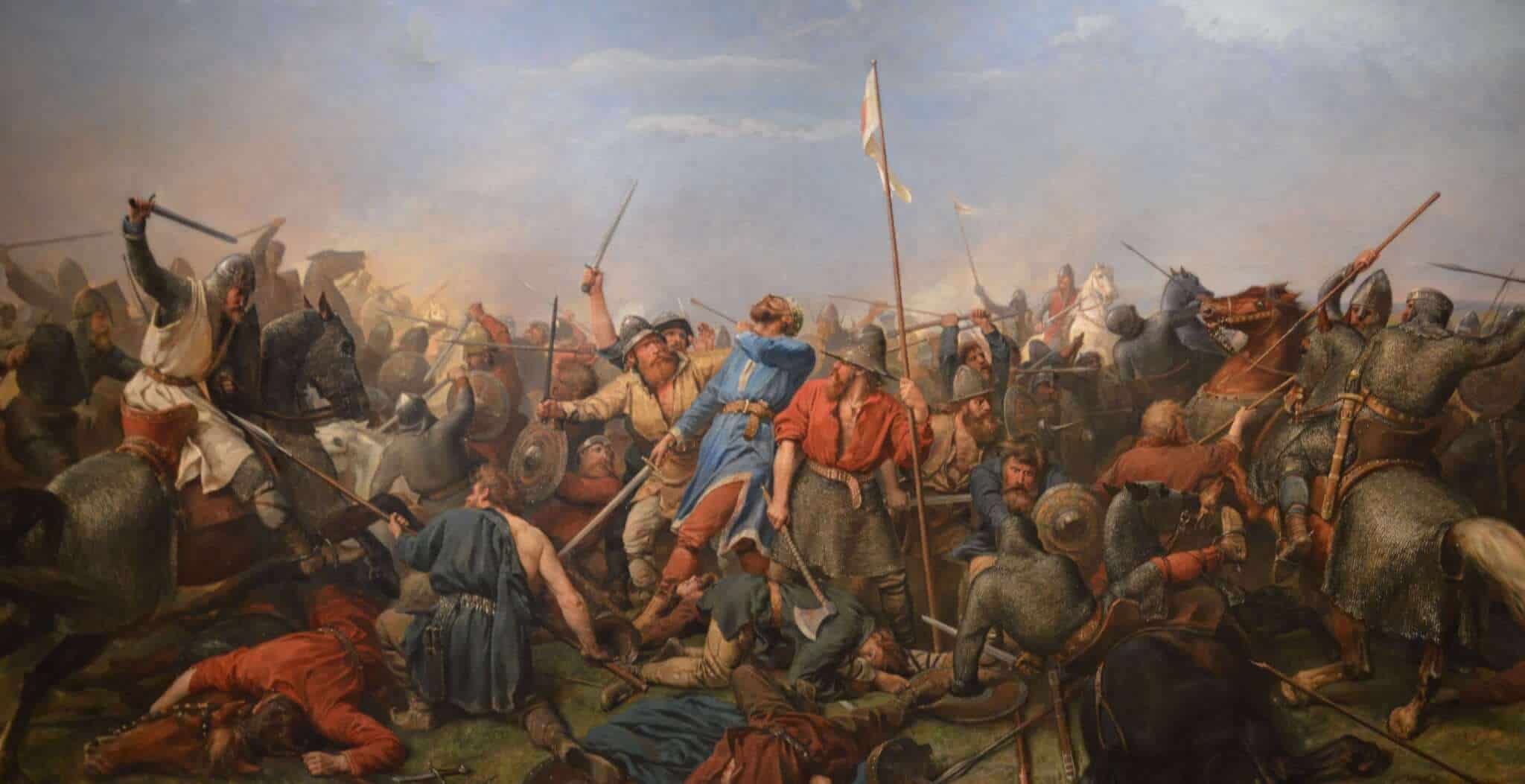
Such circumstances were poignantly demonstrated during the introduction of Danegeld (meaning Dane-money/yield) which was levied between the 9th and 11th century to pay tribute to Viking raiders. Following the defeat at Maldon, Archbishop Sigeric of Canterbury along with other powerful members of the witan from the southwest, advised King Ethelred to pay the Vikings tribute instead of attempting to maintain the armed struggle against the invaders. The tribute itself amounted to a staggering £10,000 and in the end proved ineffectual at preventing further Viking attacks.
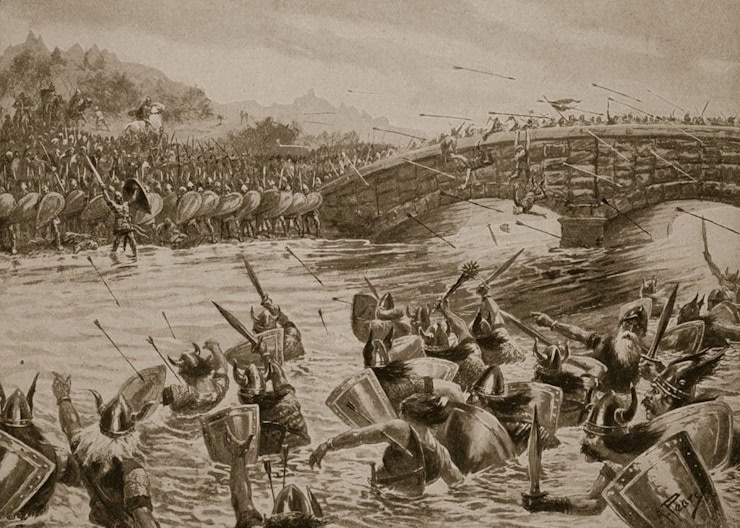
The advice of the witan proved instrumental during the reign of Ethelred the Unready, who earned his sobriquet as a result of the poor advice dispensed by his witan.
The modern terminology of ‘unready’ is now thought to be a corruption of the Anglo-Saxon term ‘unraed’ meaning no council, therefore it is believed that chroniclers were not describing him as ‘unprepared or unready’ but simply recognising that he was poorly advised by those around him. Whilst King Ethelred has been burdened with the title of ‘unready’ it is more plausible that it was in fact a contemporary criticism levelled at the witan who escaped judgement due to modern interpretations.
Therefore, Danegeld and other such examples reveal the power of the witan to lead the king into valuable judgements which could either make or break the historical legacy they left behind.
The witan was thus an advisory council dealing with all matters enforcing war and peace in equal measures. Moreover, upon the death of an Anglo-Saxon king, the royal wills would subsequently be declared at witan congregations.
The witan also had the prominent task of electing the king from the candidates presented to them. Whilst later figures in medieval royal courts became known as self-styled ‘kingmakers,’ in Anglo-Saxon England, the witan by default possessed such power.
On 5th January 1066, Edward the Confessor died without issue, leading several figures to step forward to claim the throne as their own. Such circumstances required the intervention of the witan who elected Harold Godwinson, the Earl of Wessex, a member of one of the most powerful families, to be the next king.
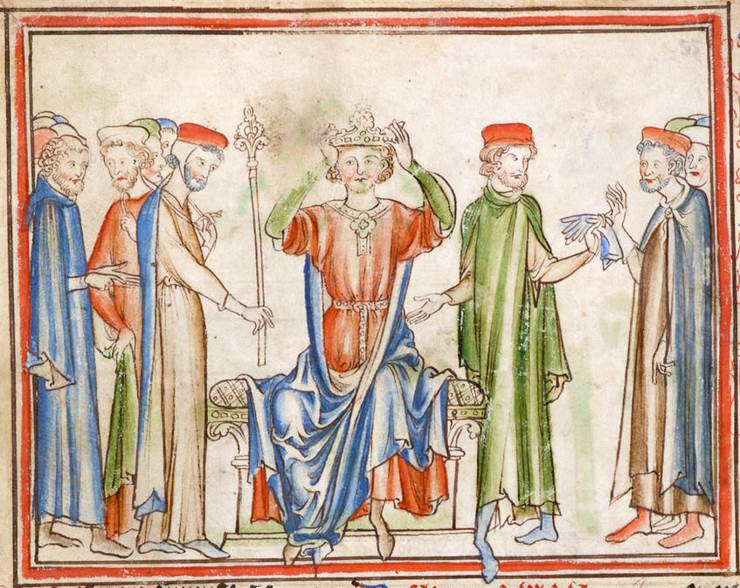
Perhaps the largest demonstration of the witan power was not the election of the king but the ability to depose an unpopular one. Whilst this occurred on extremely rare occasions, a couple of kings fell victim to such circumstances, including in 757 King Sigeberht of Wessex and Alhred of Northumbria in 774.
Despite the usual system of primogeniture being in place, the witan still held considerable power in dictating the terms of the kingship. Whilst the deceased king’s successor naturally arose and took the throne, the king was elected by the witan and as such did not have the power to depose members, thus forcing the king to forge a relationship with the statesmen who had appointed his predecessor regardless of their existing dynamic.
However Alfred the Great, who after reconstructing Wessex following the Treaty of Wedmore, continued to face threats from Danish incursions throughout his reign and in order to deal with these ongoing pressures and maintain stability during his rule, Alfred took the opportunity to reorganise his witan.
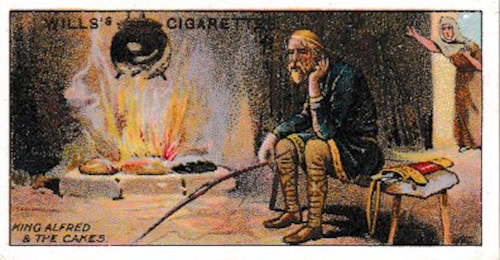
King Alfred believed the witan had failed him during his period of exile in the marshes of Somerset and in doing so capitulated to the Danes. Thus, he subsequently took it upon himself to remove certain undesirable figures. As documents from this period attest, a large majority of the ealdormen were removed from their positions and replaced with men whom Alfred could trust.
His intervention demonstrated how the prosperity and security of the reign was inextricably tied to the members of the witan, who would guide and support the king during his political and military manoeuvres.
In 1066, the era of Anglo-Saxon domination came to an end and was replaced by a new epoch under the Normans. Such a transfer of power did not see the structure of the witan fade however, rather the witan evolved into a similar and recognisable formation now known by a new name, curia regis, thus demonstrating the natural lifecycle of England’s political infrastructure which would continue to grow and expand throughout the ages into modernity.
The witan, whilst deeply Anglo-Saxon in origin and execution, was a powerful part of English political history, cementing a tradition of consultation and seeking counsel which would manifest into the modern-day political democracy we are familiar with today.
Jessica Brain is a freelance writer specialising in history. Based in Kent and a lover of all things historical.
Published: 5th March 2026