

Mummers’ plays are traditional folk dramas, delivered by masked performers drawn from the local community, which gained traction in medieval England and spread in popularity throughout the British Isles.
The origins of Mummers’ plays can be traced back to the ancient world, where in Rome the end of the year was marked by a procession of masked, performing figures often depicting spirits who would parade through the streets to the sound of music.
Its ancient Greek origins link the word mummer closely with the Greek god Momus who was god of mockery and scoff. The origins of the word ‘mummer’ derives from the Greek word ‘mommo’ meaning a mask.
It has also been associated with the early new high German mummer ‘a disguised person’ or vermummen, meaning ‘to wrap up or to mask one’s face’.
A mummer refers to the performer but was also known by a range of other names, including guisers, rhymers, pace eggers and galoshins.
These pre-Christian pagan practises soon gained popularity during the medieval period in England, when it was performed in the royal court.

Across the British Isles, mummers’ plays were performed during times of festivity throughout the year to mark special occasions, particularly at Christmas and Easter.
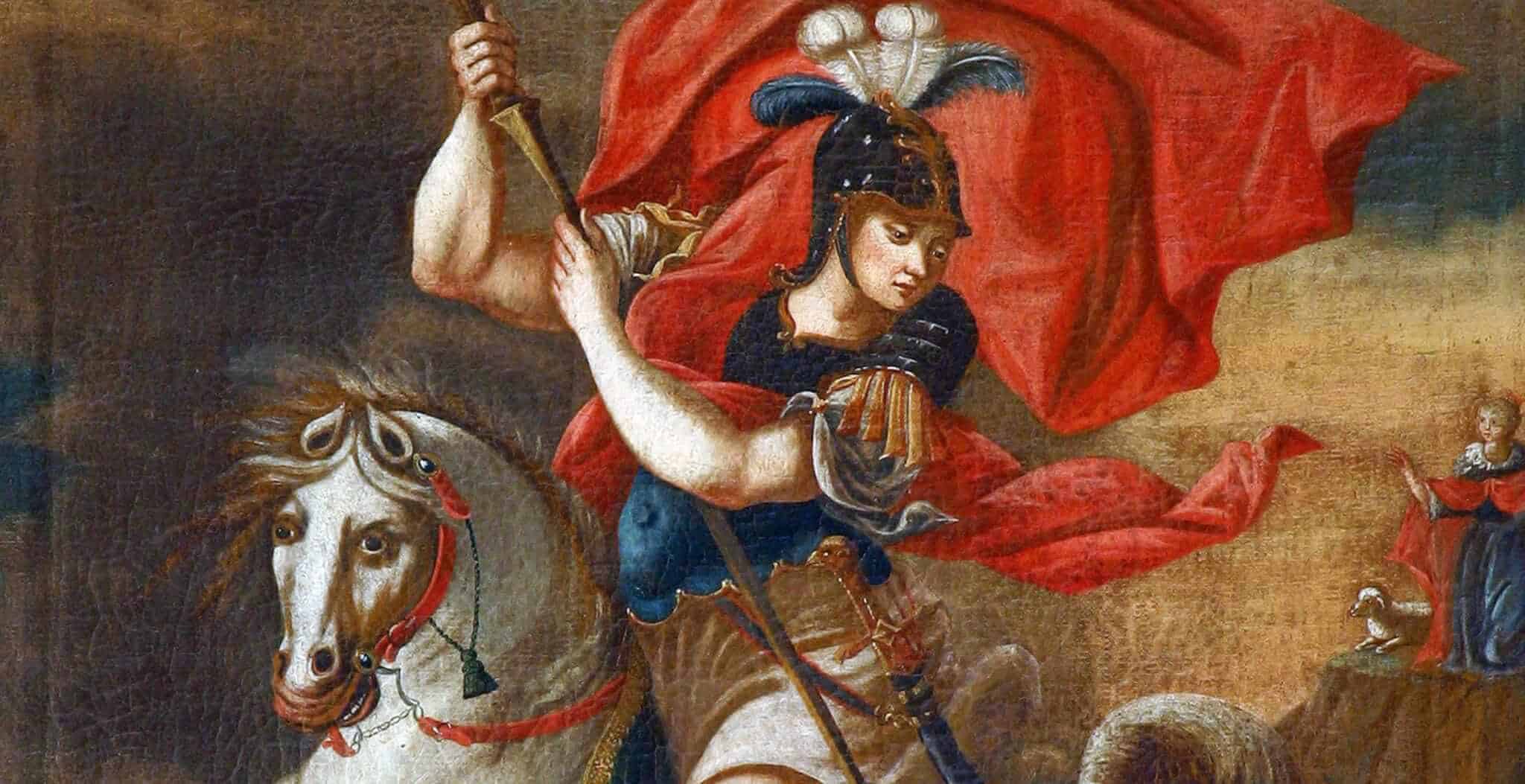
The plays were always acted by amateurs rather than professionals and were also exclusively male, despite the inclusion of female characters. The mummers would depict specific popular heroic tales with the portrayal of St George and the Dragon being a popular choice. Classic battles between good and evil, light and dark and life and death inspired the format of the plays.
This tradition saw disguised performers put on a play for audiences, often going door to door with the hope of offers of money, food or drink from the spectators.
Whilst Christmas was a time of indulgence and luxury for some, for agricultural workers it was a challenging time of year, made worse by a lack of work during this period. In order to capitalise on the festive season, often associated with generosity, the poorest members of the community provided entertainment, whether in a private home or frequenting the pubs and inns of the local village.
 A ‘modern’ Christmas play (now generally known as a mummers play), 1852. From left to right: Father Christmas, ‘represented as as a grotesque old man, with a large mask and comic wig, and a huge club in his hand’; three players, two of whom are St George and the Dragon, ‘all attired in much the same manner’; and the doctor. The woman is a spectator. Source: ‘Christmastide, its History, Festivities and Carols’. London: John Russell Smith. p 145.
In more formal settings, such performances formed an elaborate display of artistic endeavours which were usually under the direction of the Master of Revels who was responsible for organising the entertainment. A combination of masques, plays, music and pageants would be performed throughout the twelve days of Christmas.
During the reign of Edward I, the monarch used mummers to celebrate his daughter’s marriage in 1296. Whilst the ceremony was held at Christmas, the occasion was marked by a great plethora of performers including ‘fiddlers’ and ‘minstrels’ as well as the presence of ‘mummers of the court.’
The popularity of these amateur performers was cemented within the royal household, as subsequent monarchs included mummers in their festivities. In 1377, the future King Richard II was presented with 130 mummers who had travelled on horseback to perform.

Whilst the number of performances grew, they were not always welcomed, as demonstrated in 1418 by a law which was passed in London forbidding ‘mumming plays or any other disguising’ or else risk imprisonment.
Meanwhile, in Scotland performances were popular such as in May 1590 when Anne of Denmark visited the nation, and was greeted by entertainers from Edinburgh who performed a sword dance wearing floral hats and others in a typical Highland dance costume. A year later, King James VI adorned a disguise consisting of a Venetian mask when attending a wedding.
The use of costumes to celebrate unique occasions persisted throughout the years, however regional variations gave rise to a variety of performances and names by which they were known. For example, Plough Monday (the traditional start of the agricultural year) was a popular choice of day for the performers, and they became known as Plough-jacks or Plough witches with a host of different main characters. As a result, these were referred to as ‘plough plays’ rather than mummers’ plays.
In Ireland, mummers’ plays were traditionally performed despite being discouraged by the Catholic Church, with characters famous from Irish history chosen as the main protagonists.
Across the British Isles, different villages would have had their own plays associated with their local traditions which were passed on through word of mouth, rather than using scripts as they would have proved useless to most performers who were likely to have been illiterate.

Common characters such as St. George rallied the crowds against his opponent known as the Turkish Knight or sometimes referred to as Slasher. In keeping with a more festive note, some other popular protagonists included Old Father Christmas who introduced the play.
Often using the opening line, ‘In comes I, Old Father Christmas, am I welcome or am I not?,’ the performers would provide this entertainment with the hope of a drink, a morsel of food or a few coins tossed in their direction.
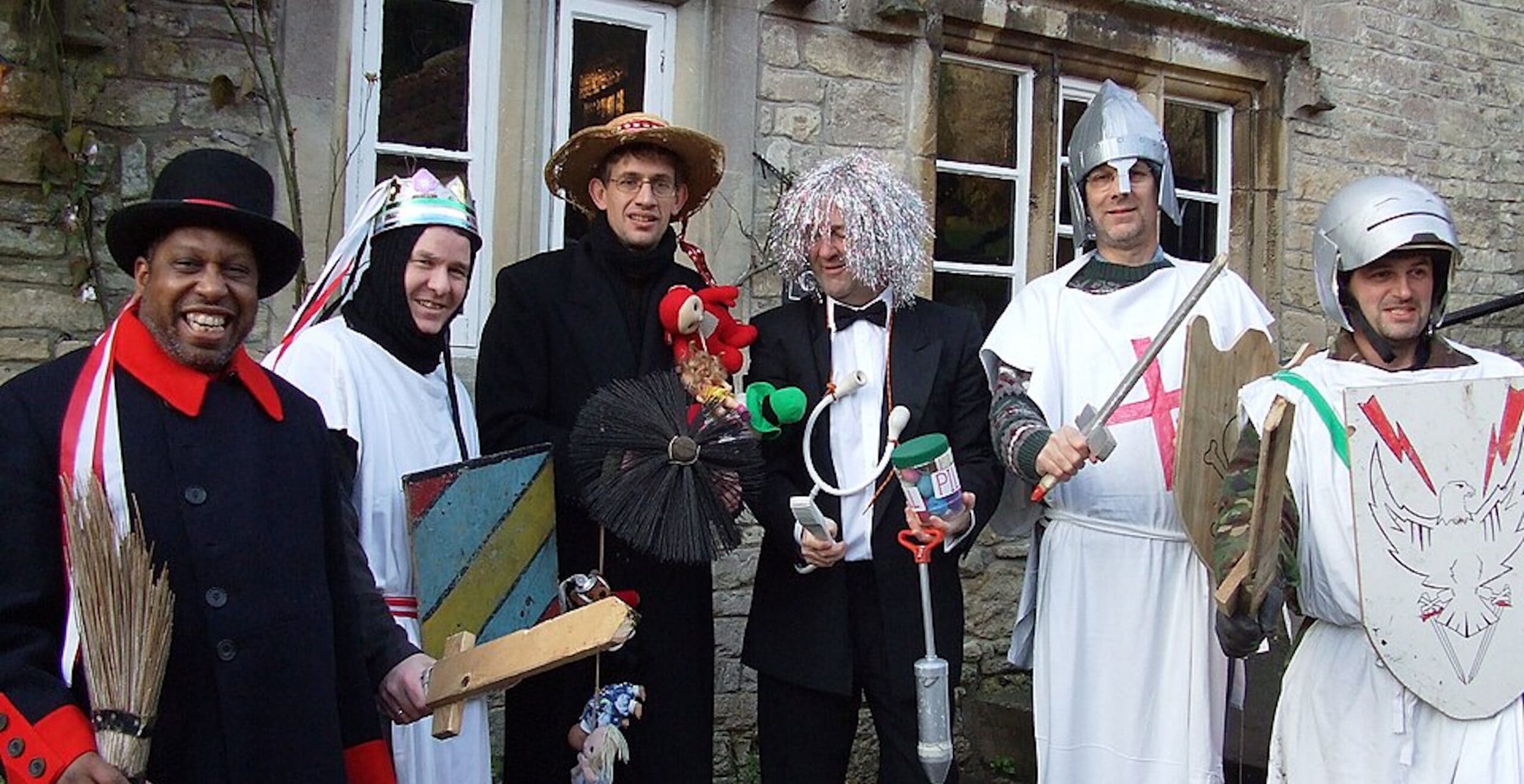
A large part of the tradition was associated with agricultural workers and rural communities. Without having access to any make-up or costumes, the workers made do with transforming their appearance using more basic methods. Typical outfits constructed around familiar and popular characters included donning a white tunic with a red cross for St George, whilst someone portraying Beelzebub might paint their face red and wear horns.
In Lancashire, sashes and toy swords were often sold in the local shops for villagers who were taking part in the performances, whilst others simply put together their own costumes by sewing different fabrics together.
Often some form of headgear was worn and commonly adorned with ribbons, strips of fabrics, rosettes or flowers. Other participants masked their faces using soot, sheep dye or whatever they could get their hands on in a bid to disguise.
Very commonly in the performance, a character faces an untimely death and then is brought back to life, evoking links to the mystical and pagan elements whilst also demonstrating a connection to agriculture with the changing seasons and birth of new crops.
Over many centuries, mummers’ plays gained popularity throughout Great Britain and Ireland, whilst spreading to other English-speaking parts of the world because of Britain’s expanding imperial reach, including faraway locations such as Newfoundland and St Kitts and Nevis.
The tradition grew and evolved through the centuries and peaked in the 18th century, before traditional mummers’ groups dissipated in the early 20th century with the advent of the First World War. In the latter half of the century there has since been an attempt to revive the traditions by groups of folklore enthusiasts.

Today, revivals of mummers’ plays are still performed with a few differences. Often associated with morris dancers, both men and women perform and mumming costumes are still focused on the element of disguise by applying face paint and elaborate outfits.
Jessica Brain is a freelance writer specialising in history. Based in Kent and a lover of all things historical.
Published: 15th December 2025
Top Image: Weston Mummers, Wikipedia Commons, Author: Rodw