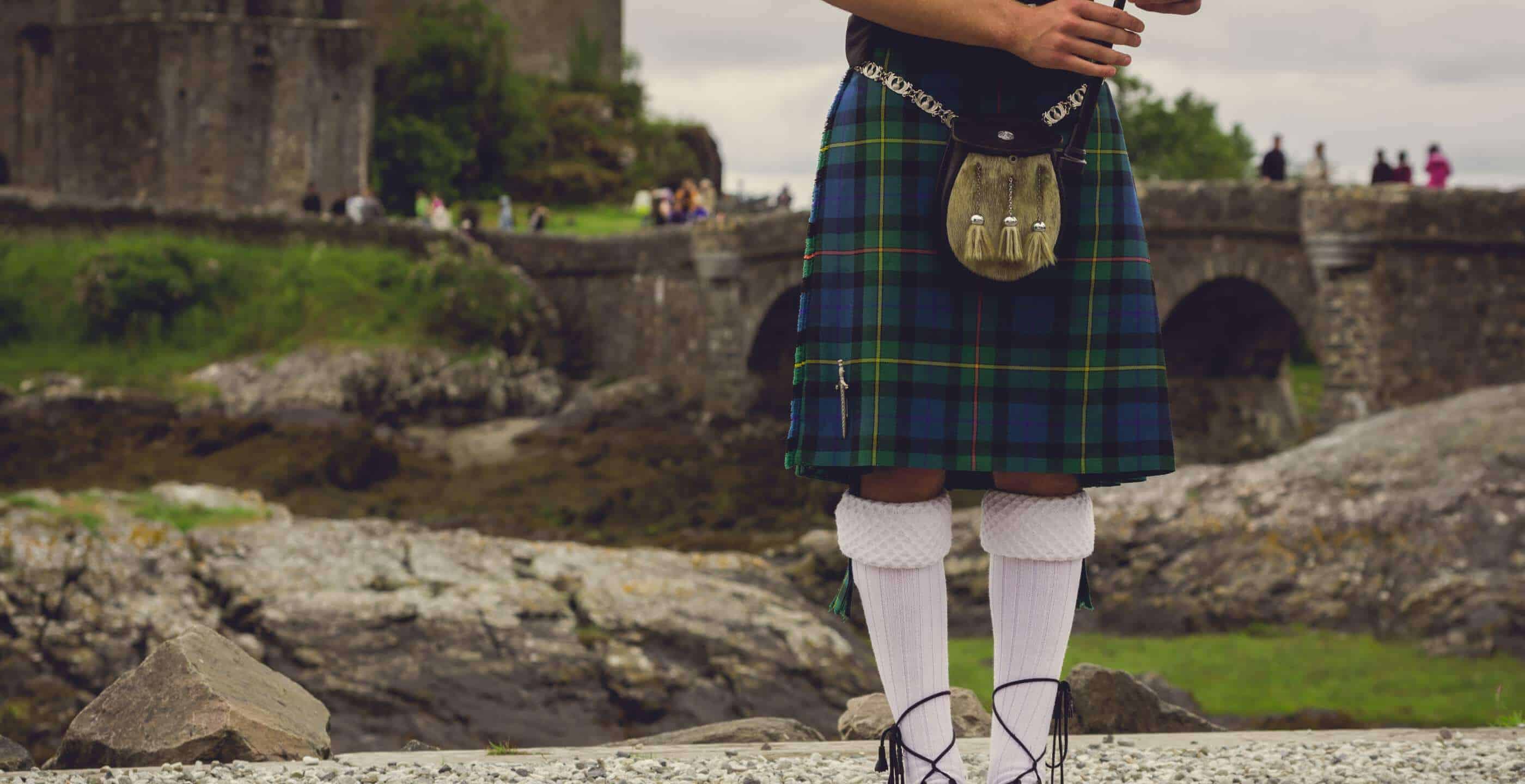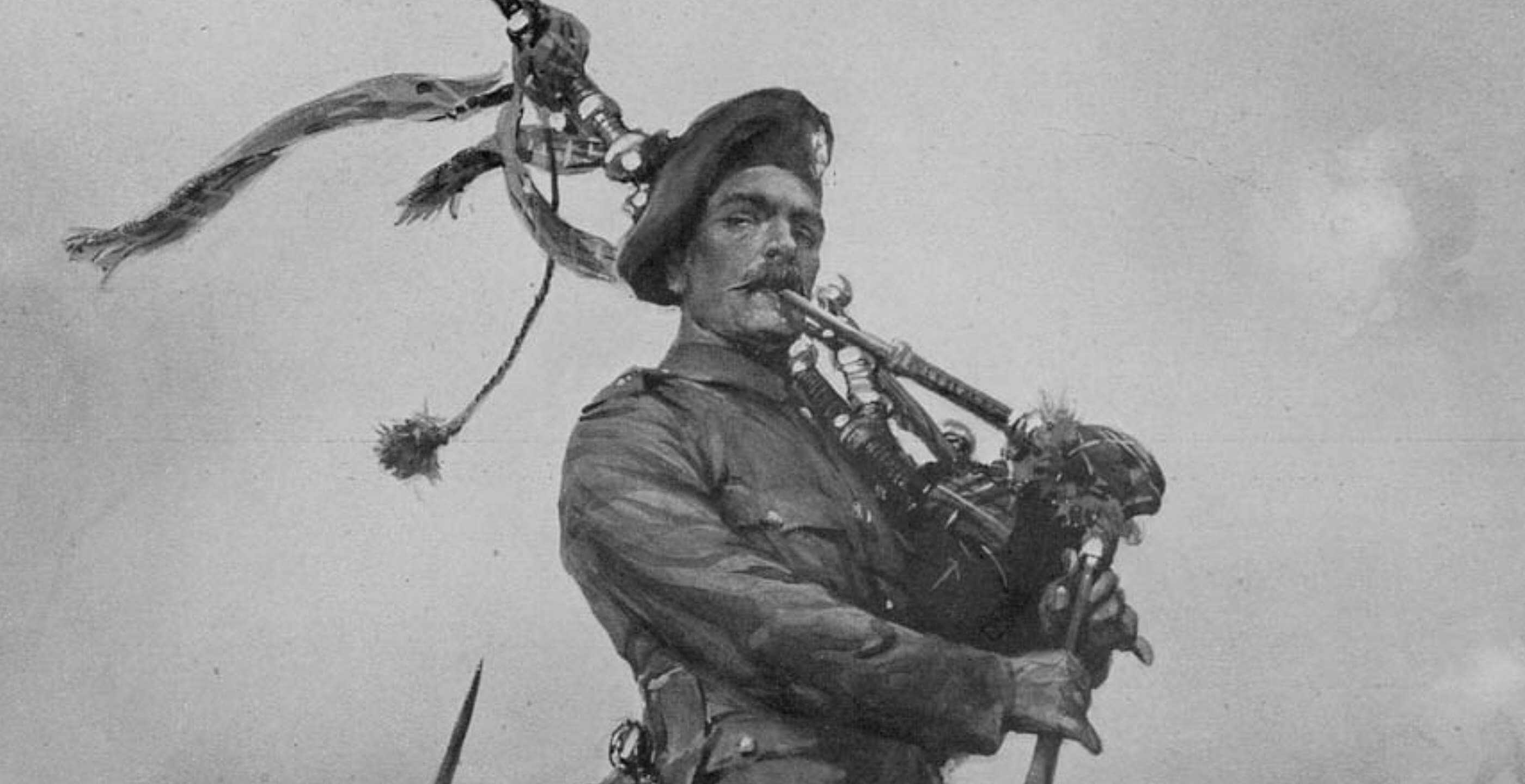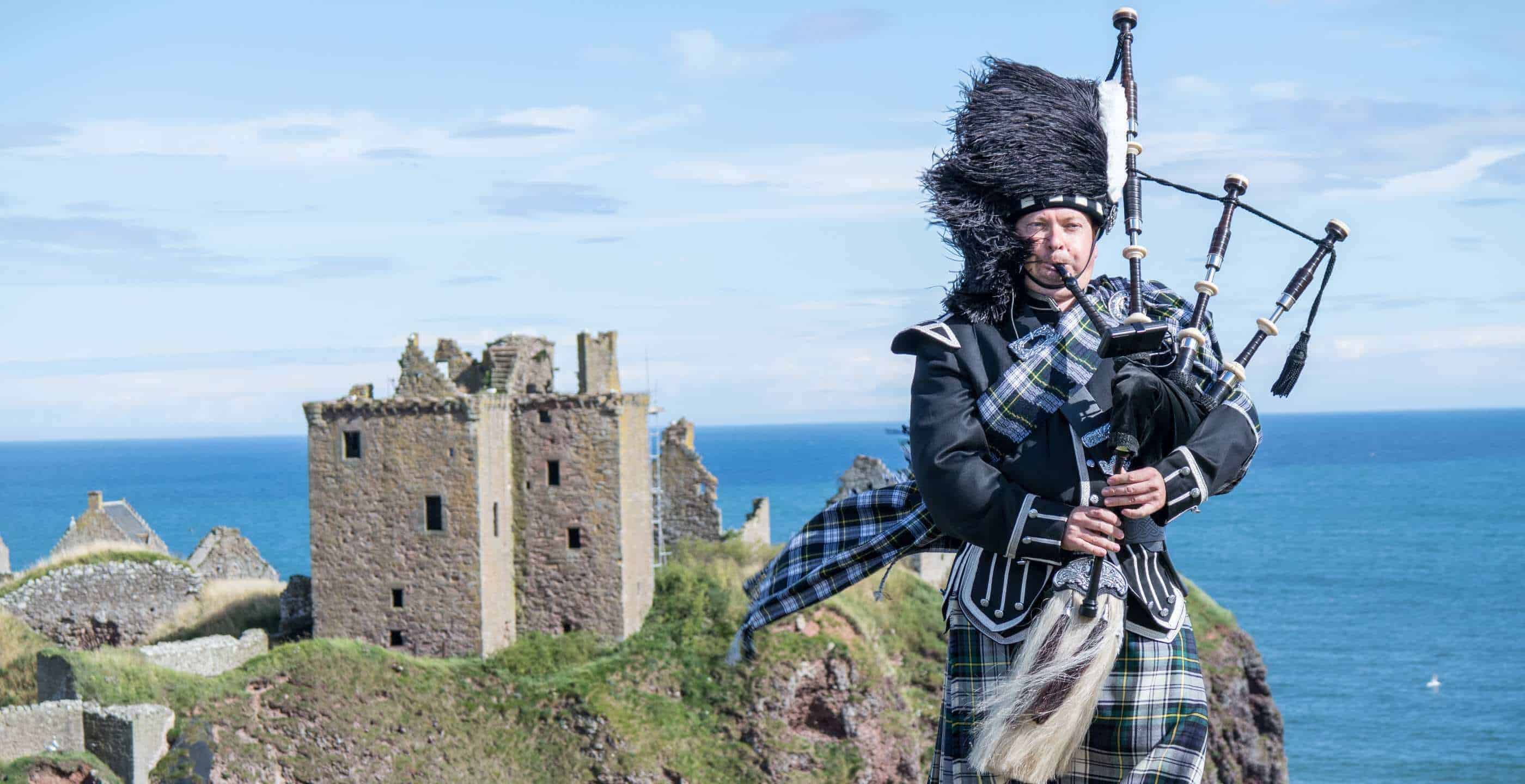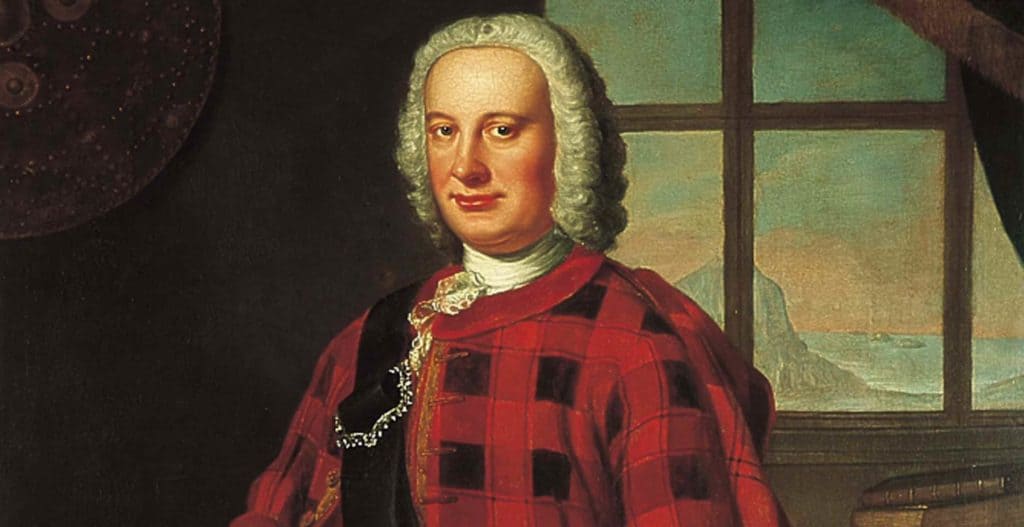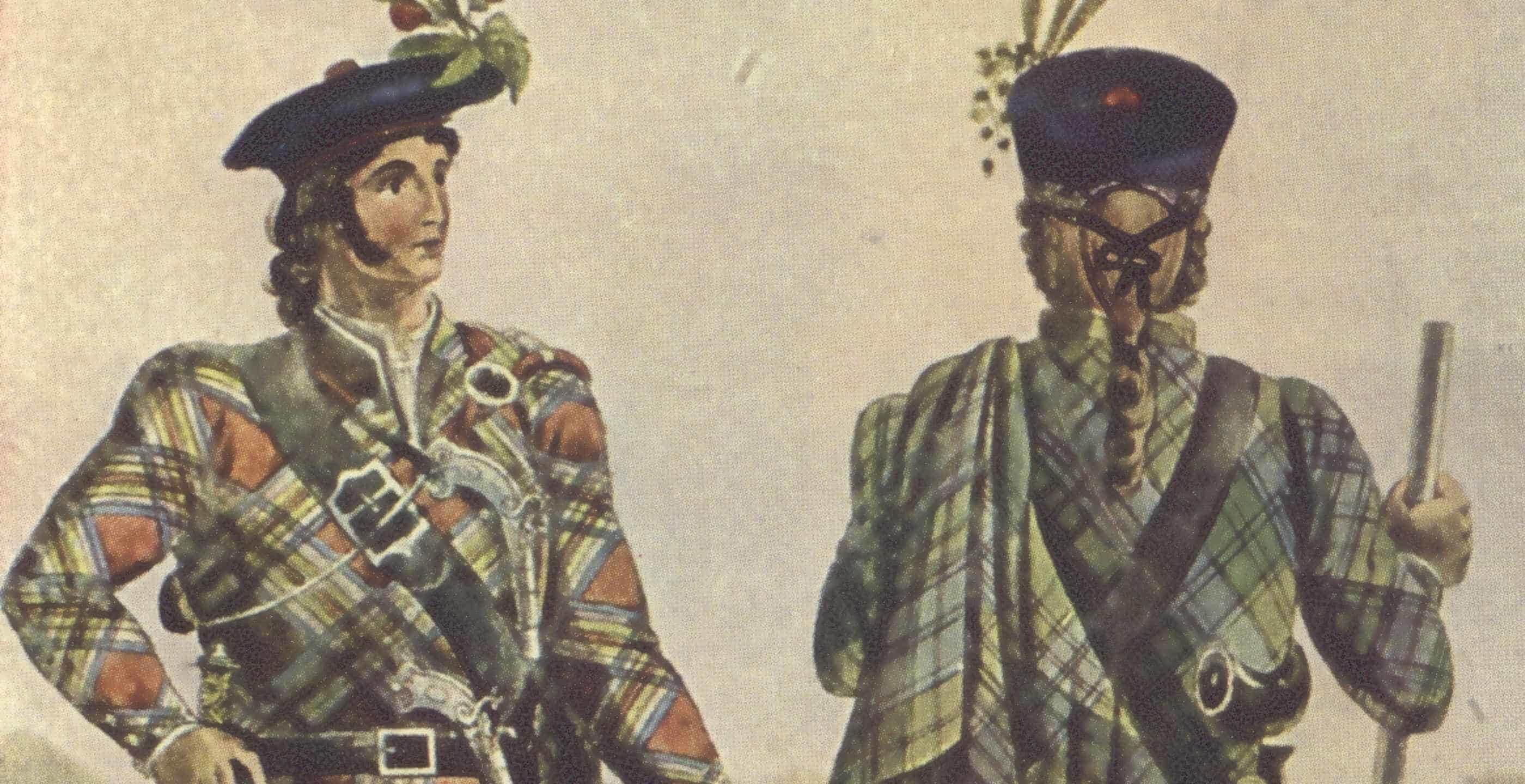


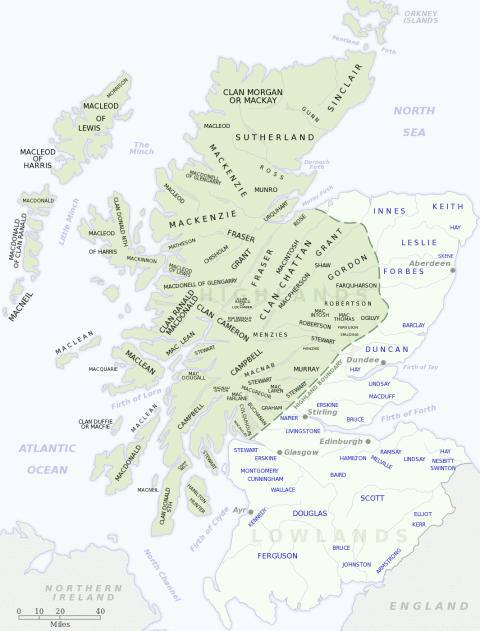
Each year almost 50,000 people from at least 40 countries across the world meet in Scotland’s capital city Edinburgh, to celebrate Scottish culture, heritage and family history. At the annual Clan Gathering, thousands of people line the Royal Mile to watch the Great Clans of Scotland proudly parading through the ancient streets of the nation’s capital with pipes sounding and drums beating the march. Many of the clans represented have a rich history, such as those featured in our listing below.
 Baird: From the 13th century this surname has been associated with Lanarkshire and also with the Aberdeen and Banff regions. Important families of that name appear from the 14th century. The Bairds have long been prominent in the legal profession as well as in national affairs. John Baird was appointed Lord of Session with the title Lord Newbyth in the 17th century. General Sir David Baird (1737 – 1829) entered the Army in 1772 and served in India from 1780; he was severely wounded and taken prisoner by Hyder Ali. He captured Pondicherry in 1793 and Seringapatam in 1799 and made a famous march across the desert from the Red Sea to the River Nile in 1801. He commanded an expedition to the Cape of Good Hope in 1805. Family motto – Dominus fecit (God Made).
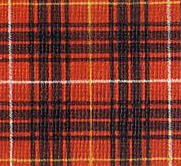 Bruce: The Bruces are descended from a Norman Knight who arrived in England with William the Conqueror in 1066. The name Bruce derives from an area of land in Normandy, France, now called Brix. The Bruces held important lordships in the north of England and a branch of the family settled in Annandale in the 12th century. King Robert the Bruce (1274 – 1329), was crowned King of Scotland in 1306. In that same year he was defeated at Methven, and took refuge in Rathlin. From 1307 he was actively engaged harrying the English, and in 1314 won a decisive victory over Edward II at Bannockburn. Bruce consolidated his kingdom and the war with England was closed by the Treaty of Northampton in 1328. Bruce died at Cardross the following year. Family motto – Fuimus (We have been).
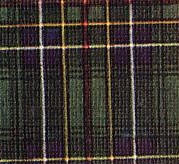 Cockburn: The Cockburns are a Border Clan. The surname derives from a place name near Duns, in Berwickshire. Sir Alexander Cockburn de Langton became Keeper of the Great Seal of Scotland in 1390. Sir Alexander’s son, also Sir Alexander, was created Great Usher in the Scots Parliament. The Cockburns were staunch supporters of Mary Queen of Scots, and in 1568 lost their castle at Skirling, in Midlothian as a consequence of this. Sir Alex J E Cockburn, the eminent Judge, was appointed Solicitor-General in 1850, Chief Justice in 1858 and Lord Chief Justice of England in 1859. He presided over many of the most important and notorious trials in Victorian England, including the famous Tichborne trial in 1873. Family motto – Accendit cantu (He excites us with song).
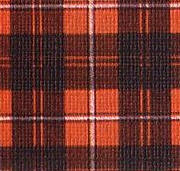 Cunningham: The family takes its name from the district of Cunningham in Ayrshire. The name derives from the Saxon “cuinneag” meaning “milk pail” along with “ham” meaning “village”. In the 12th century, the lands of Kilmaurs in Ayrshire were granted to a Norman named Warnebald, whose descendants adopted the territorial name Cunningham. The Cunninghams received additional lands thanks to their support of Robert the Bruce. It was King James III that granted Sir William Cunningham the titles of Lord Kilmaurs in 1462 and later earl of Glencairn in 1488. In 1653, the 9th Earl of Glencairn raised an army in support of Charles II. After the Restoration in 1660, Charles II appointed him Lord Chancellor.Family motto – Over Fork Over.
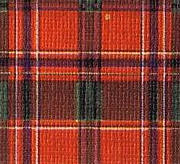 Dalziel: The family takes its name from Dalziel in Lanarkshire. Thomas de Dalziel swore allegiance to King Edward I of England in 1296, but later, appears to have changed sides and fought alongside King Robert the Bruce at Bannockburn. It was a Robert Dalziel who was created Lord Dalzell in 1628. Gen. Sir Thomas Dalzell fought for Charles I during the Civil War. After the Battle of Worcester in 1651, he was captured and sent to the Tower of London. He escaped the following year and subsequently traveled to Russia, where he served the Tsar as a general of cavalry against the Turks and Poles. He returned in 1666, when he was appointed Commander-in-Chief of the forces in Scotland by Charles II. He was the first Colonel of the Scots Greys, the regiment that defeated the Covenanters at the Battle of Rullion Green. Family motto – I Dare.
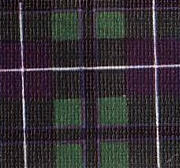 Douglas: One of the most powerful families in Scotland, the first documented Douglas was a William de Douglas in the 12th century in Morayshire. Although a much earlier origin of the name is thought to derive from the Gaelic dubhghlais meaning ‘black water’. In 1330 “Good Sir James Douglas” was killed in Spain, attempting to take Robert the Bruce’s heart on a crusade to the Holy Land. In the 14th century the Earldom of Douglas was created, and William, the first holder was also Earl of Mar. From his son were descended the Earls of Angus and the Queensbury branch. James Douglas, 4th Earl of Morton succeeded to the title and estates in 1553. He was prominent in the assignation of Rizzio, and joined forces against Mary Queen of Scots. In 1572 he was elected Regent of Scotland, but in 1581 was beheaded for his alleged part in the Darnley Conspiracy. Family motto – Jamais arrière (Never behind).
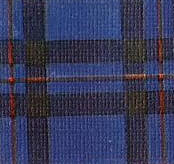 Elliot: The Elliots are one of the great ‘riding clans’ of the Scottish Borders. Their arrival in Teviotdale can be traced back to the reign of Robert the Bruce. James the 15th Chief was killed with James IV at the Battle of Flodden in 1513. From 1565, a bloody clan feud developed between the Elliots and the Scotts, after Scott of Buccleugh executed four Elliots for stealing cattle. The Elliot family held the lands of Reheugh, Larriston, Arkleton and Stobs. From the Stobs branch were descended Lord Heathfield, and Gilbert Elliot who was Governor-General of India. George Armstrong Eliott was appointed Governor of Gibraltar in 1775, and his four years’ defence of the Rock (1779 – 1783) is one of the most glorious achievements in British history. In 1787 he was created Lord Heathfield and Baron Gibraltar. Family motto – Fortiter et recte (With strength and right).
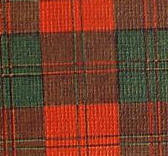 Erskine: The family takes its name from the lands of Erskine in Renfrewshire, just south of the River Clyde, which was held by Henry de Erskine in the reign of Alexander II. The Erskines were supporters of Robert the Bruce, and it was Bruce’s son, David II, that appointed Sir Robert de Erskine Keeper of Stirling Castle. Robert later became Lord Great Chamberlain of Scotland 1350 – 1357. His grandson was created Lord Erskine and from this branch was descended the Earls of Kellie. The 6th Lord Erskine was granted the Earldom of Mar in 1565, known as “Bobbing John” for his regular switching of loyalties; after raising an army of over ten thousand for James VIII, he led the Jacobite Rising of 1715. Family motto – Je Pense Plus (I think more).
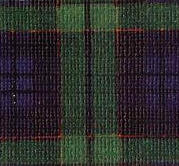 Fletcher: The name originates from the French fleche meaning arrow. Families of that name are found all over Scotland as they followed the clan for whom they made the arrows, so we find them associated in Argyllshire with the Campbells and the Stewarts, and in Perthshire with the MacGregors. The famous Scottish patriot Andrew Fletcher of Saltoun (1653 – 1716), strongly opposed the Act of Union which in 1707 dissolved the Scottish Parliament in Edinburgh, of which he was a member, and merged it with the English Parliament at Westminster. During the 1745 Jacobite Uprising, Fletchers fought on both sides. In the early 1800’s, hundreds of Fletcher clansmen and women were cleared from the Scottish Highlands by the Campbells of Breadalbane to make way for sheep grazing with many emigrating overseas. Family motto – Dieu pour nous (God for us)
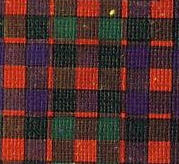 Gow: The name Gow derives from the Gaelic gobha, meaning armourer or blacksmith, and the son of the smith would therefore be Mac gobhann, known today as MacGowan. The Gows are a part of the Clan Chattan. At the Clan Battle fought on the North Inch of Perth in 1396, the hero of the fight was the Gobha Chrom – the crooked smith – said to be “small in stature, bandy legged, but fierce” he together with nine members of the Clan Chattan were all that remained alive when the battle was over. Neil Gow, the Prince of Scottish Fiddlers, was born at the Perthshire town of Inver in 1727. He was a born musician and his services were in great demand for the fashionable gatherings throughout Scotland and England. He was especially renowned for his reels and strathspeys and many of his own compositions remain popular to the present day. Family motto – Touch not the cat bot a glove.
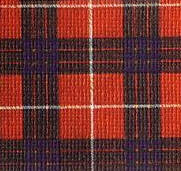 Hamilton: This family is said to be descended from Walter Fitz Gilbert, who was granted the lands of Cadzow by Robert the Bruce. James of Cadstow was created Lord Hamilton in 1445, and married Princess Mary, the daughter of James II in 1474.Their son was created Earl of Arran in 1503, and stood next in line to the crown of Scotland. The 4th Earl of Arran became the keeper of both Edinburgh and Stirling Castles, and was created a Marquess in 1599. For his support of King Charles I, the third Marquess was created a Duke in 1643. In 1648 the Duke led a Scottish Army into England, but was defeated at the Battle of Preston by the troops of Oliver Cromwell. Together with his king he was beheaded in London in 1649. Family motto – Through.
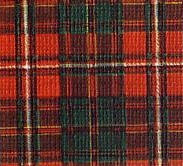 Hay: The family of Hay has many branches through Scotland, and can trace their history back to the Norman princes de La Haye who were part of William the Conqueror’s army that swept into England in 1066. Sir William Hay was created Earl of Errol in 1453, and this branch held the office of Hereditary Constable of Scotland from the time of King Robert the Bruce. The family still retains that title, giving them precedence in Scotland second only to the royal family. In the 15th century, Sir Gilbert Hay fought alongside Joan of Arc in France. On returning to Scotland, Sir Gilbert was killed alongside King James IV and many other Scots at the Battle of Flodden in 1513. Supporters of Mary Queen of Scots, the Hays rejected the Reformation. In 1806 Charles Hay, son of John Hay of Cocklaw, was raised to the Bench with the title of Lord Newton. Family motto – Serva jugum (Keep the yoke).
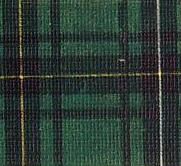 Henderson and Mackendrick: The name Henderson is in Gaelic mac Eanruig (son of Henry), sometimes anglicised to McHenry, Henryson, Mackendrick, etc. The clan claim descent from the Pictish prince Big Henry, son of King Nechtan, who arrived in Kinlochleven, just north of Glencoe around 900AD. Renowned for their size and strength, the Hendersons became the personal body guards of the chief of the Clan MacDonald of Glencoe and suffered the consequences of this in 1692 at the bloody Massacre of Glencoe. Alexander Henderson was the most prominent Presbyterian divine of his time, drafting the Solemn League and Covenant in 1643. He later became Moderator of the Church of Scotland and is buried in Greyfriar’s churchyard, Edinburgh. Family motto – Sola virtus nobilitat (Virtue alone enobles).
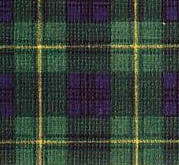 Johnstone: There are several “John’s towns” in Scotland, however the earliest record of it being used as a surname is in 1174 by one John of Johnstone in Annadale, Dumfrieshire. Later in 1296, Sir John of Johnstone of Dumfries pledged allegiance to King Edward I of England. Although at that time Perth was known as St Johnston and an area of East Lothian was called Jonystoun it was the fighting Johnstons of the Western Borders who would become the most powerful group of Johnstons in Scotland. During the Civil War, the Clan Johnstone supported the Royalist cause of King Charles. In 1633, King Charles I rewarded this loyalty by granting the title of lordship to the Johnstone chief. By the 1700’s the Clan Chief of the Johnstones had been elevated even further, from the rank of Lord to Earl of Annadale and Secretary of State. Family motto – Nunquam non paratus (Never unprepared).
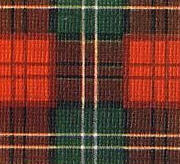 Lennox: Lennox was one of the ancient divisions of Scotland, and comprised the present county of Dumbarton, with portions of Stirling, Perth and Renfrew. The Sheriffdom of the district was granted to Mathew, Earl of Lennox in 1511. Henry Stewart, Lord Darnley (1545 – 1567) was the second son of the Earl of Lennox. He was created Duke of Albany and in 1565 he married Queen Mary, who had him proclaimed King of Scotland. The marriage was an unhappy one, and his part in the murder of Rizzio estranged him from the Queen. He was on the point of leaving the country when he was murdered at the Kirk-o’-Field in 1567. He was the father of the future King James VI and I. Family motto – I’ll defend.
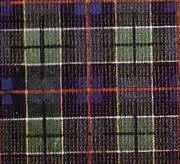 Leslie: The clan takes its name from Leslie in Aberdeenshire where it was firmly established by the 12th century. George Leslie of Leslie was created Earl of Rothes in 1447. Later Leslies took up the career of professional soldiering, fighting in Germany, France and Sweden. Alex Leslie, 1st Earl of Leven, served in the Swedish Army for 30 years. He was knighted by King Gustavus Adolphos of Sweden in 1606, and appointed Field Marshall some years later. Returning to Scotland he commanded the Covenanting Army but was defeated by Cromwell at the Battle of Dunbar in 1650. After the restoration of the monarchy he was created Lord Newark. In 1680 the 7th Earl of Rothes became Lord Chancellor of Scotland. Family motto – Grip fast.
ADVERTISEMENT
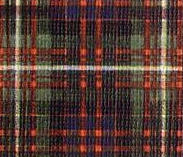 MacDonell or MacDonald of Clanranald: The largest of the Highland clans, the Norse-Gaelic Clan Ranald was descended from Ranald, son of John, Lord of the Isles. The Lord of the Isles had its own parliament and at one time was powerful enough to challenge the kings of Scotland. Their territory was principally along Scotland’s northwest coast. In the Wars of Scottish Independence the MacDonalds fought alongside Robert the Bruce. Following the Battle of Bannockburn in 1314, King Robert the Bruce proclaimed that Clan Donald would always occupy the honoured position on the right wing of the Scottish army. The MacDonalds were involved in both the 1715 and 1745 Jacobite Uprisings. Bonnie Prince Charlie even landed in Clanranald territory in 1745, and it was Flora MacDonald who helped him escape to Skye after his crushing defeat at the Battle of Culloden the following year. Family motto – Per mare per terras (By sea and by land), also My hope is constant in thee.
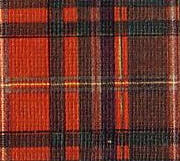 MacDougal or MacDougall: The Clan MacDougal is descended from the eldest son Dougal or Dugald, of the princely House of Somerled, King of the Hedbrides. As eldest son, Dougal inherited his father’s lands in Argyll and Lorn, as well as the islands of Mull, Jura, Tiree and Lismore. Through marriage the MacDougalls were related to the Clan Comyn, so when Robert the Bruce murdered the Red Comyn in his bid to become king, a bloody feud erupted. In the 17th century during the Civil War the clan supported the Royalist cause, which led to them losing much of their lands; these were subsequently returned when the Stuart monarchy was restored. The MacDougalls built Ardchattan Priory near to Oban in Argyll, and the clan chiefs were buried there until the early 1700’s. Family motto – Buaidh no bas (To conquer or die).
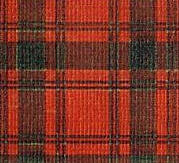 MacQuarrie: The ancestral home of the Clan MacQuarrie is the tiny Inner Hebridean island of Ulva, off Scotland’s northwest coast. The first recorded Clan Chief was John Macquarrie of Ulva, who died in 1473. In 1651 the clan suffered heavily at the Battle of Inverkeithing. Supporters of King Charles II of England, the Scots Royalist forces were decimated by the well disciplined Parliamentarian New Model Army of the English. Allan Macquarrie of Ulva, chief of the Clan MacQuarrie and most of his followers were killed in the battle. Maj-Gen Lachlan MacQuarrie joined the Black Watch in 1777, and after serving in North America, India and Egypt was appointed Governor of the convict settlement of New South Wales. The colony was in a critical condition when he arrived, but under his wise government the colony prospered. Known as the Father of Australia, he laid out Sydney, but in 1821 was forced to return to Britain due to ill health. Family motto – Turris fortis mihi Deus (God is to me a tower of strength).
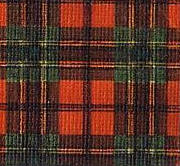 Maclean: Tradition tells that this powerful clan was descended from Gilleain-nan-Tuagh (Gillian of the Battle Axe), a descendant of the Kings of Dalriada. Gillian fought against King Haakon of Norway at the Battle of Largs in 1263. The first recorded mention of the Macleans of Duart is in a Papal Dispensation of 1367, which allowed the Maclean Clan Chief to marry Mary MacDonald, the daughter of the Lord of the Isles. The Isle of Mull off Scotland’s northwest coast was the principal home of the clan, with the MacDonald dowry supplying the funds to purchase substantial parcels of the island. The Macleans supported King Charles I against the Parliamentarians. Sir Hector Ruadh Maclean and five hundred of his clansmen were slain at the Battle of Inverkeithing in 1651 by Cromwell’s New Model Army. In 1876 Sir Harry Maclean resigned his commission in the British Army to join the army of the Sultan of Morocco. He enjoyed a romantic career and became military leader and personal advisor to the Sultan. Family motto – Virtue Mine Honour.
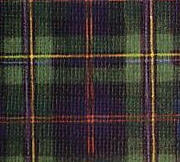 Malcolm: The family of Malcolm had settled in the counties of Stirling, Dumbarton and Argyll by the 14th century. The name however, derives from a much earlier date, to the followers of the Irish Saint Columba who established the first monastery on the Scottish Isle of Iona. ‘Maol’ derives from the gaelic meaning ‘shaven head’ or ‘monk’, and so ‘Maol Chalum’ is a monk, or disciple of Columba. In the 18th century the chief of the Clan MacCallum, Dugald MacCallum of Poltalloch adopted the name Malcolm. It is unclear why Dugald did this, but it could be that he considered the two names interchangeable, perhaps through distant ancestral links. Admiral Sir Pulteney Malcolm entered the Royal Navy in 1778, and in 1798 captured three Spanish gunboats in Manila Bay. While Commander-in-Chief of the St.Helena Station, 1816-17, he won the ‘warm regard’ of Napoleon. Family motto – In ardua petit (He aims at difficult things).
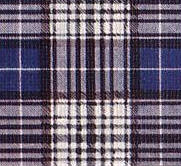 Napier: Tradition says the Napiers were descended from the old Celtic Earls of Lennox. It is thought that the name derives from the occupational name of “naperer”, one who looked after the linen in the royal household. John de Napier is first named in a land charter of 1280.These lands at Kilmahew in Dunbartonshire were subsequently held by Napiers for 18 generations, before finally being sold in 1820. John assisted in the defence of Stirling Castle in 1303, and a descendent went on to become Governor of Edinburgh Castle in 1401. The 7th Laird of Merchsiton, John Napier, (1550-1617) is famous for inventing a hydraulic screw for clearing coal pits of water, a calculating machine, a battle tank or two, and the system of logarithms that so revolutionised mathematics. His son Archibald accompanied James VI to London in 1603 when he became king of England. Family motto – Sans tache (Without stain).
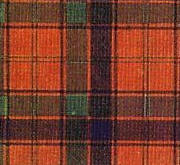 Robertson: The Robertsons, or Clan Donnachaidh (children of Duncan), were descended from the Celtic Earls of Atholl, who in turn were from a line of the kings of Dalriada. ‘Stout Duncan’ was a minor land-owner and clan chief in Highland Perthshire in the early 1300’s. Although the clan appears to have been loyal to the Bruce and Stewart royal dynasties, they also earned a reputation as raiders and feuders in medieval Scotland. The change of name can be dated to the fourth chief of Clann Dhonnchaidh, Robert Riabhach (Grizzled) Duncanson. It was Robert who tracked down, and brought to justice, the murderers of King James I in 1437. The Robertsons were involved in both the 1715 and 1745 Jacobite Uprisings. During the 18th and early 19th centuries the Robertson Chiefs refused to ‘clear’ their fellow clansmen in favour of the more profitable sheep. Family motto – Garg ‘n uair dhuisgear (fierce when roused).
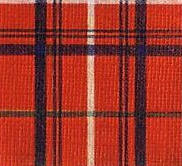 Rose: The chief branch of the clan was the Roses of Kilravock who are recorded in Inverness in the 13th century, and the charter confirming the possession of the Barony on Kilravock is dated 1293. The family is Norman in origin, and settled in Scotland after a brief period in England. The Roses were supporters of Robert the Bruce, and it was Sir William Rose in 1306 that captured Invernairn Castle for him during the Scottish Wars of Independence. Kilravock Castle was built by Hugh Rose, the 7th Laird in 1460. During the Jacobite Uprising the Clan Rose supported the British government. Sir Hugh Rose (1803-1885) was in command of the Central Field Force during the Indian Mutiny, where he fought many successful actions, capturing 150 pieces of artillery, taking 20 forts, capturing Ratghur, Shanghur, Chundehree, Jhansi and Calpese. His skill and daring were largely responsible for saving Britain’s Indian Empire. Family motto – Constant and true.
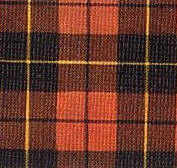 Wallace: The Wallace family originates from the Scottish Lowland area of Strathclyde, near to Glasgow. Family members can also be traced across Ayrshire and Renfrewshire. Like other Lowland families it appears that they had taken to the new Norman fashion of adopting a surname. The first recorded use of the name can be dated to the signing of a land charter by Richard Walensis in 1160. The most famous son of the family is of course Scotland’s patriotic and romantic leader, Sir William Wallace, “the Hero of Scotland”, who was born at Elderslie in 1274. In 1297 he led the Scots patriotic forces against King Edward I of England. He won the Battle of Stirling Bridge and drove the English garrisons out of Scotland, but was defeated at Falkirk in 1298. He kept up a guerrilla war until 1305 when he was captured by treachery and executed. Family motto – Pro Libertate (For liberty).