

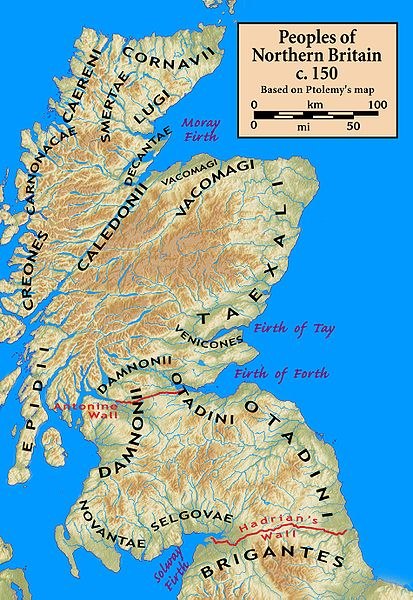
There is little doubt that Caledonian tribes of Scotland would have been aware of the mighty reputation of the Romans well in advance of their attempts to extend the borders of their Empire northwards. Since AD 43 the Romans had conquered southern England and bloodily suppressed Boudica’s rising. However, the fierce Caledonians had decided they were not going to be subject to Rome rule, even if it meant that they had to make a fight of it!
It started in AD 79 when Agricola, the Roman governor of Britannia, sent a fleet to survey and map Scotland’s coast. By AD 83 Agricola had advanced conquering southern Scotland and the Caledonian tribes to the north knew that they faced imminent invasion.
It was at this point that the Roman historian Tacitus records that the Caledonians “turned to armed resistance on a large scale”. Obviously recognising the might of the highly disciplined Roman war machine, the Caledonians employed guerrilla tactics attacking individual Roman forts and small troop movements. In one surprise night-attack, the Caledonians nearly wiped out the whole 9th legion; it was only saved when Agricola’s cavalry rode to the rescue.
By the summer of AD 84 Agricola and his legions had pushed deep into the Caledonian homelands in the north-east of Scotland. It was on this march, at a place the Romans recorded as Mons Graupius (somewhere in the Grampian Mountains, perhaps at Bennachie by Inverurie), that the Caledonians made the fatal error of confronting them head on.
It is said that some 30,000 Caledonians faced a Roman army of about half that size. It is also recorded that the Caledonians had the advantage of the higher ground, but just like Boudicca some 40 years earlier, they lacked the organisation, discipline and military tactics of the Roman legions.
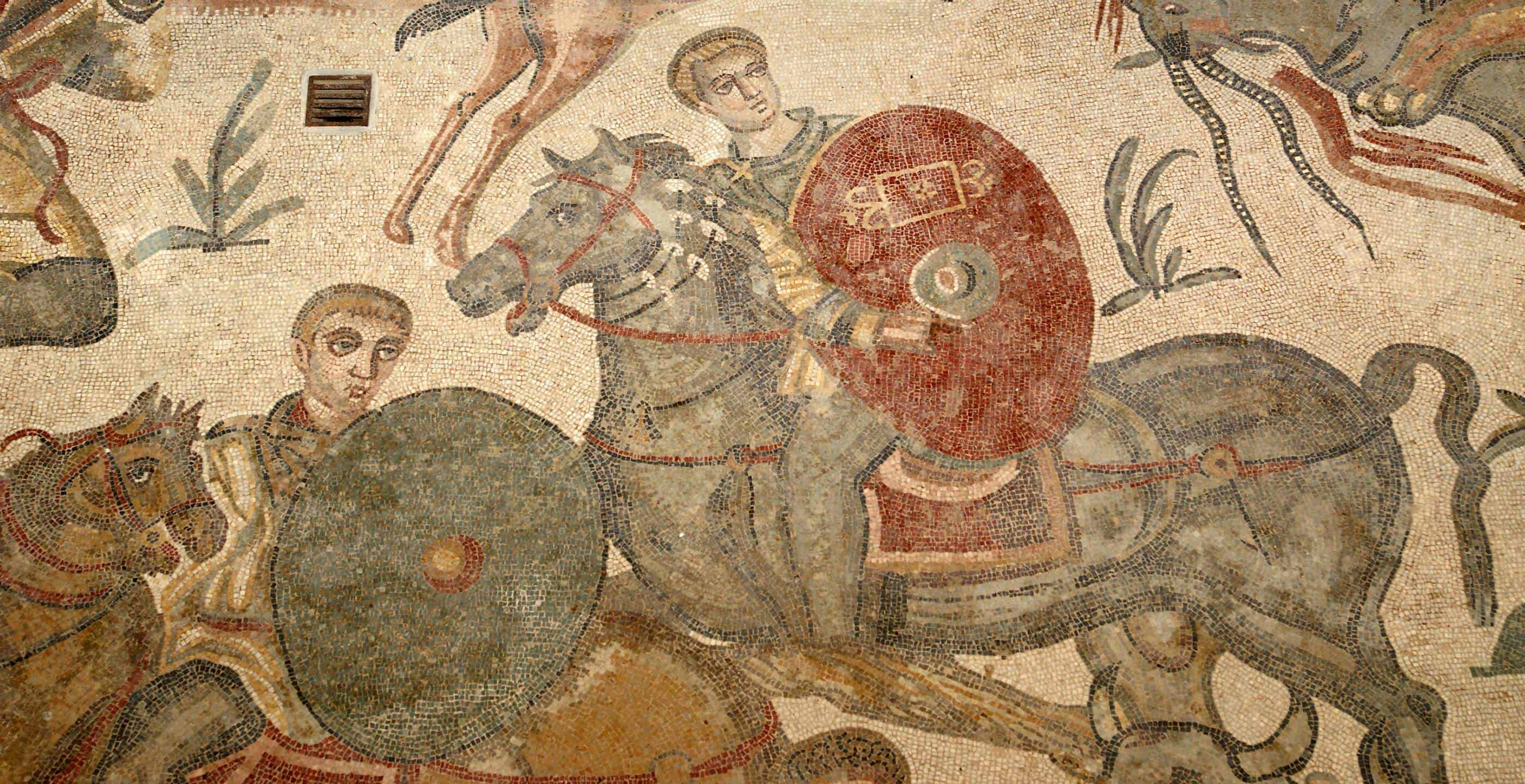
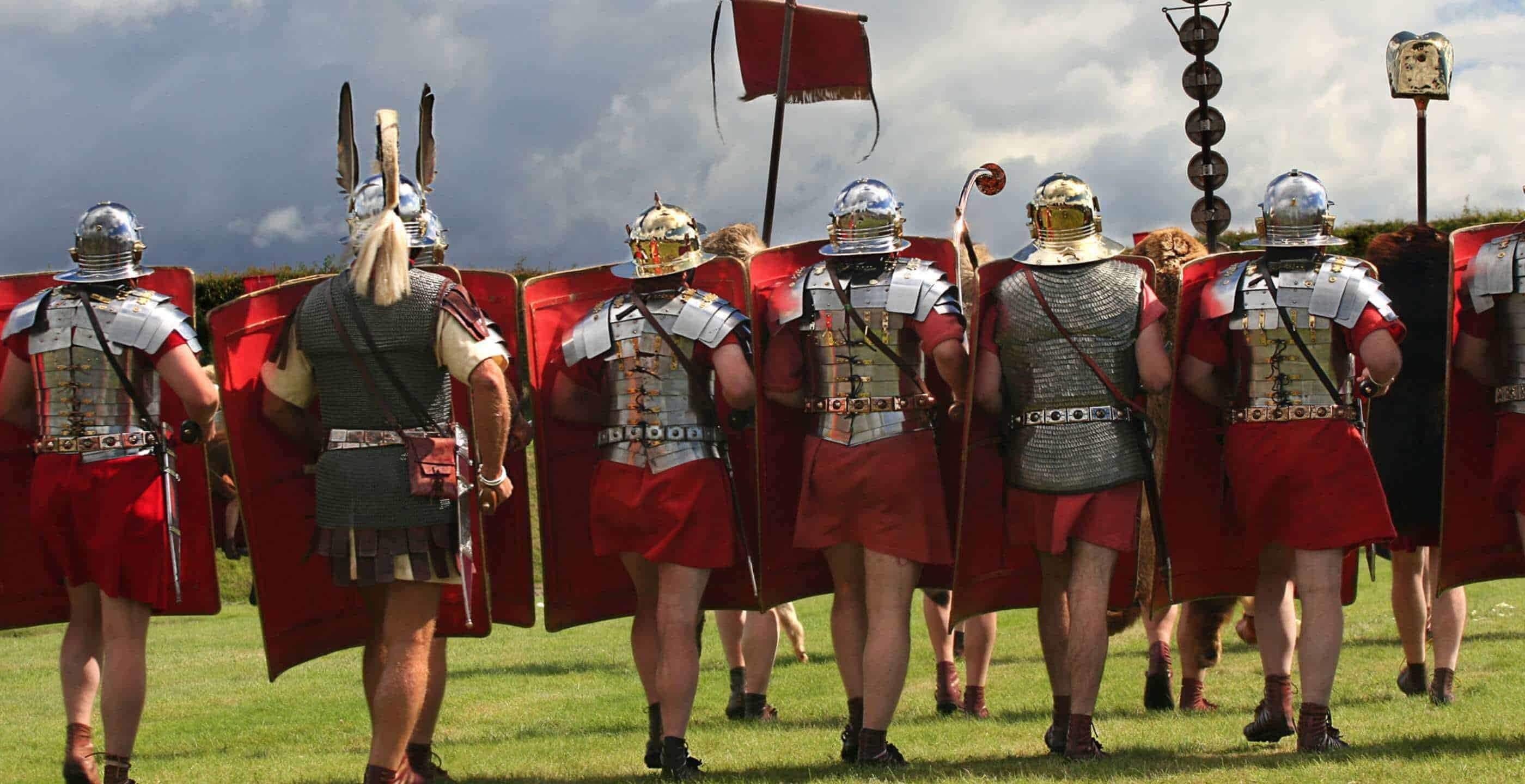
The tightly packed Roman ranks relied upon their short stabbing sword in combat. Their front ranks were made up of auxiliary troops conscripted from Germany, Holland and Belgium, with the seasoned veterans of Roman legionaries holding things together towards the rear. Bloody hand to hand fighting followed and at one point the Caledonians, with their numerical supremacy managed to outflank the Romans, but once again the highly mobile Roman cavalry rode into action to save the day for them.
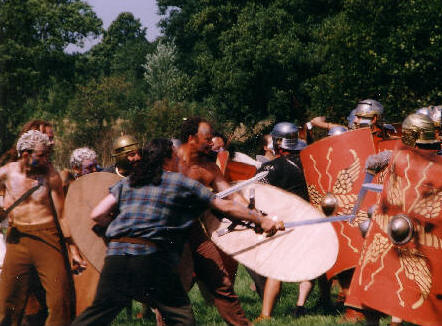
With that cavalry charge it appears that any hopes of a Caledonian victory vanished and in the bloodbath that followed 10,000 men were slaughtered. As well as those who fought valiantly to the bitter end, many fled into the surrounding forests and mountains burning their houses and killing their own wives and children in fear of Roman reprisals.
On the following day Tacitus records, “…the hills were deserted, houses smoking in the distance, and our scouts did not meet a soul.”
Following their defeat at the Battle of Mons Graupius, the Caledonian tribes must have considered that their days were numbered, but then luck intervened. The Emperor Domition ordered Agricola back to Rome to help resolve the more pressing military crisis on the Rhine and Danube frontiers.
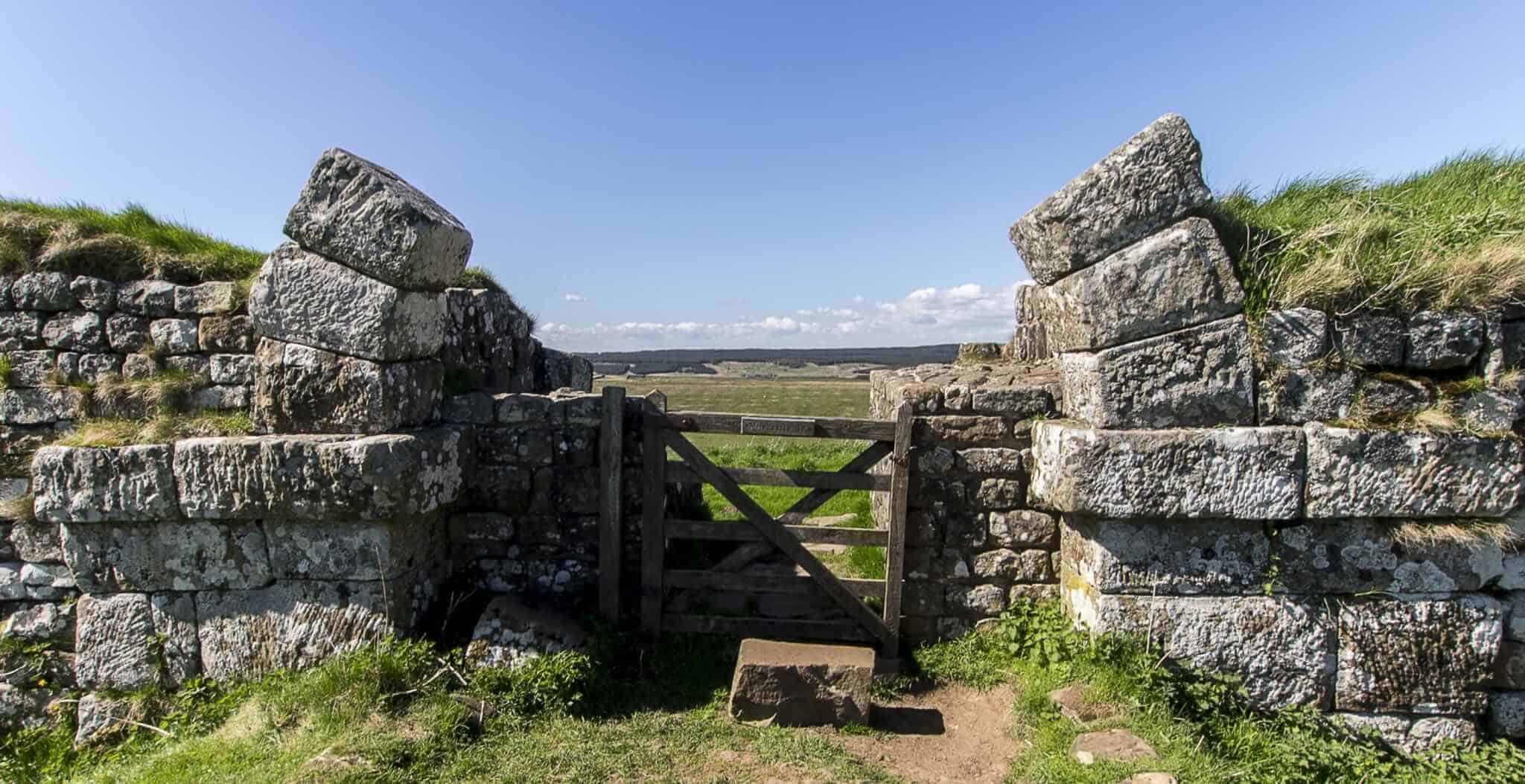
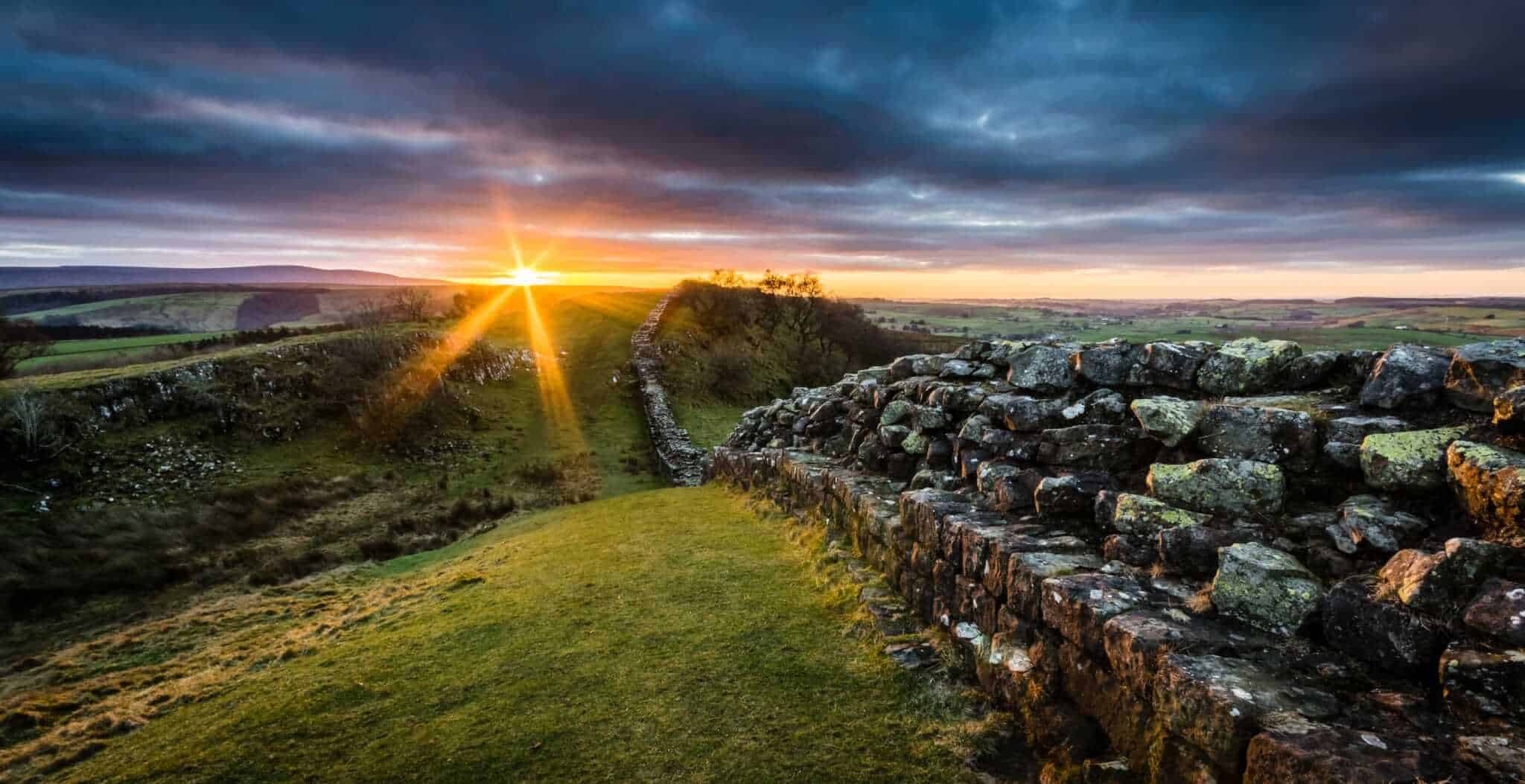
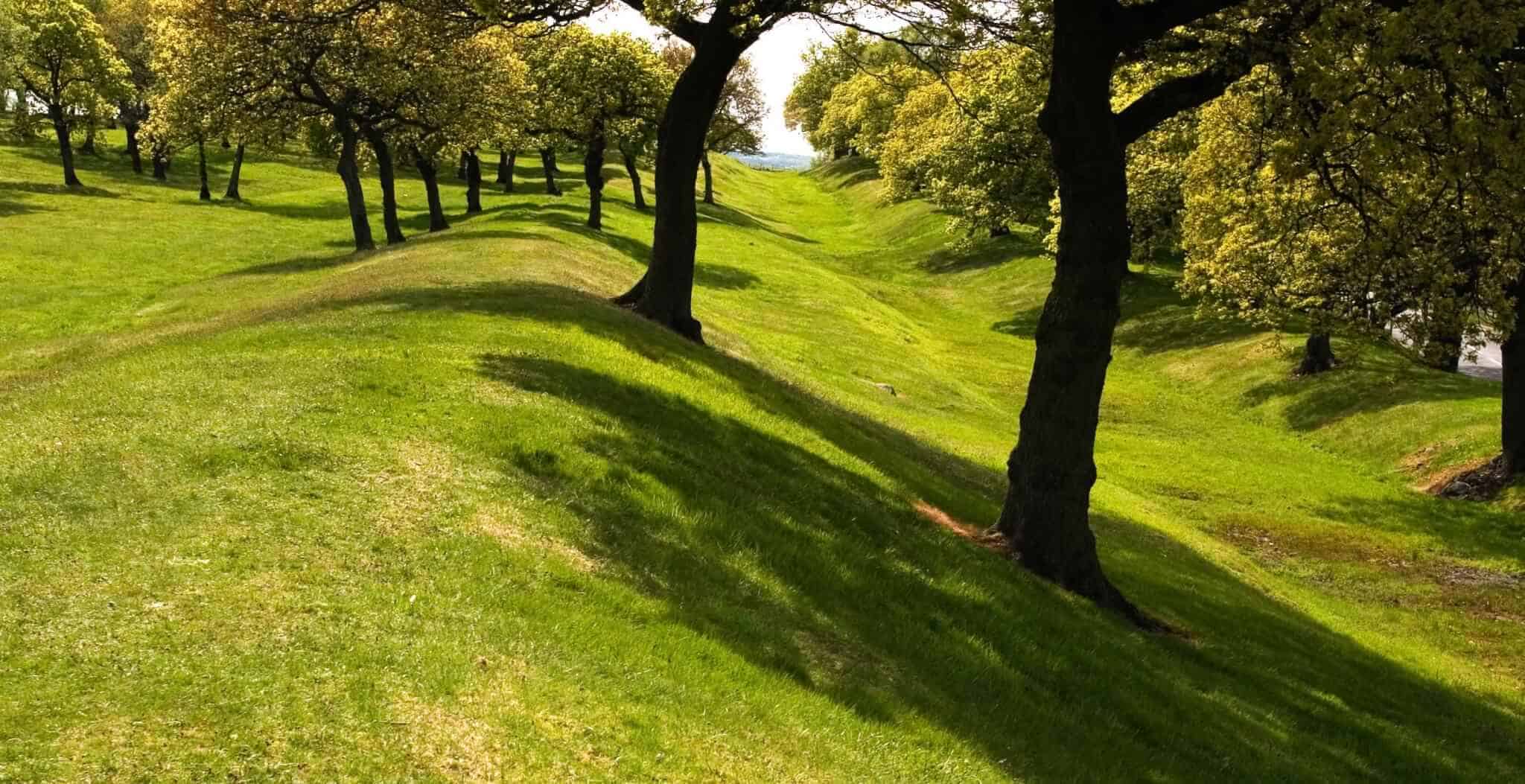
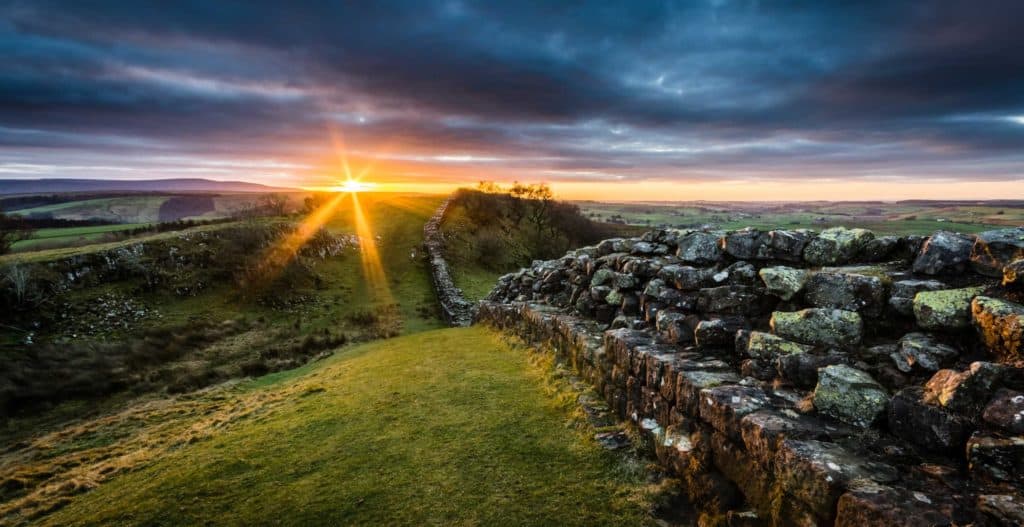
The Romans re-entrenched southwards and Hadrian’s Wall was built in 122AD between the Solway and the Tyne estuaries, establishing the northern most frontier of the Empire. Hadrian’s successor as emperor, Antoninus Pius, attempted yet again to push the frontier further north between the rivers Forth and Clyde and built his own wall, the Antonine Wall.
The Antonine Wall was built mainly for propaganda purposes as it was seen as expanding the boundaries of the Empire, but on his death it was abandoned in favour of Hadrian’s Wall.
With the exception of some minor border skirmishes, a period of peace was established along this frontier that lasted for more than a century.
During this time the tribes to the north of the wall were left unmolested and united to form the Pictish nation. The Picts’ name first appears in 297 AD and comes from the Latin Picti, meaning ‘painted people’.
By 306 AD however, united and better organized, the Emperor Constantius Chlorus was forced to protect his northern frontier against Pictish attacks on Hadrian’s Wall. On several fronts throughout Europe the tide was slowly turning against the mighty Roman Empire.
As Rome weakened the Picts became bolder, until in 360 AD together with the Gaels from Ireland they launched a coordinated invasion across Hadrian’s Wall. The Emperor Julian dispatched legions to deal with them but too little lasting effect. The Pictish raids cut deeper and ever deeper into the south.
The Roman system of law and order broke down and the wall itself was eventually abandoned and in 411 AD. The Roman legions left British shores to deal with the barbarian crisis at the heart of the empire. The Romano-Britons that remained hired other barbarians, the Angles and Saxons, to help defend them against the Picts. And so, in a final twist of irony, it would appear that it was the Scots themselves that were responsible for creating the ‘Neighbours from Hell’!