

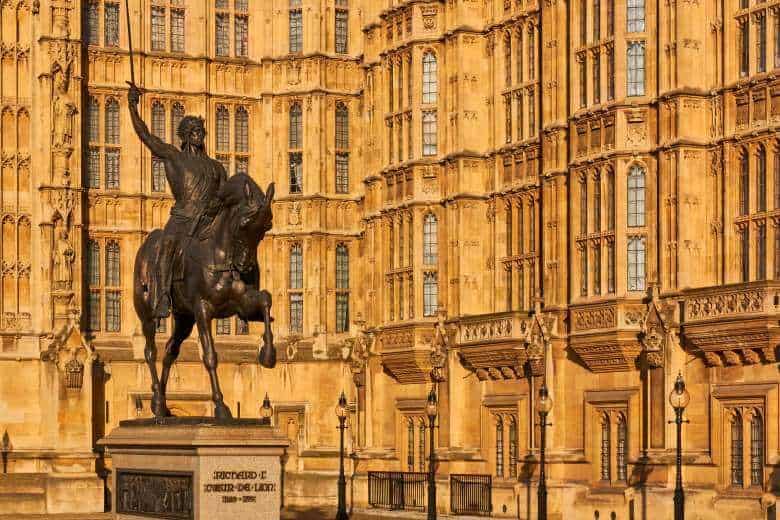
Outside the Houses of Parliament there stands a statue of Richard I seated on his horse as testimony that he was one of England’s bravest and greatest kings …or was he?
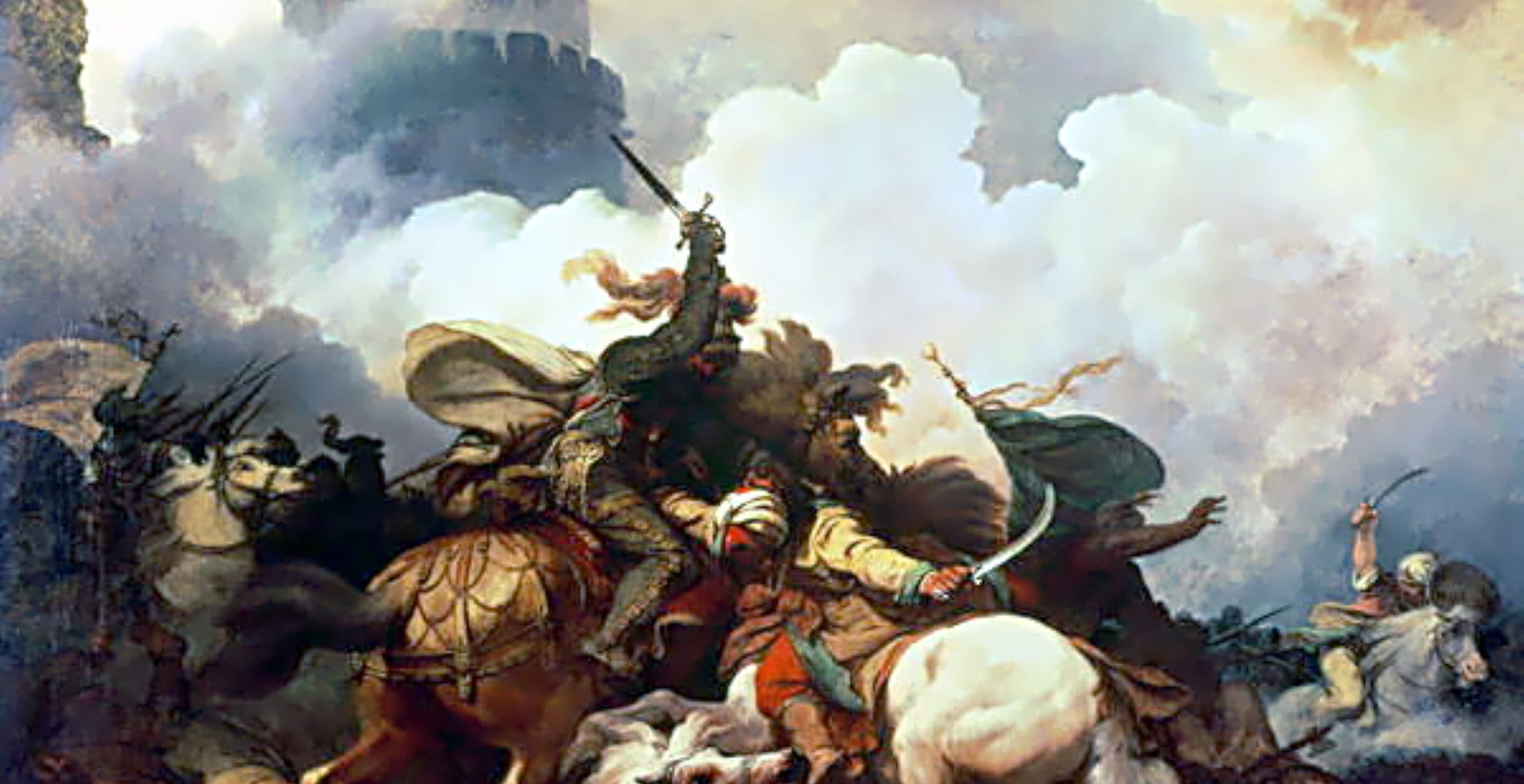
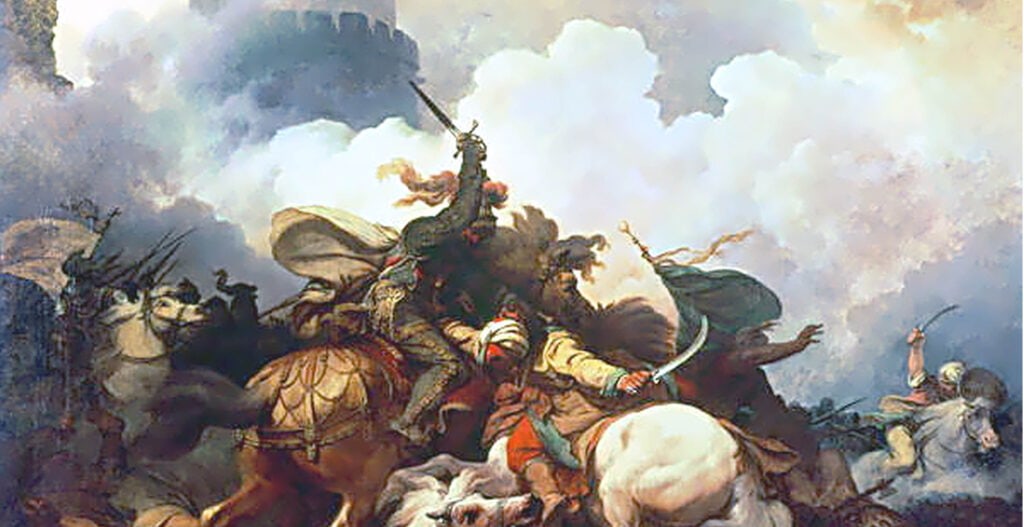
All English school children learn about this great king who reigned from 1189-1199. He earned the title ‘Coeur-de-Lion’ or ‘Lion Heart’ as he was a brave soldier, a great crusader, and won many battles against Saladin, the leader of the Muslims who were occupying Jerusalem at that time.
But was he really one of the greatest kings of England – or one of the worst?
It appears that he hadn’t much interest in being king …in his ten years as monarch he only spent a few months in England, and it is doubtful that he could actually speak the English language. He once remarked that he would have sold the whole country if he could have found a buyer. Fortunately he couldn’t find anyone with the necessary funds!
Richard was the son of King Henry II and Queen Eleanor of Aquitaine. He spent much of his youth in his mother’s court at Poitiers. During the last years of Henry’s reign, Queen Eleanor constantly plotted against him. Encouraged by their mother, Richard and his brothers campaigned against their father in France. King Henry was defeated in battle and surrendered to Richard. Two days later Henry died and on the July 6th 1189, Richard became King of England, Duke of Normandy and Count of Anjou.
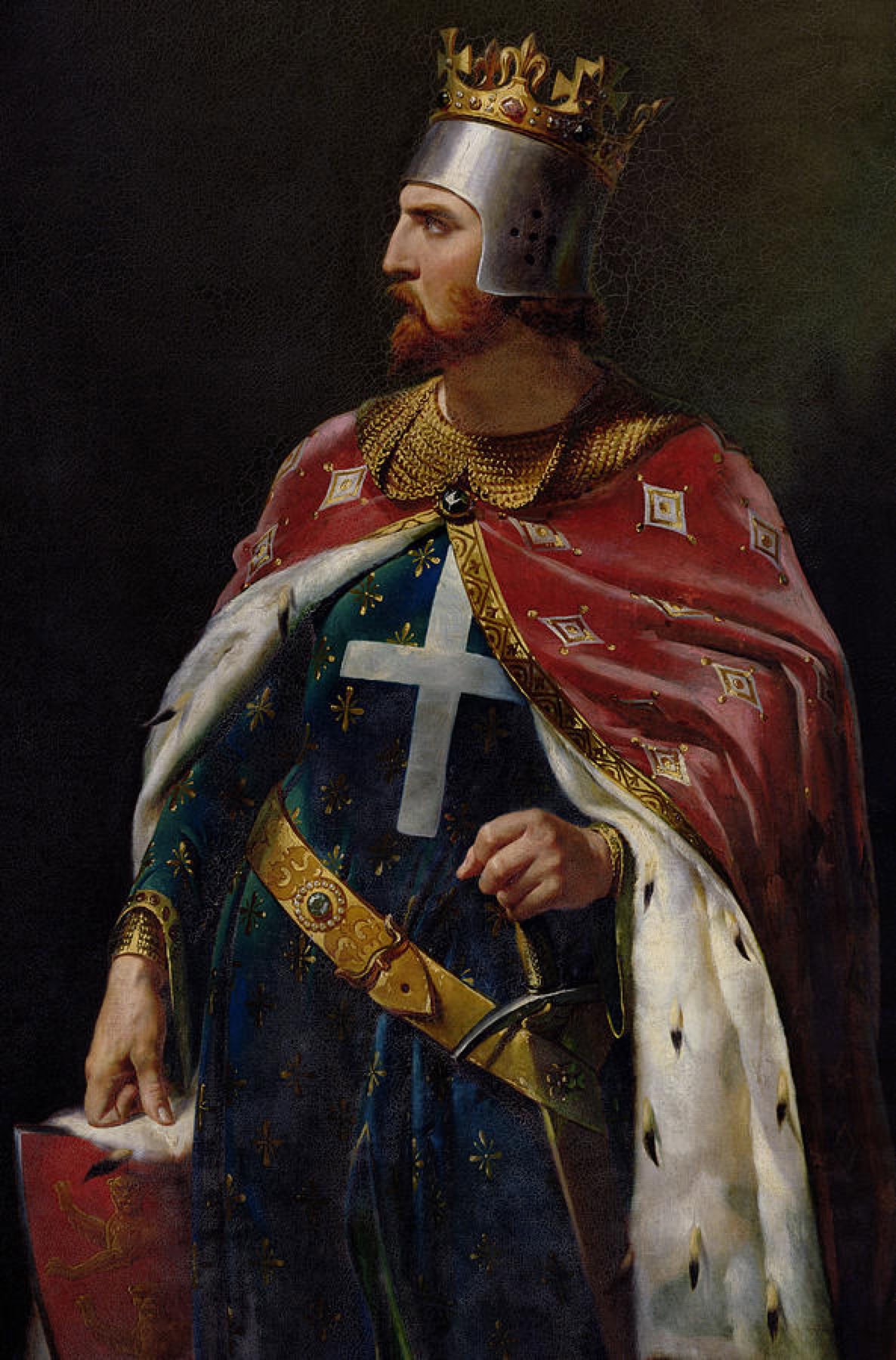
After his coronation Richard, having already taken the crusader’s vow, set out to join the Third Crusade to free the Holy Land from Saladin, the leader of the Kurds.
Whilst wintering in Sicily, Richard was met by his mother along with a potential bride to-be…Berengaria of Navarre. He initially resisted the match.
On the way to the Holy Land, part of Richard’s fleet was wrecked off Cyprus. The island’s ruler Isaac I made the mistake of upsetting Richard by badly treating his surviving crews. Richard had landed in Rhodes but immediately sailed back to Cyprus where he defeated and deposed Isaac.
Whether it was the magic of the island, the heightened senses from his victory or something else entirely, it was in Cyprus that Richard relented and married Berengaria of Navarre. An unlikely place perhaps for an English king to get married, nevertheless Berengaria was crowned Queen of England and Cyprus.
Richard continued with the Crusade, landing and taking the city of Acre on 8 June 1191. Whilst reports of his daring deeds and exploits in the Holy Land excited the folks back home and in Rome, in reality he failed to achieve the main objective which was to regain control of Jerusalem.
So in early October, after concluding a three years’ peace deal with Saladin he set off alone on the long journey home. During the journey Richard was shipwrecked in the Adriatic and eventually captured by the Duke of Austria. A heavy ransom was demanded for his release.
Kings apparently do not come cheap, and in England it took a quarter of every man’s income for a whole year to raise the funds for Richard’s release. He eventually returned to England in March 1194.

However he didn’t spend much time in England and spent the rest of his life in France doing what he seemed to enjoy most of all …fighting.
It was while besieging the castle at Chalus in France that he was shot by a crossbow bolt in the shoulder. Gangrene set in and Richard ordered the archer who had shot him, to come to his bedside. The archer’s name was Bertram, and Richard gave him a hundred shillings and set him free.
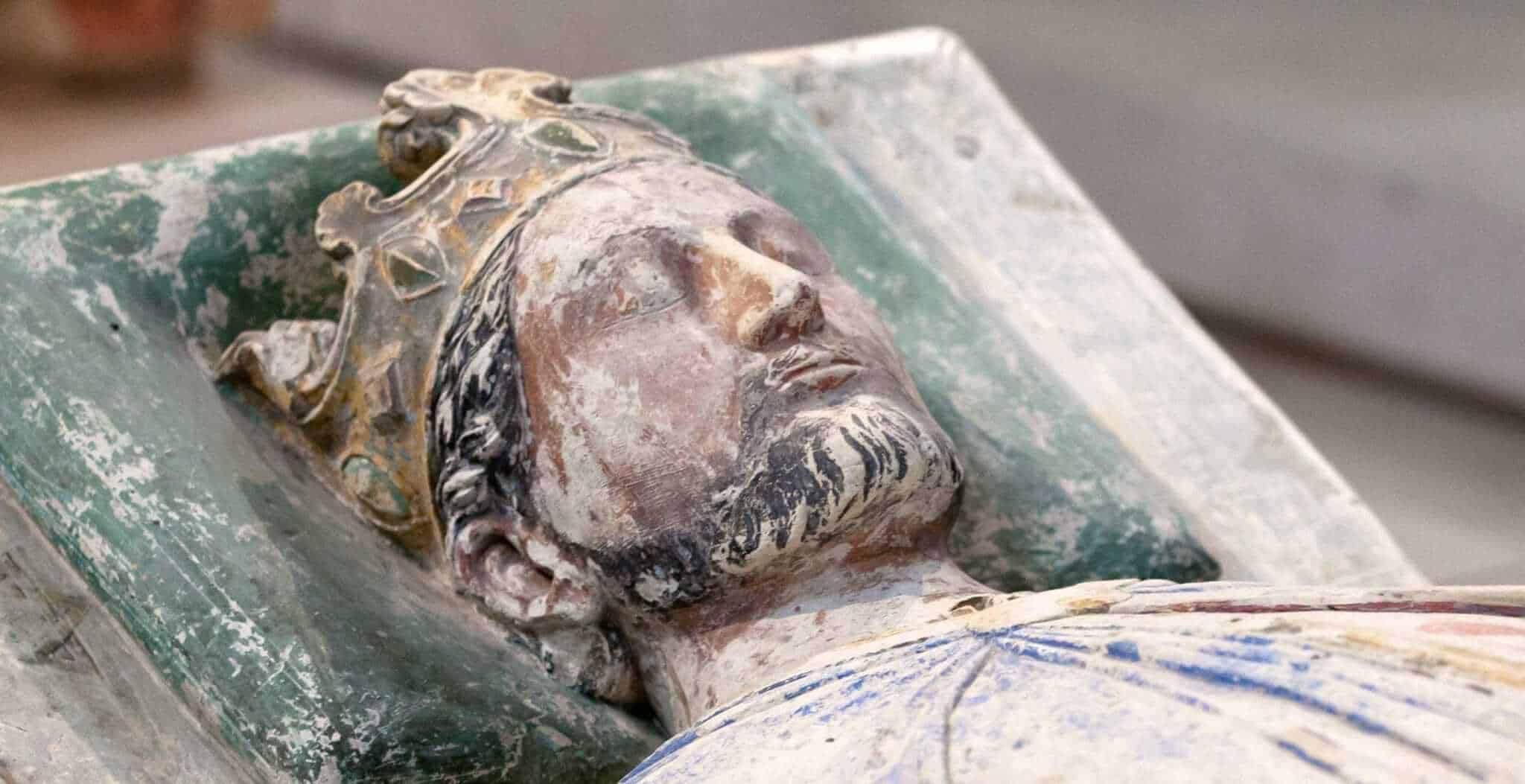
King Richard died at the age of 41 from this wound. The throne passed to his brother John.
A sad end for the Lion-Heart, and alas, also for poor Bertram the archer. Despite the King’s pardon he was flayed alive and then hanged.
Published: November 5, 2016.