

Abernethy is an extremely potent name in Scottish history. In ancient times it was the religious centre for the Southern Picts and later their political capital and home of their king.
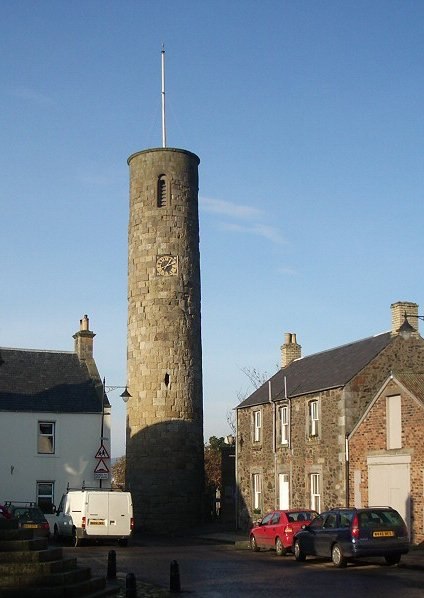
The ancient settlement of Abernethy is situated about 8 miles south-east of Perth in Scotland. Its name is derived from the celtic ‘Aber’ meaning ford and ‘Nethy’ the name of the river on which it stands. The famous round tower, one of only two such Celtic Towers remaining (the other being at Brechin), stands in the churchyard in the middle of the town although it does not form part of the church buildings.
Abernethy Tower dates probably from the 9th or 10th century, with 11th century alterations. It is 72 feet high and only 8 feet in interior diameter, with walls 3 1/2 feet thick. These Round Towers served the Celtic clergy as steeples and watch-towers against Viking invaders. There are still 76 of them standing in Ireland. The original purpose of the Abernethy Tower was defence but later it was used as a belfry and a beacon.
Abernethy has had a long and eventful history. There are remains of a petrified hill fort on the outskirts of the village as well as remains of a Pictish fort. The site of a Roman camp is nearby in the the river valley. In the 7th century Celtic missionaries bringing Columba’s message from Iona settled in Abernethy before Scone became the centre of religious life in the area with it’s monasteries and religious houses. But perhaps the most notable event to take place in Abernethy occurred in 1072 when King Malcolm Canmore paid homage to William the Conqueror.
With its tower, church and churchyard, new museum, winding glen walks, Mercat Cross and traditional houses, Abernethy village has much to offer the visitor. It is ideally located for trips to Perth, St. Andrews, Scone Palace, Falkland Palace and the Highlands.
Selected Attractions near Abernethy
Perth – ‘Gateway to the Highlands’
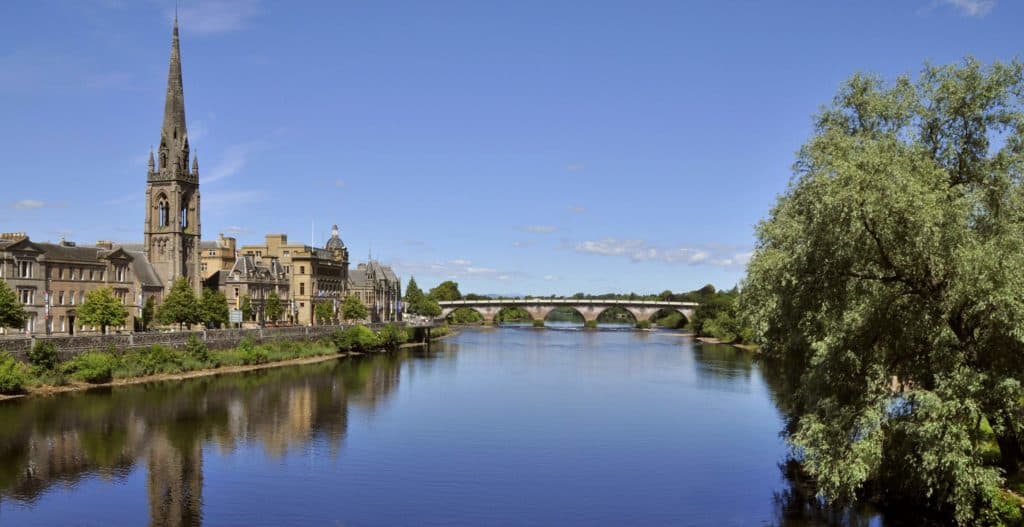
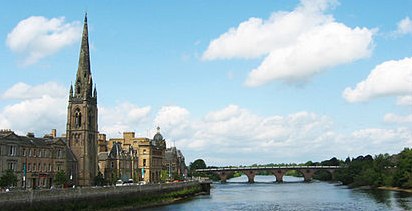
‘The ‘Fair City’ of Perth, with its tall spires and shallow River Tay flowing through it, is the town that inspired Sir Walter Scott to pen ‘The Fair Maid of Perth’ which in turn inspired Bizet’s opera. Once Scotland’s capital, much favoured by James I, Perth has the atmosphere of a well-to-do county town with a rich history.
To the north east of Perth is Kinnoul Hill, reached by either a short drive and half mile woodland walk from the car park (quite steep in parts) or a steady 40 minute walk from the town. The panoramic views take in the east end of Perth, the River Tay and the Carse of Gowrie. Branklyn Gardens, (open to the public) at the foot of Kinnoul Hill has been described as the finest two acres of private garden in the country.
Excellent shopping, cafes and restaurants add to Perth’s appeal as a holiday destination.
Scone Palace (pronounced Scoon)
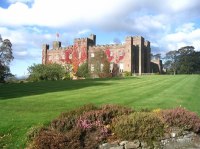 Original home of Scotland’s Stone of Destiny where 42 Kings of Scots were crowned. Glorious grounds including the famous Moot Hill where from the 9th century onwards, all Scotland’s rulers were crowned. The tradition continued even after Edward I of England removed the Stone of Destiny in 1296 and the old prophecy ‘the Scots in place must reign where they this stone shall find’ was fulfilled when James VI of Scotland took the English throne in 1603. Family home of the Earls of Mansfield. Located just 2 miles from Perth.
The Royal Palace of Falkland
Just a short drive through the hills from Abernethy takes you to the royal Burgh of Falkland, a lovely picturesque small town with a magnificent Palace, the first Conservation Area to be designated in Scotland. The Palace contains the unique Royal Tennis Court, the only one of its kind in the world and the oldest in Britain. It was built for King James V in 1539 and is the only example of a ‘jeu quarre’ court. The Palace, completed at the end of the 15th century, is a superb building surrounded by lovely gardens. Maintained by the National Trust for Scotland.
Loch Leven.
In 1567 Mary Queen of Scots was exiled to the fortress on the island set in the middle of this famous trout fishing loch. It can be visited by taking the small ferry from Kirkgate Park in Kinross.
Huntingtower Castle
A castled mansion, originally the hunting seat of the Earl of Ruthven. The painted timber ceiling on the first floor of the eastern tower is one of the earliest of its kind done around 1540. Another feature is the dovecote in the garret of the western tower.
Photos of Abernethy (in order) by Rob Burke and Lis Burke. Licensed under the Creative Commons Attribution-Share Alike 2.0 Generic license.