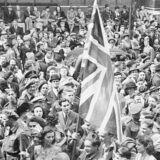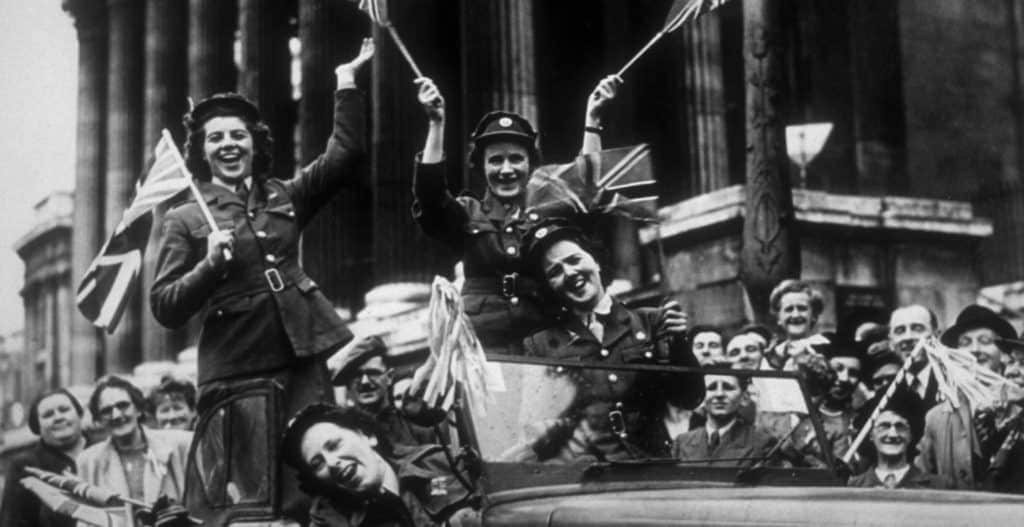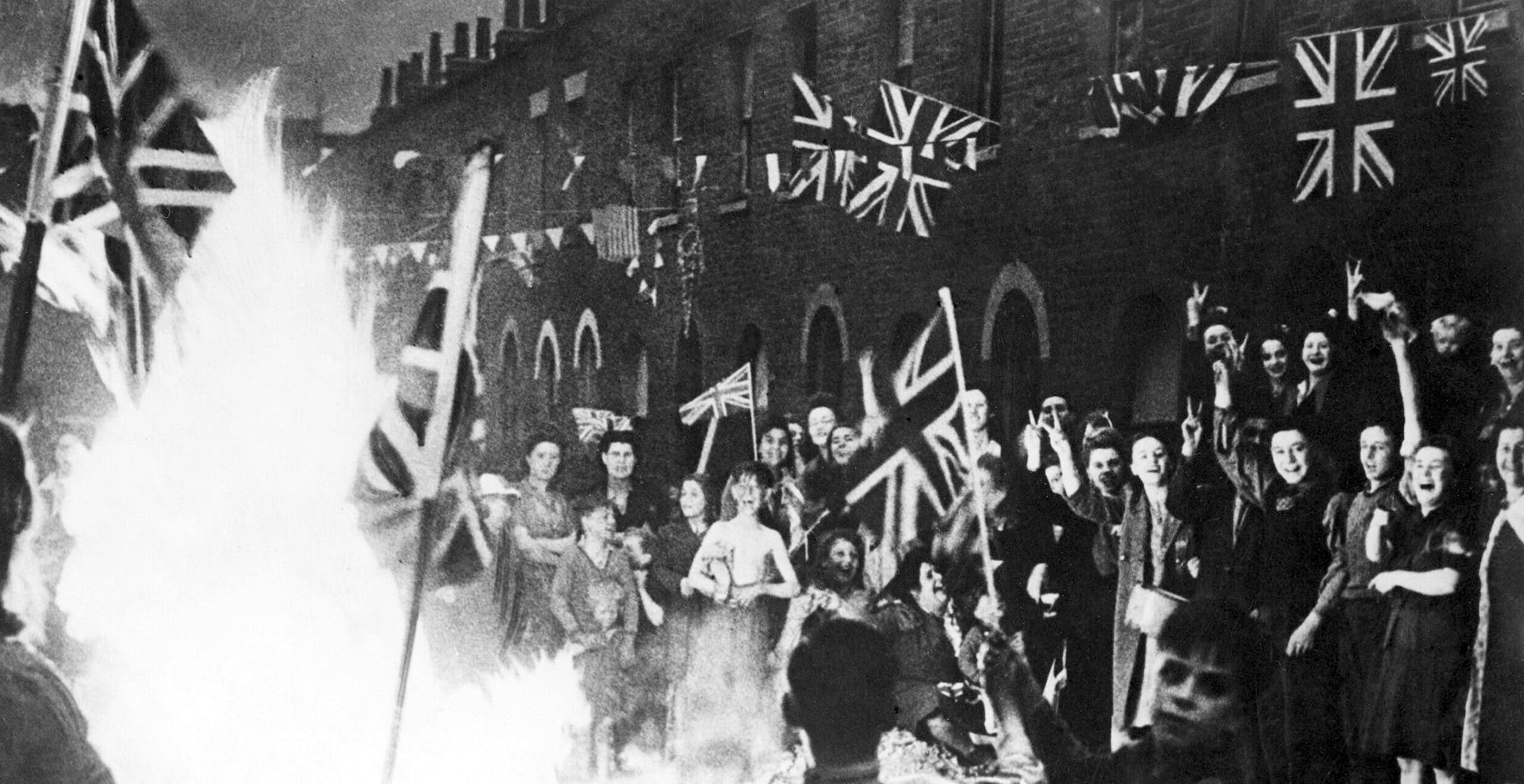


On 7th May 1945 Germany surrendered and the message echoed out across Great Britain, leading to a wave of spontaneous, albeit tentative, moments of euphoria, excitement, contemplation and relief. Scotland had, like many places across the United Kingdom, suffered badly during the Blitz and for those who remembered the flashing lights of the bombing raids, the VE Day celebrations were also a moment of reflection, sadness and contemplation.
The following day, Winston Churchill gave his address from the Cabinet Room, stating that ‘we may allow ourselves a brief period of rejoicing’.
Up and down Great Britain, the war-weary public breathed a sigh of relief and for many this emotion soon turned to a feeling of joy and desire to celebrate this momentous occasion. In Scotland, there were spontaneous scenes not only in the big cities such as Edinburgh and Glasgow, but also further afield in small and rural communities. The sound of church bells, the flickering light of bonfires and the elaborate bunting crisscrossing the streets were common sights across the country.
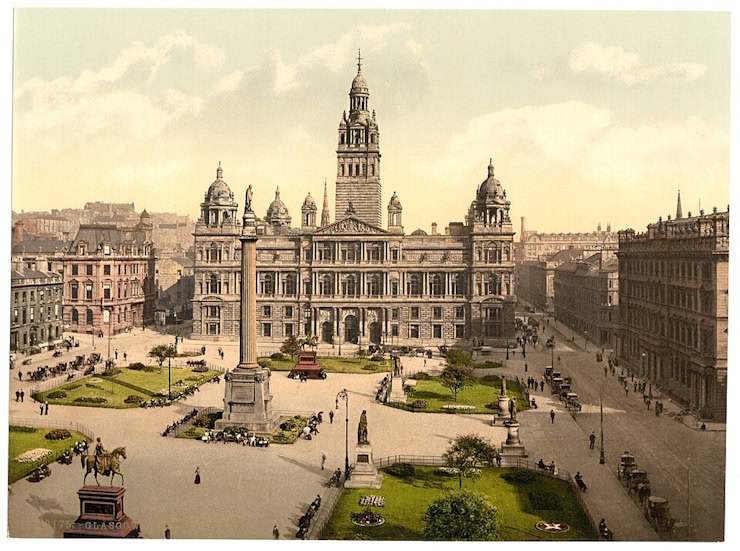
VE Day celebrations in Glasgow consisted not only of one day of festivities but a full three day extravaganza. The main celebrations took place in George Square where people gathered from all around to dance and sing. After years of enduring bombing raids, the sight of the square now all lit up was a memory that few would forget.
With people gathering on the street as early as nine in the morning, by the time the evening had drawn in, many of the pubs had run out of alcohol. Newspapers at the time surmised that almost 1/10th of Glaswegians had amassed on George Street on just the first day. The area was described as being lit up with fairy lights and packed with crowds in a way that had never been seen before.
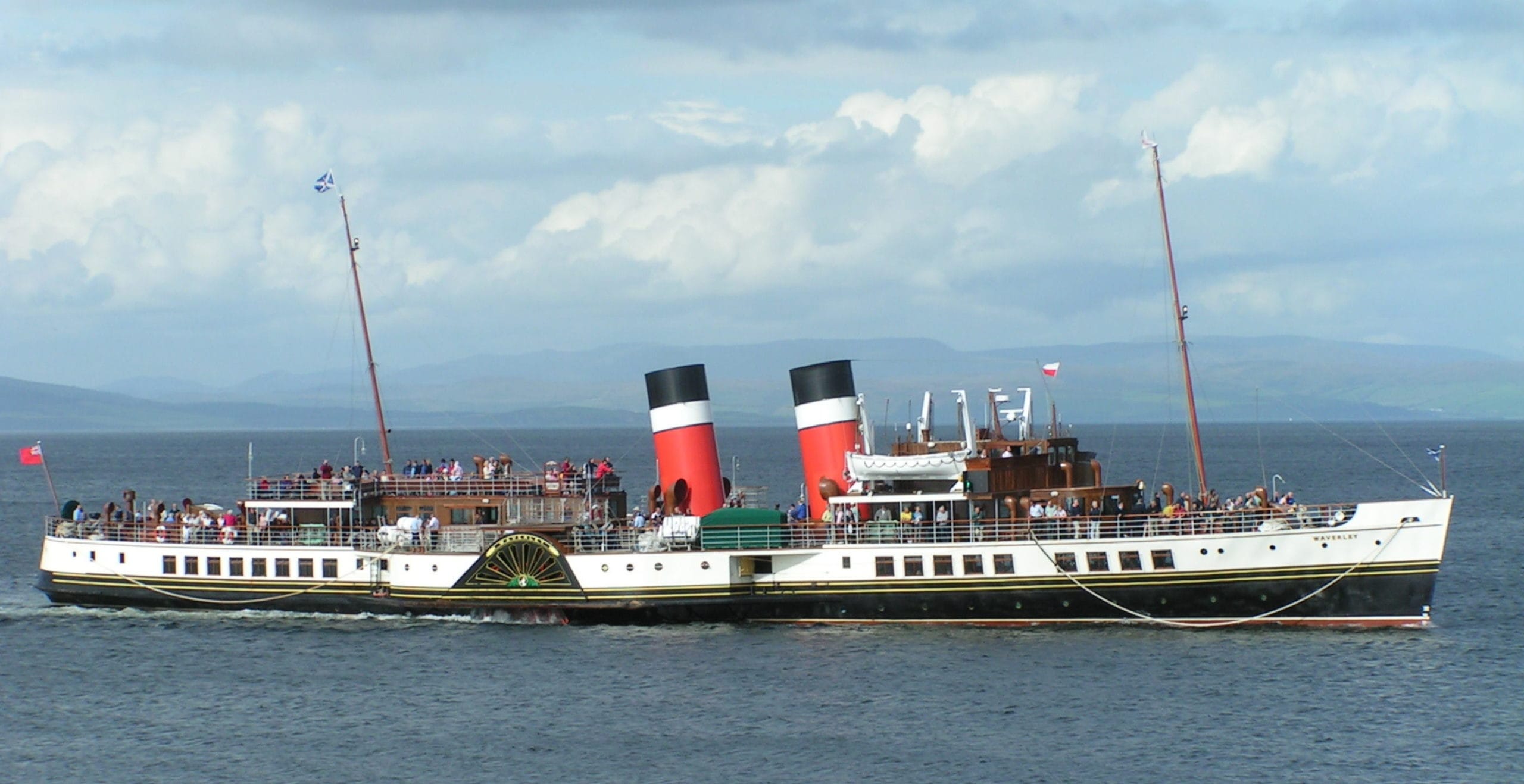
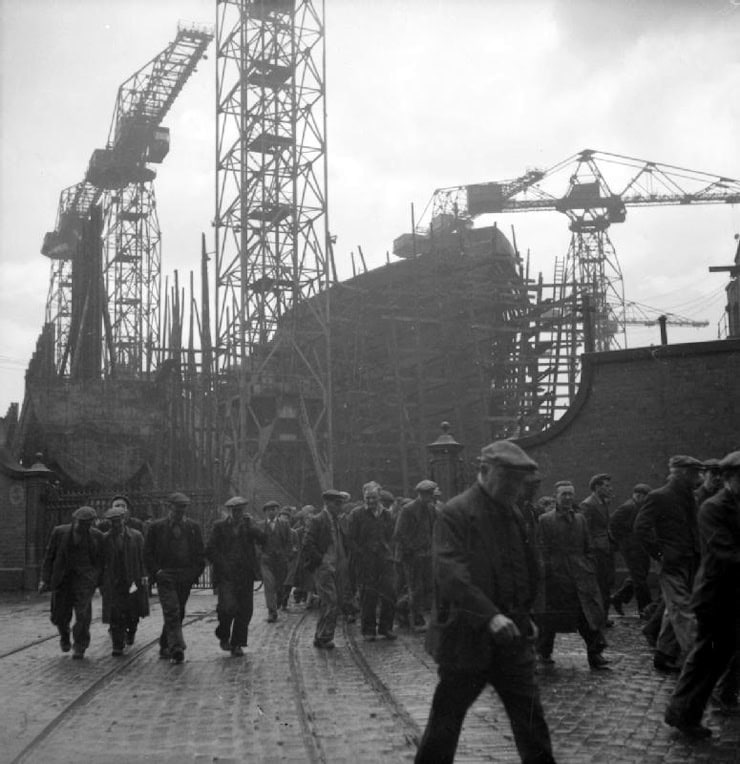
As a result, normal life was put on hold with schools shut down and a two-day public holiday declared. Whilst the people on the factory floor were in work on the Monday, many would finish their shifts and gather in the square. Out of the city centre smaller parties were held whilst the ships on the Clyde sounded their horns.
The Daily Record summed up the atmosphere of the VE Day celebrations by describing how ‘Glasgow went daft with joy last night’, with an estimated 100,000 people singing, dancing, embracing, laughing and celebrating through the streets into the early hours of the morning.
Much like London, there was hardly any space in which to move, with buses full and giant throngs of revellers on the streets. The young people of the city clambered onto monuments and statues in order to have a better view of people massed below them celebrating in a sea of colour with paper hats, bunting and flags.
The local Glaswegians were joined in this joviality by many foreign Allied troops who were posted to Scotland for their training and who also came together in the square alongside locals to celebrate the end of the war.
Meanwhile in the capital, people from across Edinburgh amassed in Princes Street. Fearing the impact of such large crowds in the city centre, extra police were brought in to deal with the crowds. The gathering consisted of street music, dancing and sweets were thrown down from the balconies above. Many bonfires were lit that day in the city with notable spectacles of flickering embers in the High Street, Canongate and close to Holyrood Palace.
With both the 8th and 9th May marked as an official public holiday, many men and women joined in the shindigs which sprung up across the city and surrounding area. Up and down Princes Street singing broke out in raucous renditions of ‘Keep Right on to the End of the Road’. Meanwhile others clambered up onto the famous statue of Wellington whilst the streets continued to fill with people.
Locals alongside servicemen and women were not put off by the rain and gathered together at the American Red Cross Service Club. A large group of people also congregated at the Ross Fountain in Princes Street Garden in an atmosphere of happiness and merriment made all the more jolly by a piper who played eightsome reel to the happy crowd.
By 8pm, the pubs in Edinburgh had closed their doors, having no more drink to serve their cheery customers.
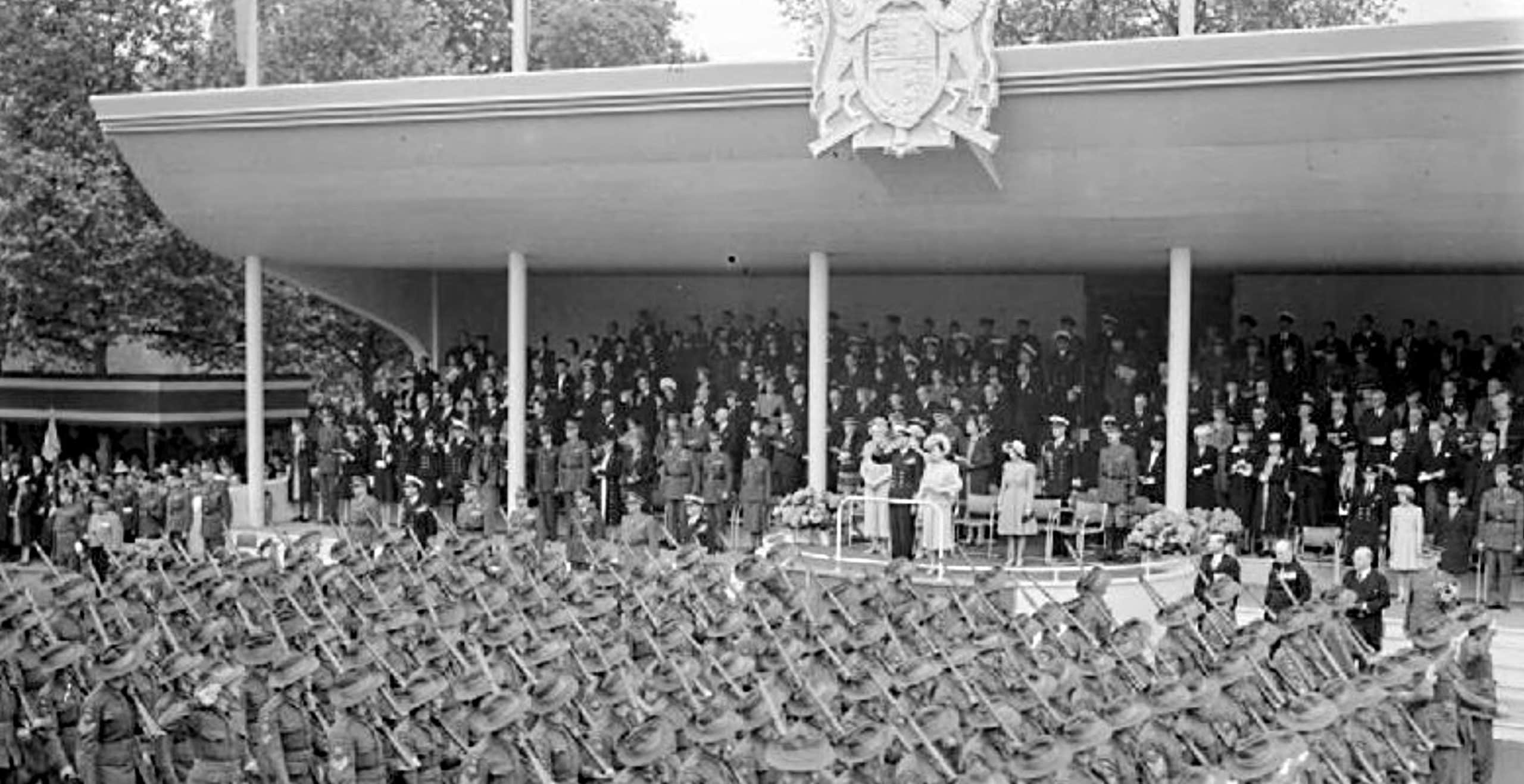
On the Sunday, Edinburgh hosted a Thanksgiving Parade which consisted of 3,000 men and women representing their contributions to the war effort. Meanwhile in Dunblane, the occasion was marked by the magnificent spectacle of the cathedral floodlit for the first time in its history, marking the German defeat. The Union Jack flickering in the wind was illuminated against the 700 year old building, a sight which was noted by local newspapers as quite remarkable.
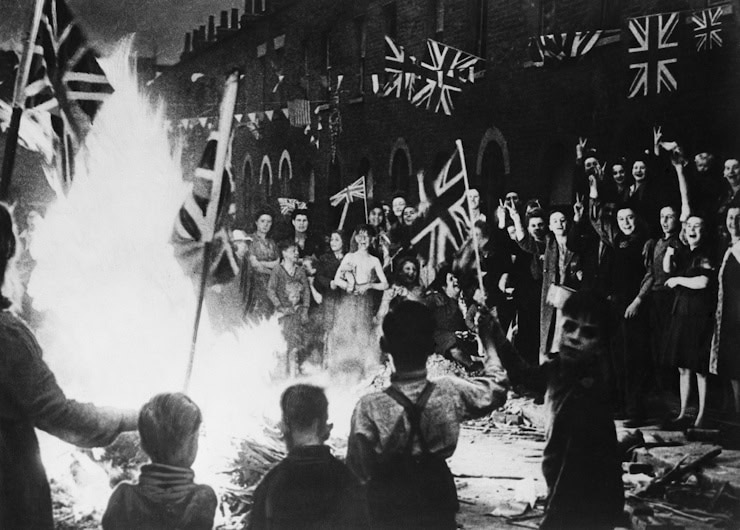
In Stirling, a jovial affair took place with an organised Victory Dance held in Victory Hall where revellers could enjoy the music of Tommy Cannon’s Dance Band through the night. When the evening drew in, a large bonfire was lit, with a burning effigy of Hitler to mark the German defeat.
Further afield in Inverness, the church bells rang out whilst a military band played music. The Lord Provost of the Highland capital gave a speech to residents in order to commemorate the occasion, remarking that never again would such a moment be experienced.
In Aberdeen the celebrations included dances and fireworks, however not all gatherings were as raucous as in Edinburgh or Glasgow. Along the coastline, fires were shot from boats and whistles sounded from the fishing boats, whilst on the mainland bonfires flickered in the distance.
VE Day represented a range of emotions for the people of Scotland and the whole of Great Britain. After years of enduring the war, the time had finally come to breathe a sigh of relief and join in the joviality. The Allied forces had triumphed and so with it had democracy. VE Day was the catharsis everyone needed before beginning to rebuild their lives.
Jessica Brain is a freelance writer specialising in history. Based in Kent and a lover of all things historical.
Published: 6th May 2026.