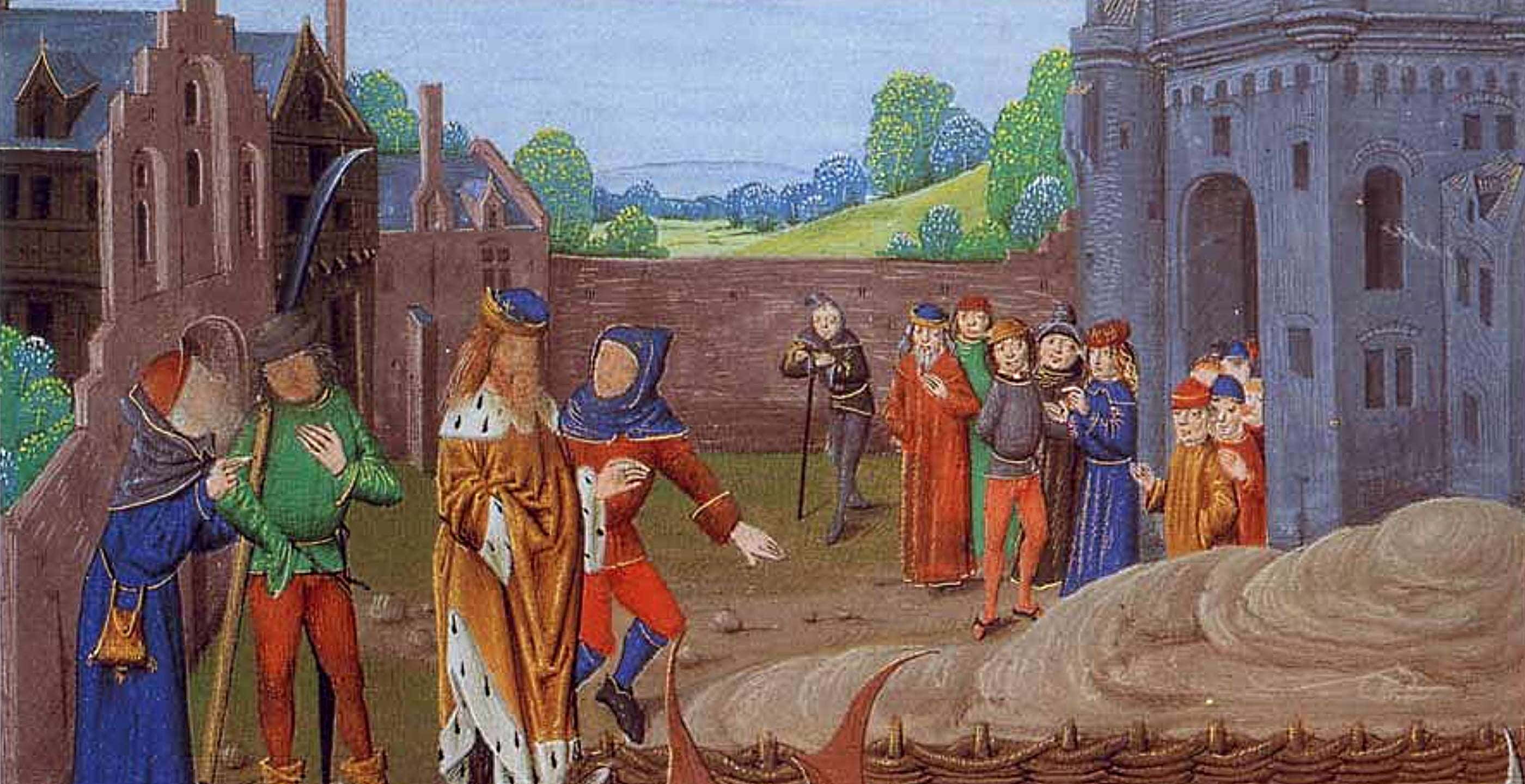


Seeking sanctuary in a place of worship has a long history in Britain, dating back to the Anglo-Saxon period under King Ethelbert of Kent who proclaimed the first laws of sanctuary around 600 AD.
The word has distinctly religious roots and derives from the Latin sanctuarium meaning a place for keeping sacred things, a shrine.
Those seeking protection in the ancient world of Greece and Rome sought sanctuary in places considered to be holy, such as the Spartan general who fled from charges of conspiracy to seek refuge at the Temple of Athena.
Across Europe such practises took place in religious settings and in the far northwest of the continent in Anglo-Saxon England, sanctuary was to become enshrined in law.
The concept of such refuge was firmly rooted in the belief that no use of force could be enacted on sacred ground.
Those seeking refuge and living within the safety of the church precincts became known as ‘sanctuary men.’
Religion and governance during this time were inextricably linked, with the Church holding great authority and thus ability to intervene in a judicial process.
The privilege of receiving sanctuary could extend to a criminal guilty of any crime, ranging from petty misdemeanours to grave acts such as murder.
In medieval England, the right to protection was dispensed as a privilege from the church and allowed someone a grace period of around 40 days where they received food, water and shelter, after which time a decision was required by the perpetrator. If the individual was reluctant however to leave, food was gradually withdrawn, much as it had been done in Ancient Greece.

Whilst it was King Ethelbert of Kent who enshrined the practise of sanctuary into law, Geoffrey of Monmouth recorded in his account Historia Regum Britanniae that the pre-Saxon king known as Dunvallo Molmutius had introduced sanctuary laws around the fourth century.
Following on from Anglo-Saxon laws, the Norman period ushered in two specific kinds of sanctuary. Whilst all churches possessed basic powers to grant refuge, there was a more far-reaching authority whereby churches that were licensed by royal charter could extend the zone to the surrounding area of the church, not simply the building itself. Several notable examples of this extension include Durham Cathedral, Westminster Abbey, Winchester Cathedral and York Minster.
Extending to a radius of more than a mile, in some cases the boundaries of sanctuary were delineated by ‘sanctuary crosses’ made of stone which showed how far the zone extended.
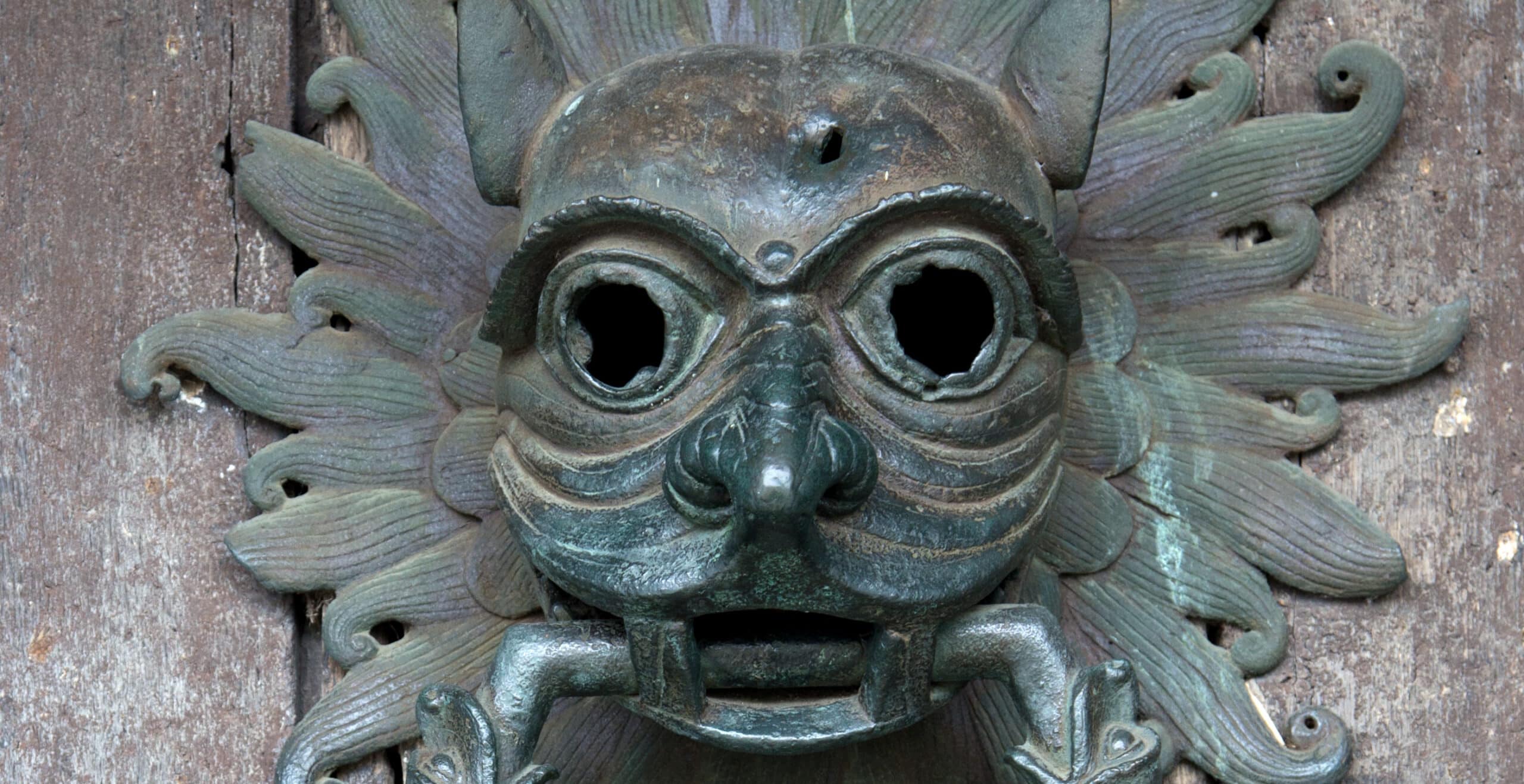
Moreover, church architecture specifically catered for the concept, with a special doorknocker and a bell for ringing when the offender was welcomed inside. In addition, in some cases a specific chair known as a frith-stool (often called a seat of peace) was located near the altar, with notable examples surviving in modern-day churches.
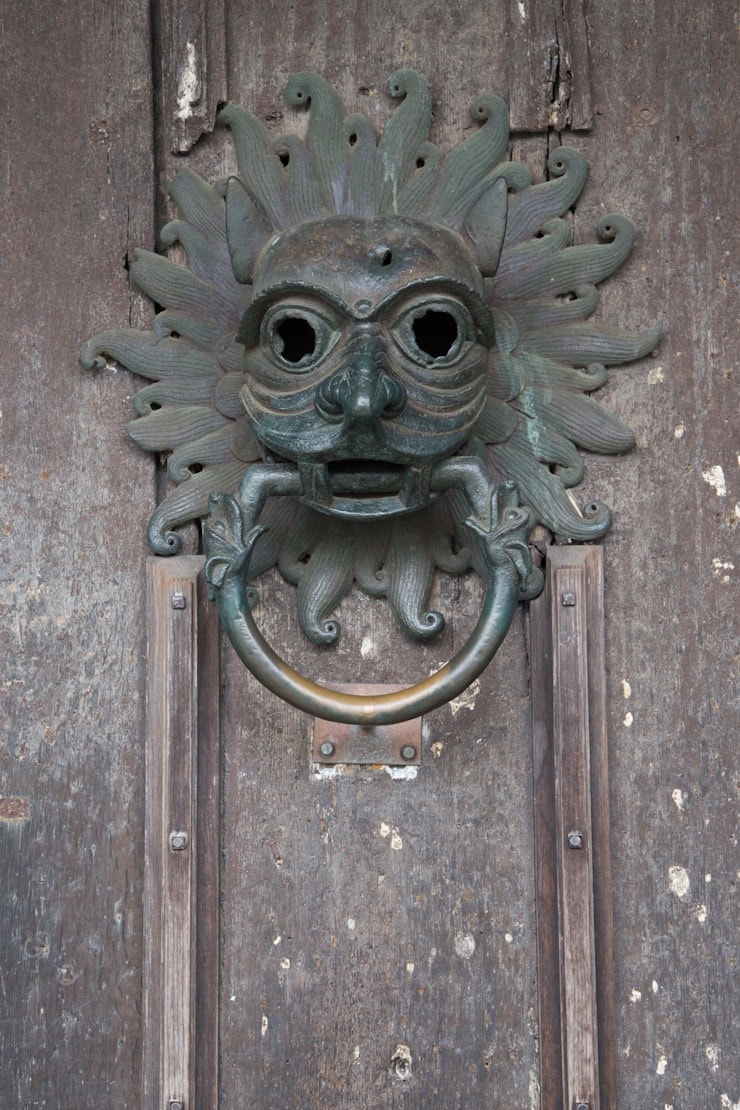
At Durham Cathedral, the knocker on the northern door, known as the Sanctuary Knocker, is pivotal to understanding its history. The perpetrator could use the knocker and was subsequently offered 37 days of sanctuary in order to form a plan to reconcile with their crime or forge another strategy to move on.
Today, the entrance to Durham Cathedral has altered, however originally two small chambers above the doorway existed whereby the monks could keep watch for sanctuary seekers throughout the day and night.
The subsequent protocol followed included ringing the Galilee bell once the sanctuary seeker had been invited in. The person in question was then given a black robe to wear which had St Cuthbert’s Cross embroidered onto the left shoulder. They were then kept in an enclosure and given all the necessities including bedding and sustenance until they were ready to depart.
The Anglo-Saxon origins of this custom are recorded in the Rites of Durham dating back to 1593 which references the laws of sanctuary awarded by King Guthred (who was King of Northumbria from 883) as well as King Alfred the Great.
The practise was governed and regulated by common law, forcing the fugitive to follow rules which included confessing his sins and surrendering any weapons before having almost 40 days to decide on their next course of action. Some of the options facing a criminal in these circumstances included surrendering to the authorities to stand trial for their crime, a confession of guilt or a potential plan to escape and choose a life of exile.
If a confession of guilt were made or an oath to leave the kingdom forever was sworn, such an admittance would be performed in a public ceremony. An official would then choose by which route and port the criminal should leave the country. In carrying out this ritual, the assailant would be forced to give up their possessions to the church, including leaving property in the hands of the Crown before embarking on their journey barefooted and bareheaded, carrying a wooden cross-staff as a symbol of church protection.
This was known as abjuring and as such the criminal would never be able to return to the kingdom without royal permission.
By 1315, the entire process was protected by law, whereby the fugitive was not allowed to die of hunger whilst in the protection of the church and sanctuary had to be confirmed by a confession. Such stipulations however were not always followed and many high-profile cases, particularly during times of conflict, saw a flouting of the legal framework.
Instances of denying sanctuary included the case of a woman called Isabella de Bury who in 1320 killed a priest and subsequently sought protection, only to be denied by the Bishop of London who proclaimed that the church would not shelter her. She was then taken from the building and hanged.
Other pertinent examples include during the Peasants’ Revolt when many of the peasants were denied their right to sanctuary.
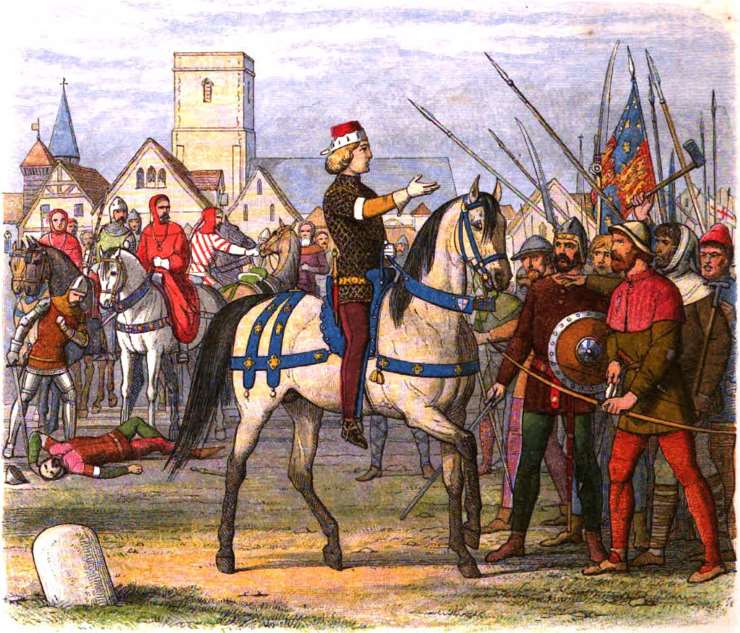
Moreover, in the context of the Wars of the Roses, sanctuary laws were violated by King Edward IV when seeking to execute his rival Lancastrian leaders.
In contrast, it was effectively used as a form of protection during the same period for King Edward’s wife, Elizabeth Woodville, who twice took refuge at Westminster Abbey to evade threats in 1470 and 1483. During this time, she gave birth to the future Edward V and later sought protection with her daughters from Richard III until security guarantees were in place.

This process allowed her to survive political threats whilst also living comfortably within the confines of the abbey, including adding her own furniture and personal items.
Those larger religious sites which received a royal charter could dispense more indefinite forms of protection, such as at Westminster Abbey and Durham Cathedral.
Unsurprisingly, the protection offered by the Church was often abused by offenders and in many cases the sanctuaries were transformed into havens for fleeing criminals.
Many in the judicial system were frustrated by the practise and made attempts to curtail the proliferation of new sanctuaries which had not received consent from the king.
By the time of Henry VIII’s reign, significant legal limitations were placed on those seeking sanctuary and within the next hundred years, the right was formally abolished.
After a particularly significant case occurred at the large sanctuary of St John’s Priory, calls for reform were greeted with sympathy by Henry who declared that the origins of sanctuary were never meant to be abused in the way that they had been, and thus changes were implemented.
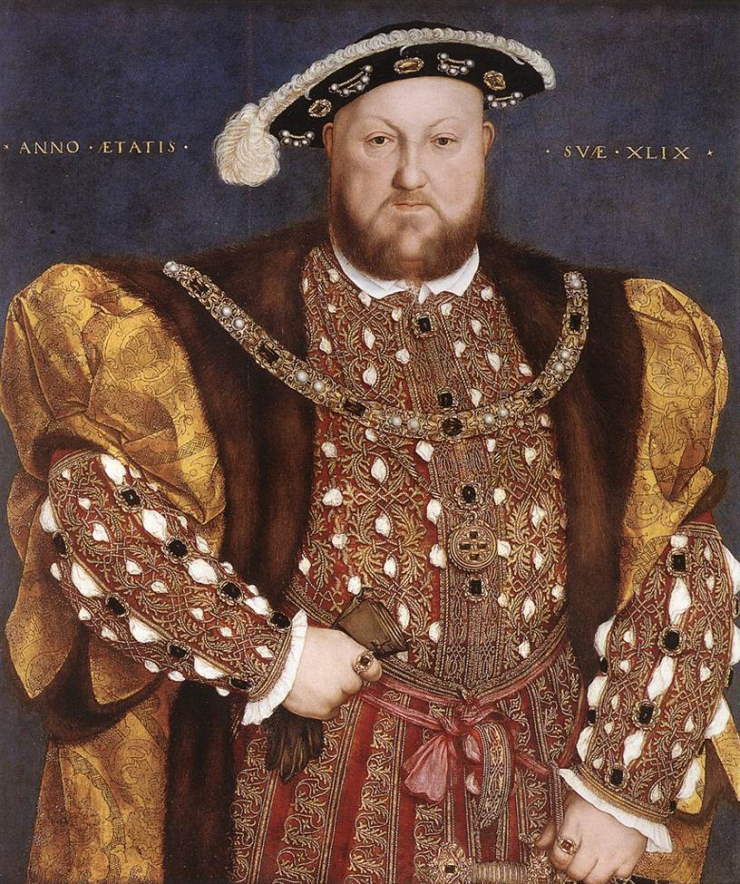
During his reign, Henry had many sanctuaries eradicated under new legislation which saw the privilege denied for the vast majority of crimes. Officially, sanctuary would continue in its severely hampered form until a statute in 1624 officially declared the eradication of all sanctuaries and removed the privilege from being granted.
Thus, the practise which had its roots in the ancient and medieval world, slowly died out as legislation evolved and the religious authority of the Church likewise began to separate from that of the king, the royal court and the new emerging form of governance.
Jessica Brain is a freelance writer specialising in history. Based in Kent and a lover of all things historical.
Published: 28th July 2026.
Top image: Sanctuary knocker, Durham Cathedral. CC BY-SA 4.0. Author: Tom Parnell