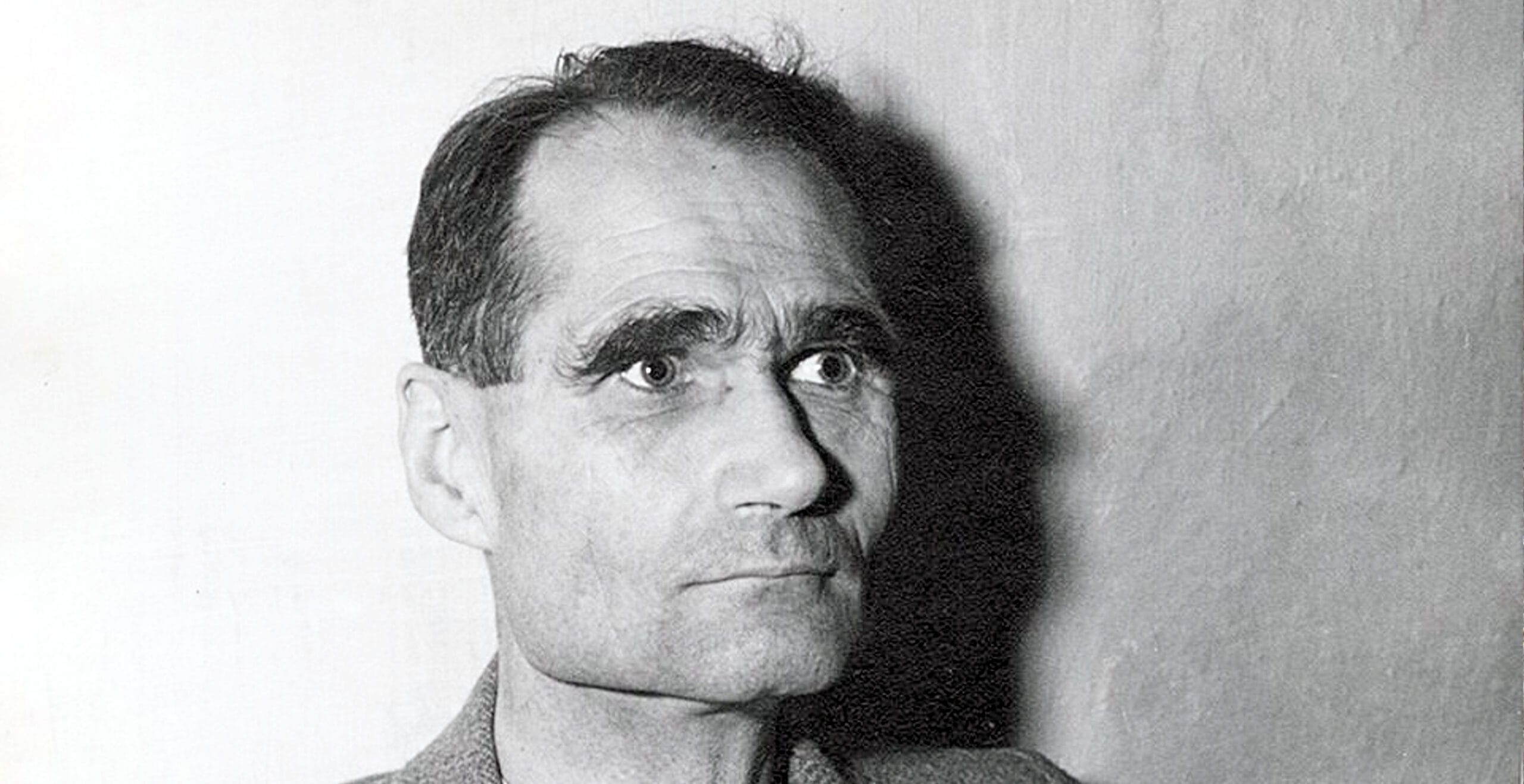


It is still considered to be one of the most inexplicable episodes of the Second World War: the night a plane flown by Rudolf Hess, leading Nazi and Adolf Hitler’s deputy, crash-landed in rural Scotland.
Hess, an experienced pilot, had taken off from Augsburg airfield at 5.54pm on May 10th 1941, flying a Messerschmitt BF 110. This plane was maintained at Augsburg for his personal use. Just after 11 pm, the Messerschmitt crashed near Eaglesham House not far from Glasgow. It later transpired that he was aiming for Dungavel House, the home of the Duke of Hamilton, and had made a fair assessment of its location.
Hess safely parachuted to earth, injuring his ankle in his hurry to leave the plane. He landed near Floors Farm, Bonnyton Moor, on the south side of Glasgow. His descent was noticed by a local farmer (sometimes described as a ploughman), who went to his assistance. It must have been a shock on a summer night in Scotland to discover a pilot who was dressed in the uniform of a German Air Force Captain, claiming to be Hauptmann Alfred Horn and demanding to see the Duke of Hamilton. Nonetheless, David McLean did what any hospitable Scot would do; he took the injured man to his home where he was offered a cup of tea. Then McLean did what any Scot in wartime also would have done; he called the Home Guard, who duly came and collected the alleged Hauptmann Horn and took him off to Maryhill Barracks.
As Anna Blair puts it in her collection of Glasgow reminiscences “Tea at Miss Cranston’s: A Century of Glasgow Memories” published in 1985: “the highlight and glory [of the war] was reserved for one local farmer and his wife, the Eaglesham Dad’s Army, and the Giffnock Police”. Blair includes two fascinating personal accounts of those who were early to visit the scene after the plane crashed. The first came from a local lad of fourteen, who heard the plane as he walked home in the blackout:
“Then the engine cut out. It was awful funny … suddenly just nothing and no airfield near. Next day all the rumours were fleein’ about that there’d been a crash on the moor, a farmer had taken in a German spy and got the Home Guard, and that now he was in our Scout Hall or maybe the cell at the police-station. Then the next far-fetched tale was that Rudolf Hess had landed in Scotland and it didnae take long for folk our way to put two and two together’nd guess the rumours were about the same thing.”
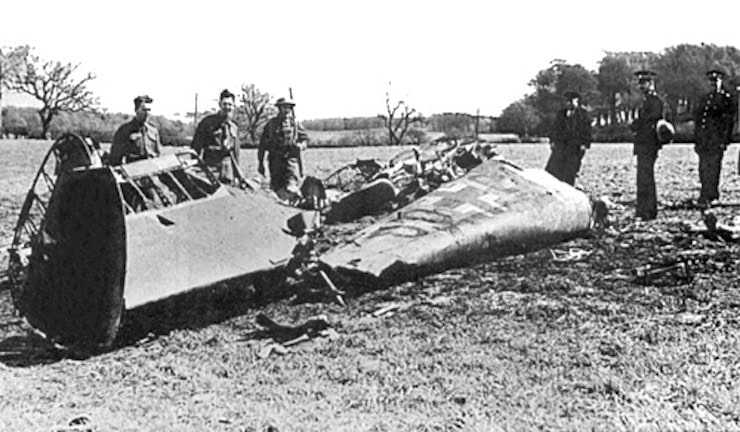
The site of the crash was of course a magnet for the local lads, who sped to the scene on their bicycles: “My brother took home two wee bits of it for souvenirs; before he even knew it was Hess’s right enough”.
Local man Willie Stevenson recounted how his friend, the police inspector Tom Hyslop, called on him with the news and asked him to go with him to examine the scene: “And away we goes to where the crash-land was at a farm field. They still didnae know then for sure who the pilot was. It was that hard to believe his claim that he was Hess. Anyway, the Home Guards had taken him to the Giffnock jail. We went into the ’plane and Tom handed me a metal label that had got torn off in the crash. I have it here yet, that wee minding off of Hess’s plane”.
If the young lad who recalled the plane engine suddenly cutting out is correct, it would seem to confirm that Hess chose the point at which to kill the engine and parachute to the ground with great precision. Having said that, his plane was nearly out of fuel since he had first travelled too far west and had to turn back. Eventually Hauptmann “Horn’s” demands paid off, and he was interviewed by the Duke of Hamilton, who was also a Wing Commander in the RAF. Indeed. Hess’s plane had been spotted as he approached the coast of Northumberland, but the two Spitfires sent out to engage with the Messerschmitt could not find it again.
Hess claimed to be on a peace mission from Hitler. He had consistently talked of the Duke of Hamilton as if he would be aware of what the mission was all about. The Duke, who had been away on RAF duties when the crash happened, was as bemused as anyone.
Interestingly, there had been overtures going on behind the scenes, particularly in Portugal, to contact the duke. These approaches were initiated by two of Hess’s acquaintances, his former tutor Karl Haushofer and his son Albrecht Haushofer.
The Haushofers did know the duke and saw him as a potential valuable contact. They had even written to him but MI5 intercepted the letter and the duke had never seen it. None of the Haushofer reports in Germany indicate that they believed the British authorities would find any peace overture acceptable, however, and eventually they would join with the opposition to Hitler.
Hess was held in Buchanan Castle before being removed to the Tower of London, and then to another location known as Camp Z in Surrey. After breaking his leg trying to escape, he was held in a secure hospital for several years. Hess was one of the Nazi hierarchy most obsessed by astrology and the occult, and while in captivity talked of various occult forces that were controlling the leaders of both Germany and Britain.
After the war he stood trial along with others in Nuremberg, and was eventually sent to Spandau Prison. Whether the idea of the mission was instigated by the Haushofers, or Hess was encouraged by discussions with them, it is clear that it was Hess’s own decision to take flight that night. It was indeed a “flight of fancy” as several historians have described it. The reaction of the Nazi hierarchy in Germany was immediate. Hess was identified as a deranged traitor who should be shot if he ever returned.
After the event, rumour and counter-rumour flew. Hess had worked alone; or Hess had worked with the approval of Hitler. It was all a plot of the British secret services; or it was a genuine overture of peace from the Nazi leaders, who admired Britain and its empire and wanted to work with its leaders. The Duke of Hamilton was in on the plot; or the Duke of Hamilton knew nothing about it. Hess was psychopathic; or Hess was cunning and deceptive; and most controversially, it wasn’t Hess at all, or Hess had died in the crash and been replaced by a substitute by the authorities!
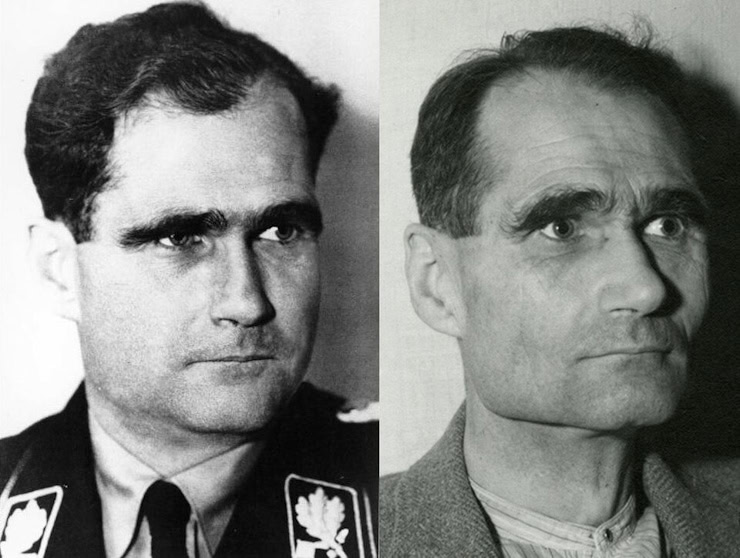
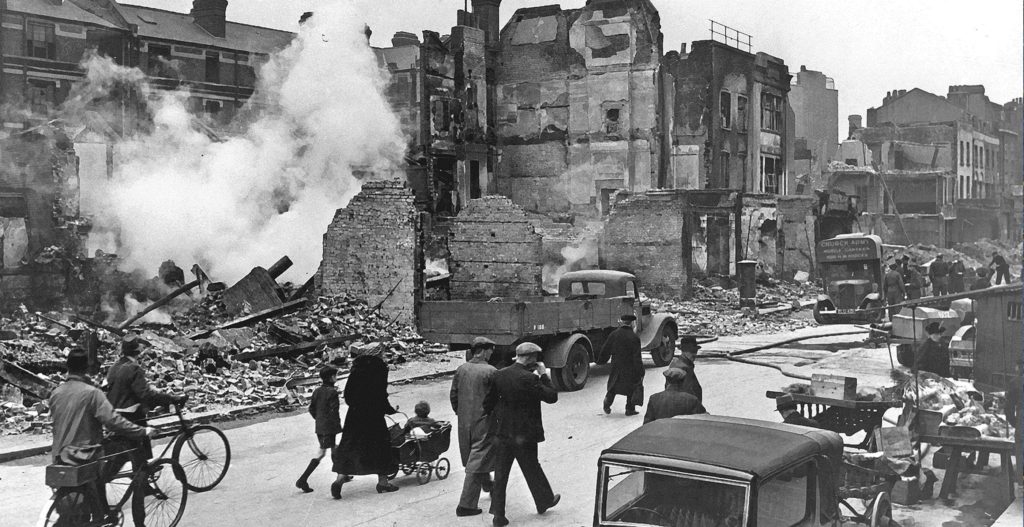
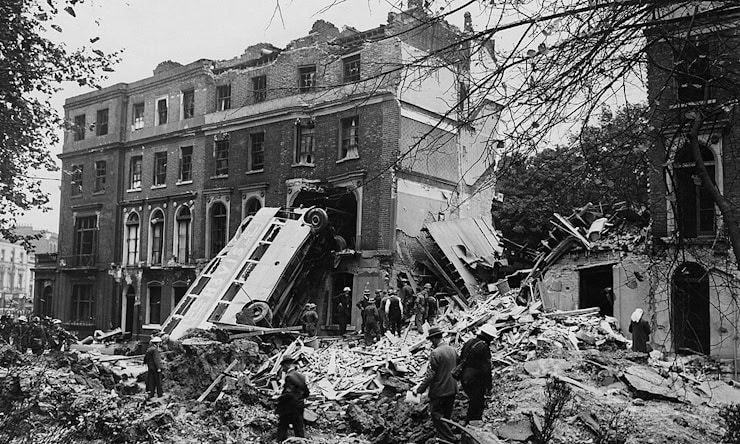
Had Hess made the decision alone, or was he influenced by others inside or outside Germany? Three things give the timing of his flight additional significance. The first was that Hess, seen as the most loyal and dependable of Hitler’s followers, had been losing influence for some time in the inner circle. Secondly, there was a build-up of Axis forces along the eastern front in anticipation of Hitler’s invasion of the Soviet Union, with which Germany had previously signed a non-aggression pact. Thirdly, on the night of Hess’s flight, London experienced the worst night of the Blitz.
Stalin was convinced for many years that the whole incident had been engineered by the British. This was one of the topics discussed at a university symposium on Hess’s mission held in Scotland in 2000. David Stafford, editor of a book of essays based on the symposium described the British exploitation of Hess’s strange flight as “too clever by half”. The decision to at least allow the Soviet Union to believe there was something underhand going on between Britain and Germany, when in fact Churchill and the rest of the top brass were as bemused as anyone else, inevitably led to suspicions in Stalin’s Russia.
“And there were no qualms in Whitehall about stoking up Russian anxieties,” confirms essay contributor Lothar Kettenacker. The famous double agent Kim Philby was feeding information to the Soviet authorities throughout the war, including advanced warning of Operation Barbarossa.
At the time Anna Blair’s book of Glasgow reminiscences was published in the 1980s, both Willie Stevenson and Rudolf Hess, being close contemporaries, were still alive. Anna Blair mused on the difference between their two lives, afterwards, the one having lived happily with his family in his home town, while the other had “paced out forty empty years in loneliness and captivity”.
Hess would continue to pace out those years in Spandau Prison until 1987, when he was found hanged in a summer house which the prisoners used to visit to read books. He was 93 and the last prisoner remaining in Spandau. Rumours flew once again, just as they had done when he parachuted from his plane over rural Renfrewshire. He had not committed suicide, but been murdered, or he was not dead; he had been removed and the body was that of another man. Shortly after his death, Spandau Prison was demolished. Buchanan Castle in Scotland, where he was also held briefly, is now a desolate, eery, overgrown ruin.
Hess’s grave was an unquiet one. At first his body lay in a secret location before being removed to a family burial plot. Eventually, with the permission of his family, it was disinterred and cremated, leaving no trace of the man whose strange flight to Scotland still causes speculation today.
Dr Miriam Bibby FSA Scot FRHistS is a historian, Egyptologist and archaeologist with a special interest in equine history. Miriam has worked as a museum curator, university academic, editor and heritage management consultant.
Published: 20th July 2026.