

The news today is filled with clickbait stories. Many of these are intended to make people concerned, or even alarmed, such as the recurring “Britain to be hit by 400 mile long wall of snow!” headlines that appear so regularly in winter now. Recently, in the middle of a heatwave, the headline changed to “Britain to be hit by 400 mile long wall of rain!” In 1750, London was in the grip of an earthquake panic due to similar scare stories that were circulating. It wasn’t entirely manufactured.
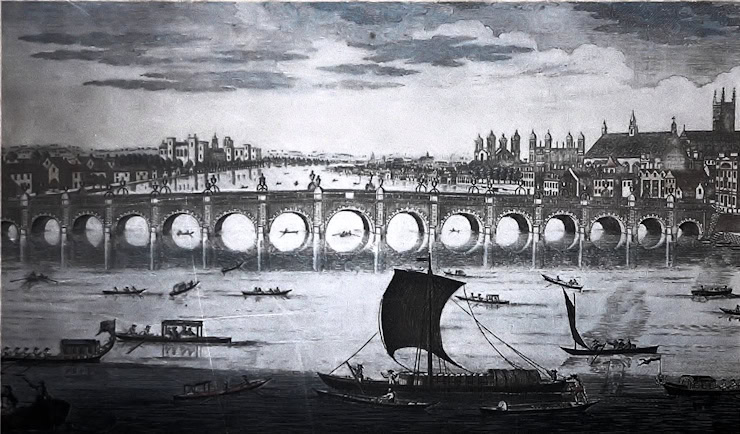
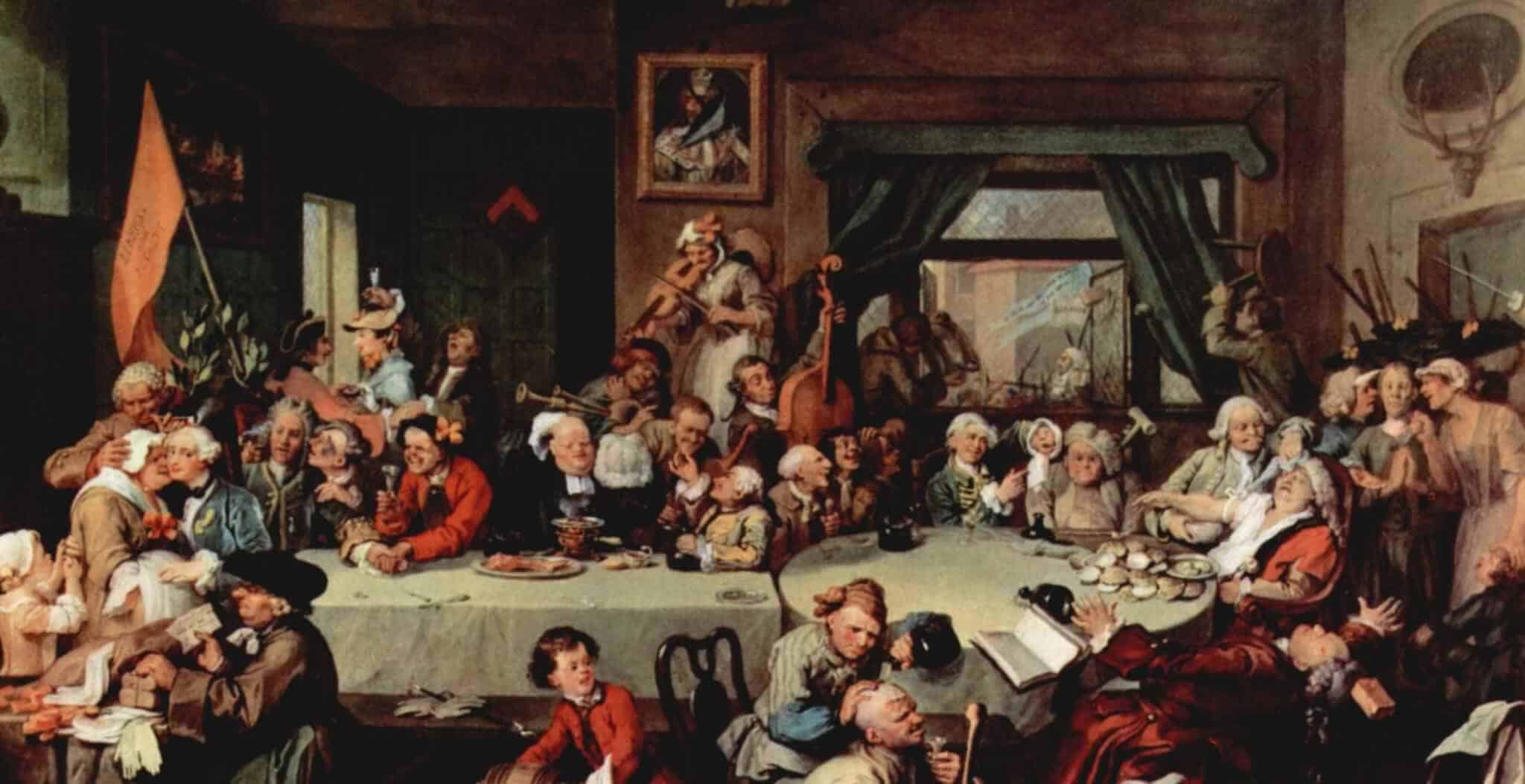
In fact, there had already been two earthquakes earlier in the year, and when a third was predicted for April 8th 1750, it wasn’t long before wealthy Londoners were packing up their belongings and heading out of the city. Spurred on by the two previous shocks, the first of which was on the 8th of February, and the second exactly one month later, when doom-laden news spread about an imminent third, the rich prepared to leave. Horace Walpole, who had been shaken but not stirred by the earlier earthquakes, counted “seven-hundred-and-thirty coaches … passing Hyde Park Corner with whole parties removing into the country”.
Not only leaving, but leaving well-prepared, at least in the case of some of the women. They had made “earthquake gowns”, warm clothing to be worn if they had to stay outdoors all night. Aristocratic women had no intention of sleeping outdoors if they could help it. They chose to stay in country inns where they could play cards, and then return after it was all over: “I suppose to look for the bones of their husbands and families under the rubbish,” quipped Walpole.
Thomas Sherlock, the Bishop of London had no doubt about the reason for the earthquakes.
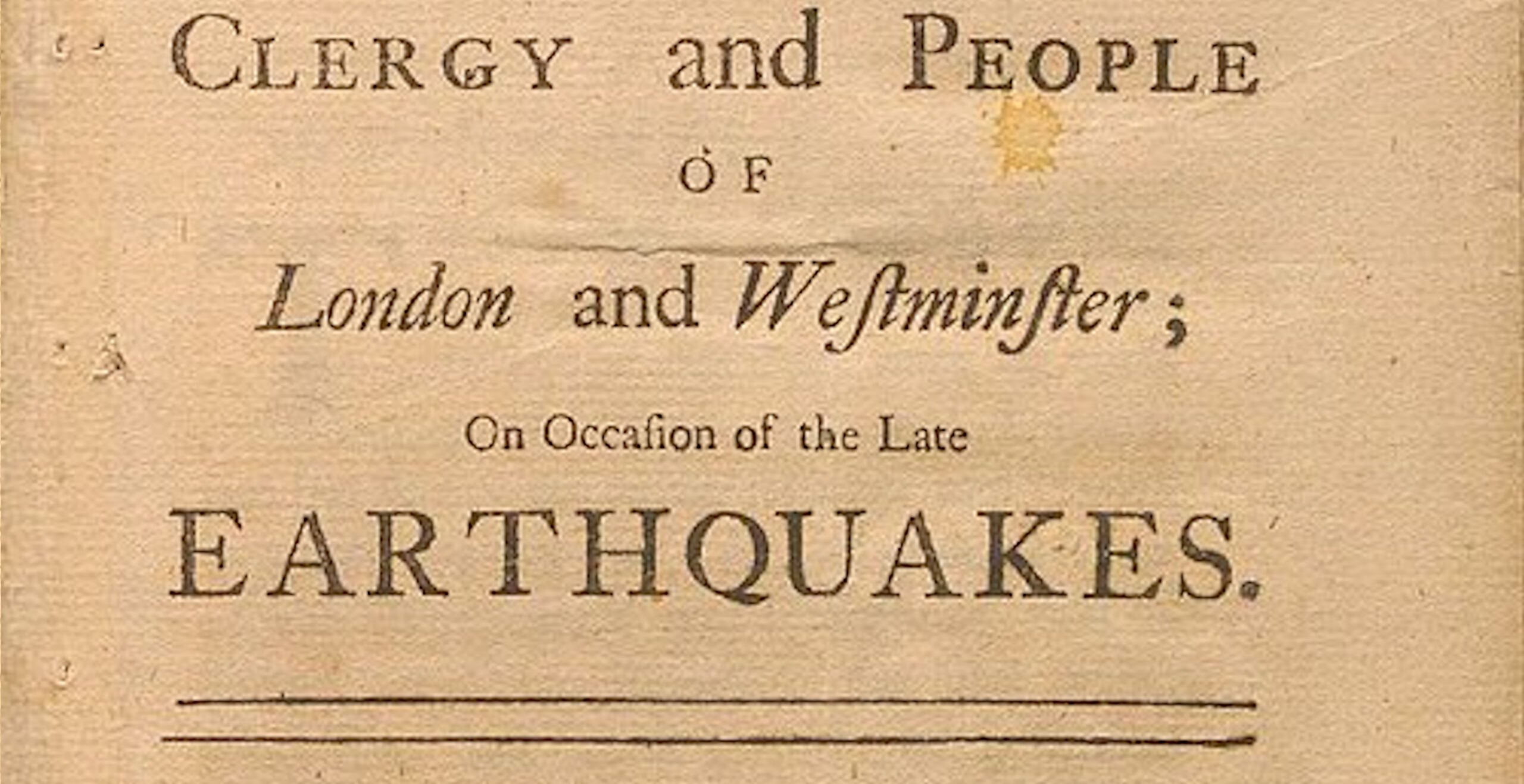
They were visitations from God upon a sinful city. Pretty soon his pamphlet “A Letter from the Lord Bishop on the occasion of the late earthquakes” was circulating widely. 10,000 copies outlining the “lewd behaviour” that had led to punishment “like the fire from heaven that destroyed Sodom” were issued, but how many were actually read is another matter.
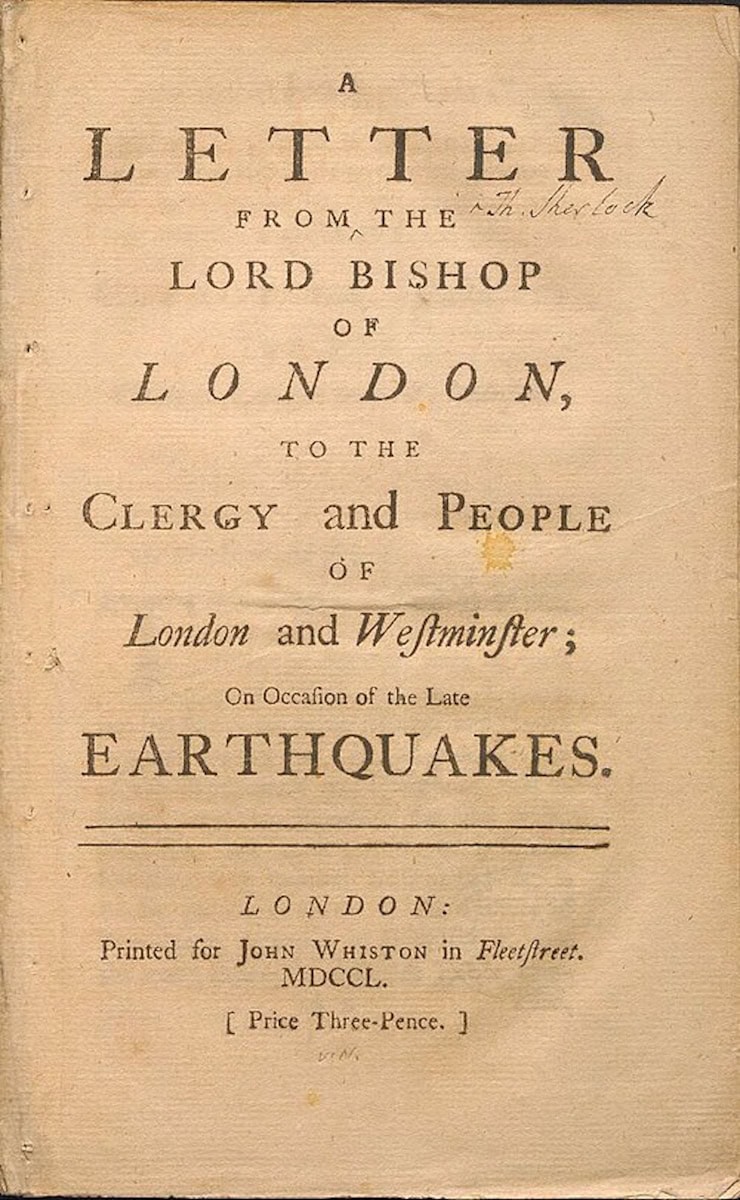 A letter from the Lord Bishop of London, to the Clergy and People of London and Westminster; : On Occasion of the Late earthquakes, Thomas Sherlock, 1750
Taking advantage of the panic, another author put up a publication somewhat prematurely describing in detail the earthquake that never happened. As well as the religious reaction to the genuine earthquakes, there was a scientific response.
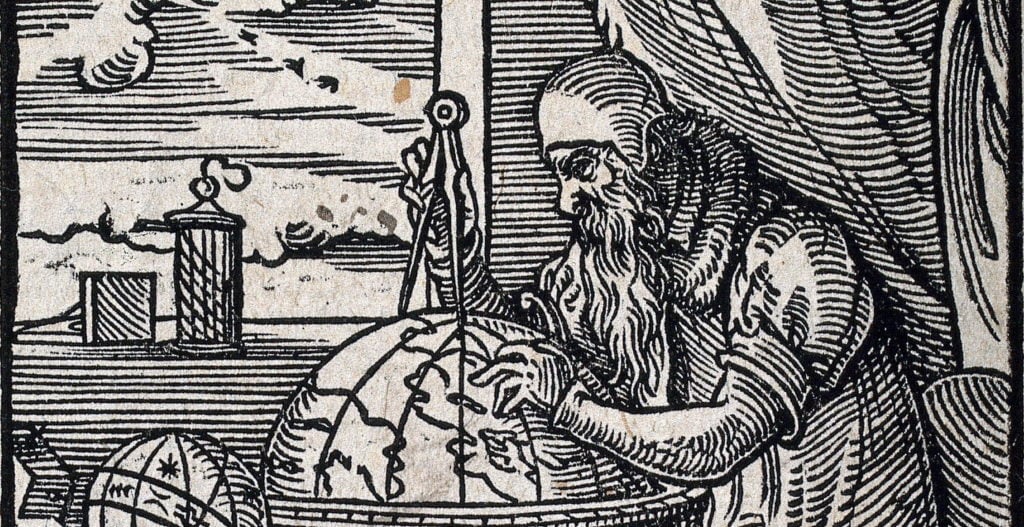
The author of “A Dissertation upon Earthquakes, Their Causes and Consequences” appealed to “minds of a superior order” whose “noble Speculations”, examined “the whole superficies of the Earth”. These educated individuals even explored space in their imaginations, aspiring to “an Acquaintance with other Worlds”. The author revealed how a member of the French Academy of Sciences had experimented with a combination of sulphur and iron filings which he buried, and which caused the “earth to heave up, swell, and burst with a sulphurous smell”. The author set out to prove that similar activity occurring naturally within the earth could lead to earthquakes.
This wasn’t the first time London had suffered an earthquake, pointed out the author, and it probably wouldn’t be the last. There had been several earthquakes in the reign of Elizabeth I. According to John Stowe’s Annals, one earthquake on Wednesday, April the 6th, 1580, “about Six in the Evening … caused such amazedness of the People as was wonderful for that Time, and caused them to make their earnest Prayers unto Almighty God. The great Clock-bell in the Palace at Westminster, struck of itself against the Hammer, with shaking; as divers Clocks and Bells in the City and elsewhere did the like”. There were also descriptions of flashes like lightning, and rumbles that travelled up and down the city.
The earthquakes in Elizabeth’s time caused damage to buildings and even resulted in deaths. An apprentice, Thomas Grey, was killed when stones fell from the ceiling in Christ Church, and a fellow servant also attending a service, Isbel Everet, was so badly injured that she died four days later. Others in the church were injured when they ran to safety. In London’s Temple, several “Gentlemen of the Temple” were injured by falling masonry in their hall where they were dining. St Paul’s was damaged, and so was part of the Temple Church.
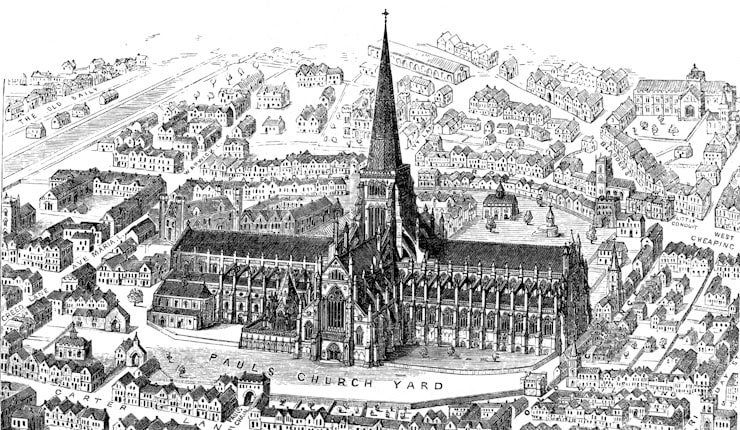
Divine retribution, it seemed, fell on church and people alike at that time. The fact that two of the earthquakes in Elizabeth’s reign had occurred on different Christmas Eves must have set some religious, as well as sceptical souls, thinking too.
The earthquake scare of April, 1750, had largely been caused by one person, a Swiss Life Guard, who was subsequently removed to Bedlam, the Bethlehem Hospital to which the mentally ill were taken at that time. In 1795 a naval officer called Richard Brothers also started an earthquake scare. He too was quickly taken to Bedlam. Between those years, in 1755, the massive and terrifying earthquake at Lisbon had occurred. It was a catastrophe that produced many accounts at the time and in the years that followed. In 1884, an earthquake with its epicentre on Colchester caused damage over 180 miles away but this does not seem to have attracted the same publicity as the ones of the previous century. Perhaps the industrialised 1800s had brought so many new rumblings and shakings to London that the population scarcely noticed.
Earthquakes, rare though they are in Britain, were one of the naturally occurring events most likely to draw forth a large number of publications. These ranged from fiery religious tracts like that of the Bishop of London, to astrological interpretations, and also attempts to explain the phenomena rationally. Some tried to link earthquakes to more familiar meteorological phenomena. One Dr Childrey viewed it as “a Conflict between the Water and the Air” after a deluge of rain, “the air struggling outrageously to free itself, which Conflict begets a Confusion…that must needs loosen the incumbent Earth, if it be loose and sandy.” Some Georgian Londoners didn’t even realise they were experiencing an earthquake in 1750, and put it down to cannons firing, or explosions in powder (gunpowder) warehouses!
Dr Miriam Bibby FSA Scot FRHistS is a historian, Egyptologist and archaeologist with a special interest in equine history. Miriam has worked as a museum curator, university academic, editor and heritage management consultant.
Published: 21st July 2026.