

In the quiet Shropshire countryside stands a patchwork of Roman ruins and a green, picturesque village — the perfect setting for a rustic stroll. But this belies its past — for 1,800 years ago, it was one of Roman Britain’s great power centres. Take a trip back in time to Wroxeter…
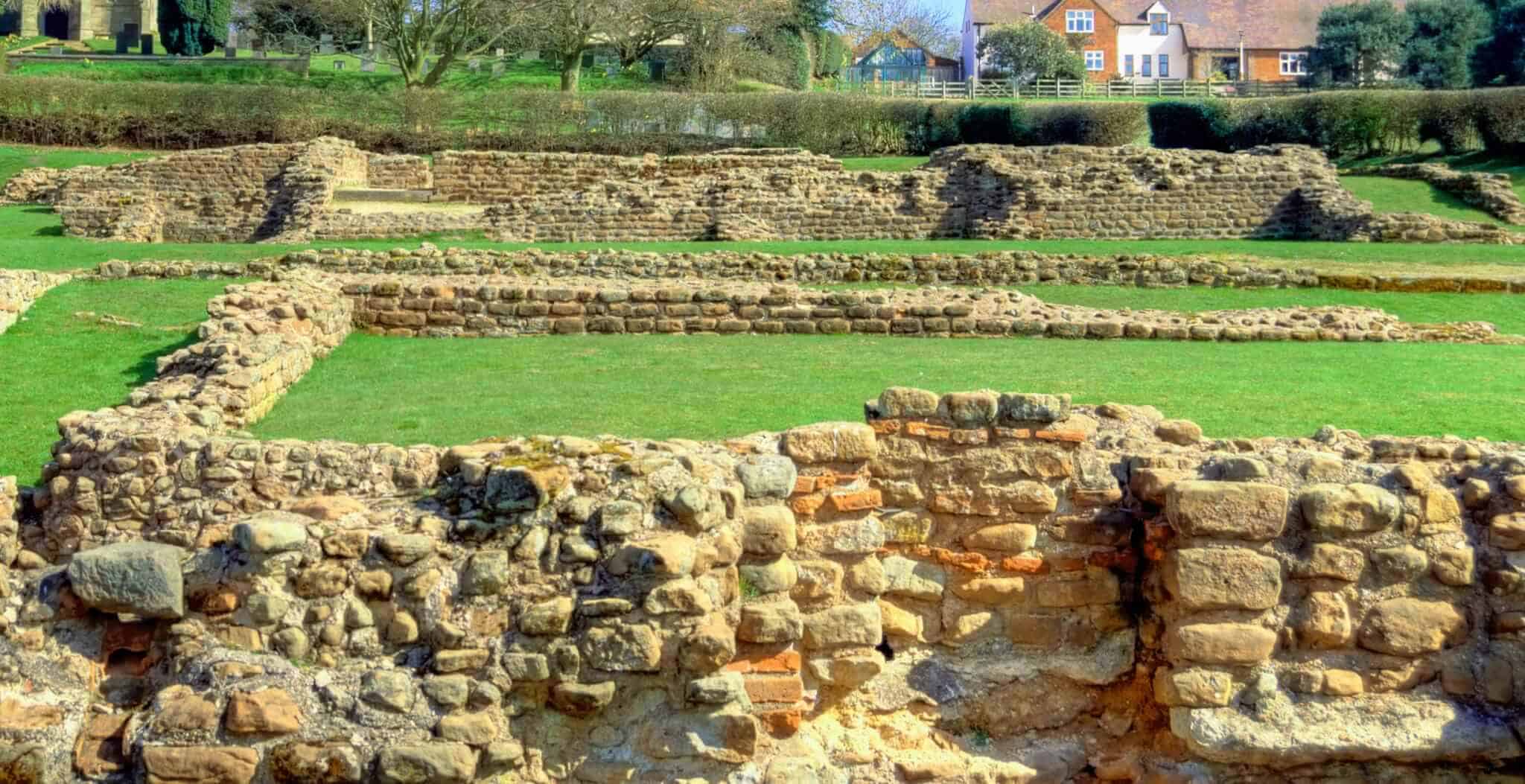
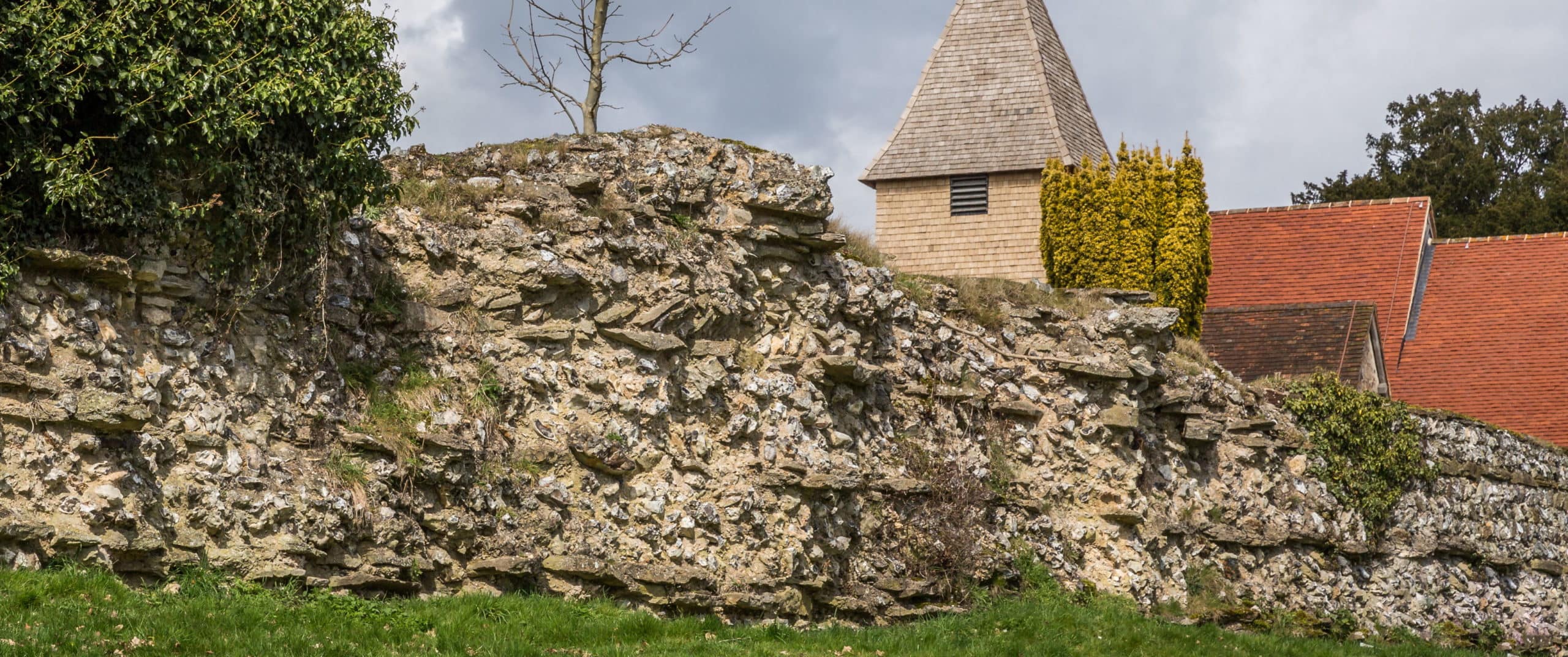
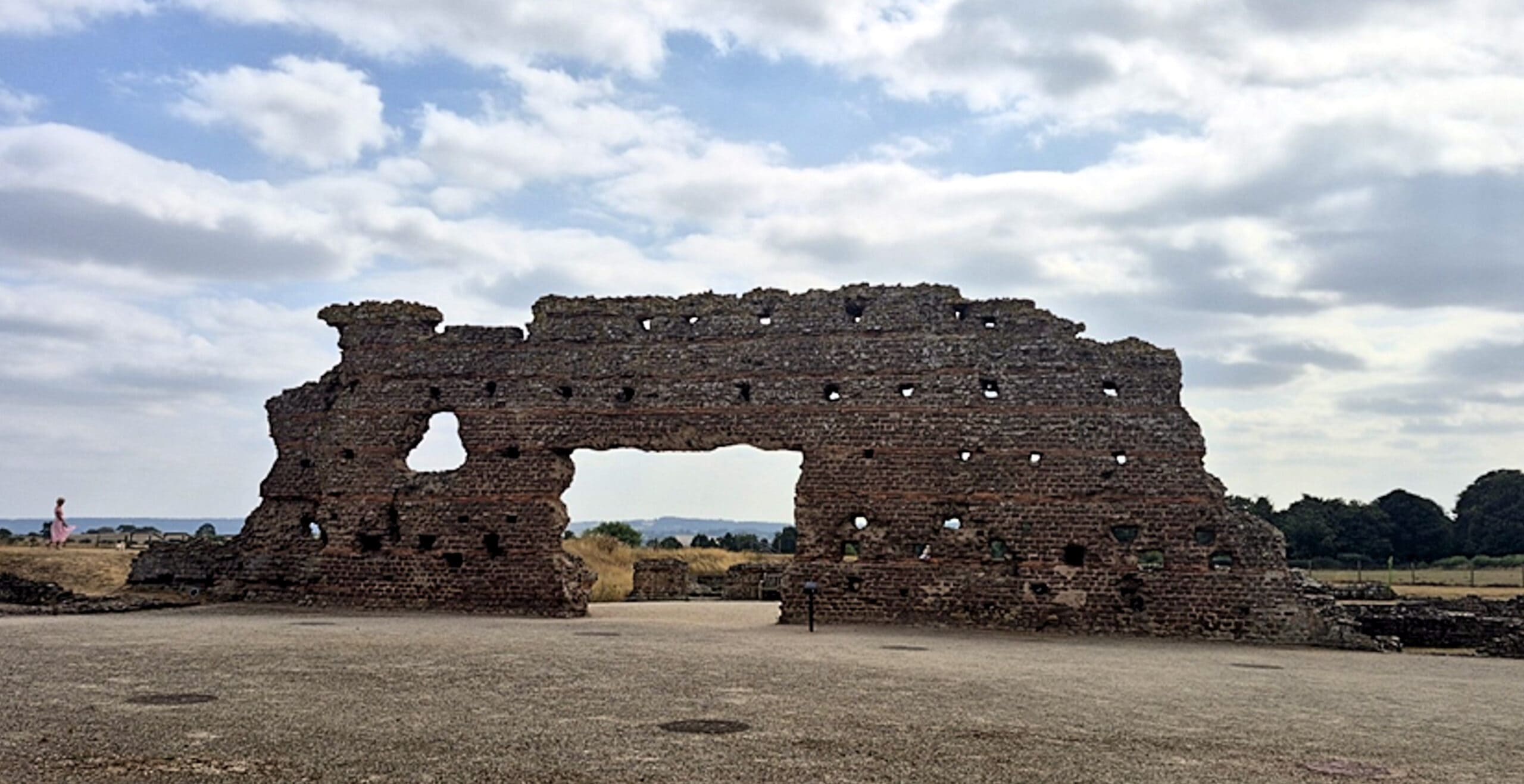
For centuries a towering, ancient wall stood anomalously amidst fields and farmland in central Shropshire. Known as the ‘Old Work’, it was decayed and overgrown, standing defiantly but without clear purpose. Centuries of travellers must have wondered at it, mystified by what it was doing in the middle of nowhere with only the small village of Wroxeter half a mile away. Maybe they thought it was the remains of an ancient church, or even an old castle? They would have been surprised to know that they were walking through what was once the fourth largest city in Roman Britain – and that this wall was the last visible remnant of a bathhouse where their Romano-British ancestors stripped down and sweated for their leisure!

Visit Wroxeter today and you can see the ‘Old Work’ amidst the excavated remains of the bathhouse, along with reconstructions and a gift shop – but first you need to know the story behind it, and why the Roman city was all but lost to time.
The Romans first came to this part of Britain in the 50s AD, as they pushed north during their conquest of Britain. The local tribe, the Cornovii, had their capital hillfort on a large local hill now known as the Wrekin (the same tribe may have held Old Oswestry to the north). There is evidence that the Romans stormed and burned the Wrekin, and established a fortified camp nearby, on low-lying ground next to the River Severn, to cement their authority. They named it ‘Viroconium Cornoviorum’, seemingly co-opting a native name – ‘Uricon’ – that may have applied to the nearby hillfort.
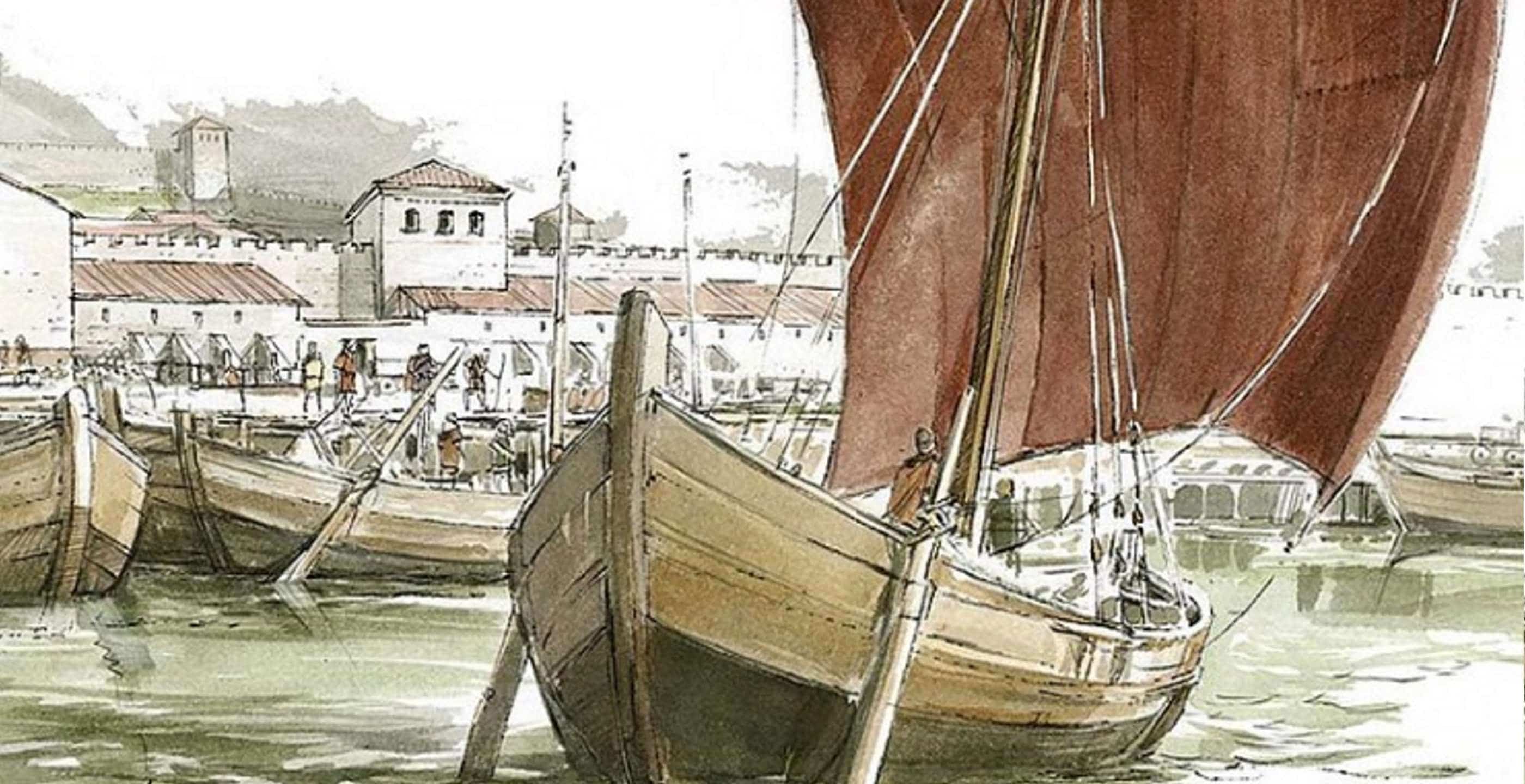
In the succeeding years this camp expanded, first to become a legionary base for the invasion of the mountainous west (now known as Wales), then becoming a large civilian centre. This transformation was partially due to the establishment of Deva (Chester) two days march to the north. As a port-cum-fortress, Deva became a military focal point, while Viroconium developed along more civilian lines. The initial legionary camp attracted local traders and market activity, which soon flourished.
Viroconium was at the centre of Roman Britain’s transport networks – Watling Street, the famous paved road which the Romans constructed, ran between Londinium and Wroxeter, possibly overlaid on an ancient British trackway. At Wroxeter, travellers could take the road north to Deva or take a boat down the Severn to access Glevum (Gloucester) and the Bristol channel. It was also in proximity to the wider West Midlands and the Welsh hills, making it an attractive trading centre for a variety of livestock, animal produce (such as wool), and minerals (such as the salt produced at brine-springs in modern Worcestershire).
This central position boosted Viroconium’s economy, with the city likely becoming home to many wealthy merchants who could afford to invest in status symbols and leisure facilities. This explains the large thermal baths, which were in operation by the middle of the second century AD. Across the Roman world, such bathhouses represented the adoption of an affluent, Latinised way of life. Here was not only a place to take the hot and cold waters; it was also a place to socialise and conduct informal business, to see and be seen. Within a few decades of Viroconium’s establishment, men whose grandfathers had been hillfort-dwelling chieftains were now merchants and administrators in the imperial framework, slipping off their togas to plunge into hot pools while discussing business and politics. Today, you can see the impressive under-floor heating system that gave them a sweat – and which was tended by the growing workforce who served the city’s notables. Viroconium soon grew to an estimated population of 15,000 people, likely making it the fourth largest city in Roman Britain, putting it on the imperial map for over 300 years.
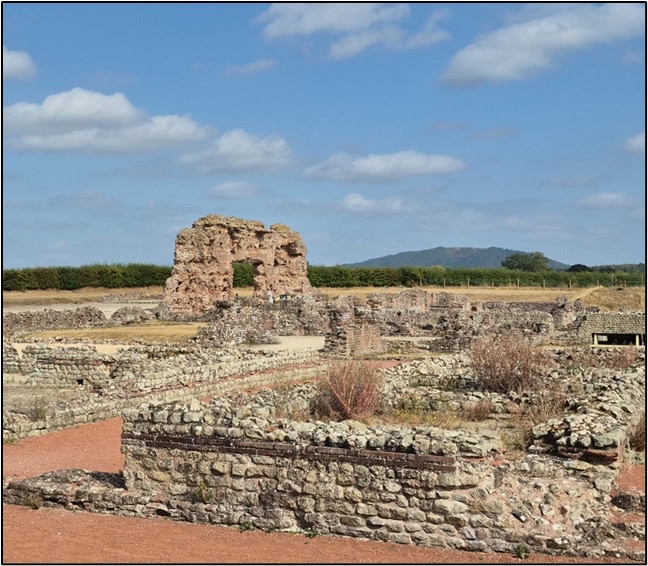
But this makes us ask – why is Wroxeter today a patchwork of fields and ruins, when other Roman cities like Colchester and London have endured down to the present? Well, following the end of Britain’s Roman administration in the early 400s, local strongmen carved out their own fiefdoms, and Wroxeter likely served as the capital of the local kingdom, Powys. However, without the imperial administration machine, the infrastructure of the city slowly began to crumble. The flow of trade and travellers would have slowed to a trickle as the world became a more dangerous place.
The bathhouse likely ceased to operate as the patrons (and the workforce) were faced with more visceral concerns, such as Irish and Anglo-Saxon invaders. The city was renovated in timber throughout the 500s – without the resources of Rome, rebuilding in stone was out of the question. Despite these seemingly dire straits, the archaeology suggests that Viroconium survived in this patchwork manner well into the 600s. Indeed, many new buildings of timber seem to have been built, implying that the city was still valued by the local powers and that they had the means to invest in it.
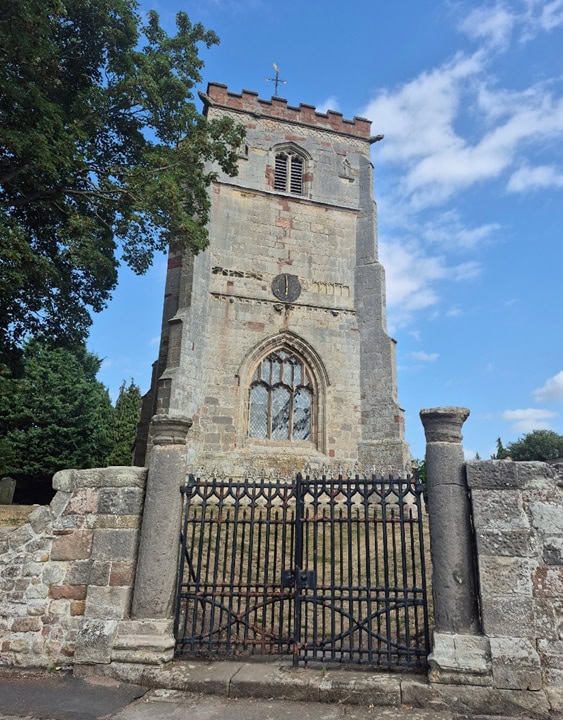
But abruptly, at some point in the late 600s, the city appears to have been almost completely abandoned. This may have been due to pressure from Mercian Anglo-Saxons around this time, forcing the rulers of Powys to move their base to Mathrafal (near Welshpool) in the hills of mid-Wales. Another story holds that a plague and/or famine in the city forced the remaining populace to flee to nearby Shrewsbury. However, the evidence is confused and unclear. The only certainty is that, having survived without Rome for some 250 years, Viroconium became all but a ghost town. The only part which may have remained occupied was the far south-west corner, where modern Wroxeter village is located. Even here, it is unclear whether this small nook is a survivor of ancient Viroconium, or whether it was reoccupied sometime after the exodus. Wroxeter’s St Andrew’s church seems to date from the 700s or 800s and sits on the Roman street grid; its tempting to believe that it originated in Roman Viroconium. If you take the short walk to the church, you will see that the gateposts are two Roman columns which may once have supported a headquarters or civic hall, and the baptismal font was carved from a Roman pillar – implying continuity.
So perhaps Viroconium did survive in a small way, morphing from Roman city to patched-up Dark Age town and finally a small Medieval village. The name Viroconium evolved in the local dialect to become Wroxeter, while the Roman city was remembered in the annals as ‘Uricon’. Its ruins long cannibalised and overgrown until only the Old Work stood, a silent memorial to a vanished world. Visit the beautiful Shropshire site today, and consider that the history which you are seeing was forgotten for centuries – only in the 1500s did antiquarians realise that Wroxeter was Viroconium, and it wasn’t excavated until the 1850s. This revealed the ruins which Shropshire’s greatest poet, A. E. Houseman, immortalised as ‘Uiricon’ in his meditation on time’s relentless march:
‘The gale, it plies the saplings double,
It blows so hard, ’twill soon be gone:
To-day the Roman and his trouble
Are ashes under Uricon.’
Mike Edwardson is a history writer with an MA from The University of Sheffield. Passionate about uncovering the lesser-known stories of British history, Mike combines his enthusiasm for exploring with a love for storytelling to bring the past to life.
Published: 19th January 2026