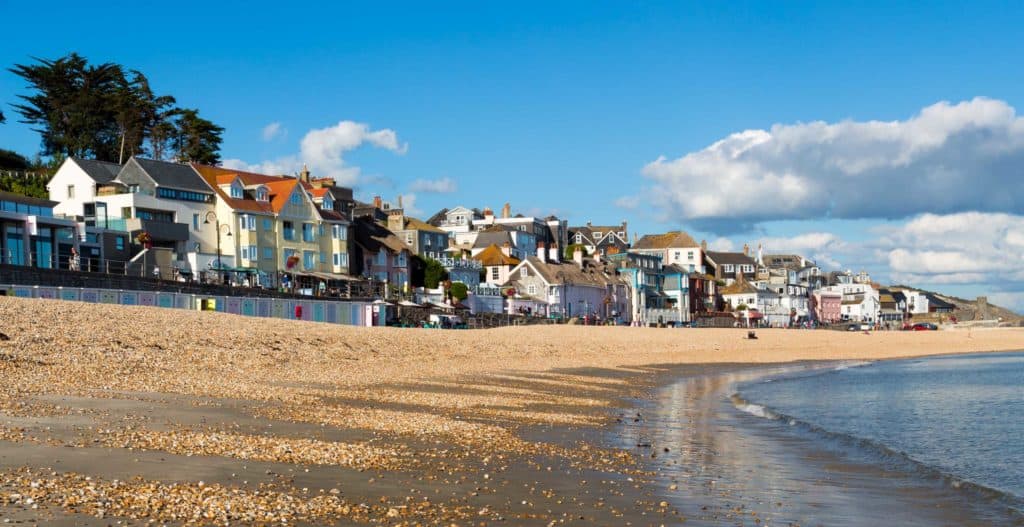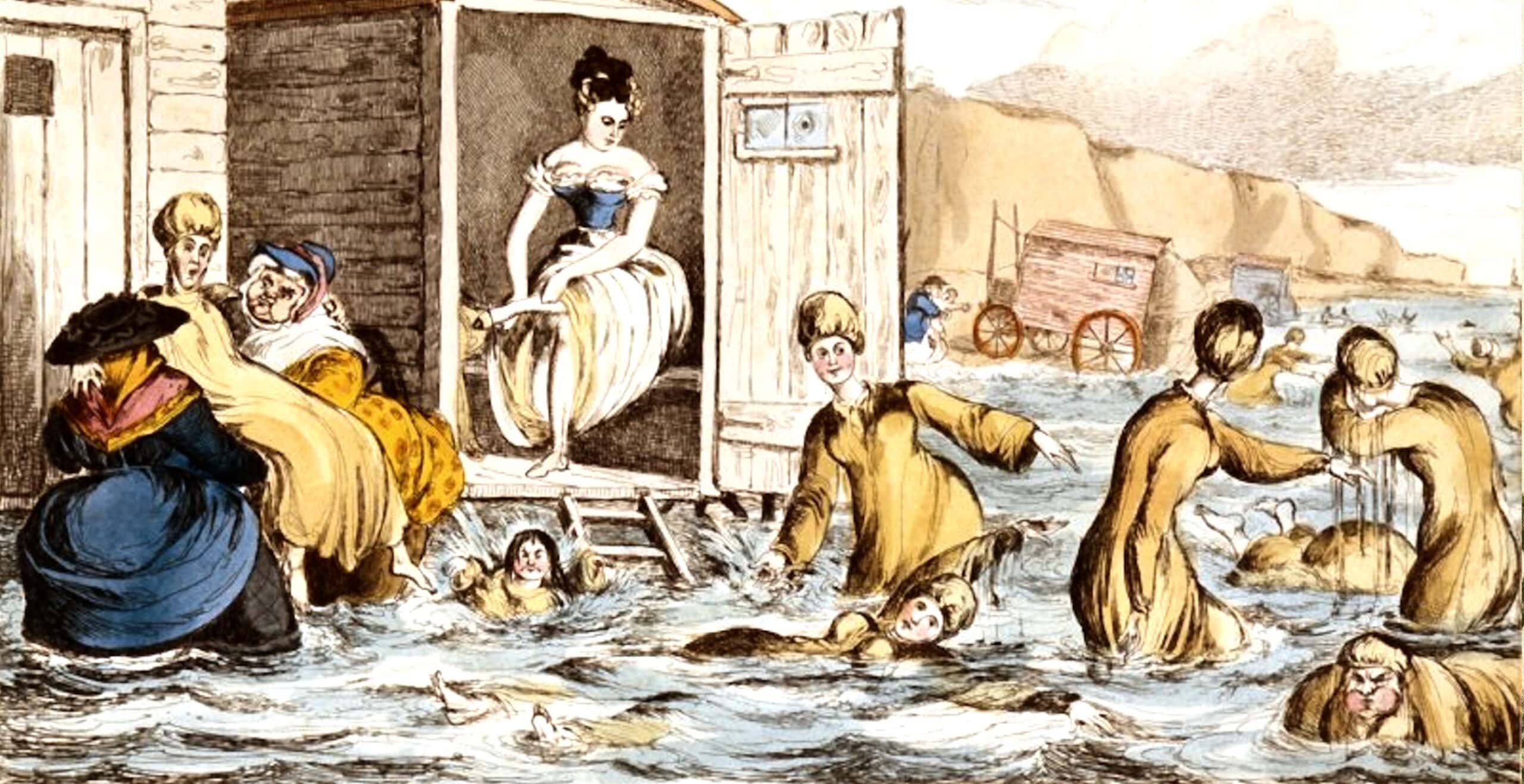


The ubiquitous sight of row upon row of brightly coloured beach huts lining the beach front has a long and interesting history dating back to the austere modesty laws imposed on Britain’s beaches in the 18th century.
Originating from a similar construction which had wheels, the popular device known as the bathing machine came to dominate the Victorian era and was an essential part of the seaside experience.
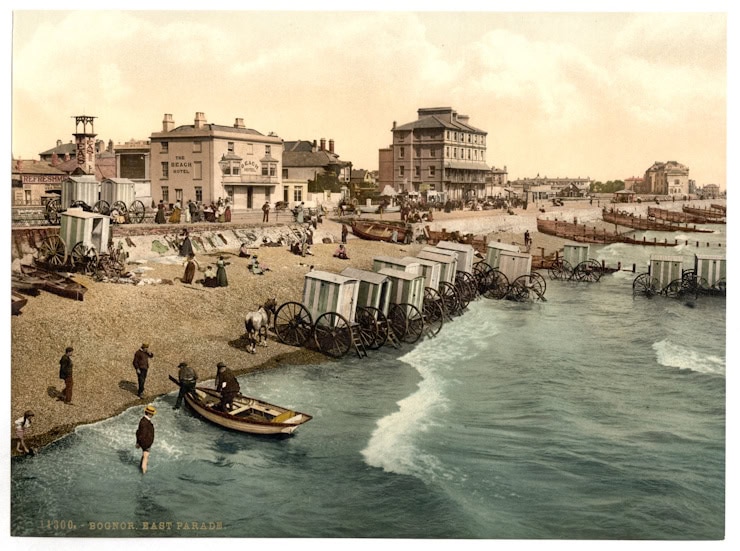
Designed with modesty in mind, the bathing machine was a wheeled contraption specifically constructed for women (and sometimes men) to change out of their clothes and into their swimwear whilst being rolled into the sea.
The machine itself originated from the bathing etiquette which was enforced at the time. In accordance with the modesty laws, the bathing machine became a common feature, allowing men and women to stay separate on the beach and preserve their dignity by changing their garments in the privacy of their own room.
The emergence of the bathing machine in the mid-1700s coincided with the laws in place at the time whereby men and women were separated on the beach and decorum needed to be preserved. In order to do so, the unusual idea of a moving changing room which could be wheeled into the sea became a popular and widespread design, allowing women to retain their dignity whilst embarking on a family trip to the seaside.
Over the years, they would continue to grow in popularity and use, becoming a common sight across beaches up and down Britain as well as in Europe and further afield in the United States, Australia, and South Africa.
The British royal family also used the machines and played an important role in advocating for the new fashion.
King George III was said to have taken a medicinal bath at Weymouth using a bathing machine, whilst Queen Victoria had one for her personal use at her holiday home on the Isle of Wight, Osborne House.
Whilst the exact date and origins of the first bathing machine are disputed, some sources indicate a man called Benjamin Beale who was a Quaker based in Margate was responsible for the construction dating back to 1750.
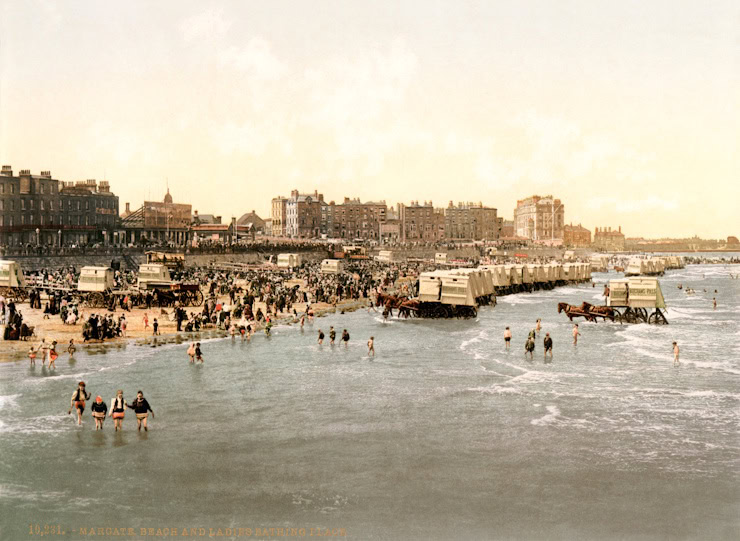
Other evidence alludes to the existence of bathing machines in Devon dating from the year 1735, whilst in the popular northern seaside town of Scarborough engravings depicting bathing machines date back to 1736.
Further north in Scotland, the popularity of the machines by the late 18 th century is indicated by an advertisement displayed in the Caledonian Mercury, detailing the availability of the machine for use in Leith, near Edinburgh.
The bathing machine became fashionable as it proved effective in ensuring modesty as the occupant of the device did not emerge until it had been wheeled into the water allowing a smooth transition from land to sea without any fear of exposure.
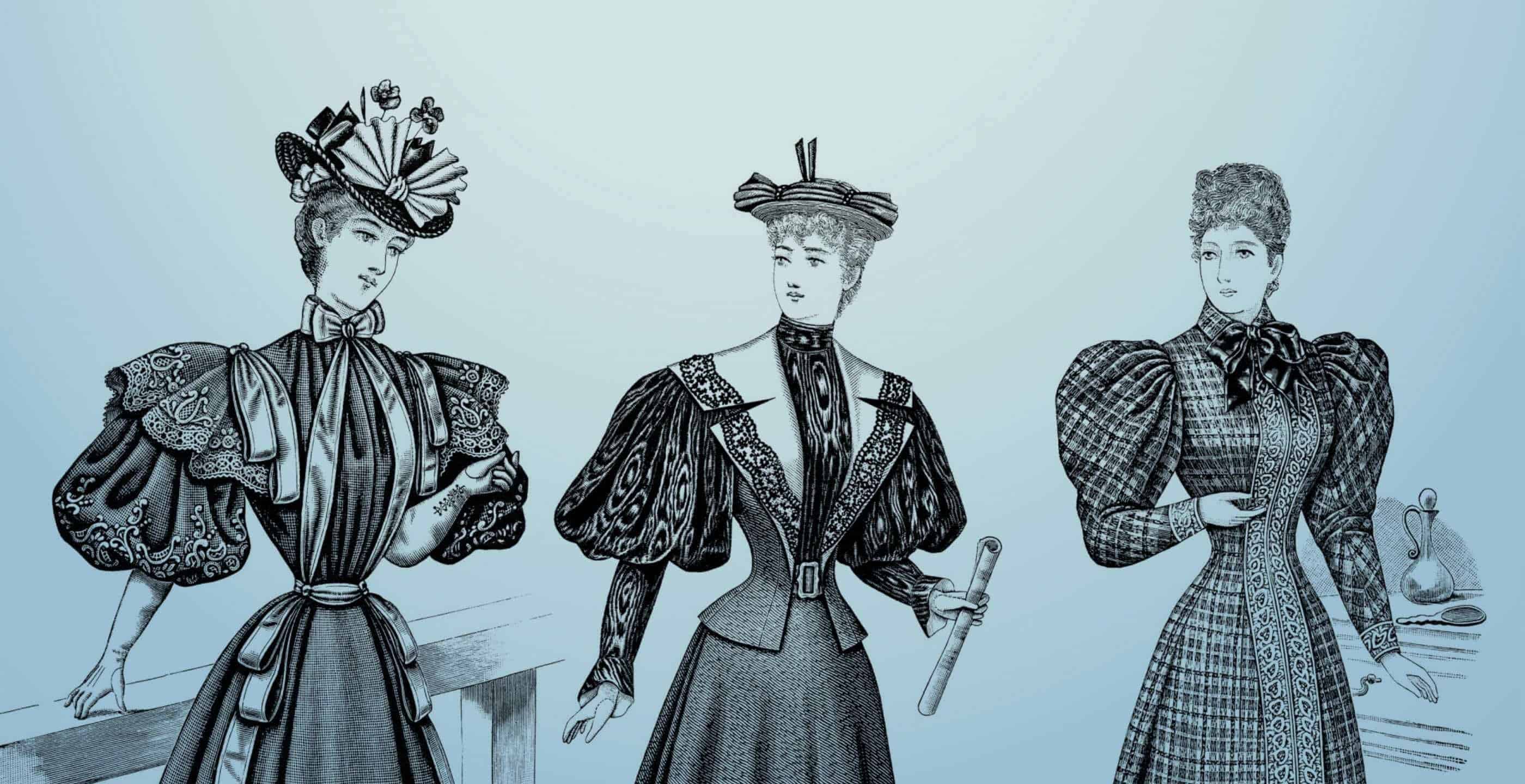
At the time, swimming costumes bore little resemblance to the small garments we are familiar with today and instead were made of voluminous enveloping fabrics which covered the body.
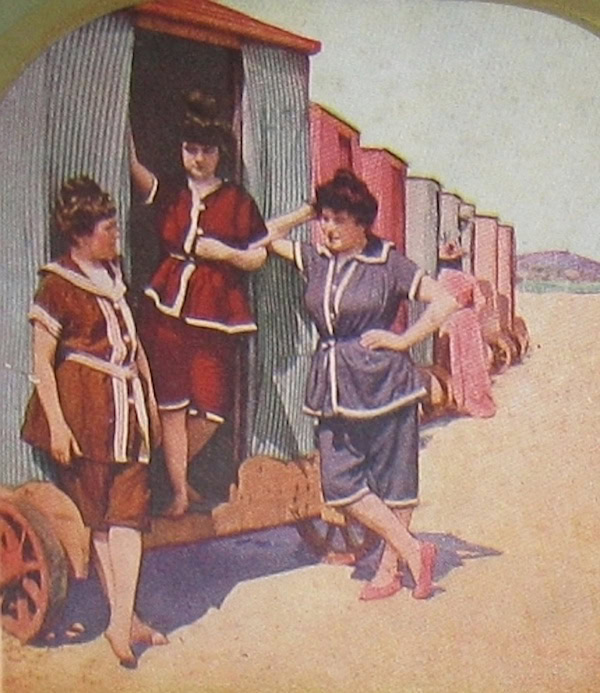
The emphasis on modesty in relation to the costumes and bathing etiquette ofthe period had not always been enforced. In fact, in the 1600s, nude female bathing in spas and baths was normal until the 1680s when standard ladies’ bathing costumes became fashionable.
In the 18th century, bathing gowns were commonplace consisting of loose gowns made of wool or flannel that covered all the body down to the ankles. For men, meanwhile, it had been commonplace to bathe in the nude, and it was only in the mid-19th century when prohibitive laws came into force designating restrictions against the practise of nude swimming, however such limitations varied depending on location.
By the 1860s, such laws were not always welcomed by men who were used to the freedom of swimming in the nude and instead were encouraged to wear drawers or caleçons instead.
Therefore, by the time the bathing machine became popular, nude bathing had become a long- forgotten practise and modesty was considered first and foremost a priority. Such strict social norms were not however so greatly enforced for men as they were for women.
The constructions themselves were around six feet high and a little wider at eight feet across, with a small, peaked roof and an entrance which consisted of either a door or a privacy screen made of some kind of canvas.
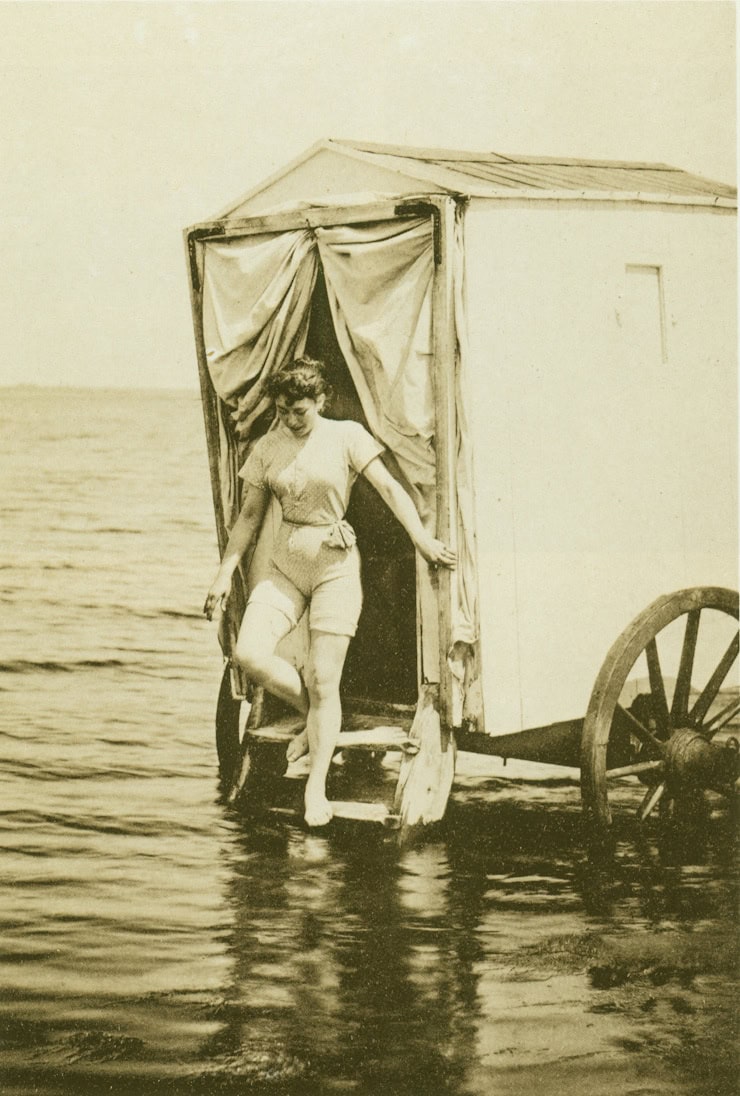
Elevated from the ground due to the wheels, entrance to the machine was via a step ladder and once inside a small bench and container of some kind enabled the swimmer to change into their outfit and place any wet clothes in a designated area.
There was both an entrance and an exit, allowing the woman to leave the machine and enter the water straight away on the other side. The machines would enter the sea by force, either pulled by horses or people and in some cases on tracks which had been constructed specifically for that purpose.
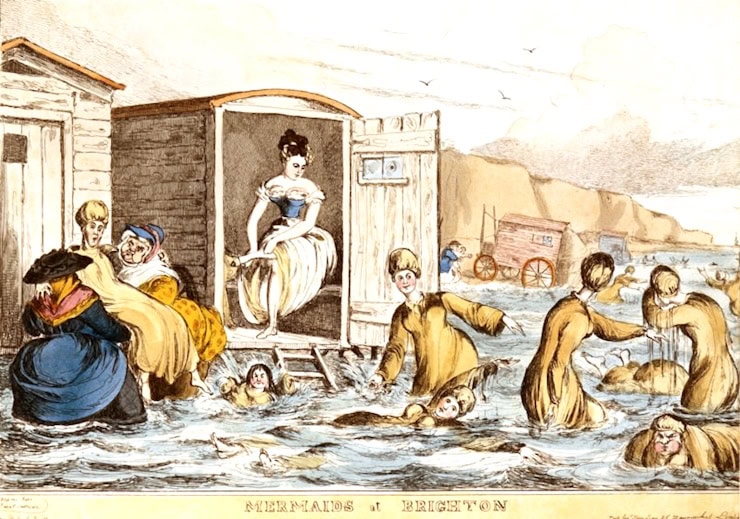
During this period, it was often the case that many people could not swim or were very inexperienced which led to the use of people called ‘dippers,’ who were people of the same gender whose job entailed escorting the bather in and out of the cart and keeping them safe. Such traditions were often necessary as the costumes donned by women were made of billowing fabrics which weighed down the wearer in the water and thus a ‘dipper’ was an important way to ensure safety in the sea.
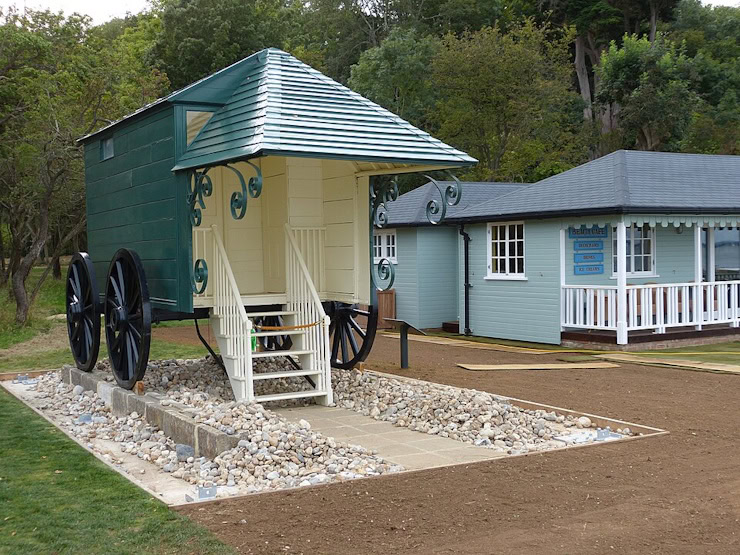
Whilst a pervasive feature of the Victorian seaside experience, the bathing machines were by no means made equal and varied in style, size and form depending on the user. For example, the machine used by Queen Victoria and her husband Prince Albert at Osborne House had a great deal of detail and was more ornate in style and structure including a veranda, curtains, and even full scale plumbing to accommodate the inclusion of a toilet.
Likewise, other European royals also changed and bathed in luxury, such as King Alfonso of Spain who had such an elaborately decorated bathing machine it was described as more reminiscent of a small house than a hut.
After Queen Victoria died, her bathing machine acquired a vastly different use as it was transformed into a chicken coop. However, the significance of this historical construction was later recognised and was restored in the 1950s and subsequently put on display in 2012.
The omnipresence of the bathing machine in the Victorian era was reflected in several contemporary popular culture references, peppering some of the most famous literature of the day ranging from Anne Brontë to Lewis Carroll. In Jane Austen’s Persuasion, the town of Lyme includes the description of bathing machines taking over the town in high season whilst in Vanity Fair, William Makepeace Thackeray describes Brighton as ‘speckled with white sails, with a hundred bathing-machines kissing the skirt of his blue garment,’ thus signifying how it became a defining element of the seaside experience.
Whilst remaining popular for several decades, the use of the bathing machine gradually declined concurrently with the relaxation of modesty and segregation laws.
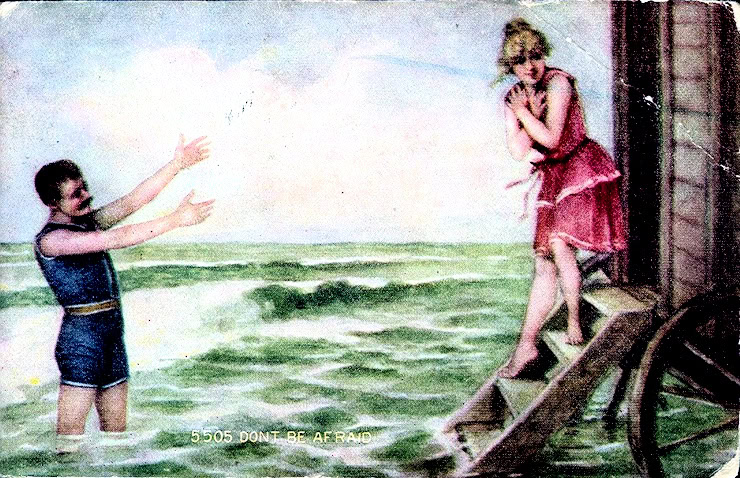 Man and woman in swimsuits, c. 1910. Once mixed-sex bathing became socially acceptable, bathing machines became less popular.
By the turn of the century, in 1901, it was no longer a requirement for men and women to separate on the beach and thus the continued use and necessity of the bathing machine dwindled leading to a sharp decline and need for the device.
By the 1920s, they became almost obsolete however in that time they soon gained a new and more enduring function as stationary beach huts, a fashion which has persisted to this day.
Jessica Brain is a freelance writer specialising in history. Based in Kent and a lover of all things historical.
Published: 8th October 2026.