

In 1951, just six years after World War II, Britain’s towns and cities still showed the scars of war that remained a constant reminder of the turmoil of the previous years. With the aim of promoting the feeling of recovery, the Festival of Britain opened to the public on the 4th May 1951, celebrating British industry, arts and science and inspiring the thought of a better Britain. This also happened to be the same year they celebrated the centenary, almost to the day, of the 1851 Great Exhibition. Coincidence? We think not!
The main site of the Festival was constructed on a 27 acre area on the South Bank, London, which had been left untouched since being bombed in the war. In keeping with the principles of the Festival, a young architect aged only 38, Hugh Casson, was appointed Director of Architecture for the Festival and to appoint other young architects to design its buildings. With Casson at the helm, it proved to be a perfect time to showcase the principles of urban design that would feature in the post-war rebuilding of London and other towns and cities.
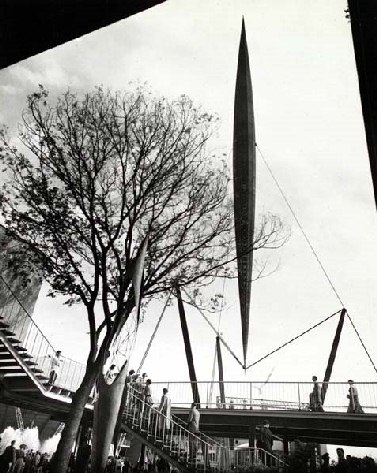
The main site featured the largest dome in the world at the time, standing 93 feet tall with a diameter of 365 feet. This held exhibitions on the theme of discovery such as the New World, the Polar regions, the Sea, the Sky and Outer Space. It also included a 12-ton steam engine on show. Adjacent to the Dome was the Skylon, a breathtaking, iconic and futuristic-looking structure. The Skylon was an unusual, vertical cigar shaped tower supported by cables that gave the impression that it was floating above the ground. Some say this structure mirrored the British economy of the time having no clear means of support. The evening before the Royal visit to the main Festival site, a student is known to have climbed to near the top and attached a University of London Air Squadron scarf!
Another feature was the Telekinema, a 400-seat state-of-the-art cinema operated by the British Film Institute. This had the necessary technology to screen both films (including 3D films) and large screen television. This proved to be one of the most popular attractions at the South Bank site. Once the festival closed, the Telekinema became home to the National Film Theatre and was not demolished until 1957 when the National Film Theatre moved to the site it still occupies at the South Bank Centre.
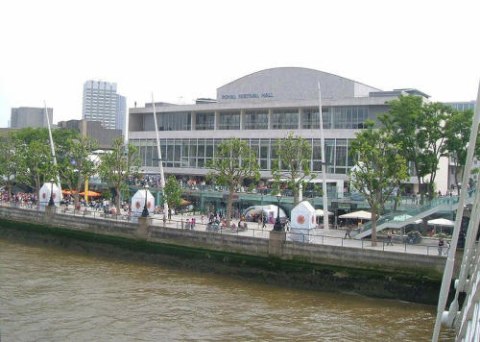
Other buildings at the Festival site on South Bank include the Royal Festival Hall, a 2,900 seat concert hall that hosted concerts conducted by the likes of Sir Malcolm Sargent and Sir Adrian Boult in its opening concerts; a new wing of the Science Museum holding the Exhibition of Science; and, located nearby, The Exhibition of Live Architecture at Poplar.
This was made up of the Building Research Pavilion, Town Planning Pavilion and a building site showing houses in various stages of completion. Live Architecture was disappointing, attracting only about 10% of the number of guests as the main exhibition. It was also received badly by leading industry figures which led Government and Local Authorities to concentrate on high-density high-rise housing. Upriver, only a few minutes via boat from the main Festival site was Battersea Park. This was home to the fun-fair part of the Festival. This included Pleasure Gardens, rides and open-air amusements.

Although the main site of the Festival was in London, the festival was a nationwide affair with exhibitions in many towns and cities throughout Britain. This included such exhibitions as the Industrial Power Exhibition in Glasgow and the Ulster Farm and Factory Exhibition in Belfast, not to forget the Land Travelling Exhibitions and the Festival Ship Campania that travelled from town to town and city to city around Britain.
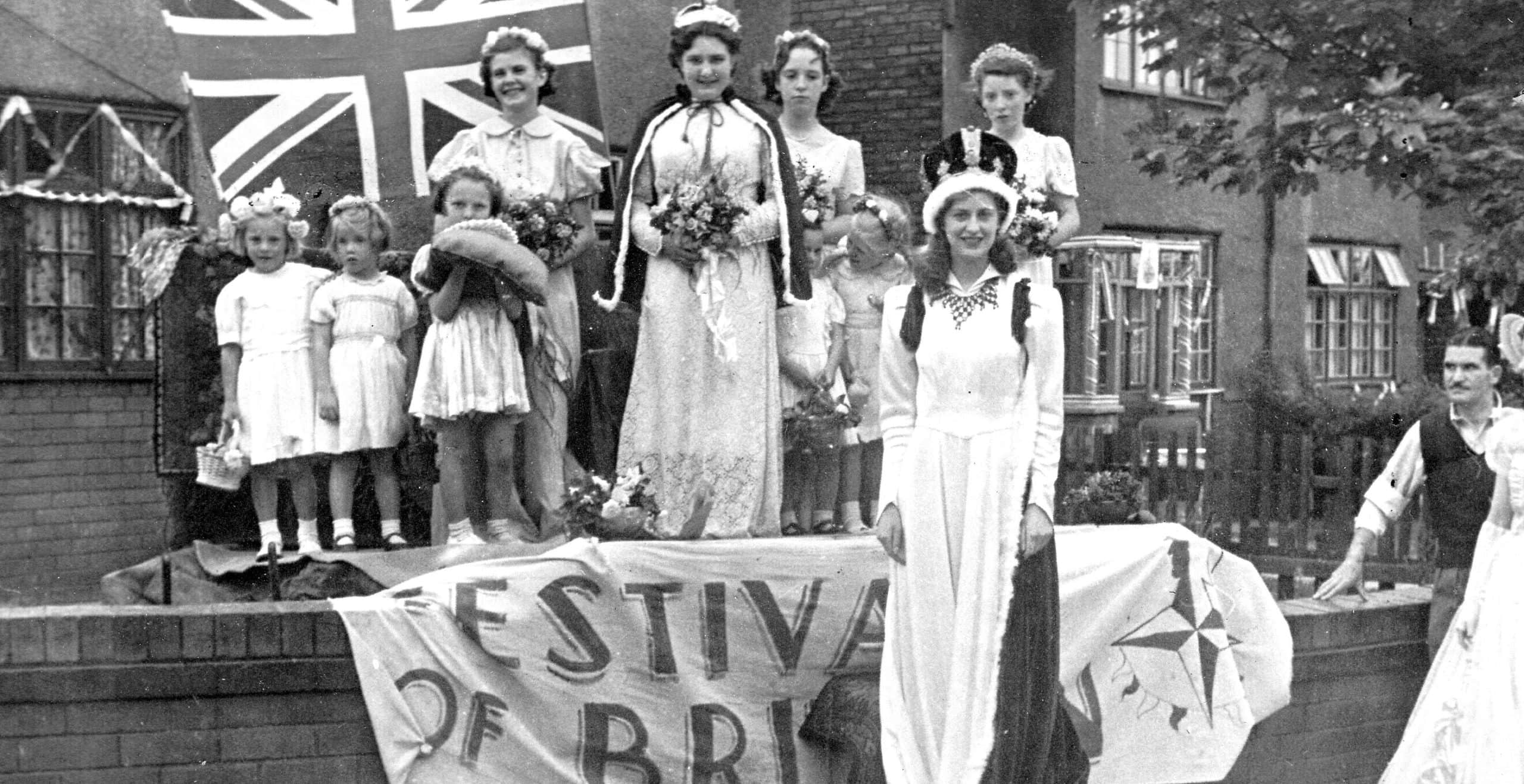
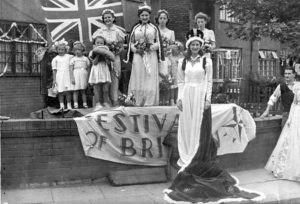
Celebrations, parades and street parties took place all around the country. This was Farnworth, Widnes, Cheshire:
As with most large Government sponsored and funded projects (the Millennium Dome, London 2012), the Festival met much controversy, from the concept to completion. Even before the Festival opened, it was condemned as a waste of money. Many people believed it would have been better spent on housing after the destruction of many houses during the Second World War. Once opened, the critics turned to the artistic taste; the Riverside Restaurant was seen as too futuristic, the Royal Festival Hall seen as too innovative and even certain furnishings in the Café met criticism for being too gaudy. It was also criticized for being too expensive, with entrance to the Dome of Discovery at five shillings. Even with the above complaints the main Festival site on the South Bank managed to attract more than 8 million paying visitors.
Always planned as a temporary exhibition, the Festival ran for 5 months before closing in September 1951. It had been a success and turned over a profit as well as being extremely popular. In the month that followed the closure however, a new Conservative government was elected to power. It is generally believed that the incoming Prime Minister Churchill considered the Festival a piece of socialist propaganda, a celebration of the achievements of the Labour Party and their vision for a new Socialist Britain, the order was quickly made to level the South Bank site removing almost all trace of the 1951 Festival of Britain. The only feature to remain was the Royal Festival Hall which is now a Grade I listed building, the first post-war building to become so protected and is still hosting concerts to this day.
Published: May 7th, 2016.