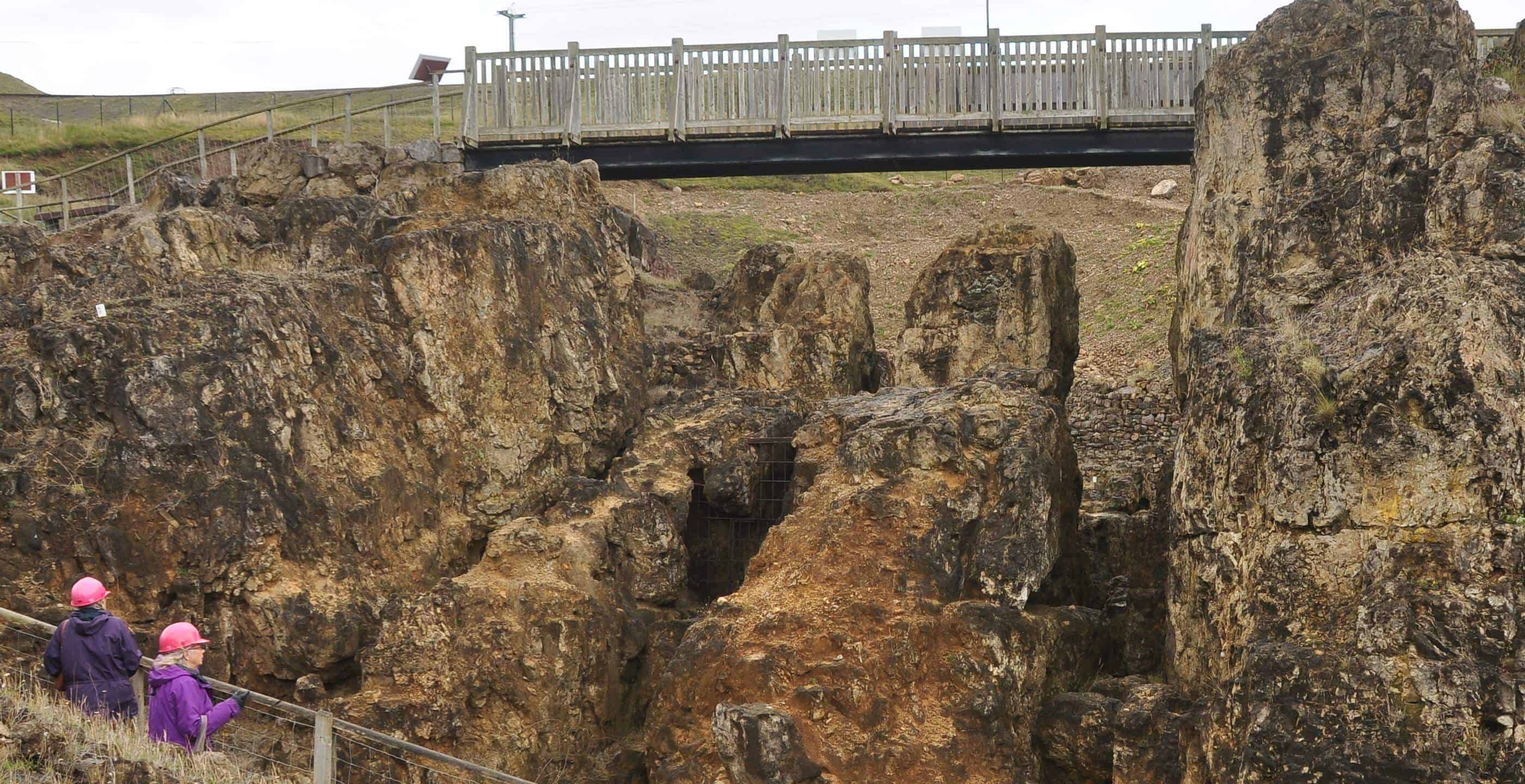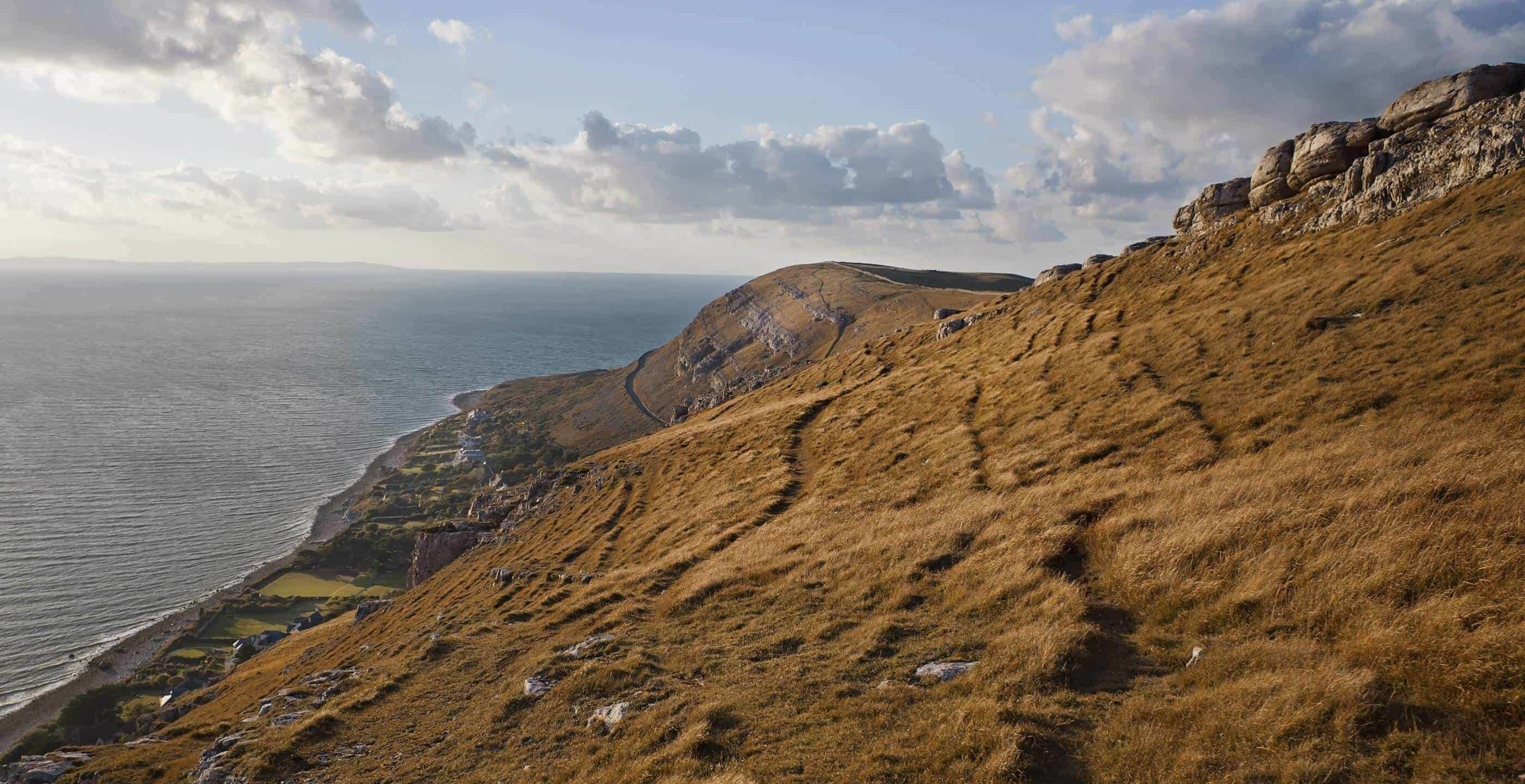


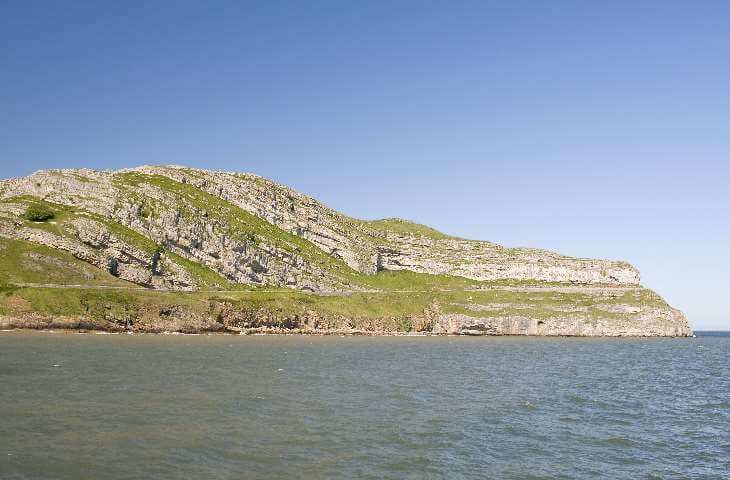
On the north western tip of mainland Wales is a mysterious rock formation. This massive headland to the west of Llandudno Bay is called by the English “the Great Orme”. The word Orme is thought to derive from the Scandinavian word for a worm. It is said that a Viking raiding party saw the rock rearing up from the mist in front of their longboat and mistaking it for a serpent, fled in terror.
At the end of the last Ice Age, retreating glaciers left behind many strangely shaped rocks around the Orme; the Mother and Daughter Stones, The Freetrade Loaf, The Rocking Stone and many others. Each stone appears to have its own story attached to it!
Amongst the many legends associated with the Great Orme is the story of Llys Helig (Helig`s Palace) and the lost Land of Tyno Helig.
Helig ap Glannawg, the prince of Tyno Helig, was said to have lived in the sixth century. His lands stretched from Flintshire in the east to Conwy in the west and beyond. In fact Helig’s Palace is said to have lain to the north, some two miles from today’s coastline, under the waters of Conwy Bay.
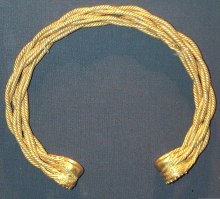 The legend surrounds Helig`s daughter Gwendud, who despite being fair of face had a wicked and cruel heart. Gwendud was wooed by Tathal, the son of one of the local barons of Snowdon, in comparison a young man of relatively humble birth. Eventually she succumbed to his charms but told him that they could not be married because he did not wear the golden torque (collar) of a nobleman.
Tathal took it upon himself to secure a golden torque by fair means or foul. After offering to guide a ransomed young Scottish chieftain back to safety, he treacherously stabbed him and stole his golden collar. Tathal claimed that they had been set upon by a band of robbers headed by an outlaw nobleman, whom he had slain in fair fight.
Gwendud now consented to marry Tethal, and Prince Helig ordering a great feast to celebrate the union. At some point in the proceedings the ghost of the murdered Scottish chieftain appeared and informed them that he would exact a terrible vengeance over four generations of their family.
Despite the curse it is said that Gwendud and Tethal lived well into their old age. Retribution appears to have caught up with the family with the birth of their great-great-grandchild. During a night of celebration and revelry in the royal palace, a maid went down into the cellar to bring up more wine. She was horrified to discover that the cellar was flooded with fish swimming around in the salty sea-water. She and her lover, who was the court minstrel, quickly realising something serious had occurred, ran for the safety of the mountains. They were hardly out of the banqueting hall when they heard shrieks of terror from behind them. Looking back they could see the foam of mighty breaking waves racing towards them. With water lapping at their heels they ran until at last they reached the safety of the land. Breathless and exhausted they waited for the morning. When the sun rose it disclosed an expanse of rippling water where Helig’s Palace had once stood.
It is said that at very low tides the ruins of the old palace can still be seen under the water. There is an area on the western slopes of the Orme, overlooking Conwy Bay, which to this day is known as Llys Helig.
Legend or fact? All we know is that archaeological discoveries in the surrounding area do suggest that until relatively recently, trees once stood in an area that is now submerged beneath the waves…