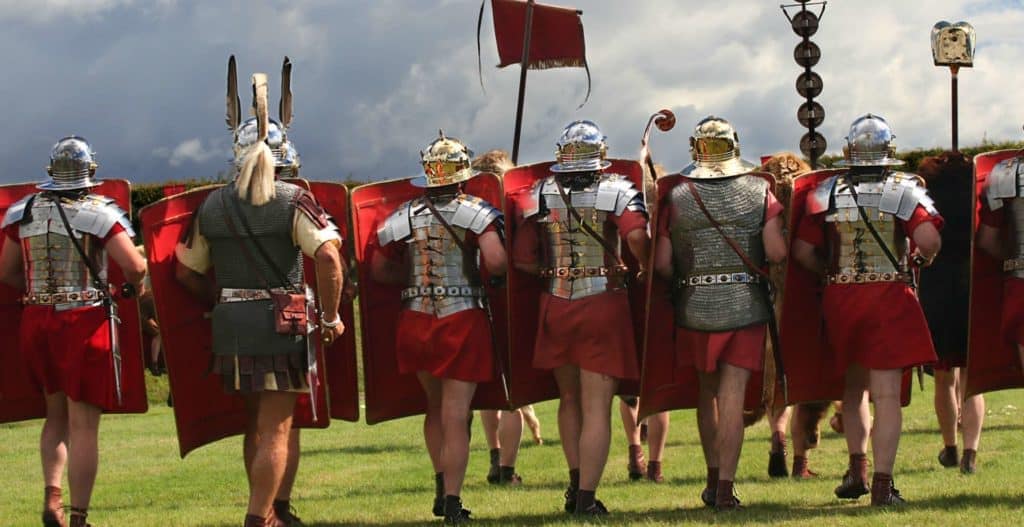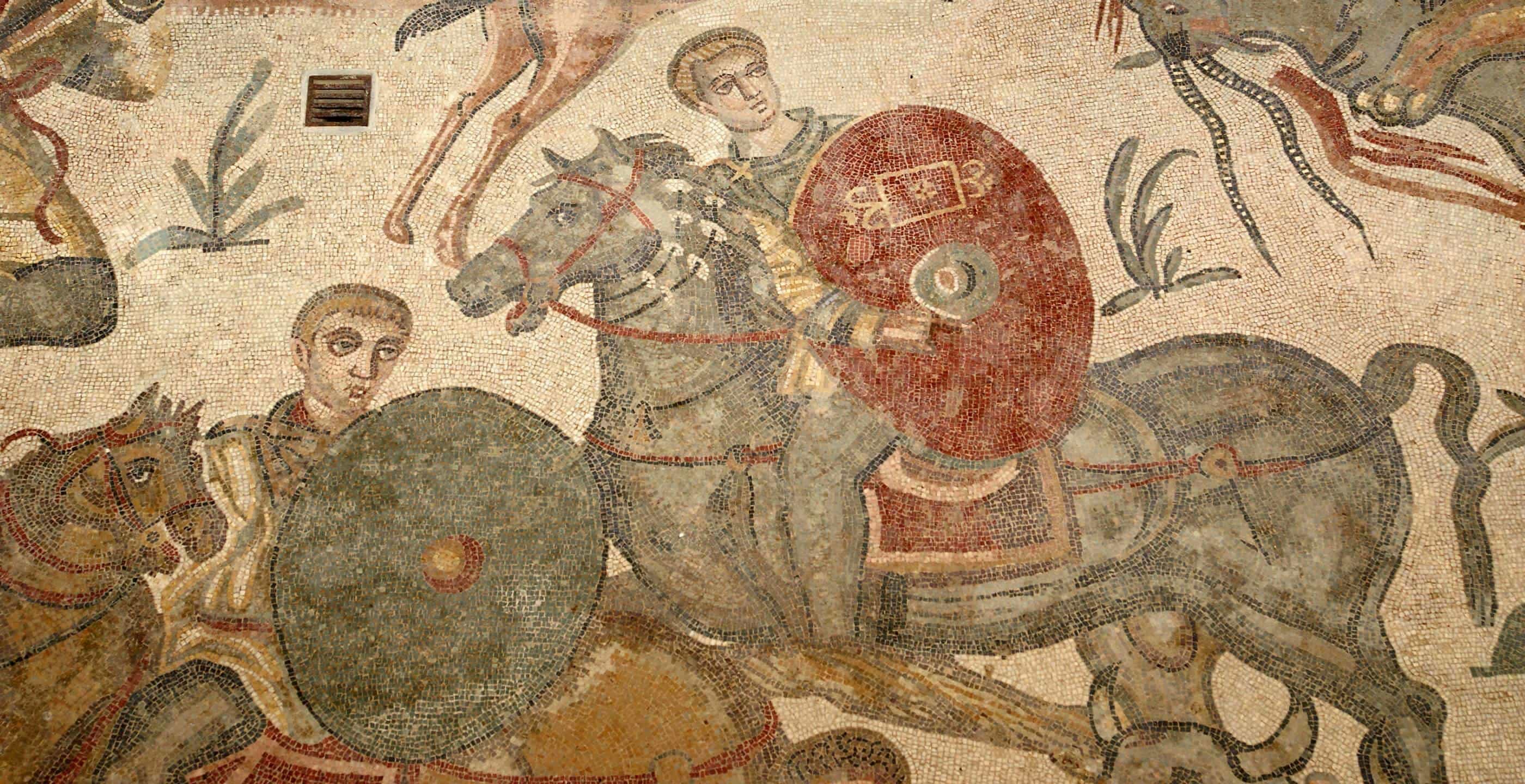


Although the region we now know as Wales didn’t really exist at the time, Romans forces would have reached the borders of current day Wales in AD 48, five years after they had started their occupation of Britain. Wales was then home to at least five native tribes including: the Deceangli in the north east; the Ordovices in the north west; the Demetae in the south west; the Silures in the south east; and the Cornovii in the central borderlands area.
The main resistance to the Roman advance into Wales was organised by Caractacus, also known in Welsh folklore as Caradoc. The son of the king of the Catuvellauni of Essex, he had already acquired a semi-heroic status as the leader of British resistance to the Roman Conquest. Following defeat at a fierce battle between the Romans and the native British, close to the River Medway, Caractacus had been driven from his native lands and fled to Wales along with many of his warriors.
Now leading the Ordovices and Silures tribes, who inhabited a large area of current day Monmouthshire; Caractacus conducted a successful guerrilla war against the Romans. He was finally defeated at the Battle of Caer Caradoc on the Welsh border in AD 50. Caractacus was eventually captured and taken to Rome where he so impressed Claudius that he was pardoned by the Emperor.
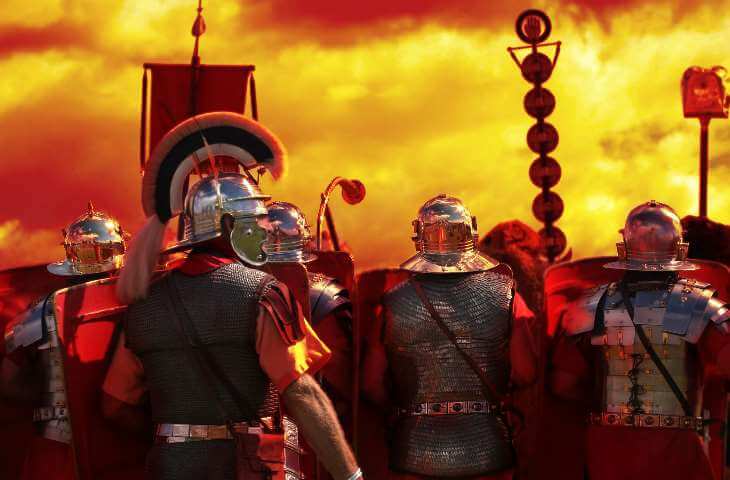
Several years later in AD 61, the Romans attacked the island of Anglesey, stronghold of the Celts and their priests, the Druids, the leaders of British resistance. The Roman historian Tacitus recorded how from across the Menai Strait: “On the coastline, a line of warriors of the opposition was stationed, mainly made up of armed men, amongst them women, with their hair blowing in the wind, while they were carrying torches. Druids were amongst them, shouting terrifying spells, their hands raised towards the heavens, which scared our soldiers so much that their limbs became paralysed. As a result, they remained stationary and were injured. At the end of the battle, the Romans were victorious, and the holy oaks of the druids were destroyed.”
By around AD 90, most of the native Welsh tribes had been defeated and almost all of what would be England and Wales had fallen under Roman rule. There may well have been one exception however, a mosaic map in the Forum in Rome showing the extent of the Roman Empire, does not include the rugged north west tribal lands of the Ordovices.
 The Romans divided their new province Britannia into a civilian lowland area and a highland military zone, with three major fortresses being constructed to protect the border at York, Chester and one beside the River Usk called Isca Silurum. This became the fortress of the Second Augustan Legion and is the most important Roman site in Wales. Isca Silurum is now known as Caerleon-on-Usk and is a suburb of Newport.
Caerleon held a force of approximately 5,600 men and outside its walls was erected a stone amphitheatre to hold gladiatorial combats. Its stone foundations remain today, clearly showing the classic layout of a Roman legionary fort.
There was also several other military stations in this area, Abergavenny, Usk and Monmouth in Monmouthshire, Cardhill, Neath and Loughor in Glamorgan. The chief station of the Romans in Radnorshire was at Castle Collen near Llandridnod Wells.
As Wales formed part of their military zone, the Romans built at least 30 auxiliary forts, joined by straight roads spaced a day’s march from each other. One of the largest was constructed at Y Gaer, two miles upstream from Brecon, and another at Llanio.
The Romans did not penetrate far into West Wales, apart from a road to their forts at Carmarthen and Llandovery.
The Romans mined for gold in Wales. There are still traces of the square-hewn tunnels at the Roman mine at Dolau Cothi near the village of Pumsaint in Carmarthenshire. DolauCothi Gold Mine is now maintained by the National Trust.