

Most visitors to Britain will have heard of the two great Roman legionary fortresses of York Eburacum and Chester Deva but many may be unaware of the third principal Roman military base of Caerleon or Isca. Modern day Caerleon is a small town of some seven thousand people, situated alongside the tidal River Usk, just escaping the urban sprawl of nearby Newport in south east Wales.
 Only since the early 1900’s have the secrets of the Roman fortress of Isca been slowly rescued from oblivion. Prior to this, visitors to the ruins had mistakenly confused the remains of Britain’s biggest Roman Amphitheatre with King Arthur’s Round Table! Visitors to the site to day can appreciate how easily such a mistake could have been made!
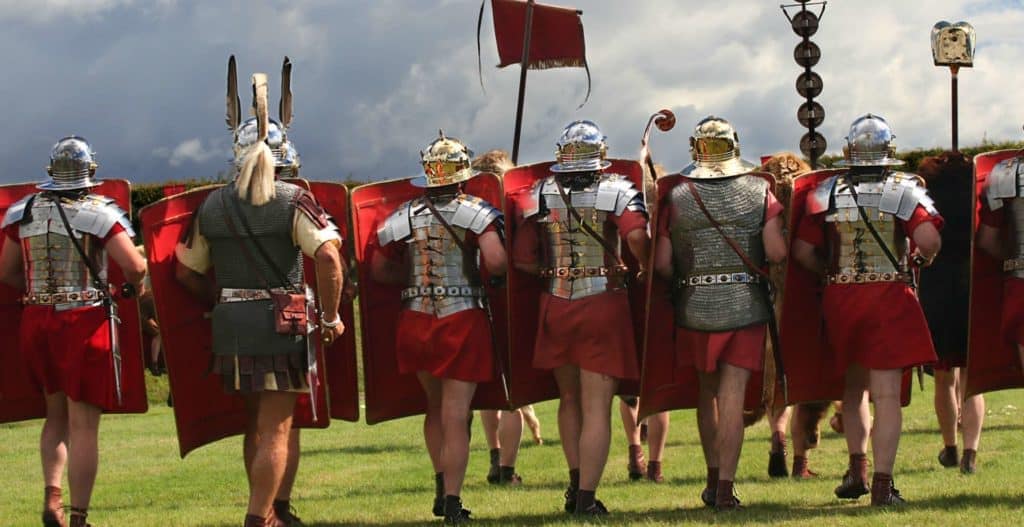
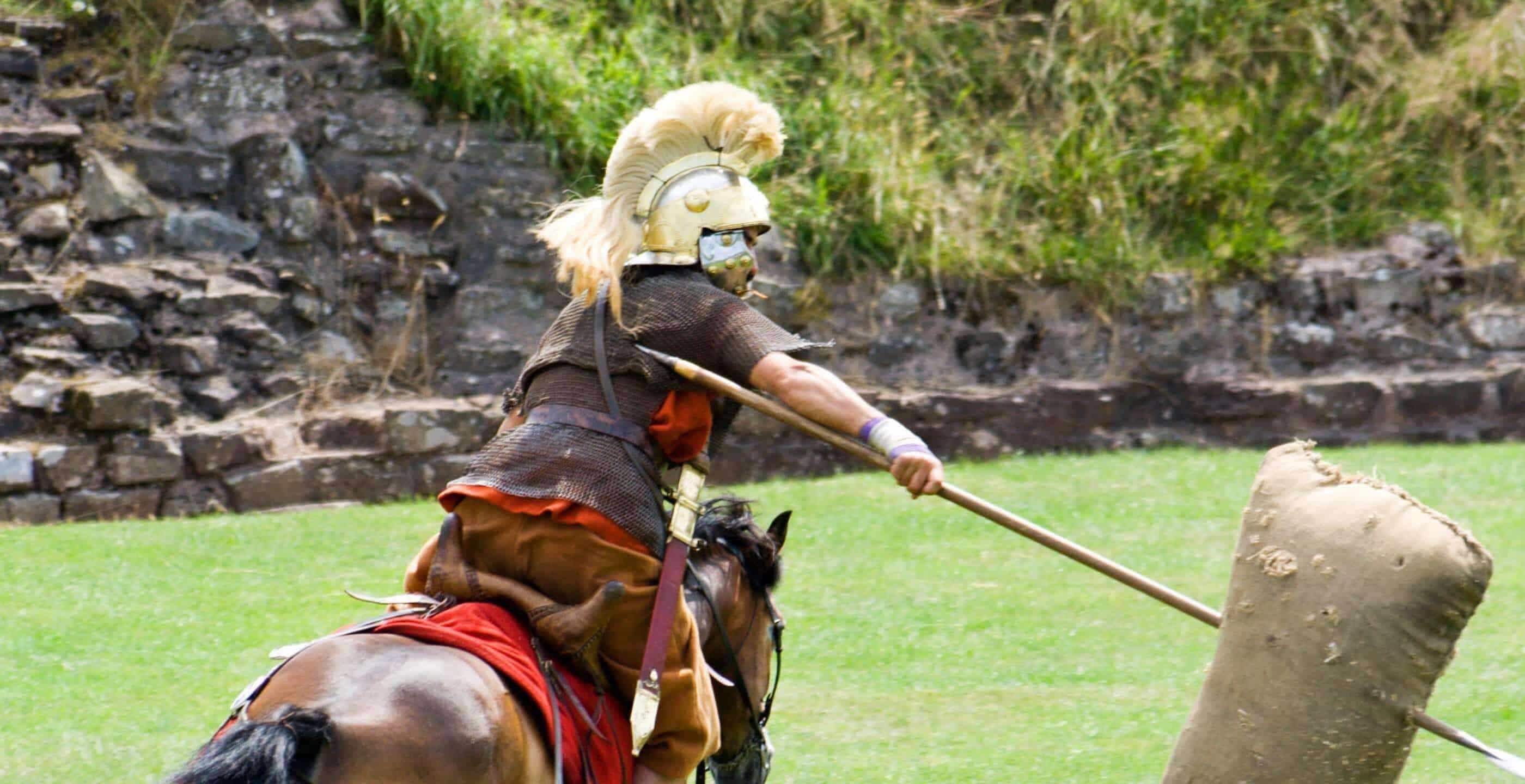
The fortress of Isca was originally home to the 5,500 heavily armed infantry troops that made up the Second Augustan Legion (Legio Secunda Augusta). Isca being one of approximately thirty similar fortresses which secured the very frontiers of the Roman empire, running from the wild mountains of Scotland to the deserts of Arabia. Legio II Augusta was named after its founder emperor Augustus, and was part of the original invasion force that began the conquest of Britain in A.D. 43.
The building of the fortress did not start until around A.D. 75. Its location had been selected by the then governor of Britain, Sextus Julius Frontinus, who had been given the task of settling the remaining unconquered areas of Britain. The site chosen, being inside enemy (Silurian) territory, but close enough to mouth of the River Usk to be reached by sea-going ships should urgent reinforcements or other supplies be required.
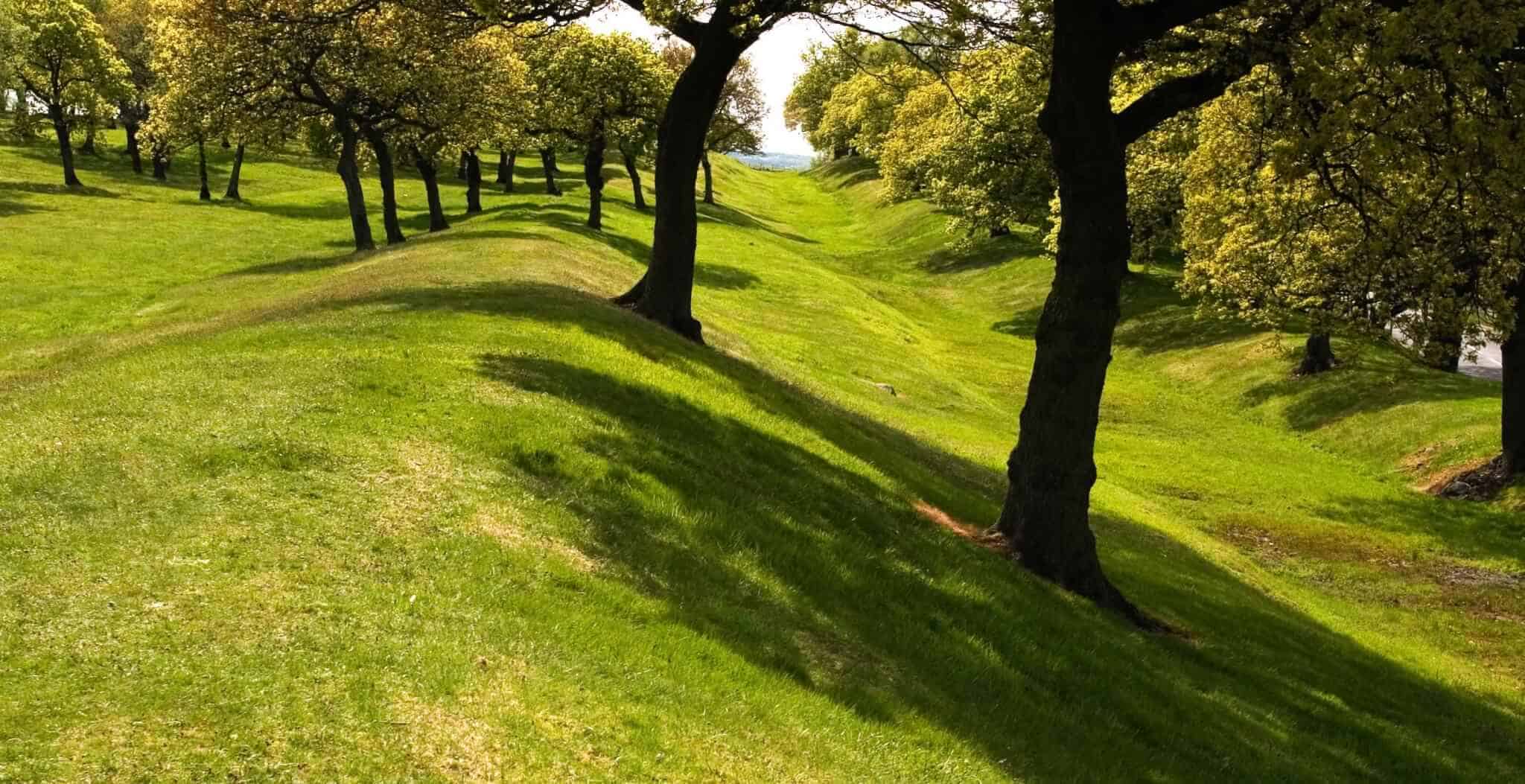
The original defences of Isca were of turf, clay and timber, these being replaced sometime around A.D. 100 by stone walls and towers. Inside the defences, the buildings were laid out in the standard pattern for legionary fortresses of that time. This pattern included ranges of long narrow barrack-blocks to house the common soldiers and a separate area for the officers’ quarters. Totally self-contained the layout also included baths and a hospital as well as workshops for the legionary craftsman – including blacksmiths, carpenters, shoemakers, etc. The Amphitheatre stands today, as it did then, just outside the fortress walls. Designed to seat 5,000 spectators and to treat them to the premier attraction of the day – Gladiators!
Isca remained the headquarters of Legio II Augusta for more than 200 years. It is unlikely however that during all of this time it would have remained at full garrison strength. Detachments would have undoubtedly been drafted off all over the empire perhaps to conquer some poor unsuspecting tribe, or to help with the building and manning of Hadrian’s Wall, or even some further flung outpost such as the Antonine Wall.
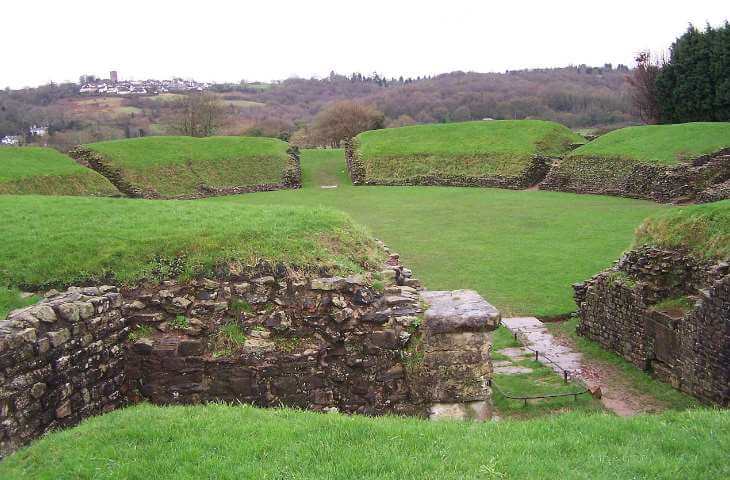
The political turmoil, murders and revolt that were part and parcel of late third-century Rome would finally see an end to the history of Isca, somewhere around A.D. 287 -296, and so the history of Caerleon would begin. Today the Roman remains at Caerleon lie within a few minutes’ walk of each other. The road systems of this pleasant little town still follow the lines of the original Roman plan with Broadway (via principalis) linking the modern Legionary museum with the impressive remains of the amphitheatre, barracks and fortress walls. High Street is on the line of the via praetoria, which led to the crossing at the River Usk. Walk along the Roman via principalis and discover the remains of turrets, cookhouses, ovens as well as the little boy’s room. Follow the course of the Roman defences to the south where the wall stands almost to its original 3.5m height. Behind every corner some more remains to be discovered. Perhaps the not-to-be-forgotten fortress of Isca!