

Despite their defeat in 1314 by King Robert the Bruce at the Battle of Bannockburn, English forces returned to Scotland in 1338 intent on conquering those pesky Scots. On 13 January they arrived outside the mighty gates of Dunbar Castle near the fallen town of Berwick.
This should have been a reasonably easy castle for them to take as its lord, Patrick Dunbar, Earl of Dunbar and March, was away with the Scottish army fighting an English army in the north.
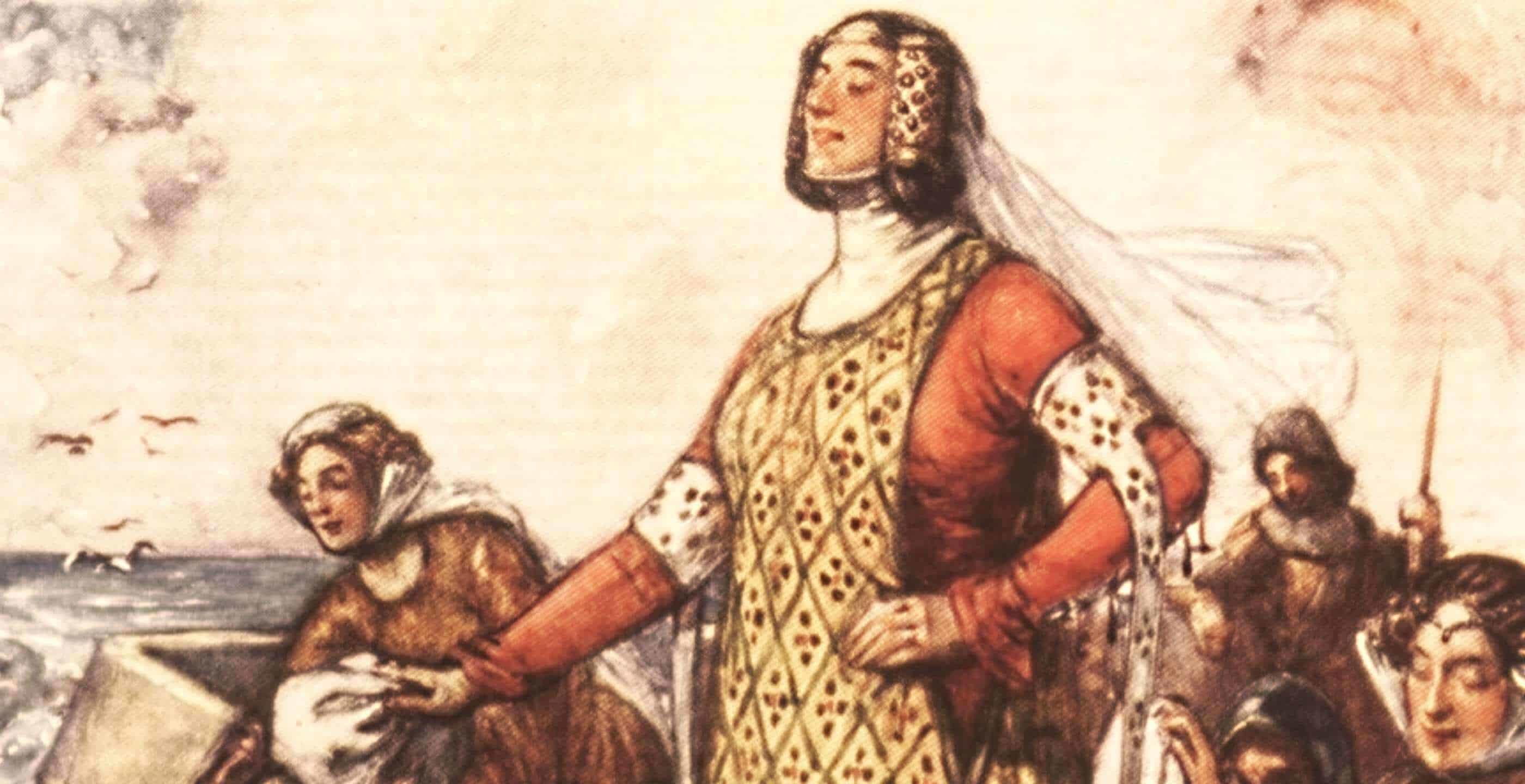
The castle was under the command of Dunbar’s wife Lady Agnes Randolph, Countess of Moray, nicknamed Black Agnes for her dark hair and complexion. With only a handful of men left behind by her husband Agnes had pledged herself to defend the castle. In response to a request to surrender she replied:
‘Of Scotland’s King I haud my house,
He pays me meat and fee,
And I will keep my gude auld house,
While my house will keep me.’
The Earl of Salisbury, the English commander, opened the siege by hurling huge rocks at the walls of the castle using great catapults. Between these attacks, and in clear view of the English, Agnes sent her maids dressed in their Sunday finest onto the ramparts to dust and clean the marks of the shot from the walls with their dainty white handkerchiefs.
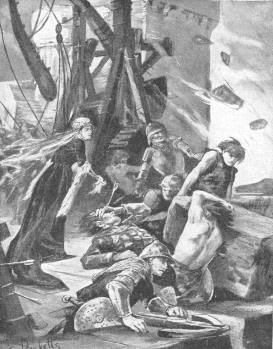
Salisbury was forced to roll out his secret weapon. It was a huge battering ram or ‘sow’, with a wooden roof to protect the men underneath. Agnes was ready for this and signalled for large boulders to be dropped from the ramparts. They crashed through the roof splintering it into pieces sending the surviving Englishmen fleeing in every direction.
Winter passed into spring and the siege continued. With the last of the castle’s winter supplies nearly exhausted Salisbury finally sensed an end and possible victory. Help for the defenders finally came from the sea when Sir Alexander Ramsay of Dalhousie arrived with men and supplies in two boats and entered the castle via a half-submerged concealed doorway.
It is said that the following morning Agnes sent a freshly baked loaf and some fine wine to the English commander and had the ‘gift’s arrival proclaimed loudly’.
In desperation Salisbury sent for Agnes’ brother the Earl of Moray. Moray had previously been captured and was a prisoner of the English. He was brought to within sight of the castle and forced by Salisbury to call to Agnes to surrender the castle or he would be killed.
Agnes simply pointed out that should her brother be killed, who had no children, then she would inherit the title and become the next Earl of Moray. Salisbury quickly recognised the flaw in his argument and let the Earl live.
Finally, on 10 June 1338, after five months of trying, Salisbury realised that he would never get the better of Agnes. As the mighty conquerors marched away the men made up a song:
‘She makes a stir in tower and trench,
That brawling, boisterous, Scottish wench;
Came I early, came I late.
I found Agnes at the gate.’
Sir Walter Scott said, ‘From the record of Scottish heroes, none can presume to erase her.’