

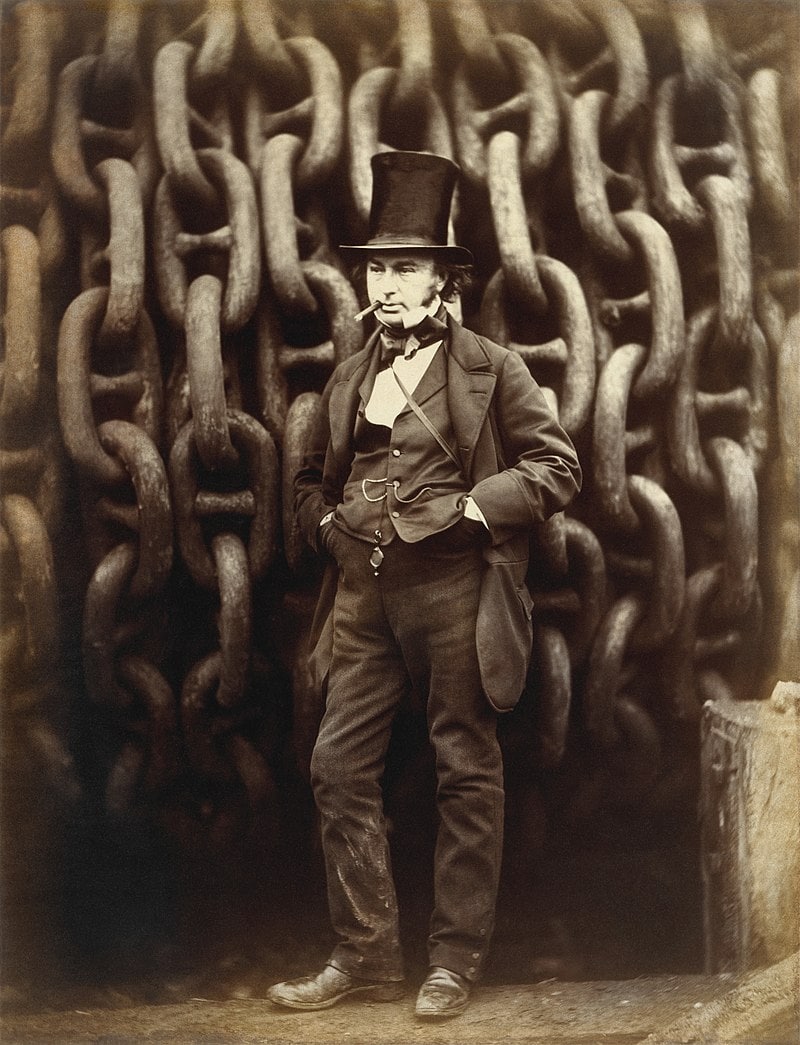
A recent popular poll placed Isambard Kingdom Brunel as the second Greatest Briton of all time, second after Sir Winston Churchill. He was without doubt Britain’s greatest engineer, and of all the legacies he left to the world, one of his greatest was the SS Great Britain.
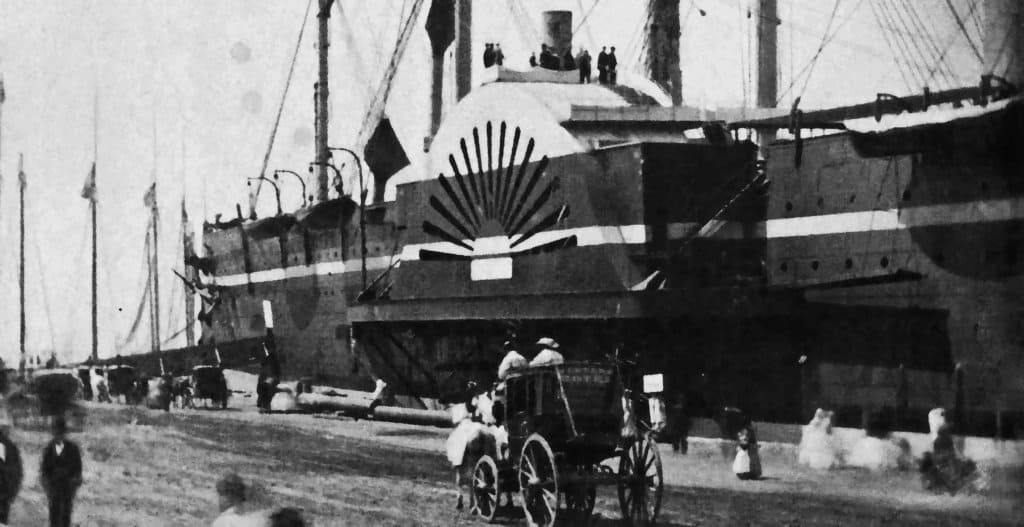
The wrought iron steamship was built in 1843 in Bristol, under the supervision of Brunel for the Great Western Steamship Company. The Great Britain set the design standards for today’s modern shipping and eminently demonstrated the industry and inventiveness of the Victorian era. Almost single-handedly Brunel shaped the future of mass passenger travel and international communications.
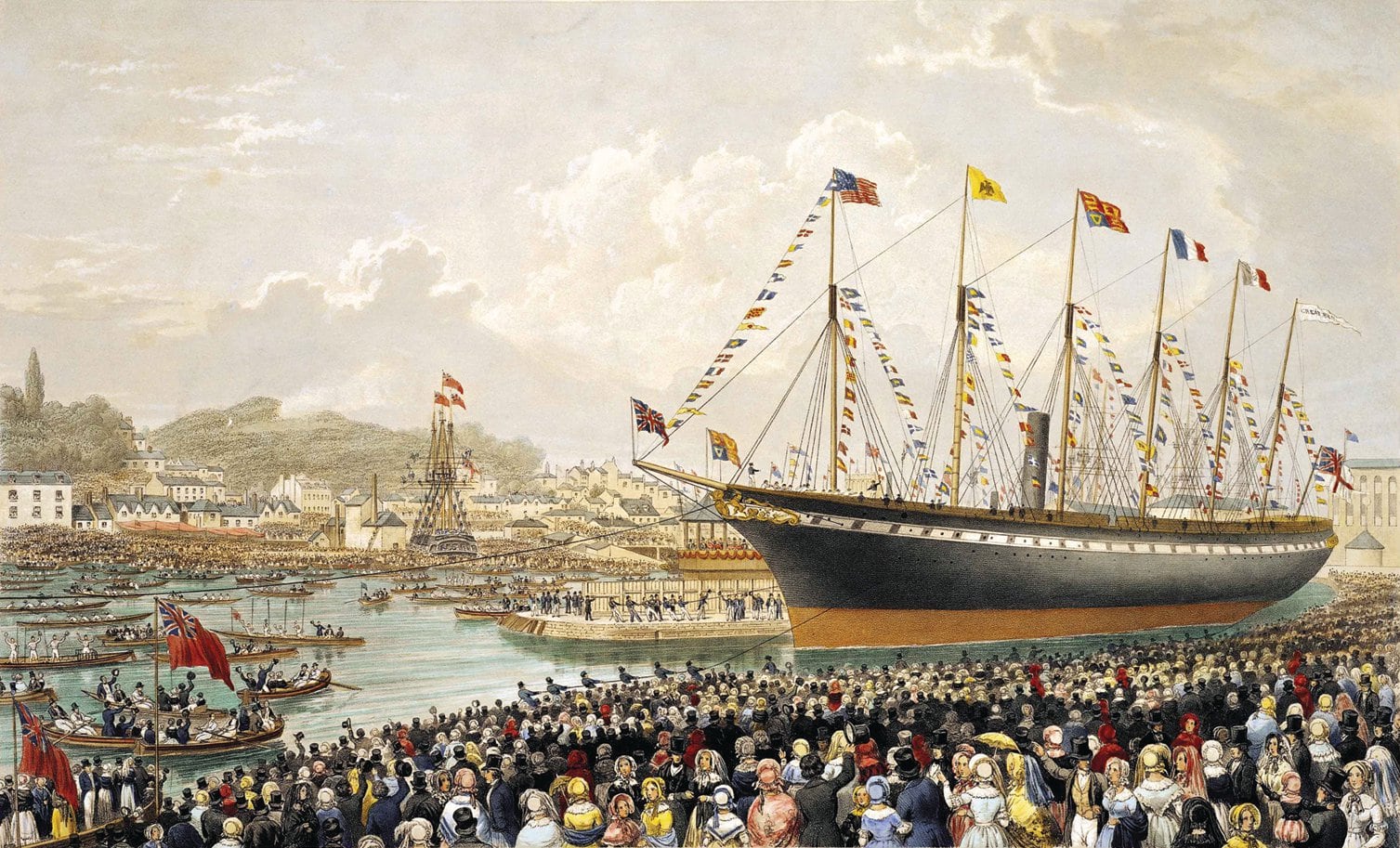
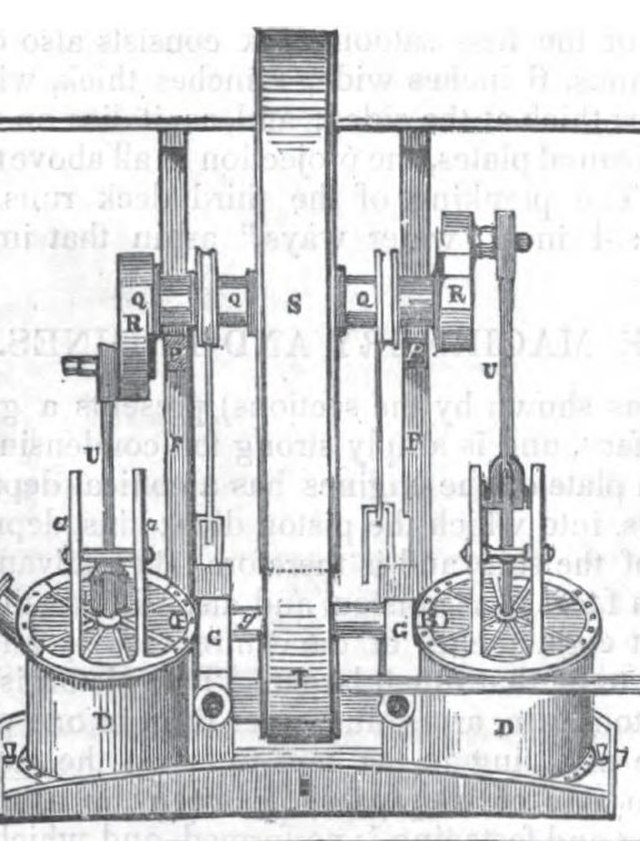
Originally conceived as a paddle steamer, her design was quickly altered to take advantage of the new technology of screw propulsion, and her engines were converted to power a massive sixteen foot iron propeller. When launched in 1843 she was by far the largest ship in the world, at almost 100 metres she was over 30 metres longer than her nearest rival, and was the first screw propelled, ocean-going, wrought iron ship. Weighing in at a massive 1930 tons, she was designed initially for the Trans-Atlantic luxury passenger trade, and could carry 252 first and second class passengers and crew of 130.
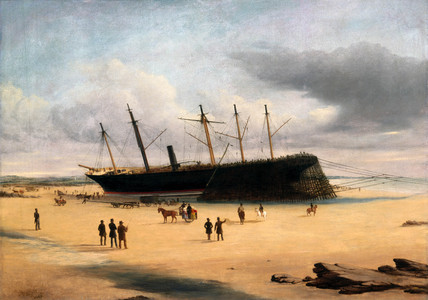
Whilst her first few voyages demonstrated her technological ability, they were not a great financial success, attracting far fewer passengers than anticipated. Her career in this trade was thus short lived, and after she ran aground on the sands of Dundrum Bay in Northern Ireland in 1846, her engines were so badly damaged that she was sold on.
Under Gibbs Bright and Co, the ship prospered. The new owners took advantage of the increase in emigration caused by the Australian gold rush, and re-built the ship as an emigrant carrier, taking people to Australia. With a new upper deck added and a new engine fitted, she could now transport 750 passengers in three classes.
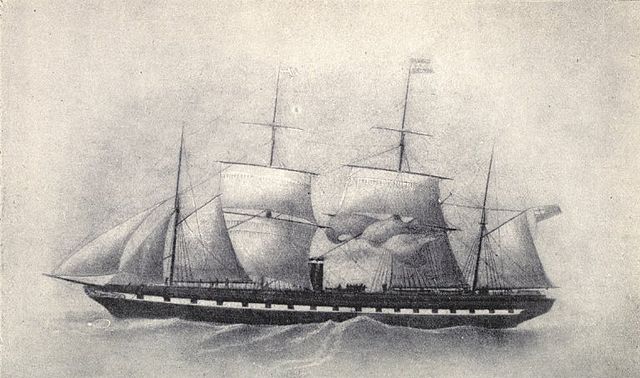
Over the next 24 years and 32 voyages she carried over 16,000 emigrants to Australia, and was known in her time as one of the fastest, most elegant and luxurious emigrant clipper ships – the ‘Greyhound of the Seas’.
The average time she took on the return journey to Australia was 120 days – very competitive for the mid-19th century. Passage on the ss Great Britain could virtually guarantee that a passenger would arrive on time, well ahead of any sail powered rivals.
As meat went off easily on these long voyages, large numbers of live animals were carried for food, giving the ship the appearance of Noah’s Ark rather than an emigrant ship. On one voyage in 1859, the ship carried 133 live sheep, 38 pigs, 2 bullocks, 1 cow, 420 fowl, 300 ducks, 400 geese and 30 turkeys. Passenger diaries record the ship as smelling and sounding like a barnyard!
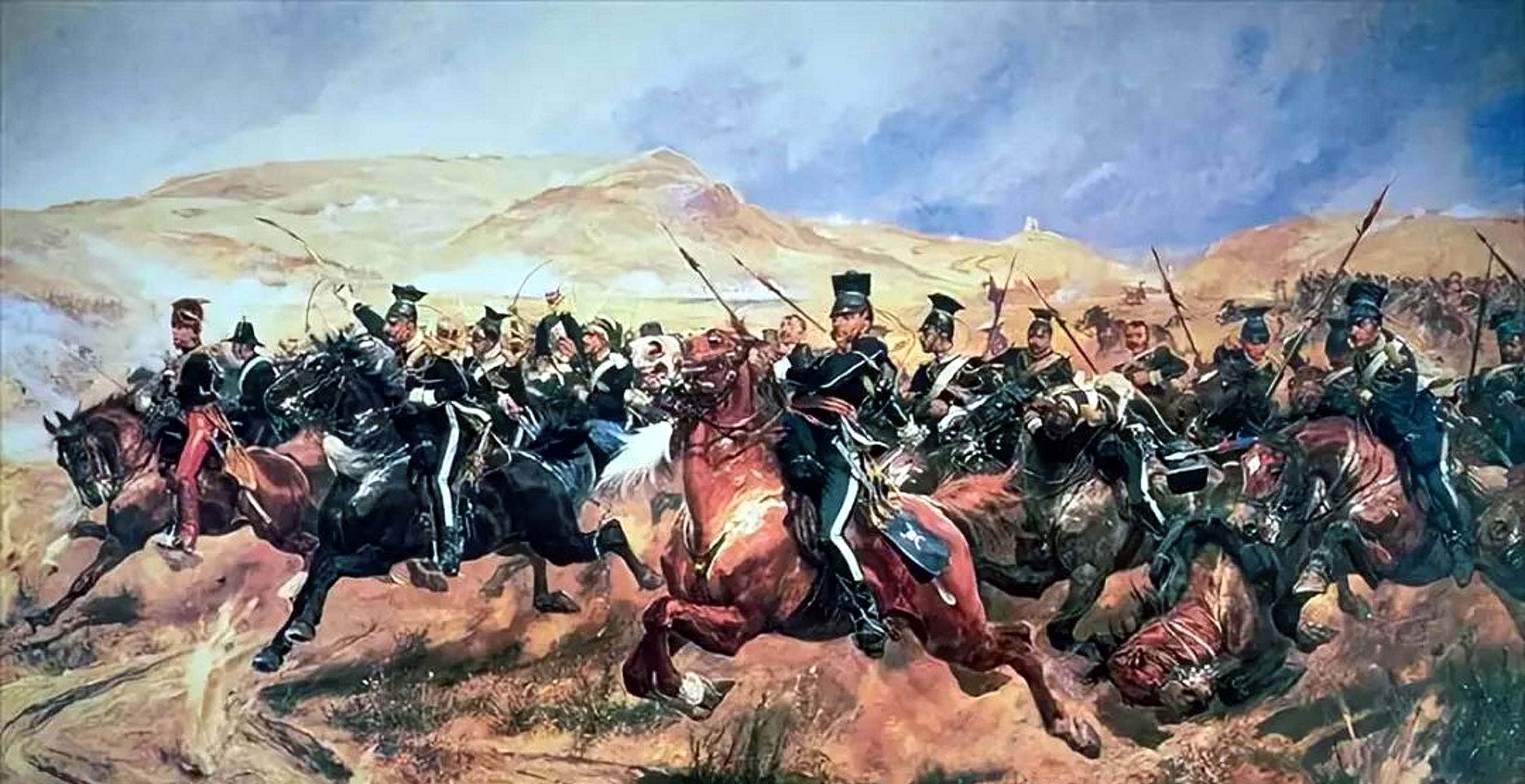
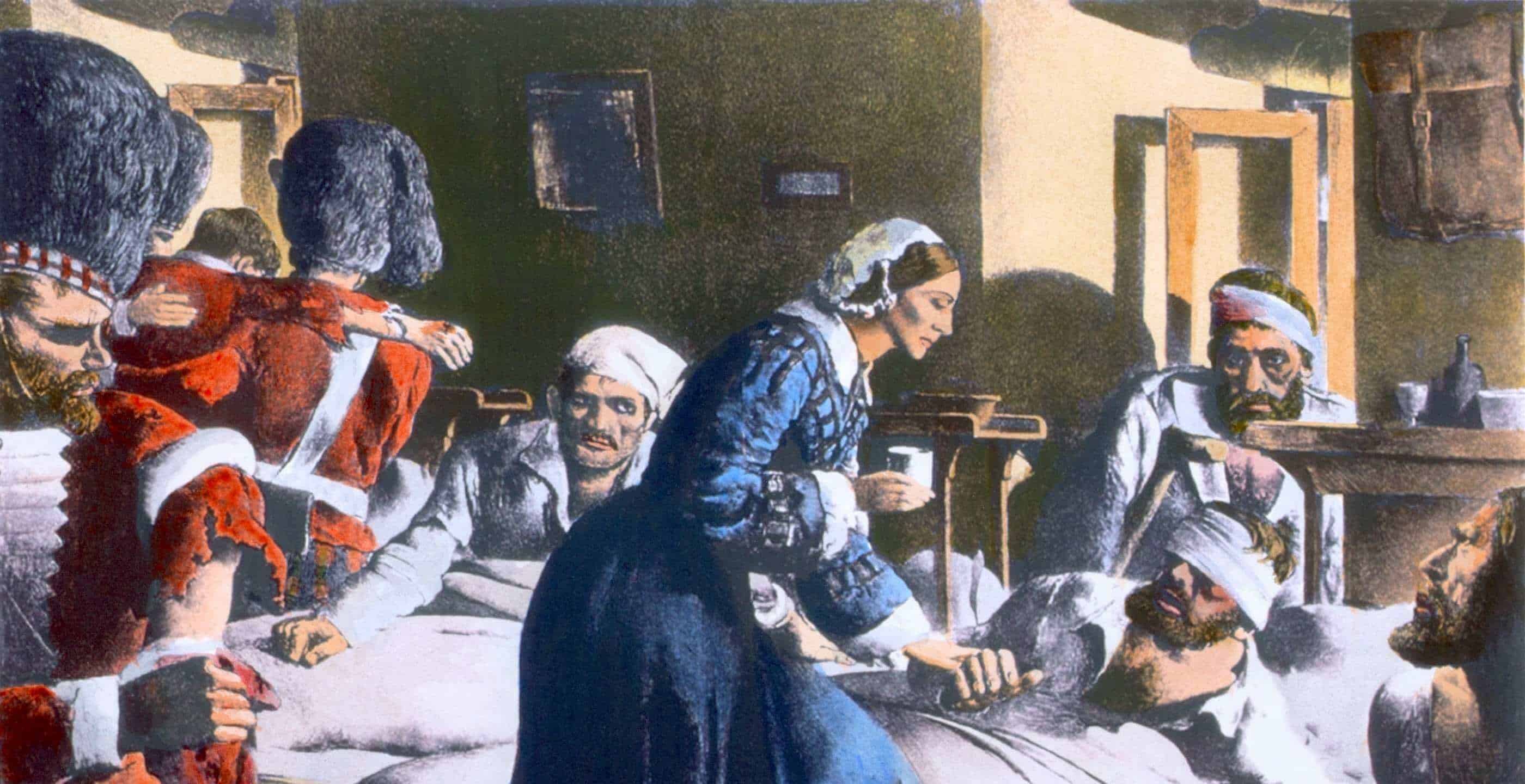
Between 1854 and 1855 she was chartered by the Government to carry troops to and from the Crimean War, and over the course of the conflict transported over 44,000 troops.
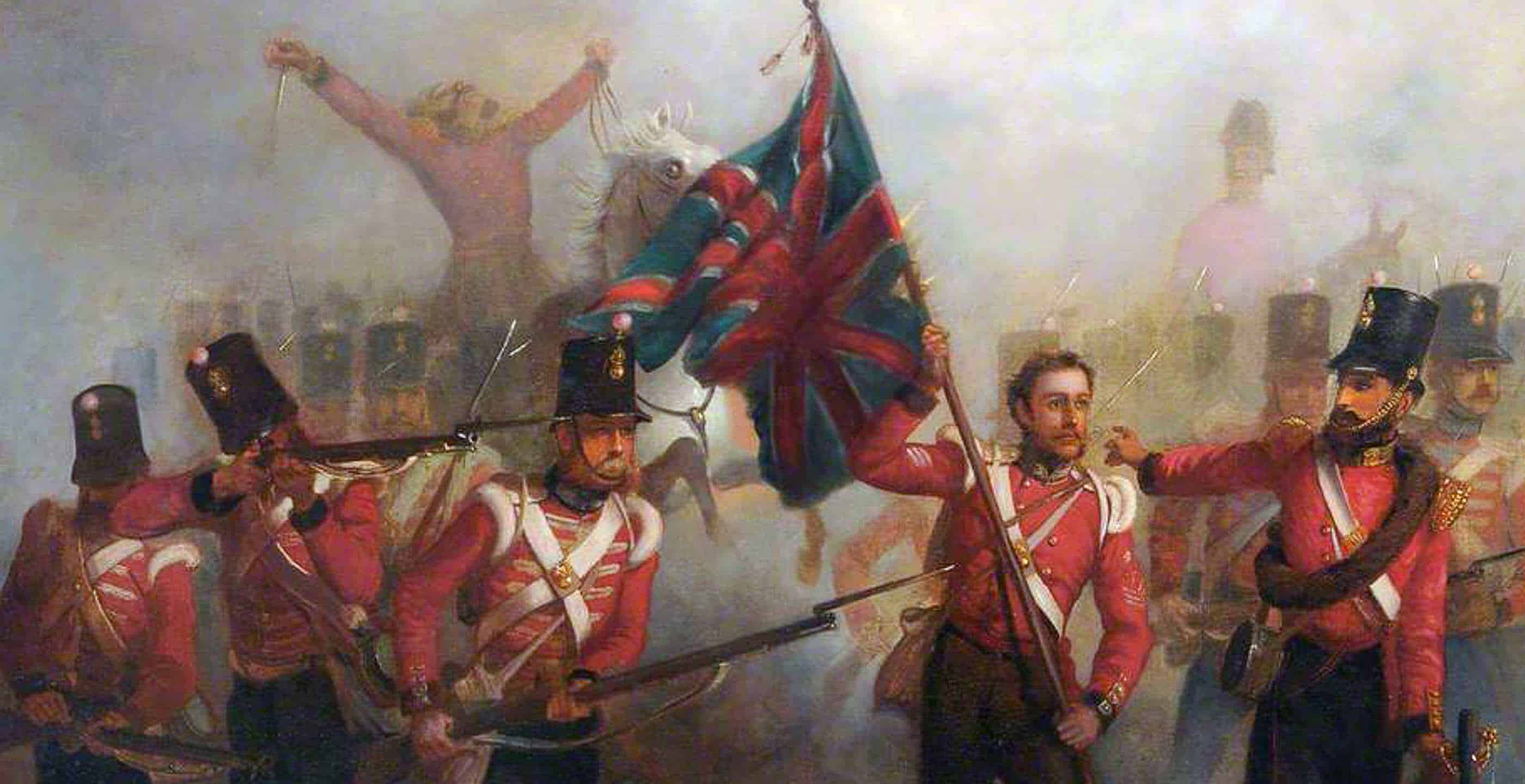
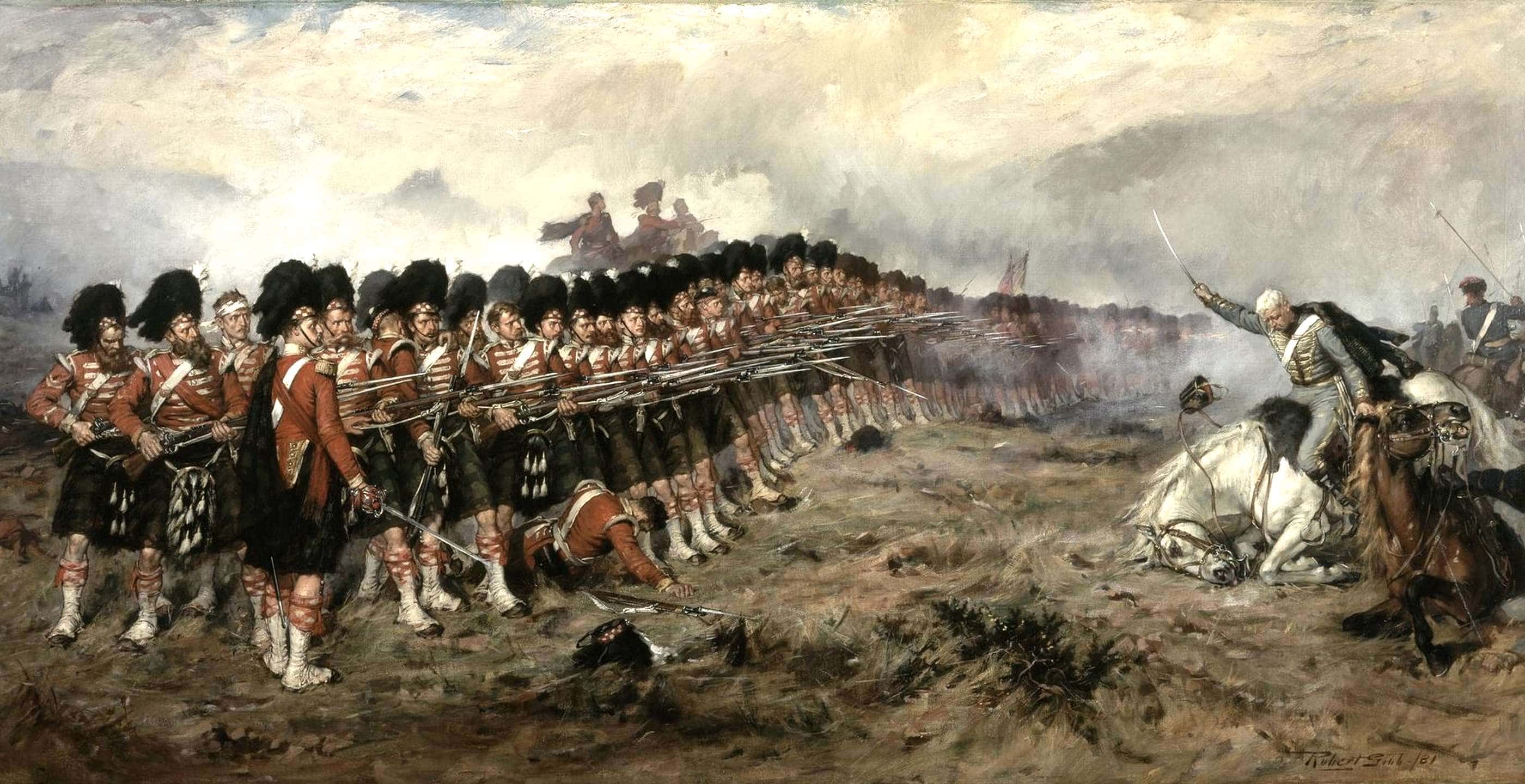
Following the war she was rebuilt yet again before being chartered by the Government for further troop transportation duties, carrying the 17th Lancers and 8th Hussars to the Indian Mutiny.
In 1861, for a marginally less serious conflict, the Great Britain also carried the first ever English cricket side to tour Australia. The tour was immensely successful with a 15,000 crowd attending the opening match at Melbourne. The tourists played 12 games in all, winning 6, drawing 4 and losing 2.
And bad news could often follow glad news, such as when the onboard newspaper the ‘Great Britain Times’ reported death of the pet koala bear belonging to the ship’s carpenter. Apparently the marsupial died of ‘pulmonary consumption’ on 25 October 1865, much to the sadness of crew and passengers.
One of the ship’s more eccentric captains, Captain Gray, climbed each mast at least once a week and interrupted one voyage to Australia to claim the uninhabited island of St. Martin for the Empire. He held a banquet that evening to celebrate.
By the late 1870’s the Great Britain was showing her age, her engines were removed, and she was converted into a fast three-masted sailing ship. In this unrecognisable guise, the once proud ship transported Welsh coal to San Francisco. On her third trip, however, she ran into trouble around Cape Horn, and was forced to run for shelter in Port Stanley in the Falkland Islands. Damaged as a result of this, she was sold as a coal and wool storage hulk in Port Stanley.
In all the Great Britain had 25 accidents entered in her logs – ranging from collisions with other vessels, running aground, lost spars and mast damage, to losing that eccentric Captain Gray in mysterious circumstances.
She remained in Port Stanley through the First World War, with coal from her hold helping to replenish the battle cruisers Inflexible and Invincible before the decisive battle of the Falkland Islands on 7 December 1914, in which the armoured cruisers Gneisenau and Scharnhorst and light cruisers Nurnberg and Leipzig were sunk.
By 1937 the Great Britain’s hull was no longer watertight, and after being towed a short distance from Port Stanley, she was beached and abandoned to the elements.
Attempts to rescue her in the late 1930’s and 1960’s failed, but finally in 1970 an epic salvage effort refloated the ship, and she was towed back home across the Atlantic to Bristol.
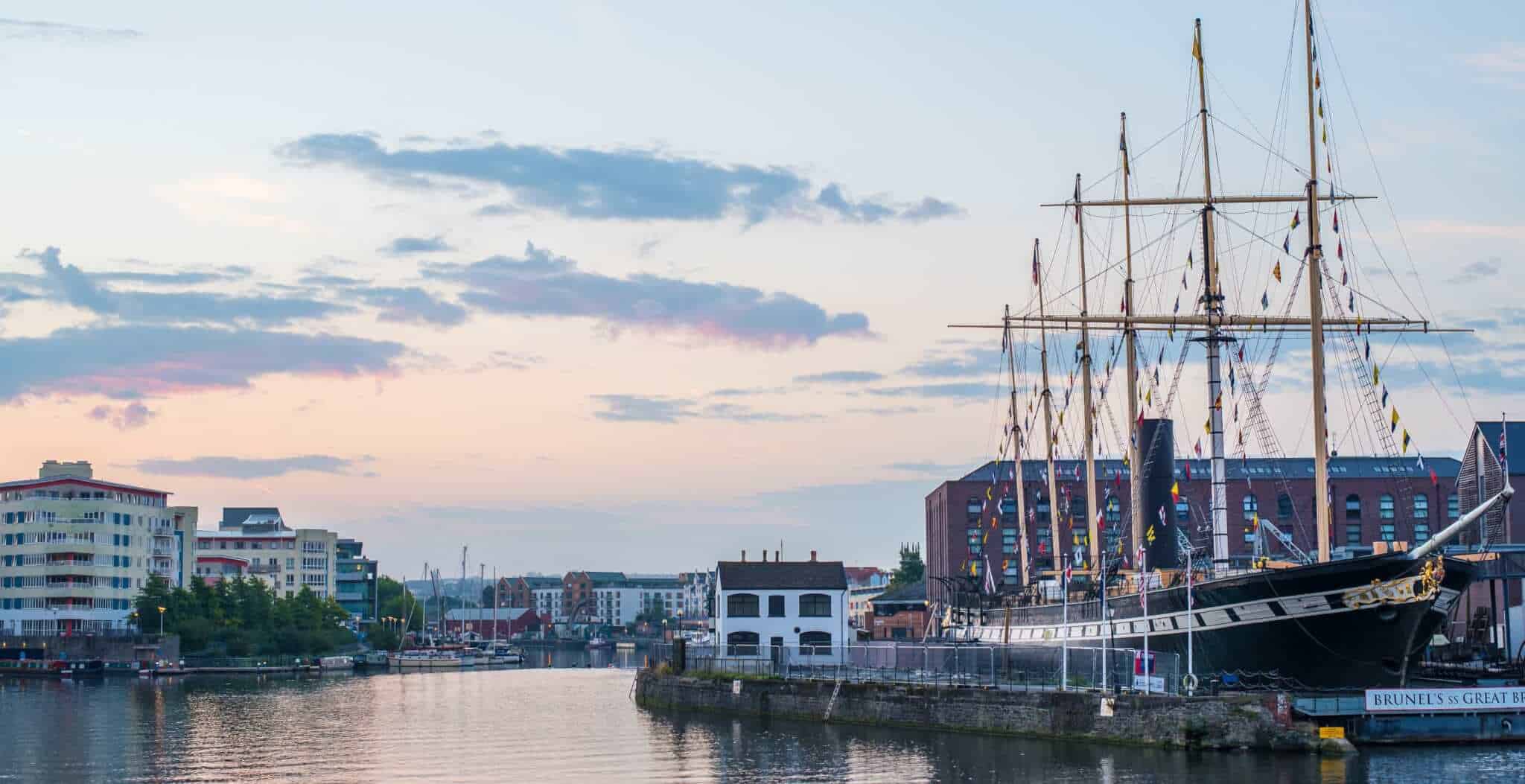
Despite spending nearly 100 years suffering in the harsh South Atlantic weather, the Great Britain was able to float up the River Avon herself! After covering over a million miles, Brunel’s 155 year old iron hull had stood the test of time superbly.
Following yet another refit, this time costing in the region of £11.3 million, Brunel’s ss Great Britain was re-launched as one of the world’s most important maritime museums in 2005. For further details visit www.ssgreatbritain.org.