

Poison seemed to be the first choice for many murderers in the Victorian era – mainly by women.
One of the most celebrated cases was that of Adelaide Bartlett.
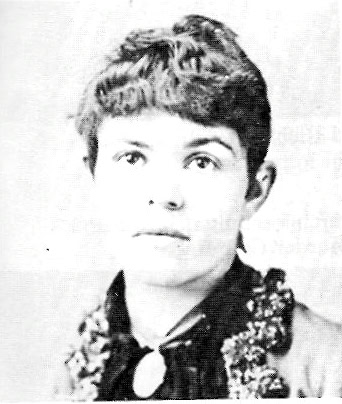
Adelaide Bartlett’s husband Edwin was one who succumbed to poison. In his case, chloroform. Adelaide’s trial has gone down in history as one of the most baffling. Although poor Edwin’s post-mortem revealed a large amount of liquid chloroform in his stomach, there was no trace in the mouth or throat.
The central part of Adelaide’s defence at her trial was the mystery of how the chloroform got into the stomach, as it is almost impossible to swallow as the unpleasant taste causes vomiting and if it had been poured down his throat while unconscious, some would have gone into the lungs and there was none found.
Adelaide was acquitted at the trial, and afterwards Sir James Paget of St. Bartholomew’s Hospital remarked, “Now that it is all over, she should tell us, in the interest of science, how she did it”.
Arsenic was easily obtained in Victorian times in the form of fly-papers. These could be soaked and the arsenic obtained. Ladies of fashion used arsenic for cosmetic purposes as well as killing husbands!
Madeline Smith, a beautiful 21 year old girl, lived in Glasgow in 1897. She had been having a torrid affair with a clerk called Emile L’Angelier, and she had written him some very passionate letters during the course of the affair. Madeline’s father pressured Madeline to become engaged to a friend of his, and she therefore tried to get the letters back from L’Angelier. He refused to give them to her and threatened to show them to her fiance. She then decided to poison him with arsenic in a cup of cocoa! He drank it and died. At her trial Madeline made a very good impression on all present, and the final verdict was Not Proven, a verdict only possible in Scotland.
Florence Maybrick also decided arsenic would be just the thing for her husband.
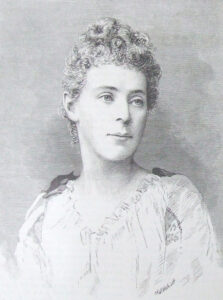
In 1889 after a short illness, James Maybrick died. The Maybrick family were suspicious, and after locking Florence in her room, they searched the house. They found a packet labelled ‘Arsenic. Poison for rats’. The autopsy on Maybrick revealed traces of arsenic in his stomach and Florence was accused of his murder. She was sentenced to death, commuted to life imprisonment. She served 15 years and was released in 1904.
Mary Ann Cotton can be called Britain’s Mass Murderess. She poisoned four husbands and twice as many children, with arsenic.
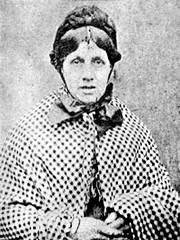
She was 20 when she married William Mowbray, a miner, and they had four children. William went to sea as a stoker and died suddenly while at home, as did the four children.
Mary, now a grieving widow, got a job as a nurse in Sunderland Infirmary where she met George Wood. He married her but did not live long. Mary collected the insurance money and met James Robinson, a man with four children. They were married in 1867 and all of his four children died, as well as the new baby that Mary had. Once more Mary collected the insurance and married Frank Cotton. He had two children by his first wife and a new baby by Mary. Frederick died suddenly as did all his children. Mary now had a new lover, a man called Natrass, but he died too of Gastric Fever, according to Mary.
The local doctor, Dr. Kilburn, became suspicious and in 1873 Mary was brought to Durham Assizes. She was found guilty and hanged at Durham Jail.
Christiana Edmunds was an ill-tempered, waspish spinster who fell madly in love with her doctor. She was convinced that Doctor Beard was in love with her and began to send him emotional, passionate letters. Doctor Beard was embarrassed but powerless. In 1871 Christiana decided that Mrs. Beard would have to go, and sent her a box of chocolates. They were full of strychnine. Christiana was eventually caught after the small boy she had deputed to buy the chocolates from the shop identified her. She pleaded insanity at her trial but was sentenced to death. This was later commuted to detention in Broadmoor for life.
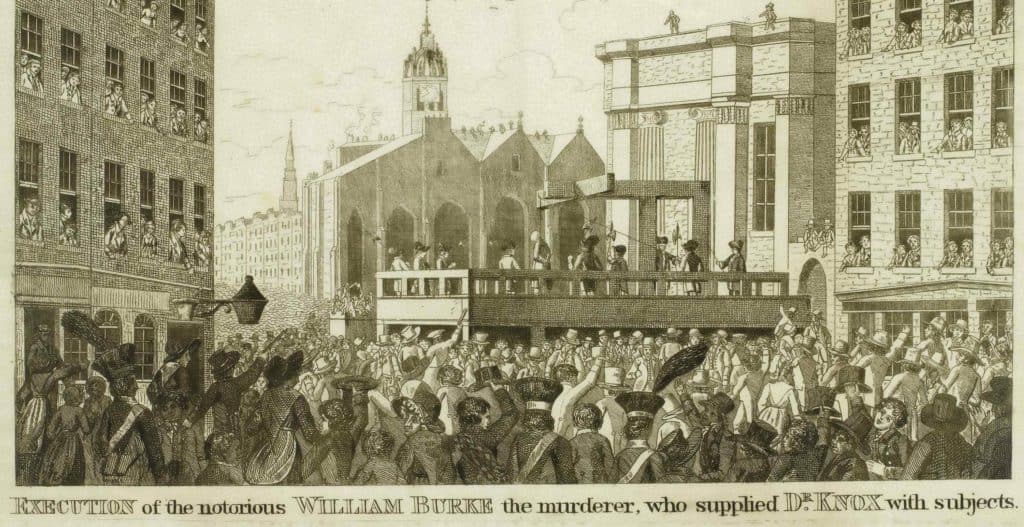
Dr. Pritchard in 1864 purchased some antimony as his wife was standing in his way – he wanted to marry one of his servant-girls. He had a problem as this servant was pregnant. His wife suddenly became very ill and his mother-in-law came to look after her. Quite suddenly his mother-in-law died in his house, and her daughter, his wife, a few weeks later. They were both found to have been poisoned with antimony. Pritchard was hanged in 1865, the last man to be executed in public in Scotland. A crowd of 100,000 watched the execution.