
Henry VIII is best known for his six wives. Most British school children learn the following rhyme to help them remember the fate of each wife: “Divorced, Beheaded, Died: Divorced, Beheaded, Survived”.
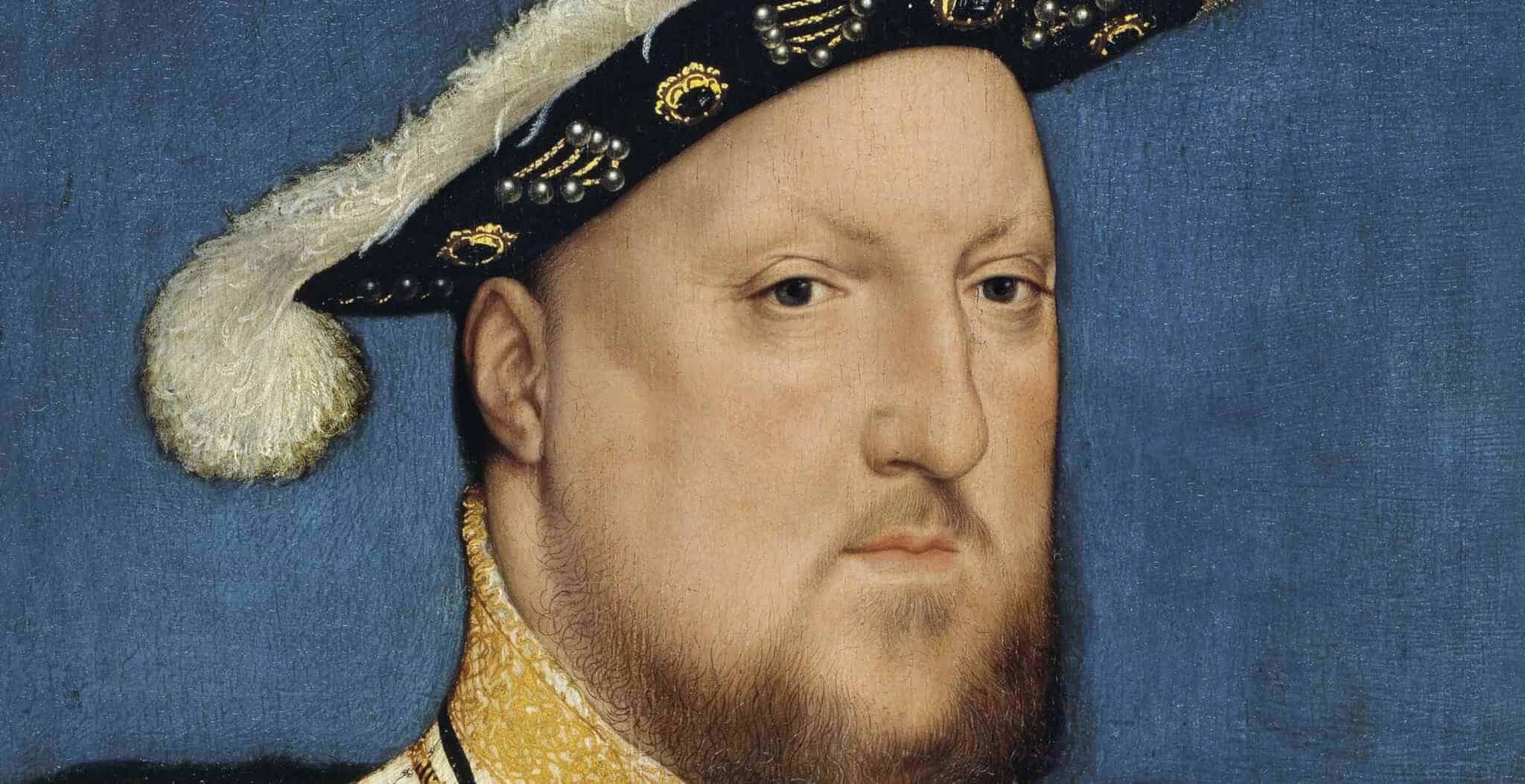
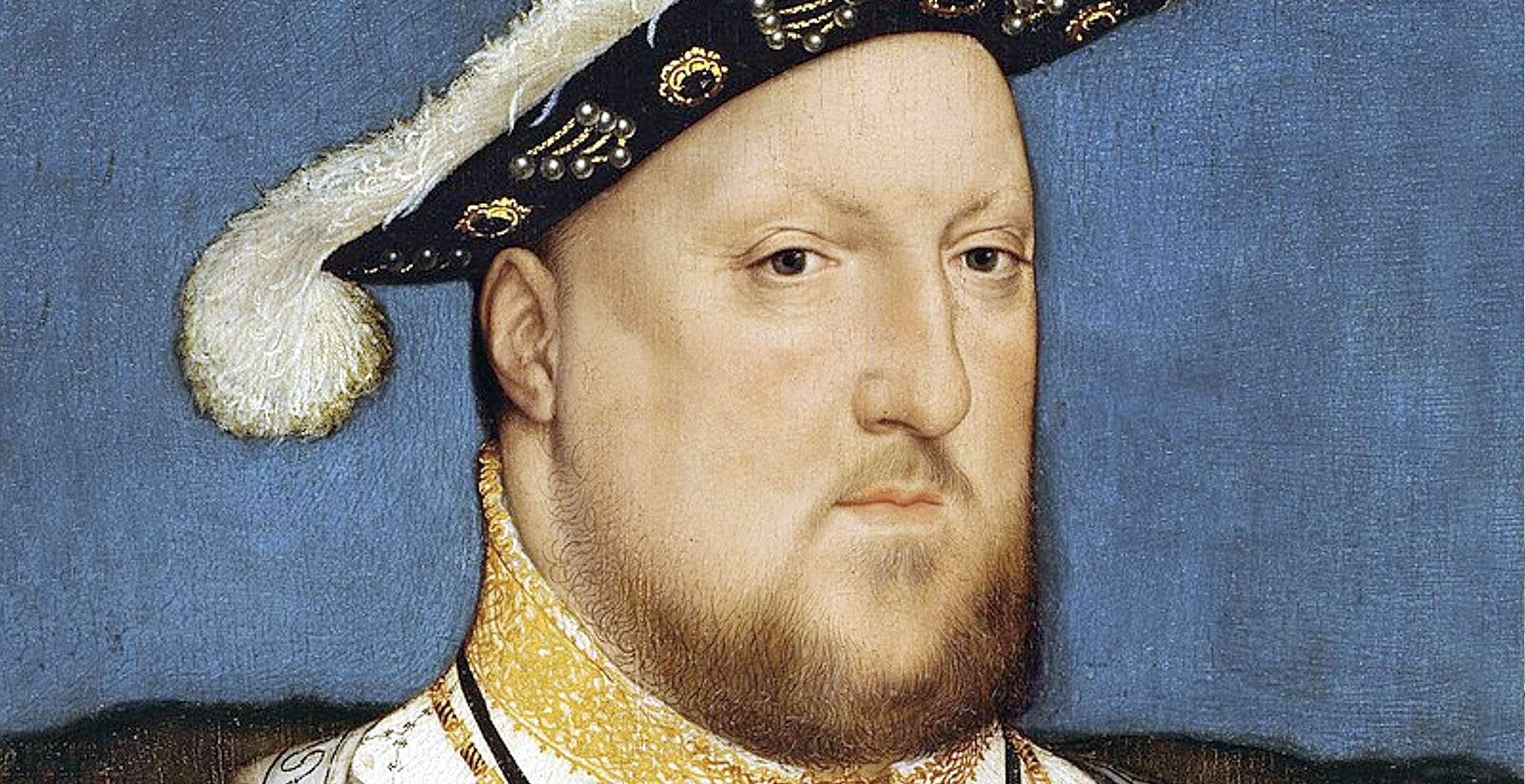
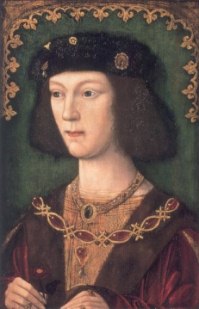
Everyone recognises his portrait: a fat, larger-than-life individual, wearing clothes set with jewels and sporting a neat red beard. This is Henry in later life: in his youth he was handsome and athletic, the most eligible prince in Europe.
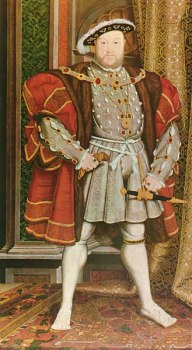 Henry was also a complex man: intelligent, boisterous, flamboyant, extravagant. Athletic, musical, a poet. Ruthless, arrogant, passionate.
Henry’s driving desire for a male heir was to lead him to divorce two wives and have two wives beheaded: it led to religious revolution and the creation of the Church of England, the Dissolution of the Monasteries and the Reformation. The decisions that Henry made during his reign were to shape modern Britain.
The second son of Henry VII, Henry was only 17 years of age when he became king in 1509. He was 6 feet 2 inches tall, with a pale skin and auburn hair. He was athletic, a man of action and enjoyed all kinds of sport: hunting, jousting, real tennis, riding. He was also a musician; he played the flute, the lute and the organ. He wrote poetry. An avid reader, he owned a library of almost a thousand books. He wrote a treatise against the Protestant Martin Luther and was rewarded by Pope Leo X who gave him the title, “Defender of the Faith”, which the British monarch retains to this day, albeit a different faith! In 1546, Henry founded Trinity College, Cambridge.
It can be argued that Henry founded the modern English nation. In 1536, the Act of Union between England and Wales brought Wales into union with England. The unification of Ireland was also achieved during his reign. Henry increased the role of the Parliament, particularly regarding taxation.
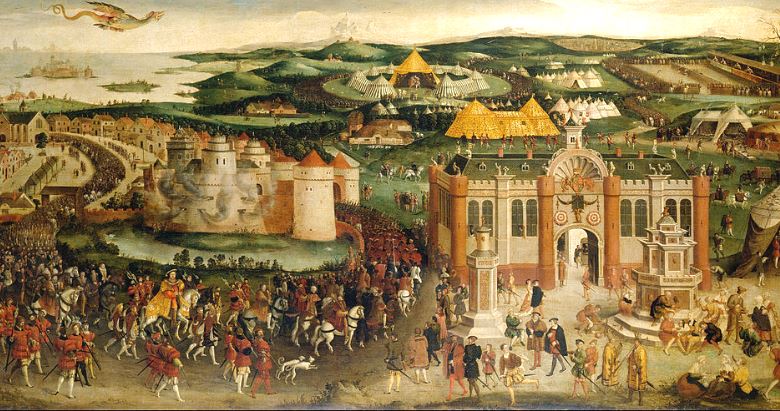
It was important for a 16th century king to appear all-powerful but this was costly. In 1520 with King Francis I of France, Henry co-hosted the legendary “Field of the Cloth of Gold”, an outrageously extravagant event in Calais. The event was meant to show a united front between the kingdoms of England and France in the face of the Holy Roman Emperor. Each king tried to outdo the other in tournaments, feasting, clothes and jewels during a celebration that lasted for weeks and cost a fortune.
Thomas Wolsey was Henry’s trusted advisor and friend. Wolsey was the son of an Ipswich butcher, a highly intelligent man who became rich and powerful, rising to the position of Lord Chancellor and Cardinal in 1515. Henry VIII had not expected to become king: his elder brother Arthur had died. Henry had therefore received little tutoring in politics and government, and was happy to rely on his friend Wolsey to advise him.
Constantly changing alliances between nations dominated Europe in the 16th century. Henry VIII and Wolsey sought to make England as significant a power as the two greatest European nations of the time, France and Spain. However foreign policy was not Henry’s strong point. His wars against France were on the whole unsuccessful and costly. Victory against the Scots at the Battle of Flodden served only to strengthen the alliance between the Scots and the French.
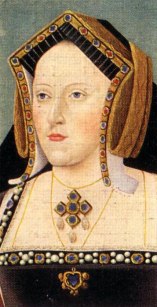
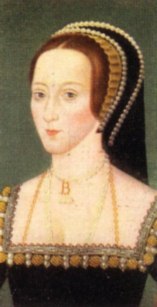
Catherine of Aragon Anne Boleyn
The annulment of Henry’s marriage to Catherine of Aragon was the breaking point in Henry and Wolsey’s friendship. Henry was infatuated with Anne Bolelyn, one of the ladies-in-waiting to the Queen, and marriage to Anne would hopefully give Henry the male heir he so desperately wanted.
The daughter of Sir Thomas Boleyn, Anne had spent part of her youth with her sister Mary at the French Court. Mary was sent back to England in 1519 (some say in disgrace for her promiscuous behaviour) and became one of Catherine’s ladies-in-waiting. Mary caught Henry’s eye and briefly became his mistress. Anne returned to England in 1522 and became a popular figure at court. By 1526 Henry was deeply in love with her.
The bloody Wars of the Roses, which had ended in Henry’s father Henry VII becoming king, were still within living memory. Henry was desperate for an heir to continue the Tudor dynasty and to avoid any future civil war. Twenty years of marriage to Catherine had resulted in just one surviving child, Mary, and now at the age of 40, Catherine was unlikely to bear any more children.
 Catherine’s inability to give him a male heir tortured Henry and he began to question whether their marriage was legal and valid. Catherine was his brother Arthur’s widow. She had married Arthur in 1501, but was widowed aged just 16. It took a further seven years before Henry and Catherine were married in 1509. At the time of their marriage, Henry was 18 and very much in love with the 23 year old Catherine. The dispensation for his marriage to Catherine from the Pope was based on the presumption that Catherine was still a virgin on her first husband’s death.
However Henry now wanted a divorce so he could marry Anne. Catherine insisted that she had been a virgin when she married Henry and refused to accept an annulment of the marriage.
Catherine’s nephew, the Holy Roman Emperor Charles V, became involved, threatening the Pope if his aunt’s marriage to Henry was annulled. Pope Clement VII was put in a difficult position as any decision he made would anger one or the other. He delayed announcing a decision for as long as possible before refusing to grant the divorce. Wolsey had failed to secure the divorce for Henry and was deposed from office. Even Wolsey’s gift of his magnificent new palace at Hampton Court to Henry could not save him: Wolsey died before he could be brought to trial for treason. Thomas More was brought in to replace Wolsey as Chancellor.
Henry took matters into his own hands and broke from Rome and the Roman Catholic Church. Excommunicated by the Pope, in 1533 Henry divorced Catherine and married Anne, who was now pregnant.
Catherine, now Princess Dowager of Wales, was forced to leave court. For the next three years she lived in seclusion in a series of dank castles and manors with just a few servants. On January 7 1536, Catherine died at Kimbolton Castle and was buried at Peterborough Abbey.
Taking advantage of the spread of the Protestant doctrine sweeping Northern Europe, and envious of the Church’s wealth, Parliament passed The Act of Supremacy in 1534 which made Henry the Supreme Head of the Church of England. The new Church was guided by the Archbishop of Canterbury, Thomas Cranmer (who had helped Henry with his divorce from Catherine). Prior to the break with Rome, for centuries Mass had been said in Latin. Cranmer believed it was important for the people to worship in English and so was responsible for the first English Bible authorized for public use which was distributed to every church in the land.
Revolts against the new Church of England and the new service were put down. Sir Thomas More, the Lord Chancellor, was executed for refusing to acknowledge Henry as head of the Church. Thomas Cromwell became Vicar-General and later Chancellor and was instrumental in the Dissolution of the Monasteries from 1536 to 1540.
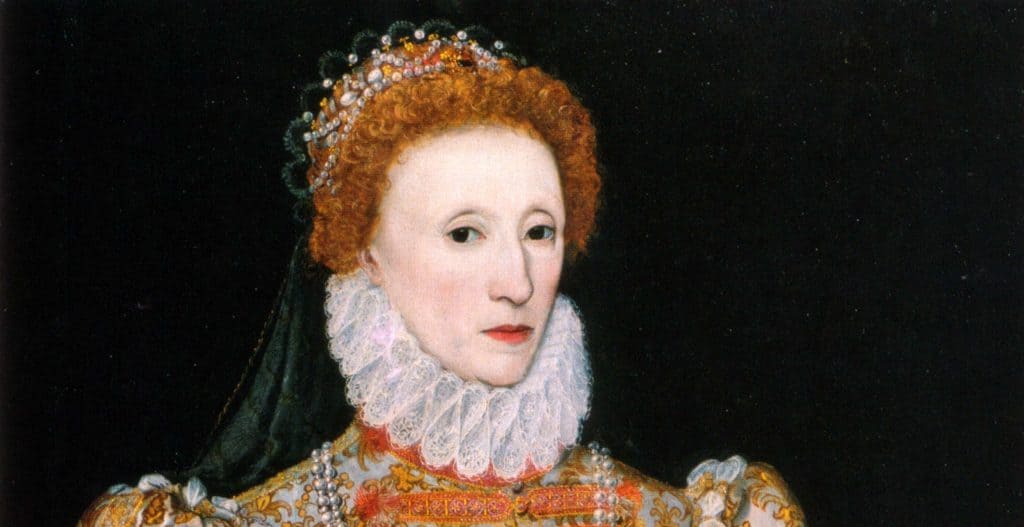
Ironically after all this upheaval, the longed-for child was a girl, Elizabeth, and Henry was bitterly disappointed. Two more of Anne’s pregnancies ended in miscarriage, in the summer of 1534 and in January 1536, when the baby was a boy. Henry became convinced the marriage was cursed and Anne’s arrogant manner didn’t help her cause.
On 2nd May 1536, Anne was arrested. She was accused of adultery with her own brother and four commoners – they were all tried and convicted of treason by Anne’s uncle, the Duke of Norfolk. On 19th May Anne was beheaded at the Tower of London- the first English queen to be publicly executed. Henry married his mistress Jane Seymour just over a week later.

Jane, a committed Catholic, begged Henry to abandon the Dissolution of the Monasteries. However when she gave birth to the long awaited male heir, Edward in 1537, all was forgiven and Henry was ecstatic. Unfortunately following the birth Jane contracted puerpural fever and died: Henry was distraught.
The Dissolution of the Monasteries began in 1536 and ended in 1540. Monastic lands, works of art and buildings were sold off. Monks, abbots and others who resisted were executed. Henry’s lifestyle, along with his wars, led to a lack of money throughout his reign. Taxation and the wealth taken from the monasteries allowed him to establish a modern navy. Henry’s flagship the Mary Rose and the ‘Great Harry’, the largest ship of its time at a weight of 1,000 tons, were built. 80 ships were added to the English navy and the first dockyard at Portsmouth was built.
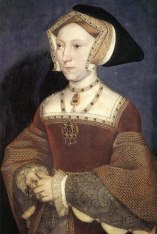
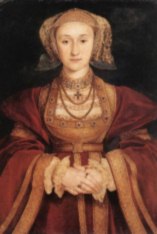
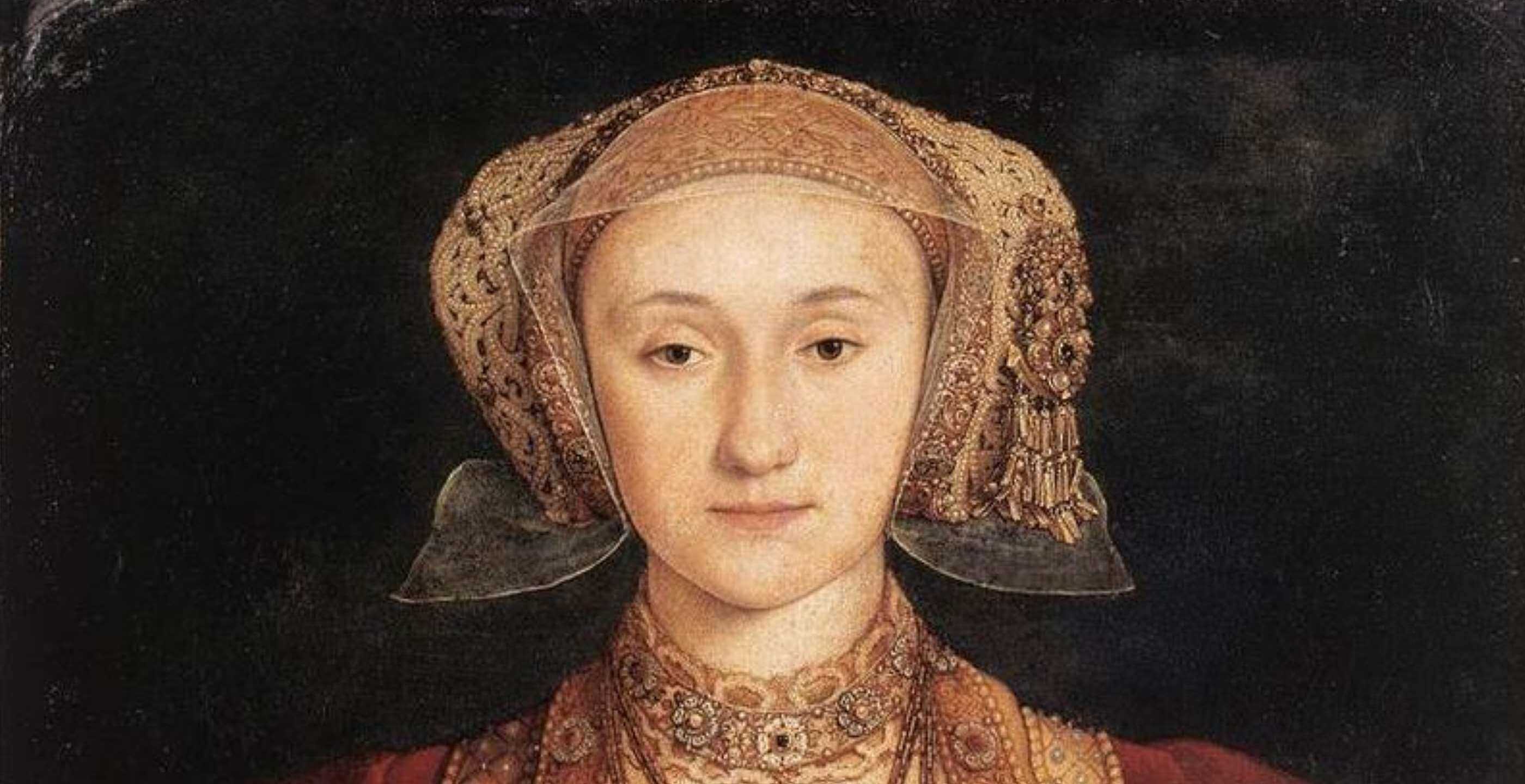
Jane Seymour Anne of Cleves
Cromwell arranged a fourth marriage for Henry to Anne of Cleves, a German Protestant princess. This was a political match, an alliance between two non-Catholic countries. A portrait of Anne was painted by Hans Holbein, probably the most famous of the Tudor court painters, and Henry agreed to the match. However on meeting Anne, he took an immediate dislike to her; he infamously referred to her as a ‘Flanders mare’ and told courtiers and ambassadors that he could not perform his husbandly duties because of Anne’s appearance. Both parties were happy for the marriage to be annulled after just 6 months and Anne was granted a generous income and several homes including Hever Castle. Anne remained in England and was a frequent visitor to Court as an honoured guest. She enjoyed an independent lifestyle, very different from that of Henry’s other divorced wife, Catherine. Cromwell however was not forgiven for arranging the disastrous match and was executed on a trumpted-up charge of treason.
Henry was now no longer the athletic sportsman he once was. A disastrous accident at the age of 44, when his horse rolled on him in a tournament, had left him with a crippled leg. Unable to exercise, Henry nevertheless continued with his lavish lifestyle, gaining so much weight that by the end of his life he measured 4.5 feet around the waist.
Overweight and plagued by leg ulcers, Henry still yearned for a second male heir to secure the succession. The young Catherine Howard, pretty and petite, took Henry’s eye and he feel deeply in love with her. Despite rumours of love affairs before she came to Court, Henry married Catherine in 1540.
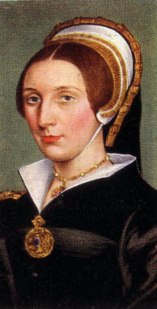
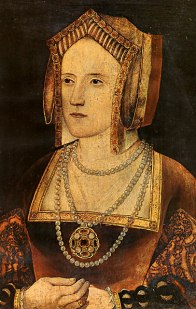
Catherine Howard Catherine Parr
Catherine was a member of the powerful Howard family; her father was younger brother to the Duke of Norfolk. She was also a cousin of Anne Boleyn, and like Anne, she too would die on the scaffold at Tower Green.
Henry was besotted with her, calling her his ‘Rose without a Thorn’. What Catherine thought of her aging, crippled, obese husband is not known, however it appears that after the marriage she made the mistake of resuming her relationship with a former lover, Thomas Culpepper. After just seventeen months of marriage to the king, she was arrested for adultery. She was executed for treason on 13th February 1542. Henry was inconsolable: he is said to have wept openly.
The execution of Catherine Howard had sunk the king into a deep depression. Catherine Parr, twice widowed, was entering a relationship with Thomas Seymour, brother of Jane Seymour, Henry’s third wife, when Henry noticed her. She was 31 years old, well educated and very intelligent. Fluent in French, she learnt Italian, could read and write in Latin and was competent in Greek. Catherine was a reformist and loved to debate religious questions. This nearly led to her downfall: a particularly vigorous religious argument between king and queen so angered Henry, it led to his signing a warrant for Catherine’s arrest on grounds of heresy. On receiving the warrant, Catherine at first panicked but then drew on all her reserves of courage and intelligence. Ordering her ladies to discard all banned books on religion, she hastened to the king, claiming that she had argued with him purely to take his mind off the pain of his ulcerated legs.
Catherine provided the closest thing to a stable family life that Henry’s three children had known. She proved an effective nurse to Henry VIII, now weakened by oozing leg ulcers. She could speak intelligently with visiting ambassadors and scholars. As proof of his faith in her, Henry named her regent when he departed in July 1544 on yet another invasion of France. It was a role held by only one other of the king’s wives, Catherine of Aragon.
Henry died at Whitehall, England, on January 28, 1547, aged 55. He was buried next to his third wife, Jane Seymour, in St. George’s Chapel at Windsor Castle.
Published: 9th October 2016.