

Speakers’ Corner is one of Britain’s most famous places for public debate and discussion. It is often seen as a shining symbol of Britain’s entry into liberal democracy.
The official story of the origins of Speakers’ Corner is now a familiar one …an Act of Parliament passed in 1872 (The Royal Parks and Gardens Regulation Act) allowed a space in the north-eastern corner of Hyde Park to be given over for public speaking. Much of the credit for the eventual passing of the 1872 Act is due to the activities of the Reform League. The Reform League had pushed the question of the right to speak freely in Hyde Park.
However the story as to the origins of Speakers’ Corner does not actually begin with the 1872 Act. In fact the space that the Reform League appropriated for free speech in Hyde Park had already existed as a public place to meet and discuss for centuries before.
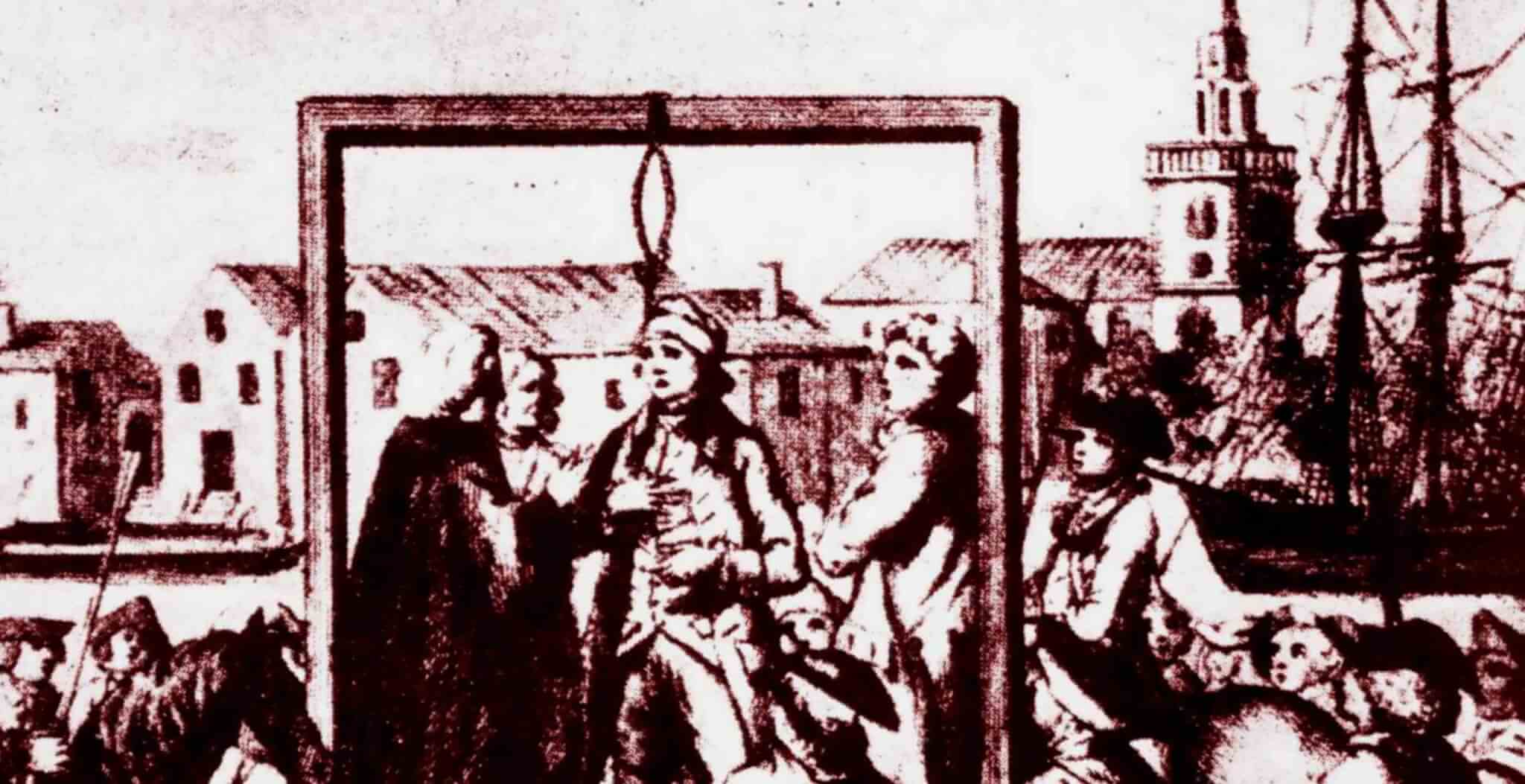
The place known today as Speakers’ Corner began life as a place for public execution. In particular Speakers’ Corner was home of the notorious Tyburn hanging tree. Established as a site for execution possibly as early as 1108, the first actual record of an execution at Tyburn was in 1196.
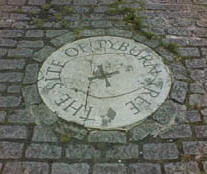 Situated in the north-east corner of Hyde Park, this place for state executions derived its name from a brook which ran beneath Brook Street: Tye Bourne. The junction of Tyburn Road (now Oxford Street) and Tyburn Lane (now Park Lane) provides its precise location. Today a stone plaque on a traffic island near Marble Arch marks the place where the gallows once stood.
After 1571 a triangular-shaped gallows was erected which reached approximately six metres. The triangular-shape reflected the need to hang more than a single person. Each beam could accommodate eight people at once, so that twenty-four could swing together in one go. As many as twelve hanging days would occur each year.
The original gallows stood at Tyburn until 1759, when they were replaced with moving gallows, and the official place of execution for felons was moved to Newgate Prison. This did not please the people of London at all, as they had always considered it ‘quite an outing’ to see a ‘good hanging’!
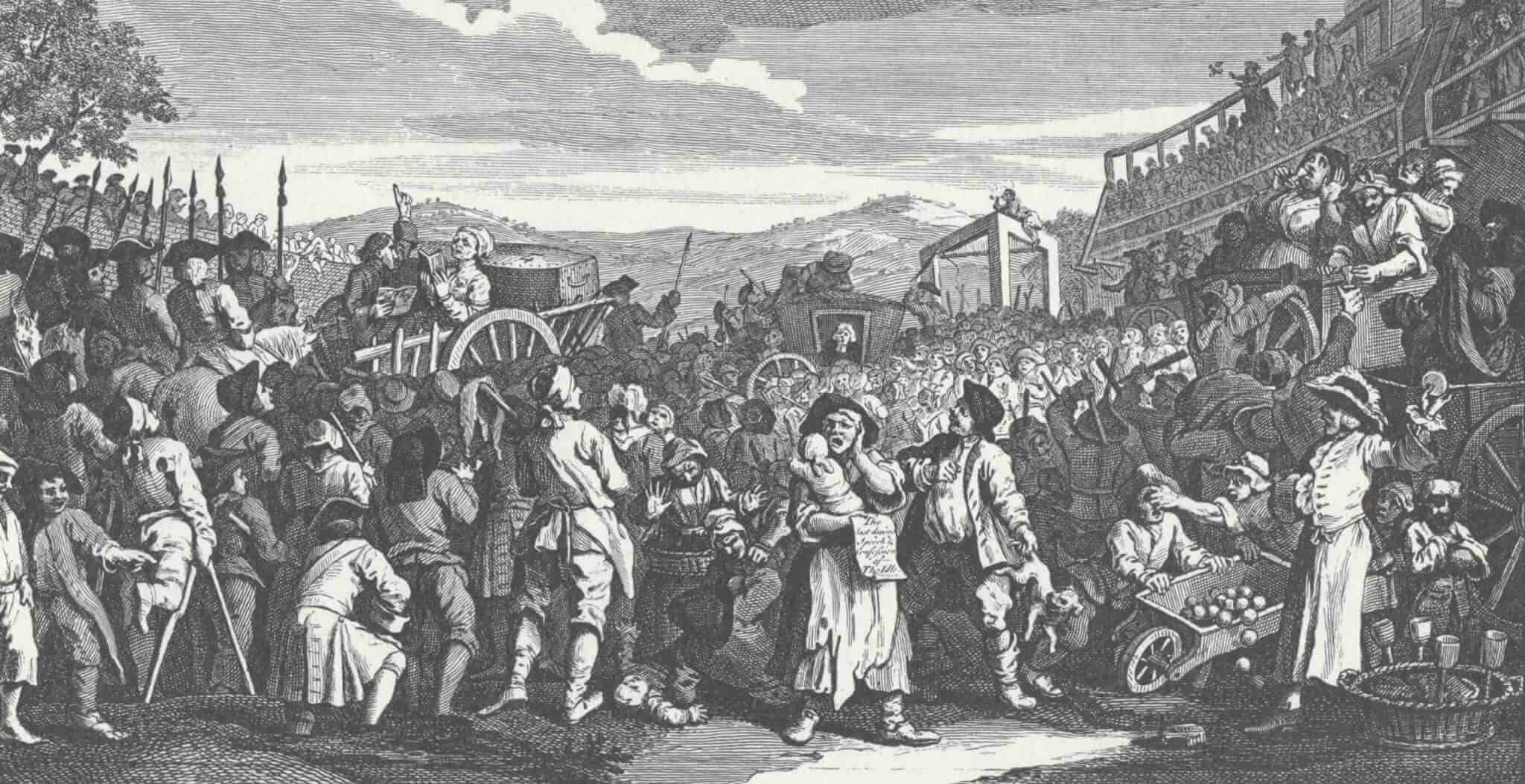
When Jack Sheppard, a highwayman, was hanged there, it was said that the event attracted an audience of 200,000 people.
The acknowledged first highwayman, Claude Duval, was hanged at Tyburn on 21st January 1670, and he was mourned by a mass of weeping women, who later attended his magnificent funeral.
Samuel Pepys the famous diarist, on 21st January 1664 noted a full account of going to see the hanging of a man he knew, a Colonel James Turner. He records that there were at least twelve to fourteen thousand people there at Tyburn to see this man hang!
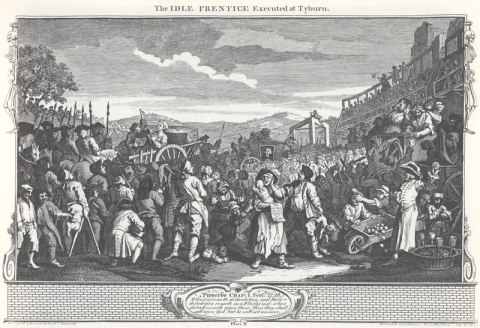
Hanging days were declared a public holiday for the labouring classes. A social commentator of the day, noted that ‘All the Way, from Newgate to Tyburn, is one continued Fair, for Whores and Rogues of the meaner sort’.
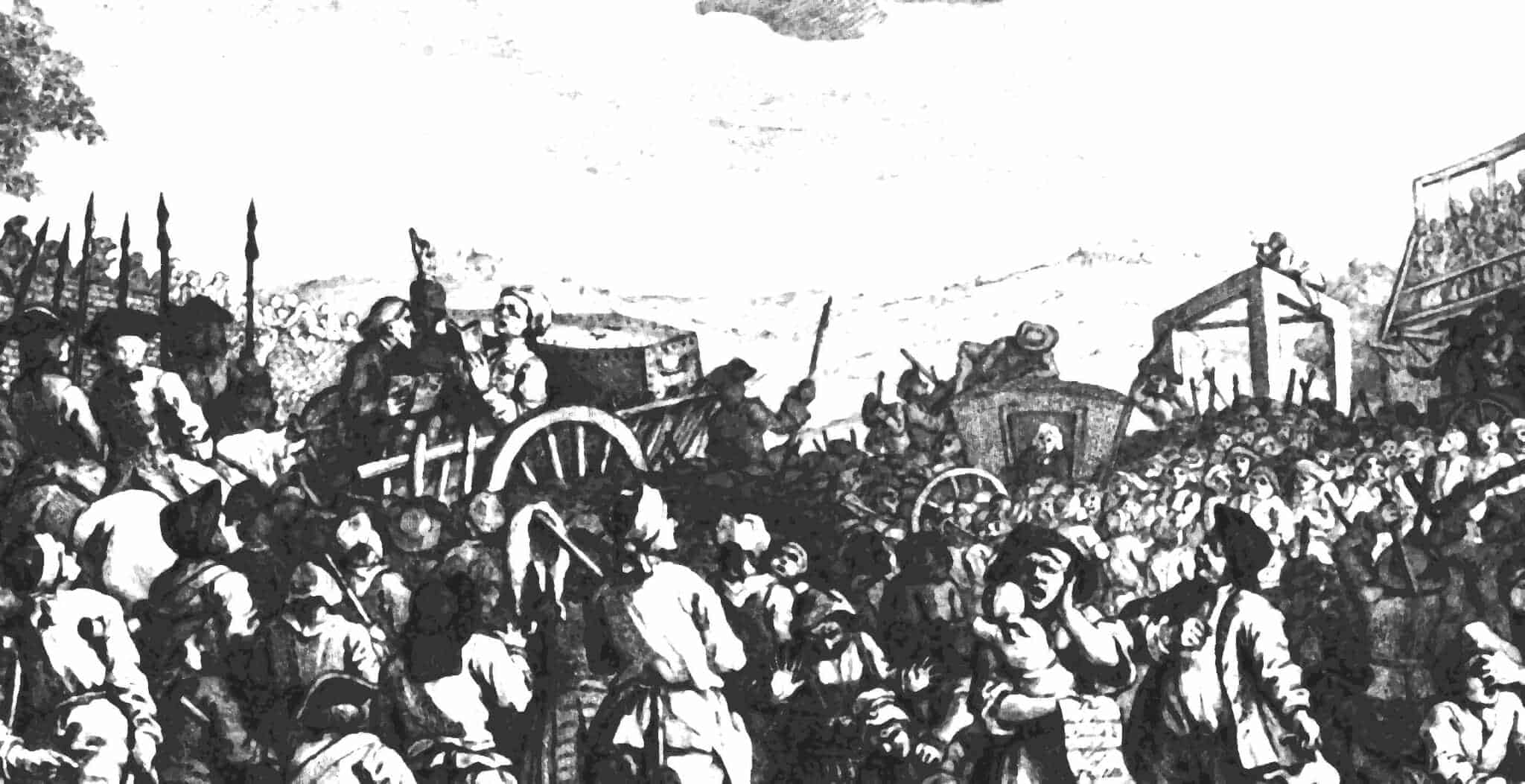
The actual hanging day itself would cause much excitement. The ceremony would begin in the morning when the prisoners were handed over to the Under Sheriff. Outside Newgate Prison gates the crowds would already be arriving as the great bell of St. Sepulchre, heard only on execution days, would announce the event.
The condemned were taken to Tyburn on a cart and had to ride with the hangman and the prison Chaplin. Peace-officers would lead the procession while immediately behind the cart marched a troop of soldiers and behind them a posse of constables on horseback.
The procession passed through Holborn, St Giles and Tyburn Road (Oxford Street). Stops made at inns on the way allowed prisoners the chance to indulge in a drop or two of the hard stuff. It was not uncommon for prisoners to arrive at the scaffold drunk and disorderly.
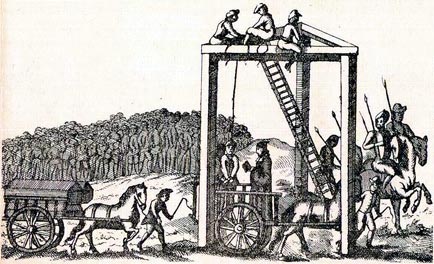
When finally at the gallows, felons might speak to the crowd and these speeches often would be directed right at the heart of the state. Catholics, for example, took advantage of the blurred division between treason and religion in their dying speech by embracing the authority of the monarchy but retaining open opposition to the Church of England. As such these martyrs opened up a public theological debate. Some of those who listened to these last speeches actually became convinced of their authenticity and converted to the Catholic cause.
Speakers’ Corner evolved from these speeches which attempted to explain, justify and or to simply give meaning to a life or lives. And so Tyburn developed into a political arena for public debate and discussion. That remains, the defining principles of Speakers’ Corner rooted within the culture that was the Tyburn Hanging Tree.
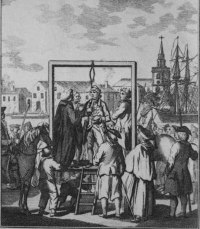 London is a rather a large city that required several places of execution, prior of course to convicts and felons being deported first to America and then to Australia. These sites have been broadly summarised below;
Tyburn Gallows – for felons
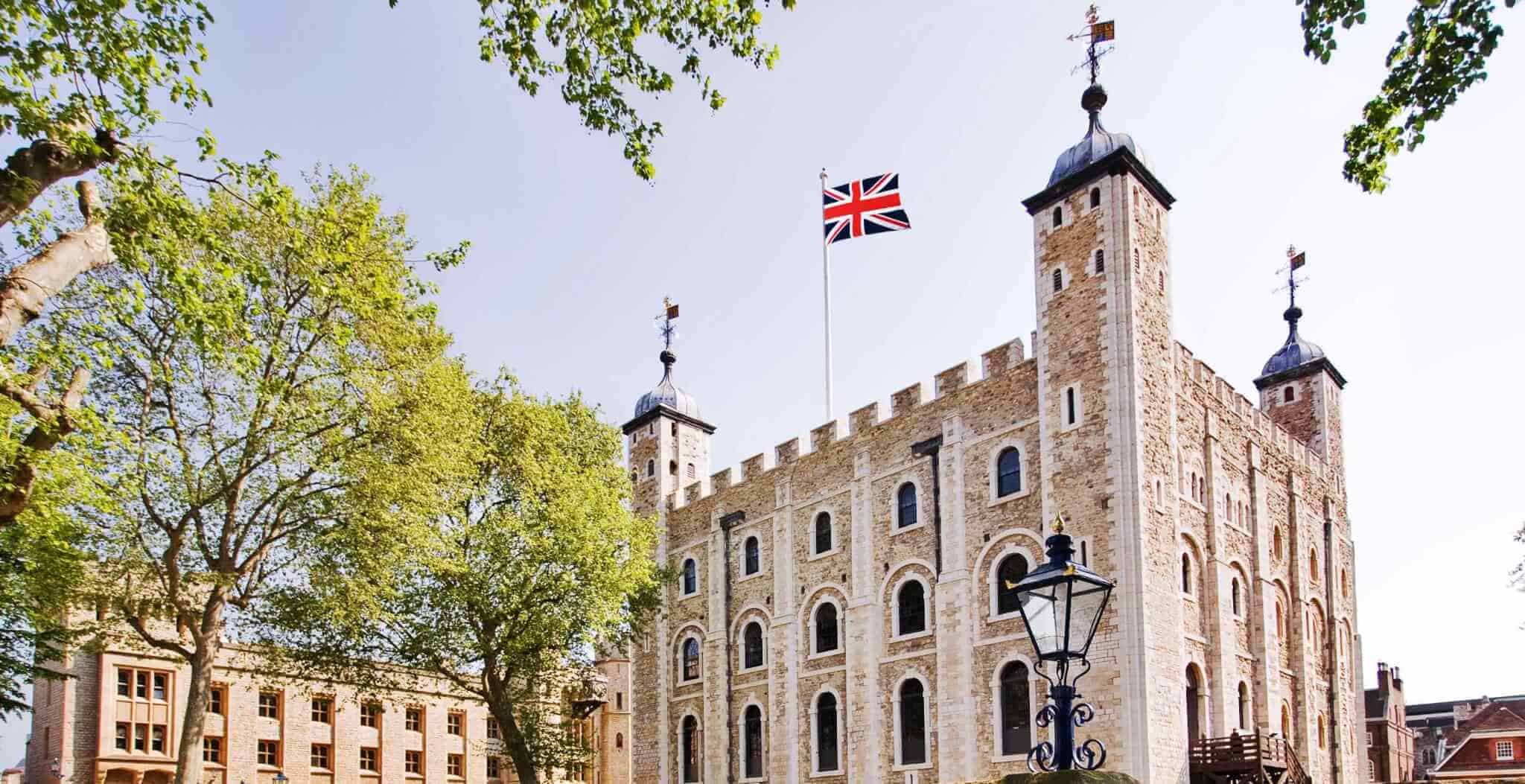
The Tower of London – for traitors
Execution Dock at Wapping – for pirates (see image to the right)
West Smithfield – for heretics, witches, servants who killed their masters, and women who killed their husbands (also called “petty treason”)
East Smithfield – was often used to execute riverside thieves
Tours of Historic London
Find out more about this great city by browsing our Selected Tours of London.