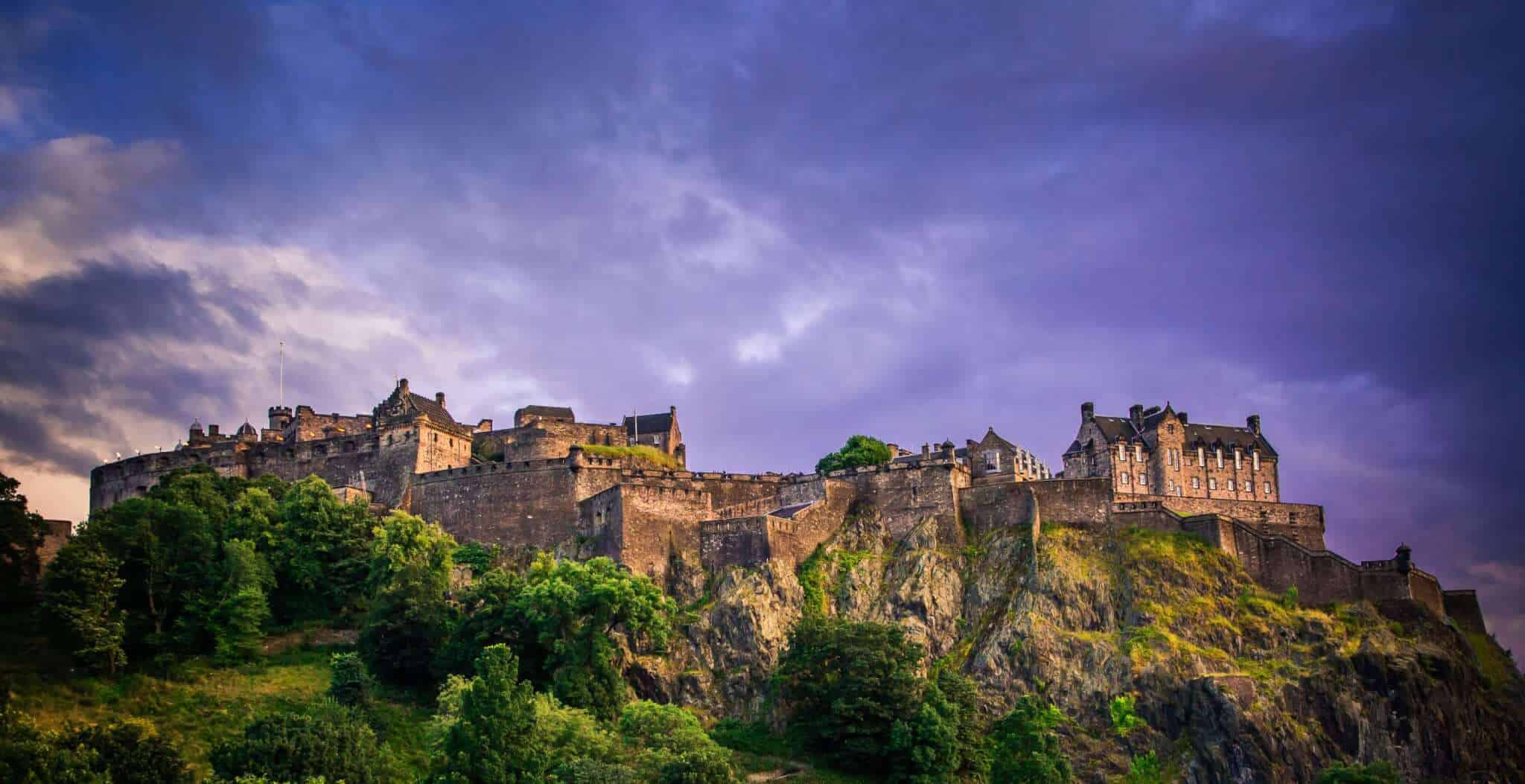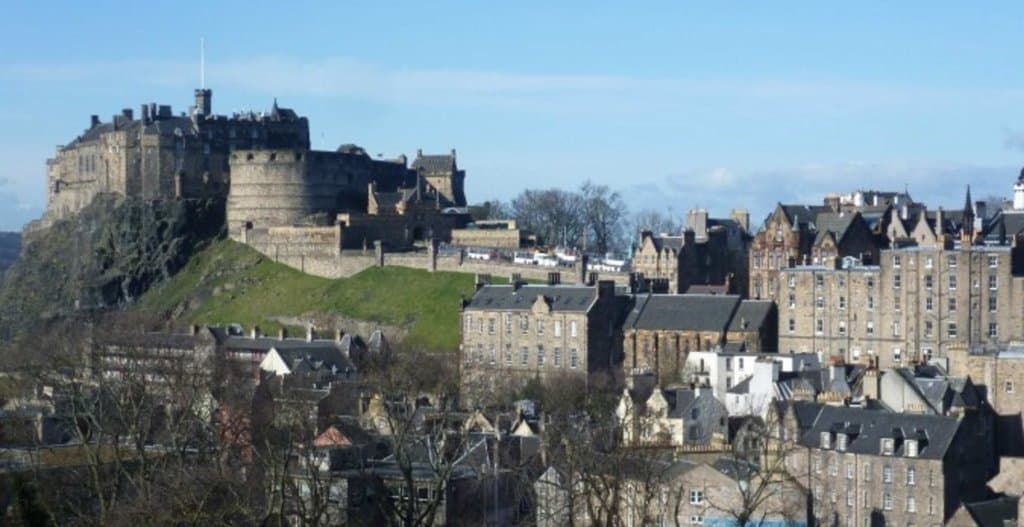


Edinburgh’s South Bridge is a monumental, albeit fundamentally flawed, feat of 18th century engineering and design. The city itself straddles seven major hills. Only two of these high points are visible in the city centre today – Castle Hill, atop which sits Edinburgh Castle, and Calton Hill, fondly referred to by locals as Edinburgh’s disgrace (but that’s another story…) The original hills of this ancient fortified city are now masked by five bridges which span the resulting valleys and seamlessly integrate their undulating contours into the landscape.
One of the most fascinating of these five bridges (and the second to be constructed after the North Bridge) is Edinburgh’s famous South Bridge; a modern highway of its day, built to link the Old Town’s High Street with the University buildings on the south side of the city.
Three closes* (Marlin’s Wynd, Peebles Wynd and Niddry’s Wynd) were demolished in the Cowgate area of the city to make way for this grand scheme. These closes dominated an area considered to be one of Edinburgh’s poorest and most run-down quarter – and at the time that was really saying something! The winding, crowded streets were knocked to the ground and the stones reused in a commendable, yet money conscious version of Georgian recycling.
However, Edinburgh was a fearful and superstitious place at the turn of the 18th century, both of real and imagined harm. The citizens fear of what the unearthly and supernatural could inflict was exacerbated by their inherent mistrust of the invading English, a long held belief that resulted in the building of the defensive Flodden Wall after the disastrous Battle of the same name in 1513. This man-made barrier around the outskirts of the city, combined with Edinburgh’s natural geography, forced residents to live virtually on top of one another – in some cases in houses 14 stories high – rather than expanding outwards as with most developing cities.
This air of claustrophobia, fear and mistrust bred an atmosphere of anxiety among the locals. When the South Bridge was finally completed in 1788 it was deemed to be an appropriate and fitting honour that the Bridges’ eldest resident, a well known and respected Judges’ wife, should be the first to cross this fine architectural structure.
 Unfortunately, several days before the grand opening, the lady in question passed away! But promises had been made, hands had been shaken and the city fathers felt obliged to honour their original agreement, and so it was, that the first “body” to cross the South Bridge crossed it in a coffin.
The locals were aghast! The bridge was now cursed! The majority of the townsfolk refused point blank to cross the bridge for many years, preferring instead the awkward and impractical route through the deep valley of the Cowgate. 18th century Edinburgers may seem overly superstitious by today’s standards, but over the following centuries it slowly became apparent that they might, in fact, have had a point…
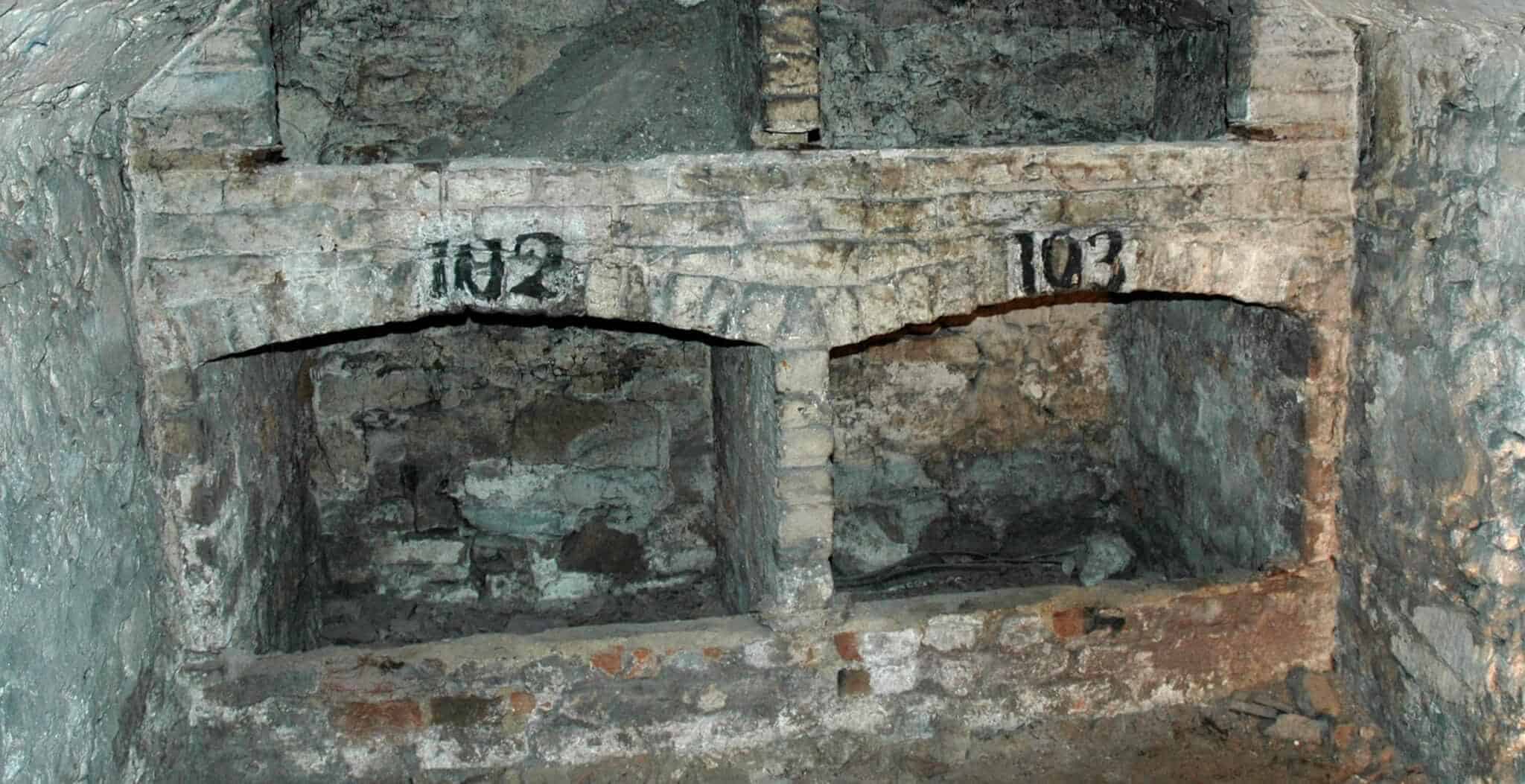
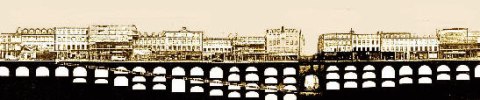
As time passed, space on Edinburgh’s South Bridge started to sell at premium prices; land was fetching more per square foot than anywhere else in Europe. Businessmen started to build shops along the top of the bridge, to make the most of passing trade. To accommodate these shop fronts, tenement houses were built along both sides of 18 of the original 19 arches, leaving only the Cowgate arch visible, as it remains today. To maximise space further, floors and ceilings were built beneath the blocked-in arches constructing dark, airless, vaulted chambers. These areas were originally used as workshops for the businesses above while the vaults below ground level were used for storage.
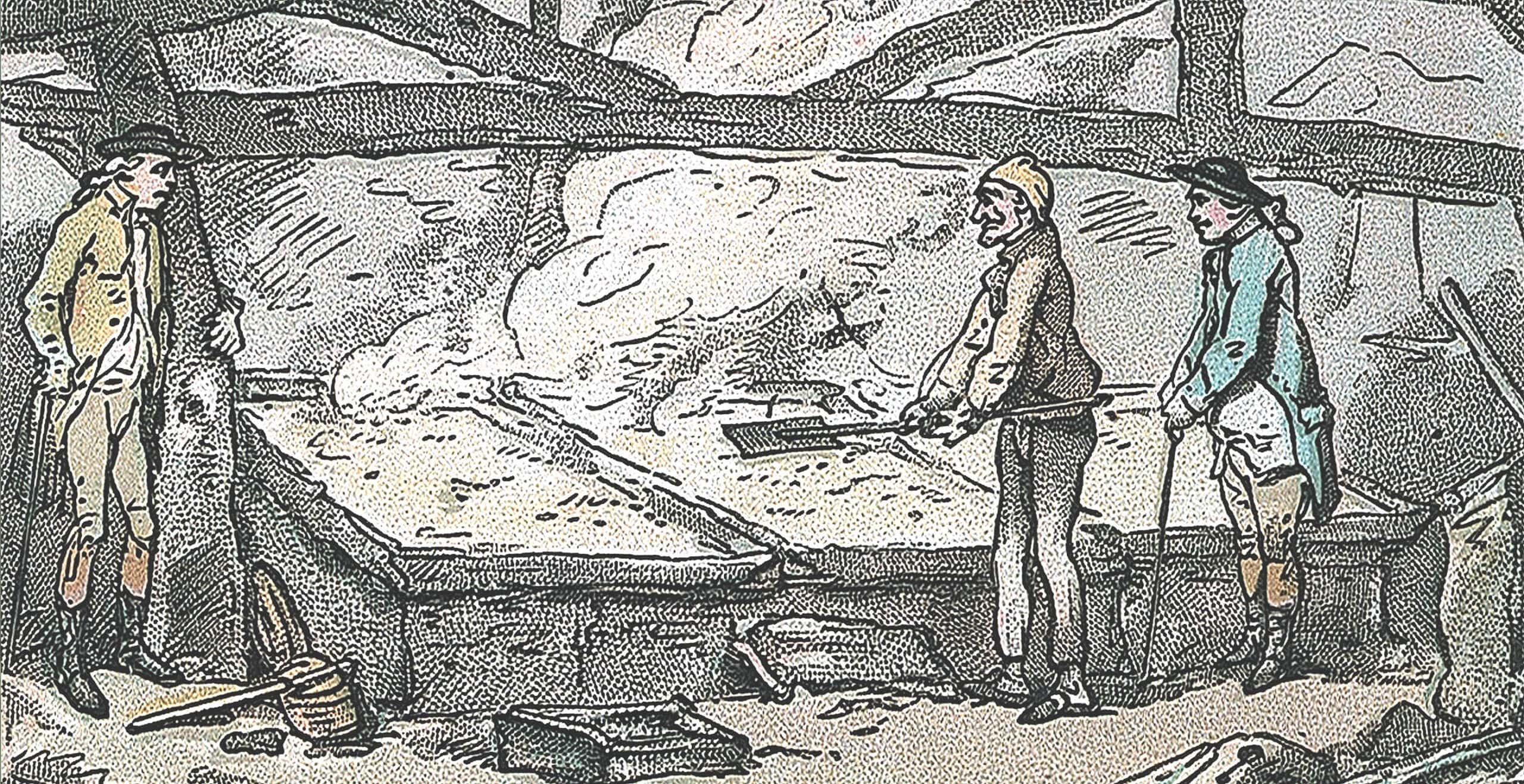
Records from the day, recent excavations and various artefacts which have since been discovered, all point to the fact that in the early days of the bridge many businesses thrived in these man-made, “underground” spaces; taverns, cobblers, cutlers, smelters, victuallers and milliners, all left evidence of their trades. However as time passed, the quality of life in these spaces deteriorated. The bridge (which had never been waterproofed due to it being built on such a tight budget) began to leak and the businesses were slowly forced to move out. Several years passed during which time the function of these spaces began to change.
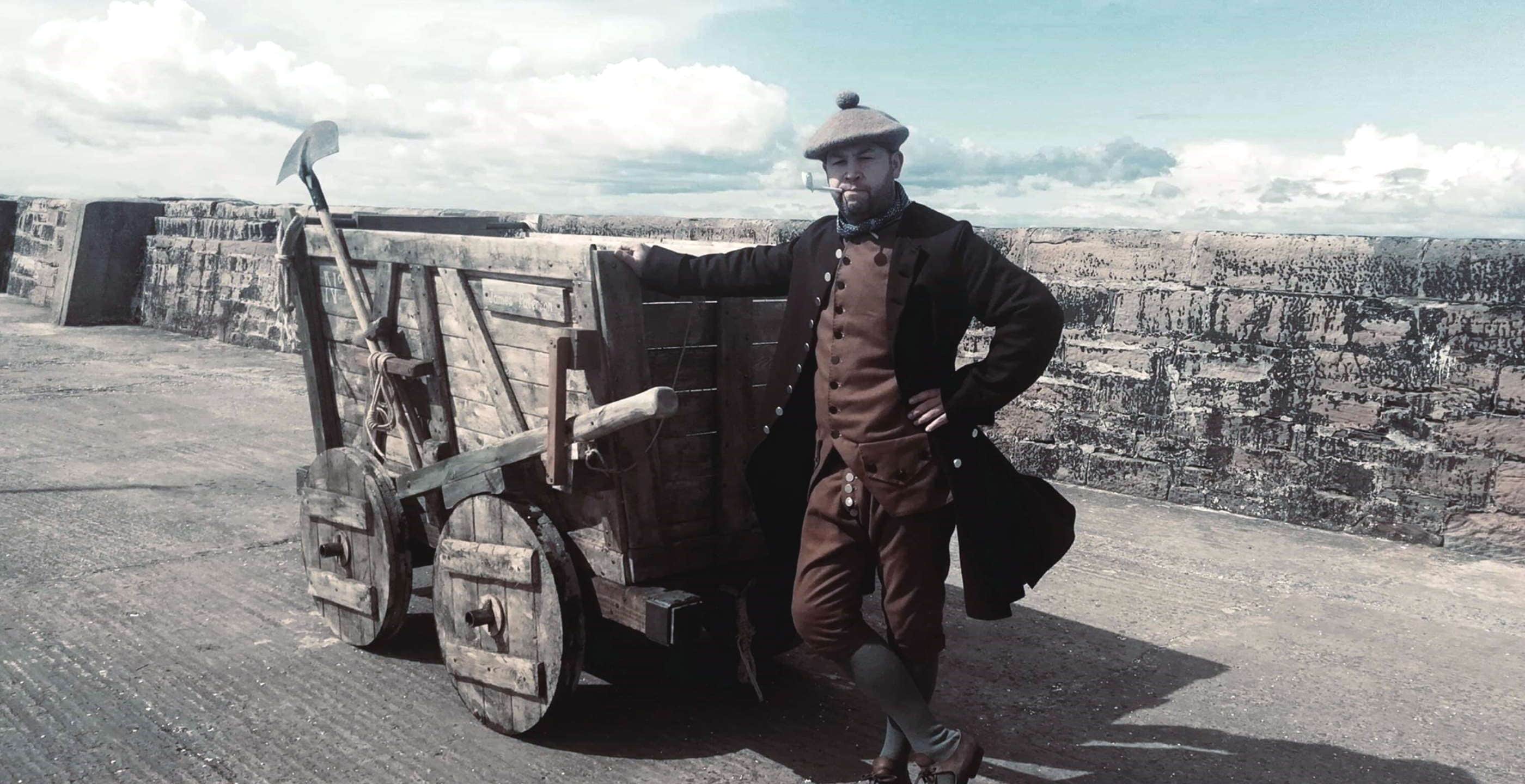
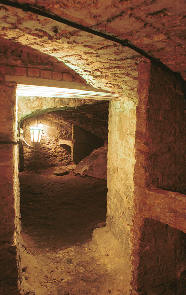 In the absence of legal trade and licensed businesses, the dark, damp wet vaults started to become home to only the very poorest and most disreputable sections of society. This included immigrant Irishmen and Highlanders seeking refuge from the clearances, mercenary landlords, and even body snatchers!
While little documentary evidence exists to support this theory – (technically, these people weren’t supposed to be there in the first place) – when the vaults were eventually excavated several corners revealed “middens”* containing household items such as old toys, broken medicine bottles, clay pipes, buttons, horse shoes, snuff boxes, cracked stoneware and ceramic jars, pots and plates; all visible signs of dwelling and inhabitation.
Even so, long after the workshops and businesses moved out and its new residents moved in, the vaults started to become completely unusable. A lack of light, air, heat, ventilation and sanitation and a slow, steady seepage of water through the cracks in the bridge made these areas not only impractical, but uninhabitable and within 30 years of the bridge opening, the abandonment of the Vaults was more or less complete.
The vaults were filled in with rubble, both for security for the businesses still operating above on street level and also to discourage squatters making home in what was effectively a place to die, not to live… and so the vaults fell into the dim distant memory of generations past.
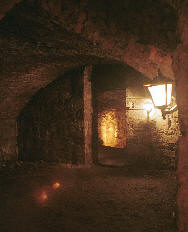
However, in 1985, these long, lost, forgotten spaces came to public attention after a chance excavation revealed the labyrinthic network of rooms and dwelling spaces contained within. These spaces have lost none of their original atmosphere. They are still dark, occasionally claustrophobic and, when it rains in Edinburgh they can still be very damp. The Vaults today ooze memories of the past, their stones seep water as well as stories, invoking memory and provoking the imagination.
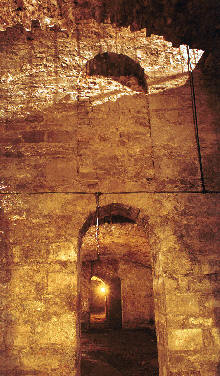 Over the years visitors who experience Mercat Tours’ history and ghost tours have recorded some very curious and unexplained activity. Further excavation over the last 20 years has revealed more of the Vaults secrets and today, groups test their nerve as they descend into what has been described by the BBC as “possibly one of the most haunted places in Britain.” Now, during Edinburgh’s festival you have the chance to experience what exists down there for yourself!
These very special overnight “Vaults Vigils” will open the doors of the Vaults to the general public every Thursday, Friday and Saturday night in August from midnight until dawn. Intrepid souls will be given the chance to brave the Blair Street vaults with a trained Mercat Guide and shown how to use the latest in “ghost hunting” equipment. EMF recorders and infrared thermometers will be made available to small groups who will conduct a series of controlled experiments with the chance to compare and contrast results at the end of the evening.
The Edinburgh Vaults are completely unique. They tell us of a time gone by and lives once lived. They remind us of our heritage and inspire us to ask questions about our past, present and our future. Are you brave enough to hear the answers?
Please check Mercat Tours for current information and booking form.
Tours of historic Edinburgh
For information concerning more tours of historic Edinburgh, please follow this link.
Footnotes:
* Close A narrow Edinburgh Street passing between two
tenement buildings, which at one point would have
been closed off at either end by gates
*Midden 1 A dunghill or refuse heap
2 Archaeology A mound or deposit containing
shells, animal bones and other refuse that
indicates the site of a human settlement