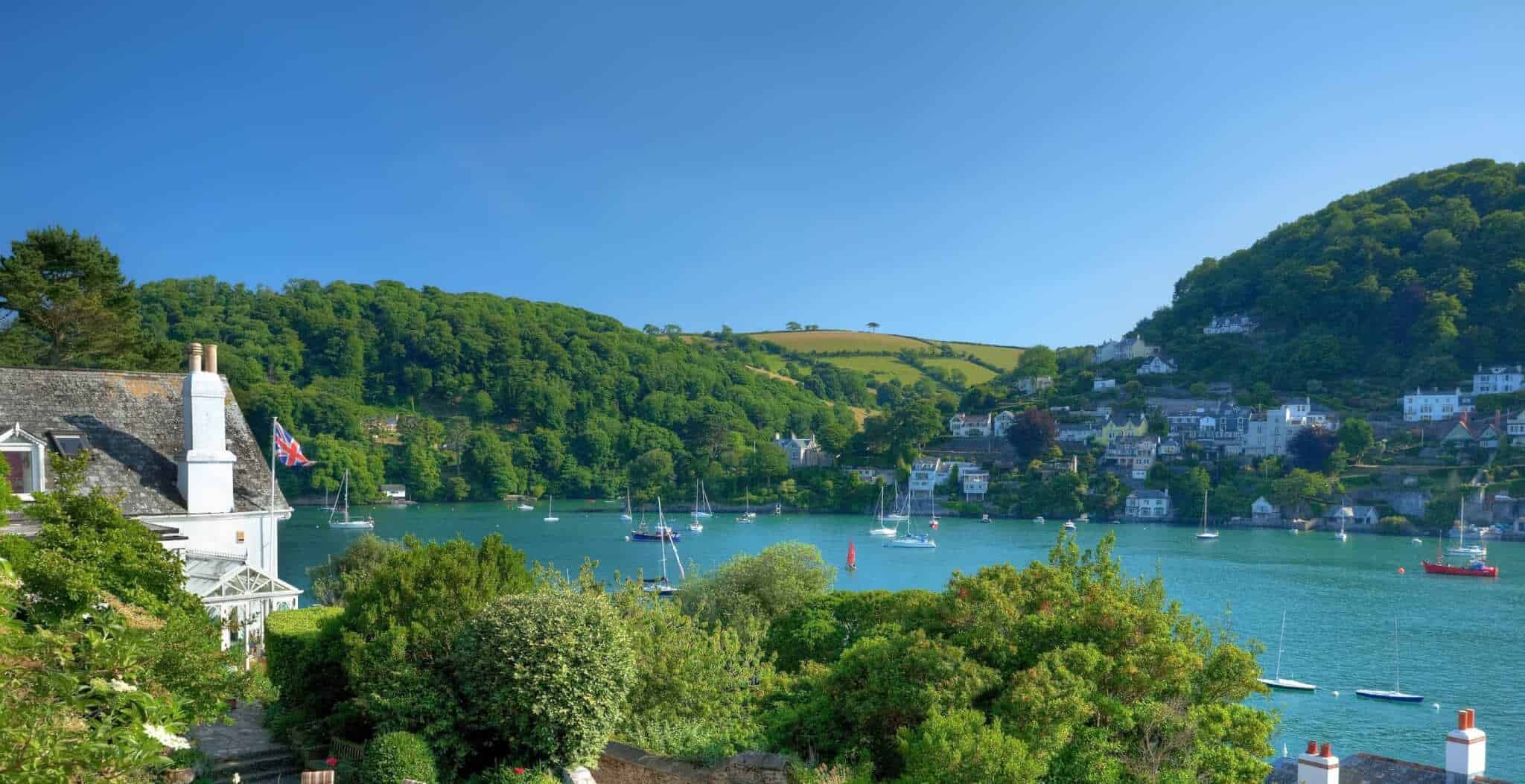


Situated on the River Dart in Devon’s South Hams, Dartmouth is a thriving town, with its narrow streets, overhanging medieval houses and old quays a haven for yachtsmen and visiting tourists alike, offering fine restaurants, galleries, marinas, antique shops and fine places to stay.
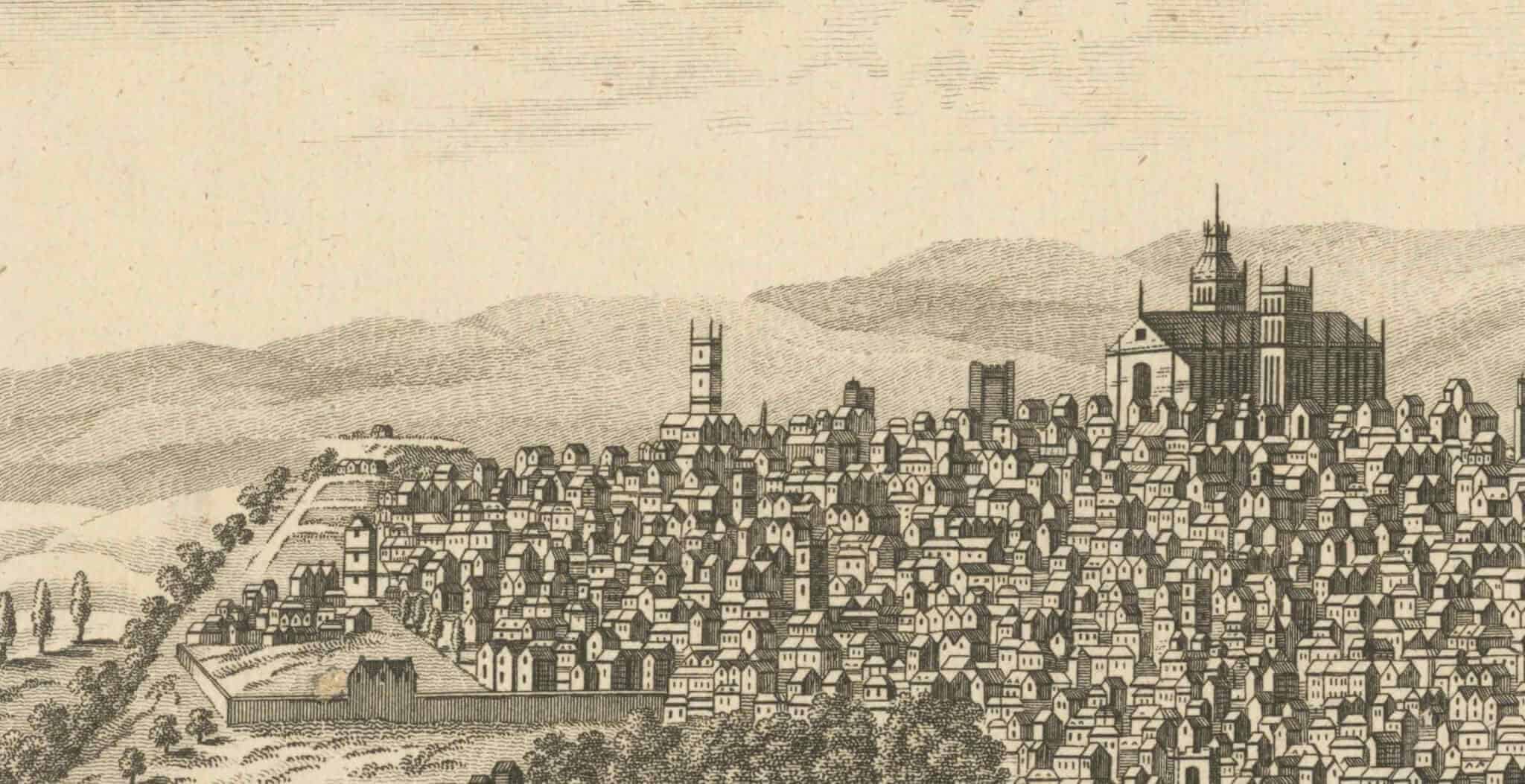
Although there was originally a nearby hilltop village and church at Townstal, Dartmouth’s origins derive from soon after the Norman conquest, when the French realised the value of the safe harbour for cross-channel voyages to their territories in Normandy. The rapid development was such that by the 12th century the town was used as an assembly point for a fleet of 146 ships setting out on the Second Crusade in 1147, and again in 1190, when more than 100 vessels embarked upon the Third Crusade. These events have given the name to Warfleet Creek, which lies just inside the river mouth.
Later a dam was built (modern Foss Street) across the tidal creek to power two grain mills, thereby joining together the two villages of Hardness and Clifton which now form the modern town. By the 14th century Dartmouth had grown considerably and the Dartmouth merchants were growing rich on the wine trade with English-owned lands in Gascony. In 1341, the king rewarded the town a charter of incorporation, and in 1372 St. Saviour’s Church was consecrated and became the town church.
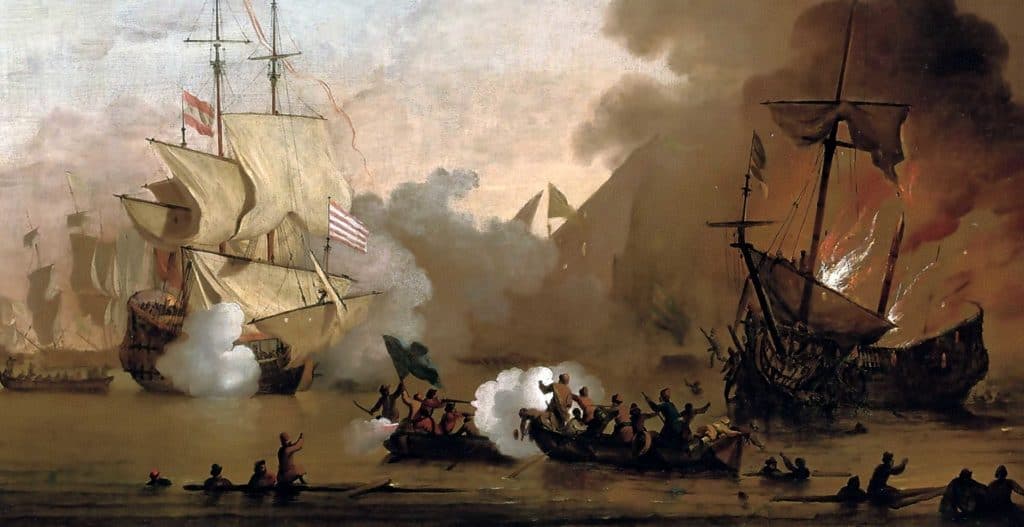
In 1373 Chaucer visited the area, and later wrote of a “Shipman of Dartmouth,” one of the pilgrims in the Canterbury Tales. The Shipman was a skilled sailor but also a pirate, and it is said that Chaucer based the character on the colourful John Hawley (d.1408) – the leading merchant and fourteen times Mayor of Dartmouth, who was also a privateer in the Hundred Years War.
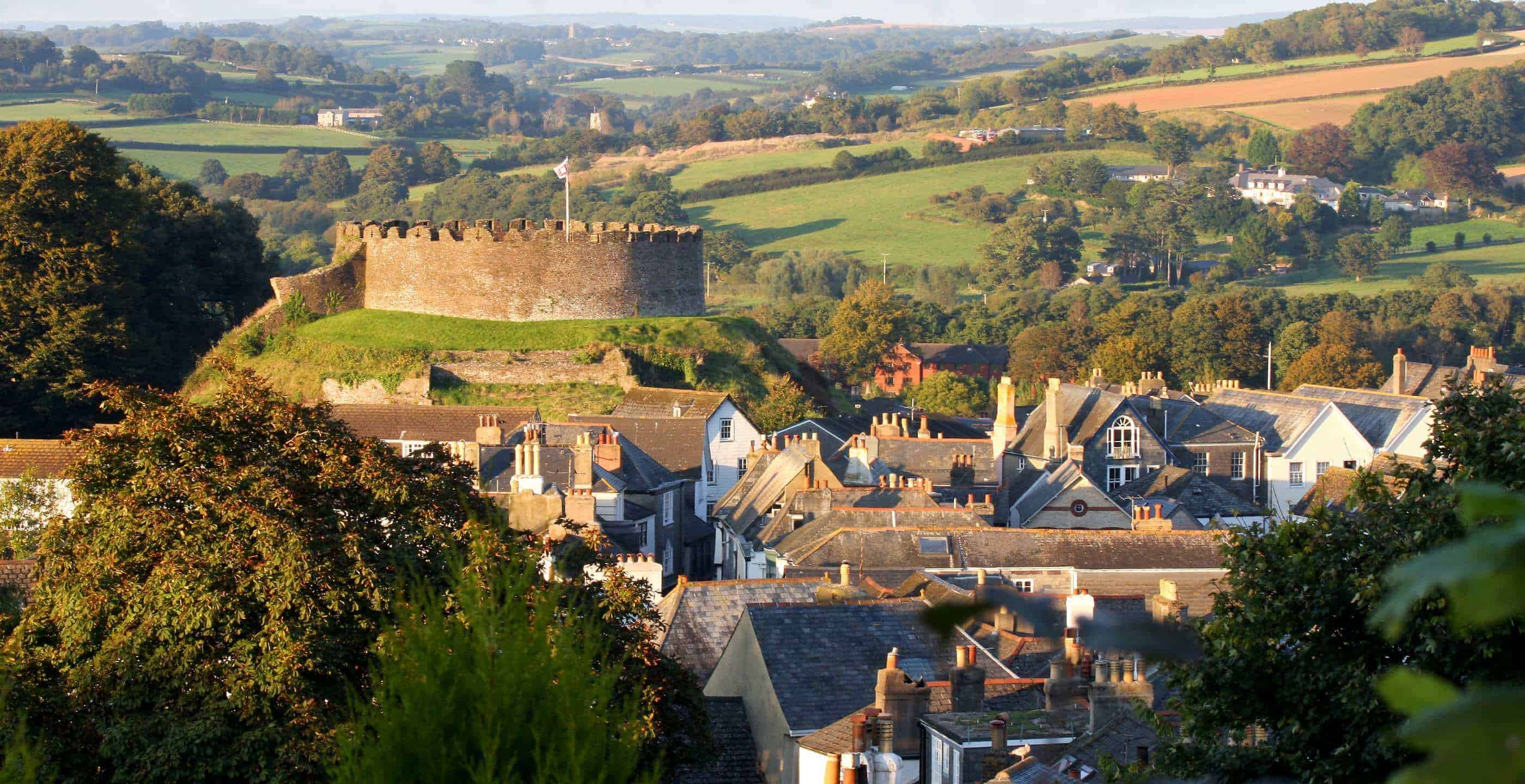
During the wars with France, the danger of attacks from across the Channel led to the construction by John Hawley of Dartmouth Castle at the mouth of the river.
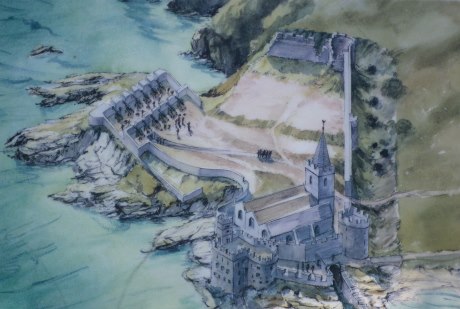
This was completed around 1400, and was provided with a moveable chain connected to another fort on the Kingswear side of the river to prevent river-borne attacks on the town. The castle was one of the first in the country to have provision for gunpowder artillery, and has been altered and adapted many times as weapons technology has progressed.
When a 2000-strong Breton force landed at Slapton in 1404 in an attempt to capture nearby Dartmouth and avenge English privateer’s actions in France, Hawley quickly organised an army of untrained locals and defeated the well-armed knights at the Battle of Blackpool Sands, the knights being weighed down by their armour and unsupported by their archers. Hawley’s brass lies in St. Saviour’s church in the chancel which he built, and after his death his house was used as the Guildhall for almost 400 years.
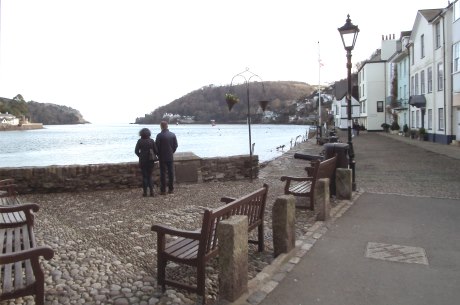
When under threat from the Spanish Armada in 1588, Dartmouth sent 11 ships to join the English fleet and captured the Spanish flagship, the Nestra Señora del Rosario, which was anchored in the Dart for over a year while its crew worked as slaves at Greenway House. Greenway was the home of Sir Humphrey Gilbert and his half-brother, Sir Walter Raleigh. Both were great explorers and adventurers, and although Gilbert failed in his quest to find the North West Passage, in 1583 he claimed Newfoundland for England. Today, Greenway is also well known for another of its owners – the Devon born author, Agatha Christie.
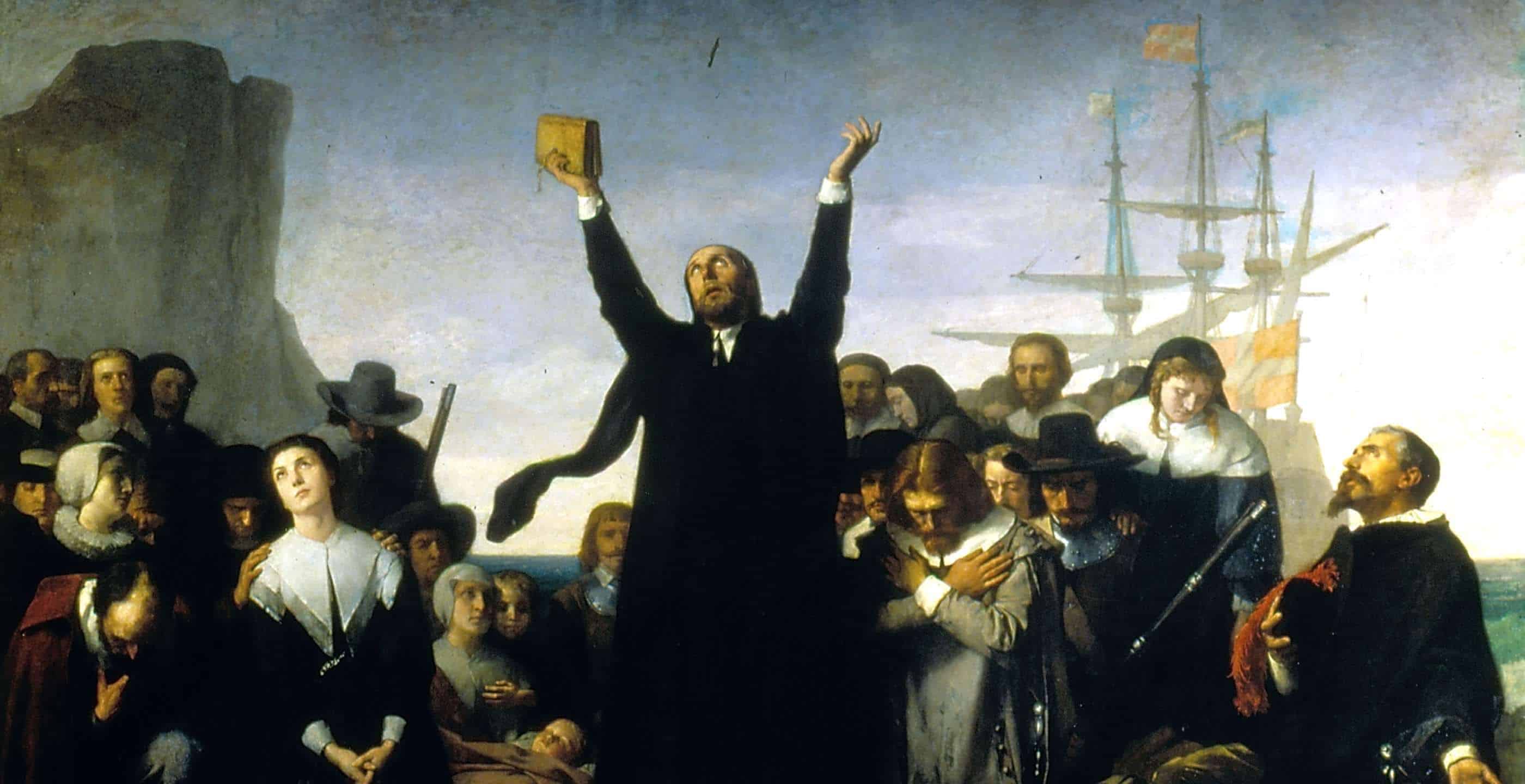
The rich fishing from the cod banks in this area gave the town a further period of prosperity. The surviving 17th century Butterwalk Quay and many 18th century houses around the town today are the most obvious results of this prosperous trade. In 1620 the Pilgrim Fathers, bound for America, berthed the Mayflower and Speedwell ships at Bayard’s Cove for repairs. Contact with these new colonies expanded, and by the 18th century locally-made goods were traded with Newfoundland, while the salted cod was sold to Spain and Portugal in exchange for wine.
During the English Civil War Dartmouth was also involved, and the castle played a significant part. Royalists besieged and captured the castle and held it for three years. However, when the Parliamentarians under Sir Thomas Fairfax attacked and took the town, the Royalists surrendered the castle the next day.
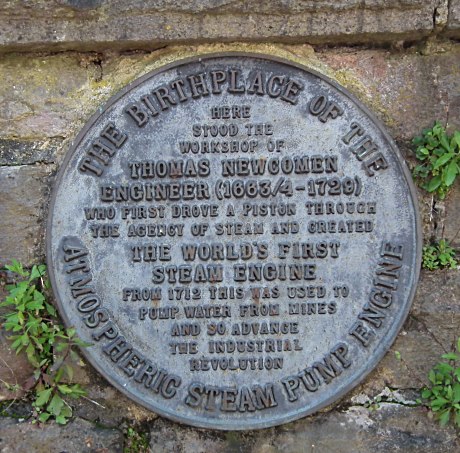
Dartmouth’s most famous former resident is Thomas Newcomen (1663 – 1729) who invented the first practical steam engine in 1712. It was soon used in the coalmines of the Midlands and proved to be one of the key inventions of the Industrial Revolution, being cheaper than James Watt’s later improved version. However, during the resulting Industrial Revolution hand weavers lost their jobs, railways were slow to reach Dartmouth because of the difficult terrain, and steam ships replaced the sailing ships traditionally built in the town. When the Newfoundland trade also collapsed in the mid-19th century, the town faced a serious economic downturn.
However, the economy gradually recovered in the second half of the 19th century. In 1863 the Royal Navy decided to train naval cadets on the Dart and stationed the ships “Britannia”, then the “Hindustan” in the river for the purpose. In 1864 the railway arrived in Kingswear, and was often used to transport coal for steam ships. Both events boosted the economy. The ships were replaced by the new Naval College in 1905, and the Navy still trains its officers there (pictured below).
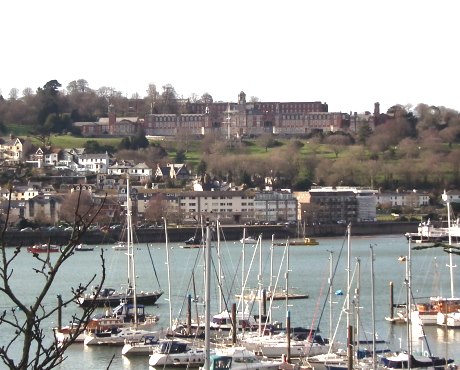
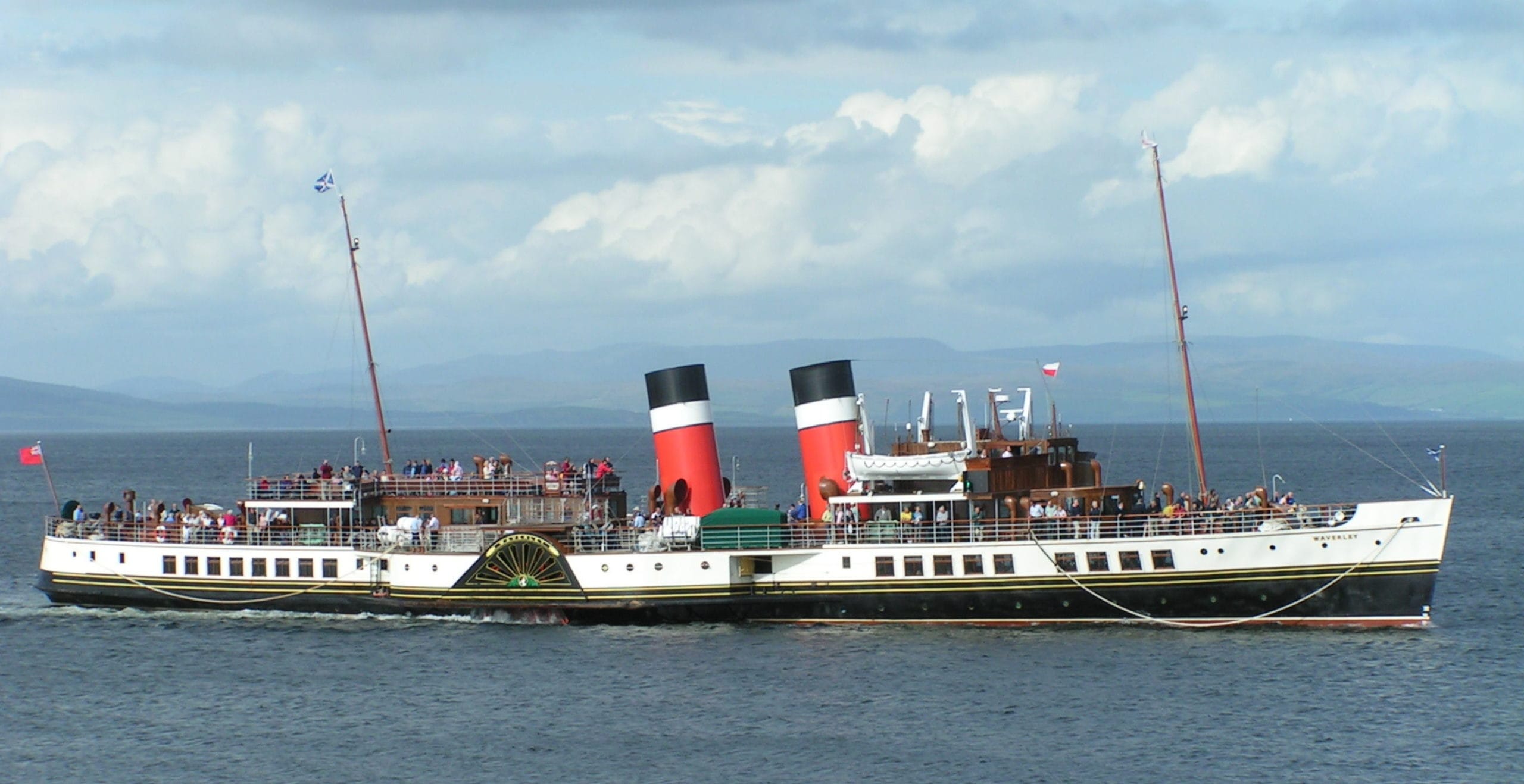
From the early 20th century the town began to benefit from the growth in the tourist industry. People came by railway, the higher ferry was introduced into service, and visitors enjoyed trips on steamers along the Dart. During the Second World War American troops took over the Naval College and made it their base for planning the D-Day rehearsals. The countryside inland from Slapton was evacuated to enable practice attacks on the nearby beaches and the river filled with landing ships. On June 4th 1944 a fleet of 480 landing ships, carrying nearly half a million men, left for Utah beach.
Since the war some of the town’s oldest industries have vanished. Shipbuilding lasted until the 1970’s, but has now stopped. Crab fishing still flourishes, but there are few commercial ships. Today, most of the local economy relies on the thriving tourism industry, with a heavy emphasis on yachting and the sea.
View our interactive map of the Museums of Britain for details of local galleries and museums.
Dartmouth is easily accessible by both road and rail, please try our UK Travel Guide for more detailed information.