

Pancake Day, or Shrove Tuesday, is the traditional feast day before the start of Lent on Ash Wednesday. Lent – the 40 days leading up to Easter – was traditionally a time of fasting and on Shrove Tuesday, Anglo-Saxon Christians went to confession and were “shriven” (absolved from their sins). A bell would be rung to call people to confession. This came to be called the “Pancake Bell” and is still rung today.
Shrove Tuesday always falls 47 days before Easter Sunday, so the date varies from year to year and falls between February 3 and March 9. In 2025 Shrove Tuesday will fall on March 4th.
Shrove Tuesday was the last opportunity to use up eggs and fats before embarking on the Lenten fast and pancakes are the perfect way of using up these ingredients.
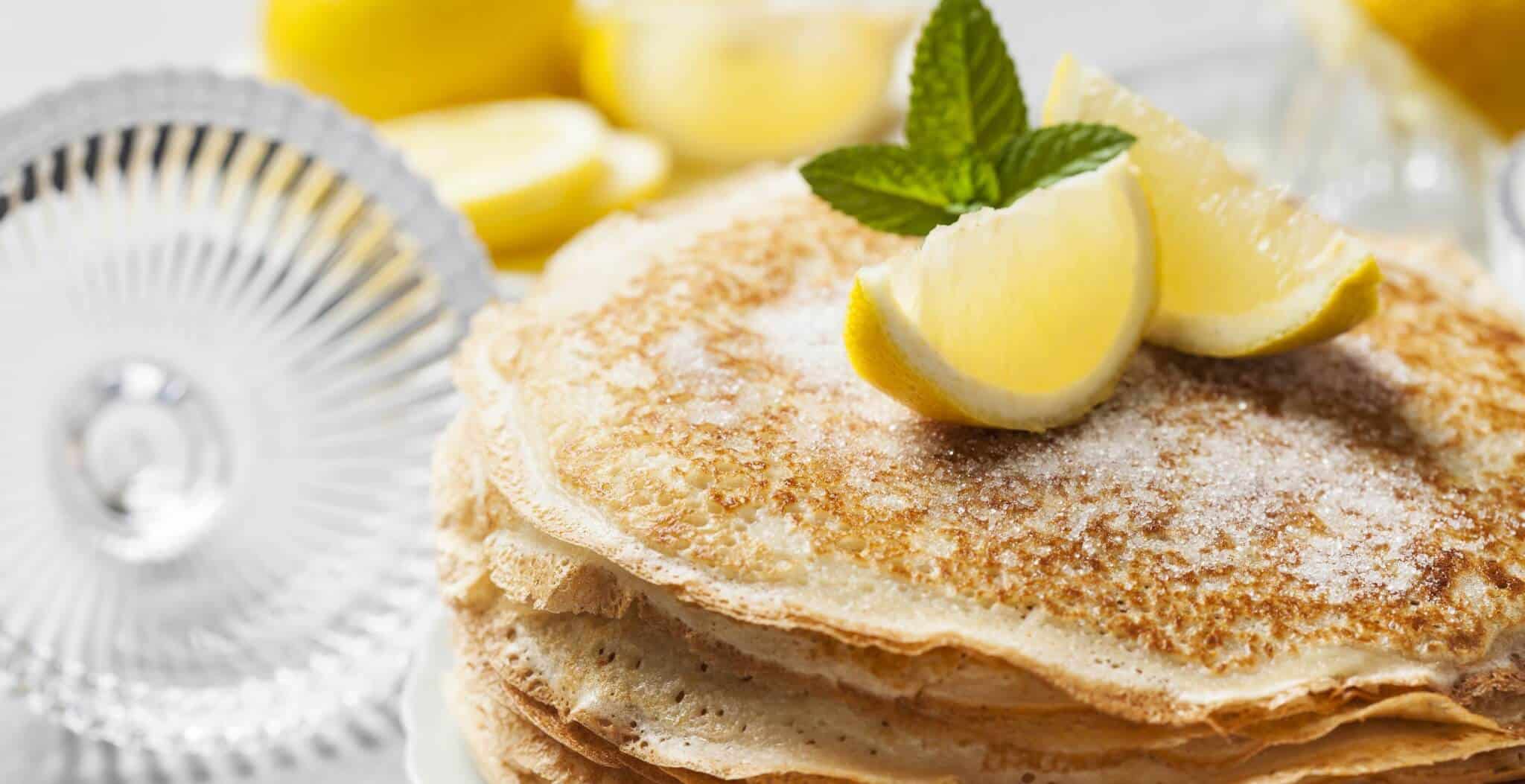
A pancake is a thin, flat cake, made of batter and fried in a frying pan. A traditional English pancake is very thin and is served immediately. Golden syrup or lemon juice and caster sugar are the usual toppings for pancakes.
The pancake has a very long history and featured in cookery books as far back as 1439. The tradition of tossing or flipping them is almost as old:
The ingredients for pancakes can be seen to symbolise four points of significance at this time of year:
Eggs ~ Creation
Flour ~ The staff of life
Salt ~ Wholesomeness
Milk ~ Purity
To make 8 or so pancakes you will need 8oz plain flour, 2 large eggs, 1 pint milk, salt.
Mix all together and whisk well. Leave to stand for 30 minutes. Heat a little oil in a frying pan, pour in enough batter to cover the base of the pan and let it cook until the base of the pancake has browned. Then shake the pan to loosen the pancake and flip the pancake over to brown the other side.
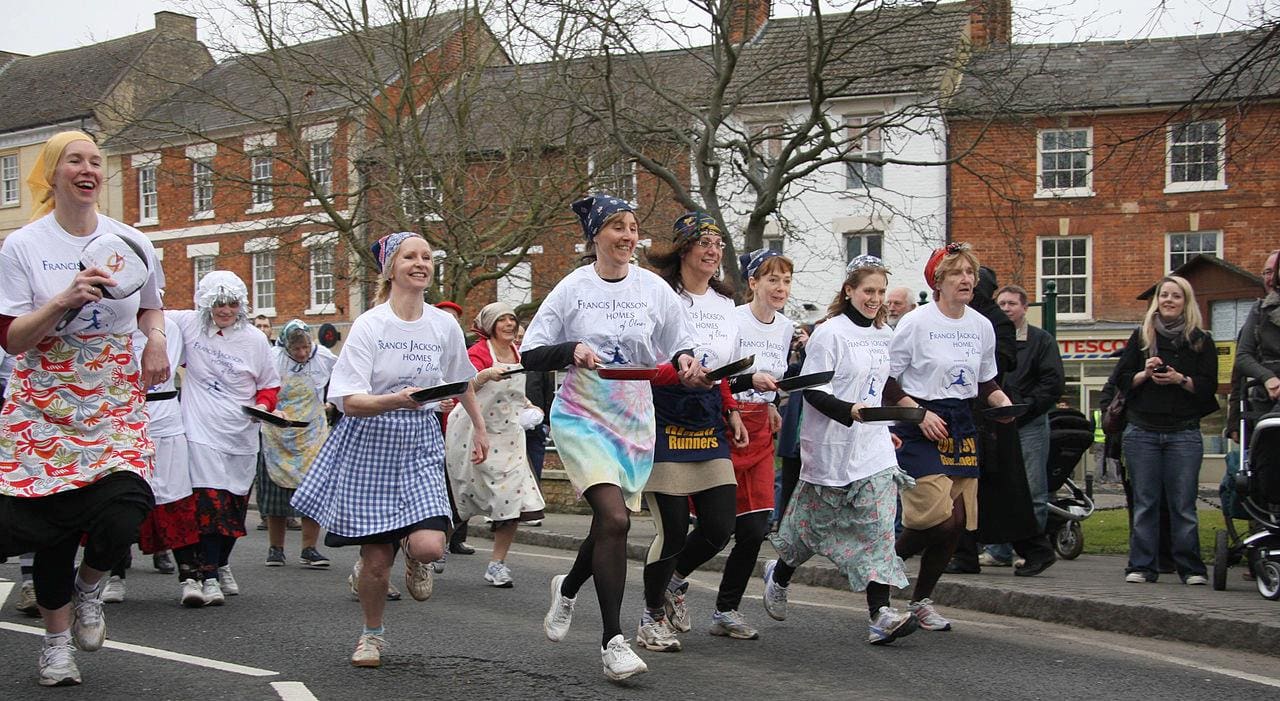
In the UK, pancake races form an important part of the Shrove Tuesday celebrations – an opportunity for large numbers of people, often in fancy dress, to race down streets tossing pancakes. The object of the race is to get to the finishing line first, carrying a frying pan with a cooked pancake in it and flipping the pancake as you run.
The most famous pancake race takes place at Olney in Buckinghamshire. According to tradition, in 1445 a woman of Olney heard the shriving bell while she was making pancakes and ran to the church in her apron, still clutching her frying pan. The Olney pancake race is now world famous. Competitors have to be local housewives and they must wear an apron and a hat or scarf.
At Westminster School in London, the annual Pancake Grease is held. A verger from Westminster Abbey leads a procession of boys into the playground where the school cook tosses a huge pancake over a five-metre high bar. The boys then race to grab a portion of the pancake and the one who ends up with the largest piece receives a financial reward from the Dean, originally a guinea or sovereign.
In Scarborough, Yorkshire, on Shrove Tuesday, everyone assembles on the promenade to skip. Long ropes are stretched across the road and there might be ten or more people skipping on one rope. The origin of this custom is not known but skipping was once a magical game, associated with the sowing and spouting of seeds which may have been played on barrows (burial mounds) during the Middle Ages.
Many towns throughout England used to hold traditional Shrove Tuesday football (‘Mob Football’) games dating back as far back as the 12th century. The practice mostly died out with the passing of the 1835 Highways Act which banned the playing of football on public highways, but a number of towns have managed to maintain the tradition to the present day including Alnwick in Northumberland, Ashbourne in Derbyshire (called the Royal Shrovetide Football Match), Atherstone in Warwickshire, Sedgefield (called the Ball Game) in County Durham, and St Columb Major (called Hurling the Silver Ball) in Cornwall.