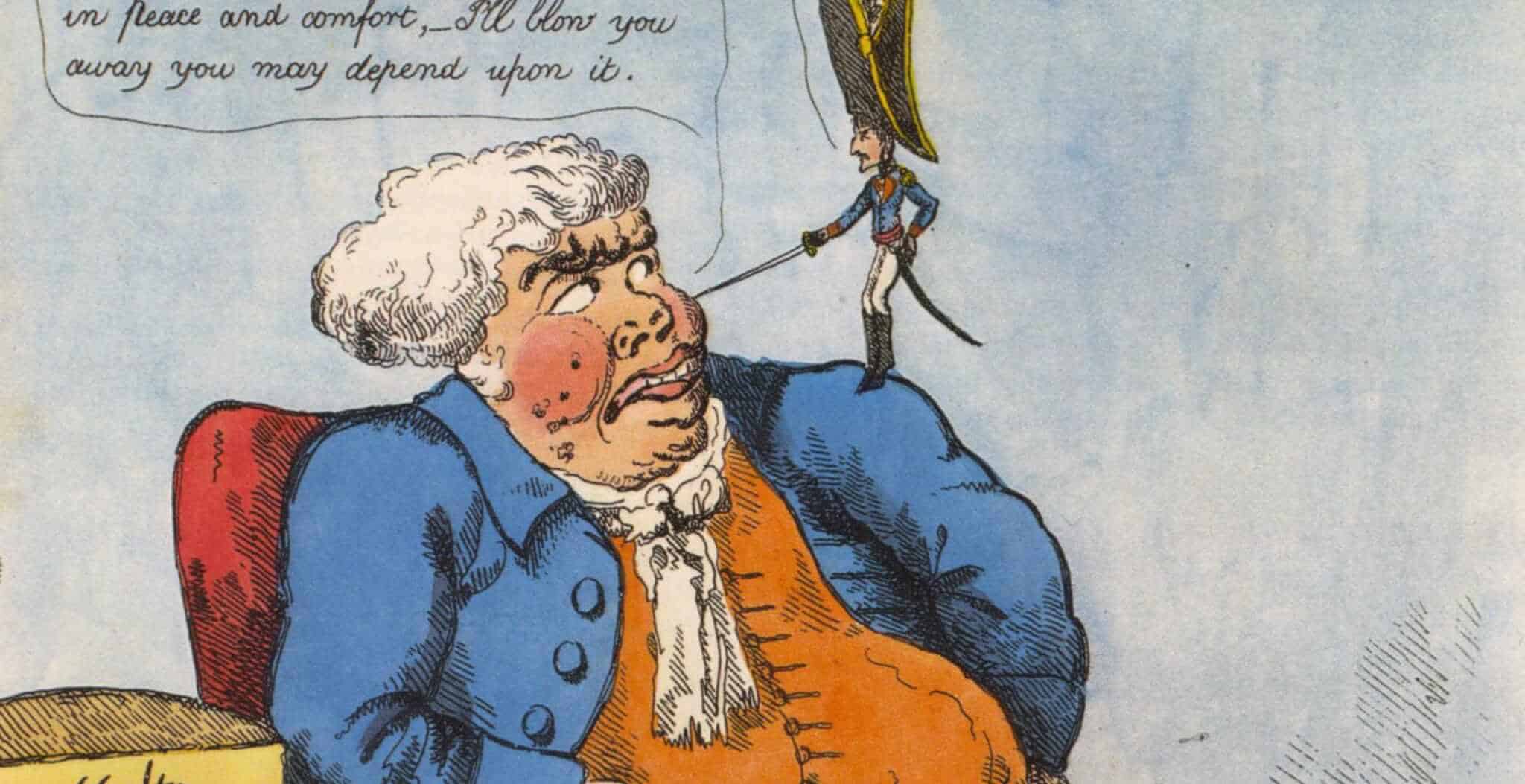


John Bull is an imaginary figure who is a personification of England, similar to the American ‘Uncle Sam’. He is shown in cartoons and caricatures as a prosperous farmer of the 18th century.
John Bull first appears as a character in a series of political satires by John Arbuthnot (1667-1735). Arbuthnot was a Scottish scientist, doctor and political satirist. His series of John Bull pamphlets, ‘The History of John Bull’, introduced John Bull as the typical Englishman: “an honest plain-dealing fellow, choleric, bold, and of a very inconstant temper” (from Law is a Bottomless Pit).
By 1762 James Gillray and other caricature engravers had incorporated John Bull into their work, and he appeared as a cartoon by Sir John Tenniel in Punch magazine.
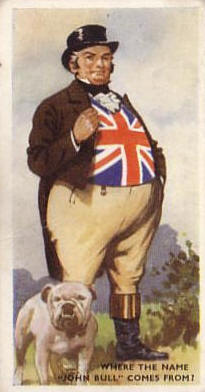
Bull is usually pictured as a stout man in a tailcoat with breeches and a Union Flag waistcoat, dressed in the fashion of the Regency period. He also wears a low topper (sometimes called a John Bull topper) on his head and is often accompanied by a bulldog. His size and apparent gluttony represented prosperity in an age where rosy cheeks and plump faces were a sign of good health.
The John Bull character was that of a drinking man, hard-headed, down-to-earth, averse to intellectualism, fond of dogs, horses, ale, and country sports.
John Bull’s surname is reminiscent of the alleged fondness of the English for beef, reflected in the French nickname for English people les rosbifs (the “Roast Beefs”).
During the Napoleonic Wars, John Bull became the national symbol of freedom, of loyalty to king and country, and of resistance to French aggression. He was the ordinary man in the street, who would fight Napoleon with his bare hands if necessary.
By the 1800s he was seen as a more assertive figure in domestic politics as well, prepared to criticise the royal family and the government, giving those outside the traditional political process a voice.
John Bull became so familiar that his name frequently appeared in books, plays, periodical titles, and as a brand name or trademark. Although frequently used through World War II, John Bull has been seen less often since the 1950s.
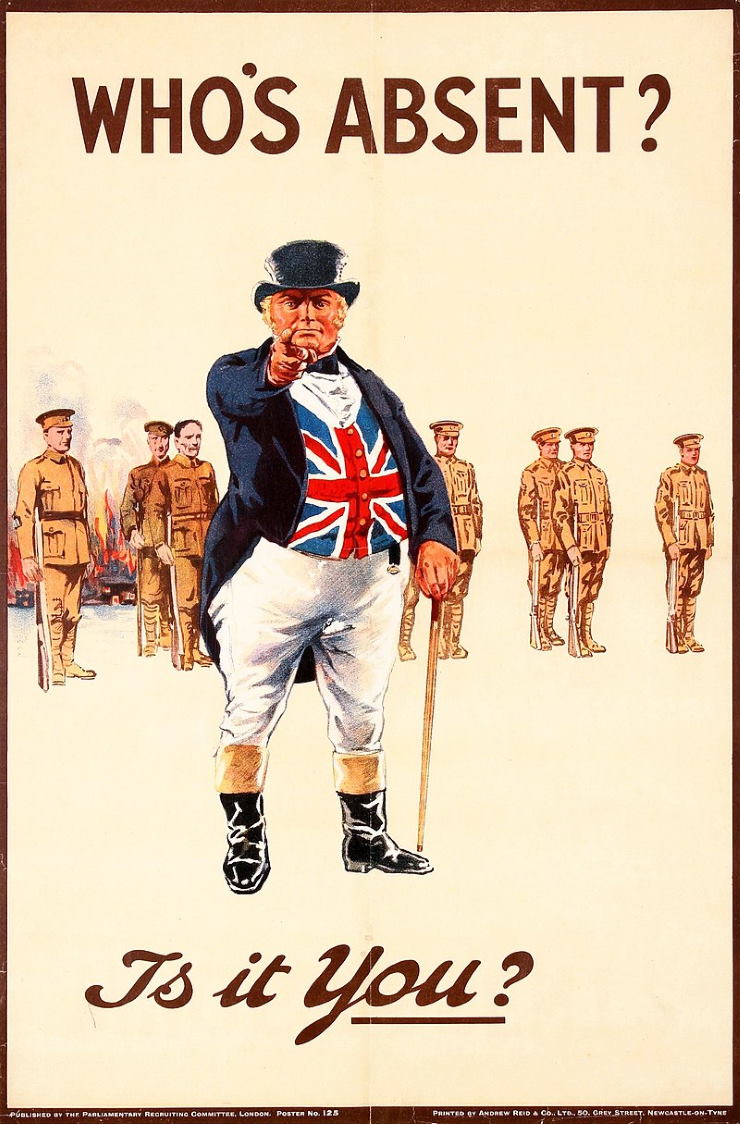 World War I recruiting poster
John Bull is still looked upon with affection by many English people. As Uncle Sam is the iconic representation of the United States, so John Bull is the personification of the character of the English: honest, generous, straightforward, with a zest for life and ready to stand up and fight for what he believes in.
Footnote:
There was a John Bull in real life, one of the most distinguished English keyboard players of his time. John Bull (1562 – 1628) was in the service of Queen Elizabeth I before taking refuge in the Netherlands to avoid various charges, including adultery, levelled at him in England. He was known as an organist and a virginalist.*
Bull wrote keyboard compositions, the best known of which is The King’s Hunt. He is also regarded as the composer of ‘God Save the King’ – the melody is supposed to have been found amongst his papers after he died.
*Virginal – a form of keyboard instrument with a mechanism for plucking rather than hammering the strings.