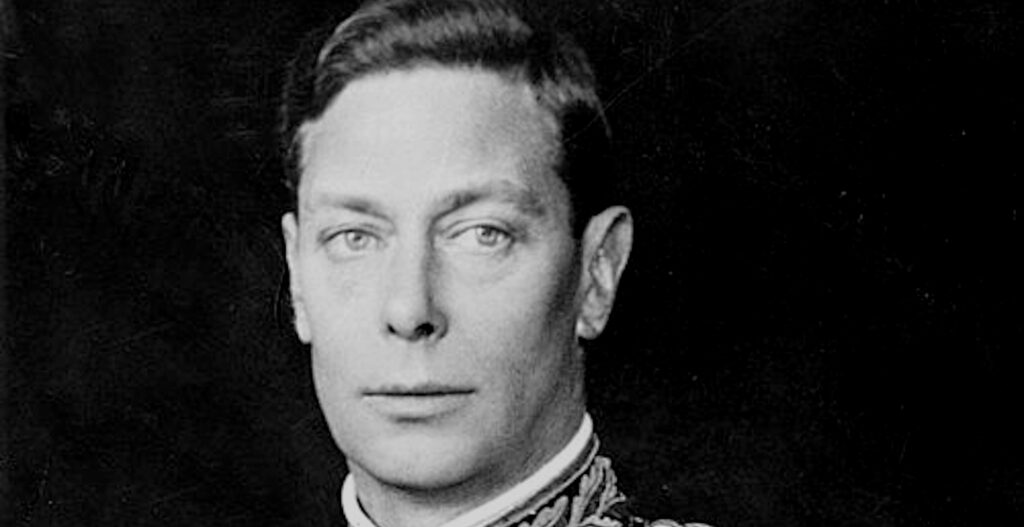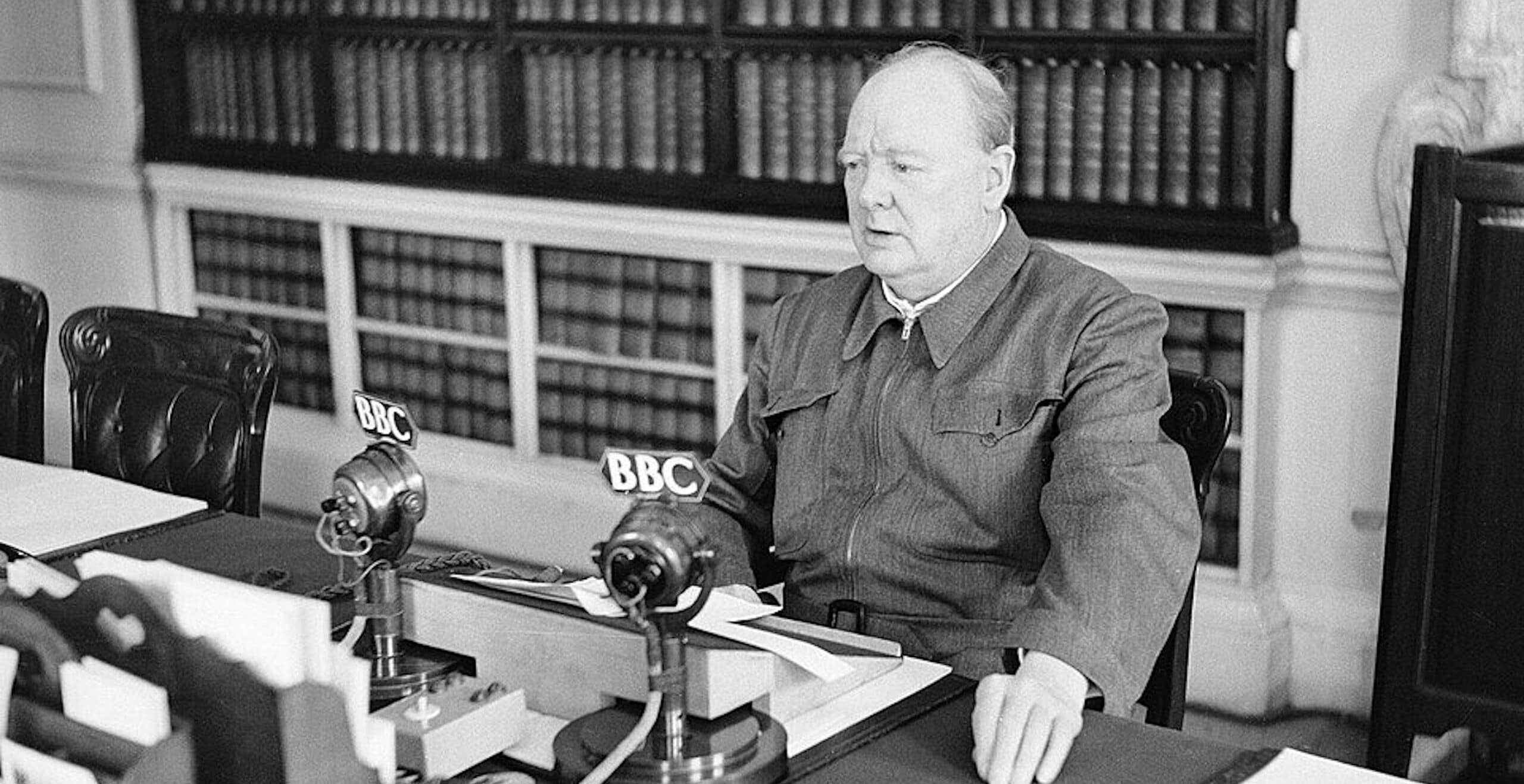


If you want to read or listen to the news today, it’s quite easy to flick the television on or ask Alexa to tell us what’s going on thousands of miles away, but during the 1940s, understanding the wartime landscape meant waiting for the intermittent news broadcasts or reading the day’s newspaper. At the outbreak of the Second World War around three quarters of Britain’s homes owned a radio, commonly referred to as the “wireless”. By this time radio was only around 50 years old, with Marconi beginning testing in the 1890s.
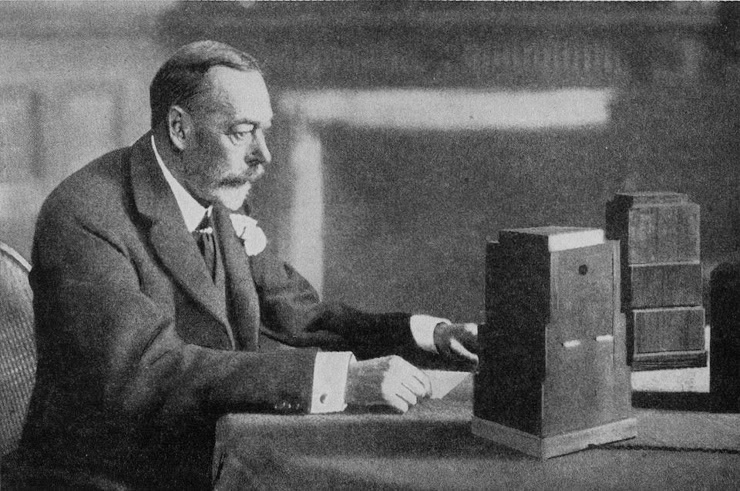
However, it wasn’t until 1922 that widespread public broadcasting had begun, with the formation of the British Broadcasting Company (BBC) which later became the British Broadcasting Corporation in 1927 with the Royal Charter. The expansion of radio in the UK continued into the 1930s with royal events including the King’s Christmas Message, the abdication of King Edward VIII and the coronation of King George VI in 1937 broadcast to millions across the country. This expansion continued with the outbreak of the Second World War and on 1 September 1939, the BBC Home Service began broadcasting nationally.
This new service was the amalgamation of two existing stations and was broadcast each day from 7.00 am until 12.15 am. It was primarily news focused with bulletins at 7.00 am, 8.00 am, 1.00 pm, 6.00 pm, 9.00 pm and midnight. This gave civilians on the Home Front and soldiers alike regular news updates about the front line, whilst also attempting to keep up national morale with music played in between.
Less than 4 months later, January 1940 saw the beginning of the BBC Forces programme, which aired lighter entertainment after British Expeditionary Forces in France complained the Home Service was too dull, whilst spending long hours in the billets during the phoney war period. The Forces Programme was also available to civilians and provided a mixture of dramas, music and quiz shows alongside the more formal news bulletins and talk segments. More entertainment shows would follow with the Sunday Half Hour show, and January 1942 saw the beginning of Desert Island Discs, which celebrates its 85th anniversary in 2027, with comedian and singer Vic Oliver, husband of Winston Churchill’s daughter Sarah, entertaining audiences with his song choices.
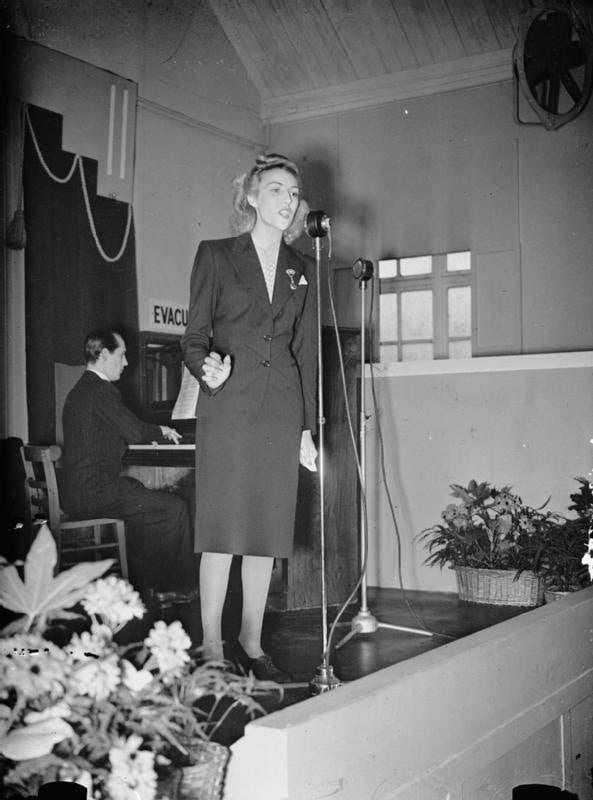
Families would often huddle around the “wireless” to listen to these shows, as well as other special entertainment programmes including the popular comedy show ‘Danger – Men at Work!’ or Vera Lynn’s thirty minute ‘Yours sincerely’ show which broadcast messages to serving “BBC Forces Programme”.
Middle class families would often have large cabinet-style radios, which for many were a focal point of the living room. Smaller radios were also available, including the Pilot Little Maestro, which was available in various materials including wood, bakelite and leatherette. It was often advertised in newspapers for “just five guineas”, which when calculated with inflation is around £215, not particularly cheap in a wartime economy.
Moreover, radio was not just for entertainment, it often also had a strategic role in wartime propaganda. Broadcast to both the United Kingdom and America, Germany Calling is a prominent example of the psychological use of radio. The station was notorious for its “Lord Haw Haw” character, a common nickname primarily associated with American-born former member of British Fascist Union William Joyce amongst others, and would broadcast German propaganda and demoralising stories to the Allies.
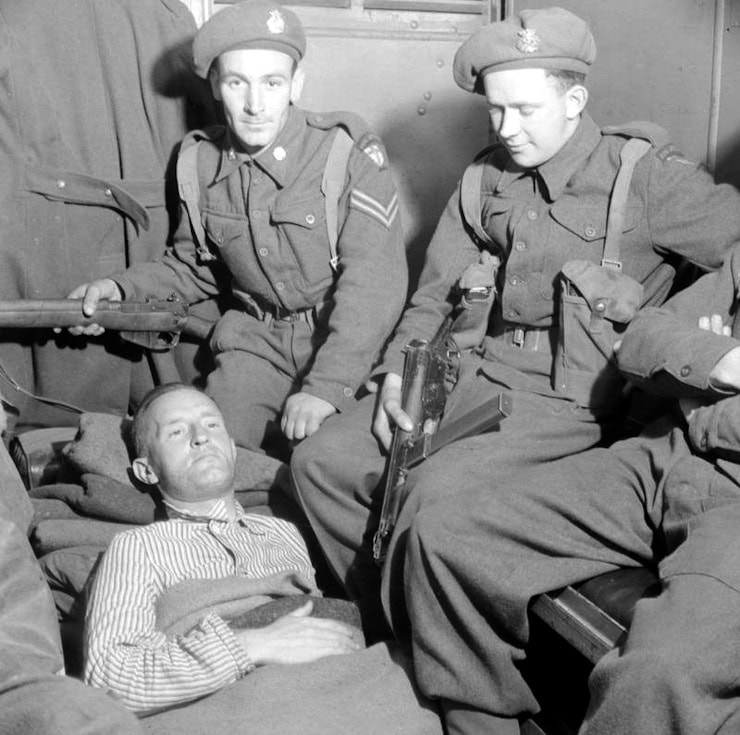
The station aired a mixture of jazz music, which had been banned by the Nazis and news, with the details of Allied troops and air crews caught behind enemy lines a regular subject. Additionally, soldiers serving abroad and in intelligence units would also listen to German radio broadcasts in an effort to gain any information they could on military strategy or national morale, with Nazi propaganda minister, Joseph Goebbels, once claiming that radio was the “eighth great power” due to its role in propaganda.
Like their loved ones at home, many soldiers stationed abroad had access to a radio and Royal Signal Corps officer Denis Gibbs, who had spent the run up to D Day in Italy, wrote in his diary about how he found out about the Allied invasion of Normandy.
Today, of course, has been D day, and you can imagine how excited we’ve felt about it all. I’ve been round at the GRS practically all day listening to the doctor’s radio, and we’ve designated ourselves S.H.B. – Supreme HQ Bougie. We were very annoyed at the party tonight when we found that the French didn’t take one jot of interest in the invasion. They’re a proper shower!
For many soldiers, moments like this show that the radio was more than just a source of news; it also offered them a social outlet where they could come together with their fellow soldiers and discuss, analyse and on occasions like this, celebrate the successes of the Allies.
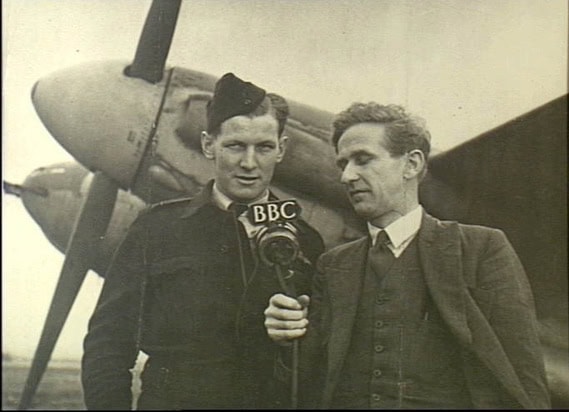 A BBC journalist interviewing Squadron Leader E H Dunkley of 464 Squadron RAAF following a successful raid on Gestapo Headquarters, ‘Shellhaus’, Copenhagen, on 21 March 1945, by the Squadron’s Mosquito aircraft.
The resulting description of their base as ‘Supreme HQ Bougie’ shows the way that radio influenced humour, as it allowed them to engage with what was occurring on the front lines soon after it happened. For civilians and servicemen, the radio formed a major part of their day to day lives with many family memories created around the wireless. For soldiers, radio broadcasts of key battles and advances often meant they were a step closer to returning home to their loved ones.
David Morgan is a public historian and writer currently undertaking a Masters by Research at the University of Gloucestershire focusing on Second World War soldier tourism in Italy. David has also recently co-curated an exhibition at the Holst Victorian House in Cheltenham looking at the Second World War through a local lens.
Published: 11th February 2026