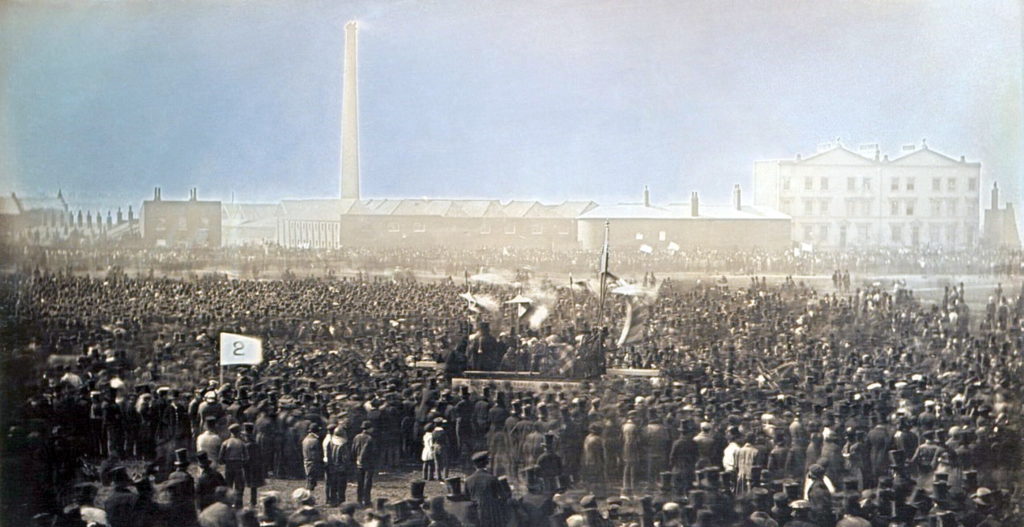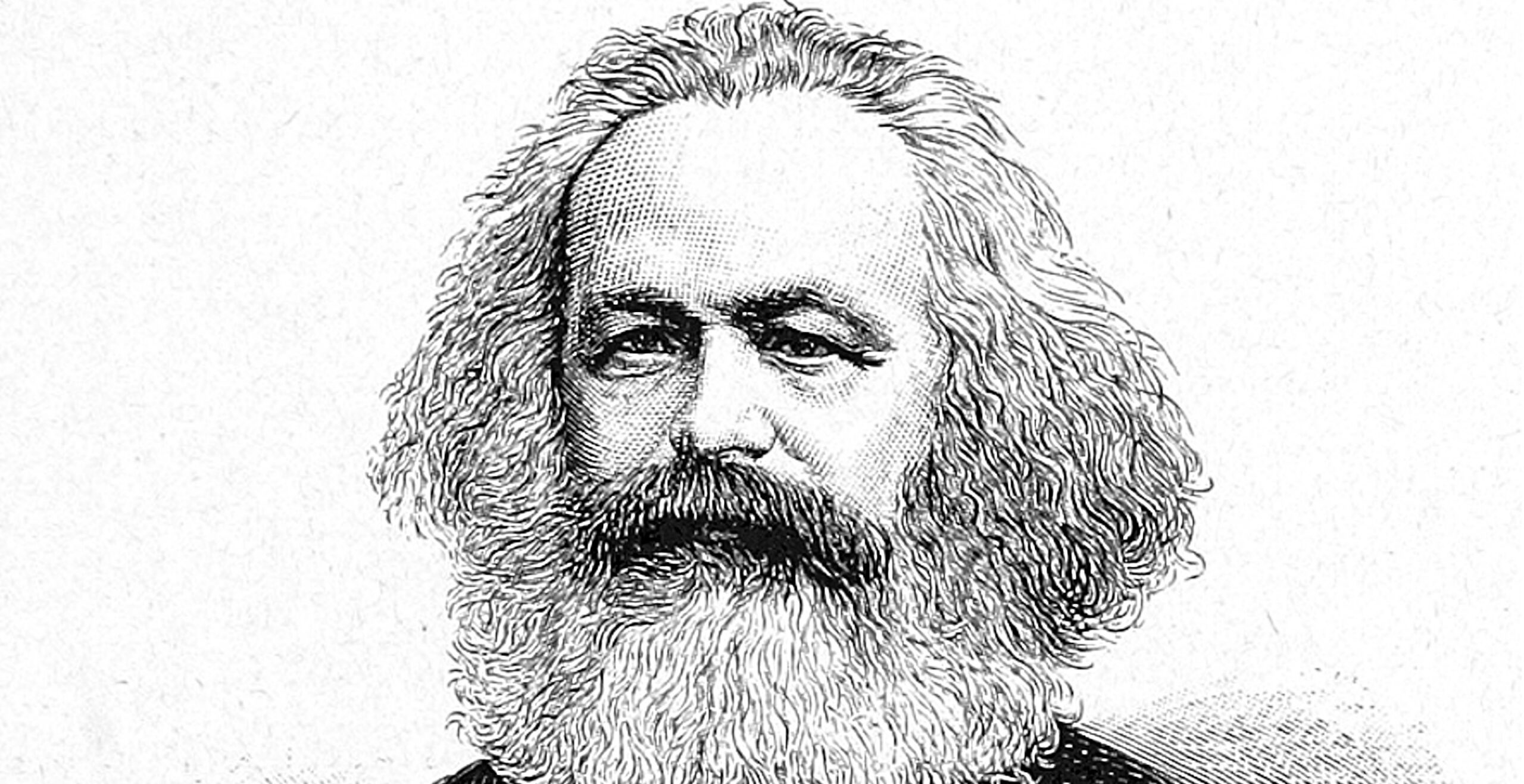


After the failed revolutions of Europe in 1848, Britain became home for thousands of political refugees enticed by rights to free speech and the press.
This included around 7,000 refugees gathering from across the continent from France, Germany, Italy, Hungary and Poland. Prominent figures including the French socialist Louis Blanc and the Italian nationalist Guiseppe Mazzini settled in the country. Amongst these figures was a man who had not yet gained great fame but was to define a new era of political thinking, 31-year-old Prussian philosopher Karl Marx.
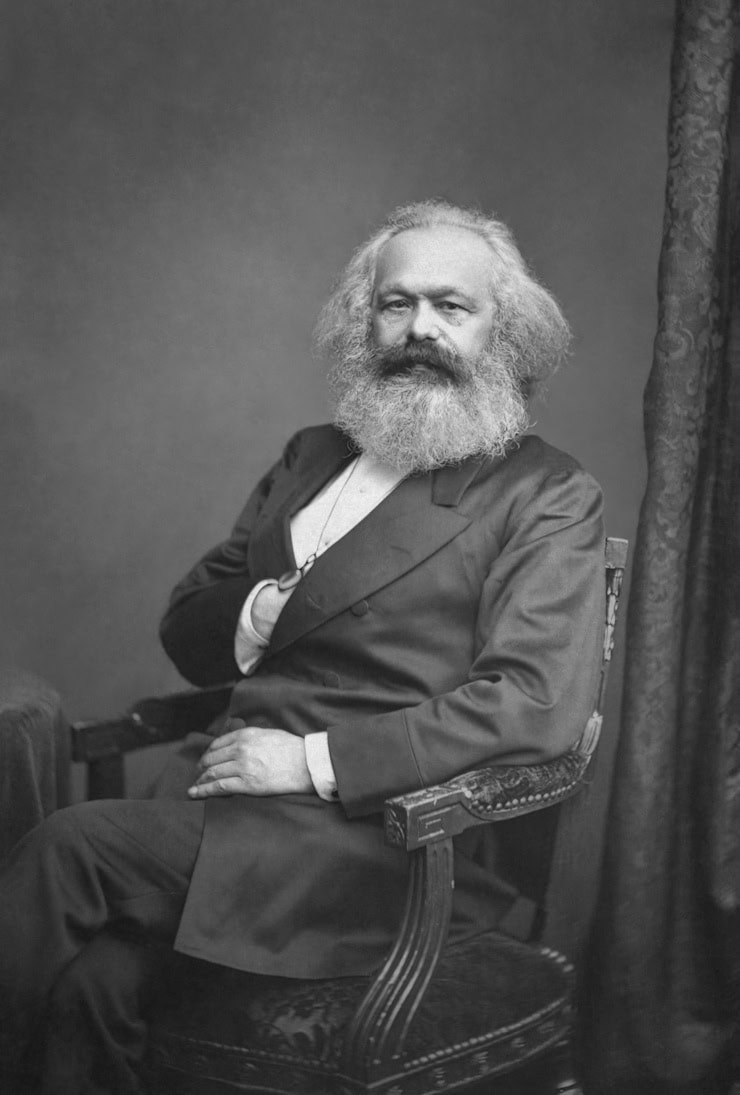
Born in Tier in the Kingdom of Prussia, as a young man Karl Marx was influenced by the philosophy of Friedrich Hegel and went on to earn his doctoral degree in philosophy from the University of Jena.
For the rest of his life, Marx devoted himself to his work, producing his own theories and analysis of capitalism and the class system, resulting in some of his most famous works including The Communist Manifesto (which he co-authored with his friend Friedrich Engels) as well as his acclaimed work, Das Kapital (which he completed in London).
From his homeland of Prussia, his work took him across Europe, firstly to Paris in October 1843 when he became the co-editor of an up-and-coming radical left wing Parisian newspaper, the Deutsch-Französische Jahrbücher. It was here in this glamorous city where his ideas about class struggle began to take shape.
A year after moving to Paris, he met fellow German socialist Friedrich Engels at a café, a chance encounter which would result in a lifelong friendship. Engels, who had recently published The Condition of the Working Class in England, proved influential in shaping Marx’s ideas and the two men would in the future collaborate on numerous publications.
In 1845, Marx found himself expelled from France, forcing him to emigrate to Belgium where he was only permitted to stay if he agreed not to publish any political literature.
Brussels became a setting for fellow exiled socialists across Europe to join together, sharing and exchanging ideas as members of the radical organisation, the League of the Just.
A few months after his move to Belgium, Marx embarked on his first trip to England with Engels who had already lived in Manchester for two years. The purpose of the trip was to make associations with the Chartist movement, a grassroots working class movement in England.
Back in Brussels, Marx and Engels worked on their publication The Communist Manifesto which was published in February 1848.
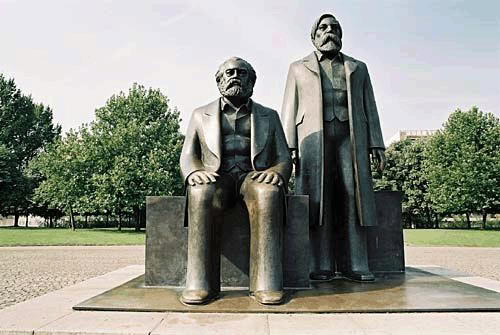
The year 1848 became highly significant, as across the continent of Europe a series of protests and rebellions emerged. In France this resulted in the overthrow of the monarchy whilst in Belgian, workers were planning revolutionary action. In this context, the Belgian Ministry of Justice accused Marx of his involvement, forcing him to flee to France where he believed he would be safe before moving on to Cologne where Marx hoped he would witness revolution spread.
Whilst in Cologne, Marx published his own daily newspaper, however he and other revolutionary socialists found themselves hounded by police. In this febrile atmosphere, the democratic parliament in Prussia collapsed, leaving the king to introduce a new cabinet of his supporters. In May 1849, Marx was given orders to leave the country, returning temporarily to France where a counterrevolution saw him expelled and leaving him with no other choice but to take himself and his family to London.
In June 1849, Marx arrived with his family in tow, residing in a city that unbeknown to him, he would call home for the rest of his life.
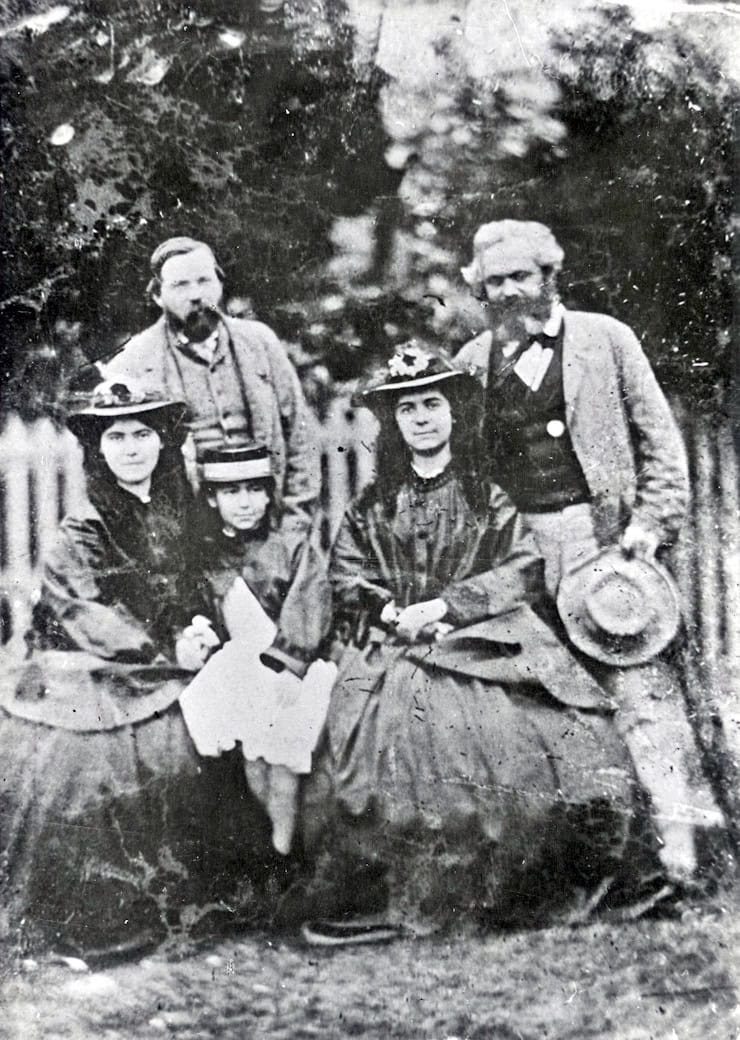
At 31 years old and with refugee status, Karl Marx accompanied by his wife Jenny and their three children settled in the city, believing it to be a short stay rather than a permanent residence.
London became his home over the next three decades, influencing his views, theories, and vision of capitalism, all of which manifested in some of his most famous and enduring works.
After arriving in London, Marx focused on his writing, becoming an international journalist published not only in newspapers in England but also in his homeland of Prussia, as well as Austria and further afield in America and South Africa.
Initially the family stayed in the German Hotel in central London, a well-known destination for émigrés, before renting a flat in Chelsea temporarily before high rents forced them to find a cheaper location. This took them to a small and rudimentary flat in the heart of Soho in Dean Street.
Soho proved to be a difficult place to live in, as with overcrowding and poverty came the constant outbreaks of disease which in many cases led to fatalities.
One such example was the local outbreak of cholera which came from the Broad Street water pump. The Marx family were not spared, losing four of their seven children in infancy. The family always struggled for money, reliant on financial aid from Engels in order to pay for basic bills.
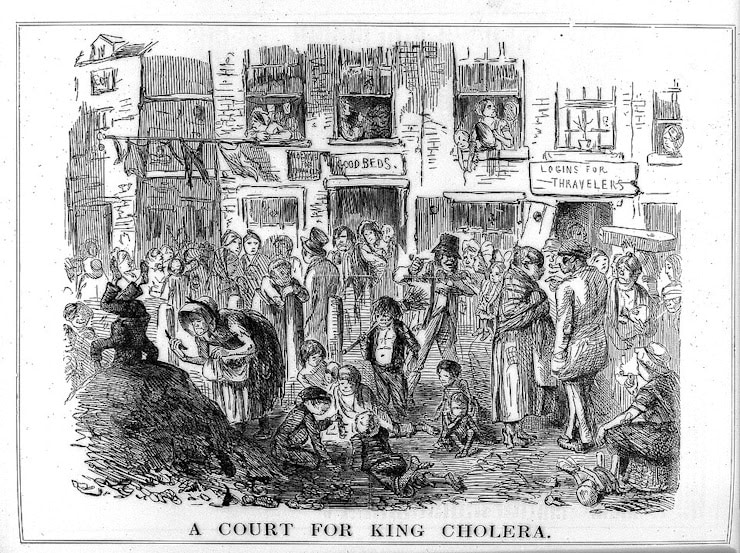 Illustration from Punch magazine, 1852
The family initially only had two rooms on the second floor of a house. The family were forced to share a bedroom whilst the front room served as a kitchen and living room. For his wife Jenny, such circumstances were difficult to cope with as she famously described ‘the evil frightful rooms which encompassed all our joy and all our pain.’
Despite their rudimentary living conditions, Marx invited fellow politically active individuals and refugees to the house.
The location itself was a hotbed for political refugees as it was low-cost and had a reputation for housing immigrants. This multicultural neighbourhood soon became home with likeminded politically active members of the community easy to find. The area accommodated the needs of these refugees with foreign language bookshops and a host of meeting places such as taverns, cafes and restaurants which played host to innumerate political debates.
One such location, popular amongst German refugees at the time, was the Red Lion pub at Great Windmill Street, the base for the Communist League as well as the German Workers’ Educational Society, in both of which Marx played an active role.
Eventually he chose to rent another flat with the addition of a study, in which he wrote some of his most famous works. Meanwhile, much of the extensive research he carried out for his work was conducted in the library of the British Museum.
The British Museum’s Reading Room was a pivotal location for Marx’s everyday life in London, providing him the opportunity to conduct research for his articles as well as his seminal work, Das Kapital.
Later in life, he encouraged his daughters to help him with his research and his daughter Eleanor even met her future partner in the Reading Room.
In the meantime, after working as a European correspondent for the New York Daily Tribune (the largest newspaper in circulation) for ten years, he broke ties with the publication after falling out with the editorial board.
He had initially begun contributing articles with the assistance of Wilhelm Pieper, who translated his early pieces from German to English before Marx’s proficiency with the English language improved.
Unfortunately for his family however, his work as a journalist did not earn him much money which forced his family to survive on very little.
This situation worsened when in 1857 he was informed that he would only be paid for one article a week by the New York Daily Tribune, due to the ensuing economic crisis.
After breaking ties with the paper, he was invited by the Tribune’s former editor Charles Dana to produce articles on military history for the New American Cyclopedia.
In the following decade Marx involved himself with the First International and during this time wrote one of his most well-known pamphlets, ‘The Civil War in France.’
Meanwhile, back in London, an inheritance bequeathed to Jenny allowed the family and their three surviving daughters to leave the poverty of Soho behind and settle in a newly developed neighbourhood.
Kentish Town would remain home for the family for the rest of their lives and in, 1864 Marx’s inheritance from a family friend as well as his mother allowed them to move to a nicer home in the area.
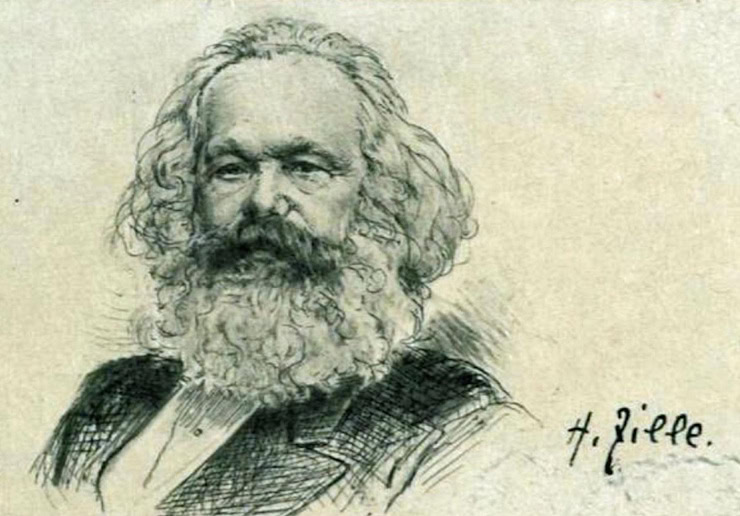
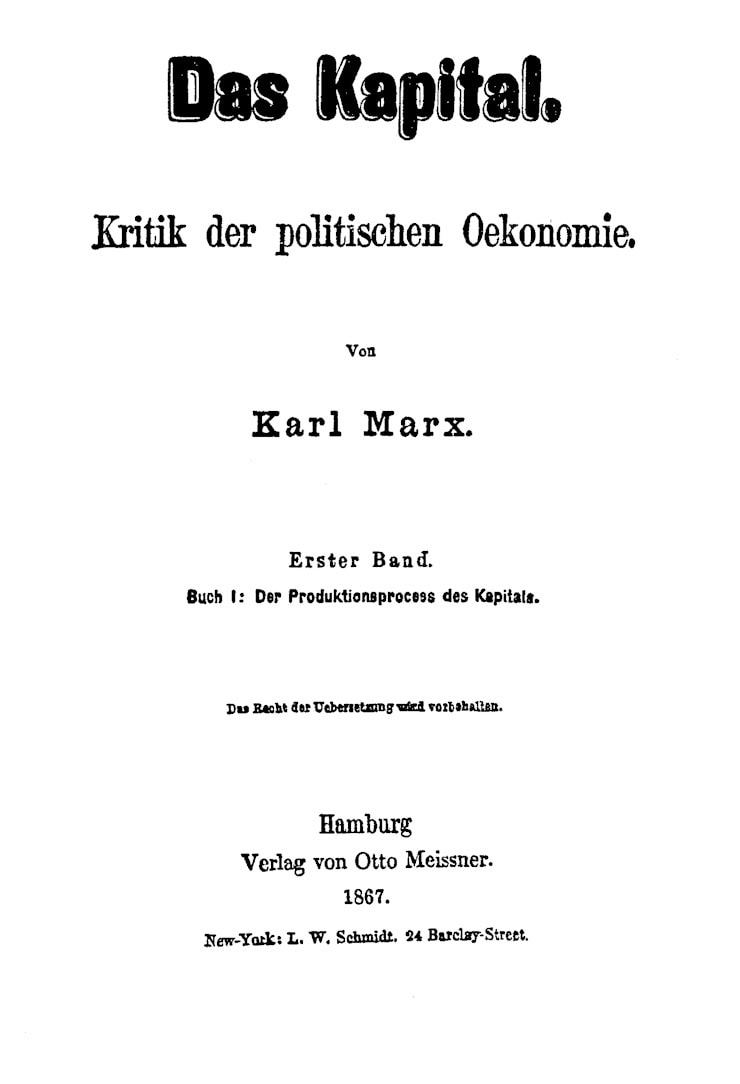
His successful publication, A Contribution to the Critique of Political Economy, was well-received and helped pave the way for his major work Das Kapital. The first volume proved to be an enormous success with huge demand including publications in German and Russian which sold out quickly.
In the latter part of his life he continued to dedicate himself to his work, however his health began to suffer, and he was unable to give as much of himself as he wished but nevertheless continued providing his analysis of German and Russian political developments.
Throughout his life Marx remained dedicated to grassroots activism, involving himself with the International Working Men’s Association which was based on Britain’s growing trade union movement.
In his final years, he lost his loyal wife Jenny who passed away after a period of ill health resulting from liver cancer.
Two years later, Karl Marx passed away in his study after battling with bronchitis.
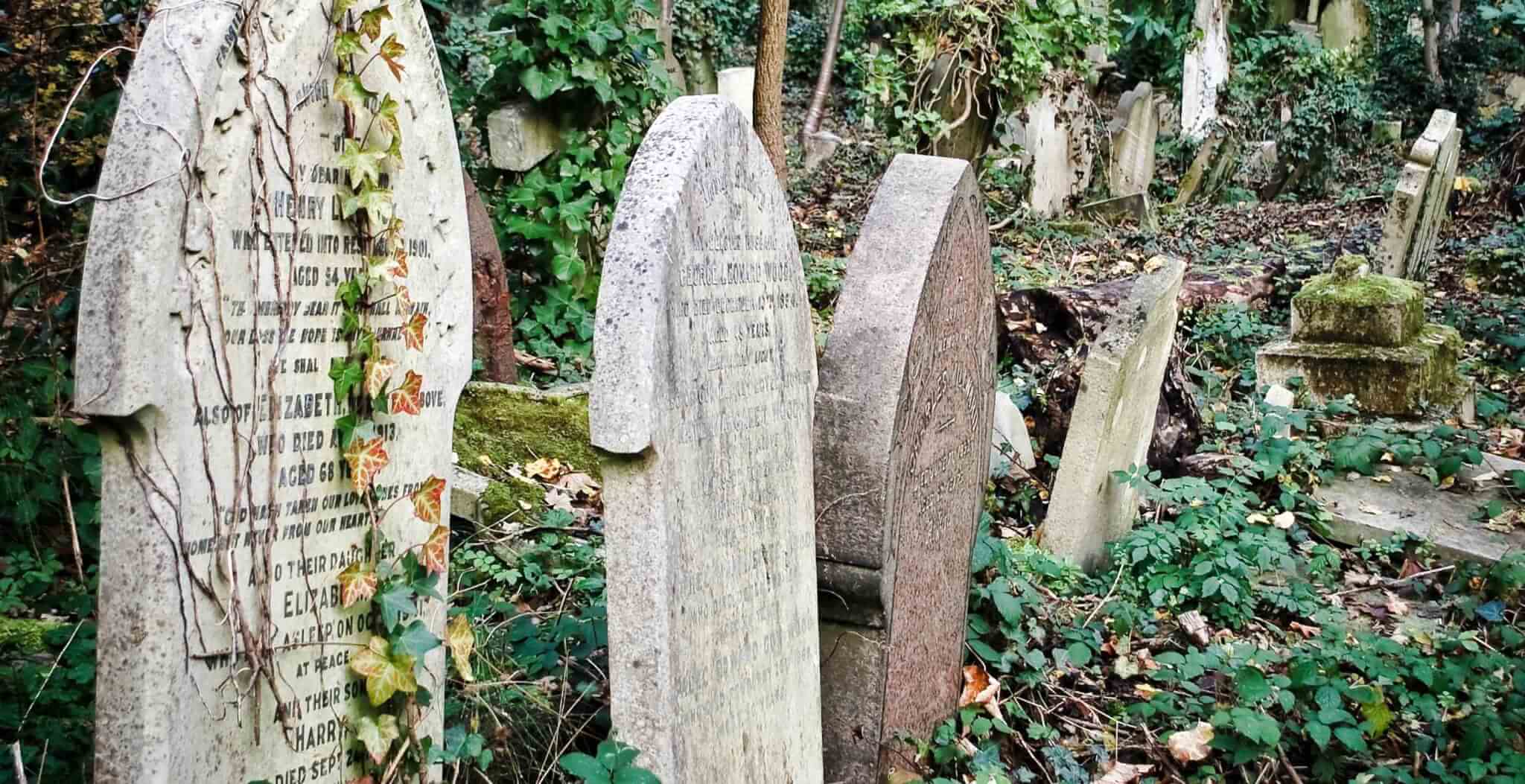
Buried in Highgate Cemetery, Karl Marx spent 34 years in London, making a life for himself in the bustling metropolis as a refugee. His time spent in England would shape his thinking and have a profound effect on his work as a philosopher and political theorist.
Jessica Brain is a freelance writer specialising in history. Based in Kent and a lover of all things historical.
Published: 11th August 2026.