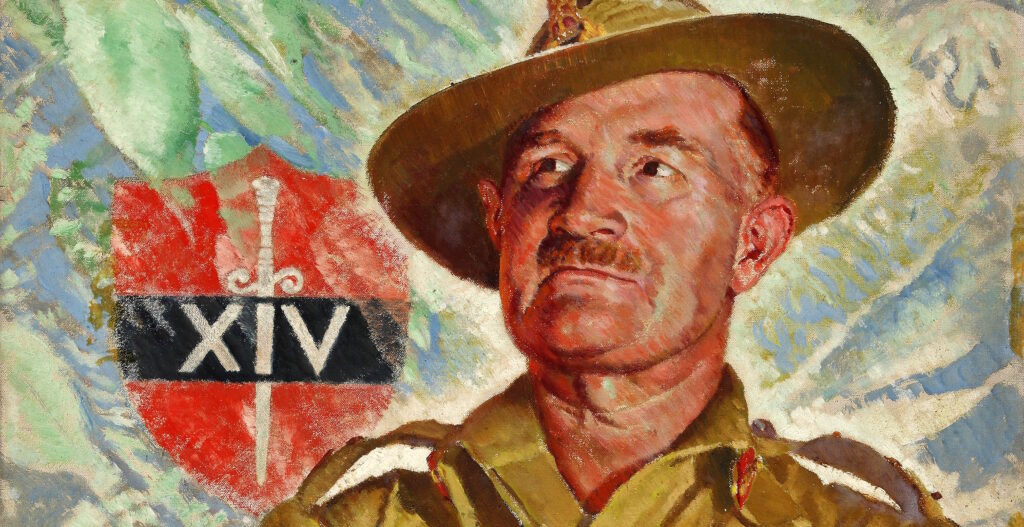

The Battles of Imphal and Kohima were conflicts fought between March and July 1944 in a gruelling but decisive campaign which enabled the 14th Army to reconquer Burma.
After a succession of Japanese victories, these two important battles marked a turning point in the fortunes of the Allies who successfully repelled a major Japanese offensive aimed at invading India.
The stage was set for conflict when in March the same year, the Imperial Japanese Army launched Operation U-Go across the border from Burma into north east India. Their ambitions were simple: capture the two strategic locations of Kohima and Imphal.
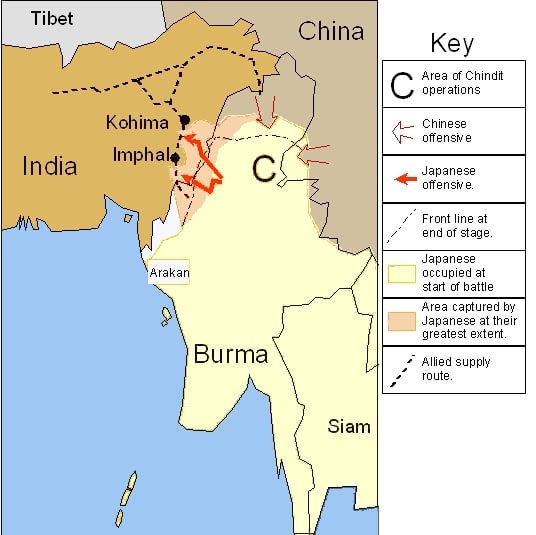
This threat forced the Allies into action in order to defend and repel the Japanese advances. At Imphal the 14th Army, which was a multi-national unit, were forced to hold off repeated attacks for several months.
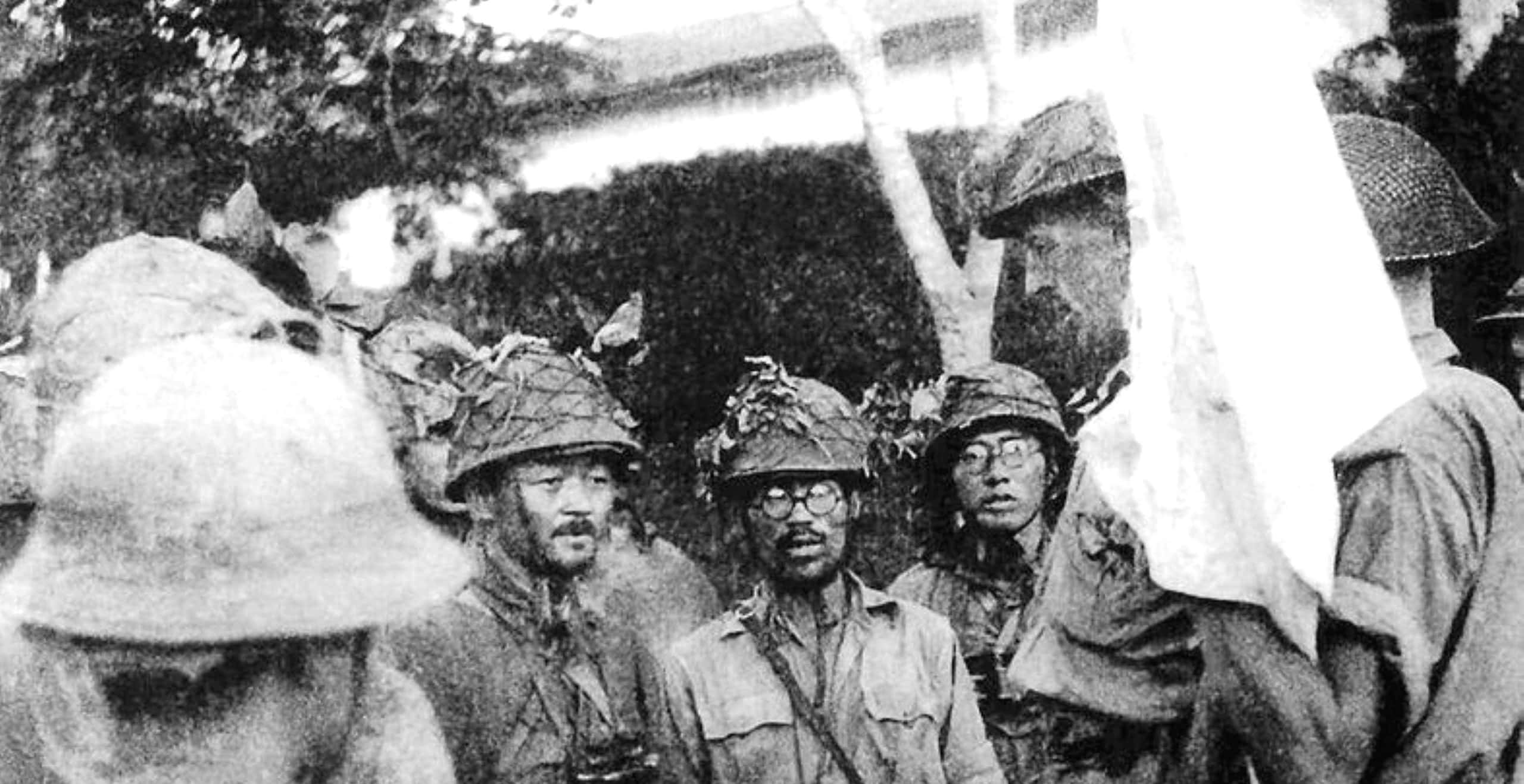
Meanwhile, further north at Kohima, a combined British and Indian garrison engaged in close-combat fighting, finding themselves outnumbered, encircled and battling with little to no resources. The men bravely defended a fourteen day long siege, holding off twenty-five Japanese attacks.
Finally, relief did eventually come in the form of Indian troops who arrived to relieve the current defenders. This enabled the Allied forces to break the Japanese siege and encirclement, thus derailing Japanese plans and forcing them from their positions.
Fighting did not end however, throughout the following months both sides exchanged fire back and forth resulting in numerous casualties. Eventually, on 22nd June the 5th Indian Division and British 2nd Division forces met up, forcing an end to the Battle of Kohima.
This allowed much needed supplies to reach the region, however in Imphal fighting continued until the following month, when the Japanese finally began to retreat back to Burma.
The defeats inflicted on the Japanese at Kohima and Imphal were not only a turning point in the Asian theatre of war which had been dominated by prior Japanese successes, but also it activated the subsequent Allied liberation of Burma.
Japan’s military provocations had begun with the attack on Pearl Harbour in December 1941 and in the subsequent weeks which followed escalated with invasions of various European overseas colonial territories across East Asia such as Hong Kong, Malaya, Singapore and Burma.
Unfortunately, the British had made a miscalculation believing that a Japanese land invasion of Burma was unlikely to occur. Sadly, this assessment was quickly disproved in March 1942 when the capital Rangoon fell to the enemy.

In the months that followed, the Japanese continued successfully pushing northwards, eventually forcing the Allied troops to retreat to India in a five month long 1,000 mile retreat through difficult terrain and with little sanitation or supplies.
Realising the severity of the situation, in November 1943 a new military formation was set up under Admiral Lord Louis Mountbatten. With new formations and new strategy, the multi-national 14th Army, made up of servicemen from across the Commonwealth, were to play a crucial role in subsequent battles.
Soldiers were given orders not to retreat but to hold off Japanese advances and rely on air supply when their communication and supply routes were cut off.
In March 1944, the Japanese began their advance against the Indian frontier to the north-east, testing the Allied forces.
Capturing the supply bases at Imphal and severing the road which linked Dimapur and Imphal at Kohima would enable the Japanese to enact their plans and further their ultimate objective of invading India.
Imphal was Britain’s principal base in the area, the capital of Manipur state. The Japanese were aware that the 4th Corps led by Lieutenant-General Scoones was based there and thus the strategy was to quickly overcome the men and seize supplies as quickly as possible. Meanwhile, the Japanese 33rd Division south of Imphal would cut off the 17th Indian Division.
With the military strategy agreed upon, the Japanese began to put their plans into action, beginning on 29th March with the severing of the Imphal-Kohima road and the encirclement of the 17th Division. This was soon followed by the isolation of Kohima which, apart from the central ridge, was largely captured in a matter of only one month.
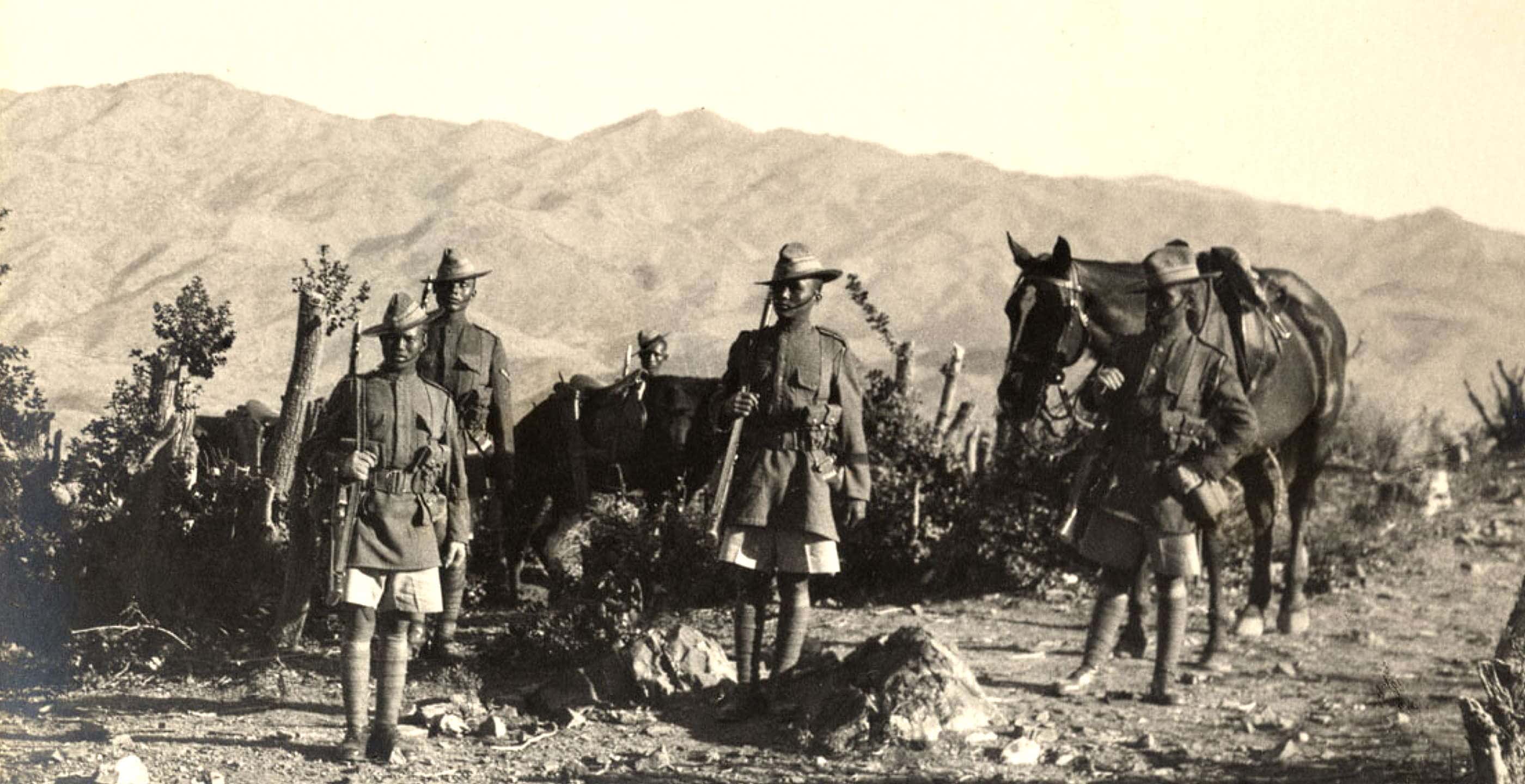
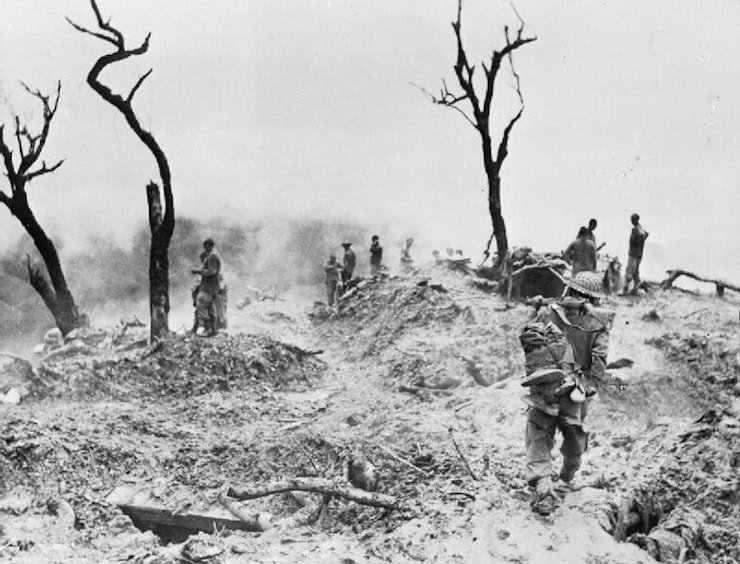 The remains of Japanese dead, equipment and caved-in bunkers on ‘Scraggy Hill’ which was captured by 10th Gurkha rifles in fierce fighting in the Shenam area during the Battle of Imphal.
Severely outnumbered, the British-Indian troops held on at Garrison Hill, faced by the daunting prospect of 15,000 Japanese.
Throughout April, the Battle of Kohima was dominated by close-quarter combat leading to a high number of casualties.
One important factor had been miscalculated by the Japanese however: they underestimated the Allies’ ability to call up reinforcements and maintain a defensive position in the meantime.
Mountbatten gave the orders for the 2nd Division to be despatched, enabling them to join with Stopford’s 33rd Corps in a march to relieve Kohima.
Mid-way through April, the British were able to break through the roadblock at Zubza, enabling them to enter Kohima four days later.
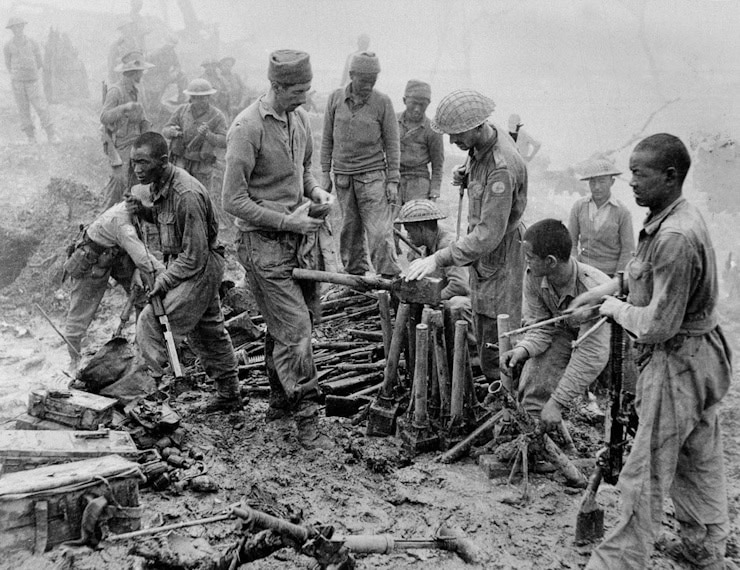
In spite of this breakthrough, fighting continued around Kohima for another month until the Japanese began their withdrawal.
Meanwhile, the road to Imphal was being cleared by Stopford’s Corps, assisted by the 2nd Division who would subsequently link up with the 4th Corps who had been besieged for over two months.
In a last ditch effort, the Japanese continued to launch attacks at Imphal’s defences, however the forces stood firm.
A very important factor in securing the win for the Allies was the communication and supply network which allowed for quick deployment of reinforcements by air, amounting to around 19,000 tons of supplies. Moreover, thousands of casualties were airlifted and replacement forces deployed quickly and effectively. The air supplies allowed the garrisons to hold back the Japanese before relief forces reached them and could repel the enemy.
The Japanese, who had not factored in Allied air supplies also miscalculated the time spent resisting a retreat. This would cost them dearly when they chose to hold on and pursue these attacks instead of withdrawing sooner when the opportunity presented itself. Once the offensive looked like it was failing, the Japanese remained nonetheless, which led to many casualties and fatalities when they starved in the worsening monsoon environment. Total numbers of deaths amounted to 53,000 men, including the missing, whilst the British had a combined casualty rate from both Imphal and Kohima of 16,500.
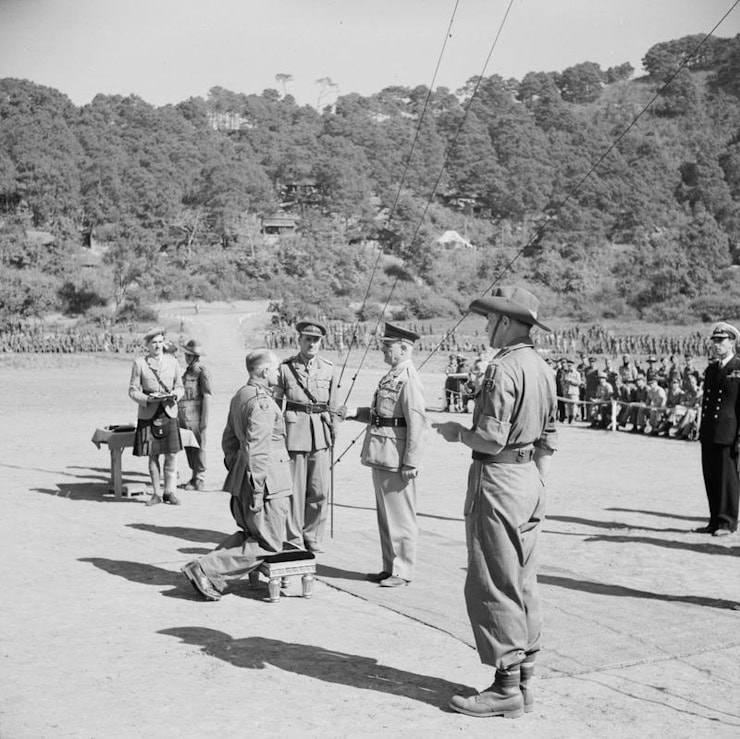
By the time the fighting had drawn to an end, the Japanese Army were left to take stock of one of the largest defeats their army had ever suffered. Their military leader Mutaguchi was relieved of his command and forced into an early retirement as a result. Meanwhile, the leading British military figures of Slim, Scoones and Stopford were all knighted in a ceremony at Imphal conducted by the Viceroy of India, Lord Wavell.
The victories at Imphal and Kohima were the beginning of a new phase of the war in Asia. This massive and much needed defensive victory allowed the British to launch a new offensive with the aim of driving the Japanese from Burma.

The Battles of Imphal and Kohima were a necessary stage in accomplishing the goals of the Allied forces to achieve victory in Asia and overcome the might of the Imperial Japanese Army.
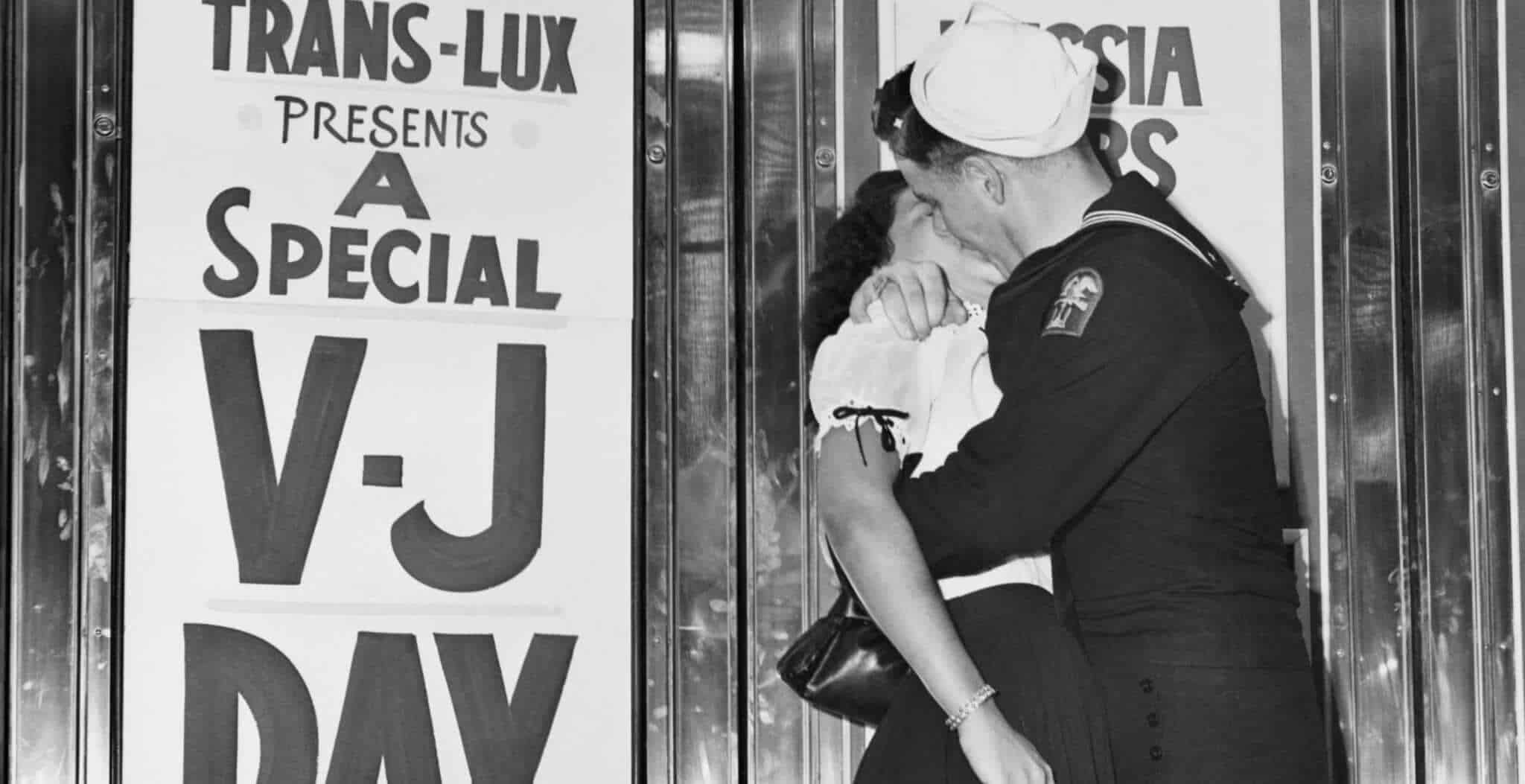
Whilst Victory in Europe was celebrated, fighting continued for several months before finally in August 1945, Victory over Japan could finally be declared and the Asian theatre of war came to an end.

Jessica Brain is a freelance writer specialising in history. Based in Kent and a lover of all things historical.
Published: 10th February 2025