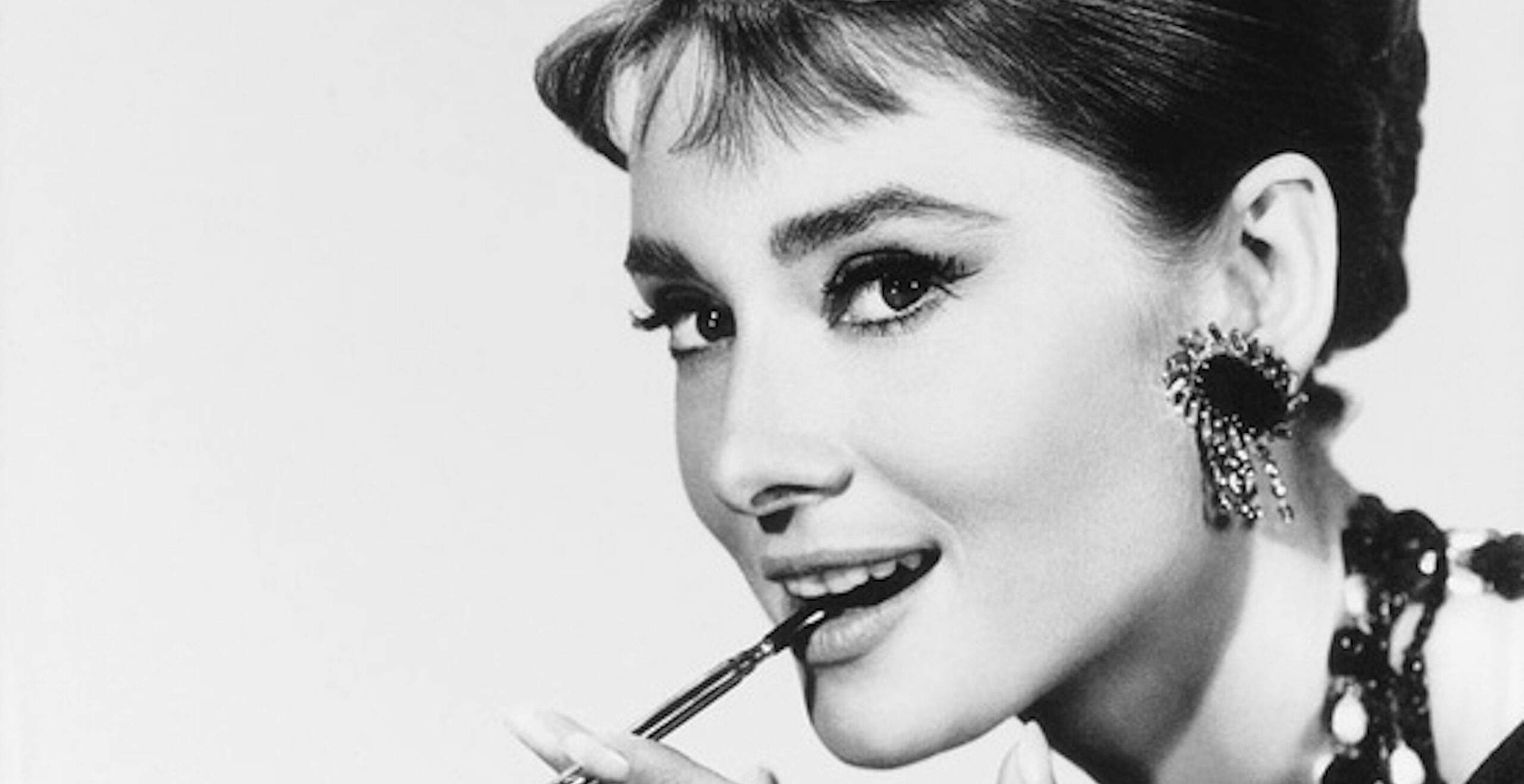


Today, Audrey Hepburn’s name evokes elegance, the cinematic golden age of the 1950s, and humanitarian work, but her childhood and adolescence were shaped by the harsh realities of Nazi occupation, starvation, and the devastation of war. The Second World War was the defining landscape of her early life.
Arnhem, the Dutch city whose name became synonymous with one of the most tragic battles of 1944, was close to the village of Velp, where Hepburn’s family spent much of the war.
Born in Brussels in 1929 to a Dutch mother and a British father, Hepburn’s early years were marked by political complexity. Her father, Joseph Ruston, had been a fascist sympathiser before the war, and this cast a long shadow over the family. Her mother, Ella van Heemstra, came from Dutch nobility, being a member of an old Frisian family, and initially shared some of her husband’s political leanings.
The couple were friends with the Mitfords and Mosleys, and Ella van Heemstra met Adolf Hitler and attended Nazi events in Germany. Robert Matzen, biographer of Hepburn’s war years, describes the Mitfords and their women friends such as Ella as “lipstick Nazis”, suggesting Nazism was treated almost as a fashion by these young women. It is an ironic description, too, as Adolf Hitler hated women to wear bright lipstick. Some remained committed Nazis, while others, like Ella, would have some of their own family members murdered by the Nazi authorities. The brutal reality of occupation changed many minds, and by the time Audrey was old enough to understand the world around her, the family’s loyalties had shifted decisively.
They were living in the Netherlands when the German invasion came in May 1940, and the occupation quickly became a daily fact of life. Audrey, known as Adriaantje, had been just six years old when her parents separated and her father’s sudden disappearance shocked and distressed her. From her school in England, where she had already begun to develop the ballet skills that would provide solace during the war years, Audrey travelled to her family in the Netherlands, a country whose language she scarcely spoke.
While still a teenager she adopted the performance name Audrey Ruston-Hepburn, her father having claimed descent from the Scottish family whose members included Bothwell, husband of Mary Queen of Scots. Arnhem, where Hepburn would spend much of the early years of the war, was a city under pressure from the outset.
Ill-prepared for a German invasion that they did not expect in 1940, the Dutch resisted fiercely, but the country fell within days. For Audrey, still a child, the occupation meant restrictions, shortages, and a gradual tightening of control.
Her mother encouraged her to continue her ballet lessons, and dance became both an escape and a discipline. It was also, in time, a means of resistance. The clandestine performances known as zwarte avonden — “black evenings” — were held in darkened rooms with windows covered, so that German patrols would not notice the gatherings. Audrey danced in several of these events, raising money for the Dutch Resistance and related causes. She later recalled that the “best audiences I ever had made not a single sound”. It was a small act of defiance, but one that carried real risk.
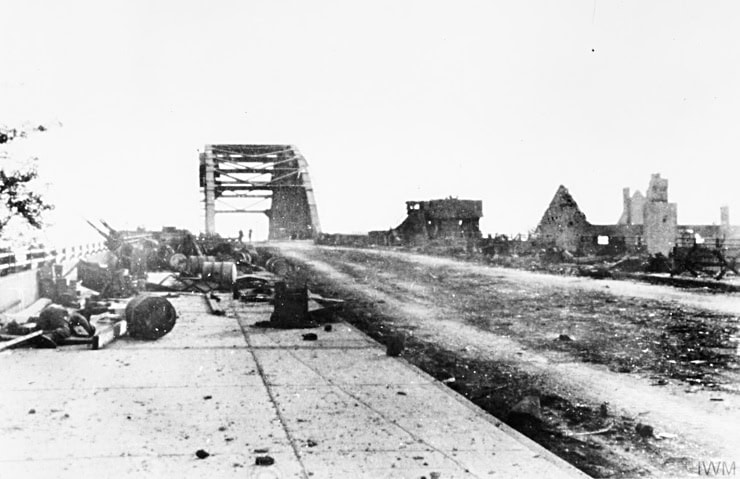
As the war progressed, Arnhem’s strategic importance grew. The city lay near the Rhine, a natural barrier that the Allies would eventually need to cross. By 1944, with the liberation of France underway and hopes rising across occupied Europe, Arnhem became the focal point of an ambitious plan: Operation Market Garden.
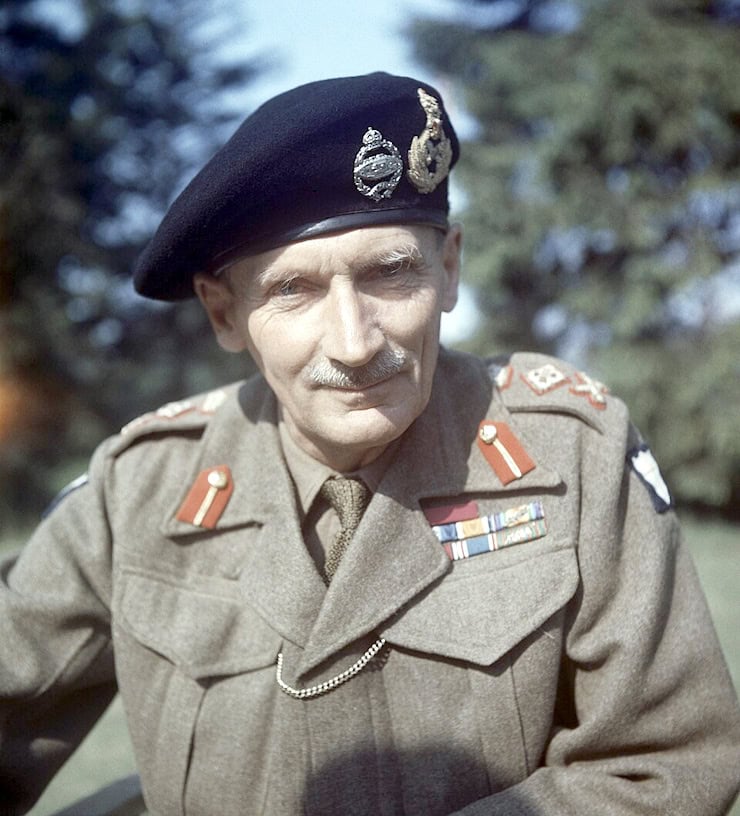
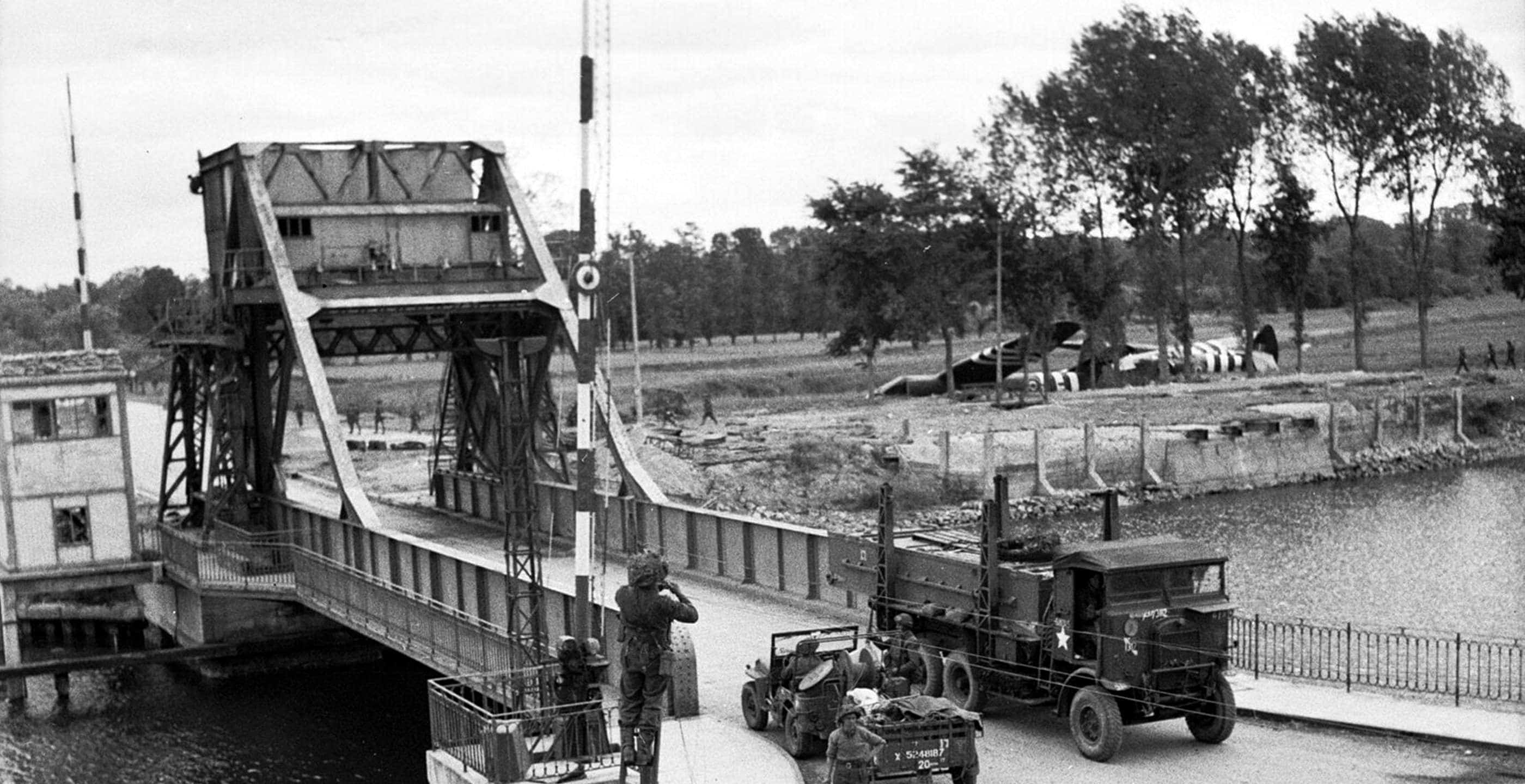
Conceived by Field Marshal Montgomery, the operation aimed to seize a series of bridges in the Netherlands, including the vital bridge at Arnhem, using airborne troops. If successful, it would open a route into Germany and potentially hasten the end of the war. Montgomery had complete faith in his proposal, but later the bridge would become “a bridge too far”, as the campaign failed to achieve its objective.
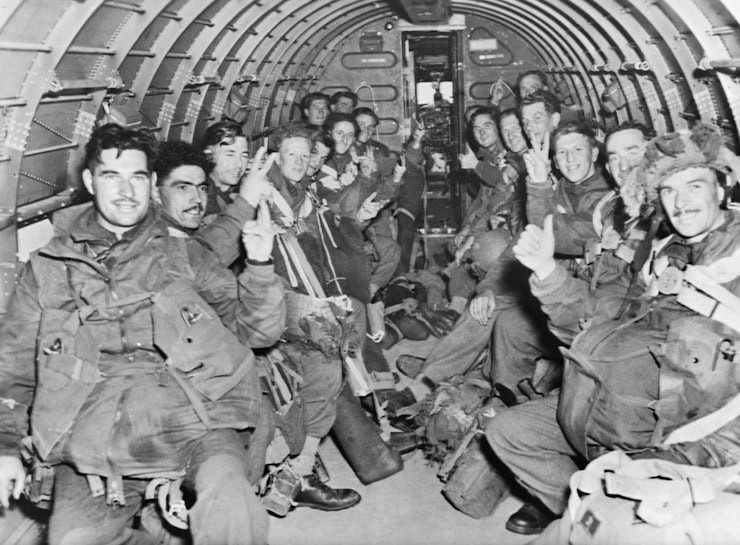
For the people of Arnhem, the arrival of Allied paratroopers in September 1944 was electrifying. Audrey, then fifteen, witnessed the landings. She later described seeing the sky filled with parachutes, and the excited occupants of the city prepared for liberation. But their optimism was short-lived.
The British 1st Airborne Division, tasked with capturing the Arnhem bridge, faced far stronger German forces than intelligence had predicted. The battle quickly turned into a desperate struggle. The airborne troops held out for several days, but without further support, they were cut off, surrounded, and eventually overwhelmed.
The people of Arnhem could only watch as their long-awaited liberators were marched into Nazi captivity, some still wearing the famous red berets of the Airborne Division. Arnhem’s road bridge became the symbol of the operation’s failure.
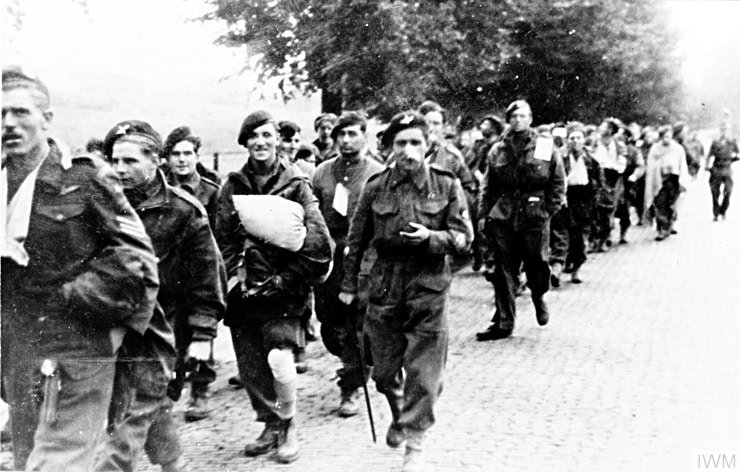 British paratroops being marched away by their German captors. Some 6,400 of the 10,000 British paratroops who landed at Arnhem were taken prisoner, a further 1,100 had been killed.
For civilians, the battle brought yet more chaos. Fighting raged in the streets, and the residents were in the middle of the crossfire. The Dutch people were caught between the hammer of the constant aerial attacks of the allies and the anvil of Nazi occupation, and the Nazis made much propaganda from the death and destruction that resulted from the allied planes. Audrey’s family home was close enough to the action that they could hear the constant battle in the skies.
During bombardments, the family, including Audrey, her mother, and her grandfather, hid in the cellar for hours on end. Whenever possible, Audrey helped outside the house as much as she could, and for much of the war she worked alongside Dr Visser d’Hooft and his family.
This too was dangerous, since the d’Hoofts were doing more than medical work; the doctor was also assisting the Onderduiken, the displaced people, literally those who had gone underground, which included Jewish people, political resisters, and later allied airmen and soldiers. Audrey’s own half-brother Alex Quarles van Ufford was an Onderduiker. Her other half-brother, Ian, had been captured and taken to Germany, where he worked among the forced labour in a munitions factory.
Hepburn’s later humanitarian work often returned to the theme of suffering witnessed at firsthand, and Arnhem was one of the places where she learned the true horror of war. At one point, the van Heemstra’s own house housed Onderduikers, including an allied airman, despite the fact that the occupying Nazi forces were actually using the attic to operate a radio! Had the Onderduikers been discovered, the family would immediately have been arrested and most likely sent to the camps in Germany, as Hepburn had witnessed happening to Jewish families.
The failure of Operation Market Garden meant that the region remained under German control for months longer, and those months were among the worst of the occupation. The earlier harsh winters of the war were nothing to the winter of 1944–45, which became known as the Hunger Winter, a period of acute famine in the western Netherlands. Food supplies dwindled to almost nothing. Hepburn, already weakened by years of shortages, suffered from malnutrition. She developed anaemia and respiratory problems, and her ballet ambitions were permanently affected. The gracefulness that later defined her screen was shaped, paradoxically, by the limitations imposed by hunger. She grew tall and slender partly because her body never fully recovered from the deprivation of those years.
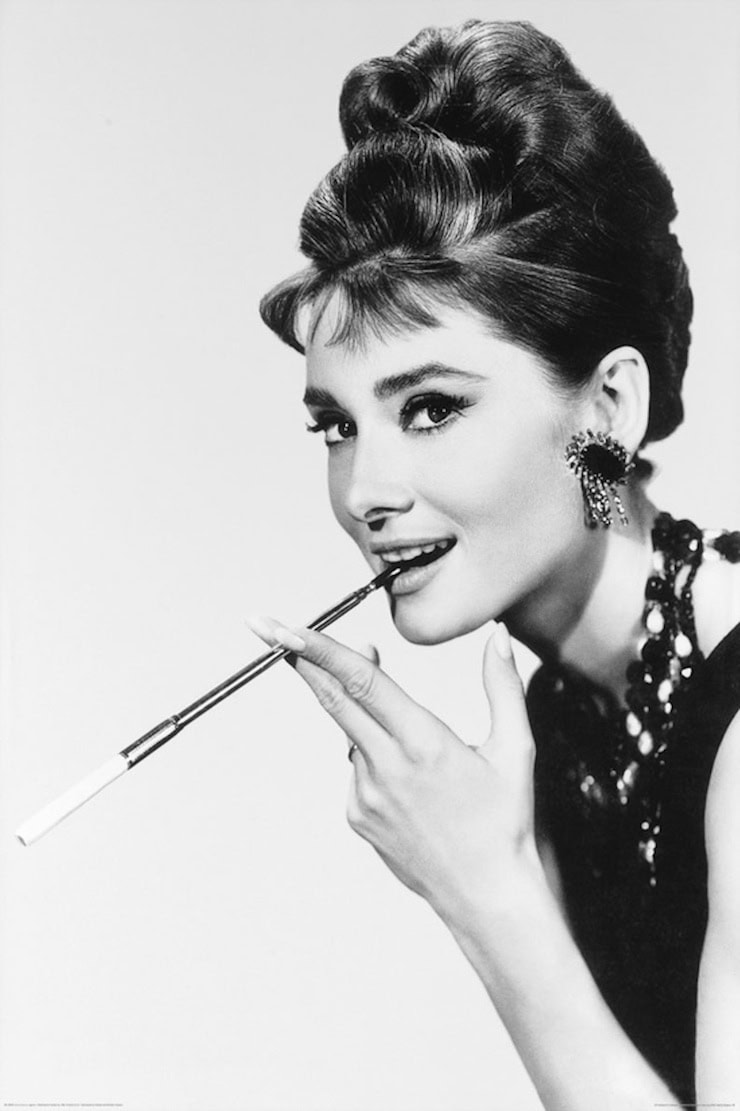
Despite the hardship, the Dutch Resistance continued its work, and Audrey’s family supported it where they could. Her much-loved uncle, Otto van Limburg Stirum, had been executed by the Germans earlier in the war along with other leading citizens, in reprisal for acts of the Resistance. It was a loss that left a deep mark on the family. Audrey herself carried messages for the Resistance, using her youth and inconspicuous appearance to avoid suspicion. Caught on one occasion by Nazi police in a forest area where allied soldiers and airmen were hiding, she began picking flowers, holding the bouquet out to them innocently; and it worked! They didn’t detain her. She was engaged in dangerous tasks, and she later spoke of the fear that accompanied them. Yet she also remembered the solidarity of the Dutch people, who found ways to resist even under the harshest conditions.
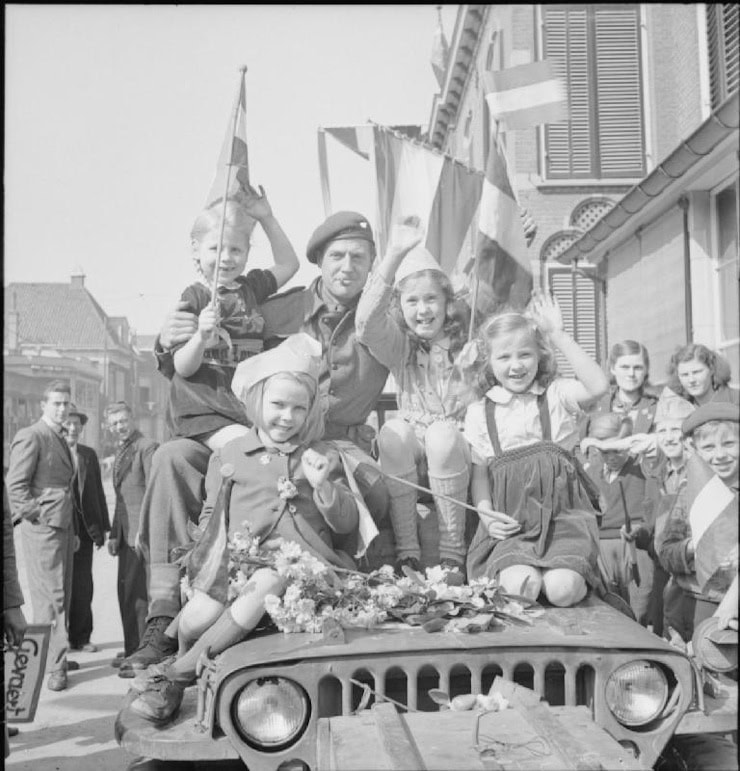
Liberation finally came in the spring of 1945, when Allied forces pushed into the Netherlands. For Audrey, the end of the war meant not only relief but the beginning of a new life. She resumed her ballet training, though her wartime malnutrition meant she could never become a prima ballerina. Instead, she turned to acting, first on stage and then in film. Her experiences during the war remained with her, shaping her empathy and her commitment to humanitarian causes. When she later worked with UNICEF, she did so with the memory of her own hunger and fear as a guide. She understood, in a way few celebrities ever could, what it meant for children to suffer in conflict zones.
While the van Heemstra family was sheltering from allied air raids in Arnhem and Velp, a young girl who was Audrey’s contemporary was also in hiding in another location in the Netherlands. This was Anne Frank, the Jewish girl whose own family had fled Germany and were living in a room concealed behind a bookcase in her father’s place of work in Amsterdam. The family’s hiding place was discovered and the family sent to the Bergen- Belsen camp, where Anne died, aged just 15. After the war was over, and Audrey Hepburn was already on her way to stardom, she met Anne’s father Otto Frank and his second wife.
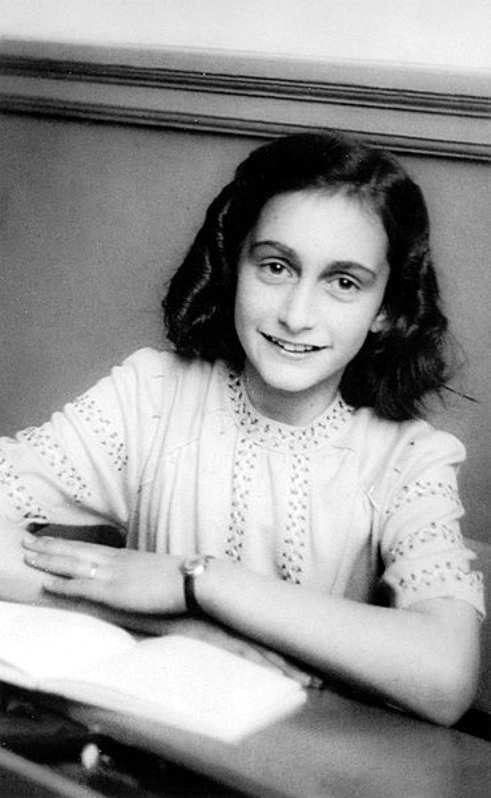
The possibility of playing the part of Anne in a movie was simply too poignant for Hepburn, who could see all too clearly the parallels in their lives, and the differences; the one who survived, and the one who did not.
Audrey Hepburn’s wartime story is often overshadowed by her later fame, but it deserves to be remembered in its own right. She was not a soldier, nor a political leader, but she lived through one of the most turbulent periods in European history and emerged with a profound sense of compassion. Arnhem, with its tragic battle and its devastated streets, was the crucible in which her character was formed. The elegance that captivated audiences around the world was built on a foundation of resilience forged in the darkest years of the twentieth century.
Dr Miriam Bibby FSA Scot FRHistS is a historian, Egyptologist and archaeologist with a special interest in equine history. Miriam has worked as a museum curator, university academic, editor and heritage management consultant.
Published: 20th July 2026.