

“I have fought against injustices, pomposities and hypocrisies all my life with my eye-glass untarnished. I have also fought against clots. No doubt I shall die of one in the end.”
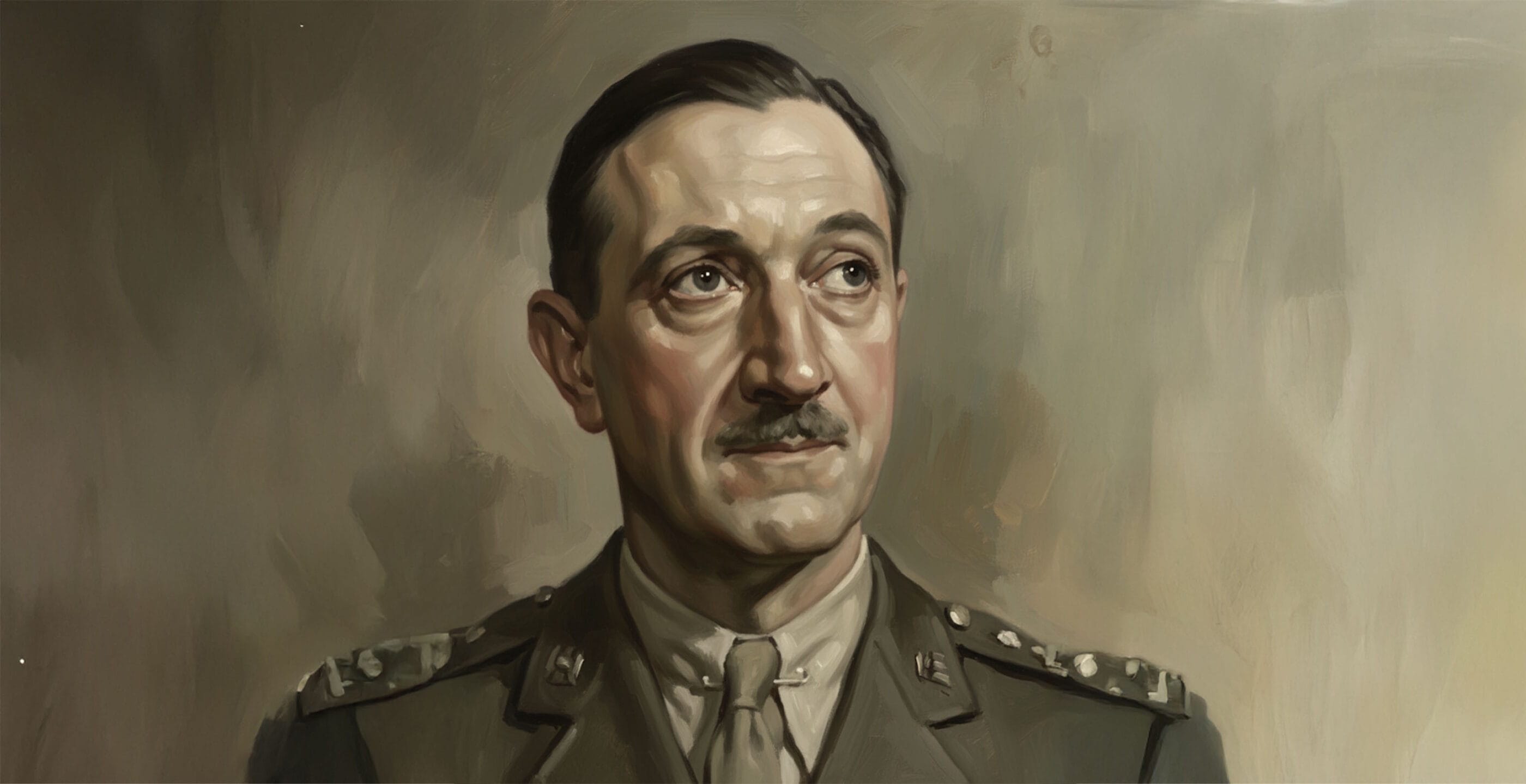
Lieutenant Colonel Alfred Daniel Wintle MC (1897–1966), better known as A.D. Wintle, was a British Army officer, decorated war veteran, and one of the most flamboyant and unconventional figures of the 20th century. Somehow, this monocle-sporting military man managed to do the impossible: to be an absolute individualist while also staunchly upholding the most rigid of English conventions. Wintle’s fierce sense of personal honour carried him through two world wars, a landmark legal case, and a series of public battles against bureaucracy and corruption. His autobiography, The Last Englishman, published in 1968, remains a vivid testament to this extraordinary character.
Alfred Wintle was born “at the age of nought” on September 30, 1897, in Mariupol, then part of the Russian Empire, where his father served as a British vice-consul. “My mother was present and correct at the time, having wisely chosen to become a Wintle by marriage,” continued Wintle in his droll autobiographical style. Wintle’s relationship with his father (and the big stick he wielded when his son misbehaved) was clearly not an easy one, but Wintle made light of it in his memoirs.
Wintle was educated in France, Germany, and England, attending the Royal Military Academy, Woolwich, before commissioning very speedily into the Royal Artillery in 1916. His upbringing was cosmopolitan, but he identified strongly with English traditions and values, which he upheld with almost theatrical intensity throughout his life.
By the age of seven, he had fallen for two things; England and horses, thanks to meeting a horse called Gilbert cared for by his aunt’s coachman when he stayed with her. “I was fascinated, on this trip, by English lawns, cricket, vegetable marrows and the neatness of the houses and the country railway stations”. Not long afterwards, Wintle would add an umbrella, a present from his aunt, which made him feel he “was well on the way to becoming a complete English gentleman…Living abroad as I did, I was probably more ferociously English than any ordinary English boy”.

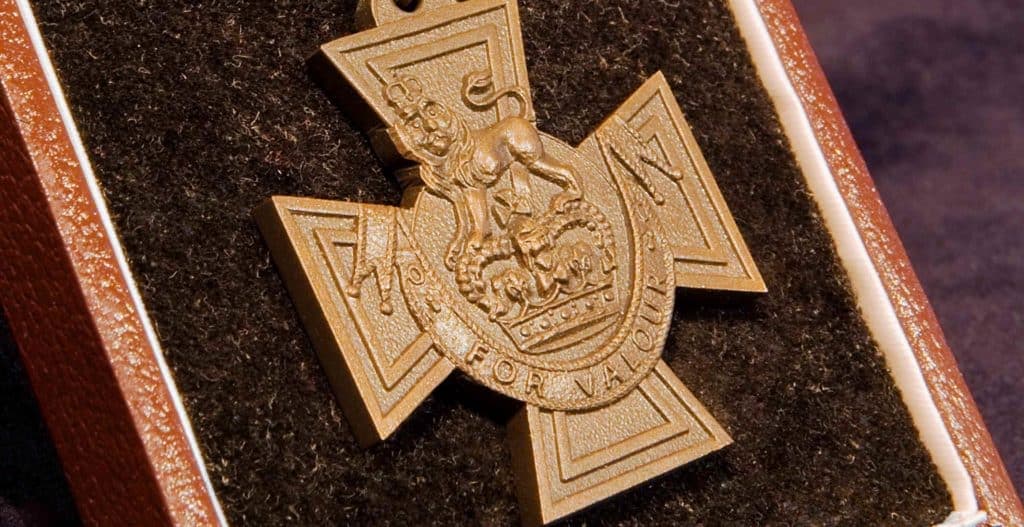
Wintle served with distinction in the First World War, seeing action on the Western Front. His introduction to war was brutal. Shortly after arriving at the front, and having just been introduced to his sergeant, a “three-inch shell from a ‘whizz-bang’ (a 77-mm field gun) burst in the trench and splashed over me the entrails of my young sergeant…” Wintle was wounded multiple times, most severely in 1917 during the Third Battle of Ypres, when an explosion cost him his left eye, several fingers, and part of a kneecap. Despite these injuries, he repeatedly attempted to return to active service, even escaping from hospital dressed as a nurse. His monocle proved to be a dead give-away while he was in nurse’s uniform. This eyeglass was not an affectation; he was forced to wear it because of an injury to his right eye. His persistence eventually saw him back in action at the front with 119th Battery, 27th Brigade, Royal Field Artillery (RFA). He earned the Military Cross for gallantry in November 1918.
In an earlier century, Wintle would undoubtedly have been called a “thoroughbred soldier”. He was a military man through and through, and like many others of his kind, he found peacetime dull and alien to his character. He could certainly be trouble – the nursing staff of the Southern General Hospital in Oxford could attest to that.
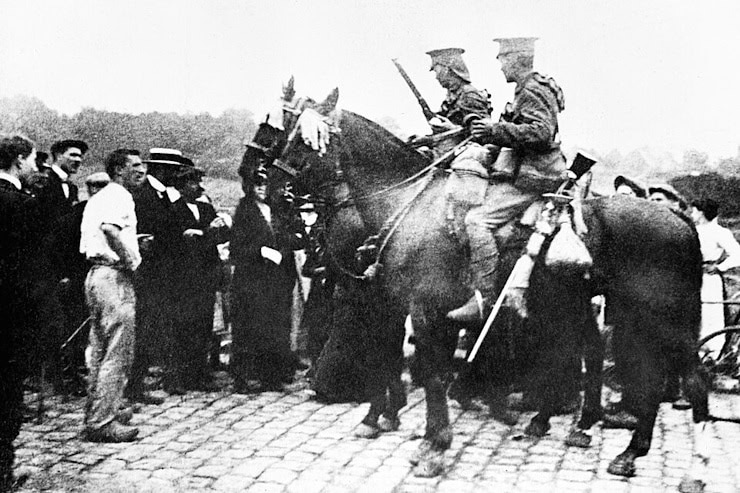
His antics walked a very fine line between practical jokes and downright disruption. He was stationed for a while in Ireland, and in 1921 finally found a place where he wanted to be as a member of the 18th Royal Hussars (Queen Mary’s Own), and spent time in India and later Egypt. Needless to say, he managed to get into scrapes despite enjoying his time in the Hussars. In 1923 he was serving in Germany and achieved his “heart’s desire, a posting to First the Royal Dragoons – ‘The Royals’ for short – Britain’s First Cavalry Regiment of the Line and the finest in the world”.
After breaking his leg while in the regiment he ended up in hospital where he recalled an extraordinary incident. Lying close to death from diphtheria in a bed near him was a member of the Royal Dragoons Band, Cedric “Boy” Mays. “What is all this nonsense about dying Mays?” barked Wintle. “You know it is an offence for a Royal Dragoon to die in bed. You will stop dying at once. And when you get up, get your bloody hair cut.” Mays lived.
At the outbreak of the Second World War, Wintle was recalled to service and assigned to military intelligence. He developed a disdain for Whitehall and for what he saw as the creeping bureaucratisation of the armed forces. He was deeply dissatisfied with being kept from combat and attempted to travel to France without authorisation to assist the French Air Force. His attempt ended when he threatened Air Commodore A. R. Boyle with a gun. This led to his arrest and brief imprisonment in the Tower of London — the last British officer to be held there.
Probably with some relief from the military top brass, Wintle was sent back to the First The Royal Dragoons. His job was intelligence gathering and helping to organise raids on the Vichy French in Syria. After this he was back in France to assess the condition of British prisoners-of-war being held there. He was soon to learn at first hand; he was betrayed and held by the Vichy French himself. Wintle being Wintle, he immediately started to cause trouble, telling them it was his duty to escape. After a couple of false starts he made it and came back to England via Spain. Morale was not high among his captors.
Wintle’s wartime activities included helping French officers escape occupied France and advocating for more aggressive British action. His relationship with the military authorities was often strained, and he was known for his outspoken criticism of what he saw as cowardice or incompetence. He was eventually released from service but continued to campaign publicly on military and political issues.
One of the most remarkable episodes of Wintle’s postwar life was his legal battle against a solicitor named Nye, who had allegedly defrauded a deceased relative of Wintle’s. In 1955, Wintle confronted Nye in his office, demanded restitution, and locked him in a cupboard when refused. Wintle was arrested and charged with false imprisonment.
In The Last Englishman, Wintle describes confronting Nye in his office and, after a heated exchange, forcibly removing Nye’s trousers—what Wintle referred to as “debagging.” It was part of a theatrical protest against what he saw as Nye’s fraudulent handling of the relative’s estate. The incident led to Wintle being charged with false imprisonment, but it also set in motion the legal battle that culminated in the landmark House of Lords case, Wintle v. Nye (1959), where Wintle represented himself and won a unanimous verdict in his favour.
The case, Wintle v. Nye, became a landmark in British legal history, highlighting issues of professional misconduct and the rights of individuals to challenge authority. Wintle also made it into the Guinness Book of Records as a twentieth century cause célèbre. Wintle cultivated a public image that was equal parts Edwardian throwback and moral crusader. Wintle’s monocle and his clipped, theatrical delivery made him a favourite of journalists and broadcasters. He appeared on BBC programmes and was profiled in newspapers as a symbol of old-fashioned honour and eccentricity. When he appeared on the TV programme “This is Your Life” his old adversary from his prison days in France, M. Maurice Molia, was one of the guests. He confessed to the audience that Wintle’s example had inspired him to defect from the Vichy authorities and transfer to the resistance, taking 280 men with him.
In his later years, Wintle lived at Coldharbour, near Sevenoaks in Kent, where he continued to write and campaign. He remained active in veterans’ affairs and was known for his hospitality and storytelling. He died on May 11, 1966, at the age of 68. Two years later, an associate of Wintle published his autobiography.
By the 1960s, Wintle must have seemed to many to be a relic of a fast-disappearing world of empire, militarism, and rigid manners and mores. However, in many ways Alfred Wintle fitted right in. The 1960s were a time when youth was in rebellion, but was rebelling against injustice, inequality, and inflexible hierarchy, all causes that Wintle would understand.
The young people of 1960s Britain were also raiding the wardrobes of their grandparents to deck themselves out in the coats, grandfather shirts, and “granny shawls” of a previous generation. They dressed in military overcoats and brass-buttoned Edwardian cavalry uniforms, wore top hats and sharp-styled caps, and generally peacocked their fashionable way through life. Wintle would surely have approved of their theatricality and individuality, though not apparently their means of greeting one another.
Perhaps it’s best to let Wintle have the last word on this matter, with his comment on the distressing tendency of the young to use “‘Hiya’ and other such vulgarisms introduced, God knows from where, by persons who describe themselves as ‘blokes’ and ‘guys’…the latter not without reason.”
Dr Miriam Bibby FSA Scot FRHistS is a historian, Egyptologist and archaeologist with a special interest in equine history. Miriam has worked as a museum curator, university academic, editor and heritage management consultant.
Published: 25th September 2025