

How burning tar barrels, guizers and a Victorian fascination with Vikings became one of Britain’s most spectacular traditions.
How should one celebrate the New Year? You could go drinking at the local pub, watch fireworks at the town display, or you could spend months carefully building a 30-foot Viking galley, paint it, decorate it, parade it through the streets behind hundreds of people carrying flaming torches and then, after all of that work, set it on fire.
Every January, that is exactly what happens in Lerwick.
Welcome to Up Helly Aa.
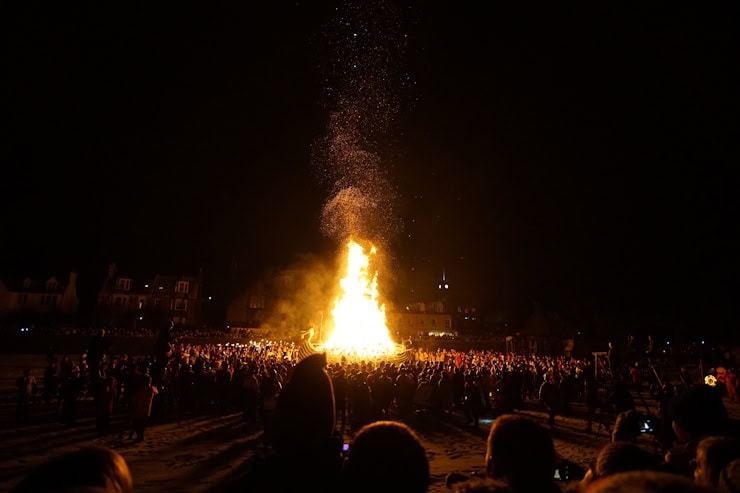
On the last Tuesday of January, the capital of Shetland is transformed. Hundreds of torch-bearing “guizers” gather in the streets. At their head stands the Guizer Jarl and his squad, dressed in elaborate Viking-inspired costumes, while the festival’s galley is pulled through the town. Eventually, the procession reaches its end.
The torches are raised. Then they are thrown. Within minutes, a ship that has taken months to build disappears beneath the flames. It is the sort of spectacle that looks as though it must have survived from the Viking Age. It hasn’t.
But personally, I think that makes the story considerably more interesting.
Before the Vikings Came the Tar Barrels
There is no unbroken line of torch-carrying Vikings marching through Lerwick for the last thousand years. In fact, the origins of Up Helly Aa as we know it are surprisingly recent. After the Napoleonic Wars, soldiers and sailors began returning to Shetland, and Lerwick’s winter celebrations developed something of a reputation.
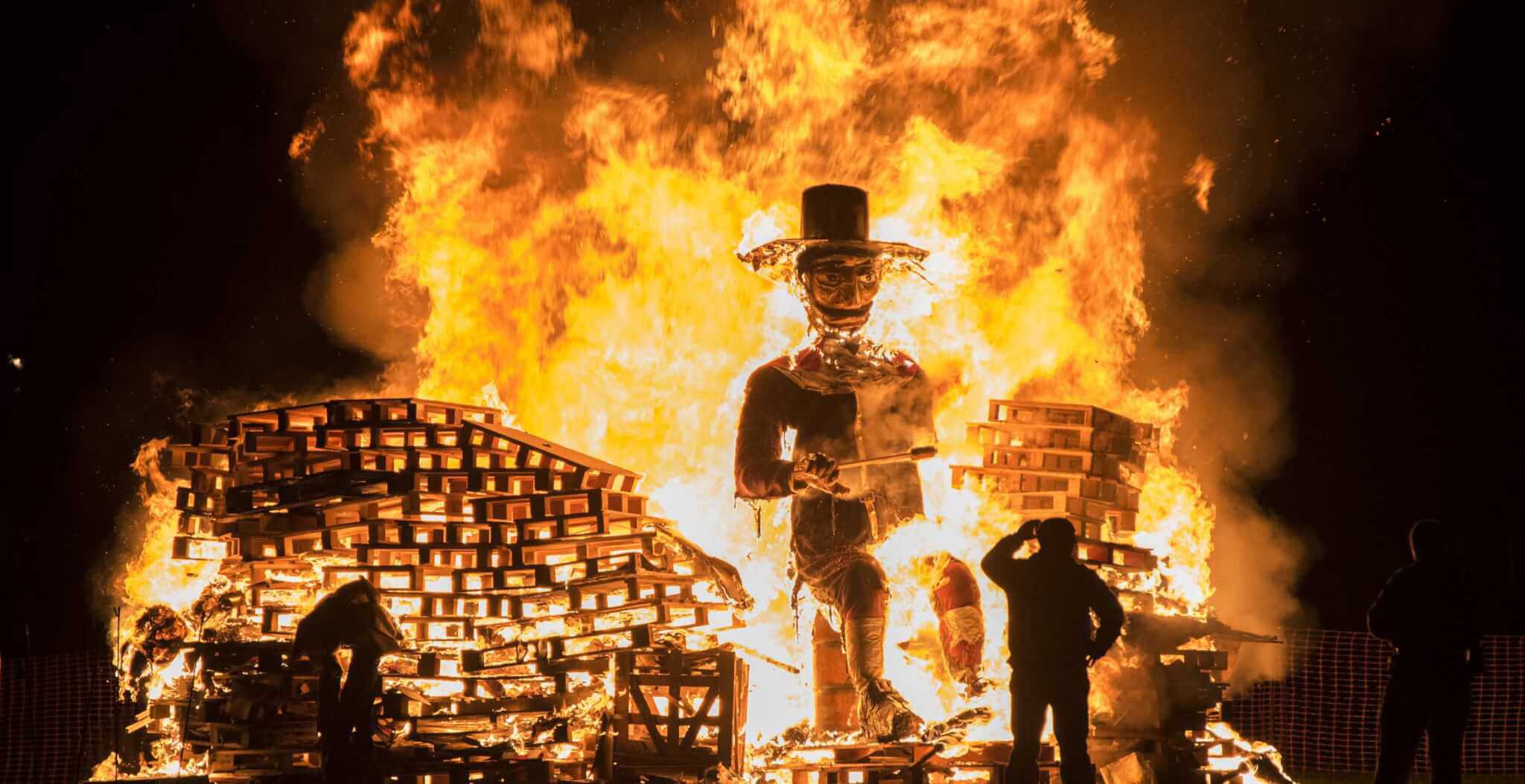
One visiting Methodist missionary recorded the scene in January 1824. There were horns and drums, guns being fired, fiddles playing, drinking, shouting and fighting. The streets, he wrote, were packed with people. Over the following decades, things became even more dramatic. By around the 1840s, groups of young men had begun dragging burning barrels of tar through the narrow streets of Lerwick. Similar to what they do in Allendale to this day! These were not neat little ceremonial flames either.
The barrels could be mounted onto crude frames and pulled through the town while their burning contents were stirred. Rival groups sometimes met one another in the cramped streets, while constables attempted, with mixed success, to keep everything under control. It was dangerous. It was unruly, and judging by the complaints from some of Lerwick’s residents, it was probably a great deal of fun for everyone involved who wasn’t trying to stop it.
Eventually, though, something began to change. During the early 1870s, a group of young Lerwegians started reshaping the celebration themselves. The burning tar barrels gradually disappeared. In their place came disguises, or “guizing”, a more organised torchlit procession and a new name: Up Helly Aa.
The celebration was also gradually moved towards the end of January. What had once been a fairly chaotic winter gathering was beginning to turn into a festival. There was just one thing missing. The Vikings.
Inventing a Viking Tradition
Shetland’s connection with the Norse world is, of course, very real. For centuries the islands were tied politically and culturally to Norway, and their Norse heritage remains an important part of Shetland’s identity.
But the Vikings of Up Helly Aa were not simply the continuation of an ancient ceremony. They were added.
The first signs of Viking imagery appeared during the 1870s, as the organisers gradually began incorporating Norse history and mythology into the festival. Then, in 1889, something appeared in the procession that would eventually become its defining image.
A galley.
The first Up Helly Aa galley was pulled through Lerwick and burned at the Market Cross at the end of the procession. More than a century later, the basic idea remains. Build a Viking ship. Parade it through town. Burn it. Even then however, the festival still wasn’t quite the Up Helly Aa we would recognise today.
The position of Guizer Jarl, the chief guizer who leads the celebrations dressed as a Viking figure, wasn’t introduced until 1906. And it was only after the First World War that a Viking Jarl Squad became a regular part of the procession. Rather than emerging fully formed from some forgotten medieval ritual, Up Helly Aa was built piece by piece. That might sound like it makes the tradition less authentic. I think the opposite is true. Because at some point every tradition has to begin.
So, Who Exactly Are the Guizers?
At this point, it is probably worth explaining some of the language surrounding Up Helly Aa. A guizer is essentially someone taking part in the festival in disguise. The word comes from the same tradition of “guising” found elsewhere in Scotland: dressing up, adopting a character and performing for others.
At Up Helly Aa, the guizers are organised into squads. Each squad chooses a theme or group of characters, makes its own costumes and prepares an act which they will perform in the halls around Lerwick later that night. Despite the Viking imagery most associated with the festival, the majority of these squads are not dressed as Vikings at all. Their costumes and themes can vary enormously from year to year.
Standing apart from them is the Jarl Squad.
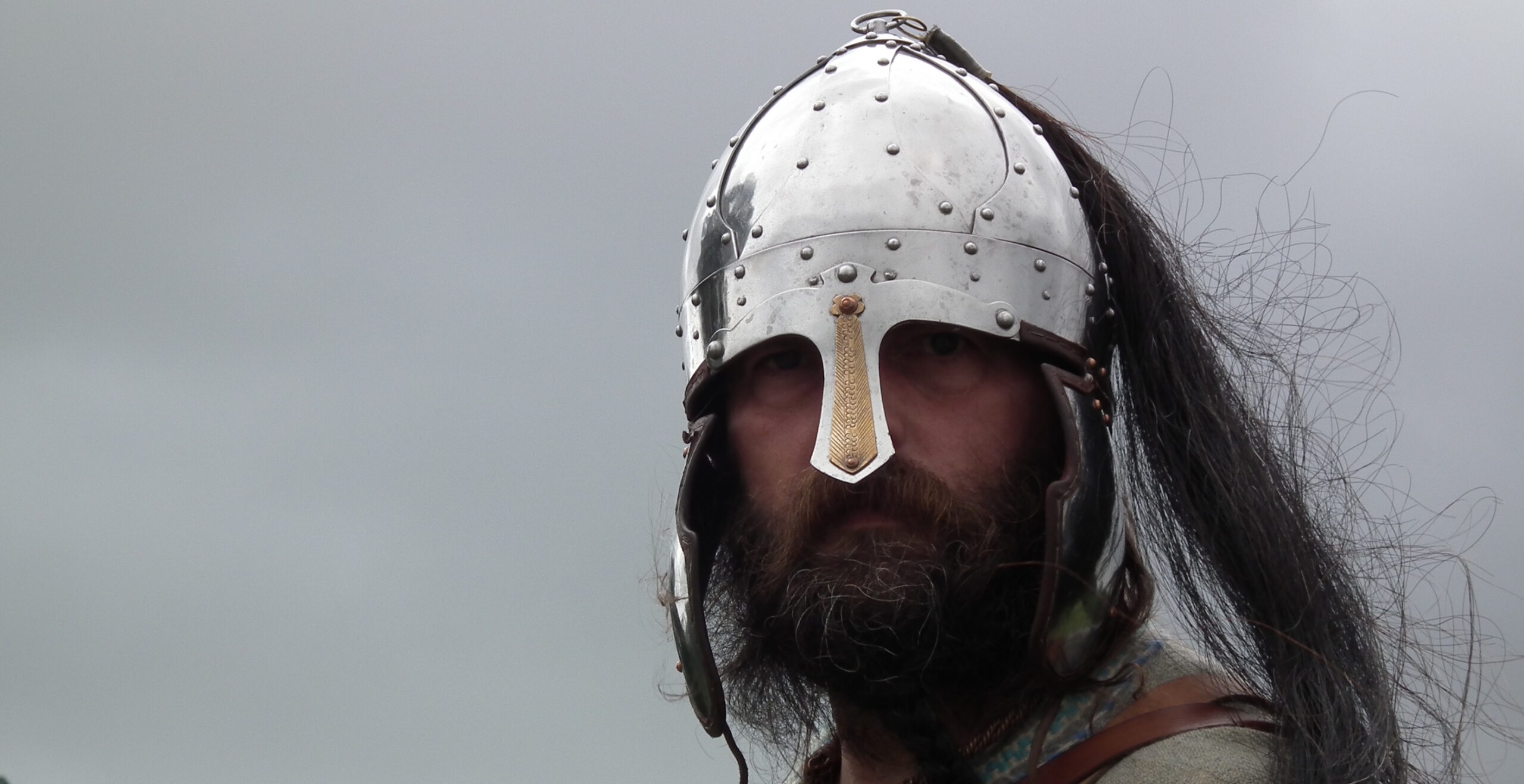
This is the group dressed in the elaborate Viking-inspired costumes seen in so many photographs of Up Helly Aa. At its head is the Guizer Jarl, literally the Chief Guizer who serves as the figurehead of that year’s celebrations. The Jarl leads the squad through Lerwick, accompanies the galley and spends much of Up Helly Aa day visiting schools, the hospital and other parts of the community before taking their place at the front of the evening procession. Becoming Guizer Jarl is not simply a matter of putting on a Viking helmet on the morning of the festival. Years of involvement can lead up to the role, while preparations for the Jarl Squad’s costumes begin long before the torches are finally lit.

Building Something Just to Destroy It
Perhaps my favourite part of Up Helly Aa is the amount of effort that goes into something everybody knows will not survive the night. The modern galley isn’t pulled out of storage each January. A new one is built. Volunteers begin work towards the end of October, continuing through the winter until the galley is ready for the festival. And what they build isn’t just a prop. The present design is around 9.2 metres long, with a mast reaching six metres high. The design itself dates from 1949 and was created by Lerwick boatbuilder James Smith, better known locally as “Boatie Jeemie.” Modern galleys continue to follow the same dimensions. Even the colour changes each year. The Guizer Jarl chooses it to complement the costumes of his Jarl Squad, and the finished design is kept secret until Up Helly Aa day. Months of planning. Months of building. Months of painting costumes, constructing torches and organising squads. All leading towards what may be the strangest bonfire there may be.
When Lerwick Lights Up
Up Helly Aa isn’t simply an evening bonfire. The Guizer Jarl and his squad spend much of the day moving through Lerwick, marching with the galley, attending a civic reception and visiting schools, the hospital and other parts of the community.
But when darkness falls is when everything changes. At around 7:30 in the evening, the signal is given. Hundreds of torches ignite almost simultaneously. The Jarl Squad leads the way alongside the galley, followed through Lerwick by dozens of squads of guizers in costume. Eventually they enter the burning site.
The procession surrounds the galley. And then the torches go in. For a few moments, the wooden ship becomes the brightest thing in Lerwick. Then it burns. But somehow that still isn’t the end of the night. Afterwards, the squads move between halls around the town, performing acts and celebrating through the night. The festivities can continue until the following morning.

A Tradition That Refuses to Stand Still
Up Helly Aa has changed repeatedly throughout its history. Burning tar barrels became torches. Winter troublemaking became an organised procession. Viking imagery was introduced. The galley arrived. The Guizer Jarl followed. And the festival continues to change even now.
For much of its history, Lerwick’s procession was restricted to male guizers. Those gender restrictions were removed for the 2023 festival, and in 2024 female members appeared in the Lerwick Jarl Squad for the first time.
It feels fitting for a festival that has never really stopped reinventing itself. Because perhaps that is the most interesting thing about Up Helly Aa. It is easy to imagine traditions as things handed down unchanged for hundreds or even thousands of years. Something our ancestors did exactly as we do now.
Usually, reality is messier. Traditions tend to grow. People add things. Remove what doesn’t work anymore. Improve them. Argue about them. Pass them on, and eventually forget which parts were old and which parts somebody invented along the way.
By Maxx Taylor
This article is part of an ongoing exploration of Britain’s traditions, legends and local celebrations from the famous ceremonies known throughout the world to the smaller customs kept alive within individual villages. Subscribe free to follow the journey. https://substack.com/@maxxtaylor
Published: 24th November 2026