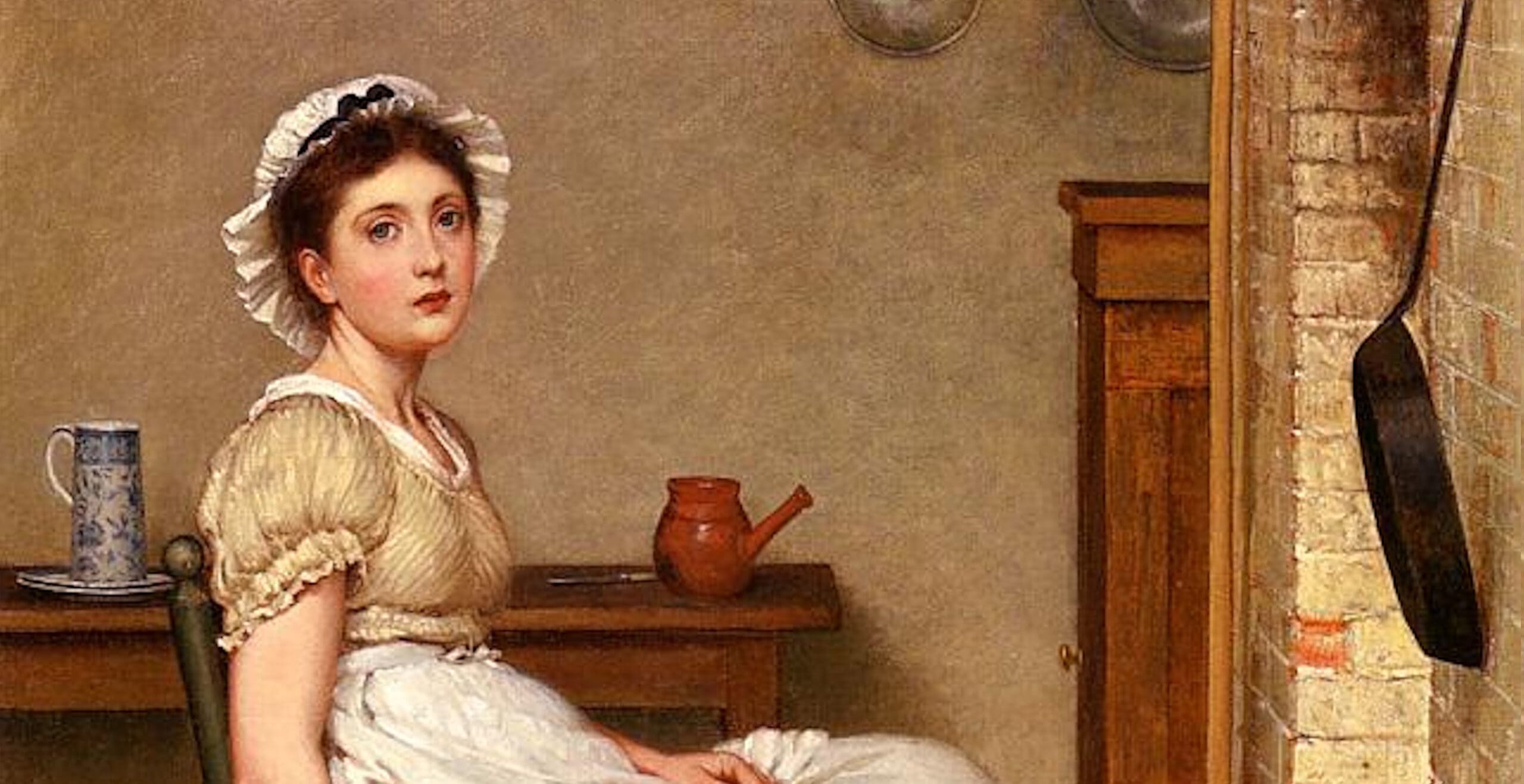


‘Dear Son – I have made it my care to place you with a man of character and ability in his profession; from whom, I hope, you will daily receive the most cogent inducements to the exercise of virtue, by his virtuous example.’
So begins A Present for an Apprentice [1740], written by Sir John Barnard, Lord Mayor of London, for his son and published for the benefit of all young men starting an apprenticeship. In this opening sentence we hear the voice of a father who cares for his son’s wellbeing, and who wants the lad to be properly guided by his master.
Placing your son in an apprenticeship was like putting him in the care of a substitute parent or avuncular mentor, who would teach him how to use the tools of the trade and do the stock-take, but also how to eat nicely and not get drunk. Apprenticeships lasted for seven years, during which time the young man would live with his master; eating, sleeping and working alongside his employer. It was an intense experience, and everyone involved took it seriously, from the initial matchmaking where parents chose a master to take on their child, to the ceremonial union at the livery company hall which bound the pair – teenaged apprentice and master craftsman – together, almost like a marriage.
In this ceremony, the master would be asked ‘if he is willing to take that apprentice, and the youth if he is willing to serve that master’. Under the aegis of the Chamberlain of the City of London, the apprentice was officially bound to his master with a contract, the indenture, which committed him to behave well and honestly:
‘… the said Apprentice his said Master faithfully shall serve, his secrets keep, his lawful commands every where gladly do.’
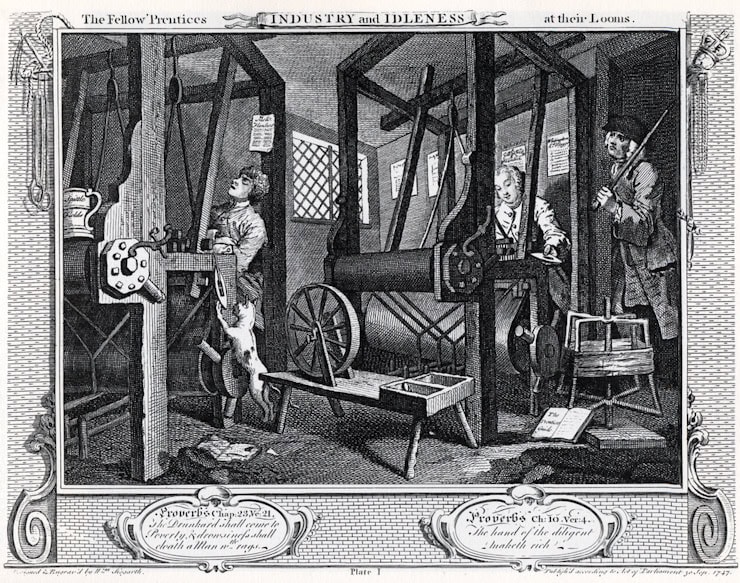
The key rules of the apprentice’s code were: be loyal, keep secrets, and be obedient. Other stipulations included: ‘He shall not play at cards, dice, tables, or any other unlawful games, whereby his said master may have any loss.’ This is partly a moral rule to prevent young men from gambling, and also a pragmatic attempt to stop an apprentice running up debts which the master would have to pay. Lastly: ‘He shall not haunt taverns nor play-houses, nor absent himself from his said Master’s service day or night unlawfully, but in all things, as a faithful apprentice, he shall behave himself towards his said Master.’
Living with an employer’s family under the same roof for 7 years forced a level of familiarity which might be uncomfortable for all parties concerned, unless the process was managed. Advice books like The Apprentices Companion [1693] promoted trustworthy and tactful behaviour, urging an apprentice to be faithful to his master in matters beyond workplace – including ‘keeping his secrets and concealing his infirmities’.
The apprentice is urged to have ‘a general carefulness about his master’s concerns’ and ‘a readiness to obey the lawful and necessary commands of his master and mistress; and likewise a tenderness over them in their sickness, weakness, old age…’ The word tenderness here suggests a very personal, intimate relationship with the older couple.
‘He must keep his master’s secrets, both in relation to his craft and dealings, and to the private affairs of his family. He must carry no tales to his neighbour’s house, or entertain his friends at the expense of his master and mistress’s reputation.’ So says The London Tradesman of 1747, echoing the advice of earlier manuals.
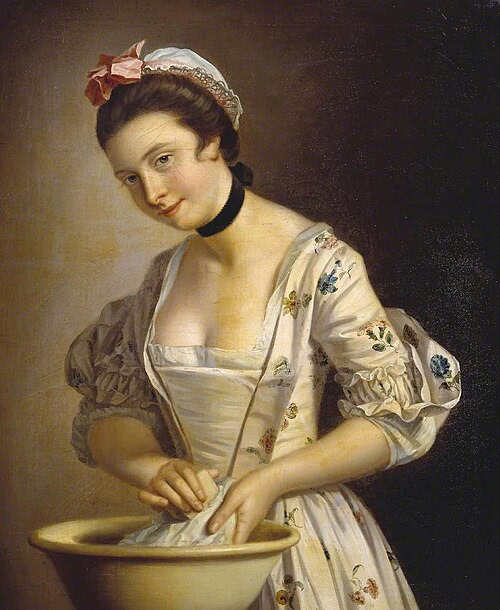
Female domestic servants were similarly advised on how to live and work well in the houses of their employers. Manuals for servant girls insisted on good personal conduct, directing these young women to be industrious and honest: get up early, work hard, do your duty, listen to instructions, don’t steal and don’t gossip. A Few Household Hints and Lessons of Conduct for Female Servants [1856] has sections on ‘Remember the Door Chain’, ‘Remember to Use Your Lamp’ and ‘Never Leave Anything on the Stairs’. It also commands: ‘Govern Your Temper’, ‘Help Others’ and ‘Bear Small Troubles Patiently’.
A lady’s maid working upstairs, preparing clothes for her mistress and doing her boss’s hair, was in close proximity to her employer on a daily or hourly basis. To make life easier for herself, and to earn a valuable reputation, she was advised to cultivate patience:
‘In her temper she should be cheerful and submissive, studying her lady’s disposition, and conforming to it with alacrity. A soft and courteous demeanour will best entitle her to esteem and respect.’ The Complete Servant [1825]
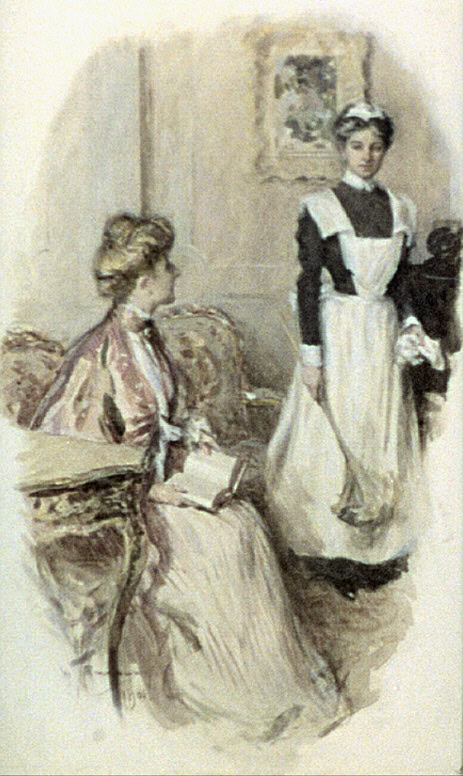
In addition to running up and down stairs without dropping anything or getting irritated, servant girls were expected to adapt their behaviour to suit the personalities of their employers. This required some subtle people-reading skills, and even acting ability, as indicated by this instruction in The Servant Girl in London [1845]:
‘You will also have to study tempers and characters, and to suit yourself to them as far as possible. There is great art in this adaptation of behaviour to temper; it is an art which prudence suggests, and virtue countenances; it is an art which women are often expert in the practice of, and it makes friends.’
The way to escape this claustrophobic situation was marriage, for young female domestics, and completing the 7-year term of an apprenticeship for male trainees. They surely looked forward to the day when they could leave the boss’s house for the last time.
Dr Jenny Mayhew is a writer and researcher with an interest in handbooks of manners and morality. Her Substack newsletter on the topic of “Bossy Little Books” can be accessed here..
Published: 27th January 2026