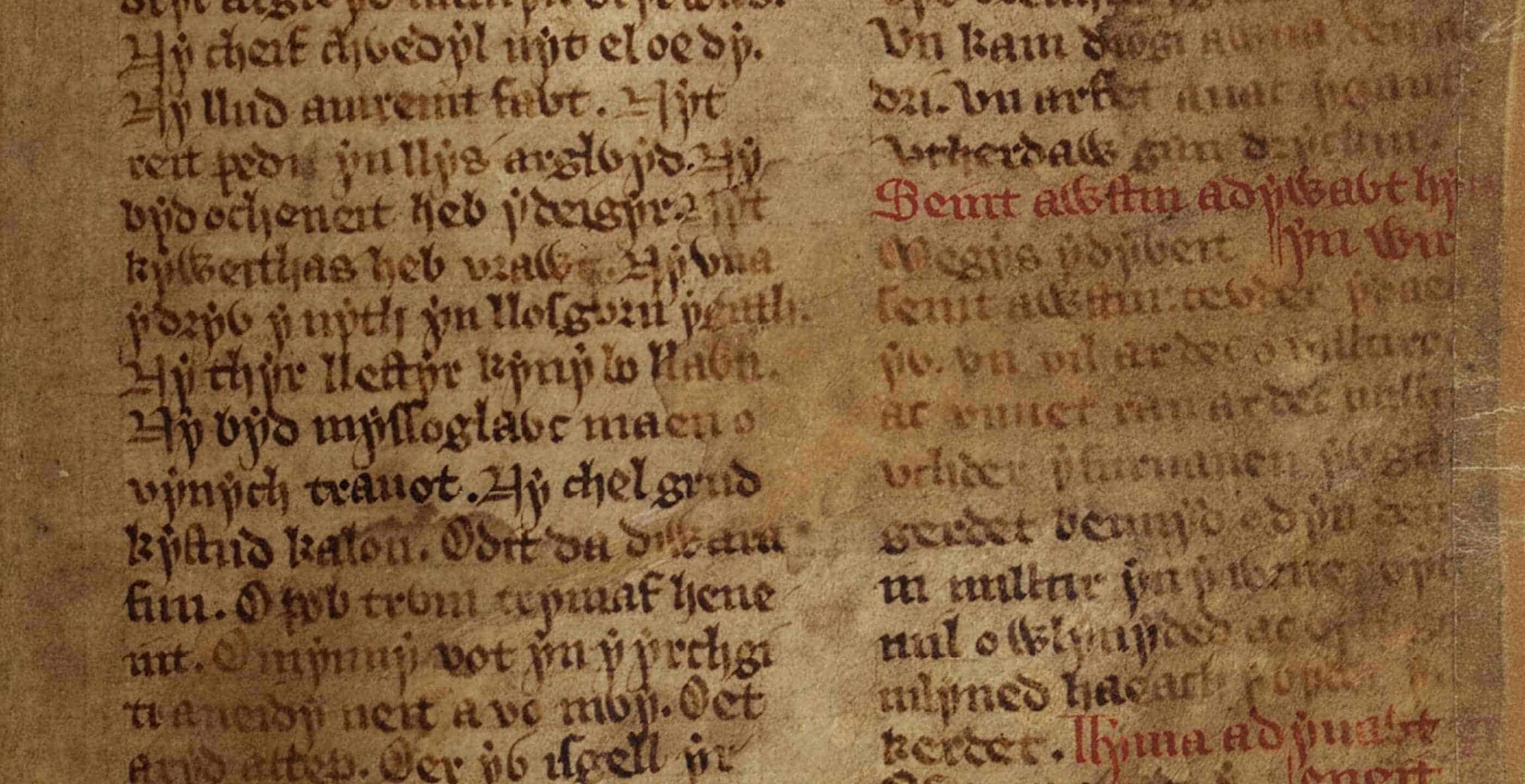


The Mabinogion is based upon a 14th century manuscript known as ‘Red book of Hergest’. The work is a collection of eleven tales of early Welsh literature and draws upon the mystical word of the Celtic people intertwining myths, folklore, tradition and history.
These tales are thought to have a much more ancient provenance, being passed down through the generations by word of mouth by the early Welsh bards. These early Welsh or Celtic storytellers wandered Britain and beyond, swapping their many tales for board and lodging. The tales they told tended to be memorised only in outline, the details being filled in and embellished as the story unfolded.
Exactly how these stories found their way into the written form is unclear, however the tales range from Celtic mythology to the better known accounts of the adventures of Arthur and his knights.
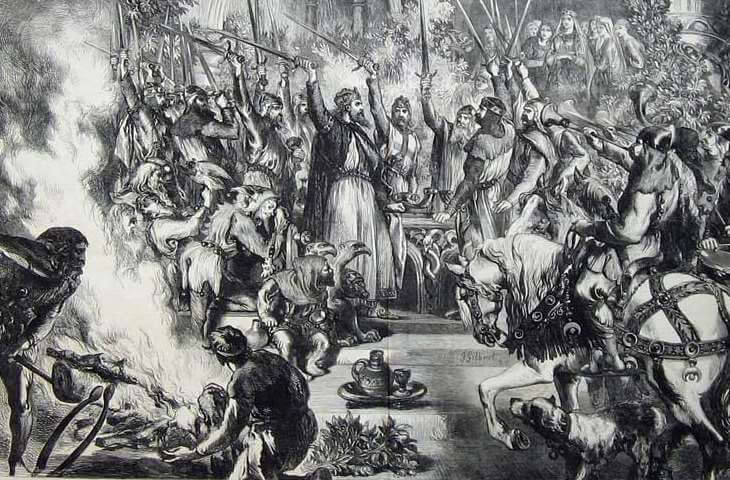
The four ‘mabinogi’ tales, from which the Mabinogion takes its name, are thought to be the earliest dating from the 11th century. These include:- Pwyll, which tells of how a Prince of Dyfed takes the place of the King of the Underworld; Branwen, which tells how the unjust treatment of a queen starts a war in Ireland; Manawydan involves overcoming an enchanter and the rescue of a mother and child, and Math the Lord of Gwynedd who ends up turning his nephews into beasts.
 Five of the remaining stories involve the legend of Arthur and his knights. The setting for Culhwych and Olwen is Arthur’s Court and includes a list of his knights. Arthur’s Court is again the setting in The Dream of Rhonabwy, which tells of a story involving Arthur and his knights, fairy heroes and Celtic warriors.
The other Arthurian stories The Lady of the Fountain, Geraint the Son of Erbin and Peredur the Son of Evrawc,are mainly concerned with the quests and adventures of Arthur’s knights. The latter even includes one of the earliest references to the Grail legend.
The Mabinogion was translated and edited under the direction of Lady Charlotte Guest and was first published in 1840. An active supporter of the Welsh language and culture, Lady Guest also promoted the revival of Welsh festivals and Eisteddfod.