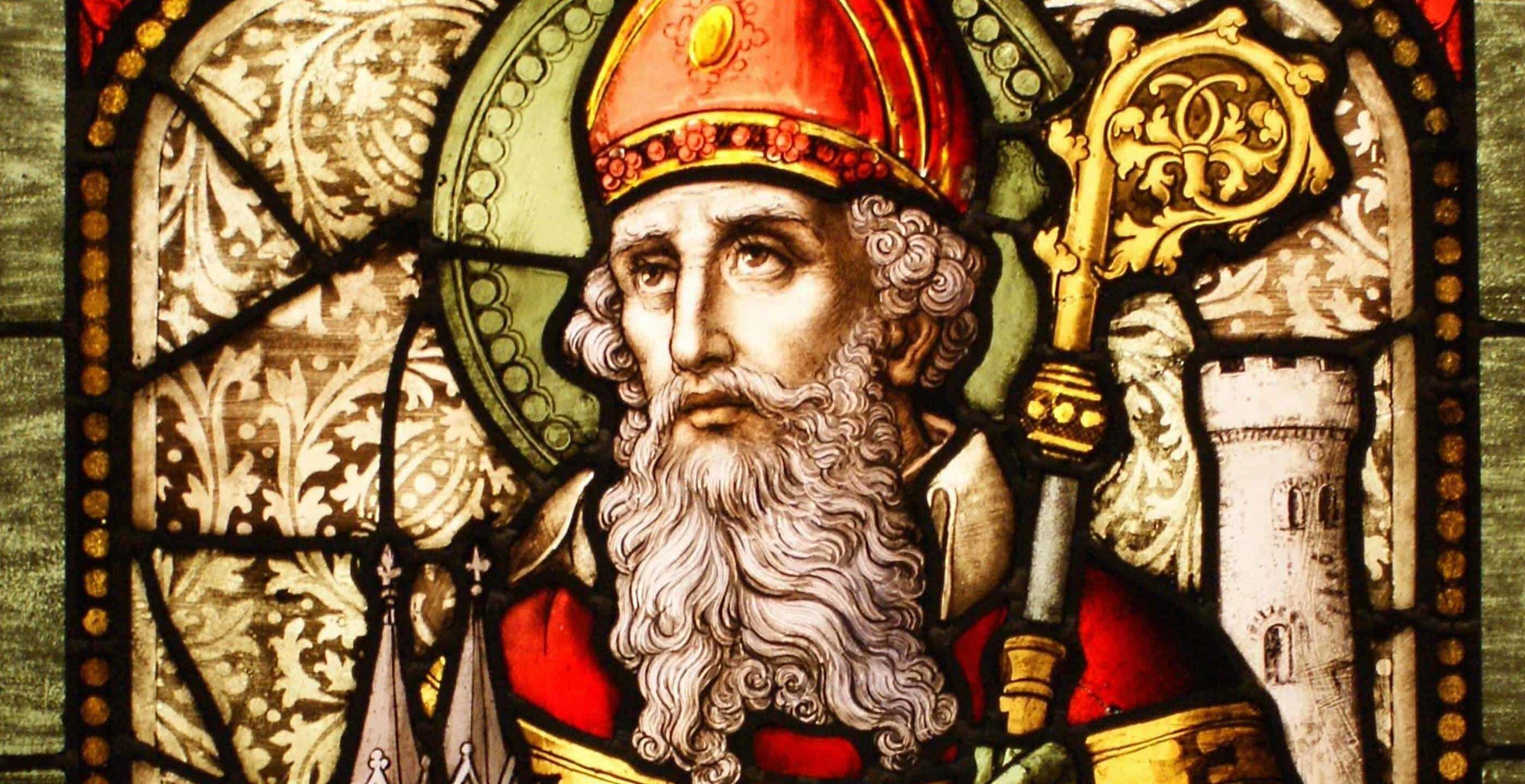


St. Patrick’s Day is celebrated in many communities across the world each year on March 17th. And, although he may be the patron saint of Ireland, it is in the United States where the celebrations have become a national festival with grand street parades, entire rivers being turned green and prodigious amounts of green beer being consumed.
The St. Patrick’s Day custom arrived in America in 1737, that being the first year it was publicly celebrated in Boston. Most Americans, and other folk across the world, assume that Patrick was Irish: not so, many scholars believe he was Welshman!
Patrick (Patricius or Padrig) was born around 386 AD to wealthy parents. Patrick’s birthplace is in fact debatable, with many believing that he was born in the still Welsh-speaking Northern Kingdom of Strathclyde of Romano-Brythonic stock, at Bannavem Taberniae. Others consider his birthplace to be in the south of Wales around the Severn estuary, or at St. Davids in Pembrokeshire, the tiny city of St Davids sitting directly on the seagoing missionary and trade routes to and from Ireland. His birth name was Maewyn Succat.
Not much is known about his early life, but it is believed he was captured and sold into slavery with “many thousands of people” by a group of Irish marauders that raided his family estate.
Patrick was a slave for six long years, during which time he lived and worked an isolated existence as a shepherd. He finally managed to escape his captors, and according to his writings, a voice spoke to him in a dream, telling him it was time to leave Ireland. To this end, it is said that Patrick walked nearly 200 miles from County Mayo, where he was held, to the Irish coast.
After his escape, Patrick apparently experienced a second revelation—an angel in a dream telling him to return to Ireland as a missionary. Shortly after this Patrick travelled to Gaul, were he studied religious instruction under Germanus, bishop of Auxerre. His course of study lasted for more than fifteen years and culminated with his ordination as a priest.
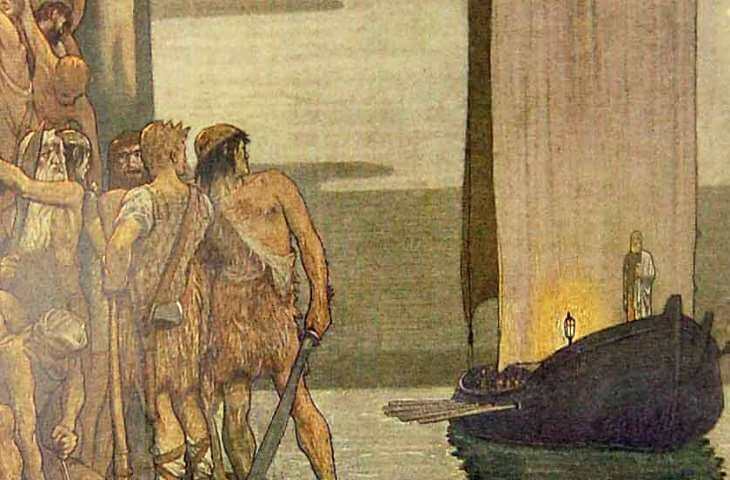
He eventually returned to Ireland to join other early missionaries, probably settling in Armagh, intent on converting the native pagans to Christianity. His seventh century biographers enthusiastically claim that he converted all of Ireland to Christianity.
In truth it does appear that Patrick was very successful at winning converts. Familiar with the Irish language and culture, he adapted traditional ritual into his lessons of Christianity rather than attempting to eradicate native beliefs. He used bonfires to celebrate Easter since the Irish were used to honouring their gods with fire, he also superimposed a sun, a powerful native symbol, onto the Christian cross to create what is now called a Celtic cross.
Upsetting local Celtic Druids it is said that Patrick was imprisoned on several occasions, but he managed to escape each time. He travelled extensively throughout Ireland, establishing monasteries across the country, setting up the schools and churches that would aid him in his conversion of the Irish to Christianity.
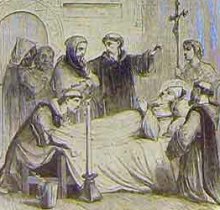 St Patrick’s mission in Ireland lasted approximately thirty years, after which time he retired to County Down. It is said that he died on March 17th in AD 461, and since then, the date has been commemorated as St. Patrick’s Day.
A rich tradition of oral legend and myth surrounds St. Patrick, most of which has undoubtedly been exaggerated over the centuries – spinning exciting tales as a means to remember history has always been a part of Irish culture.
Some of these legends recall how Patrick raised people from the dead, others that he drove all the snakes from Ireland. The latter would indeed have been a miracle, as snakes have never been present on the island of Ireland. Some claim however, the snakes to be analogous with the native pagans.
Another Irish tale which may also have an element of truth about it tells how Patrick used the three-leafed shamrock to explain the Trinity. He apparently used it to show how the Father, the Son, and the Holy Spirit could all exist as separate elements of the same entity. His followers adopted the custom of wearing the shamrock on his feast day, and shamrock green remains the essential colour for today’s festivities and celebrations.