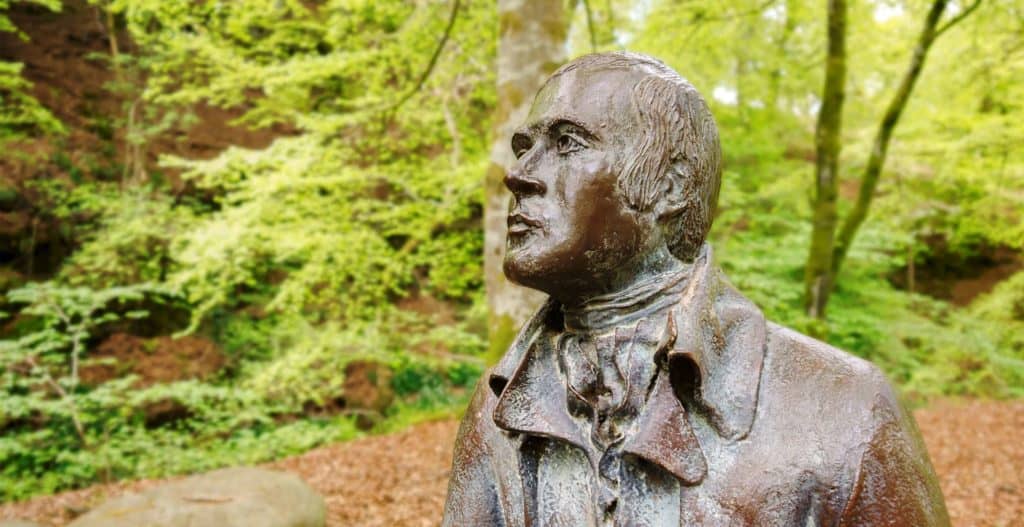


Each January, scotsmen and women across the world join together in order to celebrate the life and works of the greatest of all Scottish poets, Rabbie Burns. And during such gatherings, the words of the great man are read out aloud for all to appreciate, whilst little mention is made about William Topaz McGonagall – the bard of Dundee.
William Topaz McGonagall was born in Edinburgh to poor Irish parents, in March 1825. One of a family of five children, his father worked as a handloom weaver. The family moved to Dundee when William was still a boy.
William eventually moved into the family trade, and married Jean King in 1846. It was about this time that he also began to take part in amateur theatre productions, acting in Shakespearean plays. It was perhaps the influence of the Great Bard himself that captured William’s imagination and sparked his love of poetry.
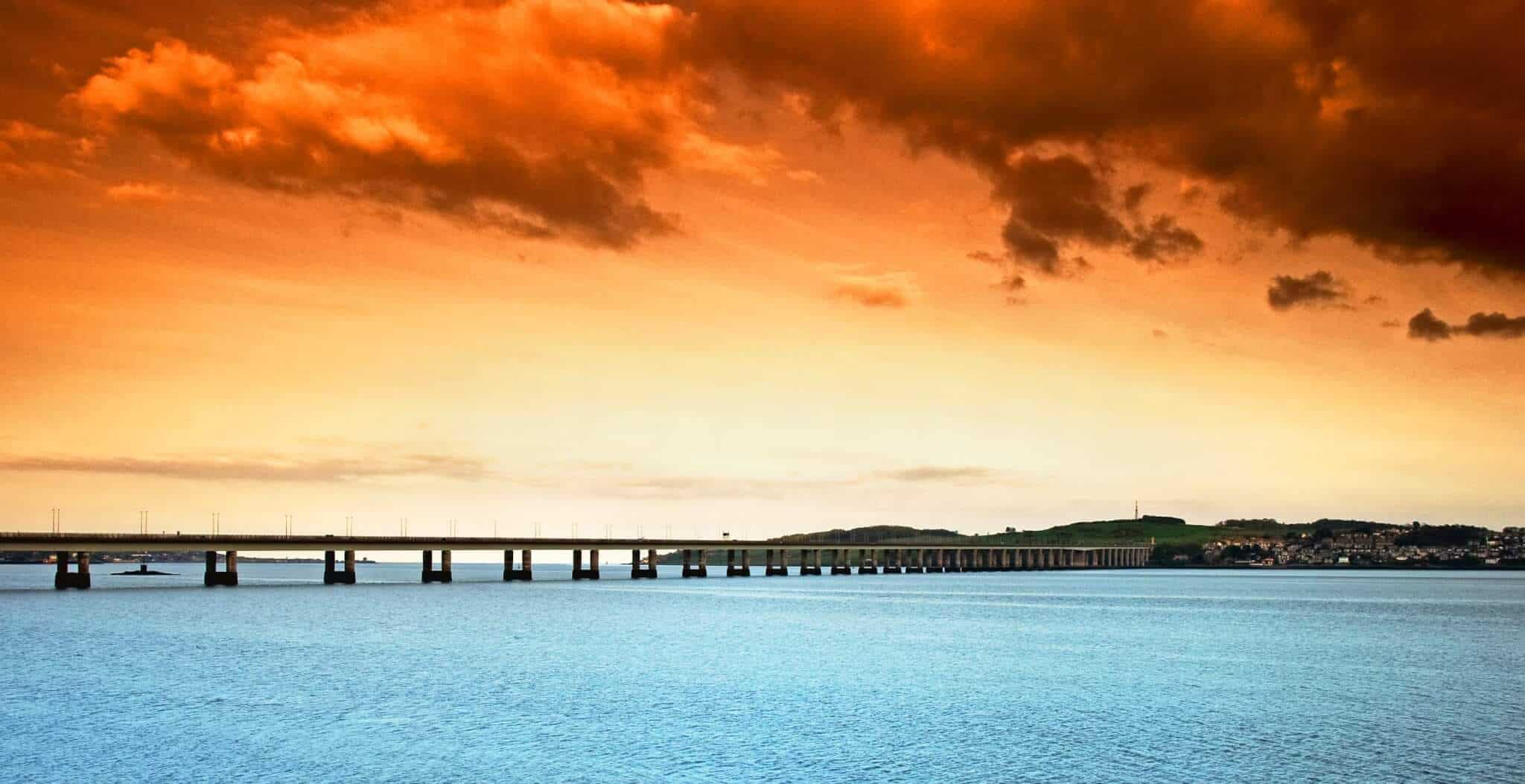
One of William’s earliest works was dedicated to the new railway bridge that had just opened over the Tay River at Dundee in 1877. In it he praised its beauty and strength. By McGonagall’s own account, the poem was ‘… received with eclat and [he] was pronounced by the Press the Poet Laureate of the Tay Bridge…’.
When the same bridge blew down just a year later William, undeterred, wrote a poem about the disaster. To this day it is still regarded as his most famous work. The Tay Bridge Disaster recounts the events of the evening of 28 December 1879, when, during a severe gale, the bridge collapsed as a train was passing over it. In the work William compiled such memorable lines as;
Beautiful Railway Bridge of the Silv’ry Tay!
Alas! I am very sorry to say
That ninety lives have been taken away
On the last Sabbath day of 1879,
Which will be remember’d for a very long time.
William didn’t let the fact that just seventy five folk perished that night interfere with his prose. But only a true master could have thought of conveying the shock of the people of Dundee with immortal lines like;
And the cry rang out all round the town,
Good heavens! The Tay Bridge has blown down.
William also campaigned vigorously against excessive drinking, but strangely chose to appear in pubs and bars to deliver his sobering poems and speeches. Surprisingly these proved very popular, the good folk of Dundee possibly recognising that McGonagall was “so giftedly bad he backed unwittingly into genius” (Stephen Pile, The Book of Heroic Failures.).

“Poet-baiting” became a popular pastime in Dundee, but William seemed oblivious to the general reception of his poems, even when his audience were pelting him with eggs and vegetables. But William did not limit his talent to the halls and pubs of Dundee, he also toured throughout Scotland, England, and the United States, giving public readings dressed in full Scottish Highland costume; he even applied an admission charge for the privilege.
He became quite literally, a legend in his own lifetime, although his audiences were almost always rather rowdy with those in attendance ‘given to catcalling’ and more than happy to launch the odd missile or two.
William also considered himself an actor, although the theatre where he was to perform would only let him deliver the title role in Macbeth if he paid up-front for the privilege. The theatre audience certainly got what they expected when the play which should have ended with Macbeth’s death at the hands of Macduff, didn’t …William believed that the actor playing Macduff was trying to upstage him, and so refused to die.
It appears that his self-belief knew no bounds as in 1892, following the death of Alfred, Lord Tennyson, he walked all the way to Balmoral Castle to ask Queen Victoria if he might be considered for the post of poet laureate. Unfortunately, he was informed the Queen was not in residence, and so he returned home.
The passing of the great poet and tragedian on 29 September 1902 was marked by the following obituary:
“Sir William Topaz McGonagall – Knight of the White Elephant, Burmah”. This came upon him quite unexpectedly in the form of a long letter sent by order of the King of Burmah, together with a silver elephant. From that date the poet was a proud man, and adopted the full title as above. The Fair City was his residence for a while, but some years ago he returned to his native city. He fell into bad health. Death soon claimed him, ending a long and varied career. – People’s Journal, 4 October 1902.
In more recent years, the image of the bad poet trapped by his romanticism inspired the likes of Spike Milligan, who resurrected William in the form a character called McGoonagall for The Goon Show of the 1950’s and 60’s. Milligan also appeared as a fictionalized William McGonagall in the 1974 movie The Great McGonagall, in which Peter Sellers co-starred as Queen Victoria.
In 1965, a competition was organised to find poets of McGonagall’s calibre, with cash prizes being offered to the winners. Again Peter Sellers and Spike Milligan were involved, this time among the panel of judges. After careful deliberation the judges decided to reject all entries, and declared that no poet can yet compare with William McGonagall.
Still more recently Dundee City Council has claimed William as a favourite son, describing him as the World’s Best Bad Poet.
But was William really aware of how bad his poetry actually was? He said that he was misunderstood and persecuted by heretical detractors, and maintained that his persistence was an act of courage. There is however, another theory that he was shrewder than he is given credit for, and was playing along to his audience’s perception of him, similar perhaps to Tommy Cooper’s ‘bad magician’ or Les Dawson’s ‘bad piano player’ act. Make your mind up for yourselves; a selection of his more famous works can be found below:
The Railway Bridge of the Silvery Tay
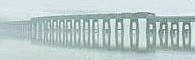
BEAUTIFUL Railway Bridge of the Silvery Tay !
With your numerous arches and pillars in so grand array
And your central girders, which seem to the eye
To be almost towering to the sky.
The greatest wonder of the day,
And a great beautification to the River Tay,
Most beautiful to be seen,
Near by Dundee and the Magdalen Green.
Beautiful Railway Bridge of the Silvery Tay !
That has caused the Emperor of Brazil to leave
His home far away, incognito in his dress,
And view thee ere he passed along en route to Inverness.
Beautiful Railway Bridge of the Silvery Tay !
The longest of the present day
That has ever crossed o’er a tidal river stream,
Most gigantic to be seen,
Near by Dundee and the Magdalen Green.
Beautiful Railway Bridge of the Silvery Tay !
Which will cause great rejoicing on the opening day
And hundreds of people will come from far away,
Also the Queen, most gorgeous to be seen,
Near by Dundee and the Magdalen Green.
Beautiful Railway Bridge of the Silvery Tay !
And prosperity to Provost Cox, who has given
Thirty thousand pounds and upwards away
In helping to erect the Bridge of the Tay,
Most handsome to be seen,
Near by Dundee and the Magdalen Green.
Beautiful Railway Bridge of the Silvery Tay !
I hope that God will protect all passengers
By night and by day,
And that no accident will befall them while crossing
The Bridge of the Silvery Tay,
For that would be most awful to be seen
Near by Dundee and the Magdalen Green.
Beautiful Railway Bridge of the Silvery Tay !
And prosperity to Messrs Bouche and Grothe,
The famous engineers of the present day,
Who have succeeded in erecting the Railway
Bridge of the Silvery Tay,
Which stands unequalled to be seen
Near by Dundee and the Magdalen Green.
The Tay Bridge Disaster
Beautiful Railway Bridge of the Silv’ry Tay!
Alas! I am very sorry to say
That ninety lives have been taken away
On the last Sabbath day of 1879,
Which will be remember’d for a very long time.
‘Twas about seven o’clock at night,
And the wind it blew with all its might,
And the rain came pouring down,
And the dark clouds seem’d to frown,
And the Demon of the air seem’d to say-
“I’ll blow down the Bridge of Tay”.
When the train left Edinburgh
The passengers’ hearts were light and felt no sorrow,
But Boreas blew a terrific gale,
Which made their hearts for to quail,
And many of the passengers with fear did say-
“I hope God will send us safe across the Bridge of Tay”.
But when the train came near to Wormit Bay,
Boreas he did loud and angry bray,
And shook the central girders of the Bridge of Tay
On the last Sabbath day of 1879,
Which will be remember’d for a very long time.
So the train sped on with all its might,
And Bonnie Dundee soon hove in sight,
And the passengers’ hearts felt light,
Thinking they would enjoy themselves on the New Year,
With their friends at home they lov’d most dear,
And wish them all a happy New Year.
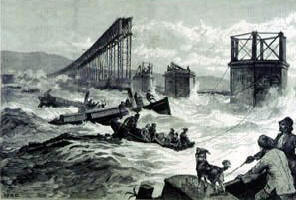
So the train mov’d slowly along the Bridge of Tay,
Until it was about midway,
Then the central girders with a crash gave way,
And down went the train and passengers into the Tay!
The Storm Fiend did loudly bray,
Because ninety lives had been taken away,
On the last Sabbath day of 1879,
Which will be remember’d for a very long time.
As soon as the catastrophe came to be known
The alarm from mouth to mouth was blown,
And the cry rang out all o’er the town,
Good Heavens! the Tay Bridge is blown down,
And a passenger train from Edinburgh,
Which fill’d all the peoples hearts with sorrow,
And made them for to turn pale,
Because none of the passengers were sav’d to tell the tale
How the disaster happen’d on the last Sabbath day of 1879,
Which will be remember’d for a very long time.
It must have been an awful sight,
To witness in the dusky moonlight,
While the Storm Fiend did laugh, and angry did bray,
Along the Railway Bridge of the Silv’ry Tay,
Oh! ill-fated Bridge of the Silv’ry Tay,
I must now conclude my lay
By telling the world fearlessly without the least dismay,
That your central girders would not have given way,
At least many sensible men do say,
Had they been supported on each side with buttresses,
At least many sensible men confesses,
For the stronger we our houses do build,
The less chance we have of being killed.
The Battle of Bannockburn
SIR ROBERT the Bruce at Bannockburn
Beat the English in every wheel and turn,
And made them fly in great dismay
From off the field without delay.
The English were a hundred thousand strong,
And King Edward passed through the Lowlands all along.
Determined to conquer Scotland, it was his desire,
And then to restore it to his own empire.
King Edward brought numerous waggons in his train,
Expecting that most of the Scottish army would be slain,
Hoping to make the rest prisoners, and carry them away
In waggon-loads to London without delay.
The Scottish army did not amount to more than thirty thousand strong;
But Bruce had confidence he’d conquer his foes ere long;
So, to protect his little army, he thought it was right
To have deep-dug pits made in the night;
And caused them to be overlaid with turf and brushwood
Expecting the plan would prove effectual where his little army stood,
Waiting patiently for the break of day,
All willing to join in the deadly fray.
Bruce stationed himself at the head of the reserve,
Determined to conquer, but never to swerve,
And by his side were brave Kirkpatrick and true De Longueville,
Both trusty warriors, firm and bold, who would never him beguile.
By daybreak the whole of the English army came in view;
Consisting of archers and horsemen, bold and true;
The main body was led on by King Edward himself,
An avaricious man, and fond of pelf.
The Abbot of Inchaffray celebrated mass,
And all along the Scottish lines barefoot he did pass,
With the crucifix in his hand, a most beautiful sight to see,
Exhorting them to trust in God, and He would set them free.
Then the Scottish army knelt down on the field,
And King Edward he thought they were going to yield,
And he felt o’erjoyed, and cried to Earl Percy
“See! See! the Scots are crying for mercy”.
But Percy said, “Your Majesty need not make such a fuss,
They are crying for mercy from God, not from us;
For, depend upon it, they will fight to a man, and find their graves
Rather than yield to become your slaves”.
Then King Edward ordered his horsemen to charge,
Thirty thousand in number, it was very large;
They thought to o’erwhelm them ere they could rise from their knees,
But they met a different destiny, which did them displease;
For the horsemen fell into the spik’d pits in the way,
And, with broken ranks and confusion, they all fled away,
But few of them escap’d death from the spik’d pits,
For the Scots with their swords hack’d them to bits;
De Valence was overthrown and carried off the field,
Then King Edward he thought it was time to yield.
And he uttered a fearful cry
To his gay archers near by,
Ho! archers! draw your arrows to the head,
And make sure to kill them dead;
Forward, without dread, and make them fly,
Saint George for England, be our cry!
Then the arrows from their bows swiftly did go,
And fell amongst them as thick as the flakes of snow;
Then Bruce he drew his trusty blade,
And in heroic language said,
Forward! my heroes, bold and true!
And break the archers’ ranks through and through!
And charge them boldly with your swords in hand,
And chase these vultures from off our land,
And make King Edward mourn
The day he came to Bannockburn.
So proud Edward on his milk-white steed,
One of England’s finest breed,
Coming here in grand array,
With horsemen bold and archers gay,
Thinking he will us dismay,
And sweep everything before him in his way;
But I swear by yon blessed sun
I’ll make him and his army run
From off the field of Bannockburn.
By St. Andrew and our God most high,
We’ll conquer these epicures or die!
And make them fly like chaff before the wind
Until they can no refuge find;
And beat them from the field without delay,
Like lions bold and heroes gay
Upon them! — charge! — follow me,
Scotland’s rights and liberty!
Then the Scots charged them with sword in hand,
And made them fly from off their land;
And King Edward was amazed at the sight,
And he got wounded in the fight;
And he cried, Oh, heaven! England’s lost, and I’m undone,
Alas ! alas! where shall I run?
Then he turned his horse, and rode on afar,
And never halted till he reached Dunbar.
Then Bruce he shouted, Victory!
We have gained our rights and liberty;
And thanks be to God above
That we have conquered King Edward this day,
A usurper that does not us love.
Then the Scots did shout and sing
Long live Sir Robert Bruce our King’
That made King Edward mourn
The day he came to Bannockburn!
Find out more about William at https://www.mcgonagall-online.org.uk