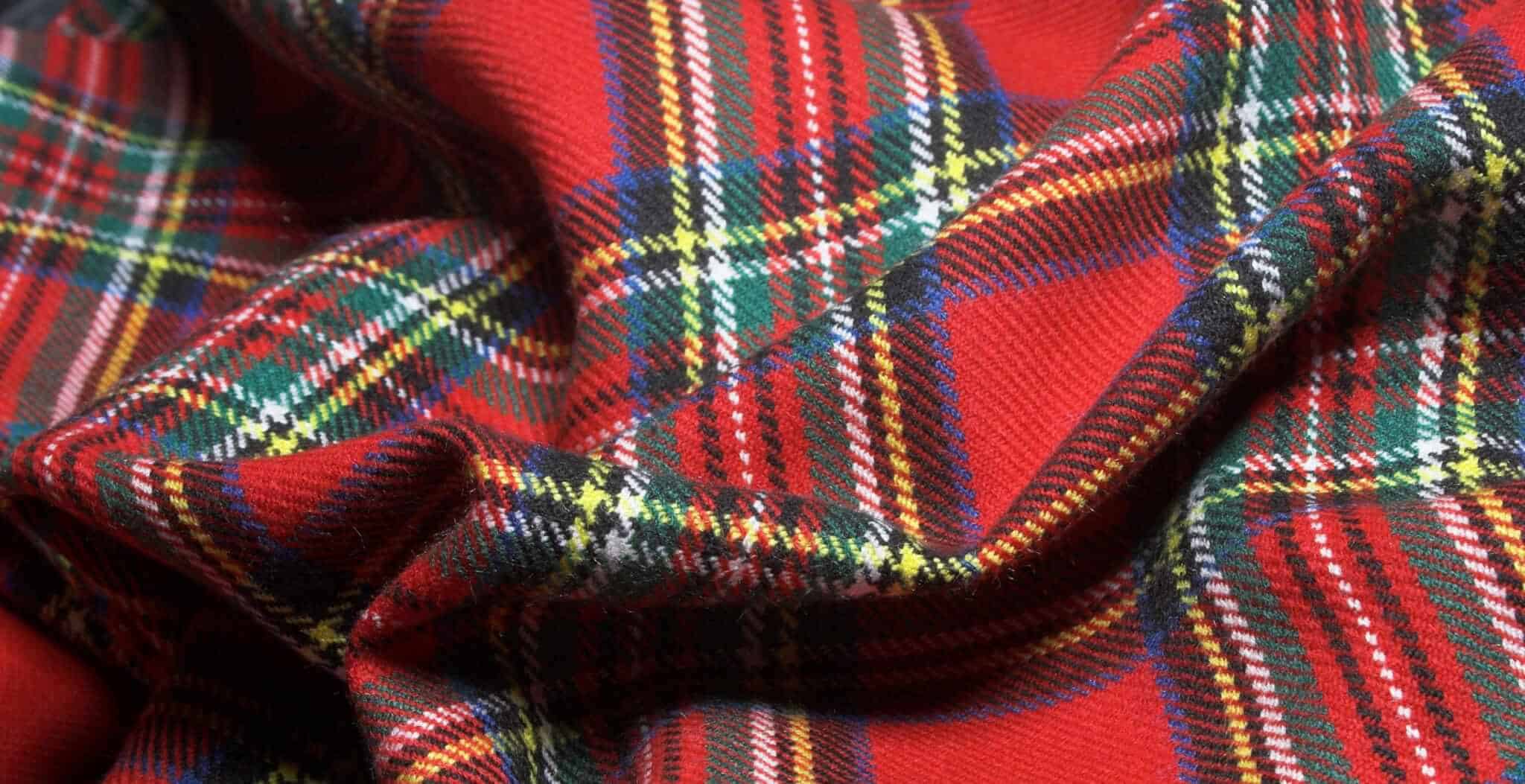


Travellers to Scotland over the past several hundred years have noted the Tartan worn by its inhabitants. These records refer to it as ‘mottled’, ‘marled’ and ‘sundrie coloured’, but perhaps the best description comes from the Gaelic word breacan, meaning chequered.
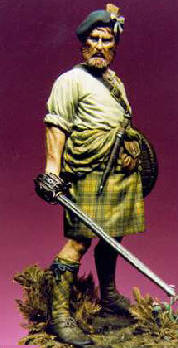 For it is that description which best defines a tartan… a check-like arrangement of a tartan pattern, or the ‘sett’, which is repeated over and over again until the desired length of cloth is produced.
For several centuries, tartan remained part of the everyday garb of the Highlander. Whilst tartan was worn in other parts of Scotland, it was in the Highlands that its development continued and so it became synonymous with the symbol of clan kinship.
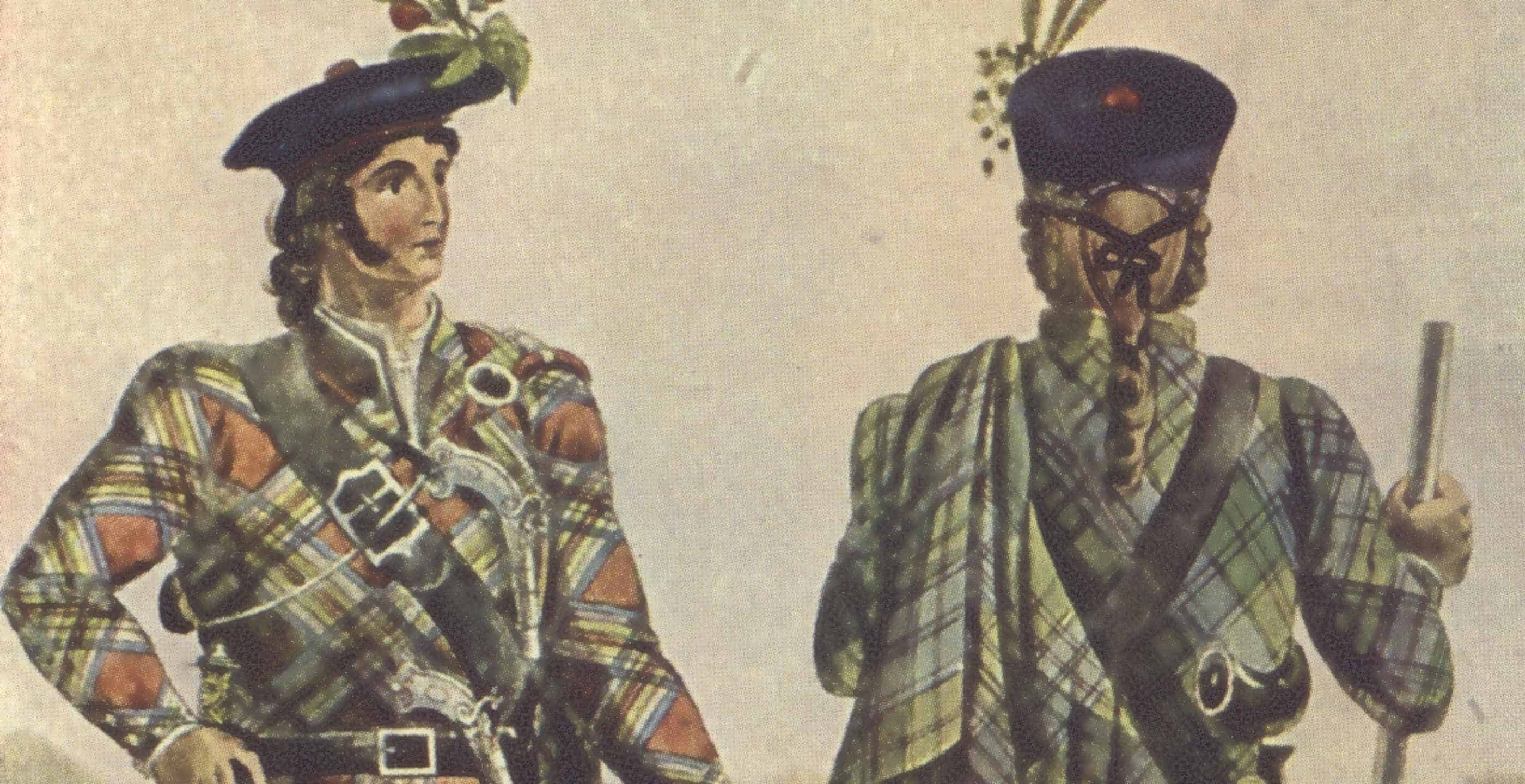
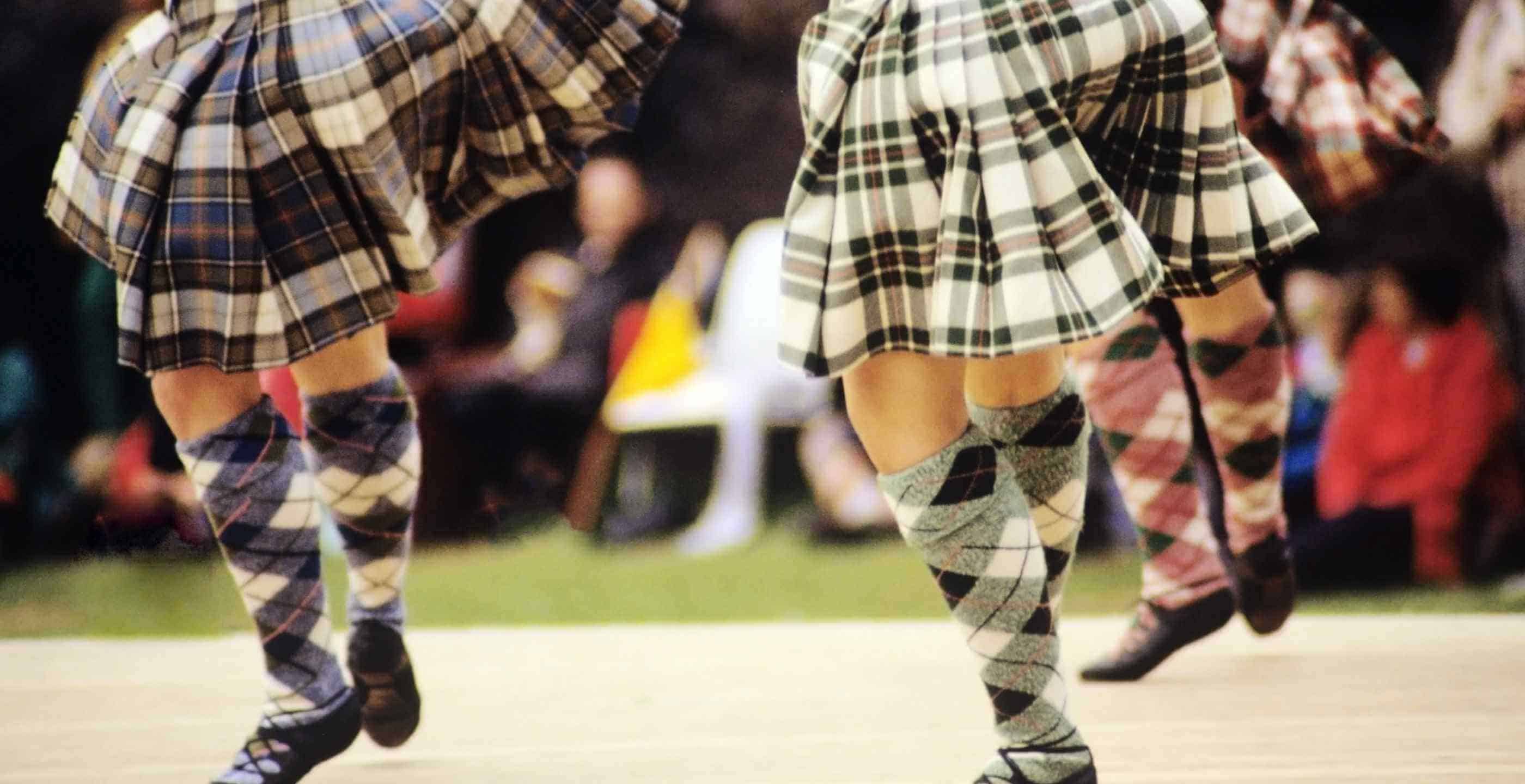
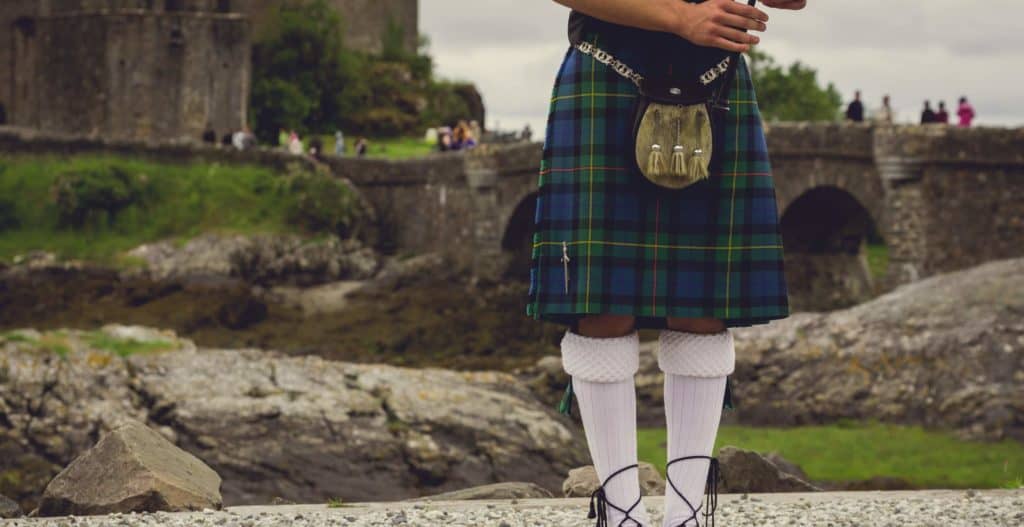
Tartan was used to make the items of clothing which are today considered traditional Scottish dress, including the philabeg, or kilt, and of course the trews. These would be worn with shoes of untanned hide and the cuaran, a knee length boot also made from hide which was shaped to the leg and kept in place by thongs. A hat, or bonnet of knitted wool sporting a badge of the clan, usually a plant of flower, would sit proudly on the head of the clansman. The highly ornamented leather sporran worn in front of the kilt served as a purse completed the ensemble.
The women of the clan wore a curraichd of linen over their heads which fastened under their chin. The tonnag was a small square of tartan worn over the shoulders, and the arasaid was a long self-coloured or tartan garment, which reached from the head to the ankles, pleated all round and fastened at the breast with a brooch and at the waist by a belt.
Early tartans were simple checks of perhaps only two or three colours. The colours were extracted mainly from dye-producing plants, roots, berries and trees local to a specific geographic area. These simple checks or tartans were worn by the people of the district where they were made, and as such became the area or clan tartan.
It is said that the weavers took great pain to give exact patterns of tartan by identifying each colour of every thread upon a piece of wood known as a maide dalbh, or pattern stick. An account from 1572 records how a housewife gave coloured wool to a weaver to make into cloth. In suing him before the magistrate she accused him of making the cloth to his ‘awin fasoun’, or own fashion, and not according to her instructions. She won her case and the naughty weaver was punished.
With the evolution of chemical dies, weavers were able to introduce more elaborate patterns including more vivid and varied colours. As clans grew and branched through birth, death or marriage, the newer clans evolved tartans of their own by adding an overstripe onto the basic pattern of the parent clan.
One of the earliest references to the use of tartans by royals was by the treasurer to King James III, who in 1471 purchased a length of cloth for the king and queen. King James V wore tartan whilst hunting in the Highlands in 1538, and King Charles II wore a ribbon of tartan on his coat at his marriage in 1662.
It is known that through the 16th and 17th centuries, tartan was exported from the Highlands to the south at prices fixed in order to prevent overcharging, the prices being determined by the number and shades of colour in the cloth.
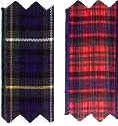
Clan MacDonald Tartan and Clan Campbell Tartan
It was after the Battle of Culloden in 1746 that the government in London attempted to purge the Highlands of all unlawful elements by seeking to crush the rebellious clan system. An Act of Parliament was passed which made the carrying of weapons and the wearing of tartan a penal offence. The Act was rigorously enforced. So much so it seems that by the time the Act was repealed in 1785, Highlanders had lost all enthusiasm for their tartan garb, content to wear the same type of dress as other Scots.
By 1785, tartan was a thing of the past, many of the weavers had died and with them the details of the old patterns were lost as their wooden pattern sticks had rotted away. Fragments of the old tartans had also rotted and perished leaving little evidence for future generations.
The great tartan revival started in 1822, when George IV visited Edinburgh and suggested that people attending the official functions should wear their respective tartans. The loss of the original patterns meant it was necessary for many ‘original’ tartans to be reinvented by the tailors of the day.
Today the confusion of the past has gained some semblance of order as tartans now require registration in the Registers at Lyon Court.
Several variations of one tartan may be worn and these tend to take their name from the purpose for which they were intended.
Clan tartans – for general use by the clans people.
Dress tartans – originally worn by the women of the clan, generally with a white background and lighter-coloured patterns.
Mourning tartans – generally of black and white.
Hunting tartans – dark in colour and worn for sport, especially suitable when a clan possessed a brightly coloured tartan, making it unsuitable for hunting.
Chiefs’ tartans – for the personal use of the chief and his immediate family.
Tartan has now gained international popularity with people selecting and sporting a design of his or her fancy. A word of warning however, the Royal tartan is for the exclusive use of the royal family and woe betide anyone who dares to break with this tradition!