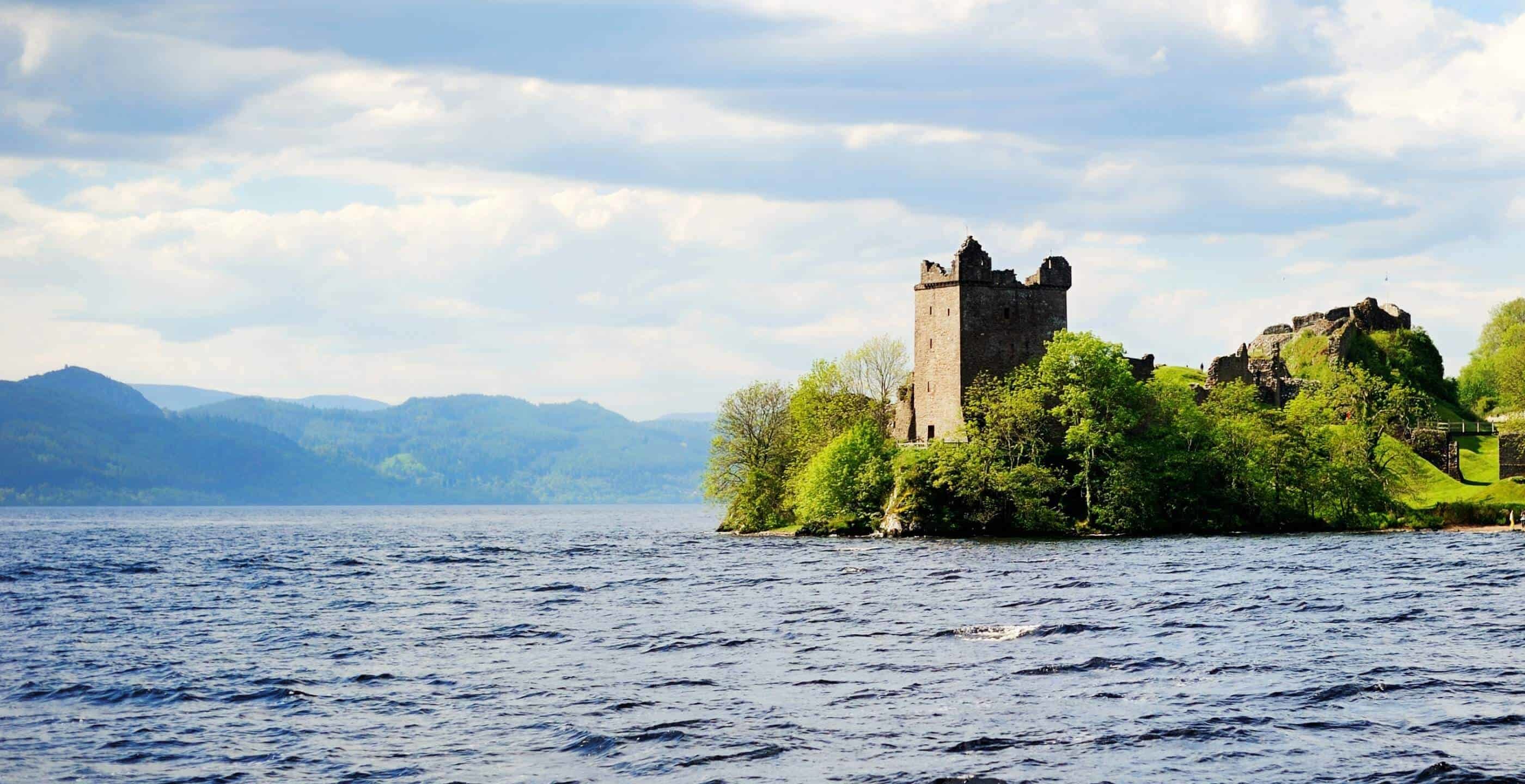


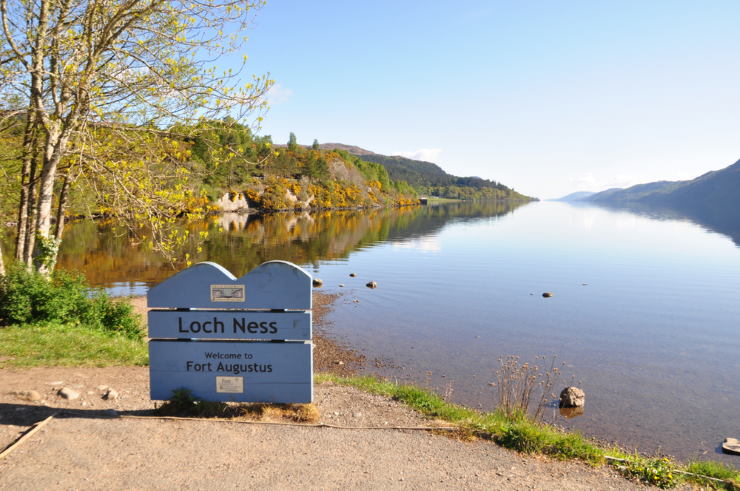
The Great Glen in the Scottish highlands is a rift valley 60 miles long and contains three famous lochs; Lochy, Oich and Ness. The most famous of these is Loch Ness because of the monster said to ‘lurk’ in its deep waters. It is deeper than the North Sea and is very long and very, very narrow and has never been known to freeze.
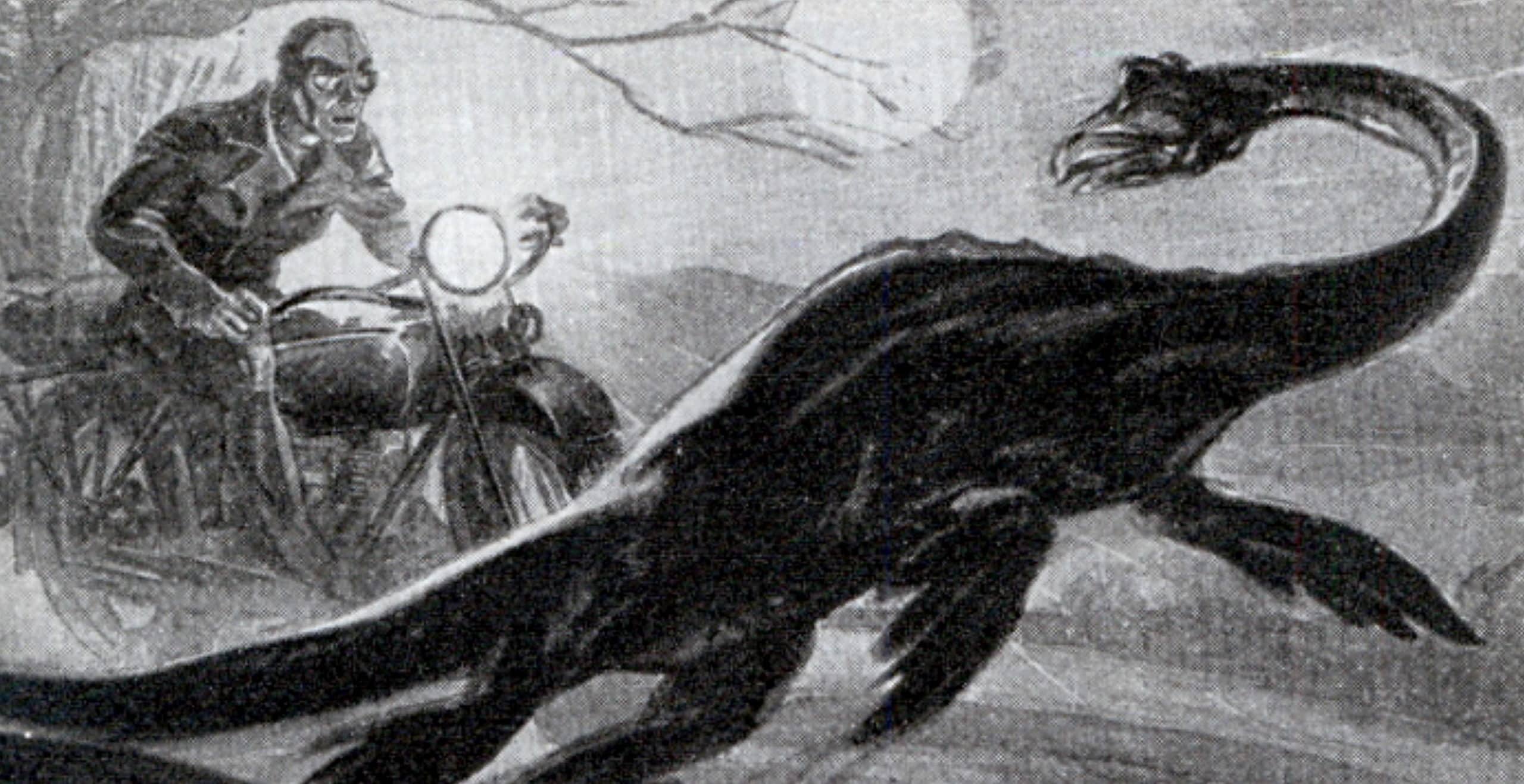
There have been numerous sightings of the monster, affectionately known as ‘Nessie’.
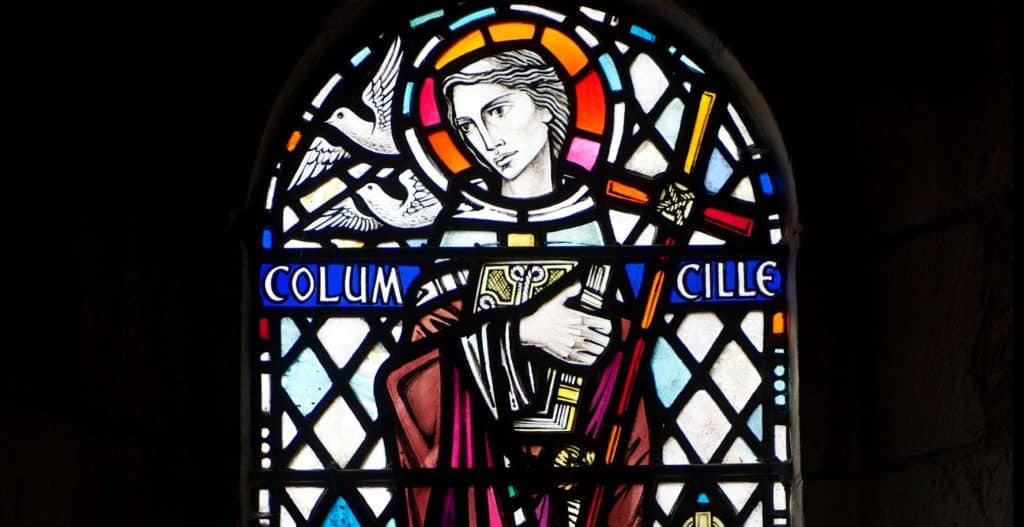
The first recorded account is of an eyeball to eyeball confrontation with the Irish saint, St. Columba in the 6th century. St. Columba, so the story goes, ordered one of his monks to swim across the loch and fetch a boat. Halfway across the monster appeared and rushed at the swimmer, roaring in a most frightening way! Columba cried out to the monster,” Go no further, nor touch the man! Go back!”. The monster is said to have fled!
Since then, Nessie has been seen many times but has never harmed anyone. Sightings have been sporadic over the centuries, but in the 20th century Nessie has been more active, which has had a profound affect on local business!
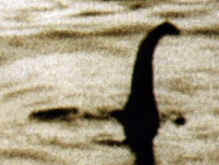
1933 was the year when the first photograph was taken of the monster, or what is said to be the monster. It showed something with a long neck arched over a thick body. This photograph, taken by a London surgeon caused a sensation when first published in the Daily Mail.
The circus owner Bertram Mills, who was travelling via the Loch on his way to Inverness, offered a £20,000 reward (the equivalent of £2 million today) to anyone who could capture the monster for his circus, but so far no one has claimed the reward. It could be said that Mills was quite the entrepreneur since the reward brought many flocking to the Loch and both sightings and ticket sales to the nearby circus were on the rise! The fact that the circus animals were fed and watered on the banks of the Loch and that the head and neck of the ‘monster’ closely resembled an elephant’s trunk was, perhaps unsurprisingly, not made common knowledge!
In 1951, Lachlan Stuart, a forestry worker who lived beside the loch, also managed to photograph the monster, if that is indeed what it was. He saw three humps in the water appear in line and ran back to his house to get his camera. After taking one photograph his camera shutter jammed, but his photograph got wide publicity as further proof of the existence of Nessie.
Interest in Nessie became intense and over the years several scientific investigations have taken place. In 1961 the Loch Ness Phenomena Investigation Bureau was formed and even two submarines have been brought into the search with sonar experts on board! When the submarine Pisces was diving off Castle Urquhart, where the water is 950 feet deep, a vast underwater cavern was found. Was this Nessie’s home?
In 1975 four firemen from Hemel Hempstead decided that the monster must be a male, as all monsters usually are, so they built a 309 foot long papier-mâché ‘lady monster’ to attract ‘Mr Nessie’.
It had false eyelashes, full make-up and gave out a pre-recorded mating call. Unfortunately the mating call turned out to be that of a male walrus, so not unsurprisingly it didn’t tempt Nessie!
It didn’t help either when the lady monster got damaged when set afloat on the water. Her ‘behind’ was flattened by the jetty when a sudden wind blew her sideways. The attempt was abandoned.
However, the Loch Ness monster is not as unique as it seems – reports of similar creatures have come from other lochs in the West Highlands.
Nessie provides us with an enduring mystery and in the 21st century where there is an explanation for everything, it is pleasing to think that there are still mysteries like the Loch Ness Monster.
Indeed the most recent ‘sighting’ was in May 2007, when Gordon Holmes, a lab technician, took a video of what he described as ‘this jet black thing, about 45 feet long, moving fairly fast in the water’. The video was broadcast by BBC Scotland and on STV’s North Tonight programme. The credibility of the video has however come into question; amongst other concerns, the video does not include any objects or features by which the size of the ‘thing’ can be measured.
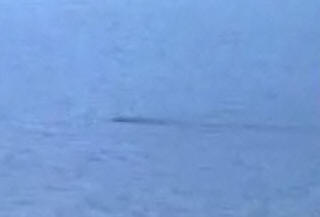
It appears that the existence of ‘Nessie’ remains to be proved.
Published: February 9th, 2017.